Introduction: The Non-Negotiable Importance of Hygiene Standards in Wet Wipes Manufacturing
For manufacturers and exporters targeting markets in South America, Russia, Southeast Asia, the Middle East, and South Africa, meeting international hygiene standards is not merely a regulatory hurdle—it is the foundational pillar of market access, brand trust, and long-term profitability. In 2026, with consumers and regulators more informed and demanding than ever, compliance has evolved from a static certificate to a dynamic, integrated system. This guide moves beyond generic advice to provide a deep, actionable methodology for ensuring your wet wipes production, whether powered by a standard máquina de pañales or a specialized wet wipes line, meets the rigorous demands of global trade. We will dissect standards, expose common pitfalls, analyze costs, and provide a step-by-step blueprint tailored for both newcomers and established fabricante de máquinas de pañales s expanding their portfolio.
Part 1: The Core Framework – Understanding International Hygiene Standards
1.1 Key Global Standards Demystified: ISO, GMP, and Regional Mandates
Navigating the landscape of standards requires understanding their scope and hierarchy. The cornerstone is ISO 22716:2007 (Cosmetics – Good Manufacturing Practices). This standard provides guidelines for the production, control, storage, and shipment of cosmetic products, which wet wipes often fall under. It is not a prescriptive set of rules but a framework for a quality management system focused on hygiene and consistency.
Complementing this is the broader concept of GMP (Good Manufacturing Practice), as enforced by bodies like the US FDA or the EU's European Medicines Agency for relevant products. For specific regions, you must also consider: ANVISA regulations in Brazil, EAEU (Eurasian Economic Union) Technical Regulations (TR CU 019/2011 for cosmetics) for Russia, ASEAN guidelines in Southeast Asia, and GCC Standardization Organization (GSO) requirements in the Middle East.
The critical insight is that most of these regulations are harmonized with or reference ISO 22716 and GMP principles. Therefore, building a system compliant with ISO 22716 positions you strongly for global market entry.
1.2 Beyond the Certificate: What Auditors *Really* Look For (The Hidden Checklist)
Passing an audit is about more than having a documented procedure. Auditors examine the living system. Based on direct experience from factory audits in 2024, they prioritize:
1. Environmental Monitoring Data Trends: Not just a single passing test, but a historical log of air particle counts, surface swabs, and water quality in production areas. Spikes or borderline results trigger deep scrutiny.
2. Personnel Flow and Hygiene Practices: They observe if workers actually follow posted handwashing protocols, change footwear when moving between zones, and wear PPE correctly. A single breach can indicate systemic training failures.
3. Traceability in Real-Time: Can you trace a specific batch of finished wipes back to the exact roll of nonwoven fabric, lot of preservative, and operator shift within 30 minutes? A paper-based system that takes hours is a red flag.
4. Calibration and Maintenance Logs: They check if the moisture control system on your máquina de pañales (adapted for wipes) is calibrated and if maintenance is proactive, not just reactive.
1.3 Common Misconceptions & Costly Myths About Wet Wipes Compliance
Several dangerous myths persist in the industry, leading to failed audits or product recalls.
Myth 1: "If the raw materials are certified, the final product is automatically compliant." Truth: Contamination most frequently occurs during handling, slitting, folding, and packaging processes. Your in-house controls are paramount.
Myth 2: "A one-time deep clean before an audit is sufficient." Truth: Auditors look for evidence of routine, validated cleaning procedures. They may test rarely-touched surfaces for residue.
Myth 3: "Hygiene standards only apply to the 'wet' part; the machinery is secondary." Truth: The design and cleanliness of your fabricante de máquinas de pañales equipment are critical. Machines with crevices, poor drainage, or non-sanitary surfaces are contamination reservoirs.
Myth 4: "International standards are too expensive for emerging market manufacturers." Truth: While upfront investment is required, the cost of non-compliance—rejected shipments, lost contracts, reputational damage—is exponentially higher.
Part 2: The 7-Step Operational Blueprint for Compliance
2.1 Step 1: Raw Material Sourcing & Supplier Vetting – Your First Defense Line
Your compliance journey begins before materials enter your factory. Establish a rigorous supplier qualification program. Require certificates of analysis (CoA) for every batch of nonwoven fabric, lotion ingredients, and packaging film. For critical components like preservatives or surfactants, insist on compliance with relevant pharmacopoeia (USP, EP).
First-Person Insight: In 2023, we sourced a batch of "GMP-compliant" nonwoven fabric from a new supplier. While the CoA was clean, in-house testing revealed higher-than-acceptable microbial counts. The issue was traced to improper storage and transportation by the supplier. We learned to not only audit the supplier's factory but also their logistics chain. We now mandate temperature-controlled, sealed transit for all sensitive materials.
Develop a supplier scorecard evaluating quality, documentation, and responsiveness. Dual-sourcing for key materials mitigates risk.
2.2 Step 2: Facility & Environmental Control – Designing a Hygienic Production Zone
The production environment must be designed to minimize contamination. Key zones include:
– Class D or better controlled environment: For the core wetting, folding, and packaging stages, maintain positive air pressure, HEPA-filtered air supply, and strict temperature/humidity control (e.g., 22±2°C, RH <60%).
– Defined personnel and material flows: Separate "dirty" (raw material unloading) from "clean" (production) areas. Use airlocks and gowning procedures.
– Surfaces: Walls, floors, and ceilings should be smooth, impervious, and easy to clean (e.g., epoxy resin). Avoid wooden pallets in production zones.
Invest in a robust environmental monitoring program: weekly air particle counts, monthly surface microbial swabs (using contact plates), and daily water system checks.
2.3 Step 2.3: The Manufacturing Process – From Slitting to Packaging
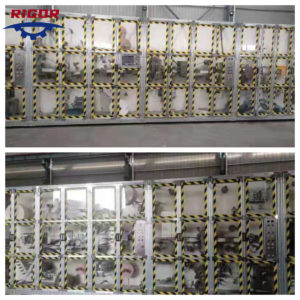
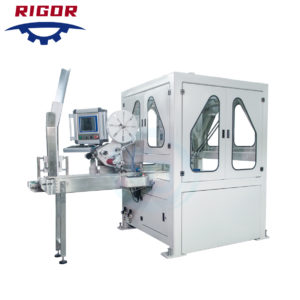
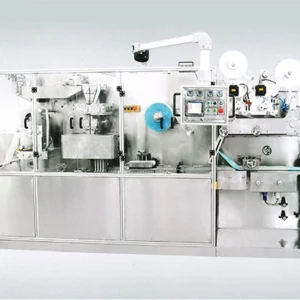
This is where your machinery choice becomes critical. A standard máquina de pañales can be adapted for wet wipes, but specific hygienic design features are non-negotiable.
1. Material Unwinding & Slitting: Ensure unwind stands are enclosed or have dust covers. Slitter blades must be made of stainless steel and dedicated to specific product types to prevent cross-contamination.
2. Wetting & Impregnation System: The lotion mixing and application tank must be constructed of 316L stainless steel, with CIP (Clean-in-Place) capability. Precise volumetric pumps ensure consistent preservative concentration.
3. Folding & Transfer: Avoid complex mechanical folders that are difficult to clean. Modern ultrasonic or hot-knife cutting is preferable to blade cutting, which can generate particulates.
4. Packaging: The final sealing must be hermetic. Conduct regular seal integrity tests (e.g., dye penetration, burst tests). Packaging material must have adequate barrier properties (e.g., AL foil laminate) as specified by your preservative system.
Work closely with your fabricante de máquinas de pañales to ensure the line design facilitates hygiene. Request sanitary design drawings for review.
2.4 Step 4: Quality Control & Microbiological Testing – Data-Driven Assurance
QC is your evidence-generating engine. Go beyond final product testing to implement in-process controls.
In-Process Checks: Monitor lotion pH, viscosity, and preservative concentration every batch. Check wipe weight, moisture content, and fold consistency.
Microbiological Testing (The Gold Standard):
- Raw Materials: Conduct TAMC (Total Aerobic Microbial Count) and TYMC (Total Yeast and Mold Count) on incoming lots of nonwoven and ingredients.
- Environment: Regular swabbing of equipment surfaces and operator hands.
- Finished Product: Perform preservative efficacy testing (PET or Challenge Test) according to USP <51> or Ph. Eur. 5.1.3. This is mandatory for most international markets and proves your formulation can inhibit microbial growth over the product's shelf life.
Maintain a certified in-house lab or partner with an accredited third-party laboratory. Keep samples from each batch for the claimed shelf life plus one year.
2.5 Step 5: Personnel & Training – The Human Factor in Hygiene
Your staff are both the greatest risk and your strongest control. Implement a continuous training program covering:
– Personal hygiene (handwashing technique, illness reporting).
– Gowning procedures for different cleanroom zones.
– Specific SOPs for operating and cleaning machinery.
– Basic awareness of HACCP principles and their role in the system.
Use visual aids, conduct regular refreshers, and link compliance performance to incentives. Empower them to stop the line if a hygiene breach is suspected.
2.6 Step 6: Documentation & Traceability – Proving Your Compliance
If it's not documented, it didn't happen. Your Quality Management System (QMS) must generate and maintain:
– Standard Operating Procedures (SOPs) for every activity.
– Batch Manufacturing Records (BMRs) detailing every parameter.
– Deviation and Corrective/Preventive Action (CAPA) reports.
– Training records for all personnel.
– Calibration certificates for all measuring equipment.
Implement a digital QMS or ERP with lot-tracking functionality. This enables full traceability from customer complaint back to source in minutes, a key auditor requirement.
2.7 Step 7: Continuous Monitoring & Corrective Action
Compliance is not a destination but a cycle of Plan-Do-Check-Act. Schedule regular internal audits (at least biannually) against your SOPs and the standard. Review all monitoring data (environmental, QC, maintenance) in monthly quality meetings.
When a deviation occurs—a failed swab, an out-of-spec pH—treat it as a learning opportunity. Use root cause analysis (e.g., 5 Whys) to find the underlying issue, not just the symptom. Document the CAPA and verify its effectiveness. This proactive approach transforms your system from reactive to resilient.
Part 3: Navigating Pitfalls, Costs, and ROI
3.1 Top 5 Costly Errors New Manufacturers Make (And How to Avoid Them)
1. Skipping the Preservative Efficacy Test (PET): Assuming a formula is stable is a recipe for recall. Conduct PET on every new formula and whenever a raw material source changes.
2. Underestimating Water Quality: Using untreated municipal water in the lotion can introduce microbes and ions that destabilize preservatives. Install a purified water system (e.g., reverse osmosis) with UV sterilization.
3. Poor Machinery Layout: Cramming equipment leads to cross-contamination and impedes cleaning. Design the line with ample space for access and maintenance.
4. Neglecting Packaging Integrity: A perfect wipe in a leaky pouch is worthless. Implement 100% online seal inspection and periodic offline destructive testing.
5. Treating Audit as a One-Off Event: This leads to a "fire-drill" culture. Integrate audit requirements into daily operations.
3.2 Cost Breakdown: Initial Investment vs. Long-Term Compliance Savings
Here is a comparative analysis of key investments, highlighting their long-term value.
| Investment Area | Estimated Initial Cost (USD) | Long-Term Benefit / Cost Avoidance |
|---|---|---|
| Sanitary Machine Modifications | $20,000 – $50,000 | Avoids batch contamination losses ($100k+ per incident), reduces downtime for cleaning by 30%. |
| Environmental Monitoring System | $10,000 – $25,000 | Provides data to prevent systemic contamination, essential for audit passage and securing large contracts. |
| Water Purification System | $15,000 – $30,000 | Ensures formulation stability, extends product shelf life, prevents preservative failure. |
| Digital QMS/ERP Software | $5,000 – $20,000 | Reduces human error in documentation, enables fast traceability (saving hours during audits/investigations). |
| Third-Party Certification Audit | $8,000 – $15,000 | Unlocks premium markets, allows for higher pricing (5-15% premium), reduces customer audits. |
3.3 Case Study: ROI Analysis of Upgrading a Production Line for Export Markets
Situation: A mid-sized manufacturer in Southeast Asia producing wipes for the local market wanted to export to the Middle East (GCC) in 2024. Their existing line, based on an older máquina de pañales frame, lacked hygienic design and documentation.
Actions Taken: They partnered with a specialized fabricante de máquinas de pañales for a $45,000 retrofit: installing stainless steel wetting units, enclosed folding sections, and an automated CIP system. They invested $12,000 in a digital QMS and $10,000 in achieving ISO 22716 certification.
Results & ROI (18-Month Period):
– Costs Avoided: Zero microbial-related rejections (estimated saving: $80,000). Reduced lotion waste due to precise dosing (saving: $15,000).
– New Revenue: Secured two GCC contracts with 12% higher margins, generating $300,000 in new annual revenue.
– Efficiency: 25% faster changeover and cleaning, increasing capacity utilization.
Calculation: Total Investment: $67,000. Total Benefit (18mo): $80k + $15k + ($300k * 1.5 * 0.12) = $80k + $15k + $54k = $149,000. ROI: (($149k – $67k) / $67k) * 100 = 122% .
This demonstrates that compliance upgrades are not an expense but a high-return investment.
Part 4: Advanced Strategies & Future-Proofing
4.1 Beginner vs. Advanced Compliance: From Basic Certification to Market Leadership
Moving beyond baseline compliance creates competitive advantage.
Beginner (Getting the Certificate): Focuses on meeting minimum audit requirements. Documentation may be retroactive. Testing is mostly pass/fail. Relationships with suppliers are transactional.
Advanced (Building a Culture): Embraces standards as a business philosophy. Uses statistical process control (SPC) on QC data to predict trends. Conducts joint improvement projects with key suppliers. Invests in R&D for more robust preservative systems or sustainable antimicrobials. Shares audit reports proactively with major clients to build trust. This level turns your compliance system into a sales and marketing asset.
4.2 2026 Trends: Smart Monitoring, Sustainable Preservatives, and Regulatory Shifts
Staying ahead requires anticipating changes.
1. Smart Factory Integration: IoT sensors on machines monitor vibration (predicting bearing failure and particulate generation), while real-time air particle counters feed data to dashboards. AI algorithms analyze this data to predict contamination risks before they occur.
2. Sustainable Preservation: Regulatory pressure against traditional parabens and MIT/CMIT is increasing globally. The trend is towards multifunctional systems combining mild, approved synthetics with natural boosters like chelating agents (EDTA alternatives) and pH buffers. Formulating for these requires close collaboration between your lab and machinery supplier to ensure compatibility and efficacy.
3. Regulatory Convergence & Digital Dossiers: Markets are moving towards accepting electronic Common Technical Document (eCTD) style submissions. Having a well-structured digital QMS will streamline the registration process for new products in multiple countries.
4.3 Essential Tools & Resource Recommendations for Manufacturers
– Reference Standards: Purchase the latest copies of ISO 22716, USP <51> , and relevant regional regulations (e.g., ASEAN Cosmetic Directive).
– Monitoring Equipment: Invest in reliable handheld particle counters (e.g., Lighthouse), contact plate incubators, and pH/conductivity meters with calibration services.
– Software: Consider cloud-based QMS platforms like Qualio or Kneat for smaller operations, or modules within larger ERPs like SAP or Oracle for integrated manufacturers.
– Professional Networks: Join industry associations like INDA (nonwovens) or regional cosmetic associations for updates and best practice sharing.
Part 5: Actionable Roadmap for Your Factory
5.1 Your 90-Day Implementation Checklist
Use this checklist to initiate or refine your hygiene compliance program.
Month 1: Assessment & Planning
– Conduct a gap analysis against ISO 22716.
– Review and map all supplier CoAs and agreements.
– Draft a master validation plan for equipment and processes.
Month 2: Foundation Building
– Finalize and train staff on critical SOPs (cleaning, gowning, handwashing).
– Begin environmental monitoring baseline study.
– Initiate PET for your flagship product(s).
– Start discussions with machinery partners for necessary upgrades.
Month 3: Implementation & Review
– Implement digital batch record-keeping (even if starting with spreadsheets).
– Conduct a full mock internal audit.
– Review first month of monitoring data and initiate CAPAs for any deviations.
– Finalize investment plan for any major capital expenditures identified.
5.2 How to Select the Right Machinery Partner for Compliant Production
Your equipment is the backbone of hygiene. When evaluating a fabricante de máquinas de pañales or a specialized wet wipes machine supplier, ask these specific questions:
1. Can you provide sanitary design drawings showing smooth surfaces, radii on corners, and absence of dead legs in fluid paths?
2. What is the material of construction for all product-contact parts? (Demand 304 or 316L stainless steel certificates).
3. Do you offer integrated CIP/SIP (Clean-in-Place/Sterilize-in-Place) systems for the wetting unit?
4. Can the machine be integrated with our environmental monitoring (e.g., data ports for temperature sensors)?
5. Provide case studies or references of clients who successfully passed international audits (e.g., ISO, GMP) using your equipment.
6. What is your recommended preventative maintenance schedule to uphold hygienic performance?
A partner who understands compliance will have detailed answers and will see themselves as part of your quality system, not just a equipment vendor.
Ensuring your wet wipes meet international hygiene standards is a complex but entirely manageable journey. It transforms your operation from a commodity producer into a trusted, global supplier. The path is clear: master the standards, implement a rigorous operational blueprint, intelligently manage costs and risks, and continuously evolve with the landscape. The most successful manufacturers in 2026 will be those who view hygiene not as a compliance cost, but as their core product feature and market differentiator. Begin by conducting your gap analysis today, and engage with machinery partners who can demonstrate a proven track record in sanitary design. Your access to the most demanding and profitable international markets depends on the systematic, evidence-based approach outlined here.
References & Authoritative Sources
- International Organization for Standardization. (2007). ISO 22716:2007 Cosmetics — Good Manufacturing Practices (GMP) — Guidelines on Good Manufacturing Practices. Retrieved from https://www.iso.org/standard/36437.html
- U.S. Food and Drug Administration. (2022). Guidance for Industry: Cosmetic Good Manufacturing Practices. Retrieved from https://www.fda.gov/media/164369/download
- European Medicines Agency. (2023). EMA/CHMP/CVMP/QWP/850374/2023 Guideline on the sterilisation of the medicinal product, active substance, excipient and primary container. (Relevant for hygiene principles). Retrieved from https://www.ema.europa.eu/en/documents/scientific-guideline/draft-guideline-sterilisation-medicinal-product-active-substance-excipient-primary-container_en.pdf
- INDA (Association of the Nonwoven Fabrics Industry). (2024). Standard Test Methods for Nonwoven Materials. (Includes microbial barrier tests). Retrieved from https://www.inda.org/standards/
- ASEAN Secretariat. (2021). ASEAN Cosmetic Directive. Retrieved from https://asean.org/wp-content/uploads/2021/09/ASEAN-Cosmetic-Directive-2021.pdf