Introduction: The Race for Speed and Efficiency in Wet Wipes Manufacturing
The global wet wipes market, valued at over USD 20 billion in 2025, is characterized by intense competition and rising consumer demand for quality and convenience. For manufacturers and investors in high-growth regions like South America, Southeast Asia, and the Middle East, the ability to produce large volumes efficiently is not just an advantage—it's a necessity for survival and profitability. The central question for any serious player becomes: How to Achieve High-Speed Multi-Lane Wet Wipes Production without sacrificing product quality or operational stability?
This guide moves beyond basic machine specifications. It is a comprehensive, data-driven blueprint for 2026, designed for both seasoned professionals evaluating new lines and newcomers planning their market entry. We will dissect the machinery, the methodology, the financials, and the common pitfalls, providing you with the knowledge to make informed decisions that directly impact your bottom line. Success in this arena requires a symbiotic relationship between advanced technology, skilled operation, and strategic planning.
Section 1: The Core Components of a High-Speed Multi-Lane Wet Wipes Line
Understanding the anatomy of your production line is the first step toward mastering its speed. A high-speed multi-lane system is an orchestra of synchronized components, where a failure in any single section can cripple the entire output.
1.1. The Unwinding & Feeding System: Stability at the Foundation
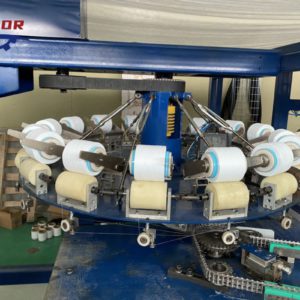
High-speed production starts long before the folding stage. The unwinding system, responsible for feeding the nonwoven fabric, must provide absolutely tension-controlled, jerk-free material flow. For speeds exceeding 500 meters per minute, modern lines employ dual or servo-driven unwinders with automatic splicing capabilities. This ensures zero downtime during roll changeovers, a critical factor for maintaining the advertised average equipment effectiveness (AEE). A common mistake is underestimating the importance of this component; inconsistent tension leads to misfolds, jams, and massive waste at downstream stages.
1.2. The Folding & Cutting Unit: The Heart of Multi-Lane Speed
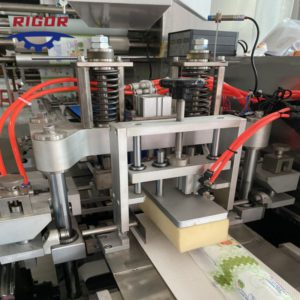
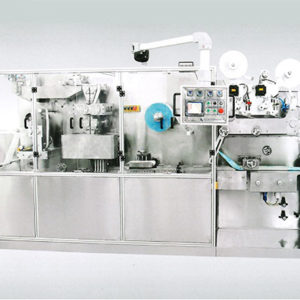
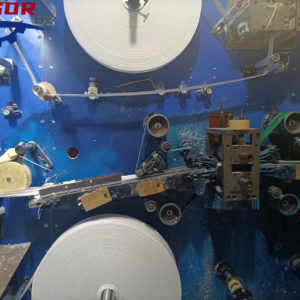
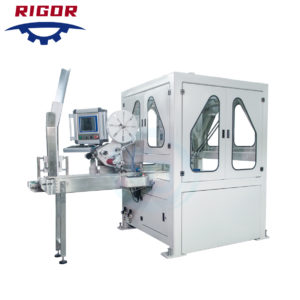
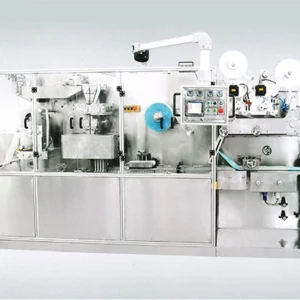
This is where the "multi-lane" magic happens. Unlike a single-lane machine that processes one stream of wipes, a multi-lane machine uses a precision slitter to divide the wide web of fabric into multiple, parallel lanes—typically 2, 3, 4, or even 6. Each lane is then independently folded (often using a patented plow-fold or cross-fold mechanism) and cut. The key to high speed here is not just moving parts faster, but ensuring perfect synchronization between the slitting knives, folding guides, and rotary cutting cylinders across all lanes. Advanced systems use laser-guided alignment and individual servo drives for each lane, allowing for micro-adjustments on-the-fly to compensate for material drift. For those also in the hygiene products sector, the engineering principles here share similarities with high-speed , particularly in the precise handling of nonwoven substrates.
1.3. The Moistening & Packaging System: Precision in Final Steps
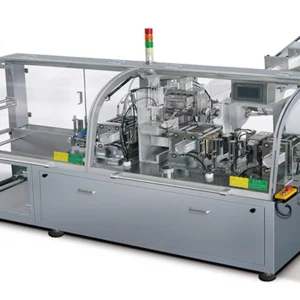
After cutting, individual wipes are transferred to a moistening tank or a precision spraying system. At high speeds, ensuring each wipe receives an exact, consistent amount of lotion is a significant challenge. We have observed that systems using positive-displacement pumps with mass-flow meters outperform simpler gravity-fed systems. Following moistening, wipes are counted and stacked before entering the final packaging stage. For high-speed lines, vertical form-fill-seal (VFFS) machines equipped with multi-head weighers or high-speed counters are essential. The entire process, from folding to sealing the flexible pouch or canister, must be a continuous, synchronized flow. Any bottleneck at packaging nullifies all speed gains achieved upstream.
Section 2: A 7-Step Actionable Methodology for Achieving High-Speed Output
Owning a fast machine does not guarantee high-speed production. Achieving and sustaining peak output requires a disciplined, systematic approach. Here is a proven 7-step methodology.
2.1. Step 1: Conduct a Thorough Raw Material Audit
Your machine is only as good as the material it processes. Not all nonwoven fabrics are created equal for high-speed runs. Work with your suppliers to test for key properties: tensile strength (both machine and cross direction), elongation, coefficient of friction, and consistency of basis weight. A variation of just 5% in fabric weight can cause misfeeds and folding errors at 600 wipes per minute. Insist on certification and batch testing. This upfront diligence prevents countless hours of troubleshooting later.
2.2. Step 2: Optimize Machine Configuration and Lane Synchronization
Once material is approved, fine-tune your machine. This involves calibrating the tension zones across the entire line, setting the precise overlap for folding, and synchronizing the cutting knife with the folder speed. For multi-lane machines, this process must be repeated for each lane individually. Use high-speed cameras to analyze the material flow at critical transfer points. A minor misalignment invisible to the naked eye can cause a 2% reject rate, which translates to tonnes of waste monthly. Modern machines from a reputable often include these diagnostic tools and software as part of their advanced control systems.
2.3. Step 3: Implement Predictive Maintenance Protocols
Reactive maintenance is the enemy of high-speed production. Develop a schedule based on running hours, not calendar days. Key activities include: ultrasonic cleaning of lotion nozzles every 48 hours, checking wear on folding plates and cutting blades every 200 running hours, and calibrating sensors weekly. We implemented a vibration analysis system on the main drive motors of a 4-lane line in a Middle Eastern facility. By detecting bearing wear two weeks before failure, we avoided an unplanned 72-hour stoppage, saving over $50,000 in lost production and emergency air freight for parts.
Section 3: Top 5 Costly Mistakes and How to Avoid Them
Learning from others' errors is cost-effective. Here are the most frequent and expensive pitfalls in high-speed wet wipes production.
3.1. Mistake #1: Prioritizing Maximum Speed Over Stability
Many buyers are seduced by a machine's top listed speed (e.g., 800 wipes/min). However, sustainable, commercial speed is often 15-25% lower. Running at 100% capacity leaves no buffer for minor variations, leading to frequent jams and higher wear. The goal should be to identify the "Sweet Spot"—the speed at which AEE is maximized (often around 85-90% of max speed) with a reject rate below 0.5%.
3.2. Mistake #2: Neglecting Operator Training and Skill Development
A $500,000 machine is operated by humans. In one case study in South America, a plant struggled with 8% waste. An audit revealed that operators lacked training on the new HMI (Human-Machine Interface) and were incorrectly responding to fault alarms, compounding small issues into major stoppages. Investing in a 2-week intensive training program with the machine supplier reduced waste to 1.2% within a month, paying for the training cost in under 10 days.
3.3. Mistake #3: Inadequate ROI Calculation and Lifecycle Cost Analysis
The purchase price is just the entry ticket. A comprehensive Total Cost of Ownership (TCO) analysis must include: energy consumption (servo motors are more efficient), spare parts cost and availability, expected maintenance labor hours, and the cost of planned downtime. A cheaper machine may have 50% higher annual maintenance costs and a 20% lower output, making it far more expensive over a 5-year period.
Section 4: ROI Analysis: Investing in High-Speed Multi-Lane Technology
Let's translate technical advantages into financial language. The decision to upgrade to a high-speed multi-lane line is an investment, and its justification lies in a clear Return on Investment (ROI) calculation.
4.1. Breaking Down the Initial Investment vs. Operational Gains
Consider a manufacturer producing 80-canister packs per minute on a single-lane line. Upgrading to a 3-lane line can triple output to 240 packs per minute. Assuming a 20-hour daily operation and 300 working days a year, the annual production capacity jumps from 28.8 million to 86.4 million packs. Even with a conservative 70% utilization rate, the additional volume can capture significant market share or fulfill large contract orders previously unattainable. The payback period often ranges from 18 to 30 months, depending on local labor and utility costs.
4.2. Case Study: A 300% Output Increase in a Southeast Asian Plant
A contract manufacturer in Vietnam replaced two aging single-lane lines (combined output: 120 packs/min) with one new 4-lane high-speed wet wipes machine. The results after 12 months:
Output: Increased to 360 packs/min (300% of previous capacity).
Floor Space: Reduced by 40%.
Labor: Reduced from 12 operators per shift to 5.
Product Reject Rate: Fell from 2.5% to 0.8%.
Overall Equipment Effectiveness (OEE): Rose from 65% to 82%.
The investment was recouped in 22 months purely through increased output and lower operational costs, not including the value of the new business attracted by their expanded capacity.
Section 5: Comparison: Single-Lane vs. Dual-Lane vs. Multi-Lane (3+ Lanes)
Choosing the right configuration is critical. The table below summarizes the key differences to guide your decision.
| Feature | Single-Lane | Dual-Lane | Multi-Lane (3,4,6 Lanes) |
|---|---|---|---|
| Max Output Range | 60-120 packs/min | 120-250 packs/min | 250-600+ packs/min |
| Footprint | Small | Moderate | Long but space-efficient per output |
| Flexibility (Changeover) | Fast (15-30 min) | Moderate (30-45 min) | Slower (45-90 min), but new designs improving |
| Capital Investment | Low | Medium | High |
| Best For | Startups, niche products, R&D | Medium-scale businesses, multiple SKUs | Large-scale contract manufacturing, high-volume standard products |
| Operational Complexity | Low | Medium | High (requires skilled technicians) |
5.1. Output, Footprint, and Flexibility Compared
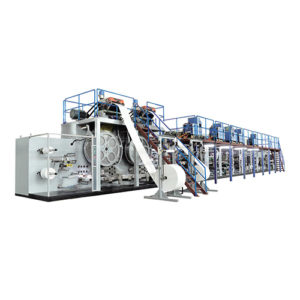
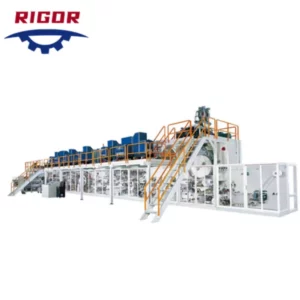
The choice ultimately hinges on your business model. If you require frequent changeovers between different wipe sizes or materials (e.g., switching from baby wipes to disinfectant wipes), a dual-lane machine might offer the best balance. For dedicated, high-volume production of a flagship product, a multi-lane machine's superior output and lower cost-per-unit are unbeatable. The engineering philosophy behind these high-output lines is also evident in modern , where multi-lane production is standard for achieving economies of scale.
Section 6: Compliance, Standards, and Future-Proofing Your Production
Speed must never compromise safety or legality. Adherence to standards is non-negotiable and, increasingly, a market differentiator.
6.1. Navigating International Standards: ISO, FDA, and Regional Regulations
Depending on your target market, your production process and product must comply with various regulations. For wet wipes, key standards include:
ISO 9001:2015 for Quality Management Systems.
ISO 13485 for medical-grade wipes.
FDA 21 CFR for the US market (governing ingredients and Good Manufacturing Practices).
EU Ecolabel or similar for environmentally marketed products.
Your machine design should facilitate compliance. This includes using food-grade or sanitary-grade stainless steel in moistening zones, providing easy access for cleaning and inspection, and ensuring the control system maintains full traceability and batch records.
6.2. The 2026 Trends: AI Integration, Sustainable Materials, and Hyper-Flexibility
The future of high-speed production is intelligent and sustainable. Leading-edge lines now incorporate AI-powered vision systems that perform 100% inline inspection for defects like stains, holes, or incorrect folding, rejecting faulty wipes without slowing down. Another major trend is the ability to process sustainable, but often more challenging, materials like plant-based nonwovens or fabrics with higher recycled content. Machines must be adjustable to handle these less uniform materials without sacrificing speed. Finally, modular machine designs are emerging, allowing a 4-lane line to be quickly reconfigured into two independent 2-lane lines for different products, offering the output of a multi-lane with the flexibility of smaller lines.
Section 7: Essential Tools and Resources for Manufacturers
Equip yourself with the right checklists and tools to navigate the procurement and operation process successfully.
7.1. Pre-Purchase Audit Checklist for High-Speed Wet Wipes Machines
- Performance Guarantee: Does the contract specify a sustainable commercial speed and maximum acceptable reject rate, verified during a Factory Acceptance Test (FAT)?
- Spare Parts Policy: What is the guaranteed availability and delivery time for critical spare parts (e.g., cutting cylinders, servo drives)?
- Training Scope: How many weeks of on-site training are included? Does it cover both operation and basic maintenance?
- After-Sales Support: Is there a local service engineer or a guaranteed response time for remote troubleshooting?
- Material Testing: Will the supplier run trials with your specific nonwoven fabric and lotion formula before purchase?
7.2. Recommended Monitoring Software and Predictive Analytics Tools
To maintain high-speed performance, leverage Industry 4.0 tools:
SCADA Systems: For real-time monitoring of speed, output, downtime reasons, and OEE.
Predictive Maintenance Platforms: Tools like Siemens MindSphere or GE Predix can analyze motor current, vibration, and temperature data to forecast failures.
Energy Monitoring Software: To track and optimize the power consumption of your line, a significant operational cost.
Mastering high-speed multi-lane wet wipes production is a continuous journey of optimization, not a one-time purchase. It demands a strategic partnership with a technology provider who understands not just machinery, but your business goals and market challenges. The data and methodologies outlined here provide a concrete foundation for your decision-making. Before committing to any major investment, we strongly advise you to request a detailed factory audit of the machine supplier y insist on a comprehensive material test with your exact specifications on their production floor. Seeing is believing, and performance under trial conditions is the most reliable predictor of success in your own plant. The competitive edge in 2026 and beyond will belong to those who blend cutting-edge engineering with operational wisdom.
References & Industry Data Sources:
- INDA (Association of the Nonwoven Fabrics Industry). "Worldwide Outlook for the Nonwovens Industry 2025-2030." [https://www.inda.org/publications/](https://www.inda.org/publications/)
- ISO (International Organization for Standardization). "ISO 9001:2015 Quality management systems — Requirements." [https://www.iso.org/standard/62085.html](https://www.iso.org/standard/62085.html)
- FDA (U.S. Food and Drug Administration). "Code of Federal Regulations Title 21, Part 177 – Indirect Food Additives: Polymers." [https://www.accessdata.fda.gov/scripts/cdrh/cfdocs/cfcfr/CFRSearch.cfm?CFRPart=177](https://www.accessdata.fda.gov/scripts/cdrh/cfdocs/cfcfr/CFRSearch.cfm?CFRPart=177)
- Smithers. "The Future of Global Wipes to 2028" Market Report. [https://www.smithers.com/services/market-reports/nonwovens/the-future-of-global-wipes-to-2028](https://www.smithers.com/services/market-reports/nonwovens/the-future-of-global-wipes-to-2028)