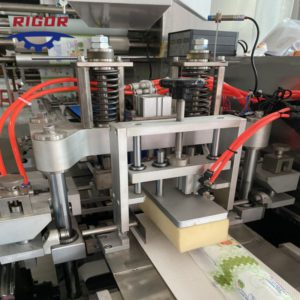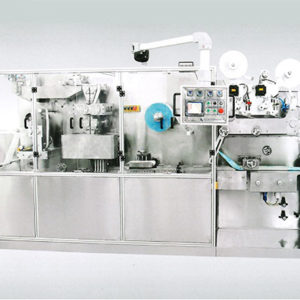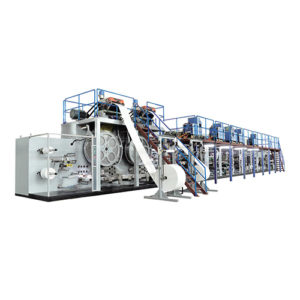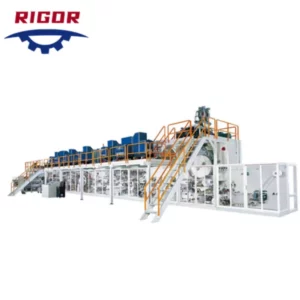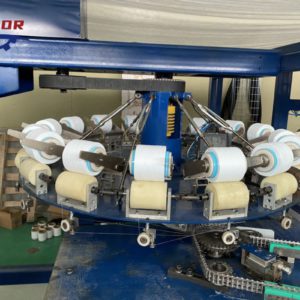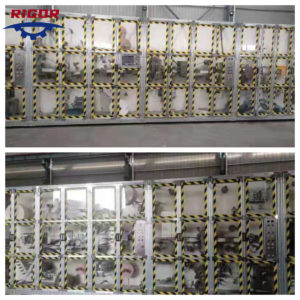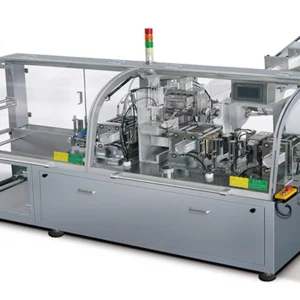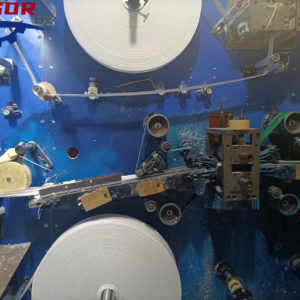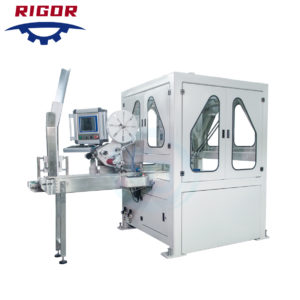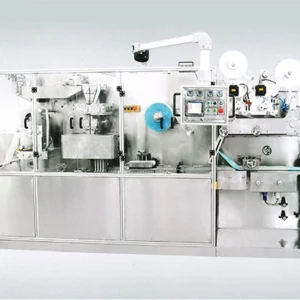
The global adult diaper market is poised for unprecedented growth in 2026. For importers and manufacturers in South America, Russia, Southeast Asia, the Middle East, and South Africa, securing a reliable and cost-effective production line is the cornerstone of business success. India has rapidly ascended as a premier sourcing destination for machine à couches pour adultes solutions, blending technical sophistication with competitive pricing. This comprehensive guide walks you through the why, how, and what of procuring an adult diaper machine from India, equipping you with insider knowledge to avoid costly missteps.
Why Is India a Top Destination for Adult Diaper Machine Sourcing in 2026?
The Rising Global Demand for Adult Diapers
The demographic tide is turning worldwide. By 2026, the United Nations projects that over 1 billion people will be aged 65 or older, with a significant concentration in developing regions. South America, for instance, is witnessing a surge in age-related incontinence cases. Brazil's public healthcare system (SUS) now distributes adult diapers to low-income seniors, creating a massive, stable demand. In Argentina, private label brands are expanding rapidly, requiring flexible manufacturing setups.
Russia's adult diaper market is fueled by a combination of an aging population and a cultural shift away from makeshift solutions. The government's import substitution policies also encourage local production, making machinery imports from cost-effective sources like India highly attractive. Southeast Asia, with its dense population and rising middle class, is not just a consumer but an emerging manufacturing hub. Countries like Vietnam and Indonesia are investing in local diaper production to serve both domestic and ASEAN markets.
The Middle East presents a premium market where quality and discretion are paramount. High absorbency and thin profiles are demanded, pushing manufacturers to upgrade to advanced machinery. South Africa acts as a beacon for the entire Sub-Saharan region, where the adult diaper market is still nascent but growing at double-digit rates. All these regions share a common need: high-quality, customizable, and affordable adult diaper machines.
India’s Manufacturing Edge: Cost-Effective Labor, Advanced Technology, and Export Experience
India's engineering prowess in the hygiene machinery sector is often underestimated. Over the past decade, Indian manufacturers have absorbed technology transfers from European and Taiwanese partners, developing their own IP in servo-driven control systems and ultrasonic bonding. A modern Indian adult diaper machine can achieve speeds of up to 350 pieces per minute, matching the output of many established brands, but at a price point 30-50% lower.
The labor cost advantage is well-known, but the real value lies in the export infrastructure. Indian suppliers are accustomed to navigating the complex documentation required for Letters of Credit (L/C) from African banks, the pre-shipment inspection requirements of Russian GOST-R, and the free trade agreement benefits with ASEAN nations. They offer flexible payment terms and are often willing to send engineers for on-site training, a service that European manufacturers charge a premium for.
Furthermore, the Indian government's 'Make in India' and 'Production Linked Incentive' (PLI) schemes for medical devices have indirectly benefited the machinery sector. These policies have led to the creation of dedicated industrial clusters in Gujarat and Tamil Nadu, where component suppliers, fabricators, and automation experts work in close proximity, reducing lead times and improving quality control.
2026 Trends: Smart Automation, Eco-Friendly Materials, and Customization Capabilities
The adult diaper machine of 2026 is a smart, connected system. Indian manufacturers are integrating PLCs with IoT gateways, allowing factory owners to monitor production metrics, reject rates, and machine health via cloud dashboards. This is particularly valuable for investors who manage multiple plants across different countries.
Sustainability is no longer optional. European and Middle Eastern markets are demanding eco-friendly products. Indian machine builders have responded by developing lines that can handle biodegradable backsheets and chlorine-free fluff pulp without compromising speed. Some even offer retrofittable modules for existing machines to reduce adhesive usage through ultrasonic bonding, aligning with global ESG goals.
Customization is where India truly shines. Whether you need a machine that produces extra-large bariatric diapers for the Saudi market or slim pull-up pants for the South African retail sector, Indian engineers can configure the machine's forming drum, cutting unit, and stacking system accordingly. This flexibility allows startups to test multiple product variants without investing in separate dedicated lines.
How to Evaluate and Select the Best Adult Diaper Machine India Supplier?
5 Critical Factors to Check in an Indian Adult Diaper Machine Manufacturer
- Industry Tenure and Export Volume: Prioritize manufacturers with a minimum of 7 years in business and a portfolio of at least 20 machines exported to your target region. Ask for the specific number of units shipped to South America or Russia in the last two years.
- In-House Manufacturing Depth: A genuine manufacturer will have its own machining shop, including VMCs (Vertical Machining Centers), laser cutters, and a dedicated assembly bay. If they outsource more than 30% of critical components, quality inconsistencies are likely.
- Certification and Compliance: Insist on CE certification for the entire machine, not just individual components. For Middle East and African markets, also check for SASO or SONCAP certificates if required. These documents prove the machine has passed safety and electromagnetic compatibility tests.
- After-Sales Infrastructure: Enquire about the number of service engineers on staff and their international travel experience. A supplier with a dedicated remote support team using AR (Augmented Reality) glasses for troubleshooting is a strong plus in 2026.
- Transparency and Communication: The supplier should provide a detailed technical proposal, including a cycle diagram, BOM with brand names, and a project timeline. Vague responses or reluctance to share drawings are immediate red flags.
Comparing Machine Types: Full-Automatic vs. Semi-Automatic Adult Diaper Production Lines
Your decision between these two categories will shape your factory layout, staffing plan, and capital expenditure. The table below summarizes the key differences to guide your selection.
| Fonctionnalité | Full-Automatic Machine | Semi-Automatic Machine |
|---|---|---|
| Production Speed | 200-400 pieces/min | 80-150 pieces/min |
| Labor Requirement | 2-3 operators per shift | 6-10 operators for manual feeding and stacking |
| Investment (2026 Price) | $80,000 – $250,000+ | $30,000 – $80,000 |
| Maintenance Complexity | High; requires skilled technicians | Low; simpler mechanical systems |
| Product Quality Consistency | Excellent; servo-driven precision | Moderate; depends on operator skill |
| Ideal For | Large-scale manufacturers targeting national or export markets | Startups or regional distributors testing the market |
Key Takeaway: If your monthly target exceeds 5 million pieces, a full-automatic line is non-negotiable. For niche markets or private-label startups, a semi-automatic machine offers a lower barrier to entry. However, factor in the rising labor costs in your country when calculating long-term viability.
Red Flags to Watch Out for During Supplier Negotiations
In my experience helping a client from Peru set up their first production line, we encountered a supplier who offered a price 20% below market average. The red flag? They refused to share a detailed Bill of Materials (BOM). Upon insisting on a video inspection, we discovered they were using refurbished servo motors. The machine failed within three months, and the supplier stopped responding to emails. This incident underscores the importance of verifying every claim.
Other red flags include: unwillingness to provide a performance bank guarantee, vague answers about spare parts availability, and a lack of proper export documentation experience. If a manufacturer cannot show you a recent shipment to a country with similar import regulations, proceed with extreme caution. Always request a live video walkthrough of their assembly floor, not just a pre-recorded promotional clip.
What Are the Most Common Mistakes When Buying an Adult Diaper Machine from India?
Even seasoned importers fall into traps when sourcing from a new geography. Understanding these pitfalls can save you tens of thousands of dollars and months of downtime. Here are the five most critical mistakes.
Mistake #1: Not Verifying After-Sales Support and Spare Parts Availability
Un machine à couches pour adultes is a complex electromechanical system. Wear and tear of components like ultrasonic horns, cutting blades, and tension controllers is inevitable. I recall a case with a distributor in Russia who purchased a high-speed line but didn’t secure a spare parts kit. When a critical servo drive failed during peak season, the lead time for a replacement from India was six weeks. The production loss exceeded the initial savings on the machine itself. Always negotiate a comprehensive spare parts package covering at least the first year of operation, and confirm the supplier’s ability to ship parts via air freight within 72 hours.
Mistake #2: Ignoring International Quality Certifications (CE, ISO, FDA)
Certifications are not just decorative stamps. In many target markets, customs clearance for machinery requires CE marking. If your machine lacks it, you might face confiscation at the port. Similarly, if you intend to sell finished adult diapers in regulated markets, the raw materials and the machine’s contact surfaces must comply with FDA or EU standards. Always ask for valid, verifiable certificates and cross-check them with the issuing body’s online database. A genuine certificate will have a traceable number and an expiration date.
Mistake #3: Underestimating Total Cost of Ownership (TCO)
The invoice price is just the tip of the iceberg. Many first-time buyers in South Africa focus solely on the FOB price and forget about freight, insurance, import duties, and local installation costs. For instance, a machine quoted at $100,000 FOB Nhava Sheva might end up costing $135,000 landed in Durban after adding logistics, customs brokerage, and VAT. Then there are ongoing costs: energy consumption, adhesive usage, and operator training. We’ll break down the true cost in the next section.
Mistake #4: Failing to Conduct a Factory Audit or Video Inspection
Traveling to India for a factory visit is ideal, but not always feasible. In 2026, however, there is no excuse for skipping a live video inspection. During a recent engagement with a client in Thailand, we conducted a three-hour video audit using a checklist. We examined the assembly floor, tested the machine with actual materials, and even spoke to the shop-floor engineers. This process revealed that the supplier’s claimed “in-house manufacturing” was actually 60% outsourced. We switched to a more transparent manufacturer and avoided a potential quality disaster.
Mistake #5: Overlooking Language and Communication Barriers
While English is widely spoken in Indian business circles, technical nuances can get lost in translation. Misunderstandings about voltage specifications, phase cycles, or PLC programming can lead to catastrophic installation errors. Always insist on a detailed technical communication protocol. Assign a bilingual project manager on your side, and ensure the supplier provides documentation in clear, unambiguous English. Record all critical discussions and confirm decisions via email to maintain a clear audit trail.
What Is the True Cost of an Adult Diaper Machine India in 2026? (Price, Shipping, ROI)
Cost transparency is essential for a sound investment decision. Let’s dissect the numbers for 2026, factoring in inflation and supply chain adjustments.
2026 Price Breakdown: Adult Diaper Machine Costs by Type and Capacity
Prices vary widely based on speed, automation level, and brand of components. Below is a realistic range for Indian-manufactured machines:
- Semi-Automatic Line (80-120 pcs/min): $30,000 – $55,000
- Full-Automatic Standard Line (150-200 pcs/min): $80,000 – $130,000
- Full-Automatic High-Speed Line (250-350 pcs/min): $150,000 – $250,000
- Full-Automatic Pull-Up Pants Line: $180,000 – $300,000
Note that these are base prices for standard adult diaper configurations. Adding features like frontal tape, wetness indicator printing, or multi-size quick change will increase the cost by 10-20%. Always request a line item quote to understand what you are paying for.
Hidden Expenses: Freight, Customs Duties, Installation, and Training
When budgeting, create a separate line item for “Landed Cost.” A 40-foot container from Mumbai to St. Petersburg might cost $4,000-$6,000. Insurance adds another 1-2% of the cargo value. Customs duties in your country can range from 5% to 20% depending on trade agreements. Then you have local installation: hiring a certified electrician, building a compressed air system, and setting up the raw material unwinding units. Indian suppliers typically offer installation supervision for a daily fee plus travel expenses. Budget at least $5,000-$10,000 for a smooth setup.
ROI Calculation: How Quickly Can You Recoup Your Investment?
Let’s take a real-world example. A mid-sized manufacturer in Brazil invested $120,000 in a full-automatic adult diaper machine from India. Their monthly production capacity is 4 million pieces. With a per-piece net profit of $0.02, the monthly net profit is $80,000. After deducting raw materials, labor, and overhead, the machine-specific contribution margin was around $15,000 per month. This resulted in a payback period of just 8 months. Even with conservative estimates, most well-run operations achieve full ROI within 12-18 months.
How to Import and Install an Adult Diaper Machine from India: A Step-by-Step Guide
Importing capital equipment across continents can be daunting. Here is a streamlined guide based on dozens of successful installations in your target regions.
Pre-Purchase Phase: Documentation, Due Diligence, and Sample Testing
Start by finalizing your product specifications. Send the supplier samples of the adult diaper you want to produce, along with the desired SAP (Super Absorbent Polymer) ratio and core formation. Request a detailed proforma invoice that lists every component brand. Conduct a video inspection as described earlier. Finally, agree on a payment schedule tied to milestones: 30% advance, 40% upon factory acceptance test (FAT), and 30% after successful installation. This structure aligns incentives and protects your cash flow.
Logistics and Shipping: Choosing the Right Incoterms and Managing Timelines
For first-time importers, CIF (Cost, Insurance, Freight) is often safer than FOB. It transfers the shipping risk to the supplier until the goods reach your port. However, experienced buyers prefer FOB to control their own logistics. Sea freight from India to South America typically takes 35-45 days. To Russia, it can take 30-40 days to St. Petersburg. Plan for potential delays at customs and factor in 2-3 weeks for clearance. Always work with a freight forwarder experienced in handling machinery imports.
On-Site Setup: Installation, Commissioning, and Operator Training Best Practices
Once the machine arrives, do not rush the unpacking. Inspect for any shipping damage and file claims immediately if needed. I recall a project in Saudi Arabia where a control panel was dented during transit; because we had unboxing video evidence, the insurance claim was processed within a week. During commissioning, insist that the supplier’s engineer stays for at least 5-7 days after the machine starts producing saleable products. This ensures your operators are fully trained on troubleshooting common faults like web break detection and adhesive clogging. Document all settings and create a standard operating procedure (SOP) manual in your local language.
What Tools and Resources Can Help You Find Reliable Adult Diaper Machine India Manufacturers?
The digital ecosystem in India is vibrant, making supplier discovery easier than ever. Here are the best channels to use in 2026.
Top Online B2B Platforms for Finding Indian Diaper Machine Suppliers
- IndiaMART: The largest Indian B2B marketplace. Filter by “Verified Supplier” and check the “Response Rate.” Be cautious of overly generic listings.
- TradeIndia: A curated platform often featuring established exporters. Useful for finding manufacturers with ISO certifications.
- Alibaba: While dominated by Chinese suppliers, many Indian companies now have Gold Supplier profiles. Use the “Region” filter to select India specifically.
Must-Attend Trade Shows in 2026: INDEX, CIDPEX, and Regional Exhibitions
INDEX (Geneva) remains the premier nonwovens exhibition, but for India-specific sourcing, keep an eye on regional shows like the India Nonwoven Show et Hygiene India Expo . CIDPEX in China also attracts top Indian manufacturers showcasing their latest adult diaper machines. Attending these shows allows you to see machines in operation and build personal relationships with factory owners.
Free Downloadable Resource: 10 Essential Questions to Ask Your Indian Adult Diaper Machine Supplier
To help you avoid the pitfalls discussed in this article, we have compiled a concise checklist of the 10 most critical questions you must ask before signing a contract. These questions cover technical specs, after-sales commitments, and hidden costs. Contact us today to receive your free PDF copy of “10 Essential Questions to Ask Your Indian Adult Diaper Machine Supplier.” Equip yourself with the right knowledge and secure a machine that drives your business growth for years to come.
At Diaper Machine Manufacturer, we understand the complexities of cross-border machinery procurement. Whether you are in South America, Russia, Southeast Asia, the Middle East, or South Africa, our network of trusted Indian partners and our in-house technical expertise can guide you from selection to successful production. Don’t leave your investment to chance. Reach out to our team for a personalized consultation, and let’s build your diaper manufacturing success story together.
References and Further Reading
- World Health Organization – Ageing and Health Fact Sheet
- United Nations – World Population Prospects 2022
- Euromonitor International – Adult Incontinence Market Research
- India Brand Equity Foundation – Medical Devices Industry Report
- TradeIndia – Diaper Machine Suppliers Directory