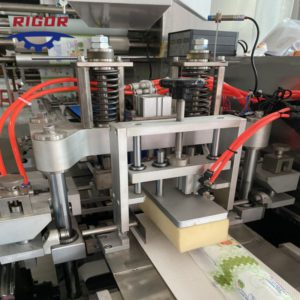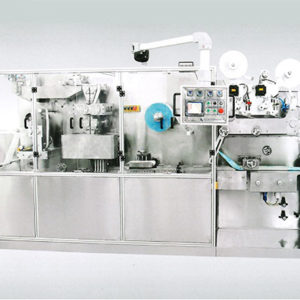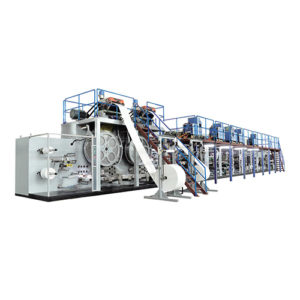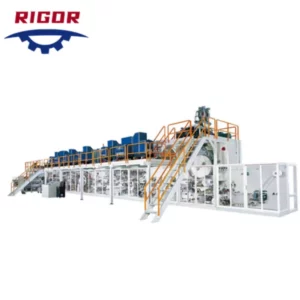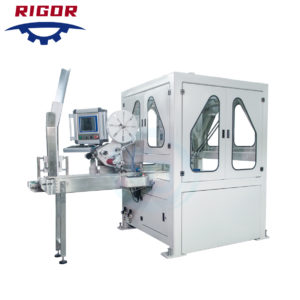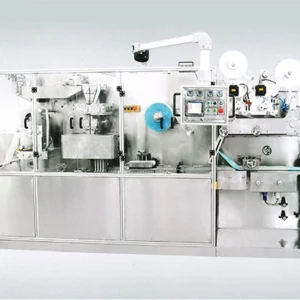
If you're in the market for a wet wipes machine, India has emerged as a competitive sourcing destination alongside traditional manufacturing giants. Whether you're based in South America, Russia, Southeast Asia, the Middle East, or South Africa, understanding the nuances of Indian machinery can save you time, money, and operational headaches. This guide covers everything from key features and pricing to common pitfalls and the latest industry trends.
What Are the Key Features to Look for in a Wet Wipes Machine India?
Types of Wet Wipes Machines: Spunlace vs. Non-Woven vs. Composite
Before diving into specifications, it’s essential to understand that a machine de production de lingettes humides is not a one-size-fits-all solution. The type of material you plan to use—spunlace, non-woven, or composite—will dictate the machine configuration. Spunlace machines are designed for hydroentangled fabrics, which are soft and highly absorbent, making them ideal for baby wipes and facial wipes. Non-woven machines handle thermally bonded or chemically bonded fabrics, often used for industrial or household cleaning wipes. Composite machines are more versatile, capable of processing multi-layer substrates that combine different properties, such as a soft outer layer with a strong inner core.
Indian manufacturers have invested heavily in spunlace technology over the past five years, driven by the global demand for premium personal care wipes. However, many suppliers also offer modular designs that let you switch between non-woven and composite materials with minimal changeover time. When evaluating a machine, ask for video demonstrations of material changeovers and request samples produced on the exact model you're considering.
Essential Technical Specifications: Speed, Width, and Automation Level
Production speed is often the first number buyers look at, but it must be matched with your downstream packaging capabilities. A typical mid-range Indian wet wipes machine in 2026 offers speeds between 60 and 120 packs per minute, with high-end models reaching 200 packs per minute. The unwinding width usually ranges from 800 mm to 1,200 mm, which determines how many lanes of wipes can be processed simultaneously.
Automation level is another critical factor. Semi-automatic machines require manual loading and unloading, while fully automatic lines integrate folding, cutting, moistening, and stacking without operator intervention. Look for PLC-based controls with touchscreen interfaces, servo-driven motors for precision, and remote diagnostics capabilities. Many Indian manufacturers now incorporate Industry 4.0 features like real-time OEE (Overall Equipment Effectiveness) tracking and predictive maintenance alerts.
Comparing Top Indian Wet Wipes Machine Models in 2026
As of 2026, several Indian companies stand out for their wet wipes machinery. Gujarat-based manufacturers have launched high-speed spunlace lines with automatic liquid dosing systems, while Tamil Nadu exporters focus on compact, energy-efficient models suitable for small to medium enterprises. For instance, Model SW-120 from a leading Ahmedabad company offers 120 ppm speed, servo folding, and CE certification at a competitive price point. Another notable option is the EcoWipe series from a Coimbatore firm, which features reduced water and energy consumption, aligning with global sustainability trends.
When comparing models, don't just rely on spec sheets. Request actual production footage, speak with existing customers in your region, and check if the machine can be customized for your specific wipe dimensions and liquid formulations.
Evaluating Build Quality: Materials, Components, and Certifications
The longevity of your machine depends heavily on the materials and components used. Food-grade stainless steel (SS304 or SS316) is the standard for all contact parts, but some budget machines use lower-grade steel that can corrode over time. Critical components like servo motors, PLCs, and sensors should come from recognized brands such as Siemens, Mitsubishi, or Delta. Indian manufacturers often offer a choice between imported and domestic components, which affects both price and reliability.
Certifications are your assurance of quality and safety. For international buyers, look for CE marking, ISO 9001:2015, and if applicable, GMP compliance for pharmaceutical-grade wipes. I’ve seen cases where a lack of proper documentation caused customs delays; always request copies of valid certificates before placing an order.
How Much Does a Wet Wipes Machine India Cost in 2026?
Price Breakdown by Machine Type and Production Capacity
Prices for Indian wet wipes machines vary widely based on automation, speed, and build quality. A basic semi-automatic tabletop model for small-scale production can start as low as $12,000, while a fully automatic high-speed line with packaging integration can exceed $150,000. For most international buyers, the sweet spot lies in the $45,000 to $80,000 range, which buys a reliable mid-speed machine (80-120 ppm) with CE certification and a one-year warranty.
It’s important to note that Indian prices are often 15-25% lower than equivalent European machines, but the gap with Chinese pricing has narrowed in recent years due to rising raw material costs in India. However, the value proposition remains strong when you factor in the lower shipping costs to the Middle East and Africa, as well as preferential trade agreements.
Additional Costs: Shipping, Customs, Installation, and Training
The sticker price is just the beginning. Ocean freight for a 20-foot container from Mumbai or Chennai to major ports in South America can cost between $2,500 and $5,000, depending on fuel surcharges and insurance. Customs duties vary dramatically: Brazil’s import tax on machinery can be as high as 35%, while some African nations offer duty exemptions for manufacturing equipment. Always consult a local customs broker to calculate the landed cost accurately.
Installation and training are often overlooked. Many Indian suppliers include basic installation supervision in the purchase price, but you will need to cover the engineer’s travel and accommodation. Budget an additional $2,000 to $5,000 for a one-week on-site commissioning. Some companies now offer remote installation support using augmented reality tools, which can cut these costs by half.
Financing and Payment Options for International Buyers
Indian exporters typically require a 30-40% advance payment via T/T (telegraphic transfer) with the balance paid against the shipping documents or through a Letter of Credit (L/C). L/Cs provide more security for both parties but involve bank fees. For larger projects, the Export-Import Bank of India (EXIM Bank) offers buyer’s credit programs that can finance up to 85% of the contract value, though these are more common for transactions above $200,000.
Some progressive manufacturers now offer leasing options through partnerships with Indian financial institutions, but this is still rare. If cash flow is a concern, negotiate milestone payments tied to production milestones rather than a large upfront sum.
ROI Analysis: How Quickly Can You Recoup Your Investment?
Let’s run a realistic scenario. Suppose you purchase a $65,000 machine that produces baby wipes at 100 packs per minute. With an effective daily output of 80,000 packs (accounting for downtime) and a net profit of $0.08 per pack after materials and labor, you could generate around $6,400 in daily profit. Even operating at 60% capacity, that translates to a monthly profit of roughly $115,000. In this ideal case, the machine pays for itself in less than a month.
However, real-world conditions—market penetration, distribution, and operational learning curves—usually stretch the payback period to 6-12 months. The key is to secure reliable raw material supply and distribution channels before the machine arrives, so you can ramp up quickly.
How to Avoid Common Mistakes When Buying a Wet Wipes Machine from India?
Mistake #1: Neglecting After-Sales Support and Spare Parts
In my consultancy work with a South African buyer in early 2025, they opted for a high-capacity machine from a small Indian workshop. The price was attractive, but they didn’t negotiate a service level agreement (SLA). When the main PLC failed after four months, they discovered the supplier had no overseas support. The resulting six-week downtime nearly halted their entire production line. This experience taught me that after-sales support is not a ‘nice-to-have’—it’s a critical part of the machine purchase.
To avoid this, always ask for a list of installed machines in your region and speak to those references. Insist on a written warranty that covers parts and labor for at least 12 months, and clarify the process for emergency remote support. Many reputable Indian manufacturers now stock critical spare parts in Dubai or Singapore for faster delivery to the Middle East and Africa.
Mistake #2: Choosing Based on Price Alone Without TCO Analysis
Total Cost of Ownership (TCO) includes energy consumption, maintenance, consumable parts, and downtime. I’ve seen buyers in Russia and Southeast Asia who chose the cheapest machine only to find that its motors consumed 30% more electricity and its cutting blades needed replacement every two months. Over five years, a $10,000 cheaper machine can end up costing $50,000 more in operational expenses.
When comparing quotes, request an estimated TCO for the first three years, including recommended spare parts inventory. A slightly higher upfront investment often yields much better returns.
Mistake #3: Overlooking International Quality and Safety Standards
I recall a client from Russia who imported a wet wipes machine without checking for EAC certification. The machine was held at customs for two months, and they had to pay a fine and retrofit safety components. The total cost of this oversight exceeded $12,000. Always verify that the Indian manufacturer can provide the necessary certifications for your target market—CE for Europe, EAC for the Eurasian Economic Union, INMETRO for Brazil, or SASO for Saudi Arabia.
Don’t accept a generic “CE certified” claim; ask for the specific certificate number and verify it with the issuing body. Some manufacturers only have CE for certain components, not the complete machine.
Mistake #4: Skipping Factory Audits or Virtual Inspections
Even in 2026, not all Indian suppliers maintain the standards they advertise. A virtual inspection via video call can reveal a lot: the organization of the workshop, the testing procedures, and the actual stock of spare parts. I helped a Peruvian buyer in 2025 conduct a virtual audit of a shortlisted supplier. We discovered that the “factory” was essentially a small assembly shed with no in-house machining capability. The buyer switched to a more established manufacturer and later reported a smooth experience.
If a physical visit isn’t possible, hire a third-party inspection service like SGS or Bureau Veritas. The $1,000-$2,000 fee is a small price for peace of mind.
Wet Wipes Machine India vs China: Which Is the Better Source in 2026?
Quality and Technology: How Do They Compare?
Chinese wet wipes machinery has long dominated the global market due to massive scale and aggressive pricing. However, Indian manufacturers have closed the technology gap significantly. In 2026, top Indian machines feature servo-driven folding, precision liquid dosing, and integrated packaging—comparable to mid-to-high-end Chinese models. Where India often excels is in customization: Indian engineers are more willing to adapt designs for unique product requirements, while Chinese suppliers may push standardized models.
Material quality is another differentiator. Indian manufacturers frequently use SS316 for critical parts, whereas Chinese machines sometimes use SS304 or even lower grades unless specified. That said, Chinese companies offer a wider range of fully automatic turnkey lines, which can be an advantage for large-scale operations.
Cost Comparison: Purchase Price, Shipping, and Tariffs
The table below summarizes the key cost and logistics differences between sourcing from India and China in 2026.
| Fonctionnalité | India | Chine |
|---|---|---|
| Average Mid-Range Machine Price | $50,000 – $90,000 | $40,000 – $80,000 |
| Technology Level | High, with increasing Industry 4.0 adoption | Very high, mass production expertise |
| Lead Time | 8–14 weeks | 6–10 weeks |
| Spare Parts Availability | Improving, many suppliers stock common parts in regional hubs | Excellent, extensive global supply chains |
| Communication & Language | English widely spoken, easier for international buyers | English common but technical discussions may require translation |
| Shipping Costs to Middle East | Lower due to proximity and trade agreements | Moderate, depending on port congestion |
| Tariffs & Trade Barriers | Often preferential for African and South American countries under bilateral agreements | Subject to geopolitical tensions; US/Europe tariffs may be higher |
| Support après-vente | Growing network, some offer remote diagnostics and regional service centers | Established, but responsiveness can vary for smaller buyers |
Supplier Reliability and Communication: India vs China
One area where Indian suppliers consistently score higher is communication. English is an official language, and technical documentation is usually provided in English. This reduces misunderstandings during the specification and negotiation phases. Chinese suppliers have improved their English capabilities, but detailed technical discussions often still require a translator or agent, which can introduce delays.
On the reliability front, both countries have a mix of excellent and subpar manufacturers. The key is due diligence. Indian companies tend to be more flexible with payment terms for first-time buyers, sometimes accepting smaller deposits. However, Chinese suppliers often have more experience with complex international logistics and can offer faster delivery times.
Case Studies: Success Stories from Both Markets
A UAE-based wet wipes brand switched from a Chinese to an Indian supplier in 2025 after experiencing repeated quality issues with folding accuracy. The Indian machine, priced 10% higher, delivered consistent fold quality and came with a dedicated WhatsApp support group that resolved issues within hours. Their production uptime improved from 85% to 97%.
On the other hand, a large Russian distributor chose a Chinese turnkey line for its massive capacity (200 ppm) and integrated packaging. The Chinese supplier sent a team of three engineers for two weeks of on-site training, and the line was operational within 10 days. The total project cost, including shipping to St. Petersburg, was 18% lower than the comparable Indian quote. Both approaches can work—it depends on your specific needs and risk tolerance.
How to Import a Wet Wipes Machine from India: A Step-by-Step Guide
Step 1: Identifying and Shortlisting Reliable Indian Manufacturers
Start with B2B platforms like IndiaMART and TradeIndia, but don’t stop there. Cross-reference suppliers with industry associations such as ITAMMA or the Engineering Export Promotion Council (EEPC). Look for manufacturers with at least five years of export history and a website that showcases detailed machine specifications rather than just stock photos.
Create a shortlist of 3-5 companies and send them a uniform Request for Quotation (RFQ) with your target production capacity, material type, and any certification requirements. This allows you to compare offers on an apples-to-apples basis.
Step 2: Negotiating Contracts and Defining Technical Specifications
When I helped a Vietnamese company negotiate with a Gujarat-based manufacturer in 2024, we insisted on a detailed Factory Acceptance Test (FAT) clause in the contract. The FAT revealed that the folding unit didn’t meet the promised speed. The manufacturer rectified it before shipping, saving the buyer from a costly post-installation dispute. This step alone saved an estimated $20,000 in potential losses.
Your contract should include: exact machine specifications (speed, width, power consumption), delivery timeline, payment schedule, warranty terms, and a clear FAT procedure. Specify that the machine must pass the FAT at the manufacturer’s site before shipment, and include a provision for liquidated damages if delivery is delayed beyond a certain date.
Step 3: Managing Logistics, Customs Clearance, and Delivery
Engage a freight forwarder with experience in shipping machinery from India to your country. They will handle the booking, documentation, and customs clearance. Key documents include the commercial invoice, packing list, bill of lading, and certificate of origin. For some destinations, you may need additional paperwork: Brazil requires a RADAR license for importers, while Saudi Arabia needs a SASO Certificate of Conformity.
Plan for port handling and inland transportation. A 20-foot container with a wet wipes machine typically weighs 3-5 tons, so ensure your facility has a forklift or crane for unloading. Delays at customs are common; budget an extra 2-4 weeks in your timeline.
Step 4: Installation, Commissioning, and Operator Training
Most Indian suppliers offer installation supervision by a technician, usually for 5-7 days. During this period, the technician will assemble the machine, calibrate the settings, and train your operators. To maximize this time, have your raw materials ready and designate at least two operators to shadow the technician full-time.
If travel costs are prohibitive, inquire about remote commissioning. Several Indian companies now provide video-guided installation using smart glasses or high-definition cameras. A Nigerian client of mine successfully commissioned a machine this way in 2025, with the Indian engineer guiding the local team through each step over a three-day video call.
What Are the Latest Trends in the Indian Wet Wipes Machine Industry for 2026?
Rise of Automation and Industry 4.0 in Wet Wipes Production
Indian manufacturers are rapidly integrating Industry 4.0 technologies. New machines come equipped with IoT sensors that monitor vibration, temperature, and motor performance in real time. This data feeds into cloud-based dashboards, allowing plant managers to track OEE and receive predictive maintenance alerts on their smartphones. Companies like Siemens India have partnered with local machinery builders to offer pre-configured automation packages that reduce integration time.
Another notable trend is the use of collaborative robots (cobots) for end-of-line packaging. While still a premium feature, cobots are becoming more affordable and are expected to be standard on high-end Indian machines by 2027.
Sustainable and Eco-Friendly Machine Innovations
With the global push toward sustainability, Indian wet wipes machine manufacturers are developing solutions for biodegradable and plastic-free wipes. These machines handle challenging materials like PLA (polylactic acid) and viscose blends without compromising speed. Some models now feature closed-loop water recycling systems that reduce liquid waste by up to 40%.
Energy efficiency is also a focus. The latest servo-driven machines consume 20-30% less electricity than older hydraulic or pneumatic models. This not only lowers operational costs but also appeals to buyers in regions with high energy prices, such as South Africa and parts of South America.
Shifting Global Demand Patterns and Export Opportunities
The post-pandemic demand for disinfectant wipes has stabilized, but the baby and personal care wipe segments continue to grow in the Middle East and Africa. Indian exporters are capitalizing on this by offering smaller, modular machines that allow startups to enter the market with lower capital investment. Additionally, the Russia-Ukraine conflict has redirected some Eastern European demand toward Indian suppliers, as traditional European machinery has become harder to source.
India’s free trade agreements with ASEAN countries and preferential access to African markets give its machinery a tariff advantage over Chinese competitors in these regions.
Government Policies and Incentives for Indian Manufacturers
The Indian government’s “Make in India” and “Production Linked Incentive (PLI)” schemes have boosted the textile and machinery sectors. Manufacturers investing in R&D for sustainable technologies can access grants covering up to 50% of project costs. This has spurred innovation in wet wipes machinery, particularly in the areas of energy efficiency and material versatility.
For foreign buyers, these incentives often translate into more competitively priced machines and faster technology adoption. It’s worth asking potential suppliers if they have benefited from any government schemes, as this can indicate their commitment to quality and innovation.
What Tools and Resources Can Help You Find the Best Wet Wipes Machine India Suppliers?
Top B2B Platforms for Indian Wet Wipes Machine Manufacturers
IndiaMART (indiamart.com) remains the largest B2B marketplace for Indian industrial products. You can filter suppliers by location, certifications, and years in business. TradeIndia is another solid option, often featuring verified suppliers. Alibaba also lists Indian manufacturers, but the platform is dominated by Chinese companies, so use the country filter carefully.
For more curated options, consider directories from the EEPC India or ITAMMA. These organizations vet their members, reducing the risk of encountering fraudulent sellers.
Must-Attend Trade Shows and Exhibitions in India
Attending a trade show gives you the chance to see machines in operation and meet manufacturers face-to-face. In 2026, mark your calendar for:
- Techtextil India (Mumbai, September 2026) – Focuses on technical textiles and nonwovens, including wet wipes machinery.
- India ITME (Greater Noida, December 2026) – A premier textile machinery exhibition where many wet wipes machine builders showcase their latest models.
- PlastIndia (New Delhi, February 2026) – While primarily for plastics, it features packaging and converting machinery that integrates with wet wipes lines.
If travel isn’t feasible, many exhibitions now offer virtual booths and live-streamed demonstrations.
Third-Party Inspection and Quality Assurance Services
Companies like SGS, Bureau Veritas, and TÜV India offer pre-shipment inspection services. They can verify that the machine matches the specifications, test its performance, and check the quality of materials. A typical inspection costs between $800 and $2,000, depending on the complexity and location. I always recommend this step for first-time buyers or when dealing with a supplier you haven’t worked with before.
Industry Associations and Networking Groups
Joining industry groups can provide insider knowledge and peer recommendations. The Indian Textile Accessories and Machinery Manufacturers’ Association (ITAMMA) is a good starting point. Additionally, LinkedIn groups focused on “Wet Wipes Manufacturing” or “Nonwoven Machinery” often have active discussions where you can ask for supplier feedback.
Don’t underestimate the value of a simple Google search with terms like “Indian wet wipes machine supplier review” or checking YouTube for factory tour videos. In 2026, many manufacturers have embraced video content to showcase their capabilities.
Choosing the right wet wipes machine from India is a strategic decision that can define your production efficiency and product quality for years to come. Whether you’re upgrading an existing line or starting a new venture, take the time to evaluate your options, visit suppliers virtually or in person, and negotiate terms that protect your investment. At Fabricant de machines à couches , we specialize in connecting international buyers with top-tier Indian machinery. Explore our range of wet wipes production machines or contact our team for a personalized consultation. Let’s build your success together.
References and Further Reading
- India Brand Equity Foundation (IBEF) – Manufacturing Sector Report 2025-26
- Indian Textile Accessories and Machinery Manufacturers’ Association (ITAMMA)
- Techtextil India 2026 Official Site
- Make in India Initiative – Government of India
- SGS India – Inspection and Certification Services
- Engineering Export Promotion Council (EEPC) India