Аннотация
The burgeoning market for disposable hygiene products across the African continent presents a significant entrepreneurial opportunity. This analysis focuses on the acquisition of pre-owned manufacturing equipment, specifically a used diaper machine for sale in Africa, as a viable entry strategy for small to medium-sized enterprises. It examines the critical due diligence process required to mitigate the inherent risks of purchasing secondhand machinery. The document outlines a comprehensive framework for evaluation, encompassing initial business scope definition, supplier vetting, and in-depth technical audits of the machinery's mechanical and electrical systems. Furthermore, it explores the complex interplay between production speed, raw material procurement, and overall profitability. The total cost of ownership, including logistics, importation tariffs, installation, and long-term maintenance, is deconstructed to provide a holistic financial perspective. The objective is to equip prospective investors with the necessary knowledge to navigate the complexities of this capital investment, ensuring the procured asset is not a liability but a foundation for a sustainable and profitable manufacturing venture in Africa's dynamic economic landscape.
Основные выводы
- Define your target market and production volume before searching for equipment.
- Thoroughly vet suppliers and demand a comprehensive machine history report.
- Conduct a detailed technical audit of all mechanical and electrical components.
- Prioritize machines with speeds over 300 diapers/minute for better raw material access.
- Calculate the total cost of ownership beyond the initial machine purchase price.
- Plan for logistics, installation, and technician training well in advance.
- Evaluate a used diaper machine for sale in Africa based on long-term parts availability.
Оглавление
- Understanding the African Hygiene Market Landscape
- The Strategic Choice: Why a Used Diaper Machine?
- A Practical 7-Point Checklist for Your 2025 Purchase
- 1. Defining Your Production Needs and Business Scope
- 2. Sourcing and Vetting Potential Suppliers
- 3. The Critical Technical Audit: A Component-by-Component Inspection
- 4. Machine Speed, Raw Materials, and Your Bottom Line
- 5. Calculating the Total Cost of Ownership (TCO)
- 6. Navigating Logistics, Installation, and Commissioning
- 7. Future-Proofing Your Investment: After-Sales, Spares, and Upgrades
- Часто задаваемые вопросы (FAQ)
- A Final Thought on Your Entrepreneurial Path
- Ссылки
Understanding the African Hygiene Market Landscape
Embarking on the journey to establish a diaper manufacturing facility in Africa in 2025 requires a deep appreciation of the continent's unique socio-economic fabric. It is not merely a transaction of machinery but an engagement with a market characterized by immense potential and specific challenges. Africa has one of the fastest-growing populations globally, with a significant youth demographic. This demographic reality forms the bedrock of a sustained, long-term demand for baby diapers. Parallel to population growth, we are witnessing a steady rise in urbanization and an expansion of the middle class in many African nations. As families move to cities and disposable incomes increase, consumer behaviors shift. The convenience and hygiene benefits of disposable diapers become more appealing compared to traditional cloth methods, creating a fertile ground for new market entrants.
However, this opportunity is not without its complexities. The African market is not a monolith. It is a mosaic of over 50 distinct countries, each with its own economic conditions, regulatory environments, consumer preferences, and logistical infrastructures. A diaper that is popular in South Africa may not be successful in Nigeria or Ethiopia. Preferences for tape-style versus pant-style diapers, absorbency levels, and even packaging sizes can vary dramatically. An entrepreneur must therefore cultivate a localized understanding. What are the prevailing price points in your target country? How do local consumers perceive quality? What role does branding play in their purchasing decisions? Answering these questions is a prerequisite to making any sound investment in manufacturing equipment. A machine, after all, is a tool to serve a market; without a clear picture of that market, the tool itself is of little use.
The Allure and The Caution of a Burgeoning Market
The potential for growth can sometimes obscure the operational realities. Consider the infrastructure. While improving, logistical networks in many parts of Africa can be challenging. Moving raw materials from a port to an inland factory or distributing finished goods to rural areas can be costly and time-consuming. Access to stable, high-quality electricity is another critical factor. A sophisticated diaper machine relies on consistent power, and frequent outages or voltage fluctuations can damage sensitive electronic components and lead to costly downtime.
Therefore, the decision to enter this market must be balanced. It requires the optimism of an entrepreneur who sees the vast unmet need and the pragmatism of an operator who understands the on-the-ground challenges. The choice of machinery, particularly the decision to purchase a used diaper machine for sale in Africa, sits at the very heart of this balancing act. A used machine can significantly lower the initial capital barrier, making the venture accessible. Yet, it also introduces variables of reliability, maintenance, and technological relevance that must be managed with diligence and foresight. This guide is designed to help you navigate that specific path, turning a potentially risky purchase into a strategic asset.
The Strategic Choice: Why a Used Diaper Machine?
The decision to procure a new versus a used diaper production line is one of the first and most consequential choices a prospective manufacturer will make. It is a decision that extends far beyond the initial price tag, influencing everything from financing and installation timelines to operational efficiency and long-term profitability. For many entrepreneurs, especially in emerging markets like those across Africa, the prospect of acquiring a brand-new, state-of-the-art machine from a premier European or Japanese manufacturer can be financially prohibitive. The capital outlay for such equipment can easily run into millions of dollars, creating a formidable barrier to entry.
This is where the strategic value of a high-quality used machine becomes apparent. Sourcing a well-maintained, pre-owned machine can reduce the initial capital investment by 50% or more, freeing up vital capital that can be allocated to other critical areas of the business, such as raw material inventory, marketing, and distribution. This reduction in initial financial pressure can be the difference between a business that launches successfully and one that never gets off the ground. It allows for a more measured entry into the market, enabling a company to establish its brand and cash flow before considering future expansions with new equipment.
A Comparative Look: New vs. Used Machinery
To fully appreciate the trade-offs, let us consider a direct comparison. Imagine two entrepreneurs in Kenya, both aiming to start a diaper business. One opts for a new machine, the other for a used one. The first entrepreneur spends a year or more securing financing and then waits another 12-18 months for the new machine to be built and delivered. The second entrepreneur, after careful research, identifies and purchases a used machine that is immediately available. Within six months, that machine is installed and producing diapers. The second entrepreneur has a significant first-mover advantage, capturing market share and generating revenue while the first is still waiting for their equipment. This speed-to-market is a powerful, often underestimated, advantage of the used equipment route.
Of course, this advantage comes with its own set of responsibilities. A used machine carries a higher inherent risk. It will likely not come with the comprehensive warranty of a new machine, and its technological features might be a generation or two behind the latest models. The buyer assumes the burden of due diligence. The following table provides a structured overview of the factors to weigh.
| Factor | New Diaper Machine | Used Diaper Machine |
|---|---|---|
| Initial Capital Cost | Очень высокий | Moderate to Low (40-70% less) |
| Lead Time | Long (12-24 months) | Short (Immediate to 3 months) |
| Technology | Latest features, high efficiency | Potentially older technology, may lack latest innovations |
| Warranty & Support | Comprehensive manufacturer warranty | Limited or no warranty; support depends on seller |
| Risk Profile | Low operational risk, high financial risk | Higher operational risk, lower initial financial risk |
| Parts Availability | Guaranteed by manufacturer | May require sourcing from third parties or fabrication |
| Depreciation | High initial depreciation | Lower depreciation as value has already dropped |
This table illustrates that the choice is not about "good" versus "bad" but about aligning the equipment strategy with the business's specific financial situation, risk tolerance, and market entry timeline. For an entrepreneur in Africa, where capital can be scarce and market opportunities are immediate, a carefully selected pre-owned diaper manufacturing line often represents the most logical and strategic pathway to success. The key is the phrase "carefully selected," which brings us to the core of our discussion: the process of selection itself.
A Practical 7-Point Checklist for Your 2025 Purchase
Navigating the global marketplace for a used diaper machine for sale in Africa can feel like a daunting expedition. You are not just buying a piece of metal; you are investing in the heart of your future factory. A misstep here can have cascading consequences, leading to production nightmares, unforeseen costs, and potentially, the failure of the enterprise. To prevent this, a systematic and disciplined approach is not just recommended; it is imperative. What follows is a seven-point checklist, a structured methodology designed to guide you from initial concept to a fully operational production line. Think of this as your compass and map for the journey ahead. Each step builds upon the last, creating a comprehensive framework for due diligence that minimizes risk and maximizes the potential for a successful investment.
1. Defining Your Production Needs and Business Scope
Before you even type "used diaper machine for sale in Africa" into a search engine, the most fundamental work must be done internally. A machine is a solution to a problem, and you must first define the problem with utmost clarity. What kind of business are you trying to build? Who are your customers? What will you produce? Without answers to these questions, you cannot possibly select the right equipment. It would be like trying to buy a vehicle without knowing if you need to haul lumber, commute in a city, or compete in a race.
Baby Diapers vs. Adult Incontinence Products
The first major decision is your product focus. While both baby diapers and adult incontinence products are disposable hygiene goods, their construction, raw material requirements, and the machines that produce them are distinctly different.
Baby diapers are a high-volume market driven by population growth. The machines are typically designed for high speeds and produce products in various sizes (newborn, small, medium, large, extra-large). The market is often highly competitive and price-sensitive.
Adult incontinence products, on the other hand, serve a growing but more niche market related to aging populations and healthcare needs. The products are larger, more complex in their absorbent core design, and often command higher profit margins per unit. The machines that make them are generally slower and more specialized. Some machines offer the flexibility to produce both, but they are rare and complex. You must research your target region. Is there a rapidly growing youth population, suggesting a focus on baby diapers? Or is there an underserved elderly population and a developing healthcare sector, pointing to an opportunity in adult products? Your choice here will dictate the type of machine you search for.
Calculating Target Production Volume
Once you know what you want to make, you must determine how much you need to make. This is not a guess; it should be a calculated estimate based on market research. How many diapers do you realistically expect to sell in your first year? Your second? Your third? This target volume directly translates into the required output of your machine.
Machine output is measured in pieces per minute (PPM). A small-scale machine might produce 200-250 PPM, while a high-speed machine can exceed 800-1000 PPM. Let's do a simple calculation. Assume you want to produce 30 million diapers in your first year.
- Working days per year: 250
- Shifts per day: 2 (8 hours each)
- Total working hours per year: 250 days * 16 hours/day = 4,000 hours
- Total working minutes per year: 4,000 hours * 60 min/hour = 240,000 minutes
- Required PPM = Total Diapers / Total Working Minutes = 30,000,000 / 240,000 = 125 PPM
This calculation gives you a net required output. However, no machine runs perfectly 100% of the time. You must account for downtime, maintenance, size changes, and material splicing. A realistic operational efficiency for a good used machine might be 70-80%. Therefore, your gross required PPM would be:
- Gross PPM = Net PPM / Efficiency = 125 / 0.75 = ~167 PPM
This tells you that for your business plan, a machine with a rated speed of around 200-250 PPM would be a suitable starting point. Buying a machine that is too slow will throttle your growth, while buying one that is excessively fast will lead to idle capacity and unnecessary capital expenditure. A crucial insight from industry experts is that very slow machines (below 300 PPM for baby diapers) can create severe problems with sourcing raw materials, as major suppliers may not be willing to sell directly for such low volumes (Richer, 2023). This is a vital consideration that we will explore further.
Understanding Market-Specific Diaper Designs
Finally, consider the product design itself. Modern diapers are complex, engineered products. Do you intend to produce a classic, thick, fluff-based diaper, which is cheaper to make but less comfortable? Or do you aim for a modern, ultra-thin diaper with a high concentration of Super Absorbent Polymer (SAP), which is preferred in many urban markets?
The design dictates the machine's capabilities. A machine built in 2005 might be excellent at producing thick, fluff-heavy diapers but may lack the sophisticated SAP application systems or the delicate handling required for the non-woven materials used in premium, ultra-thin designs. Does your machine need to produce diapers with an elastic waistband? What about three-dimensional leak guards (leg cuffs)? Does it need to have a "T-shape" or "I-shape" design? Each of these features corresponds to a specific module or capability on the production line. Creating a detailed "product specification sheet" for your ideal diaper before you start your search is a non-negotiable step. It will become the technical blueprint against which you measure every potential machine.
2. Sourcing and Vetting Potential Suppliers
With a clear definition of your needs, you can now begin the search for a used diaper machine for sale in Africa. The world of industrial machinery is vast, and suppliers range from highly reputable manufacturers to anonymous brokers. Your task is to navigate this landscape with a healthy dose of skepticism and a rigorous vetting process. A good supplier is more than just a seller; they are a potential partner who can provide history, documentation, and support. A bad supplier can be the source of a catastrophic business failure.
Where to Look: Platforms, Brokers, and Manufacturers
Your search will likely take you down three main avenues:
-
Online B2B Platforms: Websites like Alibaba, TradeIndia, and other industrial machinery marketplaces list numerous used diaper machines. These platforms offer a wide selection but require extreme caution. The listings can be vague, the sellers are often brokers with no direct knowledge of the machine, and the risk of fraud is higher. Treat these platforms as a starting point for market research, but never commit to a purchase without extensive further investigation.
-
Independent Brokers and Consultants: Specialized brokers or consultants in the disposable hygiene industry can be a valuable resource. They often have networks and are aware of machines that are coming onto the market before they are publicly listed. A good consultant can act as your agent, helping you source and inspect the machinery. However, their services come at a cost, and it is crucial to vet the broker's reputation and experience as thoroughly as you would the machine itself.
-
Direct from Manufacturers or End-Users: This is often the most reliable route. Some original equipment manufacturers (OEMs) offer certified, refurbished machines that they have taken in on trade. These machines are often reconditioned to a high standard and may even come with a limited warranty. Companies like sometimes list secondhand machinery, providing a more direct and potentially trustworthy source. Alternatively, you might find a diaper manufacturer who is upgrading their facility and selling their old line directly. This can be an excellent opportunity to see the machine in operation and speak directly with the people who have run it for years.
The Vetting Process: Questions to Ask a Supplier
Once you identify a potential machine, the vetting of the supplier begins. Do not be shy. You are making a significant capital investment, and you have the right to ask detailed questions. A reputable seller will welcome your diligence; a seller who is evasive or impatient is a major red flag.
Your questionnaire should include:
- Ownership History: Who is the current owner? Are you dealing with the owner directly or a broker? How many owners has the machine had?
- Machine Documentation: Is the full set of original documentation available? This includes mechanical drawings, electrical schematics, the operator's manual, and the parts list. A machine without its documentation is a "black box" and should be avoided.
- Operational History: Can you provide a detailed maintenance log (logbook)? How many hours has the machine run? What were the main products produced on it? Have there been any major crashes or fires?
- Reason for Sale: Why is the machine being sold? A legitimate reason is an upgrade to a faster line or a change in business focus. Be wary of vague answers.
- Inspection Possibility: Is the machine still assembled? Can it be seen in operation (a "dry run" without materials, or even better, a "wet run" with materials)? If it is already dismantled, are all parts clearly labeled and stored properly?
A refusal to provide clear answers to these questions, especially regarding documentation and inspection, is a strong signal to walk away. The initial price might be tempting, but the hidden costs and risks associated with an undocumented or uninspected machine are immeasurable.
3. The Critical Technical Audit: A Component-by-Component Inspection
This is the most intensive and arguably the most important phase of the procurement process. A technical audit is a deep, physical examination of the machine to assess its condition, identify wear and tear, and estimate the cost of any necessary refurbishments. If you do not have a strong mechanical or electrical engineering background, it is highly advisable to hire an independent, third-party technician who specializes in diaper machinery to conduct this audit with you. The cost of their expertise is a small insurance premium against a multi-thousand-dollar mistake.
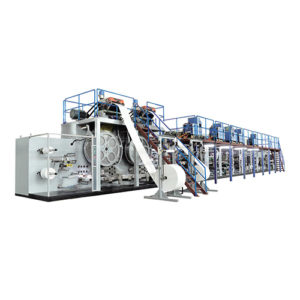
A diaper machine is not a single entity; it is a long, integrated line of sequential stations, each performing a specific task. Your audit must be just as systematic. The following table provides a checklist for this process.
| Component/System | Key Inspection Points | Potential Red Flags |
|---|---|---|
| Mill (Fluff Pulp Unit) | Check for wear on the hammer blades and screen. Listen for bearing noise. Inspect the housing for cracks. | Excessive vibration, worn-out hammers (costly to replace), cracks in the housing. |
| Drum Former | Examine the forming pockets for damage or clogging. Check the vacuum seals for leaks. | Damaged pockets lead to inconsistent core formation. Poor vacuum reduces efficiency. |
| SAP Applicator | Inspect the dosing system for accuracy and consistency. Check for corrosion or blockages. | Inaccurate SAP application wastes expensive material and affects diaper quality. |
| Non-Woven Unwinds | Check the tension control systems (dancers, load cells). Inspect rollers for scoring or damage. | Poor tension control causes material breaks and web tracking issues, leading to high waste. |
| Leg Cuff/Leak Guard Unit | Inspect the application of elastic threads. Check the folding and bonding mechanisms. | Misaligned or poorly bonded cuffs are a primary cause of diaper leakage and customer complaints. |
| Main Drive System | If mechanical (lineshaft), check gearboxes, chains, and belts for wear. If servo-driven, check motors and drives for error codes. | Excessive backlash in gears, worn chains, or persistent servo faults indicate major overhaul needed. |
| Cutting Units | Inspect the rotary knives for sharpness and proper clearance. Check the anvils for wear. | Dull knives produce ragged cuts and require frequent replacement. Worn anvils are expensive. |
| Electrical Cabinet | Check for signs of overheating (discolored wires), dust/dirt ingress, and outdated components (PLCs, drives). | Obsolete PLCs or drives can be impossible to replace, rendering the entire machine useless if they fail. |
Beyond the Checklist: A Deeper Look
Let's delve deeper into a few of these areas to understand the thinking behind the inspection.
The Mill and Drum Former: This is where the absorbent core of the diaper is created. The mill is essentially a high-speed hammer mill that disintegrates a roll of cellulose pulp into soft fluff. The fluff is then pulled by a vacuum onto a rotating "drum former" which has pockets shaped like the diaper core. Think of it like a giant, high-speed cookie cutter for fluff. If the hammers in the mill are worn, they won't fluff the pulp properly, resulting in a lumpy, ineffective core. If the pockets on the drum former are damaged, every single diaper core produced will have a defect. You must physically open the mill housing and use a flashlight to inspect the condition of these parts.
The Drive System: Mechanical vs. Servo: Older machines often use a single large motor with a long driveshaft (a lineshaft) running the length of the machine, with gearboxes and belts taking power off to drive each section. These are mechanically robust but can be imprecise and difficult to make adjustments on. Modern machines use individual servo motors for each section, all controlled electronically by a central computer (the PLC). This allows for precise, independent control and rapid size changes.
When inspecting a servo-driven machine, it is crucial to power it up and check the status of the servo drives. Do any of them show error codes? Can you "jog" each motor individually from the control panel? A single failed servo drive can cost thousands of dollars to replace, and if the model is obsolete, you may have to retrofit a whole new system. For a mechanical machine, you need to physically check for "play" or "backlash" in the gearboxes. Grab the input and output shafts of a gearbox and try to turn them against each other. Significant movement indicates worn internal gears, which will lead to timing problems across the machine.
The Electrical Cabinet: The PLC (Programmable Logic Controller) is the brain of the machine. The HMI (Human-Machine Interface) is the touchscreen you use to operate it. You must identify the brand and model of these components. Are they from a major global brand like Siemens, Allen-Bradley, or Mitsubishi? Or are they from a lesser-known brand for which support might be non-existent in Africa? Power up the machine and check if the HMI screen is responsive and free of dead pixels. Open the main electrical cabinet. Is it clean and well-organized, or a "rat's nest" of unlabeled wires and modifications? The state of the cabinet is a very good indicator of the overall quality of maintenance the machine has received.
This detailed, hands-on audit is non-negotiable. It is the only way to truly understand the condition of the asset you are considering and to budget accurately for any refurbishment work that will be required.
4. Machine Speed, Raw Materials, and Your Bottom Line
The rated speed of a diaper machine, measured in pieces per minute (PPM), is more than just a performance metric; it is a strategic factor that has a profound impact on your entire business model, particularly concerning your supply chain. An entrepreneur might logically assume that a slower, cheaper machine is a safer entry point. However, this logic can be a dangerous trap in the world of disposable hygiene products. The economics of this industry are heavily tied to the volume purchasing of raw materials.
The 300 PPM Threshold
A critical piece of wisdom shared by industry veterans is the importance of production speed in securing a favorable position with raw material suppliers (Richer, 2023). The primary raw materials in a diaper are fluff pulp, super absorbent polymer (SAP), non-woven fabrics (for the topsheet, backsheet, and leg cuffs), and elastic threads. These are specialized commodities produced by large, global corporations.
These corporations have minimum order quantities (MOQs) that are often very large. A machine running at a low speed, say 150-200 PPM, will consume raw materials so slowly that your annual demand might not even meet the MOQ of a major producer. This forces you into a difficult position. You will have to buy from local distributors or intermediaries. These intermediaries buy in bulk from the producers and then resell in smaller quantities, adding their own significant markup. This can increase your raw material costs by 20-40%, or even more.
Consider this: raw materials typically account for 60-70% of the total production cost of a single diaper. A 30% increase in your largest cost component can completely erase your profit margin, making your business uncompetitive and unsustainable.
A machine with a production speed of 300-400 PPM or higher consumes materials at a rate that is much more likely to meet the MOQs of the primary producers. This gives you the power to negotiate directly, secure better pricing, and establish a direct relationship for technical support and new material innovations. Therefore, when you are evaluating a used diaper machine for sale in Africa, do not just look at the price tag. You must ask: "Is this machine fast enough to grant me access to the primary raw material supply chain?" A slightly more expensive machine that runs at 400 PPM could be infinitely more profitable in the long run than a cheaper machine that runs at 200 PPM.
Matching Machine Capabilities with Material Availability
The compatibility between the machine and available raw materials is another layer of this puzzle. Let's say you purchase a high-tech used machine from Europe that was designed to run a specific, very thin, lightweight non-woven material to produce premium diapers. But what if that specific grade of non-woven is not readily available or is prohibitively expensive to import into your region in Africa?
Your machine must have a degree of flexibility. During your technical audit, discuss with the technician or the previous owner what range of materials the machine can comfortably handle. Can the tension control systems handle heavier, less consistent non-wovens that might be more readily available locally? Can the SAP applicator be adjusted for different grades and particle sizes of SAP? A machine that is too "finicky" and can only run one specific grade of material is a fragile investment. A more robust machine that can adapt to a range of available materials provides a much safer operational foundation for a factory in Africa, where supply chains can sometimes be unpredictable. Your goal is to find a balance: a machine fast enough to secure good pricing, but robust enough to handle the materials you can realistically and economically source.
5. Calculating the Total Cost of Ownership (TCO)
One of the most common errors for first-time industrial investors is focusing solely on the purchase price of the equipment. The sticker price of that used diaper machine for sale in Africa is just the tip of the iceberg. The Total Cost of Ownership (TCO) is a far more important financial concept that encompasses every single cost associated with acquiring, installing, and operating the machine over its lifespan. A comprehensive TCO calculation is essential for creating a realistic business plan and securing financing. It protects you from the kind of surprise expenses that can cripple a new venture before it even starts producing.
Beyond the Price Tag: Uncovering Hidden Costs
Let's break down the components of the TCO, moving beyond the initial purchase price.
- Decommissioning and Crating: If the machine you are buying is still installed at the seller's factory, who is responsible for the cost of dismantling, labeling, and properly crating it for international shipment? This is a skilled job that can cost several thousand dollars. This should be explicitly clarified in the purchase agreement.
- Freight and Insurance: Shipping a multi-ton, 20-30 meter long production line across continents is a major logistical operation. You will need to get quotes for ocean freight from the country of origin to your nearest port (e.g., Mombasa, Durban, Lagos, Tema). You must also purchase comprehensive shipping insurance to cover potential damage or loss during transit. These costs can easily add tens of thousands of dollars to the project.
- Import Duties, Taxes, and Port Fees: Every country in Africa has its own schedule of import duties and taxes for industrial machinery. This could be a percentage of the declared value of the machine. You will need to work with a local customs clearing agent in your country to get an accurate estimate of these costs. Do not forget port handling charges, storage fees, and agent fees, which can add up quickly. Researching your country's specific trade policies and any exemptions for manufacturing equipment is vital.
- Inland Transportation: Once the containers arrive at the port, they need to be transported to your factory. This may require specialized trucks and cranes, especially for the heavier components like the mill and drive sections. The cost will depend on the distance and the quality of the road infrastructure.
- Установка и ввод в эксплуатацию: A used diaper machine does not just plug into the wall. It requires precise assembly, alignment, and connection to electrical power, compressed air, and dust collection systems. You will almost certainly need to fly in one or two experienced technicians from the seller or a third-party service to supervise this process. The cost will include their daily rate, airfare, accommodation, and meals for a period that could range from two to six weeks. This is a significant but non-negotiable expense. As noted by some manufacturers, providing technicians for installation is a key part of their service (DiaperMachines, n.d.).
- Refurbishment and Initial Spare Parts: Your technical audit will have identified parts that need immediate replacement. This could include bearings, belts, knives, or even a PLC. These costs must be budgeted for. Additionally, it is wise to purchase an initial stock of critical spare parts at the same time as the machine. Having them on hand can prevent weeks of downtime while you wait for a small part to be shipped from overseas.
Building a Realistic Budget
To illustrate, let's imagine a hypothetical scenario. You find a used diaper machine for sale in China for $150,000. A naive budget would stop there. A TCO budget would look something like this:
- Purchase Price: $150,000
- Dismantling and Crating (if not included): $10,000
- Ocean Freight & Insurance (China to Nigeria): $25,000
- Import Duties & Taxes (e.g., 15%): $22,500
- Port Clearing & Agent Fees: $5,000
- Inland Transport (Lagos to factory): $7,500
- Technician Costs (2 techs, 4 weeks): $20,000
- Initial Refurbishment & Spare Parts: $30,000
- Estimated Total Cost: $270,000
As you can see, the total cost to get the machine operational is nearly double the initial purchase price. Failing to account for these ancillary costs is a catastrophic planning error. By embracing the TCO methodology, you arm yourself with a realistic financial picture, ensuring your business is capitalized for success from day one.
6. Navigating Logistics, Installation, and Commissioning
You have found the right machine, conducted your audit, and secured the financing. Now comes the immense practical challenge of moving a factory's worth of equipment across the globe and bringing it to life. This phase, stretching from the seller's floor to your first saleable diaper, is a project in its own right, demanding meticulous planning and professional partnerships. Any shortcuts taken here will inevitably lead to costly delays and damage.
The Journey: From Seller's Factory to Yours
The logistical chain is only as strong as its weakest link. Your first step is to engage a reputable international freight forwarder who has experience with shipping heavy industrial machinery to your specific country in Africa. They will be your guide through the labyrinth of international shipping.
- Crating and Loading: The proper crating of the machine is paramount. Each component should be weather-proofed, clearly labeled with its contents and handling instructions, and securely fastened within a sea container. The electrical cabinets, PLCs, and servo drives are particularly sensitive and require extra protection against moisture and shock. You should insist on receiving photographs from the seller showing the crating and loading process as proof that it has been done correctly.
- Documentation for Customs: Your freight forwarder and customs agent will need a complete set of documents, including the commercial invoice, a detailed packing list, the bill of lading, and a certificate of origin. Any discrepancy or missing document can cause your shipment to be held up in customs for weeks or even months, incurring massive storage fees. Start preparing this paperwork long before the ship is scheduled to sail.
- Customs Clearance: Do not attempt to navigate the customs process on your own. A local clearing agent is your essential partner on the ground. They understand the specific procedures, the tariff codes, and the people involved at your local port. They will handle the paperwork, the inspections, and the payment of duties, ensuring a smooth a process as possible. Choose an agent based on recommendations and their track record with similar industrial imports.
The Resurrection: Installation and Commissioning
The arrival of the containers at your factory is a moment of excitement, but the real work is just beginning. The installation phase is where the thousands of carefully labeled parts are reassembled into a functioning production line.
- Site Preparation: Long before the machine arrives, your factory floor must be ready. This includes a perfectly level concrete foundation capable of supporting the machine's weight and dampening vibrations. You also need to have the necessary utilities stubbed in: a stable electrical supply with the correct voltage and phase, a high-capacity compressed air system, and a dust extraction system, which is vital for safety and cleanliness in a facility handling fluff pulp.
- The Role of the Supervising Technician: As mentioned, the presence of an experienced technician is not a luxury; it is a necessity. They have assembled and disassembled this type of machine many times. They know the sequence, the critical alignment points, and the common pitfalls. Your local team of mechanics and electricians will work under their supervision. This is not just about getting the machine built; it is a crucial knowledge transfer opportunity. Your team will learn more about the machine in those few weeks of installation than they could from a year of reading manuals.
- Commissioning: The First Breath: Once the machine is mechanically and electrically assembled, the commissioning phase begins. This involves powering up the systems, testing every motor, sensor, and safety circuit, and then, finally, feeding raw materials into it for the first time (the "wet test"). This is an iterative process of running, stopping, adjusting, and tuning. The technicians will fine-tune the web tensions, glue application, cutting timings, and a thousand other parameters until the machine is producing a consistent, high-quality diaper at its target speed. This phase should not be rushed. The quality of the commissioning will determine the machine's efficiency and waste levels for years to come.
Only when the supervising technician has signed off on the machine's performance and your team feels confident in operating it can the project be considered complete. This systematic approach to logistics and installation transforms a complex and risky process into a manageable and predictable project.
7. Future-Proofing Your Investment: After-Sales, Spares, and Upgrades
The relationship with your machine does not end once it's producing diapers. You have made a long-term investment, and you must think about its entire operational life. A used diaper machine can be a reliable workhorse for a decade or more, but only if it is properly supported. Future-proofing is about ensuring you have access to the parts, knowledge, and potential improvements needed to keep your factory running efficiently and competitively for years to come.
The Lifeline: Spare Parts and Technical Support
Downtime is the enemy of profitability. Every hour your machine is stopped is an hour of lost revenue. The most common cause of extended downtime is waiting for a spare part.
- Identifying Critical Spares: During the installation, work with the supervising technician to create a list of "critical" and "consumable" spare parts. Consumables are parts that wear out predictably, like cutting knives, anvils, and certain belts. You should always have these in stock. Critical spares are components that fail rarely but would shut down the entire line if they did, such as a main drive motor, a specific gearbox, or the PLC itself. While you may not stock all of these, you must know exactly where to source them and what the lead time is.
- Building a Supplier Network: Where will you get these parts? If you bought the machine from a reputable source like an OEM's refurbishment program, they might offer ongoing parts support. If not, you need to be proactive. Identify the manufacturers of the key components (e.g., Siemens for the PLC, Nord for the gearboxes) and find their distributors in your region. For custom-made mechanical parts, you may need to identify a local machine shop that can fabricate them for you based on the original drawings or a sample. Creating this network before you have a breakdown is a mark of a savvy operator.
- The Value of Remote Support: Can the seller or technician who installed the machine provide remote technical support? With modern systems, a technician can often diagnose a problem via a video call or even by remotely logging into the machine's PLC. Clarifying the availability and cost of this kind of after-sales support can be incredibly valuable.
Evolving with the Market: Upgrades and Sustainability
The diaper market is not static. Consumer preferences change, and new technologies emerge. While your used machine may not have all the latest bells and whistles, it doesn't have to be frozen in time.
- Retrofitting and Upgrades: Many sections of a diaper machine are modular. It may be possible to upgrade your machine over time. For example, you could add an elastic waistband application unit to produce a more premium diaper. You could retrofit a newer, more efficient glue system to reduce adhesive consumption. You could upgrade the PLC and drives to improve reliability and diagnostics. Thinking about the machine's potential for future upgrades can extend its useful life and allow your business to adapt to market trends. When browsing available secondhand machinery, asking about the modularity and upgrade potential is a wise long-term consideration.
- Thinking Green: The Recycling Opportunity: A forward-thinking consideration is the end-of-life for the products you create. Diaper waste is a growing environmental concern. While diaper recycling is still a nascent industry, technologies are being developed to reclaim the plastic and cellulose from used diapers (Genius Machinery, 2024). While you may not invest in a recycling plant from day one, being aware of this trend is important. A business that can incorporate a sustainability story into its brand, perhaps by partnering with future recycling initiatives, will have a powerful advantage with environmentally conscious consumers and regulators in the years to come.
By thinking about the long-term life of your machine from the very beginning, you move from being just a buyer to being a strategic asset manager. This foresight is what separates businesses that thrive from those that merely survive.
Часто задаваемые вопросы (FAQ)
What is a realistic all-in budget for starting a small diaper business with a used machine in Africa? While prices vary greatly, a realistic Total Cost of Ownership (TCO) budget for a reliable, medium-speed (300-400 PPM) used baby diaper machine, including shipping, installation, and initial spares, would typically start from $250,000 to $500,000 USD. Slower or older machines might be cheaper initially but can incur higher long-term costs.
How do I find spare parts for an older, non-standard machine model in Africa? This is a critical challenge. Your first step is to get the complete set of mechanical drawings and parts lists with the machine. Identify the manufacturers of standard components (bearings, motors, pneumatics) and find their local distributors. For custom-made parts, you must build a relationship with a reliable local machine shop that can fabricate parts for you from the drawings.
Can a used diaper machine from the early 2000s produce modern, thin diapers? It depends on the machine's original specifications and potential for upgrades. Many older machines were designed for thicker, fluff-heavy cores. To produce modern thin diapers, a machine needs a very precise and high-capacity Super Absorbent Polymer (SAP) application system. It may be possible to retrofit such a system, but the cost and complexity must be carefully evaluated during the technical audit.
What are the three biggest hidden risks when buying a used diaper machine?
- Obsolete Electronics: The machine's PLC or servo drives may be from a series that is no longer produced or supported, making a failure catastrophic as no replacements are available.
- Lack of Documentation: Purchasing a machine without its original electrical schematics and mechanical drawings is extremely risky. It makes troubleshooting and sourcing parts nearly impossible.
- Poor Raw Material Compatibility: Buying a machine that is too slow (under 300 PPM) or too "finicky" can lock you out of direct purchasing from major raw material suppliers, destroying your cost competitiveness.
How long does it realistically take from paying for a used machine to producing the first saleable diaper? Assuming the machine is available immediately, a realistic timeline is 6 to 9 months. This includes about 1-2 months for dismantling, crating, and shipping; 1-2 months for customs clearance and inland transport; and 2-3 months for mechanical installation, electrical work, commissioning, and staff training.
Is financing available in Africa for purchasing used industrial machinery? Yes, but it can be challenging. Many national development banks, commercial banks, and international financial institutions offer asset financing. However, they will require a very detailed and professional business plan, including a comprehensive Total Cost of Ownership (TCO) calculation, market analysis, and realistic cash flow projections. Having a third-party technical audit report on the machine will significantly strengthen your application.
What is the average electricity consumption of a diaper machine? A medium-speed diaper machine (300-500 PPM) typically has a total installed power of 150-250 kW. However, its actual running consumption will be lower, often in the range of 80-120 kWh. A stable power supply is absolutely essential, and investing in a suitably sized backup generator is highly recommended in many parts of Africa.
A Final Thought on Your Entrepreneurial Path
The acquisition of a used diaper machine for sale in Africa is an undertaking of considerable complexity, blending financial acumen, engineering diligence, and logistical foresight. It is a path that demands careful preparation and a deep understanding of the interlocking pieces, from market analysis to raw material sourcing and long-term maintenance. The checklists and frameworks provided here are intended not as rigid rules, but as a guiding philosophy—a call for thoroughness, skepticism, and strategic thinking.
The opportunity across the continent is real and profound. Meeting the fundamental human need for hygiene products is a dignified and potentially very profitable endeavor. By choosing the path of used machinery, you embrace a strategy of capital efficiency that can make this opportunity accessible. Your success will hinge not on the initial price you pay, but on the quality of the diligence you perform. By investing your time in research and your resources in proper audits and support, you transform the purchase of a machine into the foundation of a resilient and thriving enterprise.
Ссылки
DiaperMachines. (n.d.). Full servo big waistband baby diaper machine. Retrieved January 23, 2025, from https://www.diapermachines.com/product/full-servo-big-waistband-baby-diaper-machine/
DiaperMachines. (n.d.). Used diaper machines. Retrieved January 23, 2025, from https://www.diapermachines.com/product-category/secondhand-machines/
Genius Machinery. (2024, May 8). The innovative diaper recycling machine: Transforming waste into value. Retrieved January 23, 2025, from https://www.geniusplas.com/en/article/The-Innovative-Diaper-Recycling-Machine-Transforming-Waste-into-Value.html
Richer, C. (2023, February 6). European made diaper machines. Richer Investment. Retrieved January 23, 2025, from
SQ Machine. (2022, November 1). How to start a diaper business. YG Machinery. Retrieved January 23, 2025, from https://sanitarypadmachine.com/how-to-start-a-diaper-business/