Аннотация
The acquisition of a wet wipes machine represents a significant capital investment, demanding a meticulous evaluation process to ensure alignment with production goals and long-term profitability. This document presents a comprehensive wet wipes machine buying checklist, articulating a systematic framework for prospective buyers in emerging markets such as South America, Russia, Southeast Asia, the Middle East, and South Africa. It examines nine pivotal domains of consideration, commencing with the foundational definition of production requirements and market objectives. The analysis extends into the granular details of machine specifications, including production velocity, automation levels, and system integration capabilities, particularly the role of servo-driven systems and PLC controls. Further scrutiny is applied to raw material compatibility, manufacturer credibility, the scope of after-sales support, and the total cost of ownership. The objective is to equip investors with the analytical tools to navigate the complexities of procurement, moving beyond initial price points to a holistic assessment of value, operational efficiency, and return on investment.
Основные выводы
- Define your target product, output volume, and packaging format before contacting any manufacturer.
- Analyze technical specifications like stable production speed, folding type, and liquid dosing accuracy.
- Evaluate the level of automation; full-servo systems reduce labor costs and improve consistency.
- Verify the manufacturer's reputation through case studies, certifications, and direct customer references.
- Use this wet wipes machine buying checklist to calculate the total cost of ownership, not just the purchase price.
- Prioritize manufacturers who offer comprehensive after-sales support, training, and readily available spare parts.
- Ensure the machine complies with international standards like CE and ISO for safety and quality assurance.
Оглавление
- Define Your Production Needs: The Foundational First Step
- Scrutinize Machine Specifications and Technical Parameters
- Evaluate Automation Level and System Integration
- Assess Raw Material Compatibility and Flexibility
- Investigate Manufacturer Reputation and Reliability
- Analyze After-Sales Service and Technical Support
- Understand Installation, Training, and Operational Requirements
- Calculate Total Cost of Ownership (TCO) and Return on Investment (ROI)
- Verify Compliance with Quality Standards and Certifications
- Часто задаваемые вопросы (FAQ)
- Заключение
- Ссылки
Define Your Production Needs: The Foundational First Step
Embarking on the journey to acquire a wet wipes production line is not merely a purchasing decision; it is the physical manifestation of a business strategy. The success of this venture is contingent not on the machine alone, but on how precisely that machine aligns with a well-defined operational and market vision. Before you even begin to browse manufacturer catalogs or request a quotation, a period of deep introspection and rigorous market analysis is paramount. This initial phase is the bedrock upon which your entire project will be built. Getting this right prevents costly missteps later, such as investing in a machine that is either insufficient for your demand or over-engineered for your needs. Think of it as drawing the architectural blueprint before laying the foundation of a house.
I have spoken with countless entrepreneurs over the years, and a common thread among the most successful is the clarity of their vision from day one. They don't just say, "I want to make wet wipes." They can articulate exactly what kind of wipes, for whom, at what volume, and in what packaging. This level of detail is the first item on any serious wet wipes machine buying checklist.
Determining Your Product Type and Market Niche
The term "wet wipe" is incredibly broad. The machine required to produce disinfectant wipes for hospital use is functionally different from one designed for gentle baby wipes or oil-based makeup remover wipes. Your first task is to define your product with surgical precision.
- Baby Wipes: These require materials that are exceptionally soft and a liquid formula that is hypoallergenic and gentle. The machine's liquid-adding system must be precise to ensure consistent moisture without oversaturation, and the folding must be perfect for easy one-hand dispensing by a parent.
- Cosmetic/Personal Care Wipes: These may involve more complex, sometimes viscous or oil-based lotions. The machine must have a liquid system capable of handling these formulations without clogging. The packaging is often smaller, more premium, and may require specific lid applicators.
- Disinfectant/Antibacterial Wipes: These use alcohol-based or other chemical solutions. The machine's components, especially pumps, tubes, and nozzles, must be made of corrosion-resistant materials (like 316L stainless steel) to withstand the aggressive nature of the liquids.
- Industrial or Household Cleaning Wipes: These are often larger, use stronger nonwoven fabrics, and are packaged in larger counts or canisters. The machine needs to handle wider raw materials and have a robust cutting system.
Your choice of niche will directly influence the required machine specifications. A machine optimized for high-speed baby wipe production might not be suitable for the slower, more specialized production of cosmetic wipes.
Projecting Production Volume and Speed
Once you know what you are making, you must determine how much. This is not a guess; it should be a projection based on market research, distribution channels, and business goals.
- Entry-Level Production: If you are a new entrant in a smaller market or are focused on a niche product, a machine producing 200-400 pieces per minute (ppm) might be sufficient. This allows for a lower initial investment while you build your brand.
- Mid-Range Production: For established businesses or those entering larger, more competitive markets like those in parts of Southeast Asia, a machine in the 400-800 ppm range offers a balance of output and cost.
- High-Volume Production: For major players aiming for mass-market penetration, high-speed lines producing over 1,000 ppm, and sometimes up to 2,400 ppm (for 30-lane machines), are necessary. These are complex, fully automated systems requiring significant capital.
It is vital to distinguish between "design speed" and "stable working speed." A manufacturer might advertise a design speed of 800 ppm, but the machine may only run consistently and reliably at 650-700 ppm. Always ask for the stable working speed under real-world conditions with your specified materials. This is the number that truly impacts your output and profitability.
Deciding on Packaging Formats
The final piece of this foundational puzzle is packaging. The consumer's experience is heavily influenced by the package, and your machine must be equipped to create it flawlessly.
- Flow-Pack (Pillow Pack): This is the most common format, ranging from small travel packs (5-10 wipes) to standard home packs (60-120 wipes). You must decide on the range of wipe counts you want to produce. Will the machine have an auto-stacker that can be adjusted for different counts? Will it have a single lid applicator or a dual system for flexibility?
- Canisters/Tubs: These are popular for disinfectant and cleaning wipes. This requires a completely different packaging module that involves rolling the wipes, inserting them into the canister, and then sealing and lidding. Some lines are dedicated solely to canister production.
- Sachets: Single-wipe sachets are common for restaurant hand wipes or lens cleaners. This involves a four-side sealing process and is typically handled by a different type of machine altogether.
Your decisions here—product type, volume, and packaging—form the core criteria you will present to a manufacturer. A reputable supplier will not just sell you a machine; they will engage in a consultative process, using your detailed requirements to recommend the most suitable линия по производству влажных салфеток for your specific business case. Without this clarity, you are navigating without a compass.
Scrutinize Machine Specifications and Technical Parameters
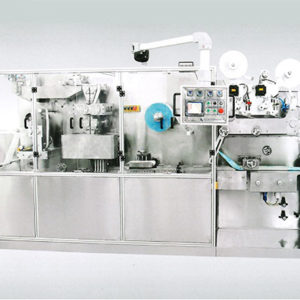
With a clear blueprint of your production needs, you can now transition from strategic planning to technical evaluation. This is where you delve into the heart of the machinery, examining the components and systems that will define your production efficiency, product quality, and operational reliability. A wet wipes machine is not a single entity but a complex assembly of interconnected modules, each performing a critical function. A weakness in one area can bottleneck the entire production line. A thorough wet wipes machine buying checklist must dissect the machine into its core functional units and assess each one against your predefined requirements.
I often compare this stage to a detailed medical examination. You wouldn't accept a doctor's vague assurance of "good health"; you'd want to see the numbers—blood pressure, cholesterol levels, and so on. Similarly, you must demand precise technical data from your potential manufacturer. Below is a table outlining the key parameters to investigate.
| Technical Parameter | Key Considerations | Impact on Production |
|---|---|---|
| Production Speed | Design Speed vs. Stable Speed (pcs/min). Speed variation for different product sizes. | Directly determines output, revenue potential, and ROI calculation. |
| Folding Type | "Z" fold, "C" fold, "W" fold, Non-Pop-up vs. Pop-up. | Affects end-user convenience (dispensing one wipe at a time) and material consumption. |
| Liquid Dosing System | Dosing range (ml), accuracy (e.g., ±5%), number of nozzles, material (SS316L). | Ensures consistent wipe moisture, product quality, and prevents costly liquid wastage. |
| Cutting System | Rotary cutter, blade material and lifespan, cut length accuracy (e.g., ±1mm). | Determines wipe dimensions, edge quality, and maintenance frequency. |
| Applicable Raw Materials | Nonwoven types (Spunlace, Airlaid), GSM range (g/m²), roll width (mm). | Defines the machine's flexibility to adapt to market trends and material availability. |
| Packaging Unit | Sealing type (heat/ultrasonic), film compatibility, lid applicator type and speed. | Critical for product integrity, shelf appeal, and preventing leaks or contamination. |
| Power & Air | Voltage/Frequency (e.g., 380V/50Hz), total power (kW), compressed air pressure (MPa). | Essential for factory planning, utility setup, and calculating operational energy costs. |
The Engine of Production: Folding, Cutting, and Stacking
The core of the machine is where the nonwoven fabric is transformed into individual wipes.
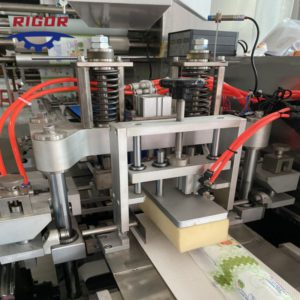
- Folding Unit: The folding mechanism dictates how the wipes are presented to the consumer. The "pop-up" feature (achieved by an interfolding "Z" fold) is standard for most baby and personal care wipes, as it presents the next wipe automatically. The precision of the folding head is paramount. Poor folding leads to dispensing issues and customer complaints. Ask the manufacturer about the durability of the folding components and the ease of adjustment.
- Cutting Unit: A high-speed rotary cutter must be robust and precise. The blades are wear parts, so you need to understand their expected lifespan and replacement cost. A clean, straight cut is a mark of a quality product, while frayed edges suggest a dull blade or a misaligned cutter.
- Stacking Unit: For flow-packs, an automatic counting and stacking unit is essential. This servo-driven system must be able to accurately count and stack the desired number of wipes (e.g., 10, 20, 80) and transfer the stack to the packaging unit. Its flexibility is key if you plan to offer multiple product SKUs with different wipe counts.
The Heartbeat: The Liquid Dosing System
This system is arguably where product quality is won or lost. Inconsistent wetting is a major quality failure.
- Precision and Control: The system should allow you to program the exact amount of liquid to be added per wipe or per stack. Look for a system with a high-precision dosing pump and a feedback loop that ensures accuracy. An accuracy of ±5% or better is a good benchmark.
- Охват: The liquid should be distributed evenly across the entire wipe. This is achieved through a manifold with multiple nozzles. Ask the manufacturer how they ensure uniform coverage and prevent dry spots, especially on wider wipes.
- Material Integrity: As mentioned, if you are using corrosive liquids, the entire liquid path—from the tank to the pump, pipes, and nozzles—must be constructed from a resistant material like food-grade or medical-grade stainless steel (SS 304 is standard, SS 316L is superior for corrosive agents).
The Final Touch: The Packaging Unit
The packaging unit protects the product and serves as your brand's ambassador on the shelf. A failure here renders all previous steps worthless.
- Sealing Integrity: The main function is to create airtight seals to prevent the wipes from drying out. The machine will use heated sealing jaws or ultrasonic technology. The temperature and pressure must be precisely controlled to create a strong seal without damaging the packaging film. Ask to see sample packages and test their seals.
- Lid Applicator: For packs with a resealable plastic lid, the lid application module is critical. It must accurately place and adhere the lid to every pack at high speed. A misaligned or poorly adhered lid will lead to product failure and customer dissatisfaction.
- Date Coding: A reliable date coder (e.g., an inkjet or thermal transfer printer) must be integrated to print production dates, batch numbers, and expiry dates, which are legal requirements in most markets.
A detailed review of these technical parameters, cross-referenced with your production goals, forms the core of an effective evaluation. Do not be swayed by a low price if the underlying specifications do not meet the demands of quality and reliability.
Evaluate Automation Level and System Integration
In the modern manufacturing landscape, particularly in the production of high-volume consumer goods like wet wipes, the level of automation is not a luxury—it is a critical determinant of efficiency, consistency, and long-term operational cost. As you progress through your wet wipes machine buying checklist, a deep dive into the machine's control systems and automation features is essential. This is the "brain and nervous system" of your production line. A higher degree of automation translates to lower labor requirements, reduced human error, higher stable speeds, and more consistent product quality. This is a particularly salient point for businesses in regions like Russia or South Africa, where skilled labor costs can be significant, or in the competitive markets of Southeast Asia, where efficiency is paramount.
When I walk clients through a factory floor, I point out the difference between a machine that needs constant operator intervention and one that runs almost autonomously. The latter is a picture of smooth, rhythmic efficiency, while the former often involves frequent stops and starts, leading to wasted material and lost production time.
| Уровень автоматизации | Key Features | Advantages | Disadvantages |
|---|---|---|---|
| Semi-Automatic | Manual raw material loading/splicing. Manual adjustment of some parameters. Basic PLC control. | Lower initial investment. Simpler to operate and maintain for basic functions. | Higher labor cost. Lower production speed. Inconsistent quality due to human error. More downtime. |
| Fully Automatic | Automatic raw material splicing (auto-splicer). Servo-driven motors for all key processes. Advanced PLC with HMI touchscreen. Automatic rejection of defects. | High production speed and efficiency. Superior product consistency. Lower labor cost per unit. Reduced material waste. | Higher initial capital investment. Requires more skilled technicians for maintenance and troubleshooting. |
The Power of Servo Motors
The distinction between a semi-automatic and a fully automatic machine often comes down to the drive system. Older or more basic machines may use a single main motor with a complex system of mechanical gears, chains, and shafts to drive all the components. Modern, high-performance machines, however, utilize multiple independent servo motors.
A servo motor is a special type of motor that allows for precise control of angular position, velocity, and acceleration. In a fully automated wet tissue machine, you will find separate servo motors controlling:
- The unwinding of the nonwoven fabric.
- The folding rollers.
- The cutting blade.
- The stacking mechanism.
- The conveyor that moves the stack.
- The film feeding in the packaging unit.
The advantage of this is immense. All these motors are synchronized electronically through the PLC. This allows for:
- Digital Size Changeover: If you want to change the length of the wipe or the number of wipes in a stack, it can often be done simply by inputting new values on the HMI touchscreen. A mechanical machine would require a time-consuming manual change of gears or other parts.
- Extreme Precision: Servo motors can start, stop, and position with incredible accuracy, which is vital for high-speed folding, cutting, and packaging.
- Reduced Maintenance: Eliminating complex mechanical transmissions means fewer moving parts to wear out, lubricate, and replace.
The Brain: PLC and HMI
The Programmable Logic Controller (PLC) is the industrial computer that controls and synchronizes all the machine's functions. The Human-Machine Interface (HMI) is the touchscreen panel that allows the operator to interact with the PLC.
- PLC Brand and Reputation: Look for PLCs from globally recognized brands like Siemens, Mitsubishi, Allen-Bradley, or Omron. These brands are known for their reliability and support. A machine using an obscure or unknown PLC brand can become a major liability if support or spare parts are hard to find.
- HMI User-Friendliness: The HMI should be intuitive and easy to navigate. It should display critical information in real-time, such as production speed, output count, and error messages. A well-designed HMI, available in the operator's native language (e.g., Russian, Spanish, or English), can significantly reduce the learning curve and minimize operational errors. It should provide clear diagnostics when a fault occurs, telling the operator exactly where the problem is (e.g., "Lid sensor blocked" or "Safety door open").
Essential Automation Features to Look For
Beyond servo drives, several other features are hallmarks of a modern, efficient machine:
- Automatic Splicing Unit: This feature automatically joins the end of an expiring raw material roll to the beginning of a new one without stopping the machine. On a high-speed line, manual roll changes can be a major source of downtime. An auto-splicer can increase overall equipment effectiveness (OEE) by 10-15%.
- Web Guiding System: This system uses sensors to monitor the position of the nonwoven fabric as it unwinds and automatically adjusts the roll to ensure it runs perfectly straight. This prevents skewed folding and cutting and reduces waste. Look for reputable brands like BST or Fife.
- Automatic Rejection System: Using vision systems or sensors, the machine can detect defects such as missing wipes, incorrect stacks, or faulty seals. It then automatically ejects the defective product from the line, ensuring that only perfect products reach the end consumer.
Investing in a higher level of automation is an investment in future efficiency. While the initial cost is higher, the long-term savings in labor, the reduction in material waste, and the increase in output and quality will almost always provide a superior return on investment.
Assess Raw Material Compatibility and Flexibility
A wet wipes machine, no matter how technologically advanced, is only as good as the raw materials it can process. The ability of a machine to handle a diverse range of nonwoven fabrics and packaging films is a critical aspect of its long-term value. Markets evolve, consumer preferences change, and supply chains can be disrupted. A machine that locks you into a single type of raw material is a rigid and risky investment. A flexible machine, on the other hand, empowers you to adapt, innovate, and optimize costs. This assessment is a non-negotiable part of any comprehensive wet wipes machine buying checklist.
Imagine you have secured a large contract, but your usual supplier of 45 gsm spunlace nonwoven is unable to deliver. Another supplier can offer a 50 gsm spunlace or a different blend, but your machine struggles to handle the change in thickness or texture, leading to jams and poor cutting. This is a scenario that can cripple a business. A flexible machine is your insurance against such vulnerabilities.
Understanding Nonwoven Fabrics
The primary raw material is the nonwoven fabric, which forms the wipe itself. These fabrics come in various types, weights, and compositions.
- Spunlace: This is the most common material for baby and cosmetic wipes due to its softness, strength, and good absorption. It is created by entangling fibers with high-pressure water jets. It can be a blend of polyester (for strength) and viscose (for softness and absorbency).
- Airlaid: This material is known for its excellent absorbency and is often used in cleaning or industrial wipes. It has a more paper-like feel than spunlace.
- Other Types: Other materials like needlepunch or meltblown nonwovens are used for more specialized applications.
When evaluating a machine, you must ask the manufacturer about its compatibility with:
- Material Type: Can it run both spunlace and airlaid fabrics?
- GSM Range (Grams per Square Meter): This is the weight or thickness of the fabric. A good machine should be able to handle a range, for example, from 35 gsm to 80 gsm. This allows you to produce both lightweight, economical wipes and thicker, premium wipes.
- Roll Width: The machine will be designed for a maximum raw material roll width. A machine that can handle wider rolls can sometimes be more efficient, potentially allowing for more lanes of production.
- Blend Composition: Different fiber blends (e.g., 70% viscose / 30% polyester vs. 50/50) can behave differently. The machine's tension control and cutting systems must be robust enough to handle these variations.
The Importance of Tension Control
The key to handling different materials is a sophisticated tension control system. As the large parent roll of nonwoven fabric unwinds, the system must maintain a constant, even tension. If the tension is too high, the material can stretch and narrow. If it's too low, it can sag and drift. A top-tier machine will have a closed-loop tension control system with sensors and a servo-driven unwinder that automatically adjusts to maintain the pre-set tension, regardless of the roll diameter or material type. This is what allows the machine to be truly flexible.
Compatibility with Packaging Films
The packaging film is another critical raw material. These films are typically multi-layered laminates, often including layers of PET, PE, or CPP, to provide a barrier against moisture loss and a surface for high-quality printing.
Your machine's packaging unit must be compatible with:
- Film Thickness: The sealing system must be adjustable to handle different film thicknesses (measured in microns).
- Material Composition: Different laminate structures require different sealing temperatures and pressures. The machine's HMI should allow the operator to save "recipes" for different films, making changeovers quick and repeatable.
- Print Registration: If you are using pre-printed film, the machine must have a print registration sensor (a photocell or "eye mark" sensor) that reads marks on the film to ensure the cutter and sealer operate in the correct position relative to the printed design. An inaccurate registration system will lead to misaligned packaging and significant waste.
Before finalizing a purchase, it is a wise and common practice to send samples of your intended raw materials—both the nonwoven fabric and the packaging film—to the machine manufacturer. They should then conduct a trial run on the machine you intend to buy, or a very similar model. Request a video of this trial and ask for the finished product samples to be sent back to you for inspection. This provides tangible proof of the machine's capabilities and flexibility, moving beyond mere promises to demonstrated performance.
Investigate Manufacturer Reputation and Reliability
In the high-stakes world of industrial machinery procurement, the machine itself is only one part of the equation. The other, equally important part, is the manufacturer behind it. A state-of-the-art machine from an unreliable or unsupportive manufacturer can quickly become a million-dollar paperweight. Conversely, a solid, reliable machine backed by a reputable and responsive manufacturer becomes a true asset and a partner in your growth. Therefore, a rigorous due diligence process to investigate the manufacturer's reputation, history, and customer satisfaction record is an indispensable step in the wet wipes machine buying checklist.
I have witnessed firsthand the stark contrast between dealing with a top-tier manufacturer and a less scrupulous one. A reputable company sees the sale as the beginning of a long-term relationship. They are invested in your success because your success becomes a testament to their quality. A "sell and forget" manufacturer disappears the moment the final payment is made, leaving you to fend for yourself.
Hallmarks of a Reputable Manufacturer
How do you distinguish the partners from the predators? Look for tangible evidence and consistent patterns of behavior.
- Experience and Specialization: How long has the company been in business? More importantly, how long have they specialized in manufacturing hygiene product machinery like diaper and wet wipe lines ()? A company with decades of focused experience, like many found in China's established manufacturing hubs, will have encountered and solved a vast range of engineering challenges. They will have a deeper understanding of the nuances of the production process.
- Global Footprint and Market Presence: A manufacturer that has successfully installed machines in various regions—South America, Russia, the Middle East—demonstrates an ability to navigate complex logistics, understand different market requirements, and support clients across different cultures and time zones. Ask for a list of countries they have exported to. Their experience in your region is a significant plus.
- Transparency and Professionalism: Pay close attention to your interactions with their sales and technical teams. Are they knowledgeable? Do they answer your questions directly and thoroughly, or are their answers vague? Do they provide detailed technical documentation, drawings, and component lists? A professional organization will be open and transparent.
- In-House Manufacturing vs. Assembly: Does the company manufacture key components in-house using their own CNC machining centers, or do they simply assemble parts sourced from various unknown suppliers? A manufacturer with strong in-house capabilities has better control over quality and can produce custom parts or replacements more quickly ().
Conducting Your Due Diligence
Do not rely solely on the manufacturer's own marketing materials. You must become a detective.
- Request Customer References: This is the single most important step. Ask the manufacturer for contact information of 2-3 existing customers, preferably in your region or a similar market. Speak to these references directly. Ask them about their experience with the machine's reliability, the quality of the after-sales support, and whether they would buy from this manufacturer again. A manufacturer who is hesitant to provide references should be viewed with extreme caution.
- Examine Case Studies and Videos: Reputable manufacturers will have a portfolio of successful installations. Review these case studies on their website. Watch videos of their machines in operation at customer sites (not just in their own showroom). This provides a real-world glimpse of the machine's performance.
- Factory Visit (Virtual or Physical): The best way to assess a manufacturer is to see their operations for yourself. If a physical visit is feasible, it is highly recommended. You can inspect their manufacturing processes, meet the engineering team, and see a machine being built or tested. If a physical visit is not possible, request a detailed live virtual tour via video conference.
- Check Certifications: As we will discuss later, certifications like ISO 9001 (for quality management systems) and CE (for compliance with European safety standards) are indicators of a commitment to quality and safety.
The Red Flags of an Unreliable Supplier
Be alert for warning signs during the sales process:
- An unusually low price that is significantly cheaper than all other quotes. This often indicates compromises in component quality, materials, or after-sales support.
- Evasive or inconsistent answers to technical questions.
- A reluctance to provide customer references or a complete list of key component suppliers.
- High-pressure sales tactics that rush you into making a decision.
- A poorly maintained website or unprofessional communication.
Choosing a manufacturer is like choosing a business partner. Your success will be intertwined for years to come. The time and effort you invest in thoroughly vetting their reputation and reliability will pay dividends through the entire lifecycle of your machine.
Analyze After-Sales Service and Technical Support
The relationship with your machine manufacturer does not end when the equipment is delivered to your factory. In many ways, it is just beginning. A wet wipes machine is a complex piece of equipment that will require maintenance, occasional troubleshooting, and replacement of wear parts over its 10-to-20-year lifespan. The quality, speed, and accessibility of the manufacturer's after-sales service and technical support are, therefore, of paramount importance. For businesses located in regions like South America, Russia, or South Africa—geographically distant from the primary manufacturing centers in Asia and Europe—this factor can be the single most critical element in the long-term success of the investment. A robust support system is a lifeline; a poor one is a recipe for extended downtime and massive financial losses.
I always tell my clients to think about a scenario: It’s a peak production day, you have a major order to fulfill, and your machine stops due to a critical sensor failure. How quickly can you get help? If your manufacturer can diagnose the problem remotely within an hour and ship a replacement part overnight, you might lose a shift. If it takes them three days to respond to your email and two weeks to ship the part, you could lose a customer. The difference is the quality of their after-sales support. This must be a central focus of your wet wipes machine buying checklist.
Deconstructing the After-Sales Support Package
Do not accept vague promises of "good service." You need to get specific commitments from the manufacturer, preferably in writing as part of your purchase contract.
- Warranty Period and Coverage: What is the standard warranty period? One year is typical, but some manufacturers may offer two. What exactly does the warranty cover? It usually covers defects in materials and workmanship but excludes normal wear parts (like blades, belts, and heaters) and damage from operator error. Clarify these details.
- Availability of Spare Parts: This is a major concern. A manufacturer should provide a recommended spare parts list with the machine, including critical components that are prone to wear or failure. Ask them:
- Do they keep a stock of these parts?
- What is their guaranteed lead time for shipping spare parts?
- Are some components from third-party suppliers (e.g., a Siemens PLC)? If so, can you source them locally, or must you buy them through the manufacturer?
- Technical Support Channels: How can you reach their technical team? They should offer multiple channels: phone, email, and instant messaging apps (like WhatsApp or Telegram), which are very effective for quick communication and sharing photos/videos of a problem.
- Support Hours and Language: Do they offer support that aligns with your time zone? Is their technical team proficient in English or another language you are comfortable with? A language barrier can be a huge obstacle during a technical crisis.
The Power of Remote Diagnostics
Modern, PLC-controlled machines offer a powerful tool for after-sales support: remote diagnostics. If the machine is connected to the internet, the manufacturer's engineers can often log into your machine's PLC from their office. This allows them to:
- See the machine's operational status in real-time.
- Review error logs and alarms.
- Diagnose software or sensor issues.
- Sometimes even guide your local technician through a fix or make software adjustments remotely.
This capability can resolve a huge percentage of issues without the need for an expensive and time-consuming on-site visit. Insist that your machine be equipped with a remote access module.
On-Site Service: The Last Resort
For complex mechanical problems or major breakdowns, an on-site visit from the manufacturer's technician may be necessary. You need to clarify the terms of these visits in advance:
- Response Time: How quickly can they dispatch a technician to your location?
- Costs: During the warranty period, the manufacturer typically covers the technician's labor, but who pays for their travel expenses (flights, visas, accommodation)? After the warranty, you will likely bear all costs. Get a clear schedule of their daily service rates and travel cost policies.
A manufacturer with a global presence may have regional service agents or partners who can provide faster and more cost-effective on-site support. This is a significant advantage for buyers in markets far from the manufacturer's home base. When you check references, be sure to ask other customers about their experience with both remote and on-site service. Their real-world experience is the most reliable indicator of the service you can expect to receive.
Your evaluation of after-sales support should be as rigorous as your evaluation of the machine's hardware. A strong support package is not an optional extra; it is an integral part of the value proposition and a critical safety net for your investment.
Understand Installation, Training, and Operational Requirements
The arrival of several large crates containing your new wet wipes machine is a moment of excitement, but it also marks the beginning of a complex and critical phase: installation, commissioning, and training. A flawless installation and a well-trained operating team are essential to unlocking the machine's full potential and ensuring its long-term health. Mishandling this stage can lead to immediate performance issues, chronic reliability problems, and even safety hazards. A prudent buyer will use their wet wipes machine buying checklist to clarify every detail of this process long before the machine is shipped. You need a clear and mutually agreed-upon plan that defines responsibilities, timelines, and costs.
From my experience, the smoothness of the installation and training process is a strong indicator of the manufacturer's overall professionalism. A well-organized manufacturer will provide a detailed pre-installation guide and work collaboratively with you to ensure everything is prepared for their technicians' arrival.
Preparing Your Facility: The Pre-Installation Checklist
The manufacturer should provide you with a comprehensive layout drawing and a list of utility requirements. Your responsibility is to prepare the factory space accordingly. This includes:
- Foundation and Flooring: The factory floor must be a solid, level concrete slab capable of supporting the weight of the machine (which can be many tons).
- Пространство и планировка: Ensure there is adequate space not only for the machine itself but also for operator movement, maintenance access, and storage of raw materials and finished goods. The ceiling must be high enough to accommodate the machine's full height.
- Utilities: You must arrange for the required electrical power supply (correct voltage, phase, and capacity), a compressed air line with the specified pressure and volume (and an air dryer/filter to ensure clean, dry air), and a water supply if needed for cleaning or liquid mixing.
- Logistics: Plan for the logistics of receiving the machine, including having a forklift or crane with sufficient capacity to unload the crates and move the machine components into position.
Having all this prepared before the technicians arrive will save a significant amount of time and money.
The Installation and Commissioning Process
This is typically performed by one or two technicians dispatched by the manufacturer. The scope of their work needs to be clearly defined in your contract.
- Mechanical Assembly: The technicians will assemble the various modules of the machine, level it, and connect all the mechanical components.
- Electrical and Pneumatic Connections: They will wire the control cabinets and connect all the pneumatic lines.
- Commissioning (Trial Run): This is the most important part. The technicians will power up the machine and conduct a series of tests. They will run it with your raw materials, fine-tuning all the parameters (tension, temperature, speed, etc.) to achieve stable production of a quality product at the agreed-upon speed. The commissioning phase is not complete until the machine can run stably for a predetermined period (e.g., several hours) and produce an acceptable quantity of sellable product.
Clarify who pays for what. Typically, the buyer is responsible for the technicians' round-trip airfare, visa fees, local transportation, accommodation, and a daily allowance. The seller covers their salary.
Operator and Maintenance Training: An Investment in Your Team
The best machine in the world will underperform if operated or maintained by an untrained team. The manufacturer's technicians have a dual role: to install the machine and to train your staff. This training is not a brief overview; it should be a comprehensive, hands-on program.
- Operator Training: Your operators need to learn:
- The function of every button, switch, and screen on the HMI.
- The correct startup and shutdown procedures.
- How to load raw materials and perform splices (if manual).
- How to make routine adjustments during production.
- How to identify and resolve common minor faults.
- Basic cleaning and safety procedures.
- Maintenance Training: Your mechanical and electrical maintenance staff need deeper training on:
- The machine's mechanical, electrical, and pneumatic systems.
- The routine lubrication and preventive maintenance schedule.
- How to diagnose and troubleshoot more complex faults.
- How to safely replace common wear parts like blades, belts, and sensors.
The training should be conducted on your own machine, in your factory. Ensure that the manufacturer provides a complete set of documentation—including a detailed user manual, electrical schematics, and pneumatic diagrams—in English or another language your team understands. These documents are invaluable for future troubleshooting.
Do not rush this phase. The time invested in thorough training will prevent countless hours of downtime and costly mistakes in the future. It empowers your team to take ownership of the machine and become self-sufficient in its day-to-day operation.
Calculate Total Cost of Ownership (TCO) and Return on Investment (ROI)
One of the most common mistakes a first-time buyer of industrial machinery can make is to focus solely on the initial purchase price. The figure on the quotation is just one piece of a much larger financial puzzle. A savvy investor understands that the true cost of a machine is its Total Cost of Ownership (TCO) over its entire operational life. Similarly, the true value of the machine is measured by its Return on Investment (ROI). A comprehensive wet wipes machine buying checklist must include a framework for calculating these two critical financial metrics. A machine with a lower sticker price might end up being far more expensive in the long run due to higher energy consumption, greater material waste, or frequent downtime.
When I discuss financing with clients, I encourage them to think like a chief financial officer, not just a procurement manager. We build a model that looks beyond the initial capital outlay to project all the costs and revenues associated with the machine over a five-to-ten-year period. This holistic view is what separates a speculative purchase from a strategic investment.
Deconstructing the Total Cost of Ownership (TCO)
TCO encompasses every cost associated with acquiring, installing, and running the machine.
-
Initial Capital Expenditure (CapEx):
- Machine Price: The negotiated FOB (Free on Board) or CIF (Cost, Insurance, and Freight) price.
- Доставка и страхование: The cost to transport the machine from the manufacturer's port to yours.
- Импортные пошлины и налоги: These can be substantial and vary significantly by country. Research your local tariffs (e.g., within Mercosur for South American buyers).
- Installation and Commissioning Costs: The travel and living expenses for the manufacturer's technicians.
-
Facility and Setup Costs:
- Factory Preparation: Costs for floor reinforcement, electrical upgrades, and compressed air systems.
- Ancillary Equipment: You may need a liquid mixing tank, a water purification system (RO), and material handling equipment (forklifts).
-
Ongoing Operational Expenditures (OpEx):
- Сырье: The cost of nonwoven fabric, packaging film, lids, and the liquid formula. This is often the largest single component of your cost per pack.
- Труд: The salaries of operators, technicians, and quality control staff. A more automated machine requires fewer operators, directly reducing this cost.
- Энергия: The electricity consumption of the machine (measured in kW) and the energy needed for the compressed air system. A machine with energy-efficient servo motors will have a lower TCO.
- Maintenance and Spare Parts: The annual budget for routine maintenance and the replacement of wear parts.
- Waste: The cost of material wasted during production ramp-up, size changes, and due to defects. A high-performance machine with a low rejection rate minimizes this cost.
Summing these costs over a set period (e.g., 5 years) gives you the TCO. Comparing the TCO of two different machines, not just their initial prices, provides a much more accurate financial comparison.
Projecting Your Return on Investment (ROI)
ROI measures the profitability of your investment. The basic formula is:
ROI (%) = (Net Profit / Total Investment) x 100
To calculate this, you need to project your revenues and subtract your costs.
-
Calculate Total Production Output:
- Stable Working Speed (pcs/min) x 60 (min/hr) x Operating Hours per Day x Operating Days per Year = Total Wipes per Year.
- (Total Wipes per Year) / (Wipes per Pack) = Total Packs per Year.
- Remember to factor in an Overall Equipment Effectiveness (OEE) rate (typically 80-85% for a good line) to account for downtime for cleaning, maintenance, and changeovers.
-
Calculate Total Annual Revenue:
- Total Packs per Year x Wholesale Price per Pack = Total Annual Revenue.
-
Calculate Annual Net Profit:
- Total Annual Revenue – Annual Operational Expenditures (OpEx) = Annual Net Profit.
-
Calculate ROI and Payback Period:
- Using the net profit and your total initial investment (CapEx + Setup Costs), you can calculate the ROI.
- The Payback Period is the time it takes for the net profit to equal the initial investment (Total Investment / Annual Net Profit). A shorter payback period is generally better.
Running this analysis for different machine options will illuminate the financial implications of your choice. A more expensive, faster, and more automated machine might have a higher initial investment, but it could offer a much faster payback period and a higher long-term ROI due to increased output and lower labor costs. This data-driven approach removes emotion and speculation from the decision, allowing you to make an investment that is financially sound and strategically aligned with your business objectives.
Verify Compliance with Quality Standards and Certifications
In a globalized marketplace, adherence to internationally recognized quality and safety standards is not merely a bureaucratic formality; it is a fundamental indicator of a manufacturer's commitment to excellence and a crucial assurance for the buyer. When you are investing a significant amount of capital in a complex piece of machinery, you need confidence that it is well-engineered, safe to operate, and built to last. Certifications from reputable bodies provide a third-party validation of a manufacturer's processes and products. For this reason, verifying compliance with key standards should be a final, critical checkpoint on your wet wipes machine buying checklist.
Think of these certifications as a passport. A machine with CE and ISO certification can "travel" more easily into regulated markets and gives you, the owner, peace of mind regarding its safety and the quality management system behind its production. It demonstrates that the manufacturer is not cutting corners and is willing to subject themselves to the scrutiny of external auditors.
The "CE" Mark: A Declaration of Safety
The CE mark is a mandatory conformity marking for products sold within the European Economic Area (EEA). While you may be operating in Russia, South Africa, or South America, the CE mark has become a globally recognized benchmark for product safety.
-
What it Means: When a manufacturer affixes the CE mark to their machine, they are declaring that the product meets the essential requirements of the applicable European health, safety, and environmental protection directives. For industrial machinery, this primarily involves the Machinery Directive (2006/42/EC).
-
Key Safety Aspects Covered: A CE-compliant machine will have undergone a thorough risk assessment and will incorporate specific safety features, such as:
- Safety Guards: Physical barriers (often with interlocking doors) that prevent operators from reaching moving parts during operation.
- Emergency Stop Buttons: Prominently placed, easily accessible buttons that can immediately halt all machine functions in an emergency.
- Safety Circuits: Electrical circuits designed to ensure the machine fails in a safe state (e.g., if a safety door is opened, the machine stops and cannot be restarted until the door is closed).
- Clear Labeling: Warning labels indicating potential hazards.
-
Why it Matters to You: Even outside of Europe, a CE mark gives you a higher level of confidence that the machine has been designed with operator safety as a priority. This can help reduce workplace accidents, lower insurance premiums, and ensure compliance with your own local factory safety regulations. Ask the manufacturer to provide the Declaration of Conformity and the technical file that supports their CE marking.
ISO 9001: A Commitment to Quality Management
ISO 9001 is the international standard for a Quality Management System (QMS). Unlike the CE mark, which applies to the product, ISO 9001 applies to the manufacturer's entire organization and processes.
-
What it Means: A manufacturer with ISO 9001 certification has established and follows a systematic approach to managing quality across their entire operation. This includes everything from how they handle customer orders and design products to how they select suppliers, control production processes, and manage non-conforming products.
-
Key Principles of ISO 9001: The standard is based on several quality management principles, including:
- Customer Focus: Understanding and meeting customer requirements.
- Process Approach: Managing activities and resources as a series of interconnected processes.
- Continual Improvement: Constantly seeking to improve processes and outcomes.
- Evidence-Based Decision Making: Making decisions based on the analysis of data and information.
-
Why it Matters to You: When you buy from an ISO 9001-certified manufacturer (), you have greater assurance that you will receive a consistent and reliable product. It means the company has documented procedures for quality control, component inspection, and final machine testing. It suggests a culture of quality and a lower likelihood of receiving a machine with defects. Ask for a copy of their current ISO 9001 certificate and check its validity.
While other certifications may be relevant depending on the specific application (e.g., GMP for pharmaceutical-grade products), CE and ISO 9001 are the two most important and widely recognized standards for industrial machinery. Do not take them for granted. Their presence is a strong positive signal about the manufacturer's professionalism and their commitment to delivering a safe, reliable, and high-quality product.
Часто задаваемые вопросы (FAQ)
What is the typical lead time for a wet wipes machine? The manufacturing lead time for a wet wipes machine can vary significantly based on its complexity and the manufacturer's production schedule. For a standard, fully automatic machine, a typical lead time is between 120 to 180 days from the signing of the contract and receipt of the down payment. Highly customized or exceptionally large lines may take longer.
Can one machine produce different sizes of wet wipes? Yes, most modern wet wipes machines are designed with a degree of flexibility. By adjusting settings on the HMI and sometimes changing minor mechanical parts, you can typically alter the wipe's length and width within a certain range. The number of wipes per pack is also easily adjustable through the servo-driven stacking system. However, drastic changes, like switching from a small 10-count pack to a large 120-count pack, might require more significant changeover time.
How much space do I need to install a wet wipes production line? A complete production line, including the main machine, raw material loading area, and finished product conveyor, can be quite long. A typical high-speed flow-pack line can range from 25 to 45 meters in length. The width required is usually around 8 to 12 meters to allow for maintenance access and movement. You should always request a detailed layout drawing from the manufacturer to plan your factory space accurately.
What are the main raw materials needed to make wet wipes? The primary raw materials are the nonwoven fabric (typically spunlace), the purified water and liquid formula, the laminated packaging film, and the plastic resealable lid. The specific grade and specification of each material will depend on the type of wipe you intend to produce (e.g., baby wipes, disinfectant wipes).
How many operators are required to run a fully automatic line? A key benefit of a fully automatic wet wipes line is the reduced labor requirement. Typically, one skilled operator can oversee the machine's operation via the HMI, while one or two additional workers can manage raw material loading and the packing of finished goods into cartons at the end of the line. Therefore, a single line can often be run with a team of 2-3 people per shift.
Do I need a separate water purification system? Yes, this is highly recommended. The water used in the liquid formula must be free from impurities, minerals, and microorganisms to ensure product safety and stability. A Reverse Osmosis (RO) water purification system is a standard and necessary piece of ancillary equipment for any serious wet wipes manufacturing operation.
What is the difference between a "pop-up" and "non-pop-up" wipe? A "pop-up" feature means that when you pull one wipe out of the package, the next wipe is automatically pulled up and presented for easy dispensing. This is achieved by an interfolding pattern (like a "Z" fold). "Non-pop-up" wipes are simply stacked on top of each other (a "C" fold) and do not present the next sheet. The pop-up style is standard for most consumer applications due to its convenience.
Заключение
The acquisition of a wet wipes machine is a foundational decision that will shape the trajectory of your manufacturing enterprise for years to come. The process, while complex, can be navigated with confidence through a systematic and disciplined approach. Moving beyond a superficial focus on price, this guide has illuminated the critical checkpoints that constitute a robust evaluation. From the initial, introspective task of defining your precise production needs to the technical scrutiny of machine specifications, automation levels, and material flexibility, each step builds upon the last.
The investigation of a manufacturer's reputation, the deep analysis of their after-sales support structure, and a clear understanding of the installation and training process are not peripheral concerns; they are central to mitigating risk and ensuring a successful long-term partnership. Likewise, a diligent calculation of the Total Cost of Ownership and projected Return on Investment provides the financial clarity needed to make a truly strategic, rather than merely transactional, decision. Finally, the verification of compliance with international standards like CE and ISO 9001 serves as a vital assurance of safety and quality. By methodically addressing each point on this comprehensive checklist, you transform the act of buying a machine from a daunting challenge into a structured, informed process, positioning your business for efficient, profitable, and sustainable production.
Ссылки
- Haina Machinery. (2024). CLK350 full servo adult & menstrual pants production line. Haina Machinery Factory. Retrieved from https://www.fjhaina.com/automatic_adult_diaper_making_machine_for_sale/4.html
- Haina Machinery. (n.d.). Machines. Haina Machinery Factory. Retrieved January 1, 2025, from
- Kar, P. (2020). Selection of manufacturing systems: A multi-criteria decision-making approach. Journal of Industrial and Production Engineering, 37(7), 351–367.
- Longo, F., Nicoletti, L., & Padovano, A. (2017). Smart operators in industry 4.0: A human-centered approach to enhance operators’ capabilities and competencies within the new smart factory context. Computers & Industrial Engineering, 113, 144–159.
- SQ Machine. (2025). How diapers are made: Materials, machines, and process explained. Retrieved from https://sanitarypadmachine.com/how-diapers-are-made/
- Sunree Hygiene. (n.d.). Manufacturing machines. Sunree China Diaper Machine. Retrieved March 1, 2025, from
- Tupa, J., Simota, J., & Steiner, F. (2017). Aspects of risk management implementation for industry 4.0. Procedia Manufacturing, 11, 1223–1230.
- Womeng Machines. (2025a). Detailed explanation of diaper production process. Womeng Intelligent Equipment Co., Ltd. Retrieved from detailed-explanation-of-diaper-production-process/
- Womeng Machines. (n.d.). Your premium diaper machine supplier. Womeng Intelligent Equipment Co., Ltd. Retrieved March 27, 2025, from https://www.womengmachines.com/
- Zhou, K., Liu, T., & Zhou, L. (2015). Industry 4.0: Towards future industrial opportunities and challenges. 2015 12th International Conference on Fuzzy Systems and Knowledge Discovery (FSKD), 2147-2152.