Аннотация
An examination of the global hygiene market in 2026 reveals a landscape transformed by significant technological evolution, particularly within the domain of diaper manufacturing. This analysis centers on the critical advancements in diaper manufacturing equipment technology that are shaping the industry for producers in emerging economies across South America, Russia, Southeast Asia, the Middle East, and South Africa. The discourse systematically explores six pivotal areas of innovation: the exponential increase in production speed through advanced automation, the integration of sustainable practices via sophisticated material handling and waste reduction, and the paradigm shift introduced by Industry 4.0, which enables smart factories and predictive maintenance. Further exploration covers the move towards enhanced modularity for greater market agility, innovations in absorbent core formation for superior product performance, and the implementation of sophisticated vision inspection systems for uncompromising quality control. The objective is to provide prospective investors and established manufacturers with a comprehensive understanding of the current technological frontier, thereby facilitating informed capital investment decisions that ensure competitiveness and long-term viability.
Основные выводы
- Embrace high-speed automation to significantly boost production output and market share.
- Invest in systems that handle sustainable materials to lower costs and meet consumer demand.
- Adopt Industry 4.0 principles for predictive maintenance, minimizing costly operational downtime.
- Prioritize modular diaper manufacturing equipment technology for flexible, future-proof production.
- Focus on advanced core formation to create higher-quality, more competitive diaper products.
- Implement real-time vision inspection systems to guarantee superior product quality.
- Select customizable machinery to adapt swiftly to diverse and evolving market needs.
Оглавление
- The Leap in High-Speed Automation and Throughput
- Sustainable Material Handling and Waste Reduction Systems
- The Integration of Industry 4.0: Smart Factories and Predictive Maintenance
- Enhanced Modularity and Customization for Market Agility
- Advanced Absorbent Core Formation Technology
- Sophisticated Quality Control and Vision Inspection Systems
- Часто задаваемые вопросы (FAQ)
- A Final Thought on Future-Proofing Your Investment
- Ссылки
The Leap in High-Speed Automation and Throughput
Entering the world of disposable hygiene products in 2026 demands a profound appreciation for one defining factor: speed. The rate at which a production line can convert raw materials into finished, packaged diapers is not merely a performance metric; it is a foundational element of a business's capacity to compete, to scale, and ultimately, to thrive. For manufacturers in burgeoning markets from the southern tip of Africa to the expansive territories of Russia, the ability to meet rapidly growing consumer demand is paramount. This is where the leap in high-speed automation becomes a central character in our story. It represents a move away from the mechanical limitations of the past and into an era of digitally controlled precision and staggering output.
Let us think for a moment about the very concept of "pieces per minute" (ppm). A decade ago, a production line running at 300-400 ppm was considered respectable. Today, leading-edge diaper manufacturing equipment technology routinely operates at speeds of 600, 800, or even exceeding 1,000 ppm for standard products (ANDRITZ, 2025). What does this leap truly signify? It means that in a single eight-hour shift, a modern line can produce over half a million diapers. This is not just an incremental improvement; it is a fundamental transformation of production capacity. It allows a single facility to serve a larger geographic region, to respond to market fluctuations with agility, and to achieve economies of scale that directly impact the final cost per unit, making the product more accessible to a wider consumer base.
The Heart of Speed: Servo Motors and Digital Control
To understand this acceleration, we must look inside the machine itself, into its very nervous system. The revolution has been driven by the widespread replacement of older, mechanically complex systems—replete with gears, chains, and pneumatic actuators—with advanced, fully servo-driven technology. Imagine trying to conduct a symphony orchestra with a series of disconnected hand cranks and levers. The result would be chaotic and slow. This is analogous to older mechanical systems. Now, picture a single conductor guiding every musician with precise, instantaneous gestures. This is the role of the integrated digital control system governing an array of servo motors.
A servo motor is a rotary actuator that allows for precise control of angular position, velocity, and acceleration. In a diaper machine, dozens, sometimes hundreds, of these motors work in perfect synchrony. One servo might be responsible for the precise cutting of the backsheet film, another for the exact placement of the elastic leg cuffs, and another for the tensioning of the nonwoven topsheet. Because each of these actions is controlled by its own dedicated motor and managed by a central processing unit, the machine can perform multiple complex operations simultaneously and with flawless repetition. There is no longer a single, monolithic "main shaft" dictating the pace for the entire machine. Instead, we have a decentralized yet perfectly harmonized digital ecosystem. This architecture not only enables higher speeds but also dramatically reduces changeover times. Adjusting a product size from 'Medium' to 'Large' is no longer a painstaking mechanical overhaul; it is a matter of loading a new set of parameters into the control system, a process that can often be completed in a fraction of the time.
Comparing Production Eras: A Leap in Efficiency
The practical implications of this technological shift are best understood through a direct comparison. The following table illustrates the evolution from older, mechanically-driven systems to the modern, servo-controlled diaper manufacturing equipment technology of 2026. This is not just a story of numbers, but a narrative of reduced complexity, enhanced reliability, and unlocked potential.
| Характеристика | Traditional Mechanical Systems (c. 2010) | Modern Servo-Driven Systems (2026) | Impact on Manufacturing |
|---|---|---|---|
| Production Speed | 200-400 pieces/minute | 600-1,000+ pieces/minute | More than doubles output, enabling market saturation and economies of scale. |
| Drive System | Main motor with mechanical transmission (gears, belts, shafts) | Multiple independent servo motors with digital synchronization | Eliminates mechanical wear points, offers precise control over each process. |
| Changeover Time | 4-8 hours | 30-90 minutes | Dramatically increases production flexibility and machine uptime. |
| Waste Rate | 5-8% | 1.5-3% | Reduces raw material costs and improves overall profitability. |
| Maintenance | Frequent mechanical adjustments and parts replacement | Primarily software diagnostics and modular component replacement | Lowers maintenance costs and reduces reliance on highly specialized mechanics. |
| Гибкость | Limited to a narrow range of product designs and sizes | Highly adaptable to new materials, product features, and sizes | Allows manufacturers to innovate and respond quickly to consumer trends. |
The Unseen Benefit: Process Stability at High Speed
One might intuitively worry that as production speeds increase, quality and consistency would suffer. It is a reasonable concern. If you try to write faster, your handwriting often becomes sloppier. However, in the realm of modern diaper machines, the opposite is often true. The precision of servo control ensures that even at 1,000 ppm, the placement of an acquisition distribution layer (ADL) is accurate to within a fraction of a millimeter. The tension of the elastic waistband is perfectly consistent from one diaper to the next.
This is because digital systems can monitor and self-correct in real-time. Sensors throughout the machine provide constant feedback to the central controller, which can make micro-adjustments to servo motor speeds and positions thousands of times per second. If a sensor detects that the nonwoven material is drifting slightly to the left, the system can instantly adjust the guide rollers to bring it back into perfect alignment. This level of active process control was simply impossible with older mechanical systems, which would often continue producing defective products until an operator manually intervened. Consequently, high-speed automation, when properly implemented, leads not just to higher throughput but to a higher percentage of 'A-grade' products, directly enhancing brand reputation and profitability.
Sustainable Material Handling and Waste Reduction Systems
The conversation around manufacturing in 2026 is inextricably linked with the question of sustainability. Consumers, particularly the growing middle class in markets across Southeast Asia and South America, are increasingly aware of the environmental impact of the products they purchase. For a producer of disposable goods, this is not a peripheral concern; it is a central strategic challenge. Addressing it requires more than just marketing; it demands tangible technological solutions built into the very fabric of the production line. Modern diaper manufacturing equipment technology rises to this challenge by focusing on two key areas: the ability to process eco-friendly materials and the intelligent minimization of production waste.
This shift represents a maturation of the industry. It moves from a singular focus on cost and performance to a more holistic view that incorporates environmental stewardship as a pillar of operational excellence. The belief that "going green" must come at the expense of profitability is an outdated notion. In fact, the most advanced systems demonstrate that sustainability and efficiency are two sides of the same coin. Reducing waste, for example, directly translates to lower raw material expenditure. Optimizing energy usage cuts down on operational costs. The ability to utilize next-generation biodegradable materials opens up new premium market segments and builds brand loyalty.
Designing for a Greener Future: Material Compatibility
The traditional diaper is a complex composite of plastics, polymers, and wood pulp, many of which are not readily biodegradable. However, the materials science landscape is changing rapidly. We are seeing the emergence of bio-based backsheet films, nonwovens derived from plant sources like PLA (polylactic acid), and even more sustainable absorbent core components. The critical question for a manufacturer is: can my machine handle these new materials?
Older equipment, designed for the specific properties of petroleum-based polymers, often struggles. A bio-based film might have different tensile strength or require a different temperature for sealing. A new type of nonwoven might be more delicate and prone to tearing under the high tension of a standard machine. This is where the adaptability of modern equipment becomes vital. Advanced diaper machines are designed with a wider processing window. They feature more sophisticated tension control systems that can be finely tuned for delicate materials. Their sealing units, whether ultrasonic or heat-based, offer precise temperature and pressure modulation to create strong, reliable bonds without damaging sensitive bio-polymers. Manufacturers like SUNREE Hygiene Machinery explicitly note that their engineering process considers future product requirements, ensuring a degree of forward compatibility (). This means an investment in a 2026 machine is not just an investment for today's materials, but a preparation for the materials of 2030 and beyond.
The War on Waste: Intelligent Scrap and Dust Management
In a high-speed manufacturing environment, even a small percentage of waste can accumulate into a significant financial loss and environmental burden. Think about the process: shapes are cut from continuous webs of material, creating off-cuts. Start-ups and splices generate scrap. Defective products are rejected. Modern diaper manufacturing equipment technology addresses this with a multi-pronged strategy.
First is scrap minimization at the source. Advanced pattern-cutting algorithms and die-cutter designs are optimized to maximize the use of the raw material web, much like a skilled tailor arranges pattern pieces on a bolt of fabric to minimize leftover cloth. For example, the contoured shape of the diaper's chassis can be "nested" in a way that the off-cut from one diaper becomes part of the next, drastically reducing trim waste.
Second is the intelligent handling of unavoidable scrap. Instead of simply collecting all waste in a single bin, modern systems can segregate it. For instance, the fluff pulp dust generated during core formation is a major consideration. Advanced dust collection systems with multiple filtration stages not only keep the factory environment clean and safe but also capture this valuable pulp. In some advanced setups, this captured pulp can be re-processed and reintroduced into the production stream, a process known as "re-pulping." This circular approach turns a waste stream into a resource, trimming raw material costs.
Finally, there is the reduction of rejected products. As we will discuss later in the context of quality control, vision systems that detect defects early mean the machine wastes less material creating a complete but faulty diaper. If a flaw in the backsheet is detected, the system can reject only that small segment before more valuable components like elastics and SAP are added to it. This surgical approach to rejection, compared to the old method of simply discarding the entire finished product, represents a significant saving. Companies like ANDRITZ emphasize process optimization to minimize scrap as a core benefit of their platforms (ANDRITZ, 2025).
Energy Efficiency: The Hidden Green Advantage
A less obvious but equally important aspect of sustainable manufacturing is energy consumption. A full diaper production line is an energy-intensive operation, with numerous motors, heaters, and pneumatic systems. Modern machine design tackles this through several clever engineering choices.
The shift to all-servo motor designs is a prime example. Servo motors are significantly more energy-efficient than the older AC motors paired with mechanical transmissions or pneumatic systems they replaced. They consume power in direct proportion to the work being done, rather than running continuously at full power. Furthermore, some advanced drive systems incorporate regenerative braking. When a servo motor decelerates a heavy roller, it acts like a generator, converting the kinetic energy back into electrical energy that can be fed back into the machine's power grid. Think of it like a hybrid car recharging its battery when you brake. Over the course of a year, these small efficiencies add up to a substantial reduction in the factory's overall electricity bill and carbon footprint. This focus on energy-saving features is a key selling point for forward-thinking suppliers ().
The Integration of Industry 4.0: Smart Factories and Predictive Maintenance
Perhaps the most profound transformation in manufacturing over the last decade has been the arrival of what is known as Industry 4.0, or the "Fourth Industrial Revolution." If the first revolution was steam power, the second was mass production, and the third was computing and basic automation, the fourth is about intelligence and connectivity. It is about creating "smart factories" where machines not only perform tasks but also communicate with each other, analyze their own performance, and even predict their own failures. In the context of diaper manufacturing equipment technology, Industry 4.0 is not a futuristic fantasy; it is a present-day reality that is fundamentally changing the relationship between the operator, the machine, and the entire production process.
For a business owner in a market like the Middle East or Southeast Asia, where skilled technical labor can sometimes be scarce or expensive, the promise of a smarter, more self-sufficient machine is incredibly compelling. It represents a pathway to higher efficiency, less downtime, and greater control over the entire manufacturing operation, even from a distance. It turns the production line from a passive tool into an active partner in the business's success.
The Digital Nervous System: IoT and Data Collection
At the core of the smart factory is the Internet of Things (IoT). This refers to the vast network of sensors embedded throughout the diaper machine. These are not the simple on/off sensors of old. These are sophisticated devices measuring hundreds of parameters in real-time: the temperature of a glue nozzle, the vibration signature of a bearing, the tension of a material web, the power consumption of a servo motor, the humidity inside the forming chamber.
Every one of these data points is a word in a continuous conversation the machine is having about its own health and performance. In a traditional factory, this conversation goes unheard. In an Industry 4.0 factory, this data is collected, timestamped, and transmitted to a central control system or a cloud-based platform. Suddenly, the invisible becomes visible. An operator can see not just that the machine is running, but exactly how it is running. They can see a gradual increase in a motor's temperature over several weeks, a subtle change in the vibration pattern of a cutting unit, or a slow drift in the application weight of the super absorbent polymer. This is the raw material for intelligence.
From Reactive to Predictive: The Power of Maintenance
Historically, maintenance has fallen into two categories. The first is reactive maintenance: you wait for a part to break, and then you fix it. This is disastrous in a high-speed production environment, as a single bearing failure can bring the entire multi-million dollar line to a halt for hours, resulting in massive losses in production and revenue. The second, slightly better, approach is preventative maintenance: you replace parts on a fixed schedule, whether they are worn out or not. This is less risky but can be wasteful, as you might discard perfectly good components.
Industry 4.0 enables a far more intelligent approach: predictive maintenance. By applying machine learning algorithms to the vast streams of sensor data, the system can learn the "normal" operating signature of a healthy machine. It can then identify subtle deviations from that signature that are precursors to a failure. For example, the algorithm might detect a specific high-frequency vibration pattern that, based on historical data, indicates a 95% probability of a bearing failure within the next 72 hours.
The system can then automatically generate a work order for the maintenance team, specifying the exact component that needs attention and even suggesting the optimal time to perform the replacement (e.g., during a planned product changeover) to avoid any unscheduled downtime. This changes the entire dynamic of factory maintenance. It moves from a state of crisis management to one of proactive, data-driven optimization. It maximizes machine uptime, which is the single most important factor in achieving a high return on investment (ROI).
The Smart Factory Ecosystem
The benefits of Industry 4.0 extend beyond a single machine. It enables a connected ecosystem that provides unprecedented levels of control and insight. The table below outlines some of the key features that define a modern, "smart" diaper production line.
| Industry 4.0 Feature | Описание | Benefit to the Manufacturer |
|---|---|---|
| Remote Monitoring | Secure access to the machine's control panel and performance data from any internet-connected device (PC, tablet, smartphone). | Allows managers to check production status from anywhere. Enables remote diagnostics by the equipment supplier, reducing the need for costly on-site technician visits. |
| Predictive Maintenance | AI algorithms analyze sensor data to forecast component failures before they occur. | Virtually eliminates unscheduled downtime, maximizes production output, and lowers maintenance costs. |
| Digital Twin | A virtual, real-time simulation of the physical machine. New product recipes or process adjustments can be tested virtually before being implemented on the real line. | Speeds up product development and reduces the risk of errors or waste during physical trials. |
| OEE Dashboards | Real-time calculation and visualization of Overall Equipment Effectiveness (OEE), a key metric combining availability, performance, and quality. | Provides a clear, data-driven view of production efficiency, highlighting areas for improvement. |
| Supply Chain Integration | The machine can automatically communicate with the factory's Enterprise Resource Planning (ERP) system. | Can trigger automatic re-ordering of raw materials when stock runs low or provide precise data on finished goods inventory for logistics planning. |
This level of integration empowers manufacturers to run leaner, more responsive operations. Imagine a scenario where your full-servo diaper production line not only produces diapers but also informs you that you will run out of SAP in three days, alerts you to a developing issue with a vacuum pump, and provides your sales team with an exact count of 'Large' size diapers ready for shipment. This is the power of the smart factory.
Enhanced Modularity and Customization for Market Agility
The global market for hygiene products is not a monolith. The ideal diaper for a consumer in a tropical, high-humidity climate like Indonesia may be very different from the one preferred in the colder regions of Russia. Some markets may demand premium, feature-rich baby pants, while others prioritize the affordability of basic taped diapers. Adult incontinence products are a rapidly growing segment, but the product specifications vary enormously. For a manufacturer, navigating this diversity requires a production asset that is not rigid and singular in its purpose, but flexible and adaptable. This is the principle behind modular design in diaper manufacturing equipment technology.
Think of it like building with LEGO bricks instead of carving from a single block of stone. A modular machine is constructed from a series of distinct, interchangeable units, or "modules." There might be a module for forming the absorbent core, a module for applying the elastic waistband, a module for creating the side-tape closure system, and so on. This architectural philosophy provides a level of flexibility and future-proofing that is simply unattainable with older, integrated machine designs. It empowers manufacturers to become more agile, responding to shifting market demands without requiring a complete replacement of their production line.
The Building Blocks of a Flexible Factory
Let's explore what these modules look like in practice. A typical modular diaper line might be configured from a menu of available options provided by the equipment supplier.
- Chassis Formation: The line begins with modules for unwinding and splicing the core raw materials: the nonwoven topsheet, the backsheet film, and the acquisition layer.
- Core Forming Module: This is a critical unit where fluff pulp and SAP are combined to create the absorbent pad. A manufacturer might choose a standard core-former or a more advanced one capable of producing channeled or multi-layered cores for premium products.
- Elastic Application Modules: A series of modules would be responsible for applying the various elastics. This could include a module for leg cuffs, one for standing gathers, and a more complex one for creating the 360-degree stretchable waistband of a diaper pant.
- Closure System Module: Here, the manufacturer makes a key choice. They could install a module for applying traditional adhesive side tapes. Or, they could opt for a module that ultrasonically bonds the sides to create a pull-up style diaper pant. The beauty of modularity is that a company could potentially start with a taped diaper module and add a pant module later as their market evolves.
- Feature Modules: Additional modules can be added to incorporate value-added features. This might include a lotion application unit, a wetness indicator printing system, or a cartoon-graphic positioning system.
- Packaging Module: The end of the line is also modular. A manufacturer could connect the line to a simple stacker and manual bagging station initially, and later upgrade to a fully automated counting, stacking, and bagging system that can handle different package sizes.
This modular approach, as highlighted by suppliers like ANDRITZ with their portfolio of lines for different capacities and product types (ANDRITZ, 2025), allows a business to tailor its investment precisely to its immediate needs and budget, while retaining a clear upgrade path for the future.
Customization: From Machine to Market
Modularity is the enabler of deep customization. Because each function is contained within its own module, it is easier for equipment manufacturers to offer tailored solutions. A client in South Africa might need a machine that can produce both baby diapers and a basic adult incontinence pad. A modular design allows the supplier to combine the necessary units to create a "combi-machine" that can switch between these two very different products. This ability to customize is a recurring theme among modern suppliers ().
This customization extends to the product itself. A modular line provides the tools to innovate. A marketing team might identify a demand for diapers with a special embossed topsheet for softness. A new embossing module can be developed and integrated. They might want to launch a diaper with a novel "pocketed" waistband to prevent back-leaks. An existing module can be modified or a new one added to create this feature. This turns the production line from a fixed asset into a dynamic platform for product development. It allows manufacturers in local markets to create products that are specifically designed for their consumers, rather than simply producing a generic, one-size-fits-all product. This is a powerful competitive advantage against larger, less agile multinational corporations.
Future-Proofing Your Investment
Perhaps the most compelling argument for modularity is its role in protecting a significant capital investment. A diaper production line can cost anywhere from a few hundred thousand to several million US dollars (). In a rapidly changing technological landscape, the fear is that a machine bought today could be obsolete in five years. Modularity mitigates this risk.
If a revolutionary new type of absorbent material is developed, a manufacturer with a modular line doesn't need to scrap their entire machine. They only need to upgrade or replace the core-forming module. If a new style of elastic waistband becomes a must-have feature, they can integrate a new application module. This ability to incrementally upgrade and evolve the machine over its lifespan extends its economic viability and ensures that the manufacturer can keep pace with both technological advancements and consumer trends. It transforms the purchase of a machine from a single, high-stakes decision into a long-term, adaptable manufacturing strategy.
Advanced Absorbent Core Formation Technology
At the very center of every diaper, both literally and figuratively, lies the absorbent core. This is the functional heart of the product, the component responsible for capturing and locking away moisture to keep a baby's skin dry and healthy. The most beautiful design and softest materials are meaningless if the core fails to perform. Consequently, the technology behind forming this core has been an area of intense innovation. Modern diaper manufacturing equipment technology has moved far beyond the simple "fluff and stuff" methods of the past, employing sophisticated processes to create cores that are thinner, more comfortable, and significantly more absorbent.
To appreciate these advancements, we must first understand the basic ingredients. The core is primarily a mixture of two materials: fluff pulp and super absorbent polymer (SAP). Fluff pulp, which is made from soft wood fibers, acts like a sponge. It quickly absorbs liquid and provides a structure to the pad. SAP, on the other hand, is a marvel of material science. It is a polymer that can absorb and retain extremely large amounts of liquid relative to its own mass, turning the liquid into a gel. The magic lies in how these two materials are combined, distributed, and shaped within the core.
The Evolution from Thick to Thin
If you were to compare a diaper from the late 20th century with one from 2026, the most striking difference would be the thickness of the absorbent pad. Older diapers were bulky and thick, filled with a large amount of fluff pulp. Modern diapers are remarkably thin and flexible, yet offer superior leakage protection. This "thin-novation" has been driven by a shift in the philosophy of core design.
The key was realizing that SAP is a far more efficient absorbent than fluff pulp on a weight-for-weight basis. The challenge, however, was that a core made mostly of SAP would be prone to "gel blocking." This occurs when the SAP granules on the surface swell up so quickly that they form an impermeable barrier, preventing liquid from reaching the SAP in the rest of the core. The solution was to create structures within the core that could maintain porosity even when wet.
Modern core-forming units achieve this in several ways. They can create a homogenous blend of pulp and SAP, ensuring that there are always pulp fibers creating channels for liquid to travel between the SAP particles. More advanced systems can create layered cores, perhaps with a higher concentration of pulp on top for quick acquisition and a higher concentration of SAP below for maximum storage. This level of precision, detailed in process explanations from industry experts (womengmachines.com), results in a core that uses less material, is more comfortable for the wearer, and performs better under pressure.
The Rise of Channel Technology
A significant recent advancement in core technology is the creation of absorbent channels. You may have seen these advertised on premium diaper packages. These are not just a marketing gimmick; they are a functional innovation enabled by advanced core-forming equipment.
During the formation process, the machine can be programmed to create specific zones within the core that are free of pulp and SAP, or have a much lower density. When the diaper becomes wet, these channels remain open and serve as conduits to distribute liquid rapidly from the front to the back of the core. This has two major benefits. Firstly, it utilizes the entire absorbent capacity of the diaper, not just the area directly under the point of insult. Secondly, it helps the diaper maintain its shape when wet, preventing the dreaded "soggy sag" that occurs when the wet absorbent material clumps together in the middle. This results in a more comfortable fit and better leakage protection, especially for active babies. The ability of a machine to produce these sophisticated, branded features is a major selling point and a way for manufacturers to differentiate their products in a crowded market.
Precision in Every Pad: SAP Dosing and Distribution
The performance of an absorbent core is critically dependent on the exact amount and placement of the SAP. Too little SAP, and the diaper will leak. Too much, and the cost increases unnecessarily. This is where the precision of modern diaper manufacturing equipment technology truly shines.
The SAP is typically applied using a volumetric or gravimetric dosing system. Gravimetric systems are the more advanced option. They use a highly sensitive load cell to continuously weigh the amount of SAP being dispensed, providing a closed-loop feedback system that ensures extreme accuracy. The system can automatically adjust for variations in SAP density or flowability to ensure that every single diaper receives the precise, pre-programmed amount of polymer, often with a tolerance of just a fraction of a gram.
Furthermore, the placement of the SAP is just as important as the amount. Advanced core-formers can create a "profiled" SAP distribution. For example, in a diaper designed for girls, the machine might be programmed to place a higher concentration of SAP in the center of the core. For a boys' diaper, the concentration might be higher towards the front. This targeted application puts the absorbency exactly where it is needed most, optimizing performance and material usage. This level of control allows manufacturers to engineer their products for specific user needs, creating tangible value for the consumer.
Sophisticated Quality Control and Vision Inspection Systems
In a manufacturing process running at speeds of 15 diapers per second, the human eye is simply incapable of providing effective quality control. A single misplaced tab, a gap in the glue line, or a clump of SAP can go unnoticed, leading to a defective product reaching the consumer. A faulty diaper is more than just an inconvenience; it can lead to leakage, skin irritation, and significant damage to a brand's reputation. This is why the integration of automated, high-speed quality control systems is not an optional extra on modern diaper machines; it is a fundamental necessity.
These systems act as the tireless, vigilant eyes of the production line. They use a combination of high-resolution cameras, specialized lighting, and powerful image-processing software to inspect every single diaper at multiple stages of its creation. They don't get tired, they don't get distracted, and they can spot microscopic flaws that would be invisible to an operator. This ensures that the high qualified rates of 97% or more cited by equipment manufacturers are not just a target, but a consistently achievable reality ().
A Camera at Every Corner: Multi-Point Inspection
A modern vision inspection system is not a single camera at the end of the line. It is a distributed network of inspection points, each tasked with a specific quality control mission.
- Raw Material Inspection: Even before the diaper is assembled, cameras can inspect the incoming webs of nonwoven and backsheet material for defects like holes, stains, or inconsistencies in color.
- Glue Application: Specialized cameras, often using UV light to make clear adhesives visible, inspect the glue patterns. They can verify that the glue for constructing the core and attaching the elastics is present, in the correct position, and applied in the right quantity.
- Core Integrity: A key inspection point is after the absorbent core is formed. The vision system checks the core's position, shape, and dimensions. It can also detect clumps or voids in the pulp/SAP mixture, which would compromise absorbency.
- Feature Placement: The system verifies the precise placement of every component. Is the front tape centered? Are the leg cuffs properly folded and sealed? Is the wetness indicator straight? Is the cute cartoon bear graphic positioned correctly and not upside down?
- Final Assembly: A final inspection checks the overall finished product for any visible defects, ensuring the diaper is properly folded and sealed.
When a camera detects a defect, the system's response is instantaneous. The image-processing software compares the captured image to a "golden template" of a perfect product. If a deviation outside the acceptable tolerance is found, the system flags that specific diaper. A signal is sent to a rejection device further down the line—often a precise puff of air—which removes the single faulty product from the production stream without ever slowing it down.
Beyond the Visible: The Power of Data
The role of a modern vision system extends far beyond simply rejecting bad products. Like the other Industry 4.0 sensors on the machine, the vision system is a rich source of data. It doesn't just tell you that a defect occurred; it tells you what the defect was, where it happened, and when.
This data is logged and can be analyzed to identify trends. For example, if the system suddenly starts rejecting a high number of diapers for a misaligned left-side tape, it provides a clear diagnostic clue to the operator. They know immediately to check the specific tape application unit, rather than having to guess at the source of the problem. This dramatically speeds up troubleshooting and reduces the overall number of defects produced.
Over time, this data can also be used for process improvement. If the data shows a slow, gradual drift in the position of the absorbent core over a period of weeks, it might indicate wear in a specific guide roller. This allows the maintenance team to address the root cause of the problem proactively. In essence, the vision system becomes a critical feedback loop, constantly providing the insights needed to fine-tune the machine for optimal performance and minimal waste. This is an essential tool for any manufacturer looking to purchase reliable and efficient diaper production machinery.
Ensuring Brand Trust, One Diaper at a Time
Ultimately, the investment in a sophisticated quality control system is an investment in brand trust. For a new manufacturer entering a competitive market, delivering a consistently high-quality product from day one is essential for building a loyal customer base. A single bad batch of diapers can create a storm of negative reviews on social media, causing irreparable damage to a young brand.
By guaranteeing that virtually every product that leaves the factory meets the highest quality standards, an automated vision inspection system provides peace of mind. It allows the business owner to focus on marketing, distribution, and growing the business, confident in the knowledge that the product itself is consistently excellent. It is the final, critical step in the technological chain that transforms raw materials into a safe, reliable, and effective product for the end consumer.
Часто задаваемые вопросы (FAQ)
What is the typical return on investment (ROI) for a new diaper machine?
The ROI for diaper manufacturing equipment technology depends heavily on factors like the machine's speed, efficiency, local market price for diapers, and the cost of raw materials and labor. However, with modern high-speed lines (600-1000 ppm), the high output and low waste rates (typically under 3%) mean that many manufacturers can expect a full return on their capital investment within 2 to 4 years, provided they secure a stable market for their product.
How much factory space is required for a complete diaper production line?
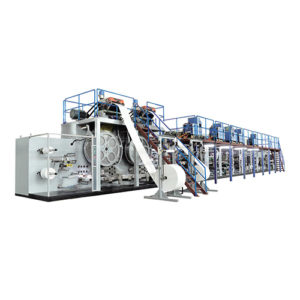
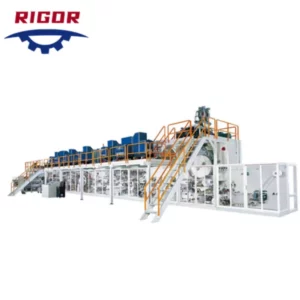
A complete production line, including the main machine, raw material staging area, and end-of-line packaging equipment, requires a significant amount of space. A typical high-speed baby diaper line might be 25-30 meters long and 4-5 meters wide. A general guideline is to allocate a space of at least 40 meters in length, 15 meters in width, and 6 meters in height to comfortably accommodate the machine, material flow, and maintenance access.
What kind of training and support do manufacturers provide after installation?
Reputable equipment suppliers provide comprehensive support. This typically includes on-site installation and commissioning by their engineers, extensive training for your operators and maintenance staff on machine operation and troubleshooting, and a warranty period (usually 12 months). Many suppliers now also offer ongoing remote support via Industry 4.0 connectivity, allowing their technicians to diagnose issues and guide your team from a distance.
Can modern diaper machines produce different types of products, like both baby diapers and adult pants?
Yes, flexibility is a key feature of modern design. Many suppliers offer "combi-machines" that are engineered to produce different product types. More commonly, modular machines can be reconfigured or have modules swapped out to change production from, for example, taped baby diapers to pull-up style baby pants or even light adult incontinence products. This allows manufacturers to adapt to changing market demands.
How do these machines handle the new generation of eco-friendly and biodegradable materials?
Advanced machines are designed with a wider processing window to handle the unique properties of sustainable materials. This includes more sensitive tension control systems for delicate bio-nonwovens, adjustable temperature and pressure settings for sealing bio-based films (like PLA), and the ability to process fluff pulp from alternative, certified sources. It is crucial to discuss your specific material plans with the equipment supplier.
What are the main differences between a semi-automatic and a fully automatic production line?
A fully automatic line handles the entire process from raw material splicing to final product packaging without manual intervention. A semi-automatic line, often a more budget-friendly option, may require operators to manually perform certain tasks, such as loading raw material rolls, packing finished products into bags, or handling rejected items. While lower in initial cost, semi-automatic lines have lower output and higher labor requirements.
How important is the quality of raw materials for the machine's performance?
The quality of raw materials is absolutely critical. Even the most advanced diaper manufacturing equipment technology cannot produce a high-quality product from substandard materials. Poor quality fluff pulp, inconsistent SAP, or nonwovens with defects will lead to higher waste rates, potential machine jams, and a final product that fails to perform. Establishing a reliable supply chain for quality materials is just as important as selecting the right machine.
A Final Thought on Future-Proofing Your Investment
Choosing to invest in a diaper production line is a significant undertaking, one that lays the foundation for your business for years to come. As we have explored, the technology available in 2026 offers capabilities that were unimaginable just a decade ago. The decision is no longer simply about finding a machine that makes diapers; it is about selecting a strategic manufacturing partner in the form of a technological platform. The right platform will be fast, efficient, sustainable, intelligent, and flexible. It will empower you not just to produce for today's market, but to innovate and adapt for the markets of tomorrow. By carefully considering these technological advancements, you position your enterprise not just to compete, but to lead.
Ссылки
ANDRITZ AG. (2025). Production platforms for baby diaper production. ANDRITZ Group. Retrieved from
Fujian Xingyuan Supply Chain Management Co., Ltd. (n.d.). Baby adult diaper production lines for disposable diaper making. Made-in-China.com. Retrieved from
Quanzhou Rigor Machinery Co., Ltd. (2021). Disposable hygiene products machinery. Diapermachines.com. Retrieved from
Quanzhou Shengquan Machinery Co., Ltd. (n.d.). Fully automatic sanitary napkin making machine production line. Made-in-China.com. Retrieved from
SQ Machine. (2025). One stop diapers production line solution. Sanitarypadmachine.com. Retrieved from
SUNREE. (2025). Manufacturing machines. Sunree Hygiene Machinery. Retrieved from
Womeng W.T.(Shanghai) Co.,Ltd. (2025, April 14). Detailed explanation of diaper production process. Womeng Machines. Retrieved from https://www.womengmachines.com/detailed-explanation-of-diaper-production-process/