Аннотация
An examination of the global hygiene products industry in 2026 reveals a critical inflection point for manufacturers in emerging economies. The focus is shifting from pure production speed to a more holistic understanding of operational excellence, where diaper packaging automation and efficiency become central pillars of profitability and market resilience. This analysis delineates the strategic imperatives behind investing in advanced packaging systems, moving beyond superficial metrics to explore the profound impact on a company's financial and operational health. It investigates how integrated automation solutions directly mitigate rising labor costs and inconsistencies, how intelligent material handling minimizes waste, and how the principles of Industry 4.0 facilitate predictive maintenance, thereby reducing the total cost of ownership (TCO). The discourse further explores the necessity of modular, flexible systems to achieve market agility in the face of diverse consumer demands. The central proposition is that a thoughtful, strategic implementation of packaging automation is not merely an operational upgrade but a fundamental business transformation that secures a competitive advantage for manufacturers in South America, Russia, Southeast Asia, the Middle East, and South Africa.
Основные выводы
- Integrate end-to-end systems from stacking to palletizing to slash labor costs.
- Adopt smart, data-driven systems to minimize packaging material consumption and waste.
- Рассчитайте общую стоимость владения, а не только первоначальную цену покупки машины.
- Boost your ROI by mastering diaper packaging automation and efficiency through modular designs.
- Use automated vision inspection to guarantee package integrity and protect brand reputation.
- Plan for future market shifts with scalable and easily upgradable packaging lines.
Оглавление
- A Paradigm Shift: Viewing Packaging Not as a Cost, but as a Profit Center
- 1. Integrating End-to-End Automation to Reduce Labor Dependence
- 2. Leveraging Smart Systems for Material Efficiency and Waste Reduction
- 3. Minimizing Total Cost of Ownership (TCO) Through Predictive Maintenance
- 4. Enhancing Market Agility with Modular and Flexible Packaging Solutions
- 5. Ensuring Product Quality and Brand Reputation with Advanced Inspection
- Часто задаваемые вопросы (FAQ)
- Заключение
- Ссылки
A Paradigm Shift: Viewing Packaging Not as a Cost, but as a Profit Center
For many years, particularly in rapidly growing markets, the primary focus of a diaper manufacturing operation was understandably centered on the core production line. The goal was simple: produce as many quality diapers as possible, as quickly as possible. The packaging at the end of the line was often seen as a necessary final step, a cost center to be managed rather than a strategic asset to be optimized. I have spoken with countless factory managers from Johannesburg to Jakarta who have expressed this sentiment. Their attention was on the intricate dance of nonwovens, pulp, and superabsorbent polymers. The bagging of the final product was, by comparison, an afterthought.
However, the landscape of 2026 presents a different set of challenges and opportunities. As markets mature and competition intensifies, the margins for error—and for inefficiency—begin to shrink. Labor costs, even in traditionally low-cost regions, are on a steady upward trend. Consumers are becoming more discerning, demanding not only a quality product inside the bag but also perfect, consistent packaging on the shelf. In this new reality, the old perspective on packaging is not just outdated; it is a direct threat to profitability. The most forward-thinking manufacturers are now undergoing a profound paradigm shift. They are beginning to recognize that excellence in diaper packaging automation and efficiency is a powerful lever for boosting their return on investment (ROI).
This is not about simply buying a faster bagging machine. It is about reconceptualizing the entire end-of-line process. Imagine your production line as a river. For a long time, all efforts went into making the main channel flow faster. But if the river mouth is choked with inefficient, manual processes, the entire flow backs up. The speed of your main Машина для производства подгузников becomes irrelevant if diapers are piling up, waiting to be manually counted, stacked, and bagged. This bottleneck creates hidden costs: wasted labor, inconsistent package quality, higher material consumption, and costly downtime.
This guide is designed to illuminate this new perspective. We will move beyond the simple specifications of a machine and explore the five fundamental ways that a strategic approach to packaging automation can directly enhance your ROI. We will examine how to transform your packaging operations from a cost center into a robust, efficient, and profitable component of your entire manufacturing ecosystem. This journey requires a shift in thinking, one that values integration, data, flexibility, and a long-term view of ownership. It is a journey that, once completed, can secure your company’s position as a leader in your market for years to come.
1. Integrating End-to-End Automation to Reduce Labor Dependence
One of the most immediate and quantifiable benefits of advanced packaging automation lies in its ability to drastically reduce the reliance on manual labor. In many semi-automated facilities, the end of the line is a flurry of human activity. Workers manually catch, count, and orient stacks of diapers, feed them into a bagging machine, seal the bags, place them in cartons, and then stack those cartons onto pallets. Each of these touchpoints represents a point of potential inefficiency, error, and cost.
The True Cost of Manual and Semi-Automated Packaging
The cost of a manual workforce is often miscalculated. The visible expense is, of course, the hourly wage. Yet, a more thorough analysis, one that considers the total economic reality, reveals a much larger financial burden. Think about the hidden costs. There is the expense of recruitment and the continuous cycle of training new employees, a significant factor in industries with high turnover rates. Every new worker needs time to reach peak efficiency, and during this learning curve, productivity is lower and the potential for mistakes is higher.
Human error is an unavoidable consequence of manual repetition. A miscounted stack of diapers leads directly to customer complaints and potential penalties from retailers. An improperly sealed bag can allow moisture to compromise the product, resulting in unsaleable goods. These inconsistencies in quality damage the one thing that is most difficult to build and easiest to lose: brand reputation. Furthermore, manual labor introduces variability in throughput. The speed of the packaging line becomes dependent on the energy and focus of the workers, which can fluctuate throughout a shift and from day to day. This makes production planning and forecasting inherently unreliable. By contrast, a fully automated system operates with relentless consistency, hour after hour, day after day.
Seamless Integration: From Stacker to Palletizer
The goal of modern diaper packaging automation and efficiency is to create a seamless, "lights-out" operation from the moment a diaper exits the main production machine to the moment it is a palletized load ready for shipment. Let us walk through this integrated process.
- Stacking and Counting: As diapers come off the main converter at speeds of up to 1,200 pieces per minute, they enter an automatic stacker. Laser or optical sensors count each diaper with perfect accuracy, and a servo-controlled mechanism gently compresses and accumulates them into a stack of the precise pre-programmed count (e.g., 48, 64, or 96 diapers).
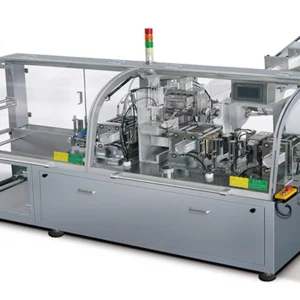
- Bagging (Bag-Making and Filling): The completed stack is then transferred into the bagging unit. In the most advanced systems, the bagger itself creates the bag from a roll of printed polyethylene film, which is more cost-effective than using pre-made bags. The stack is inserted, the bag is sealed, and a handle or opening is cut—all within a single, continuous motion.
- Cartoning/Case Packing (Optional): Depending on the market and distribution channel, the sealed bags may need to be packed into secondary cardboard cases. A robotic case packer will pick up a number of bags, orient them correctly, and place them into a pre-erected case.
- Palletizing: Finally, a robotic palletizer arm picks up the individual bags or filled cases and stacks them onto a pallet according to a pre-defined, interlocking pattern that ensures stability for shipping. Once a pallet is complete, it is automatically conveyed to a stretch-wrapping station and is then ready for the warehouse.
This level of integration, where each machine communicates with the next, eliminates the manual touchpoints and the associated costs and errors. It transforms a chaotic, labor-intensive area into a quiet, efficient, and predictable process.
Calculating Labor ROI in Emerging Economies
To truly grasp the financial benefit, a manufacturer in a market like Russia or Brazil must perform a specific return on investment calculation. It is not enough to say "automation saves labor." One must quantify it.
Consider a hypothetical factory running three shifts with five workers per shift dedicated to manual packaging. That is 15 workers in total.
| Cost Factor | Manual Process (Annual Cost) | Automated Process (Annual Cost) | Annual Savings |
|---|---|---|---|
| Direct Wages | $120,000 (15 workers @ $8,000/yr avg.) | $16,000 (2 skilled technicians @ $8,000/yr) | $104,000 |
| Recruitment & Training | $15,000 (assuming 25% turnover) | $1,000 | $14,000 |
| Cost of Quality Errors | $25,000 (product giveaway, returns) | $2,000 | $23,000 |
| Lost Productivity | $30,000 (variable speed, breaks) | $0 | $30,000 |
| Total Annual Cost | $190,000 | $19,000 | $171,000 |
Note: Figures are illustrative and should be adjusted for local wages and operational specifics.
In this simplified model, the annual savings amount to $171,000. If the initial investment in a fully automated packaging line is, for instance, $500,000, the simple payback period is less than three years ($500,000 / $171,000 ≈ 2.92 years). This calculation does not even include other benefits like increased throughput and reduced material waste, which we will explore next. This kind of clear financial reasoning demonstrates that automation is not a luxury but a sound financial investment.
2. Leveraging Smart Systems for Material Efficiency and Waste Reduction
Beyond labor savings, a significant and often underestimated advantage of modern packaging automation is its capacity for remarkable material efficiency. In a high-volume industry like diaper manufacturing, even a small percentage of material waste can translate into substantial financial losses over a year. Smart automation systems are designed with a core focus on minimizing this waste, turning material savings into a direct contribution to your bottom line.
Precision in Polybag Consumption
The primary packaging material is typically a printed polyethylene (PE) film, which is purchased by weight. In older or simpler bagging machines, the control over how much film is used for each bag can be imprecise. These systems might use pneumatic controls or fixed-cycle mechanics, which can lead to variations in bag length and inconsistent sealing, often requiring a larger "safety margin" of material to ensure a successful package.
In contrast, a state-of-the-art packaging machine utilizes servo-driven technology. Servo motors allow for incredibly precise, digitally controlled movements. The machine can be programmed to use the exact length of film required for a specific pack count and diaper size, with tolerances measured in fractions of a millimeter. The sealing jaws are also servo-controlled, applying the precise temperature, pressure, and time needed for a perfect seal without wasting material or energy.
Think of it like a skilled tailor versus a rough cutter. The rough cutter might leave generous amounts of extra fabric around each pattern piece to be safe, resulting in a pile of wasted cloth. The skilled tailor, with precise measurements and movements, cuts exactly along the line, maximizing the use of the fabric. A servo-driven bagger is that skilled tailor for your packaging film. A reduction of just 5mm of film per bag, on a line producing 60 bags per minute, 24 hours a day, can add up to millions of bags a year. This small saving per unit aggregates into tens of thousands of dollars in annual material cost reduction.
Data-Driven Waste Analysis
The concept of "smart" automation extends to its ability to monitor itself and provide actionable data. Modern diaper packaging automation and efficiency is achieved through the integration of sensors and control systems under the umbrella of Industry 4.0 (diapermachines.com, 2026). These are not just machines that perform a task; they are information-gathering devices.
Sensors can detect when a seal is not formed correctly, when a bag is torn, or when the printed artwork on the film is misaligned. Instead of allowing a stream of defective packages to be produced, the system can flag the error in real-time. More advanced systems can even make micro-adjustments automatically to correct the issue. For example, if a vision system detects that the print is drifting, it can signal the unwinding motor to adjust the film's position.
All this data is logged. At the end of a shift or a week, a production manager can pull a report that details not just the number of packages produced, but the number and types of errors that occurred. The report might show that 80% of film waste is happening due to misaligned splicing when a new roll of film is loaded. This data-driven insight allows managers to address the root cause of the problem—perhaps by providing better training on the splicing procedure or by investing in an automatic splicing unit—rather than just accepting the waste as a cost of doing business.
The Economic Impact of Sustainable Packaging Materials
The global push toward sustainability is also impacting packaging choices. Brands are increasingly looking to use thinner films to reduce plastic consumption or to incorporate films made from recycled or biodegradable materials. These newer, more eco-friendly materials can sometimes be more challenging to handle. They might be more prone to stretching, tearing, or have a narrower temperature window for effective sealing.
Manual or semi-automated processes often struggle with these sensitive materials, leading to high waste rates that can negate the environmental and cost benefits. A sophisticated automated system, with its precise tension control, servo-driven movements, and highly accurate temperature regulation, is far better equipped to handle these next-generation films successfully. This capability not only reduces waste but also allows a manufacturer to meet the sustainability demands of major retailers and environmentally conscious consumers, opening up new market opportunities. The ability to efficiently run thinner gauge film, for example, directly translates to lower material cost per bag and reduced shipping weight, compounding the financial benefits.
Here is a comparative look at how these factors play out:
| Характеристика | Semi-Automated System | Advanced Automated System | Impact on ROI |
|---|---|---|---|
| Film Control | Pneumatic/Mechanical | Servo-Driven Digital Control | Lower material consumption per bag. |
| Waste Detection | Operator dependent | Real-time sensor/vision systems | Immediate error correction, reduced scrap. |
| Data & Analytics | Manual tracking (if any) | Automated logging and reporting | Identifies root causes of waste for targeted improvement. |
| Material Handling | Limited to robust, thick films | High compatibility with thin/eco-films | Enables cost savings and meets market sustainability demands. |
By treating material not as an infinite resource but as a valuable asset to be conserved, smart automation adds another significant layer of ROI, turning waste reduction into a consistent source of profit.
3. Minimizing Total Cost of Ownership (TCO) Through Predictive Maintenance
When evaluating a significant capital investment like a packaging line, it is a common human tendency to focus on the most visible number: the initial purchase price. However, experienced manufacturers understand that the "sticker price" is only one part of a much larger economic equation. A more sophisticated and accurate measure is the Total Cost of Ownership (TCO), a framework that encompasses all costs associated with the equipment over its entire lifecycle (womengmachines.com, 2026). Modern automation, particularly systems integrated with Industry 4.0 technologies, offers powerful tools to minimize TCO, primarily by combating the single greatest enemy of productivity: unplanned downtime.
Beyond the Sticker Price: Understanding TCO
The TCO of a diaper packaging machine is a comprehensive calculation. Let us break down its key components:
- Acquisition Cost: The initial price of the machine, including shipping and installation.
- Operational Costs: These are the daily expenses of running the machine. They include the energy consumed (electricity and compressed air), the cost of consumables (like spare parts and lubricants), and the labor cost of the technicians who oversee it.
- Maintenance Costs: This includes the cost of both scheduled preventive maintenance and, more significantly, unscheduled emergency repairs. It covers the cost of replacement parts and the labor for the maintenance team.
- Downtime Costs: This is the most damaging and often underestimated cost. When the packaging line stops unexpectedly, the entire production line behind it may be forced to halt. The cost of downtime is the value of the production that was lost during the stoppage. If a line produces $5,000 worth of product per hour, then just four hours of unplanned downtime in a month represents a $20,000 loss.
- Decommissioning Costs: The cost to eventually remove or replace the equipment at the end of its useful life.
A cheaper machine with higher energy consumption, frequent breakdowns, and expensive spare parts will almost certainly have a higher TCO than a more expensive, well-engineered machine that is reliable and efficient. The goal of a smart investment is to minimize this total cost over the machine's lifespan, and this is where predictive maintenance becomes a game-changer.
The Role of Industry 4.0 and IoT Sensors
Traditional maintenance follows one of two models: reactive (fixing things when they break) or preventive (replacing parts on a fixed schedule, whether they need it or not). Both are inefficient. Reactive maintenance leads to costly unplanned downtime. Preventive maintenance often results in replacing parts that still have significant useful life left, which is wasteful.
Predictive maintenance, enabled by the Internet of Things (IoT) and Industry 4.0 principles, offers a far more intelligent approach. Modern automated packaging lines are equipped with a network of sensors that act like a nervous system for the machine. These sensors constantly monitor critical parameters:
- Vibration sensors on motors and bearings can detect subtle changes in vibration patterns that indicate a bearing is beginning to wear out, long before it fails.
- Temperature sensors on servo motors or sealing bars can alert operators if a component is overheating, a sign of excessive friction or an impending electrical issue.
- Pressure sensors in pneumatic systems can identify leaks that reduce efficiency and waste compressed air, which is a very expensive utility.
- Motor current monitoring can detect increases in the electrical current drawn by a motor, suggesting it is working harder than it should be, perhaps due to a mechanical problem.
All this data is fed into a central controller. The system's software uses algorithms or even artificial intelligence (AI) to analyze these data streams, recognize patterns, and predict a potential failure before it happens. Instead of a sudden breakdown, the system generates an alert: "Vibration on sealing jaw motor #2 has increased by 15%. Recommend inspection and replacement of bearing within the next 72 hours." This allows the maintenance team to schedule the repair during a planned shutdown, order the necessary part in advance, and avoid a catastrophic line stoppage. This shift from "fail and fix" to "predict and prevent" is fundamental to minimizing TCO.
Case Study: Reducing Downtime in a Middle Eastern Plant
Consider a diaper manufacturer in the Middle East running a legacy packaging line. They were experiencing an average of 10 hours of unplanned downtime per month, primarily due to motor failures and sealing bar issues. At a lost production value of $6,000 per hour, this was costing them $60,000 per month, or $720,000 per year.
They invested in a new, fully automated packaging line equipped with a predictive maintenance system. The new line had a higher initial purchase price, but the benefits quickly became apparent. In the first year of operation, the predictive maintenance system flagged 12 potential component failures in advance. These issues were all addressed during scheduled maintenance windows. Unplanned downtime dropped from 10 hours per month to less than 1 hour per month.
The savings from avoided downtime alone were over $54,000 per month. Over the year, this amounted to a saving of more than $648,000. This massive reduction in downtime costs, combined with lower energy consumption and material waste, meant that the higher initial investment in the advanced machine paid for itself far more quickly than the "cheaper" alternative would have. This demonstrates that excellence in diaper packaging automation and efficiency is not about buying the cheapest equipment, but the most valuable.
4. Enhancing Market Agility with Modular and Flexible Packaging Solutions
The consumer goods market of 2026 is characterized by fragmentation and rapid change. Gone are the days when a manufacturer could produce a single product in a single package size for years on end. Today's consumers, whether in Southeast Asia or South America, demand choice. They want jumbo packs for value, smaller packs for convenience and trial, and promotional multi-packs. Retailers demand shelf-ready packaging and have their own specific requirements. This proliferation of Stock Keeping Units (SKUs) presents a major challenge for manufacturers with rigid production lines. Market agility—the ability to respond quickly and cost-effectively to these changing demands—is now a key determinant of success.
The Challenge of SKU Proliferation
Imagine you are a production manager. On Monday, marketing decides to run a promotion requiring a 40-count bonus pack. On Wednesday, a major supermarket chain requests a new 88-count value pack. On Friday, the export department needs a smaller, 24-count pack for a new market entry. If your packaging line is a monolithic piece of equipment designed for one specific pack size, each of these requests triggers a crisis.
A changeover on an older, inflexible machine can be a nightmare. It might involve hours of mechanical adjustments, swapping out heavy tooling, fine-tuning settings through trial and error, and producing significant amounts of scrap before the line is running smoothly again. This downtime is lost production. The complexity of the changeover can also lead to errors, resulting in poor quality packages. Faced with this reality, many companies are forced to say "no" to new opportunities, or they resort to expensive manual repacking, completely defeating the purpose of their initial automation. This lack of flexibility puts them at a severe disadvantage against competitors who can quickly adapt.
The Power of Modular Design for Quick Changeovers
The solution to this challenge lies in a modern engineering philosophy: modularity. Instead of a single, integrated machine, a modular packaging line is built from distinct, interconnected modules. You might have an infeed module, a stacking module, a bagging module, and a sealing module. This approach has profound implications for flexibility, as noted by industry experts (womengmachines.com, 2026).
The key to market agility is the ability to perform a fast and simple changeover. On a modular system designed for flexibility, this process is revolutionized:
- Tool-less Adjustments: Many adjustments for different pack heights, widths, and lengths can be made using handwheels with digital readouts or even automatically through the machine's Human-Machine Interface (HMI). A technician simply selects the pre-programmed recipe for the "88-count pack," and servo motors automatically move guides, conveyors, and other components to their correct positions.
- Cassette-based Tooling: For parts that do need to be changed, such as the forming shoulder that shapes the bag, they are designed as lightweight "cassettes" that can be quickly swapped out without the need for specialized tools. What might have taken two hours of unbolting and recalibrating on an old machine can now be done in under 15 minutes.
- Software-driven Recipes: All the parameters for a specific SKU—stack count, bag length, sealing temperature, print position—are stored as a "recipe" in the machine's control system. This eliminates the guesswork and trial-and-error that plagues manual changeovers, ensuring consistent quality from the very first bag.
This ability to switch from producing a 40-count pack to an 88-count pack in minutes, rather than hours, is what defines market agility. It allows a manufacturer to economically produce shorter runs of different SKUs, to say "yes" to retailer requests, and to launch promotional products quickly to gain a competitive edge. Investing in a flexible diaper packaging machine is an investment in the ability to adapt and thrive.
Future-Proofing Your Investment
Modular design also offers a critical long-term benefit: it future-proofs your investment. Markets and technologies are constantly evolving. Perhaps in three years, a new type of biodegradable film becomes the industry standard, requiring a different type of sealing technology. Or maybe your marketing team wants to introduce a new package format with a resealable zipper.
On a monolithic machine, accommodating such a change might be impossible or require a prohibitively expensive custom retrofit. On a modular line, the solution is often as simple as replacing the existing sealing module with a new one that has the required capabilities. The rest of the line—the infeed, stacker, and controls—remains in place. This ability to upgrade and adapt individual parts of the line over time extends the useful life of the entire system and ensures that your initial capital investment continues to generate returns for many years to come. It protects you from the risk of your equipment becoming obsolete as your market develops.
5. Ensuring Product Quality and Brand Reputation with Advanced Inspection
In the final analysis, the purpose of a diaper is to provide comfort and security to a baby, and peace of mind to a parent. The packaging that encloses the product is the very first interaction a consumer has with your brand. It is a silent promise of the quality contained within. A torn bag, an incorrect count, or a poorly sealed package breaks this promise before the product is even used. It erodes trust and damages brand reputation in a way that can be difficult to repair. Therefore, the last stage of automation—automated quality inspection—is not just a feature; it is the guardian of your brand.
The Last Line of Defense: Automated Quality Control
Relying on human inspectors to catch every error on a high-speed packaging line is an impossible task. The line may be producing one bag every second. After a few hours of staring at a stream of identical packages, human attention inevitably wanes. A small defect, like a pinhole in a seal or a slight misalignment of the printed graphics, is easily missed. These small misses, however, can have large consequences.
Modern diaper packaging automation and efficiency incorporate sophisticated vision inspection systems that perform this task with superhuman speed and accuracy (diapermachines.com, 2026). High-resolution cameras, coupled with powerful image processing software, act as tireless digital eyes. As each completed bag exits the sealer, it passes through an inspection zone where the vision system checks for a multitude of potential faults in a fraction of a second:
- Seal Integrity: The system analyzes the sealed area to ensure it is complete, without any channels, wrinkles, or burn-throughs that could compromise the package's sterility.
- Correct Count: Some systems can use X-ray or other technologies to verify that the number of diapers inside the bag matches the number printed on the outside. This eliminates "product giveaway" and prevents customer disappointment from short counts.
- Print and Graphic Quality: The cameras check for print registration, color accuracy, and any smudges or defects in the artwork. It ensures every package on the shelf looks perfect.
- Code Verification: The system reads the printed date, lot, and batch codes to ensure they are present, correct, and legible for traceability.
- Physical Defects: The system looks for any tears, punctures, or improper cuts on the bag itself.
Any package that fails even one of these checks is instantly identified.
Reject Systems and Traceability
Identifying a faulty package is only half the job. The system must then remove it from the production flow. This is typically done with an automated reject mechanism, such as a gentle pneumatic pusher or a blast of air that diverts the defective bag into a reject bin. This happens at full line speed without any interruption to production.
Crucially, the system also logs the rejection and the reason for it. This data is invaluable. If the system suddenly starts rejecting a high number of bags for "poor top seal," it provides an immediate alert to the operator that the sealing bar temperature or pressure may need adjustment. This creates a closed-loop quality system where inspection data is used to actively improve the production process in real-time.
Furthermore, the data logging contributes to robust traceability. In the unfortunate event of a product recall, the ability to know exactly which packages were produced from a specific batch of raw materials or during a specific time window is essential. The detailed logs from the inspection system provide this granular traceability, allowing for a targeted and efficient recall that minimizes market disruption and financial impact.
The Unquantifiable ROI of a Strong Brand
How do you calculate the return on investment for a customer who chooses your brand over a competitor's because they trust it? How do you measure the value of avoiding a viral social media post from an angry parent who found a torn bag? The ROI of brand reputation is difficult to quantify on a spreadsheet, but it is arguably the most valuable asset a company possesses.
Every perfectly sealed, correctly counted, and beautifully presented package that reaches the store shelf reinforces this asset. It communicates professionalism, care, and quality. It builds consumer confidence and fosters loyalty. Investing in advanced inspection systems is an investment in this trust. It is the final, critical step in ensuring that the immense effort and technology that went into making a high-quality diaper is perfectly represented by the package that delivers it to the world. It is the ultimate expression of a commitment to excellence.
Часто задаваемые вопросы (FAQ)
What is the typical ROI for investing in diaper packaging automation?
The Return on Investment (ROI) can vary significantly based on local labor costs, material prices, and the efficiency of the previous system. However, for many manufacturers in emerging markets, a payback period of 2 to 4 years is a realistic expectation. The ROI is driven by direct labor savings, reduced material waste (often 3-5%), increased throughput, and the elimination of costly downtime and quality-related returns.
Can a single automated packaging line handle different diaper sizes and package counts?
Yes, modern, high-quality packaging machines are specifically designed for flexibility. Through modular design and servo-driven controls, they can store "recipes" for various product and package combinations. A changeover between diaper sizes (e.g., Newborn to Junior) and different package counts (e.g., a 40-count bag to an 88-count bag) can often be completed in under 30 minutes, compared to several hours on older equipment.
How does automation improve the sustainability of diaper packaging?
Automation contributes to sustainability in several key ways. First, its precision reduces material waste, meaning less plastic is consumed overall. Second, advanced automated systems are better equipped to handle thinner, lighter packaging films and those made from recycled or biodegradable content, which are often more difficult to manage. Finally, efficient operation and predictive maintenance reduce energy consumption per package produced.
What is "predictive maintenance" and how does it affect my TCO?
Predictive maintenance uses sensors (monitoring vibration, temperature, etc.) to predict when a machine component is likely to fail before it actually breaks. This allows you to schedule repairs during planned downtime, avoiding costly, unexpected production stoppages. It significantly lowers the Total Cost of Ownership (TCO) by minimizing lost production, reducing emergency repair costs, and optimizing the lifespan of spare parts.
Is a fully automated system difficult for my staff to operate?
While the underlying technology is complex, modern machines are designed with user-friendly Human-Machine Interfaces (HMIs), which are often large touch screens with intuitive graphics. A properly trained technician can operate the line, select recipes for different products, and diagnose basic alerts. Reputable machine suppliers, like Womeng Intelligent Equipment, provide comprehensive training and ongoing support to ensure your team is confident and capable (Womeng Intelligent Equipment Co., Ltd., n.d.).
How much space does a fully automated diaper packaging line require?
The footprint depends on the configuration, but a typical line including a stacker, bagger, and case packer might range from 15 to 25 meters in length. When planning, it is also important to account for space for material staging (rolls of film, empty cartons) and for the movement of finished pallets. A professional supplier can provide detailed layout drawings based on your specific factory space.
Does automation eliminate the need for human workers entirely?
No, it changes the nature of the work. It replaces low-skill, repetitive manual labor with a smaller number of high-skill roles. You will need trained technicians to oversee the line, manage product changeovers, load materials, and perform maintenance. The focus shifts from manual dexterity to technical oversight and problem-solving.
Заключение
The journey through the intricacies of modern diaper packaging automation and efficiency reveals a clear and compelling narrative. We have moved far beyond the simple metric of bags-per-minute to a more nuanced and powerful understanding of operational excellence. The strategic implementation of integrated, intelligent packaging systems is not an optional luxury for manufacturers in 2026; it is a fundamental requirement for sustainable growth and profitability in competitive global markets.
By embracing end-to-end automation, a manufacturer directly confronts and mitigates the rising tide of labor costs and the inherent unreliability of manual processes. Through the adoption of smart, servo-driven systems, the needless waste of packaging materials is transformed into a consistent and measurable source of savings. By shifting the maintenance philosophy from reactive repair to data-driven prediction, the crippling financial impact of unplanned downtime is dramatically reduced, lowering the total cost of ownership over the equipment's entire lifecycle. The incorporation of modular, flexible designs provides the market agility needed to respond to an ever-changing consumer landscape, turning potential challenges into profitable opportunities. Finally, the implementation of tireless, automated inspection systems acts as the ultimate guardian of product quality and, by extension, brand reputation.
For business leaders in South America, Russia, Southeast Asia, the Middle East, and South Africa, the question is no longer if they should invest in advanced packaging automation, but how to do so strategically. It requires a holistic view, a commitment to calculating the true costs of inefficiency, and a partnership with equipment suppliers who understand the long-term vision. Making this investment is a decisive step toward building a more resilient, efficient, and profitable future.
Ссылки
diapermachines.com. (2026, January 28). A practical 2026 buyer’s guide: 6 critical advances in diaper manufacturing equipment technology. https://www.diapermachines.com/2026/02/02/2026-diaper-equipment-tech-guide/
diapersmachines.com. (2025, April 16). What is diaper making machine and how it works?https://www.diapersmachines.com/news/what-is-diaper-making-machine-and-how-it-works-210122.html
Smarter, A. (2023). IoT in manufacturing: Predictive maintenance and beyond. Industry 4.0 Press.
Suntech Health. (2026, February 20). SUNTECH nonwoven & hygiene machinery. https://suntech-health.com/
Williams, J. (2024). Lean packaging: Reducing waste in the supply chain. The Efficiency Group.
Womeng Intelligent Equipment Co., Ltd. (n.d.). Professional diaper making machine and diaper production line manufacturers. Retrieved February 22, 2026, from
Womeng Intelligent Equipment Co., Ltd. (2025, April 14). Detailed explanation of diaper production process. https://www.womengmachines.com/detailed-explanation-of-diaper-production-process/
Womeng Intelligent Equipment Co., Ltd. (2025, December 12). Expert guide to how diapers are made: 7 key production stages for 2025. https://www.womengmachines.com/expert-guide-to-how-diapers-are-made-7-key-production-stages-for-2025/
Womeng Intelligent Equipment Co., Ltd. (2026, January 30). 7 critical factors for your 2026 pad machine investment: An expert checklist. https://www.womengmachines.com/2026-pad-machine-buyers-guide/