Özet
The procurement of a wet tissue machine for hospitals and clinics represents a significant investment in public health infrastructure, demanding a rigorous evaluation of technical specifications, regulatory compliance, and long-term operational viability. This analysis examines the multifaceted considerations confronting manufacturers and healthcare providers in 2025, particularly within emerging markets like South America, Russia, Southeast Asia, the Middle East, and South Africa. It delineates a comprehensive framework for selecting equipment that not only meets but exceeds stringent hygiene standards. Key evaluation criteria include adherence to Good Manufacturing Practices (GMP), the capability to handle specialized nonwoven materials and sterile liquid formulations, and the appropriate level of automation to balance productivity with capital outlay. The discourse extends to the imperatives of contamination control, machine versatility for future product diversification, supplier dependability, and a holistic assessment of the total cost of ownership. The objective is to equip decision-makers with the necessary knowledge to procure a wet tissue machine for hospitals and clinics that ensures the production of safe, effective medical wipes while delivering a sustainable return on investment.
Önemli Çıkarımlar
- Ensure the machine meets regional GMP and ISO standards for medical device manufacturing.
- Verify the equipment's precision in handling various nonwoven fabrics and sterile liquids.
- Select an automation level that aligns with your production volume and labor costs.
- Prioritize a wet tissue machine for hospitals and clinics with integrated sterilization systems.
- Evaluate the machine's modularity for future upgrades and product line expansions.
- Choose a supplier with a proven track record of reliable after-sales support in your region.
- Analyze the total cost of ownership beyond the initial purchase price for long-term value.
İçindekiler
- GMP Compliance and Regulatory Adherence: The Foundation of Medical-Grade Production
- Material Compatibility and Precision Handling: The Heart of a Quality Wipe
- Automation and Operational Efficiency: Balancing Labor, Speed, and Investment
- Sterilization and Contamination Control: The Non-Negotiable Mandate
- Machine Versatility and Future-Proofing: Preparing for Tomorrow's Demands
- Supplier Reliability and After-Sales Support: Your Partner in Production
- Total Cost of Ownership (TCO): A Holistic View of Your Investment
- Sıkça Sorulan Sorular (SSS)
- Sonuç
- Referanslar
GMP Compliance and Regulatory Adherence: The Foundation of Medical-Grade Production
When one considers the acquisition of a wet tissue machine for hospitals and clinics, the conversation must begin not with speeds or feeds, but with the bedrock of medical manufacturing: regulatory compliance. In the healthcare environment, a wet wipe is not a mere convenience item; it is a medical tool. It could be used to disinfect a surface before a procedure, to clean a patient's skin, or to sterilize a piece of equipment. The potential for harm from a contaminated or improperly formulated wipe is immense. Consequently, health authorities globally impose strict regulations, often harmonized under the umbrella of Good Manufacturing Practices (GMP). These are not suggestions; they are legally enforceable systems designed to ensure products are consistently produced and controlled according to quality standards. For a prospective buyer in a market like Brazil, Russia, or South Africa, understanding these standards is the first step toward a successful and responsible investment.
Understanding GMP in Medical Device Manufacturing
Good Manufacturing Practices are a quality assurance system. Think of them as the comprehensive rulebook that governs every single step of the production process. GMP covers everything from the sourcing of raw materials to the final packaging and distribution of the product. The goal is to minimize the risks inherent in any pharmaceutical or medical device production that cannot be eliminated through testing the final product. For a wet tissue machine for hospitals and clinics, this means the machine itself must be designed, constructed, and installed in a way that facilitates GMP compliance.
What does this look like in practice? First, the materials used to build the machine must be appropriate. Surfaces that come into contact with the nonwoven fabric or the antiseptic liquid must be made of high-grade stainless steel, typically 316L, which is resistant to corrosion from cleaning agents and the product formulation itself. Welds should be smooth, polished, and free of crevices where microorganisms could harbor and multiply. The overall design should eliminate dead legs or hard-to-clean areas. Imagine trying to clean a complex pipe system with many sharp corners versus a smooth, curved tube; the latter is inherently more hygienic. A GMP-compliant machine embodies this principle of hygienic design.
Furthermore, the control systems and software on the machine fall under GMP scrutiny. Regulations like the U.S. FDA's 21 CFR Part 11, which often serves as an international benchmark, dictate requirements for electronic records and signatures. This ensures that every parameter change, every batch start, every alarm is recorded in a secure, unalterable audit trail. If a quality issue arises, you must be able to trace the complete history of that specific batch. Who was the operator? What were the machine settings for liquid dosage? At what time was it produced? A machine designed for the medical sector will have this traceability built into its core operating system.
Material Selection for Medical-Grade Wipes
The choice of raw materials is inextricably linked to the capabilities of the wet tissue machine and the regulatory framework. Medical wipes are not made from just any fabric. They are produced from technical nonwoven fabrics, which are engineered structures of fibers bonded together chemically, mechanically, or thermally. The selection of these materials is a science in itself, governed by the intended use of the wipe (Yundufillingmachine.com, 2025).
For instance, a wipe intended for skin antisepsis before an injection needs to be soft, low-linting (to avoid leaving fibers in the wound), and capable of holding and releasing a specific amount of alcohol or chlorhexidine solution. A common material for this is a spunlace fabric, often a blend of polyester for strength and viscose for absorbency and softness. A wipe for disinfecting hard surfaces in an operating room, however, might prioritize durability and scrubbing ability, perhaps using a meltblown or composite nonwoven fabric that can withstand vigorous use without tearing.
Your wet tissue machine for hospitals and clinics must be able to handle these different materials flawlessly. This involves having adjustable tension controls to manage fabrics of varying thicknesses and tensile strengths. The cutting mechanism must be robust enough to provide a clean, fray-free cut on tough materials yet delicate enough for softer ones. The folding system needs to be versatile to create the standard Z-folds or C-folds required for dispensing, without damaging the fabric's integrity. A machine designed for general-purpose baby wipes may not have the required precision or robustness to handle the specialized nonwovens used in healthcare settings.
Documentation and Traceability Requirements
A cornerstone of GMP is documentation. The old adage in quality assurance is, "If it wasn't documented, it didn't happen." When you purchase a wet tissue machine for hospitals and clinics, you are also purchasing a documentation package. This is not optional. Regulatory auditors from bodies like ANVISA in Brazil or Roszdravnadzor in Russia will demand to see it.
This package typically includes:
- Design Qualification (DQ): Documents proving the machine's design is suitable for its intended purpose and adheres to GMP principles.
- Installation Qualification (IQ): A checklist and report verifying that the machine, as installed, matches the design specifications and that all parts are correctly in place. This includes verifying material certificates for contact parts.
- Operational Qualification (OQ): A series of tests performed to verify that the machine operates correctly throughout its specified operating ranges. For example, testing that the liquid dosing system delivers the correct volume at its minimum, medium, and maximum speed settings.
- Performance Qualification (PQ): Documentation of tests showing that the machine, operating with the actual raw materials and product formulations, consistently produces wipes that meet all pre-determined quality specifications over a sustained period.
A reputable manufacturer of medical-grade machinery will provide a comprehensive documentation package and will often assist with the IQ/OQ/PQ process. This support is invaluable, especially for companies new to medical device manufacturing. The ability to trace every component of the final product back through the production process is non-negotiable. The machine's software and hardware must support this level of granular data logging for every batch, creating an unassailable record of quality.
Material Compatibility and Precision Handling: The Heart of a Quality Wipe
Once the regulatory framework is established, the focus shifts to the physical interaction between the machine and the materials it processes. A wet tissue machine is, at its core, a device for converting two primary raw materials—a solid nonwoven fabric and a liquid solution—into a finished, packaged product. The success of this conversion hinges on the machine's ability to handle both with exceptional precision and without compromising their integrity. For hospitals and clinics, where the wipe's performance can have direct health consequences, this precision is paramount. A wipe that is too dry will not disinfect effectively. A wipe made from a fabric that tears during use can pose a contamination risk.
Nonwoven Fabric Specifications for Clinical Use
The term "nonwoven fabric" encompasses a vast family of materials, each with unique properties. The choice of fabric dictates the wipe's application, feel, and cost. A wet tissue machine for hospitals and clinics must be a versatile platform capable of processing a range of these materials. Let's consider the different characteristics the machine must accommodate.
| Fabric Type | Key Characteristics | Typical Clinical Application | Machine Handling Considerations |
|---|---|---|---|
| Spunlace | Soft, drapable, good absorbency, low lint. Often a blend of PET/Viscose or PET/Woodpulp. | Patient cleansing, skin preparation, baby care in NICUs. | Requires gentle tension control to prevent stretching; sharp, well-maintained cutters for clean edges. |
| Meltblown | Excellent barrier properties, fine fibers, high surface area. Often polypropylene (PP). | High-level disinfectant wipes, filtration media, absorbent layers in composite wipes. | Prone to static; requires anti-static bars. Can be less robust, needing careful web handling. |
| Spunbond | Strong, durable, stable. Often polypropylene (PP) or polyester (PET). | Surface cleaning wipes, protective outer layers of composite wipes, sterilization wraps. | Higher tension settings may be needed; robust cutting system required for thicker variants. |
| Airlaid | Very high absorbency, bulky, cloth-like feel. Often wood pulp mixed with binders. | Wipes for managing heavy fluid spills, incontinent care wipes. | Can generate dust, requiring effective vacuum/extraction systems; precise folding is needed for bulky material. |
The machine's web handling system is the key. It consists of rollers, guides, and tension controllers that guide the large parent roll of nonwoven fabric through the machine. For clinical applications, this system must ensure the fabric is not stretched or distorted, as that would alter its properties. It must also keep the web perfectly aligned to ensure consistent folding and cutting. High-quality machines use servo-driven motors for each section, allowing for micro-adjustments to tension and speed, creating a stable process regardless of the fabric type being run. This adaptability is a hallmark of a well-designed specialized wet tissue machinery solution.
Liquid Formulation Dosing Precision
The second critical component is the liquid. In a hospital setting, this liquid is not just water; it is an active formulation. It could be 70% isopropyl alcohol, a chlorhexidine gluconate solution, a quaternary ammonium compound for surface disinfection, or a gentle, pH-balanced cleansing lotion for sensitive skin. The efficacy of the wipe is directly tied to the correct amount of this solution being applied to each wipe. This is known as the "wet-out" or "pick-up" percentage.
A typical specification might be a liquid-to-fabric weight ratio of 300%. This means for every 100 grams of dry fabric, 300 grams of liquid must be applied. A wet tissue machine for hospitals and clinics must achieve this target with exceptional accuracy and consistency, not just from wipe to wipe, but from the first wipe in a pack to the last.
Several dosing technologies are used:
- Spraying Systems: A series of nozzles sprays the liquid onto the fabric as it passes. High-end systems use multiple, independently controlled nozzle banks to ensure even coverage across the entire width of the fabric. The challenge is to avoid aerosolization of the liquid (especially with alcohol-based solutions, which creates a fire hazard) and to ensure the spray penetrates the full thickness of the fabric.
- Dripping/Pouring Systems: A simpler method where liquid is dripped from a manifold onto the fabric. This is less precise and can lead to uneven saturation, with the center of the web being wetter than the edges. It is generally not suitable for high-specification medical wipes.
- Immersion/Squeezing Systems: The fabric is run through a bath of the liquid and then through a set of nip rollers that squeeze out the excess. While it ensures full saturation, it can be wasteful and poses challenges for cleaning and changeover between different liquid formulations.
The gold standard for medical applications is often a sophisticated, non-contact spraying system integrated with a closed-loop control. A sensor measures the weight of the dry fabric entering the system, and another sensor measures the weight of the wetted fabric leaving it. The machine's control system (PLC) continuously compares the actual wet-out to the target setpoint and automatically adjusts the flow rate of the liquid pumps to maintain perfect consistency. This level of precision is not a luxury; it is a requirement for producing a reliable medical product.
Preventing Cross-Contamination
In a clinical environment, preventing the transfer of microbes is a primary concern. This principle extends to the manufacturing process. Cross-contamination can occur in two main ways: from one product batch to another, or from the environment into the product. A well-designed wet tissue machine for hospitals and clinics incorporates features to mitigate both risks.
For batch-to-batch contamination, the focus is on "cleanability." Quick changeovers between different liquid formulations are a common requirement. Imagine switching from an alcohol-based disinfectant wipe to a gentle, water-based skin wipe. Any residual alcohol could cause skin irritation. Therefore, the entire liquid delivery system—tanks, pipes, pumps, nozzles—must be designed for easy and complete cleaning and sanitization. This means using sanitary fittings (like Tri-Clamp connections), sloping pipes for full drainage, and materials that can withstand common sanitizing agents like steam, ozone, or chemical sterilants.
To prevent environmental contamination, the machine should be designed to operate within a cleanroom environment. This involves minimizing flat horizontal surfaces where dust can collect. Electrical cabinets should be sealed. Moving parts that require lubrication should use food-grade or medical-grade lubricants and be designed to prevent any leakage into the product zone. Many advanced machines feature an enclosed production area, sometimes with its own filtered air supply (HEPA filters), creating a micro-environment that is cleaner than the surrounding room. Such features demonstrate a manufacturer's deep understanding of the unique demands of medical production (Diapermachines.com, 2023).
Automation and Operational Efficiency: Balancing Labor, Speed, and Investment
The decision of how much automation to incorporate into a wet tissue production line is one of the most significant strategic choices a manufacturer will make. It is a complex calculation involving capital expenditure, local labor costs, production volume targets, and quality consistency requirements. There is no single "correct" answer; the optimal solution for a facility in Southeast Asia might be very different from one in the Middle East. Examining the spectrum from semi-automatic to fully automatic systems allows a business to align its investment with its specific operational context.
Semi-Automatic vs. Fully Automatic Lines
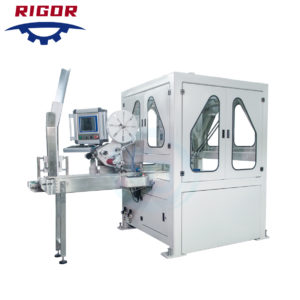
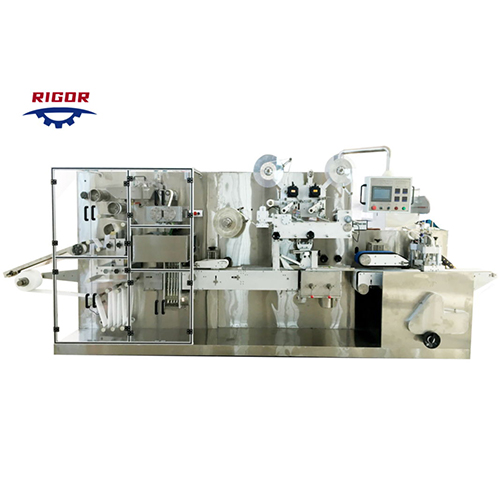
Let's first clarify what these terms mean in the context of a wet tissue machine for hospitals and clinics. A production line is a series of stations: fabric unwinding, folding, cutting, liquid application, stacking, and packaging. The level of automation refers to how many of these steps are integrated and performed without manual intervention.
-
Semi-Automatic Systems: In a semi-automatic setup, you typically have separate machines for different stages. For example, one machine might handle the folding, cutting, and wetting of the wipes, producing stacks of wet tissues. An operator would then manually transfer these stacks to a separate packaging machine. This approach has a lower initial investment cost. It can be a viable entry point for small-scale producers or for manufacturing specialized, low-volume products. However, it introduces several challenges. The manual handling step is a potential source of contamination, a significant concern for medical wipes. It is also a bottleneck; the overall production speed is limited by the speed of the human operator. Labor costs, even in lower-wage regions, become a major ongoing operational expense. Quality can be less consistent, as the placement of the wipe stack into the packaging machine depends on operator skill.
-
Fully Automatic Lines: A fully automatic line, by contrast, is a single, integrated system. The parent roll of nonwoven fabric enters at one end, and sealed, ready-to-ship packages of wet wipes emerge from the other end, with no manual handling in between. The folding, cutting, wetting, stacking, and packaging processes are all synchronized and controlled by a central PLC. These systems represent a much higher initial capital investment. Their benefits, however, are substantial. Production speeds are significantly higher and more consistent. The risk of contamination is dramatically reduced due to the elimination of manual touchpoints. Waste is minimized because the integrated system can detect errors (like a mis-fold or an empty package) and reject individual units without stopping the entire line. The per-unit production cost is often much lower at high volumes, leading to a faster return on investment (ROI).
The following table provides a simplified comparison to aid in this decision-making process.
| Özellik | Yarı Otomatik Makine | Fully Automatic Machine |
|---|---|---|
| Initial Investment | Lower | Higher |
| İşgücü Gereksinimi | High (multiple operators) | Low (typically one supervisor) |
| Production Speed | Low to Medium | High to Very High |
| Contamination Risk | Higher (due to manual handling) | Minimal |
| Product Consistency | Variable (operator dependent) | Very High |
| Operational Flexibility | Good for small, varied batches | Best for high-volume, standardized production |
| Footprint | Can be smaller / more modular | Larger, integrated line |
| ROI Horizon | Slower, dependent on labor costs | Faster, especially at high volumes |
For a business targeting the hospital and clinic market, the argument for a fully automatic line is compelling. The need for absolute consistency and minimal contamination risk often outweighs the higher initial cost.
Integration of Robotics and AI
In 2025, the concept of a "fully automatic" line is evolving. The most advanced systems now incorporate robotics and elements of artificial intelligence (AI) to further enhance efficiency and quality.
Robotics are most commonly seen at the end of the line. Instead of having an operator manually place the finished packs into cartons, a robotic arm can perform this task. It can pick and place with precision, build stable pallet patterns, and work 24/7 without fatigue. This "end-of-line" automation frees up human workers for more value-added tasks like quality control checks or machine maintenance.
AI and machine learning are being integrated into the process control itself. For example, a vision system (a camera paired with AI software) can inspect every single wipe for defects like stains, holes, or incorrect folds. It can inspect the seal integrity of every package. This goes beyond simple pass/fail checks. The AI can identify trends—for instance, if a cutting blade is starting to become dull and causing slight fraying, the system can flag it for maintenance before it leads to out-of-spec products. Some systems can even use predictive analytics to anticipate when a component is likely to fail, allowing for scheduled maintenance instead of costly unplanned downtime. This is the frontier of "smart manufacturing" or Industry 4.0, and it is becoming increasingly accessible on modern wet tissue machines (Yundufillingmachine.com, 2025).
Calculating ROI based on Automation
A prudent investor must look beyond the sticker price of the machine and calculate the true return on investment. This requires a detailed analysis of the total cost of production for each scenario.
Let's imagine a hypothetical case. A company wants to produce 50 million packs of antiseptic wipes per year.
- Scenario A (Semi-Automatic): They might need three lines, each requiring four operators per shift, across three shifts. That's 12 operators per line, totaling 36 operators. You must calculate their annual wages, benefits, and training costs. You also have to factor in a higher material waste percentage (perhaps 5-7%) and lower overall equipment effectiveness (OEE) due to changeovers and manual bottlenecks.
- Scenario B (Fully Automatic): They could achieve the same output with a single high-speed automatic line. This line might require only one skilled supervisor per shift, totaling three employees. The material waste might be as low as 1-2%. The OEE would be much higher, leading to more production time.
While the initial cost of the fully automatic line might be several times that of the semi-automatic equipment, the annual savings in labor and material waste can be enormous. In many cases, the payback period for the additional investment in automation is surprisingly short, often between 18 to 36 months. After that period, the higher efficiency translates directly into higher profitability. This calculation is fundamental for securing financing and for creating a sustainable business model for a wet tissue machine for hospitals and clinics.
Sterilization and Contamination Control: The Non-Negotiable Mandate
In the realm of medical devices, the concept of "clean" is not sufficient. The required state is often "sterile," meaning the complete absence of viable microorganisms. While not all clinical wet wipes are required to be sterile (e.g., surface cleaning wipes), many are, particularly those used on broken skin or in invasive procedures. The ability to produce and package wipes while ensuring their sterility is a defining feature of a true medical-grade wet tissue machine. Contamination control is not an add-on feature; it is a design philosophy that must permeate every aspect of the machine and its operating environment.
In-line Sterilization Techniques (e.g., UV-C)
Traditionally, medical products are sterilized after packaging, a process known as "terminal sterilization." This is often done using methods like gamma irradiation or ethylene oxide (EtO) gas. While effective, these methods have drawbacks. They require large, specialized facilities, add significant cost and time to the production cycle, and can sometimes negatively affect the product or its packaging.
A more modern and integrated approach is to use in-line sterilization techniques as part of the production process on the wet tissue machine for hospitals and clinics. One of the most common and effective methods is the use of ultraviolet light in the C-band spectrum (UV-C). UV-C light, typically at a wavelength of 254 nanometers, is germicidal. It works by damaging the DNA and RNA of bacteria, viruses, and molds, rendering them unable to replicate.
On a wet tissue machine, UV-C systems can be strategically placed at multiple points:
- Fabric Sterilization: A bank of UV-C lamps can be positioned to irradiate the surface of the nonwoven fabric just before it enters the folding and wetting stage. This helps to reduce the initial bioburden (the number of microorganisms) on the raw material.
- Liquid Sterilization: The liquid formulation, especially if it is purified water before the addition of biocides, can be passed through a UV-C reactor. This ensures the liquid being applied to the wipe is free from microbial contamination.
- Packaging Film Sterilization: The inner surface of the flexible packaging film can be exposed to UV-C light just before it is formed into a pouch and sealed. This sterilizes the surface that will be in direct contact with the wipes.
It is vital to understand that UV-C is a surface-level sterilization method. It cannot penetrate opaque materials. Its effectiveness depends on the intensity of the light, the exposure time, and the absence of "shadows" where microbes can hide. Therefore, a machine that incorporates UV-C must be designed to ensure the entire target surface receives a sufficient dose of radiation. The lamps must be properly shielded to protect operators, as direct exposure to UV-C is harmful to skin and eyes.
Cleanroom Compatibility of Machinery
A machine does not operate in a vacuum. It operates within a facility. For medical wipe production, that facility is often a classified cleanroom. A cleanroom is an environment with a controlled low level of pollutants such as dust, airborne microbes, aerosol particles, and chemical vapors. Cleanrooms are classified by the number of particles of a certain size per cubic meter of air (e.g., ISO 7 or ISO 8).
A wet tissue machine for hospitals and clinics destined for such an environment must be "cleanroom compatible." What does that mean?
- Minimal Particle Generation: The machine itself should not be a source of contamination. This means using components that do not shed particles. For example, belts should be non-shedding, and moving parts should be designed to minimize friction and wear. Painted surfaces are generally avoided, as paint can chip or flake; polished stainless steel is the preferred material.
- Easy to Clean: As mentioned before, all surfaces should be smooth, non-porous, and easily accessible for regular cleaning and disinfection.
- Controlled Airflow: The machine's design should not disrupt the cleanroom's carefully managed airflow patterns (which are typically designed to sweep particles away from the product). It should avoid creating turbulence or dead air spots.
- Enclosed and Pressurized Zones: High-end machines often create their own "mini-cleanroom" around the most sensitive areas, like the wipe stacking and packaging station. This enclosed area can be supplied with its own HEPA-filtered air and maintained at a positive pressure relative to the surrounding room. This ensures that even if the main cleanroom has a momentary lapse in integrity, the product zone remains protected, as air will always flow out, not in.
Investing in a machine that is not designed for a cleanroom environment can be a costly mistake, as it may be impossible to validate the production process to the satisfaction of regulatory authorities.
Packaging Solutions for Maintaining Sterility
Producing a sterile wipe is only half the battle. The packaging must maintain that sterility from the moment it leaves the machine until a nurse or doctor opens it, potentially months or years later. The packaging station of a wet tissue machine for hospitals and clinics is therefore a place of intense engineering focus.
The choice of packaging material is the first step. It must be a multi-layer laminate film that provides a complete barrier to microorganisms, moisture, and gas. The inner layer must be a sealant material that can form a strong, peelable seal. The outer layers provide strength and printability. For products that will be terminally sterilized (e.g., by gamma radiation), the film must also be radiation-stable.
The sealing process itself is critical. Most automatic machines use heat-sealing technology. The quality of the seal depends on three parameters: temperature, pressure, and dwell time. A high-quality machine will have a sophisticated sealing system with precise, independent controls for all three parameters. The PLC will constantly monitor these parameters, and if any of them deviate from the setpoint, the machine will alarm and reject the affected package.
For single-wipe sachets, a four-sided seal is common. For multi-wipe flow packs, the machine creates a "fin seal" along the bottom or back and two "end seals." The integrity of these seals must be perfect. Even a microscopic pinhole can compromise the product's sterility and allow the liquid to evaporate, rendering the wipe useless. Advanced machines incorporate in-line leak detection systems that can test every single package for seal integrity before it is boxed, providing 100% quality assurance.
Machine Versatility and Future-Proofing: Preparing for Tomorrow's Demands
Investing in a major piece of capital equipment like a wet tissue machine for hospitals and clinics is a long-term commitment. The machine you buy in 2025 should not only meet your current production needs but also be adaptable enough to meet the needs of 2030 and beyond. Market demands change. New product opportunities arise. Raw materials evolve. A machine that is a "one-trick pony" can quickly become obsolete. Therefore, evaluating a machine's versatility and its potential for future upgrades—its "future-proof" qualities—is a vital part of the procurement process.
Adjustability for Different Wipe Sizes and Folds
The market for clinical wipes is not monolithic. A hospital may require large, thick bath wipes for bedridden patients, small alcohol prep pads for injections, and medium-sized surface disinfectant wipes. A manufacturer who can produce a variety of products on a single line has a significant competitive advantage. This requires a machine with built-in adjustability.
Consider the wipe dimensions. A versatile machine allows the operator to easily change both the length and width of the wipe.
- Wipe Length (Cut-off Length): On modern servo-driven machines, changing the wipe length is often a simple matter of entering a new value into the Human-Machine Interface (HMI). The machine's control system automatically synchronizes the speed of the fabric feed with the speed of the rotary cutter to produce the new length, all without mechanical changes.
- Wipe Width: Changing the width is typically a more involved process. It requires adjusting the folding boards and sometimes changing the slitting knives that cut the main fabric web into smaller lanes. A well-designed machine will make this process as quick and tool-free as possible, using calibrated adjustment points and quick-release mechanisms to minimize downtime.
The folding pattern is another area where flexibility is key. Common folds include the Z-fold and C-fold, which allow for "pop-up" dispensing where pulling one wipe pulls the next one up. However, other folds like a simple half-fold might be required for certain products. A versatile folding unit can be adjusted to produce different fold types. Some advanced systems even have interchangeable folding heads, allowing for a complete change of folding style in a relatively short amount of time. The ability to quickly change over from producing a 20cm x 30cm, Z-folded patient wipe to a 5cm x 5cm, half-folded prep pad is a powerful capability.
Modularity for Future Upgrades
Technology does not stand still. A feature that is state-of-the-art today might be standard tomorrow. A machine with a modular design is built with this evolution in mind. Modularity means the machine is constructed from distinct, self-contained units or "modules" (e.g., an unwinder module, a folding module, a packaging module). This architecture offers several advantages for future-proofing.
Imagine you purchase a machine today that meets your needs for producing a standard disinfectant wipe. Two years from now, a new market opportunity emerges for a wipe that requires a special textured fabric for improved scrubbing. A modular machine might allow you to add a new "embossing" module in-line between the unwinder and the folder. Or perhaps you want to add an in-line vision inspection system. With a modular design, you can integrate this new quality control module without having to replace the entire production line.
This "plug-and-play" philosophy extends to software and controls. A machine built on an open, non-proprietary control platform (like those from major industrial automation suppliers) is much easier to upgrade or integrate with other systems (like a central factory management system) than one that uses a closed, proprietary system. When evaluating a machine, you should ask the supplier about its modularity. What is their roadmap for future upgrades? How easy is it to add new capabilities? A forward-thinking supplier will have clear answers to these questions and will design their advanced medical wipe production lines with this adaptability in mind.
Compatibility with Eco-Friendly Materials
In 2025, environmental sustainability is no longer a niche concern; it is a central issue for consumers, regulators, and corporations worldwide. The wet wipe industry has faced scrutiny over the environmental impact of its products, particularly those made from plastic-based nonwovens that are not biodegradable. This is driving a rapid shift towards more sustainable materials.
These new materials include:
- Plant-based fibers: Fabrics made from 100% viscose, bamboo, or cotton are biodegradable and come from renewable resources.
- Flushable materials: Specialized fabrics, often made from wood pulp, are engineered to lose strength and break apart in water, allowing them to be flushed down the toilet without clogging sewage systems (Wetwipefactory.com, 2024). These are particularly relevant for patient care and continence wipes.
- Recycled materials: While less common in medical applications due to purity concerns, the use of recycled content in nonwovens is growing for less sensitive applications.
A future-proof wet tissue machine for hospitals and clinics must be able to handle these materials. Eco-friendly fabrics can have very different properties from traditional synthetics. They might be weaker, more prone to stretching, or generate more dust. A machine with a highly precise and gentle web-handling system, adjustable tension controls, and effective dust extraction is better positioned to process these materials of the future. The ability to demonstrate compatibility with biodegradable or flushable substrates can be a powerful selling point for your products and a key differentiator in a competitive market. When you invest, you are investing in the capability to adapt to the green economy.
Supplier Reliability and After-Sales Support: Your Partner in Production
The purchase of a wet tissue machine for hospitals and clinics is not a simple transaction; it is the beginning of a long-term relationship with the equipment supplier. The most technologically advanced machine is of little value if it is frequently down due to a lack of spare parts or technical support. For manufacturers in regions like South America, Russia, or the Middle East, which may be geographically distant from the machine's country of origin, the quality of the supplier's after-sales support network is an absolutely vital consideration. A reliable supplier acts as a partner, invested in your success.
Evaluating Supplier Reputation in Emerging Markets
Choosing a supplier is as important as choosing the machine itself. How can you evaluate a supplier's reliability, especially when they may be located thousands of kilometers away?
First, look for a proven track record. A reputable supplier will be able to provide you with a list of references—other customers in your region or in a similar market who have purchased their equipment. You should contact these references. Ask them direct questions: How was the installation process? When you have a technical problem, how quickly does the supplier respond? How is the availability of spare parts? Are their technicians knowledgeable? A company's existing customers are its best and most honest advertisement.
Second, investigate their presence and commitment to your market. Does the supplier have a local or regional office? Do they have local agents or partners who can provide first-line support in your language and time zone? A supplier who has invested in building a local infrastructure is demonstrating a long-term commitment to the region. This is far preferable to dealing with a company where all support must come from a distant headquarters, leading to delays and communication barriers.
Third, assess their financial stability and longevity. You are buying a machine that should last for 10-20 years. You need to be confident that the supplier will still be in business to provide parts and support throughout the machine's lifespan. Research the company's history. How long have they been manufacturing this type of equipment?
The Importance of Technical Support and Spare Parts Availability
When a production line goes down, every minute costs money in lost output and idle labor. The speed at which you can get that line running again often depends on the quality of the supplier's technical support.
Modern machines offer sophisticated remote support capabilities. Through a secure internet connection, a technician at the supplier's headquarters can log in to your machine's control system. They can see what the operator sees on the HMI, diagnose alarms, analyze sensor data, and even help make software adjustments. This can resolve many issues in a matter of minutes or hours, rather than waiting days for a technician to travel to your site. You must ensure that the machine you are considering has this remote diagnostic capability and that the supplier has a dedicated team to provide this service.
Despite the best remote support, some problems require a hands-on solution or a replacement part. This is where spare parts availability becomes critical. Before purchasing, you should request the supplier's recommended spare parts list and their policy on parts stocking. A good supplier will maintain a stock of critical "wear and tear" parts (like blades, belts, and seals) at a regional depot for quick shipment. For more significant components, they should be able to guarantee a shipping time. You should also discuss the use of standardized components. A machine that uses motors, sensors, and pneumatic valves from major, globally recognized brands (like Siemens, Allen-Bradley, Festo, or SMC) is often easier to support, as you may be able to source some common parts locally, providing a valuable backup option.
Training and Installation Services
The world's best machine will not perform well if your team does not know how to operate and maintain it correctly. Comprehensive training is not an optional extra; it is a fundamental part of the machine delivery package.
The training should cover several areas and be tailored to different roles:
- Operator Training: This focuses on the day-to-day operation of the machine: how to start and stop it, how to load raw materials, how to perform product changeovers, how to clear common jams, and how to understand the HMI and basic alarms.
- Maintenance Training: This is a more in-depth program for your mechanical and electrical technicians. It should cover the machine's preventative maintenance schedule, lubrication procedures, how to replace common wear parts, and basic troubleshooting of the mechanical, pneumatic, and electrical systems.
- Control System Training: For your automation engineers, this training delves into the machine's PLC and software, teaching them how to perform deeper diagnostics and understand the control logic.
This training should ideally be conducted in multiple phases: first at the supplier's factory during the Factory Acceptance Test (FAT), and then again at your facility during and after installation. The supplier's technicians who perform the installation and commissioning are often the best trainers, as they can provide hands-on instruction on the actual machine. The quality of the training manuals and documentation, provided in your local language, is also a key factor. A supplier who invests in high-quality training is investing in your ability to be self-sufficient and successful.
Total Cost of Ownership (TCO): A Holistic View of Your Investment
A savvy business leader understands that the purchase price of a piece of equipment is only one part of its true cost. The Total Cost of Ownership (TCO) is a financial estimate intended to help buyers determine the direct and indirect costs of a product or system. For a wet tissue machine for hospitals and clinics, a thorough TCO analysis is essential for making a sound investment decision and for accurately forecasting the long-term profitability of the venture. It shifts the perspective from "What does it cost to buy?" to "What does it cost to own and operate over its entire lifecycle?"
Beyond the Initial Purchase Price
The initial capital expenditure (CAPEX) is the most visible cost, but it can be misleading if viewed in isolation. A cheaper machine might end up being far more expensive over a 10-year period. The TCO framework requires you to look at the ongoing operational expenditures (OPEX) that the machine will incur.
Imagine two machines. Machine A costs $800,000. Machine B, with higher efficiency and more automation, costs $1,200,000. On the surface, Machine A looks like the better deal. But a TCO analysis will dig deeper. It forces you to quantify the costs that will accumulate year after year. These include labor, energy, raw material waste, maintenance, and consumables. Only by projecting these costs over the machine's expected lifespan can you make a true "apples-to-apples" comparison and understand the real financial impact of your choice.
Factoring in Energy Consumption and Maintenance
Energy is a significant and often overlooked operational cost. A wet tissue production line has numerous motors, heaters (for the sealing jaws), control cabinets, and pneumatic systems, all of which consume electricity. A well-engineered machine will incorporate energy-efficient components. For example, using high-efficiency servo motors instead of older AC motors with mechanical clutches can drastically reduce power consumption. Using advanced "smart" heating elements for the sealing jaws that only draw maximum power when needed, rather than staying at a constant high temperature, also saves energy. Ask potential suppliers to provide data on the machine's typical power consumption (in kWh) at its target production speed. In regions with high electricity costs, a 10-15% difference in energy efficiency can translate into tens of thousands of dollars in savings each year.
Maintenance is another major OPEX component. This includes both planned preventative maintenance and unplanned breakdown maintenance. A machine designed for reliability and ease of maintenance will have a lower TCO. Look for features like centralized lubrication systems, easy access to service points, and the use of high-quality, long-life components. The supplier should provide a detailed preventative maintenance schedule. The cost of this maintenance includes not only the spare parts but also the labor hours required to perform it and the production downtime during which the maintenance is carried out. A machine that requires frequent, time-consuming maintenance will have a higher TCO than one designed for durability.
Consumables and Waste Management
The TCO must also account for the consumption of raw materials, including the amount that is wasted. Every wet tissue machine generates some waste during startup, shutdown, and splicing new parent rolls of fabric or film. However, a high-efficiency machine minimizes this waste. For example, an automatic splicing system can join a new roll to an expiring roll at full production speed with minimal waste, compared to a manual splice which requires stopping the machine and results in significant material loss.
Consider a machine that has a 2% lower waste rate than a competitor. If you are processing $5 million worth of nonwoven fabric and film per year, that 2% difference represents $100,000 in direct savings, year after year. This saving alone can often justify the higher initial price of the more efficient machine.
Finally, think about other consumables. These might include the lubricants, cleaning agents, and replacement wear parts like cutting blades, belts, and suction cups. The cost and lifespan of these parts contribute to the TCO. A machine that uses a proprietary, expensive cutting blade that needs frequent replacement will be more costly to run than one that uses a standard, long-lasting blade. A comprehensive TCO analysis forces you to ask these detailed questions, moving beyond the sales brochure to the practical realities of running the machine for the next decade.
Sıkça Sorulan Sorular (SSS)
What is the typical production speed for a wet tissue machine for hospitals and clinics? Production speed varies greatly depending on the machine's level of automation and the specific product. A typical range for fully automatic machines is between 400 to 2,000 wipes per minute. For packaging, speeds are often measured in packs per minute, which can range from 30 to 120 packs per minute, depending on the wipe count per pack.
How much space is required to install a full production line? A complete, fully automatic line for a wet tissue machine for hospitals and clinics, including the machine itself plus space for raw material staging (fabric rolls, liquid totes) and finished product palletizing, can require a significant area. A rough estimate would be a length of 20-30 meters and a width of 8-10 meters, but this is highly dependent on the specific configuration. Always request a detailed layout drawing from the supplier.
Can one machine produce both alcohol-based and alcohol-free wipes? Yes, but it requires specific design considerations. For alcohol-based formulations, the machine must be explosion-proof. This involves using intrinsically safe electrical components, proper ventilation and vapor extraction systems, and grounding to prevent static discharge. A machine designed for this can typically also run water-based (alcohol-free) solutions, but a thorough cleaning and sanitization process is required between product changeovers.
What is the average lead time from ordering a machine to its installation? The lead time for a custom-built wet tissue machine can be substantial. A typical timeframe from placing the order to the machine being ready for shipment is between 4 to 8 months. You must then factor in shipping time, customs clearance, installation, and commissioning, which can add another 1 to 3 months. It is wise to plan for a total project timeline of 6 to 12 months.
How does the machine handle different packaging formats? Versatile machines can be adjusted to handle various packaging formats. For flow packs, this includes changing the pack length, width, and height to accommodate different wipe counts (e.g., from a 10-count travel pack to an 80-count nursery pack). For single-wipe sachets, the machine can be adjusted for different sachet dimensions. Changeovers may require replacing some mechanical parts, but on modern machines, many adjustments are servo-driven and controlled via the HMI to minimize downtime.
What are the main differences between a machine for baby wipes and one for medical wipes? While the basic process is similar, a wet tissue machine for hospitals and clinics has more stringent requirements. Key differences include the use of higher-grade materials (like 316L stainless steel), GMP-compliant design for easy cleaning and sterilization, more precise liquid dosing systems, options for in-line sterilization (like UV-C), and advanced quality control and documentation features to ensure traceability and compliance with medical device regulations.
Is it possible to produce flushable wipes on a standard machine? Not always. Flushable nonwoven materials are often more delicate and have lower wet strength than standard fabrics. A machine for producing flushable wipes needs a very gentle web handling and tension control system to prevent the material from tearing or stretching during production. It is a capability that should be specifically discussed and verified with the supplier.
Sonuç
The selection of a wet tissue machine for hospitals and clinics in 2025 is a decision of profound consequence, shaping a company's productive capacity, its adherence to public health standards, and its long-term financial health. The journey from initial consideration to a fully operational production line requires a perspective that transcends the mere mechanics of the equipment. It demands an appreciation for the intricate web of regulatory demands, the subtleties of material science, and the economic calculus of automation.
As we have explored, a successful investment is predicated on a holistic evaluation. It begins with an unwavering commitment to GMP and regulatory compliance, the very license to operate in the medical space. It extends to a deep technical appraisal of the machine's ability to precisely handle the delicate nonwovens and active liquid formulations that define a clinical wipe. The strategic choice between semi-automatic and fully automatic systems, informed by a rigorous ROI analysis, will dictate the operational efficiency and scalability of the enterprise for years to come.
Furthermore, the non-negotiable requirements for sterility and contamination control must be embedded in the machine's design, from its cleanroom compatibility to its packaging integrity. A forward-looking approach, one that values versatility and modularity, will ensure the investment remains relevant amidst evolving market trends and the growing imperative for sustainable materials. Finally, the entire endeavor is underpinned by the relationship with the supplier, whose reliability, technical support, and training are as integral to success as any gear or motor. By diligently navigating these critical checkpoints, manufacturers can confidently acquire not just a machine, but a robust and responsible production capability poised to meet the exacting demands of modern healthcare.
Referanslar
ATP Packaging. (2024, June 27). Automated wet wipe packaging: How to do it faster and more efficiently. ATP Packaging. https://atp-packaging.com/en/automated-wet-wipe-packaging-how-to-do-it-faster-and-more-efficiently
Diapermachines.com. (2023, March 6). Wet wipes manufacturing process. https://www.diapermachines.com/2023/03/06/wet-wipes-manufacturing-process-2/
Diapermachines.com. (2023, November 13). A comprehensive guide – Wet wipes machine. https://www.diapermachines.com/2023/11/13/a-comprehensive-guide-wet-wipes-machine/
SUNY Industry. (2025, April 23). Comprehensive guide to wet wipes manufacturing machines. ZhengZhou SUNY Industrial Co.,Ltd. https://www.sunyindustry.com/NEWS/comprehensive-guide-to-wet-wipes-manufacturing-machines.html
Wetwipefactory.com. (2024, July 20). Wet wipes classification & process introduction.
Yundufillingmachine.com. (2025, March 26). The ultimate guide to wet wipes making machines: Revolutionizing efficiency and quality in modern production. https://yundufillingmachine.com/guide-to-wet-wipes-making-machines
Yundufillingmachine.com. (2025, May 12). How wet wipes are made: Process, machinery, and principles. https://yundufillingmachine.com/how-wet-wipes-are-made-process-machinery/