Özet
The global demand for affordable menstrual hygiene products presents a significant opportunity for entrepreneurs, particularly in emerging markets across South America, Russia, Southeast Asia, the Middle East, and South Africa. This document serves as a comprehensive guide for startups navigating the acquisition of a low-cost sanitary pad machine. It examines the critical decision-making factors that extend beyond the initial purchase price, advocating for a holistic evaluation framework. The analysis differentiates between semi-automatic and fully automatic machinery, detailing the implications for labor, output, and scalability. It further explores the total cost of ownership, encompassing raw material sourcing, installation, training, and operational expenditures. The guide emphasizes the necessity of aligning production capacity with market analysis and building a resilient supply chain. By providing a structured approach to evaluating technical specifications, manufacturer reliability, and after-sales support, this text equips aspiring business owners with the knowledge to make an informed investment, fostering a sustainable and impactful enterprise in the personal hygiene sector.
Önemli Çıkarımlar
- Analyze the total cost of ownership, not just the machine's initial price.
- Choose between semi-automatic and fully automatic based on your capital and labor market.
- Secure a reliable raw material supply chain before starting production.
- Select a low cost sanitary pad machine for startups with scalable production capacity.
- Verify manufacturer credibility and the availability of robust after-sales support.
- Develop a comprehensive business plan covering logistics, staffing, and local regulations.
- Prioritize machine quality and user-friendly controls for long-term efficiency.
İçindekiler
- 1. Demystifying Machine Types: Semi-Automatic vs. Fully Automatic
- 2. Calculating Your Investment: Beyond the Machine's Price Tag
- 3. Understanding Production Capacity and Output Realities
- 4. The Heart of the Matter: Raw Materials and Supply Chain
- 5. Navigating Technical Specifications and Customization
- 6. Evaluating Manufacturer Reliability and After-Sales Support
- 7. Assembling Your Business Plan: From Machine to Market
- FAQ
- Sonuç
- Referanslar
1. Demystifying Machine Types: Semi-Automatic vs. Fully Automatic
Embarking on the journey of manufacturing sanitary pads begins with a foundational choice, one that shapes your entire operational framework, your initial capital outlay, and the very rhythm of your factory floor. This is the choice between a semi-automatic and a fully automatic sanitary pad machine. It is not merely a technical decision; it is a strategic one. Think of it as choosing between a well-equipped workshop and a fully autonomous assembly line. Both can produce excellent results, but they demand different things from you as the owner in terms of investment, workforce, and oversight. For a startup, especially in regions where capital might be constrained but labor is available, understanding the nuances of this choice is the first step toward building a resilient enterprise. Let us walk through the characteristics of each, not as abstract concepts, but as tangible operational models you can visualize for your own future factory.
What Defines a Semi-Automatic Machine?
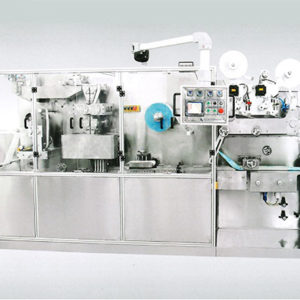
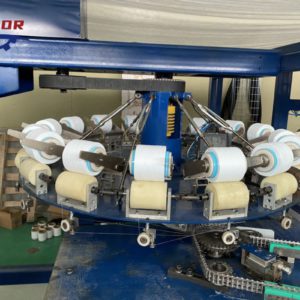
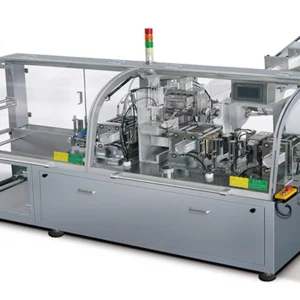
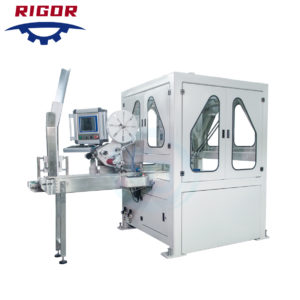
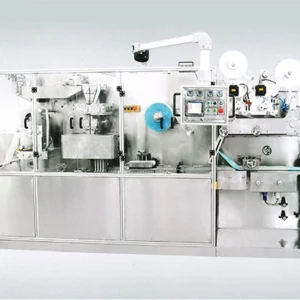
A semi-automatic sanitary pad machine represents a balanced synergy between human skill and mechanical efficiency. It is not a completely hands-off process, nor is it a fully manual one. Imagine a production process broken down into several key stages. A semi-automatic line automates the most complex or repetitive tasks—such as pulverizing the fluff pulp, forming the absorbent core, and perhaps cutting the pads into shape. However, it relies on human operators for other steps. These manual interventions often include placing the formed cores onto the non-woven top sheet, feeding materials into certain parts of the machine, folding the final product, and packaging.
The involvement of labor is its defining feature. This human element introduces both advantages and challenges. On one hand, it makes the initial investment in a semi-automatic machine significantly lower than its fully automated counterpart. The machinery is less complex, often smaller, and requires less sophisticated electronic control systems. For a startup, this lower barrier to entry is a powerful enabler. On the other hand, production speed is directly tied to the efficiency and coordination of your workforce. The output is measured not just by the machine's mechanical speed but by the pace at which your team can perform their tasks. Quality control also becomes a shared responsibility between the machine's consistency and the operator's diligence.
The Leap to Full Automation: What Changes?
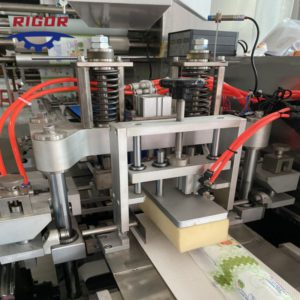
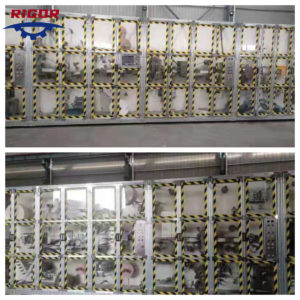
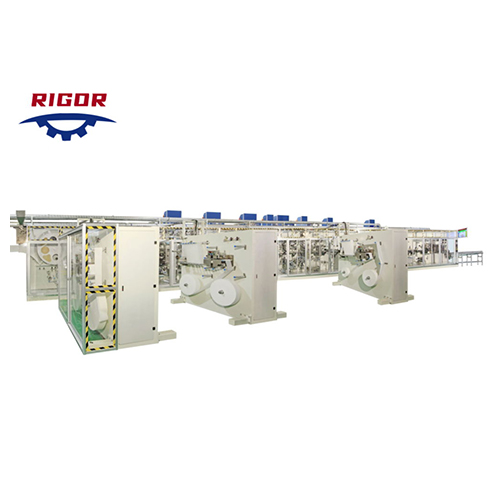
Stepping up to a fully automatic sanitary pad machine is like witnessing a perfectly choreographed ballet of mechanical parts. From the moment the raw material spools are loaded at one end to the point where sealed, packaged sanitary pads emerge at the other, human intervention is minimal. These machines integrate every single step into one seamless, continuous flow. A Programmable Logic Controller (PLC), the sophisticated brain of the operation, synchronizes every action: feeding the non-woven fabrics, crushing the pulp, precisely dosing the Super Absorbent Polymer (SAP), compressing the core, applying the back sheet and release paper, cutting the final shape, folding the wings, and even counting and bagging the finished products.
The primary change is a dramatic increase in speed and consistency. A fully automatic machine can produce hundreds, or even thousands, of pads per minute, a rate a semi-automatic line could never achieve. Because the process is automated, the potential for human error is virtually eliminated, leading to a highly uniform product quality. Every pad is made to the exact same specifications. The trade-off, of course, is the significant initial investment. These machines are larger, more complex, and incorporate advanced robotics, sensors, and control systems, all of which contribute to a higher price tag. They also demand a different kind of workforce—not a large team of manual laborers, but a smaller, highly skilled team of technicians who can operate, maintain, and troubleshoot this advanced equipment.
A Comparative Analysis for Startups
To make an informed decision, it is helpful to place the two options side-by-side and compare them across the factors that matter most to a new business. A startup's reality is a delicate balance of ambition and available resources. The table below offers a clear, practical comparison to guide your thinking.
| Özellik | Semi-Automatic Sanitary Pad Machine | Fully Automatic Sanitary Pad Machine |
|---|---|---|
| Initial Investment | Low to Moderate | High to Very High |
| Production Speed | Lower (e.g., 50-150 pads/minute) | Very High (e.g., 300-1200+ pads/minute) |
| İşgücü Gereksinimi | High (4-8 operators per shift) | Low (1-3 skilled technicians per shift) |
| Cost Per Unit | Higher (due to labor costs and lower speed) | Lower (at high volume due to efficiency) |
| Operational Flexibility | High (easier to switch product types manually) | Moderate (may require part changes for different sizes) |
| Space Requirement | Smaller Footprint | Larger Footprint |
| Kalite Tutarlılığı | Good, but dependent on operator skill | Excellent and highly consistent |
| Maintenance | Simpler, mechanical focus | More complex, requires electronic/PLC expertise |
Making the Right Choice for Your Initial Business Scale
So, which path is yours? There is no single correct answer. The right choice is deeply personal to your business plan, your market, and your financial reality.
If you are a startup with limited initial capital, targeting a local or regional market, a semi-automatic machine is an excellent starting point. It allows you to enter the market, build your brand, and generate cash flow without taking on overwhelming debt. The reliance on labor can be an advantage in regions where wages are competitive, creating local employment opportunities. Your focus will be on training your team to be efficient and quality-conscious. This model allows you to learn the business from the ground up, understanding each step of the production process intimately.
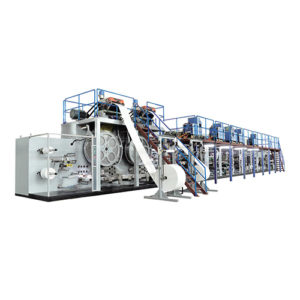
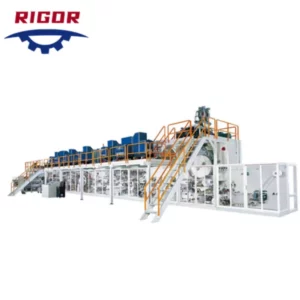
Conversely, if you are well-capitalized, aiming to compete in a larger, more established market from day one, or if your business plan is predicated on achieving the lowest possible cost per unit through economies of scale, a fully automatic machine is the logical choice. Your investment will be in technology rather than a large workforce. Your challenge will be to secure enough sales volume to keep the machine running efficiently and justify its high cost. This path is for entrepreneurs who plan to scale rapidly and compete on price and volume. A fully automatic bebek bezi üretim hattı shares similar principles of high-speed automation and is a good reference for understanding the scale of such an operation.
Think about your five-year plan. Do you see yourself as a boutique local brand known for quality, or a volume player capturing significant market share? Your answer to that question will point you toward the machine that is right for you, not just for today, but for the future you intend to build.
2. Calculating Your Investment: Beyond the Machine's Price Tag
When a new entrepreneur first inquires about a low cost sanitary pad machine for startups, the most immediate question is almost always, "How much does it cost?" It is a natural and necessary question, but focusing solely on the price written on the invoice is like judging the size of an iceberg by what you see above the water. The true cost of setting up your production is a much larger, more complex figure. This is what financial experts call the Total Cost of Ownership (TCO). It encompasses every single expense you will incur to get from an empty factory space to your first box of market-ready sanitary pads. Understanding TCO is not just an accounting exercise; it is the foundation of a realistic business plan and the difference between a venture that struggles with unexpected costs and one that is prepared for the financial realities of manufacturing. Let us break down this iceberg piece by piece.
The Total Cost of Ownership (TCO) Explained
Total Cost of Ownership is a framework that helps you see the full picture. It includes the initial purchase price, but it also forces you to account for all the direct and indirect costs associated with acquiring, installing, and operating the asset over its entire lifecycle. For a sanitary pad machine, the TCO can be broken into three main categories:
- Acquisition Costs: This is the most obvious part. It includes the price of the machine itself, plus any taxes, import duties (a significant factor for international purchases), and shipping or freight charges to get the machine from the manufacturer to your factory door.
- Operational Costs: These are the recurring expenses of running the machine. This is the largest and most ongoing part of the TCO. It includes the cost of raw materials (pulp, non-woven fabric, SAP, etc.), electricity to power the machine, wages for your operators and technicians, and routine maintenance parts like blades and glue nozzles.
- Post-Acquisition & Hidden Costs: These are the often-overlooked one-time or infrequent costs. They include the cost of installation (which may require a technician from the manufacturer), training for your staff, any necessary modifications to your factory (like electrical upgrades or reinforced flooring), and the cost of spare parts you should keep in stock.
By calculating the TCO, you move from being just a buyer to being a strategic investor. You can more accurately forecast your cash flow, set a realistic budget, and determine a competitive yet profitable price for your final product.
Factoring in Raw Material Sourcing and Costs
The single largest component of your operational cost will be raw materials. A sanitary pad is a composite product, an assembly of several different materials, each with its own price and supply chain. The machine is a one-time purchase, but the materials are a constant flow of expense. Neglecting to plan for this is a common pitfall for startups. The primary materials you will need to source are outlined below.
| Raw Material | Function in the Sanitary Pad | Key Sourcing Considerations |
|---|---|---|
| Fluff Pulp | Forms the main absorbent core; provides structure and absorption capacity. | Usually sold in large rolls or bales. Quality (fiber length) affects absorbency. |
| Dokumasız Kumaş | Used for the top sheet (skin contact) and sometimes the back sheet. | Must be soft, hydrophilic (for the top), and hydrophobic (for the back). |
| Süper Emici Polimer (SAP) | A fine powder mixed with pulp that turns liquid into a gel, locking it away. | The key to high absorbency. Price can fluctuate; quality varies. |
| PE Film (Polyethylene Film) | The waterproof back sheet that prevents leakage. | Can be breathable or non-breathable. Often printed with branding. |
| Release Paper | The paper strip that covers the adhesive on the back and wings. | Must release cleanly without leaving residue. |
| Hot Melt Adhesive | Used for construction (bonding layers together) and positioning (on the back). | Different types are needed for different applications within the pad. |
The cost of these materials can vary significantly based on global commodity prices, shipping costs, and supplier location. A crucial part of your business plan must be to identify and build relationships with reliable suppliers, whether local or international. You should request samples and test them thoroughly. Your goal is to find the optimal balance between cost and quality that allows you to produce a product that meets your market's expectations and your financial targets.
Hidden Costs: Installation, Training, and Shipping
Here lie the expenses that can catch an unprepared entrepreneur by surprise.
- Shipping and Import Duties: If you are buying your machine from another country, which is often the case, the cost of shipping (sea freight is common for large machinery) can be substantial. On top of that, your country's customs authority will levy import duties and taxes, which can be a significant percentage of the machine's value. You must research these duties beforehand.
- Installation: A semi-automatic machine might be simple enough for a local engineer to install with guidance from the manufacturer's manuals. A fully automatic machine, however, will almost certainly require a specialized technician from the manufacturer to come to your site for installation and commissioning. You will likely be responsible for their travel, accommodation, and service fee. This can add thousands of dollars to your setup cost.
- Training: Your team needs to know how to operate and maintain the machine safely and efficiently. Proper training prevents costly mistakes, reduces downtime, and ensures product quality. This training might be included with the installation, or it could be a separate cost. Do not treat it as optional; it is a vital investment.
Projecting Your Return on Investment (ROI): A Simple Framework
Once you have a handle on your Total Cost of Ownership, you can start projecting your Return on Investment. ROI tells you how long it will take for the profits from your machine to pay back the initial investment. A simplified formula is:
ROI (%) = (Net Profit / Total Investment) x 100
To do this, you need to project your revenue and your costs.
- Estimate Total Investment (TCO): Sum up the machine price, shipping, duties, installation, and a buffer for initial raw material stock.
- Calculate Cost Per Pad: Add up the cost of all raw materials in one pad, plus a small amount for electricity and labor per pad (Total Monthly Labor & Electricity / Total Pads Produced Monthly).
- Set a Wholesale/Retail Price: Research your market to determine a competitive price for your product.
- Calculate Profit Per Pad: Subtract the Cost Per Pad from your Wholesale Price.
- Estimate Monthly Production: Based on your machine's output and your planned operating hours.
- Calculate Monthly Net Profit: Multiply Profit Per Pad by Monthly Production.
- Determine Payback Period: Divide your Total Investment by your Monthly Net Profit. This tells you how many months it will take to recoup your investment.
This exercise transforms the purchase of a low cost sanitary pad machine for startups from a simple transaction into a calculated business strategy. It forces you to think through every financial aspect, preparing you for a successful and profitable launch.
3. Understanding Production Capacity and Output Realities
In the world of manufacturing, numbers tell a story. When you look at the specifications for a sanitary pad machine, one of the most prominent figures you will see is its production capacity, often listed as "pads per minute" (PPM). For a hopeful entrepreneur, a high PPM number can be incredibly exciting. It conjures images of a bustling factory, with products flying off the line, ready to meet the demands of a waiting market. However, a seasoned manufacturer knows that this number, while important, is just the beginning of the story. The true measure of a machine's output is not its theoretical maximum speed but its consistent, reliable, real-world production. Understanding the difference is vital for accurate business planning, managing expectations, and ensuring your investment truly aligns with your goals. Let us translate these "pads per minute" into the language of business reality.
How "Pads Per Minute" Translates to Daily Production
The PPM figure is a measure of the machine's designed mechanical speed under ideal conditions. Think of it as the top speed of a car. You might own a car that can go 200 kilometers per hour, but in your daily commute, factoring in traffic, stoplights, and speed limits, your average speed is much lower. The same principle applies to your machine.
To get a realistic estimate of your daily output, you need to account for several factors:
- Operational Efficiency: No machine runs 24/7 without stopping. You must account for shift changes, operator breaks, and routine cleaning. A common industry practice is to assume an operational efficiency of around 80-85%.
- Maintenance and Downtime: There will be planned downtime for preventive maintenance (like changing cutting blades) and unplanned downtime if a fault occurs.
- Material Changes: When a roll of non-woven fabric or fluff pulp runs out, the machine must be stopped to load a new one. The time this takes is called splicing time, and it reduces overall output. Advanced fully automatic machines have "auto-splicing" features that do this at full speed, but this is a premium feature not always found on a low cost sanitary pad machine for startups.
Let’s do a simple calculation. Suppose you buy a machine with a rated speed of 150 PPM.
- Theoretical Maximum (per hour): 150 pads/minute * 60 minutes/hour = 9,000 pads/hour.
- Realistic Output (at 80% efficiency): 9,000 pads/hour * 0.80 = 7,200 pads/hour.
- Per 8-hour Shift: 7,200 pads/hour * 8 hours = 57,600 pads.
- Per Day (with two 8-hour shifts): 57,600 pads/shift * 2 shifts = 115,200 pads.
This realistic number, not the theoretical maximum, is what you should use for your financial projections, raw material planning, and sales targets.
Matching Machine Output to Your Market Demand Forecast
One of the most delicate balancing acts for a startup is matching production capacity to market demand. Buying a machine that is too small can mean leaving sales on the table and being unable to fulfill large orders, frustrating potential distributors. On the other hand, buying a machine that is too large for your initial market can be a catastrophic financial burden. You would be paying for capacity you cannot use, the high electricity consumption of a large machine, and the large stockpile of raw materials needed to feed it, all while your sales struggle to catch up.
This is where diligent market research becomes your most valuable tool. Before you even talk to a machine manufacturer, you should have a well-reasoned estimate of your target market's size and your potential share.
- Who are your customers? Are you selling directly to consumers, to local shops, to regional distributors, or to institutions like schools and NGOs?
- What is your distribution area? Are you starting in one city, a specific region, or aiming for nationwide distribution from the outset?
- How many units do you realistically expect to sell in your first month? First quarter? First year? Be conservative and build your estimates from the bottom up. Talk to potential distributors. Understand their current volumes.
Let’s say your research suggests you can realistically sell 1 million pads in your first year. That’s roughly 83,000 pads per month. Based on our earlier calculation, a 150 PPM machine running just one shift a day for about 20 days a month could easily meet this demand. This kind of analysis prevents you from over-investing and allows your business to grow sustainably.
The Scalability Question: Can Your Machine Grow with Your Business?
Your business today will not be your business in three years. As your brand gains recognition and your distribution network expands, your demand will grow. The ideal machine is one that can serve you well at the start and also accommodate future growth. This is the concept of scalability.
When evaluating a low cost sanitary pad machine for startups, ask the manufacturer about its scalability:
- Can the speed be adjusted? Some machines can be run at a lower speed initially and then ramped up as your team becomes more experienced and demand increases.
- Is it modular? Some production lines are designed in a modular way, allowing you to add components later. For example, you might start with manual packaging and later add an automatic bagging machine to the end of the line.
- What is the upgrade path? Does the manufacturer offer a trade-in program or a clear upgrade path to a faster or more advanced model once you outgrow your initial machine?
Thinking about scalability from day one is a sign of a mature business strategy. It shows that you are planning not just for your launch, but for your long-term success.
Quality Control at Different Production Speeds
Finally, it is vital to understand the relationship between speed and quality. Pushing a machine to its absolute maximum speed can sometimes compromise the quality of the final product. At very high speeds, there is less time for adhesives to set properly, for cores to be perfectly aligned, or for sensors to reject a faulty pad.
Modern machines, even less expensive ones, are increasingly equipped with quality control systems. These can include:
- Vision Systems: Cameras that visually inspect each pad for defects like incorrect shape, stains, or improper sealing.
- Metal Detectors: To ensure no metallic contaminants are in the final product.
- Automatic Rejection Systems: An arm or a puff of air that automatically removes any pad identified as defective from the production line.
When you are discussing PPM with a manufacturer, ask them: "At what speed was this quality level achieved?" A good manufacturer will be transparent about the stable operating speed—the speed at which the machine can run for extended periods while consistently producing a high-quality product with a low rejection rate. This stable speed, not the peak speed, is the number that truly matters for the health and reputation of your new brand.
4. The Heart of the Matter: Raw Materials and Supply Chain
A sanitary pad machine, no matter how sophisticated or efficient, is ultimately a tool for transformation. It takes simple, raw inputs and, through a series of precise mechanical actions, assembles them into a product that is essential for the health, dignity, and empowerment of millions. The machine is the body, but the raw materials are its lifeblood. The quality of your final product is inextricably linked to the quality of the materials you feed into it. Furthermore, the reliability of your entire operation hinges on your ability to consistently and affordably source these materials. For a startup in an emerging market, building a robust supply chain is not just a logistical task; it is a strategic imperative that can define your resilience and competitive edge. Let us delve into the core components that make up a sanitary pad and explore how to build a supply chain that will sustain your business.
A Deep Dive into Core Materials: Fluff Pulp, SAP, Non-Woven Fabric
Understanding the function of each material helps you make smarter purchasing decisions. A sanitary pad is an elegant piece of material science, with each layer performing a specific job. The process is similar to what's seen in diaper manufacturing, where an absorbent core is key (SUNREE, 2025).
-
Fluff Pulp: This is the foundation of the absorbent core. It is typically made from softwood trees and arrives at your factory in large, dense rolls. Inside the machine, a "hammermill" or "pulverizer" grinds and fluffs it up, turning it into a soft, cotton-like material. This fluff creates a matrix that can quickly acquire and distribute liquid. When you are sourcing pulp, you will hear terms like "fiber length" and "bleaching process" (like ECF – Elemental Chlorine Free, or TCF – Totally Chlorine Free). Longer fibers generally create a more stable and absorbent core. TCF pulp is often preferred for products marketed as eco-friendly or for sensitive skin.
-
Super Absorbent Polymer (SAP): This is the miracle ingredient. SAP is a dry, granular powder, almost like fine salt, that has an incredible capacity to absorb and retain liquid. It can hold many times its own weight in fluid, turning it into a stable gel. This is what provides the high level of security and dryness that modern pads offer. The SAP is precisely mixed in with the fluff pulp as the core is being formed. The quality of SAP is measured by its absorption capacity and its retention ability under pressure. Sourcing high-quality SAP is non-negotiable for producing a premium, leak-proof pad.
-
Non-Woven Fabric: You will actually need several types of non-woven fabric.
- Top Sheet (Hydrophilic): This is the layer that is in direct contact with the skin. It must be soft, comfortable, and hydrophilic (water-loving), meaning it allows liquid to pass through it quickly into the absorbent core below, keeping the surface feeling dry.
- Edinim Dağıtım Katmanı (ADL): Often a distinct layer placed just below the top sheet, the ADL's job is to rapidly spread the liquid across the entire length of the core. This prevents all the fluid from concentrating in one spot, improving the overall performance of the pad.
- Back Sheet (Hydrophobic): This is the outermost layer of the pad itself (before the PE film). It is hydrophobic (water-repelling) and serves as another barrier to prevent leakage.
Each of these materials comes with its own set of specifications (like GSM – grams per square meter, which indicates thickness and density), and your machine will be calibrated to work with specific types.
Sourcing Strategies: Local vs. International Suppliers
Once you know what you need, the next question is where to get it. You have two primary options: sourcing locally/regionally or sourcing from major international suppliers (often in China, Europe, or the United States). Each strategy has its own set of benefits and drawbacks.
-
Local/Regional Sourcing:
- Pros: Shorter delivery times mean you can keep less inventory on hand, improving cash flow. Shipping costs are significantly lower. Supporting local economies can be a powerful part of your brand story. Communication is easier due to shared language and time zones.
- Cons: The range of available materials may be limited. The quality might not always meet the standards of major international producers. Local prices may not always be the most competitive, especially for specialized materials like high-grade SAP.
-
International Sourcing:
- Pros: Access to a vast range of materials, often at the cutting edge of technology. Prices, especially when buying in bulk, can be very competitive. Quality is often highly consistent and certified to international standards.
- Cons: Long shipping times (4-8 weeks via sea freight is common) mean you must plan your purchases far in advance and hold more inventory. You will have to navigate international payments, customs clearance, and import duties. Communication can be challenging across time zones and language barriers.
For many startups, the best approach is a hybrid one. You might source bulky, lower-tech materials like fluff pulp or packaging from local suppliers while importing critical, high-tech components like SAP or specialized non-woven fabrics from international experts.
Building a Resilient Supply Chain in Emerging Markets
A resilient supply chain is one that can withstand shocks—a sudden price increase, a shipping delay, a supplier going out of business. In the dynamic environments of many emerging markets, resilience is key to survival.
- Diversify Your Suppliers: Never rely on a single supplier for a critical material. Always have a qualified backup supplier, even if you give the majority of your business to a primary partner. This gives you leverage in negotiations and protects you from disruptions.
- Build Strong Relationships: Your suppliers are your partners. Treat them with respect, pay your bills on time, and communicate clearly about your future needs. A supplier who feels valued is more likely to help you out in a tight spot, perhaps by extending credit or expediting an order.
- Manage Your Inventory: Implement a clear inventory management system. Know how much of each material you have, what your weekly consumption rate is, and what your reorder point should be. This prevents a situation where your expensive machine has to sit idle because you ran out of release paper.
- Understand Logistics: Become an expert in the logistics of getting materials to your factory. If you are importing, work with a reliable freight forwarder and customs broker who understands the regulations in your country.
Quality Testing Your Raw Materials for a Superior Final Product
You cannot produce a quality product from substandard materials. Your brand's reputation is built on the trust that your product will perform as promised, every single time. This requires a rigorous quality control process for incoming raw materials.
You do not need a multi-million dollar laboratory. You can start with simple, practical tests:
- Visual Inspection: Check for discoloration, dirt, or damage on the rolls.
- Feel Test: Is the non-woven top sheet as soft as the sample you approved?
- Simple Absorbency Test: Create a small sample core with the pulp and SAP you received. Use a syringe to apply a measured amount of colored water and see how quickly it is absorbed and whether the surface feels dry afterward.
- Adhesive Test: Check if the positioning adhesive is tacky enough and if the release paper peels away cleanly.
By establishing a clear quality standard for each material and testing every new shipment against that standard, you protect your investment, your machine, and most importantly, your customer's trust. The journey to creating a successful sanitary pad brand is paved with quality materials.
5. Navigating Technical Specifications and Customization
When you begin to review proposals from different manufacturers for a low cost sanitary pad machine for startups, you will be presented with a technical specification sheet. At first glance, this document can seem intimidating, filled with industry jargon, acronyms, and numbers. It might list things like "Power: 380V, 50Hz, 3-Phase," "PLC: Siemens," or "Product Sizes: 240mm, 290mm." It is easy to feel overwhelmed or to gloss over these details, focusing only on the price and production speed. However, these technical specifications are the very DNA of the machine. They dictate what it can do, how it will fit into your factory, and the kind of product you can create. Understanding these details is not just for engineers; it is for any entrepreneur who wants to make a wise and informed investment. Let us demystify these specifications and explore how you can work with a manufacturer to customize a machine that perfectly fits your vision.
Power Requirements and Factory Infrastructure
This is one of the most practical and least negotiable aspects of your machine selection. A machine is a physical object that must exist in a physical space and connect to a local power grid. Mismatches here can lead to costly delays and rework.
- Voltage, Frequency, and Phase: Electrical grids are not the same everywhere in the world. Europe and much of Asia, Africa, and South America use a 50Hz frequency, while North America and parts of South America use 60Hz. Voltage standards also vary widely (e.g., 220V, 380V, 415V). A "3-Phase" power supply is standard for industrial machinery as it delivers power more efficiently than the single-phase power found in homes.
Before you finalize a machine order, you must confirm the exact power standard available at your factory location. Provide this information to the manufacturer. A good manufacturer can then build the machine's electrical system—its motors, heaters, and control panels—to match your local grid perfectly. Getting this wrong could mean the machine will not run, or worse, it could damage the electrical components.
-
Total Power Consumption: The spec sheet will list a total power consumption in kilowatts (kW). This number is crucial for two reasons. First, your factory's electrical service must be able to supply this much power. You may need to work with your local utility company to upgrade your service. Second, this figure is the basis for calculating your electricity costs, a key part of your operational budget.
-
Compressed Air: Many sanitary pad machines use compressed air for various functions, such as operating pneumatic cylinders, creating a vacuum to hold materials in place, or for the auto-rejection system. The spec sheet will indicate the required air pressure (e.g., in Bar or PSI) and consumption rate (e.g., in m³/min). This means you will also need to purchase a separate air compressor and air tank that can meet these requirements.
Pad Design Flexibility: Winged, Non-Winged, and Varying Sizes
Your market may demand different types of sanitary pads. Some consumers prefer the security of pads with wings, while others prefer the simplicity of non-winged pads. You may also want to offer different lengths for day use (e.g., 240mm), night use (e.g., 290mm or 320mm), or even longer pads for extra protection. The ability of your machine to produce this variety is a key indicator of its flexibility.
When discussing with a manufacturer, ask these specific questions:
- Can the machine produce both winged and non-winged pads? How is the changeover made? Is it a simple setting on the control screen, or does it require a lengthy mechanical adjustment?
- How many different pad lengths can the machine produce? Typically, a machine comes with one or two size formats included in the price.
- What is the cost and process for adding a new size in the future? This usually involves purchasing a new set of cutting molds and other size-specific parts. Knowing this cost upfront helps you plan for future product line extensions.
The ideal machine for a startup offers a good degree of flexibility without being overly complex. It should allow you to launch with the most popular product types and sizes for your market, with a clear and affordable path to add more variety as your brand grows.
The Importance of User-Friendly Controls and PLC Systems
The Programmable Logic Controller (PLC) is the central nervous system of a modern machine. It is a rugged industrial computer that controls and synchronizes all the motors, sensors, and actuators. The PLC is what ensures every pad is made exactly the same way. Major, reputable brands for PLCs include Siemens, Mitsubishi, Allen-Bradley, and Delta. Seeing a well-known PLC brand on a spec sheet is a good sign of quality and reliability, as it means service and spare parts are more likely to be available globally.
However, the PLC itself is only half the story. The other half is the Human-Machine Interface (HMI). This is the touchscreen or control panel that your operator uses to interact with the machine. A well-designed HMI is intuitive, easy to learn, and provides clear information. It should:
- Be in a language your operators can understand (e.g., English, Spanish, Russian, Arabic).
- Allow for easy adjustment of key parameters like machine speed, glue application amount, and SAP dosage.
- Display real-time production data, such as current speed, total count, and efficiency.
- Provide clear alarm messages that help the operator quickly identify and fix a problem (e.g., "Non-woven web break" or "Safety door open").
A user-friendly HMI reduces the training time for new operators, minimizes errors, and decreases machine downtime. When you are evaluating a machine, ask for a video demonstration of the HMI in action.
Inquiring About Customization Options from the Manufacturer
While manufacturers have standard models, many are willing to customize a machine to meet a client's specific needs. This is particularly true when you are seeking a low cost sanitary pad machine for startups, as your requirements may be unique. Do not be afraid to ask for modifications. Customization can take many forms:
- Product Features: You might want to add a specific feature, like a tri-fold design for the pad or the ability to produce an ultra-thin core.
- Component Brands: If you have a preference for a certain brand of motor or sensor because you know it is easily available in your country, you can ask the manufacturer if they can incorporate it.
- Layout: If your factory space is long and narrow, you can ask if the machine's layout can be adjusted to fit.
- Adding Features: You might ask to add an automatic stacking or bagging unit to a semi-automatic line to reduce labor at the end of the process.
This dialogue with the manufacturer is crucial. It allows you to move beyond a standard, off-the-shelf solution and co-create a machine that is truly tailored to your business vision, your market's needs, and your operational reality. A manufacturer who is willing to listen and collaborate on these technical details is often a manufacturer who is invested in your success.
6. Evaluating Manufacturer Reliability and After-Sales Support
You are not just buying a machine; you are entering into a long-term relationship with the company that built it. The sanitary pad machine you choose will be the heart of your production for years to come. During that time, you will inevitably need support. You will need a spare part, you will have a technical question, or you will want to upgrade a component. In these moments, the quality of the manufacturer's after-sales support becomes just as important as the quality of the machine itself. A reliable manufacturer stands behind their product, viewing your success as their own. An unreliable one may disappear after the final payment is made, leaving you with an expensive piece of equipment and no one to call when something goes wrong. For a startup, the risk is too great to ignore. Therefore, evaluating the trustworthiness of the manufacturer and the robustness of their support system is a critical step in the procurement process.
The Hallmarks of a Trustworthy Machine Manufacturer
How can you, as a buyer potentially thousands of miles away, gauge the reliability of a manufacturer? You must become a detective, looking for clues and evidence that build a picture of their professionalism and integrity. Here are the hallmarks to look for:
- Experience and Specialization: How long has the company been in business? How many machines have they built and installed globally? A company with a long track record, like the 18+ years of experience noted by some industry leaders (SUNREE, 2025), has likely navigated numerous challenges and refined its products and processes. Specialization matters too. A manufacturer focused solely on hygiene machinery (diapers, sanitary pads, etc.) will have deeper expertise than a general-purpose engineering firm.
- Professional Communication: Pay attention to how they communicate with you from the very first inquiry. Are their responses prompt, detailed, and professional? Do they answer your questions directly, or are they evasive? Do they have a professional website with clear information and specifications?
- Certifications: Look for quality management certifications like ISO 9001. This indicates that the company has established and follows standardized processes for design, manufacturing, and quality control. CE marking is another important one, especially if you are in a region that follows European standards, as it signifies that the product meets health, safety, and environmental protection standards.
- Customer References and Case Studies: A confident manufacturer will be happy to provide you with references from other customers, ideally in a region close to yours. Do not just ask for a list of names. Ask if you can speak to them. Ask those customers about their experience with the machine, the installation process, and, most importantly, the after-sales support.
The Non-Negotiable: Comprehensive After-Sales Service
After-sales service is the safety net for your investment. Before you sign any contract, you must have a crystal-clear understanding of what the manufacturer's support package includes. This is not a "nice to have"; it is a non-negotiable part of the deal.
A comprehensive support package should include:
- Warranty: What is the warranty period (typically one year)? What exactly does it cover? Does it cover all parts, or just non-wearing parts? Who pays for shipping of a replacement part under warranty?
- Technical Support: How can you reach their technical team? Do they offer support via phone, email, and video call? Is there support available during your business hours, considering potential time zone differences?
- Spare Parts Availability: The machine will have "wearing parts"—components like cutting blades, bearings, and timing belts that wear out with normal use and need regular replacement. Does the manufacturer provide a recommended spare parts list with the machine? How quickly can they ship spare parts to you in an emergency? What are the costs of these parts?
- On-Site Technician Support: If you face a complex problem that cannot be solved remotely, will the manufacturer send a technician to your factory? What are the terms and costs associated with this service after the initial installation and warranty period?
A manufacturer's commitment to after-sales support is a direct reflection of their confidence in their own product and their commitment to their customers' long-term operational success.
Asking the Right Questions Before You Purchase
Your power as a buyer is greatest before you sign the contract. Use this leverage to get the clarity you need. Create a checklist of questions and do not proceed until you have satisfactory answers.
- "Can you provide a full list of component brands used in the machine (PLC, motors, sensors)?"
- "Can you share a video of this exact model of machine running, producing the pad size I am interested in?"
- "What is the standard delivery time from the date of order confirmation?"
- "Can you provide a detailed quotation that breaks down the cost of the machine, optional features, and recommended spare parts?"
- "What documentation is provided with the machine (user manual, electrical diagrams, maintenance schedule)?"
- "What training is included with the installation?"
These questions demonstrate that you are a serious, knowledgeable buyer and compel the manufacturer to be transparent.
Visiting the Factory or Requesting a Virtual Tour
In a perfect world, you would visit the manufacturer's factory before making a purchase. This allows you to see their operations firsthand, meet the team, and inspect the quality of their workmanship. You can see machines being assembled and perhaps even see a finished machine undergoing testing.
If a physical visit is not feasible due to distance or cost, the next best thing is a live virtual tour. In 2025, this is a common and reasonable request. Ask your sales contact to walk you through their factory floor using a video call. This allows you to see the scale of their operation, the organization of their workshop, and the general level of professionalism. It helps bridge the distance and builds a level of trust that emails and photos alone cannot achieve. A manufacturer who is proud of their facility will be happy to accommodate this request. A manufacturer who hesitates or refuses may have something to hide. Choosing a partner like an established bebek bezi makinesi üreticisi often comes with the assurance of a transparent and professional operation that is open to such scrutiny.
Ultimately, your goal is to find a partner, not just a supplier. The right manufacturer will be a source of technical expertise and support that will be invaluable as you launch and grow your business.
7. Assembling Your Business Plan: From Machine to Market
Acquiring the right low cost sanitary pad machine for startups is a monumental step, but it is just one chapter in the larger story of building your business. The machine is the engine, but a successful enterprise needs a well-designed vehicle around it: a solid operational plan, a skilled team, and a clear route to the customer. Many entrepreneurs focus so intensely on the hardware of production that they can overlook the critical software of business operations. A comprehensive business plan acts as your roadmap, guiding you through the complexities of setting up your factory, managing your team, navigating the legal landscape, and finally, reaching your market. It transforms your manufacturing capability into a living, breathing, profitable business. Let us walk through the final, crucial steps that take you from machine ownership to market leadership.
Securing Your Location: Space and Utility Requirements
Your machine needs a home, and not just any four walls will do. Your factory space must meet a specific set of requirements to be safe, efficient, and compliant with local regulations.
- Space and Layout: You will need enough space not just for the machine's footprint, but also for a "buffer zone" around it for operators to move safely and for maintenance access. Beyond that, you need dedicated areas for raw material storage (in a clean, dry environment), finished goods storage, a small quality control station, and office space. When planning your layout, think about workflow. The ideal layout allows for a logical flow of materials from receiving, through the machine, to the finished goods area, and finally to the shipping dock, minimizing unnecessary movement.
- Floor Loading: Industrial machinery is heavy. The concrete floor of your chosen facility must be able to support the weight of the machine, especially in areas with high vibration, like the pulverizer. You may need to consult a structural engineer to verify the floor's load-bearing capacity.
- Utilities: As we discussed in the technical specifications, your factory must have access to the correct industrial-grade electrical supply (voltage, phase) and sufficient capacity (kW). You will also need a reliable water supply for cleaning and sanitation, and potentially a drainage system. If your machine requires compressed air, you will need space for the compressor and air tank.
- Ventilation and Hygiene: A clean production environment is essential for a hygiene product. The space should be well-ventilated to manage dust from the fluff pulp and any fumes from hot melt adhesives. Walls and floors should be easy to clean. Many regions have specific hygiene standards for producing personal care items, which you must adhere to.
Staffing and Training Your Production Team
Your team is your most valuable asset. The success of your daily operations will depend on their skill, diligence, and motivation. Even with a highly automated machine, the human element remains vital.
- Defining Roles: For a semi-automatic line, you will need to hire and train operators for specific manual tasks. You will also need at least one lead technician who has a deeper mechanical and electrical understanding of the machine. This person will be responsible for changeovers, troubleshooting, and preventive maintenance. You will also need staff for warehouse management, quality control, and administration.
- The Training Process: Your machine manufacturer should provide the initial, foundational training for your lead technicians. However, your responsibility does not end there. You need to develop your own internal training program and standard operating procedures (SOPs) for every task. This ensures that everyone performs their job consistently and safely, and it makes training new hires much easier in the future.
- Creating a Culture of Quality: From day one, instill in your team the understanding that they are not just making a product; they are producing an item that is crucial for the health and confidence of your customers. Empower them to spot and flag quality issues. A production operator who feels responsible for quality is your best line of defense against defects.
Navigating Local Regulations and Product Certification
Before you can sell your first pack of sanitary pads, you must ensure you are in full compliance with all local laws and regulations. This can be a complex process, and it is wise to consult with a local legal or business expert.
- Business Registration: You will need to legally register your company, obtain a tax identification number, and secure any necessary business licenses to operate a manufacturing facility in your city and country.
- Product Standards and Certification: Many countries have a national standards body (like the SABS in South Africa or the INMETRO in Brazil) that sets quality and safety standards for products like sanitary pads. Your product may need to be tested and certified by this body before it can be legally sold. This often involves laboratory testing for things like absorbency, material safety, and microbiological cleanliness.
- Packaging and Labeling Laws: There are almost always specific laws governing what information must appear on your product's packaging. This can include the manufacturer's name and address, a list of materials, the manufacturing date, the batch number, and the number of pads in the pack.
Navigating this regulatory landscape can take time. Start the research and application process early, well before your machine arrives.
Creating a Go-to-Market Strategy for Your Brand
You have a great product. Now, how do you get it into the hands of your customers? A go-to-market strategy is your action plan for reaching, engaging, and selling to your target audience.
- Branding and Packaging: Your brand is more than just a name or a logo. It is the story you tell and the feeling you evoke. What does your brand stand for? Affordability? Superior comfort? Local pride? This identity should be reflected in your packaging design, which is your most important marketing tool at the point of sale.
- Distribution Channels: How will you sell your product? Will you build your own sales team to sell directly to small shops and kiosks? Will you partner with established distributors who already have a network? Will you try to get listed in major supermarkets? Or will you focus on selling to institutions like schools, hospitals, and NGOs? Each channel has its own margins, logistics, and relationship dynamics.
- Pricing Strategy: Based on your TCO and ROI calculations, you know your cost per unit. Now you must set a price that is competitive in the market, attractive to distributors (allowing them a fair margin), and profitable for you.
- Marketing and Promotion: How will customers learn about your brand? Your initial marketing efforts might be grassroots and community-focused. This could include local radio ads, promotional events at markets, partnerships with community health workers, or social media campaigns targeted at your specific demographic.
Building a business is a holistic endeavor. The successful entrepreneur is one who can zoom in on the technical details of a machine's gear ratio and then zoom out to see the broad landscape of market trends, supply chains, and brand strategy. By assembling a thoughtful and comprehensive business plan, you provide the structure and direction needed to turn your powerful new machine into a thriving, impactful enterprise.
FAQ
How much does a low-cost sanitary pad machine for startups typically cost in 2025?
The price varies significantly based on automation level and features. A basic, semi-automatic machine might start from $15,000 to $40,000 USD, while a small-scale, fully automatic machine could range from $60,000 to over $150,000. These are ballpark figures for the machine alone; always budget for the total cost of ownership, including shipping, installation, and raw materials.
How much factory space do I need to install a sanitary pad machine?
A semi-automatic line typically requires a smaller footprint, perhaps 80-150 square meters, including space for material and product storage. A fully automatic line is longer and more complex, often requiring 200-400 square meters or more. Always confirm the exact machine dimensions and recommended operational space with the manufacturer.
Can a single machine produce sanitary pads of different sizes and types?
Most modern machines offer this flexibility. They can often be configured to produce both winged and non-winged pads. Changing between different lengths (e.g., 240mm day pads and 290mm night pads) usually requires swapping out specific parts like the cutting mold. Inquire about the cost and time required for these changeovers.
What is a realistic profit margin for a sanitary pad manufacturing business?
Profit margins depend heavily on your raw material costs, labor costs, operational efficiency, and the price your market can bear. After accounting for all costs, startups can often aim for a net profit margin of 10% to 25%. Achieving higher margins often requires achieving economies of scale with a highly efficient, fully automatic machine.
How can I find reliable suppliers for raw materials like fluff pulp and SAP?
Start by asking your machine manufacturer for a list of recommended or compatible suppliers. You can also attend international trade fairs for the hygiene or non-woven industries. Online B2B platforms like Alibaba can be a starting point, but always verify supplier credentials, ask for samples, and perform quality tests before placing a large order. Building relationships with a primary and a backup supplier is a crucial strategy.
What is the most important factor to consider when choosing a manufacturer?
Beyond the machine's price and specifications, the most important factor is the manufacturer's reliability and their commitment to after-sales support. A machine is a long-term investment that will require maintenance, spare parts, and technical assistance. Choose a manufacturer with a proven track record, positive customer testimonials, and a clear, comprehensive after-sales service policy.
Do I need skilled engineers to operate a sanitary pad machine?
For a semi-automatic machine, you can train diligent operators for the manual tasks, but you will need at least one technician with good mechanical aptitude for maintenance and troubleshooting. For a fully automatic machine with a PLC system, you will need to hire or train technicians with stronger skills in electronics and automation to manage the machine effectively.
Sonuç
The path to establishing a sanitary pad manufacturing enterprise is one of meticulous planning, strategic investment, and a deep understanding of both technology and markets. The selection of a low cost sanitary pad machine for startups is not a mere purchase but the foundational decision upon which the entire venture is built. As we have explored, this decision requires a perspective that transcends the initial price tag, embracing the comprehensive realities of total cost of ownership, the practicalities of production output, and the critical importance of a resilient supply chain. The choice between semi-automatic and fully automatic systems must be aligned with your specific capital resources, labor environment, and long-term business ambitions.
Success in this industry, particularly in the promising markets of South America, Southeast Asia, the Middle East, and Africa, is predicated on diligence. It requires a thorough evaluation of a manufacturer's reliability, a clear-eyed assessment of technical specifications, and a commitment to quality that begins with the raw materials themselves. Your business plan must serve as a living document, guiding you from the initial factory setup through the complexities of regulatory compliance and into the dynamic arena of marketing and distribution. By approaching this journey with the intellectual rigor of an investor and the passionate vision of an entrepreneur, you can transform a well-chosen machine into an engine of both commercial success and profound social impact, meeting a fundamental need with a product you can be proud of.
Referanslar
Diapermachines.com. (2024a). Innovations in diaper manufacturing: Exploring the baby diaper machine revolution. https://www.diapermachines.com/2024/01/08/innovations-in-diaper-manufacturing-exploring-the-baby-diaper-machine-revolution/
Diapermachines.com. (2024b). China adult diaper machine, Diaper manufacturing Manufacturer. https://www.diapermachines.com/2024/06/05/detailed-explanation-of-diaper-production-process/
Diapermachines.com. (2025). What is the cost of manufacturing diapers? A breakdown for new investors and manufacturers. https://www.diapermachines.com/2025/04/08/what-is-the-cost-of-manufacturing-diapers-a-breakdown-for-new-investors-and-manufacturers/
Sanitarypadmachine.com. (2025). How diapers are made: Materials, machines, and process explained. https://sanitarypadmachine.com/how-diapers-are-made/
SUNREE. (2025). The disposable baby diaper manufacturing process: A comprehensive guide. https://sunreehygiene.com/the-disposable-diaper-manufacturing-process-a-comprehensive-guide/
Womengmachines.com. (2025a). Detailed explanation of diaper production process. https://www.womengmachines.com/detailed-explanation-of-diaper-production-process/
Womengmachines.com. (2025b). How to make a diaper. https://www.womengmachines.com/how-to-make-a-diaper/