
Özet
An investment in a tissue wet wipes machine represents a significant strategic decision for any enterprise operating within the fast-moving consumer goods sector. This document provides a comprehensive examination of the critical factors that prospective buyers must evaluate to ensure a successful acquisition and long-term operational viability. The analysis moves beyond superficial specifications to explore the nuanced interplay between production capacity, material versatility, mechanical precision, and automation. It investigates the core processes of a wet wipes production line, from the handling of non-woven substrates to the complexities of folding, liquid application, and final packaging. By framing the selection process through seven distinct yet interconnected factors, this guide aims to equip business leaders, particularly in emerging markets like South America, Russia, and the Middle East, with the analytical tools necessary to assess machinery not merely on its initial price but on its total cost of ownership and potential return on investment, thereby aligning capital expenditure with sustainable profitability and market competitiveness.
Önemli Çıkarımlar
- Evaluate production speed against your specific market growth projections.
- Select machinery compatible with diverse non-woven materials for future flexibility.
- Understand how different folding types impact the end-user experience and packaging.
- Prioritize a tissue wet wipes machine with precise liquid control for consistent product quality.
- Balance automation levels with local labor costs to optimize operational efficiency.
- Assess the machine's integrated packaging capabilities to ensure product integrity.
- Calculate the total cost of ownership, not just the purchase price, for accurate ROI.
İçindekiler
- A Foundational Examination of Wet Wipes Production
- Factor 1: Production Capacity and Speed – Aligning Output with Market Demand
- Factor 2: Material Compatibility and Versatility – Preparing for Future Product Diversification
- Factor 3: Folding and Stacking Mechanisms – The Heart of Product Presentation
- Factor 4: Liquid Application and Control Systems – Ensuring Consistency and Quality
- Factor 5: Level of Automation and Integration – Balancing Labor Costs with Capital Investment
- Factor 6: Packaging and Sealing Capabilities – The Final Touchpoint with the Consumer
- Factor 7: Calculating Total Cost of Ownership (TCO) and Return on Investment (ROI)
- Sıkça Sorulan Sorular (SSS)
- Sonuç
- Referanslar
A Foundational Examination of Wet Wipes Production
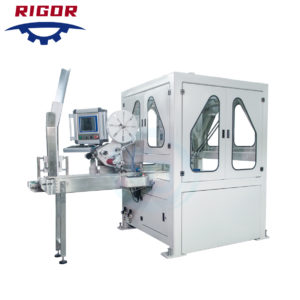
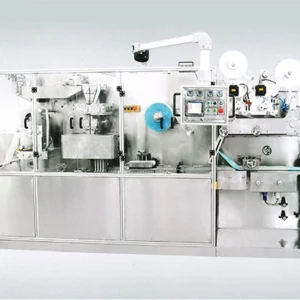
Embarking on the production of wet wipes requires a deep appreciation for the machinery that transforms raw materials into the finished goods consumers use daily. A tissue wet wipes machine is not a single, monolithic entity; it is more accurately conceptualized as a sophisticated, integrated production line. Each module within this line performs a specific, sequential function, and the harmony between these modules dictates the efficiency of the entire operation and the quality of the final product. Understanding this sequence is the first step for any prospective investor.
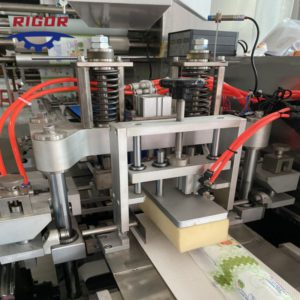
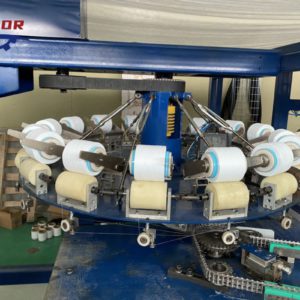
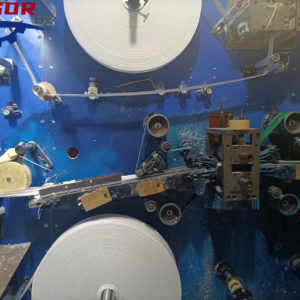
The process begins with the unwinding of a large parent roll of non-woven fabric. This fabric is the skeleton of the wipe. The machine then guides this continuous sheet through a series of rollers and tension controls, a seemingly simple step that is paramount for preventing tears and ensuring uniformity. Next, the fabric enters the folding unit, a marvel of mechanical engineering that pleats the fabric into the familiar Z-fold or C-fold stacks. Simultaneously or immediately after, the liquid application system saturates the folded wipes with a carefully formulated solution. The now-moistened stack is cut to the desired length and width before being transferred to the packaging unit. Here, the wipes are inserted into flexible packaging or canisters, sealed to maintain moisture, and prepared for shipment. Each of these stages—unwinding, folding, wetting, cutting, and packaging—must be perfectly synchronized. A failure in one stage creates a bottleneck or defect that reverberates through the entire line (Yundu Filling Machine, 2025).
Factor 1: Production Capacity and Speed – Aligning Output with Market Demand
The first question any potential investor must grapple with concerns scale. How many wipes do you need to produce, and how quickly? The production speed of a tissue wet wipes machine, typically measured in pieces per minute (pcs/min) or packs per minute, is arguably its most prominent specification. However, selecting a speed is not a simple matter of choosing the biggest number. It demands a thoughtful and honest projection of your market demand, not just for today but for the foreseeable future.
Defining Production Speed and Its Implications
Let's consider what these numbers truly mean. A machine rated at 400-800 pcs/min might be ideal for a new market entrant or a company serving a niche segment. It allows for controlled growth without an exorbitant initial capital outlay. In contrast, a high-capacity line running at 2000-3000 pcs/min or more is suited for an established brand with significant market share or a business acting as an original equipment manufacturer (OEM) for large retailers.
The choice has profound consequences. A machine with excessive capacity for your needs will sit idle, depreciating in value while failing to generate revenue to cover its cost. Its high energy consumption and maintenance requirements become a financial drain. Conversely, a machine with insufficient capacity creates a different set of problems. You may be unable to fulfill large orders, lose contracts to competitors, and miss out on the economies of scale that lower your cost per unit. The frustration of having demand you cannot meet is a difficult position for any growing business.
How to Forecast Your Demand Accurately
Forecasting is both an art and a science. It begins with rigorous market research. For businesses in South America or Southeast Asia, this means analyzing population growth, disposable income trends, and cultural attitudes toward hygiene products. Are you targeting the baby care segment, the cosmetics market, or the household cleaning niche? Each has a different growth trajectory.
A practical exercise is to build a three-tiered forecast:
- Conservative Estimate: Based on secured contracts and a modest market penetration rate.
- Moderate Estimate: Based on your marketing plan's targets and expected growth.
- Aggressive Estimate: An optimistic scenario assuming high market acceptance and competitive wins.
Your ideal machine capacity should comfortably meet your moderate estimate while having the potential to stretch toward your aggressive estimate, perhaps by running extra shifts. It should not be so large that it is unprofitable under your conservative scenario.
Production Speed Tiers and Typical Applications
| Speed Tier | Wipes per Minute (pcs/min) | Packs per Minute (Approx.) | Ideal Business Profile | Strategic Considerations |
|---|---|---|---|---|
| Entry-Level | 300 – 800 | 30 – 80 | Startups, niche markets, R&D | Lower initial investment, flexible for small batches. |
| Mid-Range | 800 – 2000 | 80 – 200 | Growing businesses, regional brands | Balances capacity with investment, good for scaling. |
| High-Capacity | 2000 – 4000+ | 200 – 400+ | National brands, OEM suppliers | High capital cost, requires consistent high-volume demand. |
Factor 2: Material Compatibility and Versatility – Preparing for Future Product Diversification
The wipe itself is a composite of a fabric substrate and a liquid solution. The tissue wet wipes machine you choose must be able to handle the specific materials you intend to use, and ideally, those you might use in the future. A lack of versatility in material handling can severely limit your ability to innovate and adapt to changing consumer preferences.
Understanding Non-Woven Fabrics
Wet wipes are not made from traditional paper or woven cloth. They are constructed from non-woven fabrics, which are sheets of fibers bonded together mechanically, chemically, or thermally. The type of non-woven fabric determines the wipe's softness, strength, absorbency, and cost.
Think of it like choosing the right kind of paper for a book. A glossy, heavy stock feels premium, while a thin, porous paper is economical. Similarly, different non-wovens serve different purposes:
- Spunlace: This is the most common material for personal care wipes. It is created by entangling fibers with high-pressure water jets, resulting in a soft, strong, and cloth-like feel. It is excellent for baby wipes and cosmetic removers.
- Airlaid: This material is known for its exceptional absorbency, making it a prime choice for industrial or cleaning wipes where spill absorption is key. It has a fluffier, paper-like texture.
- Spunbond: Produced by spinning and then bonding filaments, spunbond fabrics are strong and cost-effective but often less soft than spunlace. They are frequently used in medical or protective applications.
Your machine's unwinding, tensioning, and cutting systems must be calibrated to handle the specific characteristics of your chosen fabric. A system designed for robust spunbond might tear a delicate, low-GSM spunlace fabric.
The Importance of Grams per Square Meter (GSM)
GSM is a measure of the fabric's density or weight. A higher GSM generally means a thicker, plusher, and more durable wipe. A baby wipe might be 45-60 GSM, while a heavy-duty cleaning wipe could be 70 GSM or higher. Your machine must have adjustable settings to accommodate a range of GSMs. If it can only handle a narrow range, you are locked into a specific product quality tier. Ask potential suppliers about the machine's tested GSM range.
Future-Proofing: Can the Machine Handle Biodegradable Materials?
As environmental consciousness grows globally, so does the demand for sustainable products. Materials like viscose, bamboo, and polylactic acid (PLA) are becoming popular alternatives to traditional polypropylene (PP) and polyethylene (PE) fibers. These biodegradable materials often have different physical properties—they might be less strong or more prone to stretching.
A forward-thinking investment is a tissue wet wipes machine that has been tested with or can be easily adapted for these eco-friendly substrates. This versatility ensures that as consumer demand shifts toward greener products, your manufacturing capabilities can shift with it, providing a significant competitive advantage.
Factor 3: Folding and Stacking Mechanisms – The Heart of Product Presentation
How a wipe is folded and presented to the user is a critical, though often overlooked, aspect of product design. The folding mechanism is the mechanical heart of the tissue wet wipes machine. Its precision and reliability directly affect the consumer's experience and the efficiency of the packaging process. A poorly folded wipe can frustrate the user and cause jams on the production line.
Common Folding Types: Z-fold, C-fold, and Interfold
Imagine pulling a single wipe from a pack. Does another one pop up, ready for use? Or do you have to dig for the next one? This experience is dictated by the fold.
- Z-Fold: In this configuration, each wipe is folded in a "Z" shape and interleaved with the next one. When you pull one wipe, it partially pulls out the next, creating the classic "pop-up" feature. This is highly convenient for single-handed use, making it the standard for baby wipes.
- C-Fold: Each wipe is simply folded in half, like a "C". The wipes are stacked on top of each other but are not interlinked. This is a non-pop-up presentation. The user must reach into the pack to grab the next wipe. It is simpler mechanically but less convenient for the end-user.
- Interfold: This is a variation of the Z-fold, where the wipes are intertwined in a way that ensures reliable dispensing one at a time. The precision required for a good interfold is a key indicator of a machine's quality.
The choice of fold type is a strategic one. A Z-fold adds perceived value and convenience, while a C-fold might be sufficient for a budget product. A high-quality machine should offer the ability to produce a perfect, consistent Z-fold or even allow for changing between fold types with some adjustments.
Pop-up vs. Non-Pop-up Dispensing
The distinction between pop-up and non-pop-up is fundamental. Pop-up dispensing, enabled by interfolding, is the gold standard for convenience. However, it requires a more complex and precise folding head on the machine. Non-pop-up stacks are easier to produce but can lead to users pulling out multiple wipes at once, causing waste and frustration. For markets where convenience is a major selling point, investing in a machine with reliable pop-up folding capability is paramount.
Folding and Stacking Type Comparison
| Özellik | Z-Fold (Interfold) | C-Fold (Non-Interfold) |
|---|---|---|
| Dispensing | Pop-up, one-at-a-time | Non-pop-up, manual separation |
| User Convenience | High (ideal for single-handed use) | Moderate (requires two hands) |
| Mechanical Complexity | High (requires precise interleaving) | Low (simple stacking) |
| Common Application | Baby wipes, facial wipes | Some disinfectant wipes, budget products |
| Waste Potential | Low (dispenses one wipe) | Higher (risk of pulling multiple wipes) |
Stacking Precision and its Impact on Packaging
After folding, the continuous sheet is cut into individual stacks of a predetermined count—for example, 80 wipes per stack. The machine's stacking unit must create neat, uniform stacks. If the stack is crooked or uneven, it will not fit properly into the packaging. This can cause the packaging machine to jam, leading to costly downtime and wasted materials. A precise stacking mechanism, often controlled by servo motors, is a hallmark of a superior ıslak mendil üretim makinesi. It ensures that each stack is a perfect cuboid, ready for seamless insertion into the final package.
Factor 4: Liquid Application and Control Systems – Ensuring Consistency and Quality
The "wet" in "wet wipes" is the liquid solution that performs the cleaning, moisturizing, or disinfecting function. The application of this liquid is a delicate process. Too little liquid results in a dry, ineffective wipe. Too much liquid leads to a soggy, dripping mess and increases costs. The liquid application system of a tissue wet wipes machine is therefore central to product quality and profitability.
Spraying vs. Dripping Systems: A Comparative Analysis
There are two primary methods for applying the solution to the non-woven fabric:
- Spraying Systems: These use a series of nozzles to spray a fine mist of liquid onto the fabric as it passes by. High-quality systems use multiple spray bars on both the top and bottom of the fabric to ensure even coverage. The advantage of spraying is its ability to provide a very uniform application and to be finely controlled. The amount of liquid can be adjusted precisely by changing the pressure and the duration of the spray.
- Dripping or Soaking Systems: In these systems, the folded and cut stacks of wipes are passed through a bath or under a "waterfall" of liquid. This method ensures thorough saturation but can be harder to control. It can sometimes lead to wipes at the bottom of the stack being much wetter than those at the top. It is a simpler, often less expensive technology, but may lack the precision of a modern spraying system.
For most personal care applications, a sophisticated spraying system is preferable. It allows for precise control over the liquid-to-fabric ratio, which is a key quality parameter.
Achieving Uniform Saturation
Uniform saturation is the goal. A consumer should not be able to tell the difference between the first wipe and the last wipe in a pack. A good machine achieves this through several mechanisms. As mentioned, multiple spray bars are one method. Another is the use of squeeze rollers. After the liquid is applied, the fabric passes through a pair of rollers that gently squeeze it, helping to distribute the liquid evenly throughout the fibers and remove any gross excess. The pressure of these rollers must be adjustable to suit different fabric types and GSMs.
Managing Liquid Viscosity and Formulation
Wet wipe solutions can range from water-thin liquids to more viscous lotions. The machine's liquid system—including the pumps, pipes, and nozzles—must be able to handle the viscosity of your specific formulation without clogging. If you plan to produce different types of wipes (e.g., a water-based baby wipe and a lotion-based makeup remover wipe), the system should be easy to clean and purge between production runs to prevent cross-contamination. This is known as Clean-in-Place (CIP) capability. A machine with a robust, easy-to-clean liquid system provides the flexibility to diversify your product line without major hardware changes.
Factor 5: Level of Automation and Integration – Balancing Labor Costs with Capital Investment
A modern tissue wet wipes machine is a testament to the power of automation. The decision of how much automation to invest in is a strategic calculation that balances the cost of labor against the cost of technology. In regions with high labor costs, full automation is often a straightforward choice. In markets like South Africa or parts of Southeast Asia, where labor may be more affordable, the calculation is more nuanced.
Semi-Automatic vs. Fully Automatic Lines
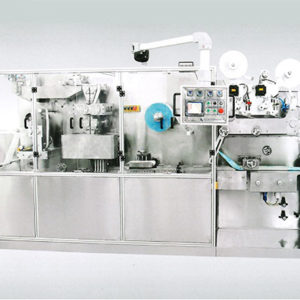
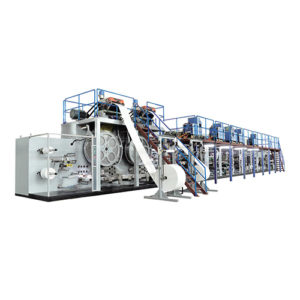
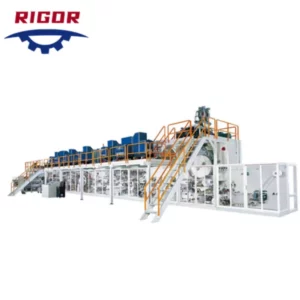
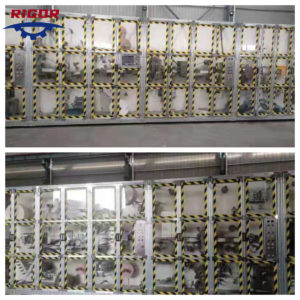
Let’s clarify the terms. A fully automatic production line is a seamless, integrated system. The raw fabric is loaded at one end, and sealed, ready-to-ship packs of wet wipes emerge from the other. The transfer of materials between stages—from folding to cutting to packaging—is handled by robotic arms and conveyors without human intervention. This minimizes labor, reduces the risk of contamination, and maximizes throughput (Diaper Machines, 2023).
A semi-automatic line, by contrast, involves one or more manual steps. For example, a machine might fold, wet, and cut the wipes into stacks, but a human operator would then have to manually move those stacks to a separate packaging machine. While the initial investment for a semi-automatic line is lower, it introduces higher long-term labor costs and can become a bottleneck as production scales up.
The choice depends on your business model. For a small-scale operation, a semi-automatic line can be a sensible starting point. However, for any business with ambitions of growth, investing in one of the available fully automatic wet wipes production lines is almost always the wiser long-term decision. The gains in efficiency, consistency, and hygiene typically outweigh the higher initial cost over the lifetime of the machine.
The Role of PLC, HMI, and Servo Motors
Understanding the components that drive automation can help you evaluate a machine's sophistication.
- PLC (Programmable Logic Controller): Think of the PLC as the machine's brain. It is an industrial computer that controls and synchronizes all the machine's functions—the timing of the cutter, the speed of the rollers, the action of the packaging unit. A machine with a reputable PLC brand (like Siemens, Mitsubishi, or Allen-Bradley) is generally a sign of quality and reliability.
- HMI (Human-Machine Interface): This is the machine's face—typically a touchscreen panel. The HMI is where the operator inputs commands, sets parameters (like wipe count and pack size), and monitors the machine's status. An intuitive, user-friendly HMI in the local language is vital. It reduces training time and minimizes the risk of operator error.
- Servo Motors: If the PLC is the brain, servo motors are the precise, powerful muscles. Unlike standard motors, servos can be controlled with extreme precision in terms of position, speed, and torque. They are used for critical actions like cutting the wipes to an exact length, precisely placing a stack, or accurately applying a plastic lid. A machine that uses servo motors for key functions will be more accurate, faster, and more reliable than one that uses older mechanical or pneumatic systems.
Integrating with Upstream and Downstream Equipment
A tissue wet wipes machine does not operate in a vacuum. Consider how it will connect to other parts of your factory. Upstream, you might have a water purification system that feeds your liquid solution. Downstream, you might have a case packer that automatically puts the finished packs into shipping boxes, and a palletizer that stacks those boxes onto pallets. A truly "smart" machine will have the communication protocols (like Ethernet/IP or Profinet) to integrate seamlessly with this ancillary equipment, creating a fully automated "end-to-end" production process.
Factor 6: Packaging and Sealing Capabilities – The Final Touchpoint with the Consumer
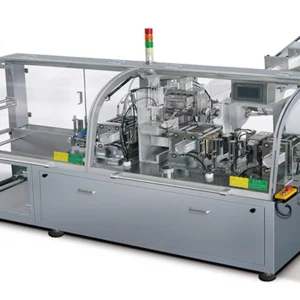
The package is more than just a container; it is your product's first impression on the shelf and its primary defense against drying out. The packaging module of a tissue wet wipes machine is therefore just as important as the wipe-making section. An integrated machine that handles both wipe production and packaging in a single line offers the best efficiency and control.
Types of Packaging: Flow-wrap, Canister, and Lid Application
The most common packaging format for wet wipes is the flexible flow-wrap pack. The machine forms a tube of film around the stack of wipes, seals it at both ends, and creates a longitudinal seal along the back. A die-cutter then creates an opening on the top, and a resealable label or a rigid plastic lid is applied over it.
Alternatively, some wipes, particularly for household cleaning, are packaged in rigid plastic canisters. This requires a different type of machine that rolls the continuous sheet of wipes and inserts the roll into a pre-made canister.
A versatile machine will have its packaging section designed in a modular way. It might primarily be a flow-wrapper, but with the option to add a separate lid-applying robot. The ability to apply both simple resealable labels and more premium rigid lids gives you flexibility in your product positioning.
Sealing Integrity: Preventing Leaks and Contamination
The quality of the seal is non-negotiable. A weak or incomplete seal will allow the liquid solution to evaporate, rendering the wipes useless, and can permit bacteria to enter the pack. High-quality machines use precise temperature and pressure controls on their sealing jaws to create strong, consistent seals every time. Advanced systems even incorporate inspection cameras that can detect a faulty seal and automatically reject the defective pack from the line. When evaluating a machine, pay close attention to the design of the sealing unit. It is a direct reflection of the manufacturer's commitment to quality.
Date Coding and Lot Tracking Integration
For product safety and regulatory compliance, every pack of wipes must be marked with a production date, an expiry date, and a lot or batch number. This is usually done with a small inkjet or thermal transfer printer that is integrated into the packaging line. This traceability is essential. In the unlikely event of a product recall, the lot number allows you to identify and isolate only the affected batches, saving your company from a much larger and more costly recall. Ensure that the machine you choose can easily integrate a reliable date coding system.
Factor 7: Calculating Total Cost of Ownership (TCO) and Return on Investment (ROI)
The price tag on a tissue wet wipes machine is only one part of its true cost. A savvy investor looks beyond the initial purchase price to calculate the Total Cost of Ownership (TCO). This holistic view is necessary to accurately project your Return on Investment (ROI) and make a financially sound decision.
Beyond the Sticker Price: Installation, Training, and Maintenance
The purchase price is the beginning, not the end, of your investment. Consider these additional costs:
- Shipping and Installation: The cost of transporting a large industrial machine to your facility and having it professionally installed and commissioned by the manufacturer's technicians.
- Training: Your operators and maintenance staff will need to be trained to use and care for the new equipment. A good supplier will include comprehensive training as part of the package.
- Spare Parts: Machines have wearable parts that will need to be replaced over time. A prudent buyer will purchase a recommended spare parts package along with the machine to minimize future downtime.
- Maintenance: Regular preventive maintenance is key to a long and productive machine life. This involves costs for lubricants, cleaning supplies, and technician time.
Calculating Operational Costs: Power, Labor, Consumables
Once the machine is running, it will incur ongoing operational costs.
- Power Consumption: A large, high-speed machine can be a significant consumer of electricity. Request the machine's power rating (in kW) from the supplier to estimate your monthly energy bill.
- Labor: Even a fully automatic line requires operators to oversee the process, load raw materials, and handle finished goods. Calculate the number of operators needed per shift and their associated wages.
- Raw Materials: This is your largest ongoing cost. It includes the non-woven fabric, the packaging film, and the liquid solution. Even a small percentage of waste due to machine inefficiency can add up to a substantial financial loss over a year. A reliable, efficient machine minimizes this waste.
A Framework for Projecting ROI
Calculating ROI helps you justify the investment. A simplified formula is:
ROI (%) = ( (Net Profit from Wipes – Total Investment) / Total Investment ) * 100
To project your net profit, you need to estimate your revenue (number of packs sold x price per pack) and subtract all your operational costs (materials, labor, energy, etc.). The "Total Investment" is the TCO we discussed above.
Let’s imagine a thought experiment. Machine A costs $300,000. Machine B, a more efficient model with better automation, costs $450,000. Machine A requires three operators per shift, while Machine B requires only one. Machine A has a material waste rate of 3%, while Machine B's is 1%. Over a five-year period, the savings in labor and reduced material waste from Machine B could easily surpass the initial $150,000 price difference, resulting in a higher long-term ROI. When exploring various wet wipe machine options, it is this long-term thinking that separates successful enterprises from those that struggle.
Sıkça Sorulan Sorular (SSS)
What is the average lifespan of a tissue wet wipes machine? With proper maintenance and care, a well-built tissue wet wipes machine from a reputable manufacturer can have a productive lifespan of 15 to 20 years or even longer. The key is consistent preventive maintenance and the timely replacement of wearable parts like blades, belts, and bearings.
How much factory space do I need for a full production line? This varies greatly depending on the machine's configuration and speed. A complete, fully automatic line, including space for raw material storage and finished goods, can require anywhere from 150 to 400 square meters (approximately 1600 to 4300 square feet). Always request a detailed layout drawing from the manufacturer.
Can one machine produce different sizes of wet wipes? Yes, most modern machines are designed with a degree of flexibility. You can typically adjust the wipe's length and the number of wipes per stack via the HMI. Changing the wipe's width, however, usually requires a more significant mechanical changeover, such as swapping out the folding unit or slitting blades.
What are the main maintenance requirements? Daily maintenance includes cleaning the machine, especially the liquid application and sealing systems. Weekly tasks might involve lubricating moving parts and inspecting blades for sharpness. Monthly and annual checks are more thorough and may involve inspecting electrical components and motors. The manufacturer will provide a detailed maintenance schedule.
How does the electrical supply in my region affect machine choice? This is a vital consideration. You must ensure the machine's electrical specifications (voltage, phase, and frequency) match your local power supply. For example, a machine built for Europe's 400V/50Hz supply will not work correctly on North America's 480V/60Hz supply without modification. Inform the manufacturer of your region's electrical standards at the beginning of the purchasing process.
What is the difference between a baby wipe machine and a disinfectant wipe machine? While the basic principles are similar, there are key differences. Disinfectant wipe machines often require more robust materials for the machine itself (like higher-grade stainless steel) to resist corrosive cleaning solutions. The liquid application system may also be more specialized to handle alcohol-based or more aggressive chemical formulations.
Sonuç
Choosing the right tissue wet wipes machine is a complex but manageable process when approached with diligence and a clear strategic framework. It is an exercise that extends far beyond a simple comparison of price and speed. It requires a deep, empathetic understanding of your target market, a realistic forecast of your business growth, and a commitment to quality that touches every aspect of the machine's design—from its material handling and folding precision to its automation and sealing integrity. By carefully evaluating these seven critical factors, you transform a daunting capital expenditure into a calculated, strategic investment. You are not merely buying a piece of equipment; you are acquiring the engine for your company's growth, a tool that will enable you to deliver consistent, high-quality products to consumers and secure a profitable, long-term position in a competitive global market.
Referanslar
Clean-Wipe. (2025). How wet wipes are made | Complete guide. Clean-Wipe.com. https://clean-wipe.com/how-wet-wipes-are-made.html
Diaper Machines. (2023, November 13). A comprehensive guide – Wet wipes machine. https://www.diapermachines.com/2023/11/13/a-comprehensive-guide-wet-wipes-machine/
Diaper Machines. (2023, December 25). The production process of wet wipes in this industry. https://www.diapermachines.com/2023/12/25/the-production-process-of-wet-wipes-in-this-industry/
Yundu Filling Machine. (2025, March 26). The ultimate guide to wet wipes making machines: Revolutionizing efficiency and quality in modern production. https://yundufillingmachine.com/guide-to-wet-wipes-making-machines
Yundu Filling Machine. (2025, March 26). Wet wipes manufacturing machine. https://yundufillingmachine.com/wet-wipes-manufacturing-machine-guide
Yundu Filling Machine. (2025, May 12). How wet wipes are made: Process, machinery, and principles. https://yundufillingmachine.com/how-wet-wipes-are-made-process-machinery/