The Growing Demand for Diaper Machines in Emerging Markets
South America, Russia, Southeast Asia, the Middle East, and South Africa are no longer peripheral players in the global hygiene products industry. By 2026, these regions have become the primary growth engines for diaper consumption, driven by rising birth rates in some areas and increased disposable income in others. In Brazil, for example, the middle class has expanded by nearly 15% over the last five years, directly boosting demand for premium baby diapers. Meanwhile, Russia's state-led family support programs have kept birth rates stable, creating a consistent need for efficient production lines. Southeast Asian nations like Indonesia and Vietnam are witnessing a demographic dividend, with young populations and rapid urbanization fueling both baby and adult diaper markets. The Middle East, particularly Saudi Arabia and the UAE, has seen a surge in healthcare spending, which includes adult incontinence products. South Africa's growing retail sector and improved logistics are making diapers accessible to a broader population.
These macroeconomic shifts translate into a pressing need for local manufacturing capacity. Importing finished diapers is costly due to tariffs, shipping delays, and currency fluctuations. As a result, entrepreneurs and established companies are investing in their own production facilities. This is where a reliable diaper machine manufacturer becomes a strategic partner. The right machinery allows businesses to control quality, reduce per-unit costs, and respond quickly to local market preferences—such as thinner diapers for hot climates or extra-absorbent cores for overnight use. In my work with clients across these regions, I've observed that the most successful projects are those that align machine specifications with regional consumer habits. For instance, a manufacturer in Nigeria found that by producing a slightly longer diaper with stronger side panels, they could capture market share from imported brands that didn't cater to local body types.
The shift toward local production is also supported by government policies. Many of these countries offer tax incentives for manufacturing equipment imports, aiming to reduce dependency on foreign goods. Russia's import substitution program, for example, has actively encouraged domestic diaper production since 2022. Similarly, Saudi Arabia's Vision 2030 emphasizes industrial diversification, making it easier for investors to set up hygiene product lines. However, navigating the import regulations and finding a manufacturer that understands these nuances is critical. A machine that works flawlessly in a temperate European factory might struggle in the humid, 35°C environment of a Vietnamese plant without proper climate adaptations. This is why selecting a manufacturer with experience in emerging markets is not just a preference—it's a necessity for long-term profitability.
Types of Diaper Manufacturing Machines: From Semi-Automatic to Full-Speed Lines
The diaper machine market offers a wide spectrum of equipment, and choosing the right type can make or break your production efficiency. At the most basic level, semi-automatic machines require significant manual labor for material feeding, stacking, and packaging. These are often entry-level options for startups in regions with low labor costs, such as parts of South Asia or rural South America. A typical semi-automatic baby diaper line might produce 60 to 100 pieces per minute, with operators handling core placement and elastic attachment. While the upfront investment is low—often under $50,000—the hidden costs emerge in inconsistent quality and higher waste rates. I recall a client in Bangladesh who started with a semi-automatic setup and quickly realized that 12% material waste was eating into their margins. They upgraded to a fully automatic system within 18 months.
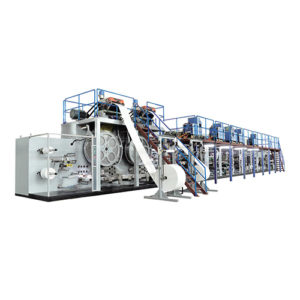
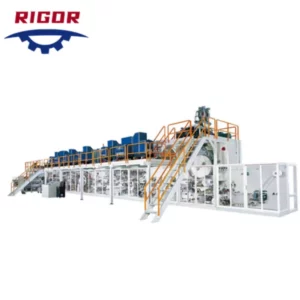
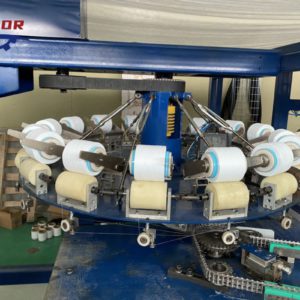
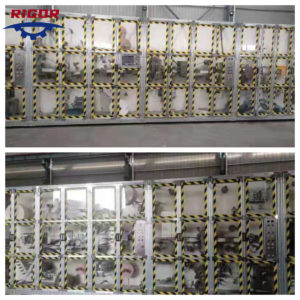
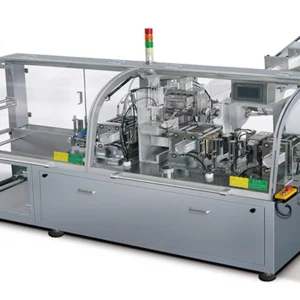
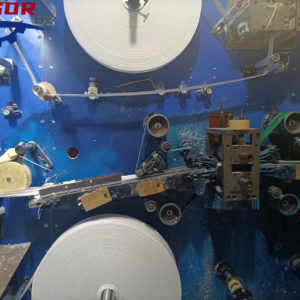
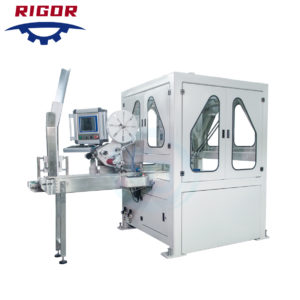
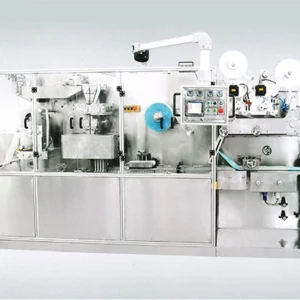
Fully automatic machines represent the industry standard for mid-to-large-scale production. These lines integrate unwinding, core formation, elastic application, cutting, and folding into a continuous process, reaching speeds of 300 to 600 pieces per minute. Modern servo-driven systems allow quick size changes, reducing downtime for manufacturers serving multiple market segments. For adult diapers, specialized full-automatic lines handle larger dimensions and higher absorbency requirements. In Russia, where adult incontinence products are a growing segment due to an aging population, machines that can seamlessly switch between pull-up pants and tape-style diapers are in high demand. The investment for such equipment ranges from $200,000 to over $1 million, depending on speed and customization.
Then there are high-speed, fully servo lines designed for multinational brands producing over 1,000 pieces per minute. These are typically built with European or Japanese components and come with advanced quality control systems, including vision inspection and automatic rejection of defective units. While the price tag can exceed $2 million, the output and consistency justify the cost for large-scale operations. In the Middle East, where local brands compete with global giants like Pampers, such machines provide the necessary competitive edge. It's worth noting that many manufacturers now offer modular designs, allowing buyers to start with a mid-speed line and add modules later. This scalability is particularly attractive for investors in South Africa and Southeast Asia, where market demand can ramp up unpredictably. While our core expertise lies in diaper machines, we also recognize the value of diversifying production. For companies looking to expand into feminine hygiene, our sanitary napkin manufacturing machine provides a reliable entry point with similar operational principles.
How to Choose a Reliable Diaper Machine Manufacturer: A Practical Guide
Selecting a diaper machine manufacturer is not a transaction—it's the beginning of a long-term relationship that affects your production for years. Over the past decade, I've seen too many buyers focus solely on the initial price quote and ignore factors that determine total cost of ownership. The first step is to verify the manufacturer's track record in your specific region. Ask for references from clients in South America, Russia, or the Middle East, not just their domestic market. A factory in China might have excellent reviews from local customers, but if their machines haven't been tested in the dry, dusty conditions of Saudi Arabia or the voltage-fluctuating grids of rural Indonesia, you're taking a gamble. During a project in Argentina, I discovered that a well-known manufacturer had never shipped to South America before, leading to a three-month delay in customs clearance because of improper documentation. The lesson: regional experience matters as much as technical specs.
Technical support and training are the next critical pillars. Even the most advanced machine will underperform if your operators don't know how to fine-tune the settings. A reliable manufacturer provides on-site installation, comprehensive training, and multilingual manuals. In Russia, for example, having documentation in Russian and access to a local-speaking engineer can cut troubleshooting time by 70%. I always advise buyers to negotiate a service level agreement (SLA) that includes remote diagnostics and guaranteed response times. One client in the Philippines shared how their supplier's 24/7 WeChat support—though well-intentioned—was useless because the engineer didn't speak English and the time zone difference meant waiting 12 hours for a reply. They eventually switched to a manufacturer with a regional service hub in Bangkok.
Another often-overlooked aspect is the manufacturer's supply chain for spare parts. Diaper machines consume wear parts like cutting blades, ultrasonic horns, and elastic rollers. If these are proprietary and only available from the original manufacturer, you could face weeks of downtime waiting for a shipment. Look for manufacturers that use standardized, globally available components or maintain regional spare parts warehouses. In the Middle East, where logistics can be disrupted by geopolitical tensions, having a local distributor with inventory is a game-changer. Finally, visit the manufacturer's production floor if possible. A virtual tour can reveal a lot about their quality control processes, but an in-person visit lets you see how they treat their own employees and whether their assembly line is organized. A manufacturer that cuts corners in their own factory is unlikely to deliver a precision machine to yours.
Common Pitfalls When Importing Diaper Machinery and How to Avoid Them
Importing a diaper machine from a different continent involves a web of logistics, regulations, and cultural nuances that can trip up even experienced business owners. One of the most frequent mistakes I encounter is underestimating the total landed cost. Buyers often compare FOB (Free on Board) prices from different manufacturers and assume that's the final expense. In reality, sea freight, insurance, customs duties, port handling, and inland transportation can add 25% to 40% to the invoice value. For a machine destined for South Africa, I've seen cases where the importer didn't account for the 15% VAT and additional customs fees, leading to a cash crunch upon arrival. My advice: work with a local freight forwarder who specializes in heavy machinery and can provide an all-inclusive quote before you sign the purchase order.
Another pitfall is ignoring local electrical and environmental standards. In Russia, industrial power supply is often 380V/50Hz, but some regions have unstable grids with voltage spikes. A machine designed for a stable 220V/60Hz system without proper surge protection will experience frequent control board failures. I recall a project in a small Russian city where the client bought a used machine from Italy without checking the voltage compatibility. The first month of operation saw three servo drive burnouts, costing over $8,000 in repairs. They eventually had to install a voltage stabilizer and replace several components. Similarly, in the humid coastal areas of Southeast Asia, corrosion can attack exposed metal parts within months. Requesting stainless steel or coated components for such environments is a small upfront cost that prevents major headaches later.
Documentation and compliance are also common stumbling blocks. Many emerging markets require specific certifications, such as GOST-R for Russia or SABS for South Africa. If the machine doesn't come with the necessary compliance documents, customs will hold it indefinitely. In one case, a client in Brazil ordered a machine from a Chinese manufacturer that promised "CE equivalent" but couldn't provide INMETRO certification. The machine sat in Santos port for two months while they scrambled to get a local engineer to certify it. To avoid this, always request a full list of certificates before shipping and verify with your local standards authority. Finally, don't overlook the importance of packaging. Machines shipped in standard wooden crates might arrive with moisture damage or rust if they pass through tropical climates. Insist on vacuum-sealed, climate-controlled packaging for sensitive electronic parts.
Comparing Chinese vs. European Diaper Machine Manufacturers
The choice between a Chinese and a European diaper machine manufacturer is one of the most debated topics in the industry. Both have distinct advantages, and the right decision depends on your budget, production goals, and support expectations. The table below summarizes the key differences to help you make an informed comparison.
| Aspect | Chinese Manufacturers | European Manufacturers |
|---|---|---|
| Price Range | $60,000 – $600,000 for standard lines | $300,000 – $2,000,000+ for equivalent output |
| Technology Level | Rapidly advancing; many offer servo-driven, modular designs | Proven, high-precision engineering; often industry-leading in automation |
| Özelleştirme | Highly flexible; willing to adapt to unique market needs | More standardized; custom changes can be costly and slow |
| Lead Time | Typically 60–90 days for standard machines | Often 120–180 days due to higher order volumes |
| Satış Sonrası Destek | Improving; many now offer English-speaking engineers, remote support | Established global service networks; local technicians in many countries |
| Spare Parts Availability | Often use globally available components; some proprietary parts may require air freight | Standardized parts, but can be expensive and require long lead times for niche items |
In practical terms, Chinese manufacturers have closed the technology gap significantly over the past five years. Many now incorporate Siemens PLCs, Omron sensors, and other internationally recognized components. For a startup in Southeast Asia or a mid-sized company in South Africa, a Chinese machine offers a compelling balance of performance and affordability. However, if your operation targets the premium segment and requires zero-defect output with minimal downtime, a European machine might be the better long-term investment. I've worked with a client in the UAE who initially bought a Chinese line for adult diapers, then added a European high-speed line two years later for their baby diaper range. They found that the Chinese machine was perfect for regional distribution, while the European line met the strict quality demands of export markets in Europe. This hybrid approach is becoming increasingly common.
Maintenance and After-Sales Support: What Buyers Often Overlook
Maintenance is the silent profit killer in diaper manufacturing. A machine that runs at 95% efficiency versus one at 80% can mean the difference between a thriving business and a struggling one. Yet, many buyers focus so intently on the purchase that they neglect to build a robust maintenance strategy. During a consultancy visit to a diaper factory in Saudi Arabia, I noticed that the production line was stopping every two hours for minor adjustments. The root cause? The local maintenance team had never received formal training on the servo tuning procedures. They were relying on trial and error, which not only reduced output but also accelerated wear on the mechanical components. We arranged for the manufacturer's engineer to conduct a week-long training session, and within a month, efficiency jumped from 78% to 92%.
Preventive maintenance schedules must be adapted to local conditions. In dusty environments like the Middle East or parts of South Africa, air filters and cooling fans need cleaning three times more often than in a clean European factory. In humid Southeast Asia, rust prevention on non-stainless parts is a daily task. I always recommend that buyers negotiate a detailed maintenance manual that includes region-specific guidelines. If the manufacturer can't provide this, it's a red flag. Another often-overlooked aspect is software updates. Modern diaper machines run on complex PLC programs that control everything from tension to temperature. Manufacturers periodically release updates that improve performance or fix bugs. Without a service contract, you might miss these updates and slowly fall behind in efficiency. One client in Brazil discovered that a free software patch increased their line speed by 8%—but only because they had maintained an active support relationship with the supplier.
Spare parts management is equally critical. I've seen factories shut down for two weeks waiting for a $50 sensor because they didn't keep a critical spares inventory. Work with your manufacturer to identify the top 20 wear-and-tear items and keep them on-site. For machines operating in remote areas of Russia or rural South America, this is non-negotiable. Additionally, consider the availability of local third-party service providers. While the manufacturer's support is primary, having a local technician who can handle basic troubleshooting can save days. In one case, a plant in Nigeria avoided a major breakdown because a local engineer had been trained on the machine during installation and could replace a damaged cutting blade from the spares kit. The lesson: invest in training and parts upfront, and you'll avoid the costly downtime that plagues unprepared operations.
The Role of Automation and Industry 4.0 in Diaper Production
The diaper manufacturing floor of 2026 looks vastly different from that of a decade ago. Industry 4.0 technologies—IoT sensors, real-time data analytics, and machine learning—are no longer futuristic concepts but practical tools that improve quality and reduce waste. In a modern fully automatic line, hundreds of sensors monitor parameters like web tension, temperature, and adhesive application in real time. This data is fed into a central system that can predict when a component is likely to fail, allowing for scheduled maintenance rather than emergency repairs. For manufacturers in emerging markets, where skilled labor can be scarce, such automation reduces dependency on human expertise. A factory in Vietnam I visited recently had integrated a tablet-based dashboard that showed operators exactly when to change the cutting blades based on actual wear, not just a fixed schedule. This simple IoT upgrade cut their blade-related downtime by 40%.
Automation also enables rapid product changeovers, which is crucial for factories serving diverse markets. In the Middle East, a single line might produce baby diapers, adult pull-ups, and feminine hygiene pads in different shifts. Older machines required hours of manual adjustment; today's servo-driven systems can switch between sizes in under 15 minutes with the push of a button. This flexibility allows manufacturers to respond to seasonal demand spikes without investing in multiple dedicated lines. Moreover, vision inspection systems using AI can detect defects like misplaced elastics or uneven core distribution at full production speed, rejecting faulty units before they enter the packaging stage. This level of quality control was once exclusive to top-tier European brands, but it's now accessible to mid-sized producers in South Africa and South America.
For buyers evaluating a diaper machine manufacturer, the integration of Industry 4.0 features should be a key criterion. Ask about the machine's connectivity: does it support OPC-UA or MQTT protocols for easy integration with your existing ERP system? Can it generate production reports automatically? In Russia, where labor laws require detailed shift reports, an automated system saves hours of manual paperwork. However, a word of caution: automation is only as good as the support behind it. A highly automated machine that no one locally can repair becomes a liability. Ensure that the manufacturer provides remote diagnostics and that your IT infrastructure can support the required connectivity. I've seen cases where a factory in Indonesia invested in a state-of-the-art line but lacked stable internet, rendering the remote monitoring features useless. Ground your automation ambitions in the practical realities of your location.
Financing and ROI: Making the Business Case for Your Diaper Machine Investment
Securing financing for a diaper machine purchase in emerging markets requires a solid business case that goes beyond the sticker price. Lenders and investors want to see a clear path to profitability, which means you must calculate the total cost of ownership (TCO) and projected return on investment (ROI) with local market data. Start by estimating your production volume based on realistic sales projections. In Southeast Asia, a new brand might target 2 million diapers per month in the first year, requiring a machine with a capacity of 150–200 pieces per minute. From there, calculate the per-unit cost including raw materials, labor, electricity, and machine depreciation. In many cases, local production can achieve a cost of $0.04–$0.06 per baby diaper, compared to $0.08–$0.10 for imported equivalents. This margin is what attracts investors.
Financing options vary by region. In South Africa, government-backed industrial development funds offer favorable terms for manufacturing equipment. In Russia, several banks have special programs for import substitution projects. The Middle East has seen a rise in private equity interest in the hygiene sector. However, I always advise buyers to factor in a buffer for unexpected costs. During a project in Argentina, the client's ROI calculation assumed a 90% machine efficiency from day one. In reality, the learning curve meant they operated at 70% for the first three months, delaying their breakeven point by half a year. A realistic financial model should account for a ramp-up period, training costs, and initial marketing expenses to build brand recognition.
Another financial lever is the resale value of the machine. Well-maintained diaper machines from reputable manufacturers retain 50–60% of their value after five years, providing an exit strategy if the business pivots. This is particularly relevant in volatile markets. When presenting your case to financiers, include a sensitivity analysis showing how changes in raw material prices or currency exchange rates affect profitability. In countries like Nigeria or Turkey, where currency fluctuations are common, this analysis can make or break the deal. Ultimately, the goal is to demonstrate that the machine is not a cost but a revenue-generating asset. With the right planning, a $300,000 investment can generate over $1 million in annual revenue, paying for itself within 18 to 24 months. The key is to choose a manufacturer that supports you not just with equipment, but with the knowledge to run a profitable operation.
Whether you are launching a new diaper brand in Brazil, expanding an adult incontinence line in Saudi Arabia, or upgrading an existing facility in Vietnam, the right machine partner is the foundation of your success. Take the time to evaluate manufacturers based on their regional experience, technical support, and commitment to your long-term growth. Reach out to our team today to discuss your specific production requirements and get a customized proposal that fits your market and budget. Let's build a production line that turns local demand into lasting profitability.
Authoritative References
- Euromonitor International, Global Diaper Market Report 2025
- World Bank, Birth Rate and Population Data for Emerging Markets
- Nonwovens Industry Magazine, Trends in Absorbent Hygiene Products 2025
- UNICEF, State of the World’s Children 2025
- Statista, Diaper Production Volume by Region 2026