Özet
The acquisition of a laminated wet wipes machine represents a significant capital investment and a strategic decision for manufacturers in the hygiene products sector. This analysis examines the multifaceted considerations integral to selecting the appropriate machinery in the 2025 market, with a particular focus on the needs of businesses in emerging economies such as South America, Russia, Southeast Asia, the Middle East, and South Africa. It evaluates the critical interplay between lamination technology, material science, and automation levels, arguing that a holistic assessment is necessary for optimizing production outcomes. The paper posits that factors extending beyond initial cost, including production efficiency, quality control mechanisms, operational footprint, long-term supplier support, and the total cost of ownership, are determinative of a machine's ultimate return on investment. By deconstructing the manufacturing process and the machinery's role within it, this document provides a framework for making a well-grounded investment that aligns with both current production demands and future market growth.
Önemli Çıkarımlar
- Evaluate lamination technology based on your specific nonwoven fabric and film choices.
- Match the machine's automation level to your labor costs and production volume goals.
- Prioritize integrated quality control systems to protect your brand and reduce waste.
- Calculate the Total Cost of Ownership (TCO), not just the initial purchase price.
- A reliable laminated wet wipes machine is a cornerstone for market competitiveness.
- Ensure the supplier offers robust after-sales support, especially for remote locations.
- Analyze the machine's utility consumption for accurate long-term operational budgeting.
İçindekiler
- Scrutinizing Lamination Technology and Material Compatibility
- Assessing the Degree of Automation and Integration
- Evaluating Production Speed, Efficiency, and Output Capacity
- Prioritizing Quality Control and Defect Detection Systems
- Analyzing Operational Footprint and Utility Requirements
- Investigating After-Sales Support, Training, and Spare Parts Availability
- Calculating the Total Cost of Ownership (TCO) and ROI
- Sıkça Sorulan Sorular (SSS)
- Sonuç
- Referanslar
Scrutinizing Lamination Technology and Material Compatibility
The decision to invest in a laminated wet wipes machine is fundamentally a decision about the kind of product you wish to bring into the world. The lamination process itself is the heart of the matter, as it is the very step that imparts unique qualities to the final wipe, distinguishing it from a standard single-ply product. A laminated wipe, by its nature, involves bonding two or more layers together. Typically, this involves a nonwoven fabric layer for softness and liquid absorption, and a film layer—often a polyethylene (PE) film—to act as a moisture barrier. This construction is particularly valuable for disinfecting wipes, where the barrier prevents the sanitizing solution from evaporating too quickly and protects the user's hand, or for certain types of cleaning wipes where one side is for scrubbing and the other for wiping.
The central question for a prospective buyer is not if the machine laminates, but how it laminates. The technology employed for bonding these layers directly influences the final product's texture, durability, and performance, as well as the operational efficiency of your production line. Let us consider the primary methods available in 2025.
Lamination Methods: A Comparative Analysis
The two prevailing technologies for this process are adhesive lamination and thermal lamination. Each carries its own set of capabilities and demands, and understanding their distinct natures is the first step toward a sound investment.
Adhesive Lamination involves applying a thin layer of hot-melt or cold-set adhesive to one of the substrates before it is pressed together with the other layer by rollers. Hot-melt adhesives are popular due to their fast setting times and strong bonding capabilities across a wide range of materials. The precision of the adhesive application system is paramount. A system that applies too much adhesive can result in a stiff, unpleasant-feeling wipe and can lead to operational issues like gumming up rollers. Too little, and you risk delamination, where the layers separate either in the package or during use, a critical quality failure that can erode consumer trust. Modern machines utilize sophisticated spray or slot-die coating systems to ensure an exact, consistent application, measured in grams per square meter (GSM).
Thermal Lamination, in contrast, uses heat and pressure to bond layers. This method is suitable when at least one of the substrates has thermoplastic properties (like polypropylene or polyethylene). The surface of the material is heated to its melting point and then pressed against the other layer, creating a bond as it cools. The advantage here is the absence of an additional consumable—the adhesive—which simplifies the supply chain and can lower the per-unit cost. However, the process requires exquisite temperature control. Insufficient heat results in a weak bond, while excessive heat can melt or distort the nonwoven fabric, compromising its softness and integrity. The machine's heating elements and temperature sensors must be of the highest quality to maintain a consistent temperature profile across the entire width of the web.
Think of it as choosing between sewing and welding. Adhesive lamination is like sewing with a very fine, strong thread; it joins different materials effectively but adds a third element (the thread/adhesive). Thermal lamination is like welding; it fuses the materials themselves into a single unit, but requires that the materials be compatible with the welding process.
| Özellik | Adhesive Lamination | Thermal Lamination |
|---|---|---|
| Bonding Mechanism | Application of hot-melt or cold adhesive. | Heat and pressure melt and fuse thermoplastic layers. |
| Malzeme Uyumluluğu | Highly versatile; can bond dissimilar materials. | Requires at least one substrate with thermoplastic properties. |
| Consumables | Requires a continuous supply of adhesive. | No additional consumables required for bonding. |
| Final Product Feel | Can sometimes add stiffness depending on adhesive type/amount. | Generally maintains a softer feel if done correctly. |
| Operational Complexity | Requires management of adhesive system (tanks, nozzles, temperature). | Demands precise and stable temperature control across the web. |
| Capital Cost | Machines may have a slightly higher initial cost due to the adhesive system. | Machinery can be simpler, potentially lowering initial cost. |
The Critical Role of Material Science
A laminated wet wipes machine does not operate in a vacuum. It is part of an ecosystem that includes the raw materials you feed into it. The choice of nonwoven fabric is a foundational decision that will ripple through your entire operation (Yundu Filling Machine, 2025). Common substrates include spunlace (a blend of polyester and viscose/rayon), which is known for its cloth-like feel and excellent absorbency, and polypropylene (PP), which offers strength and is thermoplastic.
Your machine must be able to handle the specific materials you intend to use. This concerns several mechanical aspects:
- Gerginlik Kontrolü: Nonwoven fabrics, especially lighter-weight ones, can stretch or tear under improper tension. A sophisticated machine will have an advanced tension control system, often with dancer rollers or load cells, that automatically adjusts to maintain consistent tension from the master roll to the lamination point. This is even more critical in a lamination line where two or more webs must be fed in perfect synchrony.
- Web Guiding: As the large rolls of fabric unwind at high speed, they can drift from side to side. An automated web guiding system (edge sensors connected to a steering mechanism) is essential to ensure the layers are perfectly aligned before they are bonded. Misalignment leads to ugly, unsellable products and significant waste.
- Roller Specifications: The rollers that press the layers together (nip rollers) must have the correct surface material and hardness (durometer) for your chosen process. For thermal lamination, these rollers may also be heated. Their condition is vital for a uniform bond.
Imagine trying to bake a perfect cake. You can have the best oven in the world (the machine), but if you use the wrong kind of flour or your eggs are not fresh (the raw materials), the result will be disappointing. The synergy between your materials and your machine is what creates a high-quality product.
Assessing the Degree of Automation and Integration
The term "automation" in the context of a laminated wet wipes machine is not a simple binary choice between "manual" and "automatic." It is a spectrum, and finding your ideal position on that spectrum is a function of your business strategy, labor market, and production goals. For manufacturers in diverse markets like Southeast Asia or South America, the calculation may differ significantly from that in Europe or North America.
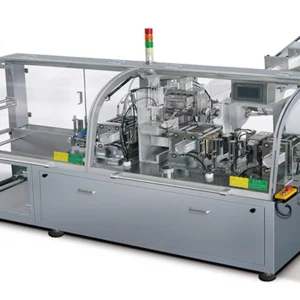
A fully automatic line represents a seamless flow from raw material to finished good. At one end, large parent rolls of nonwoven fabric and lamination film are loaded, often with automatic splicing units that join the end of an expiring roll to the beginning of a new one without stopping the machine. The machine then handles the lamination, slitting the wide web into narrower lanes, wetting the material with a precise amount of solution, cutting individual wipes, folding them into an interlocking stack, and inserting the stack into its final packaging. The packages are then sealed, labeled, and may even be fed directly into a case packer that readies them for shipping. Human intervention is minimal, typically limited to oversight, quality checks, and replenishing raw materials like packaging film.
The Spectrum of Automation and its Implications
The allure of full automation is powerful: high speeds, exceptional consistency, and dramatically reduced labor costs per unit. However, it also entails the highest capital investment and requires a more skilled technical staff for operation and maintenance.
Let us break down the different levels:
- Semi-Automatic: In this configuration, several processes might be discrete. For example, one machine might handle the lamination and slitting, producing finished, dry, laminated rolls. These rolls would then be manually transported to a separate converting machine for wetting, folding, and cutting. A final machine, or even a manual process, would handle packaging. This approach offers a lower entry cost and greater flexibility. You can upgrade one part of the line at a time. It is, however, more labor-intensive and introduces more points for potential error or contamination between stages.
- Standard Automatic: This is a common configuration where lamination, wetting, folding, and cutting occur in a single, integrated machine. The stacks of wipes are then discharged onto a conveyor, where they are manually or semi-automatically fed into a separate packaging machine. This strikes a balance between efficiency and investment.
- Fully Automatic (Full Line): This is the integrated system described earlier, linking the converting process directly to one or more packaging machines. These lines often incorporate robotics for tasks like transferring wipe stacks. The primary benefit is the elimination of the bottleneck between converting and packaging, allowing the entire line to run at the high speed dictated by the converting section.
| Otomasyon Seviyesi | Capital Investment | İşgücü Gereksinimi | Output Speed | Flexibility | Skill Requirement |
|---|---|---|---|---|---|
| Semi-Automatic | Low | High | Low to Medium | High | Low to Medium |
| Standard Automatic | Medium | Medium | Medium to High | Medium | Medium |
| Fully Automatic | High | Low | Very High | Low | High |
Integration: The Unseen Efficiency Multiplier
Beyond the level of automation is the quality of integration. A truly "smart" line in 2025 features a unified control system, often a central PLC (Programmable Logic Controller) with a human-machine interface (HMI) touchscreen. From this single point, an operator can monitor and adjust parameters for the entire line—lamination temperature, liquid dosage, cutting length, folding type, and packaging speed.
This integration is what enables high-level efficiency. For example, if a sensor in the packaging unit detects a problem, it can signal the converting section to slow down or pause, preventing a pile-up of unpackaged wipes and minimizing waste. Advanced systems can also offer features like recipe management, where an operator can select a pre-programmed set of parameters for a specific product, enabling rapid and error-free changeovers from, for instance, a 40-count pack of disinfecting wipes to a 60-count pack of baby wipes.
When you evaluate a fully automatic wet wipes production line, you are not just buying a collection of mechanisms. You are investing in a synchronized system. The question to ask a supplier is not just "What does each part do?" but "How do the parts communicate with each other to optimize the whole?"
Evaluating Production Speed, Efficiency, and Output Capacity
When you look at the specifications for a laminated wet wipes machine, one of the first numbers you will see is the production speed, typically listed in pieces per minute (ppm) or cuts per minute. It is a headline figure, and it is easy to be drawn to the machine with the highest number. However, the true measure of a machine's productivity is not its theoretical maximum speed, but its actual, sustained output of high-quality, saleable products over a long period. This is a far more nuanced concept, captured by the idea of Overall Equipment Effectiveness (OEE).
OEE is a powerful metric that combines three factors:
- Availability: The percentage of scheduled time that the machine is actually running. Downtime for changeovers, maintenance, or breakdowns reduces availability.
- Performance: The speed at which the machine runs as a percentage of its theoretical maximum speed. Running a machine slower than its designed speed (perhaps to handle a difficult material) reduces performance.
- Quality: The percentage of products made that meet quality standards. Wipes that are rejected for delamination, improper folding, or bad seals reduce the quality score.
The formula is simple: OEE = Availability x Performance x Quality. A world-class OEE score is considered to be 85%. A seemingly small drop in any of these three factors can have a massive impact on your final output.
From "Pieces Per Minute" to "Cases Per Shift"
Let us consider a thought experiment. Machine A has a rated speed of 800 ppm. Machine B has a rated speed of 600 ppm. On the surface, Machine A seems 33% faster.
However, suppose Machine A is difficult to change over between products, taking 90 minutes, and experiences frequent small stops due to its complex design. Its availability might be 80%. It might also struggle with certain materials, forcing you to run it at 90% of its max speed (Performance = 90%). Due to the high speed, its quality rate for good products is 98%.
- Machine A OEE = 0.80 (Availability) x 0.90 (Performance) x 0.98 (Quality) = 70.56%
- Actual Output = 800 ppm * 0.7056 = 564.5 saleable ppm
Now consider Machine B. It is more robustly built, and changeovers are simpler, taking only 45 minutes. Its availability is 90%. It runs smoothly at its designed speed (Performance = 100%), and its more controlled process yields a quality rate of 99.5%.
- Machine B OEE = 0.90 (Availability) x 1.00 (Performance) x 0.995 (Quality) = 89.55%
- Actual Output = 600 ppm * 0.8955 = 537.3 saleable ppm
In this scenario, the "faster" machine still produces slightly more, but the gap has narrowed dramatically. If Machine A's quality rate dropped to 95%, its actual output would fall to 540 ppm, making the two machines virtually identical in real-world output, despite the significant difference in rated speed and likely cost. The lesson is clear: you must look beyond the headline speed and investigate the factors that determine OEE.
Design Features that Boost True Efficiency
When examining a laminated wet wipes machine, look for design elements that contribute to a high OEE:
- Tool-less Changeovers: Can key components like folding heads or cutting blades be adjusted or swapped without requiring a full set of wrenches and a mechanic? This drastically reduces changeover time.
- Waste Management: How does the machine handle the edge trim from the slitting process? An efficient vacuum-based trim removal system prevents this waste from tangling in the machine and causing a stop.
- Accessibility for Maintenance: Are key mechanical and electrical components easy to access for cleaning and repair? A machine that is difficult to work on will have longer maintenance-related downtime.
- Robustness of Construction: A heavier, more rigid frame will vibrate less at high speeds, leading to better performance and higher quality. Pay attention to the quality of the bearings, motors, and other core components.
Your goal is to maximize the number of sellable cases of wet wipes at the end of each shift. This is achieved not by a machine that is simply fast, but by a machine that is reliably and consistently productive.
Prioritizing Quality Control and Defect Detection Systems
In the consumer goods market, consistency is synonymous with trust. A customer who opens a pack of your laminated disinfecting wipes and finds that the layers are separating, or that a wipe is torn or improperly folded, may not complain. They may simply choose to buy a competitor's product next time. Quality is not a luxury; it is the foundation of brand loyalty and long-term profitability. This is why the quality control systems integrated into a modern laminated wet wipes machine are not optional add-ons, but core components of the investment.
The manufacturing process, from raw material to folded stack, is a series of opportunities for defects to arise. A state-of-the-art machine in 2025 should be equipped with a network of sensors and vision systems designed to catch these defects as they happen, rather than at the final quality check when an entire pallet of product might have to be rejected.
A Network of Digital Eyes and Sensors
Imagine an inspector who can watch every single wipe as it is produced, even at speeds of thousands of pieces per minute. This is essentially what a modern machine vision system does. These systems use high-speed cameras and sophisticated image processing software to perform a range of critical checks.
- Lamination Bond & Alignment: A vision system placed immediately after the lamination rollers can check for any bubbles, creases, or areas of poor bonding. It can also verify that the two webs are perfectly aligned, ensuring that the moisture-barrier film completely covers the nonwoven layer.
- Web Cleanliness and Defects: Before lamination, sensors can inspect the incoming raw material webs for defects like holes, black spots, or other contamination. The system can be programmed to automatically reject the finished wipes that are produced from that specific section of the web, or even stop the machine if the defect is severe.
- Cutting and Folding Accuracy: After the wipes are cut, a vision system can check the dimensions of each wipe and the precision of the fold. Is the "pop-up" feature working correctly, ensuring the next wipe is presented to the user? Are the edges clean and not frayed?
- Metal Detection: It is standard practice to have a metal detector integrated into the line, typically just before the wipes are packaged. This is a critical safety step to ensure no tiny metal fragments from a broken blade or other machine part have inadvertently contaminated the product.
The Logic of Automatic Rejection
Detecting a defect is only half the battle. The machine must then act on that information. The most advanced laminated wet wipes machines have automatic rejection systems. When a sensor or camera flags a defective wipe or stack of wipes, a pneumatic arm or a blast of air precisely removes the faulty product from the production line before it reaches the packaging stage.
This has two profound benefits. First, it ensures that only 100% compliant products reach the consumer, safeguarding your brand's reputation. Second, it provides invaluable data. The machine's control system logs every rejection and its cause. Are you suddenly seeing a spike in rejections for delamination? This tells your maintenance team that they need to investigate the lamination unit immediately—perhaps the adhesive nozzle is clogged or the heating element is failing. This data-driven approach to maintenance moves you from a reactive model (fixing things when they break) to a predictive one (addressing issues before they lead to major downtime or quality failures).
Investing in a machine with comprehensive, integrated quality control is an investment in peace of mind and long-term brand equity. It is the mechanism by which you can confidently stand behind every single product that leaves your factory.
Analyzing Operational Footprint and Utility Requirements
A laminated wet wipes machine is not a standalone appliance that you simply plug into the wall. It is a major piece of industrial equipment that becomes a central part of your factory's ecosystem. A failure to properly plan for its physical space and its consumption of utilities can lead to costly delays during installation and inefficient operation down the line. A thorough analysis of these practical requirements is a non-negotiable step in the selection process.
Mapping the Physical Footprint
The dimensions provided on a spec sheet—length, width, and height—are just the beginning of the story. You must think in three dimensions and consider the entire operational envelope of the machine.
- Machine Body: This is the core footprint, but it is not the whole picture.
- Raw Material Staging: Where will you place the large parent rolls of nonwoven fabric and lamination film before they are loaded onto the machine? A full production line might require space for several of these massive rolls, each weighing hundreds of kilograms. You will need clear access for a forklift or pallet jack.
- Operator Access: Your operators and maintenance staff need safe and clear access to all parts of the machine. This means leaving a perimeter of at least one meter around the entire line for movement, cleaning, and repairs.
- Ancillary Equipment: The machine itself is not all. You need to account for the liquid preparation system (mixing tanks, pumps, piping), the control cabinets, any external adhesive melting tanks, and the trim removal system's collection unit.
- Finished Goods Area: Where will the packaged wipes go after they exit the line? You need space for a conveyor to transport them and an area for palletizing and staging for shipment.
Before you even sign a purchase order, you should obtain a detailed layout drawing from the supplier and map it onto your factory floor plan. This exercise often reveals potential issues with column placement, ceiling height, or workflow that are far easier and cheaper to solve on paper than after the machine has been delivered.
The Unseen Costs: Utility Consumption
The ongoing operational cost of a machine is heavily influenced by its consumption of electricity, compressed air, and water. These are not trivial expenses, and an efficient machine can save you a significant amount of money over its lifespan.
- Electricity: The total power consumption is usually given in kilowatts (kW). This will be a sum of all the motors, heaters, control systems, and lighting. For thermal lamination, the heating elements will be a major consumer of power. When comparing machines, look at the kW rating in relation to the production output. A more efficient machine produces more wipes per kilowatt-hour. You must also ensure that your factory's electrical supply can handle the load, including the initial surge when the motors start.
- Compressed Air: Many of the machine's automated functions, such as tension control brakes, rejection gates, and packaging movements, are powered by compressed air. The requirement is usually given in cubic feet per minute (CFM) or cubic meters per hour, at a certain pressure (e.g., 90 PSI or 6 Bar). Your factory's air compressor must have sufficient capacity to supply this consistently. An air supply that is undersized or fluctuates in pressure will cause erratic machine performance.
- Water: The wetting system requires a supply of purified water (often Reverse Osmosis or Deionized water) to be mixed with the lotion concentrate. While the volume of water in the wipes themselves is part of the product cost, the system needs to be supplied reliably. The machine's design will dictate the required flow rate and pressure.
Asking for a detailed utility requirement sheet from the supplier is essential. This allows you to work with your facilities engineers to confirm that your infrastructure is ready and to accurately forecast your ongoing operational costs. A supplier who can provide clear, detailed information on these practical matters is often one who has a deeper understanding of the realities of manufacturing.
Investigating After-Sales Support, Training, and Spare Parts Availability
The relationship with your machine supplier does not end when the final payment is made. In many ways, it is just beginning. A laminated wet wipes machine is a complex piece of equipment that will be the heart of your production for a decade or more. The quality and responsiveness of the supplier's after-sales support structure are, therefore, just as important as the machine's technical specifications. This is especially true for manufacturers in regions like the Middle East, Russia, or South Africa, where geographical distance can make support challenging.
The Value of a True Partnership
The initial installation and commissioning are the first test of this partnership. A reputable supplier will not simply ship a crate to your factory door. They will send a team of qualified engineers to supervise the installation, perform the initial start-up, and fine-tune the machine to run your specific products efficiently.
This period is also a critical opportunity for training. Your operators and maintenance staff need to understand not just how to run the machine, but why it runs the way it does.
- Operator Training: This should cover the day-to-day operation of the machine, including startup and shutdown procedures, loading raw materials, making minor adjustments via the HMI, understanding alarm codes, and performing basic cleaning and preventative maintenance.
- Maintenance Training: This is a deeper level of training for your technical staff. It should cover the machine's mechanical, electrical, and pneumatic systems. Your team needs to learn how to perform scheduled preventative maintenance, how to troubleshoot common problems, and how to safely replace key wear parts like blades, bearings, and belts.
A good supplier will offer comprehensive training programs, both at their facility and on-site at your factory. In 2025, many also offer advanced remote support, where their engineers can securely log into your machine's control system to diagnose problems and guide your local team through a fix, saving valuable time and the cost of an international flight.
The Lifeline of Spare Parts
Every machine has parts that will wear out and need to be replaced. The availability and cost of these spare parts can have a huge impact on your machine's uptime. Before purchasing, you must ask the supplier for a recommended spare parts list and a price list.
This list is typically divided into two categories:
- Wear Parts: These are components that are expected to be replaced at regular intervals, such as cutting blades, anvil rollers, rubber rollers, and belts. You should plan to keep a stock of these parts at your facility.
- Critical Spares: These are more expensive components that have a long life but would cause a major shutdown if they failed, such as a main drive motor, a key PLC module, or a specialized sensor. While you might not stock all of these, you need to know the supplier's lead time to deliver them. A lead time of several weeks for a critical part is a significant business risk.
The ideal supplier will have a well-organized spare parts department and may even have regional distribution centers to reduce shipping times. They should be able to guarantee the availability of parts for a certain number of years after the machine is purchased. When you are evaluating exploring advanced wet wipe production lines, the supplier's commitment to long-term support is a direct investment in your own operational security.
Calculating the Total Cost of Ownership (TCO) and ROI
The most common mistake a first-time buyer of industrial machinery makes is to focus too heavily on the initial purchase price. The number on the quotation is certainly important, but it is only one piece of a much larger financial puzzle. A more sophisticated and realistic approach is to evaluate the Total Cost of Ownership (TCO). TCO considers every cost associated with the machine over its entire operational life. This is the only way to make a true "apples-to-apples" comparison between two different machines and to accurately project your Return on Investment (ROI).
The purchase price is the tip of the iceberg. The TCO is the entire iceberg.
Deconstructing the Total Cost of Ownership
Let us break down the components that contribute to TCO:
- Capital Expenditure (CapEx): This is the initial purchase price of the machine, including shipping, insurance, and import duties. It also includes the cost of installation and commissioning.
- Operational Expenditures (OpEx): These are the ongoing costs of running the machine.
- Labor: The salaries and benefits of the operators and maintenance technicians required for the line. A more automated machine will have lower labor costs.
- Utilities: The cost of the electricity, compressed air, and water the machine consumes, as calculated in the previous section.
- Consumables: For an adhesive lamination machine, this is a significant ongoing cost. It also includes packaging film and other materials.
- Waste: The cost of the raw material that is wasted due to edge trim, rejected products, and material used during setup and changeovers. A more efficient machine with better quality control will have a lower waste cost.
- Maintenance & Spares: The annual cost of the spare parts you consume and any service visits from the supplier's technicians.
- Training: The cost of initial and ongoing training for your staff.
When you ask two different suppliers for a quotation, you should also ask them for the data needed to estimate these other costs. A transparent supplier will be able to provide you with average power consumption, expected waste percentages, and a priced list of recommended spare parts for the first two years of operation.
From TCO to Return on Investment (ROI)
Once you have a clear picture of the TCO, you can calculate the projected ROI. The ROI tells you how long it will take for the investment to pay for itself and start generating profit.
A simplified ROI calculation looks like this:
- Calculate Annual Production Volume: Based on the machine's true output (using an honest OEE estimate), the number of shifts you plan to run, and the number of operating days per year.
- Calculate Annual Revenue: Multiply the annual production volume by your projected selling price per pack.
- Calculate Annual Operating Cost: Sum up all the OpEx components (labor, utilities, consumables, waste) and maintenance costs for one year.
- Calculate Annual Gross Profit: Subtract the Annual Operating Cost from the Annual Revenue.
- Calculate Simple ROI (Payback Period): Divide the initial Capital Expenditure by the Annual Gross Profit. The result is the number of years it will take to recoup your initial investment.
For example, if the total CapEx is $500,000 and the machine is projected to generate an annual gross profit of $200,000, the simple payback period is 2.5 years.
This calculation is the ultimate test of your investment. A machine that is cheaper to buy but more expensive to run may have a much longer payback period than a more expensive but highly efficient machine. By taking the time to calculate the TCO and project the ROI, you move from being a machine buyer to a strategic investor in your company's future.
Sıkça Sorulan Sorular (SSS)
What is the primary advantage of a laminated wet wipe over a standard one?
The main advantage lies in its multi-layer construction. Lamination allows for the combination of different materials to create enhanced functionality. For example, bonding a nonwoven fabric to a plastic film creates a barrier that prevents cleaning or disinfecting solutions from drying out too quickly and protects the user's hand from the liquid. It can also create a dual-purpose wipe with a rough side for scrubbing and a soft side for wiping.
How much factory space is typically required for a laminated wet wipes machine?
This varies greatly depending on the machine's configuration and level of automation. A complete, fully automatic line from raw material unwinding to final case packing can be quite long, often 20 to 30 meters. You must also account for at least 1 meter of clearance around the entire machine for operator access and maintenance, plus additional space for raw material staging and finished goods palletizing. It is essential to get a detailed layout drawing from the supplier.
Can a single laminated wet wipes machine produce different sizes of wipes?
Yes, most modern machines are designed with a degree of flexibility. The wipe's length is typically adjustable electronically through the HMI (Human-Machine Interface). The width is determined by the slitting blades. Changing the width is a more involved process that requires adjusting or changing the slitting assembly, but it is a standard feature. Changing the folding pattern may also require some mechanical adjustments or swapping of the folding head.
What kind of routine maintenance is required for these machines?
Routine maintenance is crucial for longevity and performance. Daily tasks include cleaning the machine, especially around the adhesive applicators (if applicable) and cutting units. Weekly tasks often involve inspecting and cleaning sensors, checking belt tensions, and lubricating certain moving parts. Monthly and annual maintenance involves more detailed inspections of bearings, motors, and electrical systems, and the scheduled replacement of wear parts like blades and rollers. The supplier will provide a detailed preventative maintenance schedule.
How does the lamination process affect the final feel and softness of the wipe?
The lamination process can certainly impact the wipe's tactile properties. Adhesive lamination, if not done precisely, can add a noticeable stiffness to the product. The type and amount of adhesive used are critical. Thermal lamination, when executed correctly at the optimal temperature, can often produce a softer-feeling bond. The final feel is a delicate balance between the choice of nonwoven substrate, the lamination method, and the precise calibration of the machine.
What is the typical lead time for ordering a new laminated wet wipes machine?
Lead times can range from 4 to 9 months, and sometimes longer for highly customized or complex lines. The manufacturing process for the machine itself is intricate, involving the fabrication of thousands of parts, assembly, and testing. It is important to factor this lead time into your business plan.
How are the wipes wetted in the machine?
The wetting process is highly controlled. A liquid system prepares the solution (lotion) by mixing purified water with a concentrate. This solution is then applied to the continuous web of laminated fabric before it is cut. Application is typically done through a spray system with multiple nozzles or a cascade/waterfall system to ensure every part of the fabric is uniformly saturated. The machine's control system precisely manages the amount of liquid added, ensuring consistency from the first wipe to the last.
Sonuç
The journey toward acquiring a laminated wet wipes machine in 2025 is an exercise in strategic foresight. It requires a perspective that extends far beyond the immediate gleam of new steel or the allure of a low initial price. As we have explored, the selection of the right machinery is a deeply analytical process, one that weighs the nuances of lamination technology against the realities of material science. It demands a clear-eyed assessment of automation's role in your specific economic and labor context, and a sophisticated understanding of efficiency that prioritizes real-world output—the OEE—over theoretical maximum speeds.
A successful investment is built upon a foundation of quality, ensured by integrated detection systems that act as vigilant protectors of your brand's reputation. It acknowledges the practical constraints of the factory floor, accounting for every kilowatt of power and every square meter of space. Crucially, it recognizes that the machine's purchase is the beginning of a long-term relationship with the supplier, a partnership where responsive support, effective training, and reliable parts availability are the true guarantors of operational uptime.
Ultimately, by embracing a holistic view centered on the Total Cost of Ownership and a carefully projected Return on Investment, a manufacturer can transform a major capital expenditure into a powerful engine for growth. The right laminated wet wipes machine is not merely a tool for producing goods; it is a strategic asset capable of delivering consistent quality, enhancing market competitiveness, and securing a profitable future in the dynamic global hygiene industry.
Referanslar
Clean Wipe. (2025, November 1). How wet wipes are made | Complete guide. clean-wipe.com. Retrieved from https://www.clean-wipe.com/how-wet-wipes-are-made.html
Diaper Machines. (2023a, July 17). The manufacturing process of wet wipes. diapermachines.com. Retrieved from https://www.diapermachines.com/2023/07/17/the-manufacturing-process-of-wet-wipes/
Diaper Machines. (2023b, November 13). A comprehensive guide – Wet wipes machine. diapermachines.com. Retrieved from https://www.diapermachines.com/2023/11/13/a-comprehensive-guide-wet-wipes-machine/
Diaper Machines. (2023c, December 25). The production process of wet wipes in this industry. diapermachines.com. Retrieved from https://www.diapermachines.com/2023/12/25/the-production-process-of-wet-wipes-in-this-industry/
Yundu Filling Machine. (2025a, March 26). The ultimate guide to wet wipes making machines: Revolutionizing efficiency and quality in modern production. yundufillingmachine.com. Retrieved from https://yundufillingmachine.com/guide-to-wet-wipes-making-machines
Yundu Filling Machine. (2025b, May 12). How wet wipes are made: Process, machinery, and principles. yundufillingmachine.com. Retrieved from https://yundufillingmachine.com/how-wet-wipes-are-made-process-machinery/
Yundu Filling Machine. (2025c, May 30). How are wet wipes made? | Industrial wet wipes manufacturing & machinery. yundufillingmachine.com. Retrieved from https://yundufillingmachine.com/wet-wipes-manufacturing-process-machinery