Abstract An examination of the global hygiene products sector in 2025 reveals a significant technological shift towards automation, particularly in diaper manufacturing. This analysis focuses on the multifaceted advantages of adopting a fully automatic baby diaper making machine. It posits that such an investment transcends mere production enhancement, representing a strategic move towards market leadership, especially in high-growth regions like South America, Russia, Southeast Asia, the Middle East, and South Africa. The core argument explores how these machines deliver unparalleled efficiency, superior product consistency, and substantial long-term cost savings. Further, the document investigates the capabilities for operational flexibility, improved workplace safety, and the integration of data-driven manufacturing principles like the Industrial Internet of Things (IIoT). By synthesizing technical specifications with economic rationale, this exploration demonstrates that a fully automatic system is not just an operational upgrade but a foundational element for building a resilient, competitive, and future-proof enterprise in the modern consumer goods landscape.
Key Takeaways:
- Achieve unparalleled production speeds, dramatically increasing market output.
- Ensure superior product consistency and quality control through automation.
- Reduce long-term operational costs via lower labor and material waste.
- Gain flexibility to produce various diaper sizes and styles quickly.
- A fully automatic baby diaper making machine enhances workplace safety standards.
- Leverage data analytics for predictive maintenance and optimized performance.
- Secure a decisive competitive advantage in emerging global markets.
Table of Contents:
- The Automation Imperative in Modern Diaper Manufacturing
- Advantage 1: Unprecedented Production Speed and Efficiency
- Advantage 2: Superior Product Quality and Consistency
- Advantage 3: Significant Long-Term Cost Reduction
- Advantage 4: Enhanced Operational Flexibility and Customization
- Advantage 5: Improved Safety and Workplace Ergonomics
- Advantage 6: Data-Driven Manufacturing and Predictive Maintenance
- Advantage 7: Gaining a Competitive Edge in Emerging Markets
- Часто задаваемые вопросы (FAQ)
- A Forward-Looking Perspective on Production
- Ссылки
The Automation Imperative in Modern Diaper Manufacturing
The decision to enter or expand within the disposable hygiene products industry is a consideration of immense scale and complexity. For entrepreneurs and established businesses in regions experiencing demographic booms—from the sprawling cities of Southeast Asia to the growing family units in South America—the demand for reliable, high-quality baby diapers is not merely a market trend; it is a societal constant. The question, therefore, is not whether a market exists, but how one can most effectively and profitably meet its needs. The answer, increasingly, lies in the capabilities of the production machinery itself. A contemplation of manufacturing methodologies reveals a clear technological hierarchy: manual, semi-automatic, and fully automatic systems. To grasp the transformative power of the latter, a comparative perspective is necessary.
Imagine the process of assembling a single diaper. It involves the precise layering of nonwoven fabrics, the formation of an absorbent core with pulp and superabsorbent polymer (SAP), the application of elastic leg cuffs, the attachment of fastening tapes, and the final cutting and folding. A manual process would involve numerous workers performing these steps sequentially, with inherent variability in speed and quality. A semi-automatic line introduces machinery for some steps, yet still requires significant human intervention for material feeding, quality checks, and transferring products between stages. A fully automatic baby diaper making machine, in contrast, is a self-contained ecosystem. It integrates every single step into a continuous, fluid, and high-speed process, managed by a central programmable logic controller (PLC).
Comparing Manufacturing Approaches
A deeper look at these methods reveals the stark contrasts in their operational outputs and strategic value. The choice between them directly shapes a company’s potential for growth, its brand reputation, and its overall profitability.
| Характеристика | Manual/Semi-Automatic System | Fully Automatic Baby Diaper Making Machine |
|---|---|---|
| Production Speed | Low to moderate (e.g., 50-200 pieces per minute) | Very high (e.g., 500-1,200 pieces per minute) |
| Labor Requirement | High; multiple operators needed per shift | Low; a few technicians for oversight and maintenance |
| Product Consistency | Variable; dependent on operator skill and fatigue | Extremely high; machine precision minimizes defects |
| Material Waste | Higher due to human error and stop/start cycles | Minimal due to continuous process and auto-splicing |
| Operational Uptime | Lower; frequent stops for adjustments and material changes | High; designed for 24/7 operation with minimal downtime |
| Data Collection | None or very limited | Comprehensive; real-time data on all production metrics |
This table does not just illustrate differences in numbers; it represents a fundamental divergence in manufacturing philosophy. The semi-automatic approach is rooted in augmenting human labor, while the fully automatic approach is about transcending its limitations. For markets in the Middle East or Russia, where consumers are increasingly sophisticated and demand consistent quality, the precision of an automated system becomes a powerful brand differentiator. It is the difference between making a product and engineering a product.
Advantage 1: Unprecedented Production Speed and Efficiency
The most immediate and striking benefit of a fully automatic baby diaper making machine is its sheer velocity. These systems are engineered for relentless output, often producing diapers at speeds ranging from 500 to over 1,200 pieces per minute (PPM). To put that into perspective, a machine running at 800 PPM can produce 48,000 diapers per hour, or over a million diapers in a single 24-hour period. This level of productivity is simply unattainable with methods reliant on significant manual intervention. For a business aiming to capture a significant market share, this speed is not a luxury; it is the engine of growth. It allows a manufacturer to meet large-scale orders from distributors, supermarket chains, and hospitals with confidence and punctuality.
Calculating the Return on Investment (ROI)
The initial capital outlay for a fully automatic system is substantial. However, a thoughtful analysis of its ROI reveals a compelling financial narrative. The primary driver of this return is the radical reduction in labor costs. A semi-automatic line might require eight to ten operators per shift to manage various stages. A fully automatic line, by contrast, can often be managed by just two or three skilled technicians. Over three shifts, this translates into a daily saving on the wages of more than twenty operators. When calculated over a year, these savings alone can account for a significant portion of the initial investment. Furthermore, the ability to run continuously, 24/7, maximizes the asset’s utility. A machine that never sleeps is a machine that is constantly generating revenue, rapidly accelerating the timeline to profitability.
Scaling Production for Dynamic Market Demand
Markets are not static. A successful marketing campaign, a new distribution partnership, or a competitor’s failure can create sudden spikes in demand. A business equipped with a fully automatic baby diaper making machine possesses the agility to respond to these opportunities almost instantly. Scaling production is not a matter of hiring and training new staff—a slow and costly process—but of adjusting the machine’s operational parameters. This capacity to scale rapidly provides a formidable strategic advantage. It enables a company to be opportunistic, to fill market gaps as they appear, and to solidify its position as a reliable, high-volume supplier. This responsiveness is particularly valuable in the dynamic economies of South Africa and Southeast Asia, where market conditions can evolve quickly.
Advantage 2: Superior Product Quality and Consistency
In the consumer goods sector, trust is paramount. A parent who purchases a pack of diapers expects every single one to perform flawlessly. A single defective diaper—one that leaks, has a faulty tab, or causes irritation—can irreparably damage brand loyalty. A core strength of a fully automatic baby diaper making machine is its ability to produce a highly uniform product, time after time, million after million. This consistency stems from the mechanical precision inherent in its design. Human hands, no matter how skilled, are subject to fatigue and minute variations. A servo-driven robotic arm, however, will place a fastening tape in the exact same position with sub-millimeter accuracy on every single diaper. This mechanical reliability is the bedrock of premium quality.
The Role of Advanced Servo Motors
To appreciate the precision of these machines, one must understand the function of full servo-driven systems. Unlike older, mechanically-driven machines that rely on a single main motor with complex gears and shafts, a full servo machine uses multiple independent servo motors to control each specific action. One motor controls the application of the elastic waistband, another controls the cutting blade, and another manages the absorbent core placement. This allows for incredibly precise, independent, and software-controlled adjustments to each component of the diaper. It is this technology that allows for the perfect tension in the leg cuffs, the exact amount of adhesive, and the flawless alignment of layers, resulting in a diaper that is not only effective but also comfortable for the infant. This level of engineering is a hallmark of the advanced baby diaper machines designed for today’s competitive market.
Integrated Quality Control Systems
Modern automated lines do not simply assemble products; they inspect them. They are equipped with a sophisticated array of sensors and vision systems that act as vigilant, tireless quality control inspectors. These systems can include:
| Quality Control Feature | Function | Benefit |
|---|---|---|
| High-Resolution Cameras | Visually inspect each diaper for defects like misaligned tabs, clumps in the core, or tears. | Instantly rejects any non-conforming product, preventing it from being packaged. |
| Metal Detectors | Scan for any metallic contaminants that may have accidentally entered the raw material stream. | Ensures absolute product safety, a critical concern for baby products. |
| Tension Control Sensors | Continuously monitor the unwinding of elastics and nonwoven fabrics. | Guarantees a comfortable, secure fit without being too tight or too loose. |
| Glue Application Scanners | Verify the presence and correct pattern of all adhesive applications. | Prevents delamination of layers and ensures structural integrity of the diaper. |
These integrated systems operate at the full speed of the production line, checking every single unit. This results in a defect rate that is orders of magnitude lower than what can be achieved through manual spot-checks. This commitment to quality builds a powerful brand reputation and justifies a premium price point in the market.
Advantage 3: Significant Long-Term Cost Reduction
The concept of spending more to save more is the essence of strategic capital investment. While the initial price of a fully automatic baby diaper making machine is higher than its semi-automatic counterpart, its total cost of ownership (TCO) over a five- or ten-year period is often substantially lower. The economic benefits extend far beyond the obvious savings in direct labor, weaving a more complex narrative of efficiency and resource optimization.
Analyzing the Total Cost of Ownership (TCO)
A comprehensive TCO analysis must account for several factors. As discussed, labor is a major component. However, one must also consider material consumption. Automated systems are designed for extreme precision. For instance, the application of superabsorbent polymer (SAP), one of the most expensive raw materials, is controlled with remarkable accuracy, minimizing overuse. Advanced cutting systems ensure that the shape of each diaper is cut from the nonwoven web with the least possible waste. Many machines also feature an “auto-splicing” function. When one giant roll of raw material is about to run out, the machine automatically splices the end of that roll to the beginning of a new one without stopping production. This eliminates the significant material waste and downtime associated with manual roll changes, where dozens of meters of material can be lost in each changeover.
Energy Efficiency and a Smaller Footprint
Modern engineering has also focused on making these powerful machines more energy-efficient. The use of high-efficiency servo motors, intelligent power management systems, and designs that reduce friction and mechanical loss means that the energy consumed per diaper produced is often lower than on older, less efficient lines. While the total power draw may be high, the per-unit cost is low due to the immense volume of production. This not only reduces operational expenditure but also aligns with growing global expectations for sustainable manufacturing practices, a factor that can be a valuable marketing point.
Advantage 4: Enhanced Operational Flexibility and Customization
The consumer market is not monolithic. Parents require different diaper sizes as their child grows, and market preferences for features and styles can shift. A key advantage of a software-driven, fully automatic baby diaper making machine is its adaptability. This flexibility allows a manufacturer to be a full-range supplier, capable of meeting diverse consumer needs without requiring a separate production line for each product variation.
Quick-Change Tooling and Modular Design
Imagine needing to switch production from a medium-sized diaper to a large-sized one. On an older, mechanically-linked machine, this could be a laborious process involving hours of downtime while technicians manually replace heavy gears, cams, and cutting dies. On a modern, full-servo machine, this changeover can often be accomplished in under an hour. Many of the adjustments are made through the machine’s touchscreen interface, which tells the servo motors the new parameters for cutting dimensions, elastic placement, and core size. Physical changes are often limited to swapping out a few lightweight, modular components. This “quick-change” capability is revolutionary. It allows for shorter production runs to be economically viable, enabling a manufacturer to produce a full portfolio of sizes (e.g., Newborn, Small, Medium, Large, Extra Large) and cater to niche market segments.
Software-Driven Product Innovation
This flexibility extends beyond simple size changes. It allows for genuine product innovation. A manufacturer might decide to introduce a new premium line of diapers with a different, softer topsheet material, or add a three-dimensional leak guard for extra protection. A fully automatic baby diaper making machine can be programmed to handle these new specifications. The ability to easily adjust parameters like glue patterns, cutting shapes, and the positioning of new components means that a company can respond to market research and evolving consumer preferences with agility. It can introduce “new and improved” versions of its products, keeping the brand fresh and ahead of competitors who may be locked into less flexible production technology. The ability to produce both traditional tape-style diapers and the increasingly popular pull-up style training pants on a single, convertible line is another example of this powerful, software-driven versatility.
Advantage 5: Improved Safety and Workplace Ergonomics
A manufacturing facility is a complex environment, and ensuring the well-being of its workforce is a moral and legal obligation. A fully automatic baby diaper making machine fundamentally redesigns the relationship between the worker and the machine, leading to a safer and more ergonomic workplace. It removes personnel from the most hazardous aspects of the production process.
Meeting International Safety Standards (ISO, CE)
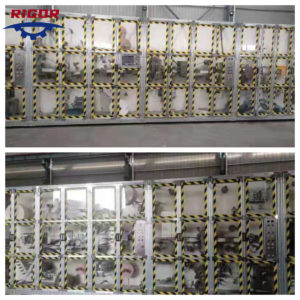
Reputable manufacturers design their machines to comply with stringent international safety standards, such as those mandated by ISO (International Organization for Standardization) and CE (Conformité Européenne) marking in Europe. This involves a multi-layered approach to safety. The entire machine is enclosed in protective guarding with interlocked doors; if a door is opened during operation, the machine immediately and safely stops. Emergency stop buttons are strategically placed throughout the line. Light curtains create invisible safety barriers around hazardous areas, halting the machine if an operator’s hand breaks the beam. These built-in safety features drastically reduce the risk of accidents compared to semi-automatic lines where operators may need to work in closer proximity to moving parts. Investing in a machine from a trusted source like Rigor Machine Manufactory ensures that these critical safety systems are robust and reliable.
The Human Factor: Upskilling the Workforce
The transition to automation does not eliminate the need for human workers; it elevates their role. Instead of performing repetitive, physically demanding, and often monotonous tasks, employees are retrained as skilled technicians. Their responsibilities shift to overseeing the machine’s operation via control panels, loading raw materials with mechanical assistance, performing quality assurance checks, and conducting scheduled maintenance. This work is more intellectually engaging and less physically taxing, reducing the risk of repetitive strain injuries and other musculoskeletal issues common in traditional manufacturing environments. It creates a more highly skilled workforce, which can lead to greater job satisfaction and lower employee turnover—a significant hidden benefit for the company.
Advantage 6: Data-Driven Manufacturing and Predictive Maintenance
Perhaps the most forward-looking advantage of a modern fully automatic baby diaper making machine is its transformation into an intelligent, data-generating asset. In the era of Industry 4.0, information is as valuable as the physical product itself. These machines are equipped with a network of sensors that continuously monitor every aspect of the production process, creating a rich stream of real-time data.
Leveraging the Industrial Internet of Things (IIoT)
This network of sensors is a practical application of the Industrial Internet of Things (IIoT). Data on machine speed, temperature of glue applicators, tension of materials, rejection rates, and motor performance is constantly collected and displayed on a central human-machine interface (HMI). This information provides an unprecedented level of transparency into the manufacturing process. Managers can see exactly how efficiently the line is running, identify bottlenecks, and track raw material consumption with precision. Some advanced systems can even connect to the company’s Enterprise Resource Planning (ERP) software, automatically updating inventory levels and production schedules. This data-rich environment allows for informed, strategic decision-making rather than guesswork. The insights gained from IIoT can be profound, shaping everything from operational efficiency to supply chain management (Iansiti & Lakhani, 2014).
From Reactive to Predictive Maintenance Models
Traditionally, maintenance has been either reactive (fixing something after it breaks) or preventive (servicing something at fixed intervals, whether it needs it or not). IIoT data enables a far more intelligent approach: predictive maintenance. By analyzing trends in the data—for example, a motor’s temperature slowly creeping up over several weeks, or a slight increase in vibration—the system’s software can predict that a component is likely to fail in the near future. It can then alert technicians to schedule maintenance during a planned downtime, before an unexpected and costly breakdown occurs. This shift from reactive to predictive maintenance drastically increases machine uptime, reduces repair costs, and extends the operational life of the equipment. It ensures the factory runs like a finely tuned instrument, maximizing its productivity and profitability.
Advantage 7: Gaining a Competitive Edge in Emerging Markets
All the aforementioned advantages—speed, quality, cost-efficiency, flexibility, safety, and intelligence—converge into one ultimate, decisive benefit: a sustainable competitive advantage. For a business operating in the rapidly growing markets of South America, the Middle East, or Africa, a fully automatic baby diaper making machine is not just a piece of equipment; it is a strategic weapon.
Meeting the Demand for Quality
As incomes rise in these regions, consumer expectations evolve. Parents are no longer satisfied with basic, low-cost diapers. They are increasingly seeking out products that offer better absorbency, a softer feel, a more comfortable fit, and greater reliability—qualities often associated with international brands. A manufacturer using a fully automatic system can produce a diaper that meets or exceeds these quality standards. This allows a local or regional company to compete directly with large multinational corporations, offering a world-class product that is made closer to the consumer, potentially at a more competitive price point. By leveraging comprehensive hygiene product solutions, a business can establish itself as a leader in quality.
Future-Proofing Your Manufacturing Operations
Investing in a fully automatic baby diaper making machine is an investment in the future. The technology is scalable, adaptable, and intelligent. It provides the foundation upon which a business can grow for years to come. As the market expands, the machine can keep pace. As consumer tastes change, the machine can adapt. As new digital manufacturing technologies emerge, they can often be integrated into the existing platform. This choice protects the business from technological obsolescence and positions it to capitalize on future opportunities. It is the most robust strategy for building a lasting, profitable, and leading enterprise in the global hygiene products industry. The demographic trends in many of these emerging markets point towards decades of sustained demand (United Nations, 2022), making a long-term, high-technology investment a profoundly logical step.
Часто задаваемые вопросы (FAQ)
What is the typical initial investment for a fully automatic baby diaper making machine? The investment varies significantly based on production speed, features, and manufacturer. A high-speed, full-servo machine with advanced quality control systems represents a major capital expenditure. However, it is best to view it as a long-term investment whose return is realized through drastically lower labor costs, minimal material waste, and massive production volume. A detailed quote should be sought from manufacturers based on specific requirements.
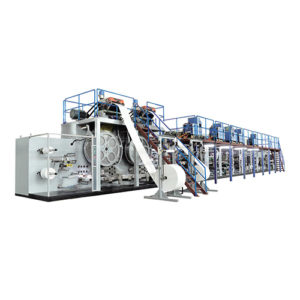
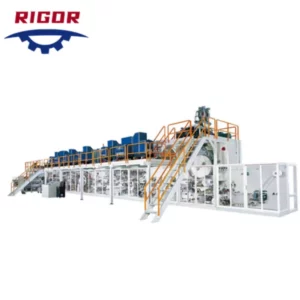
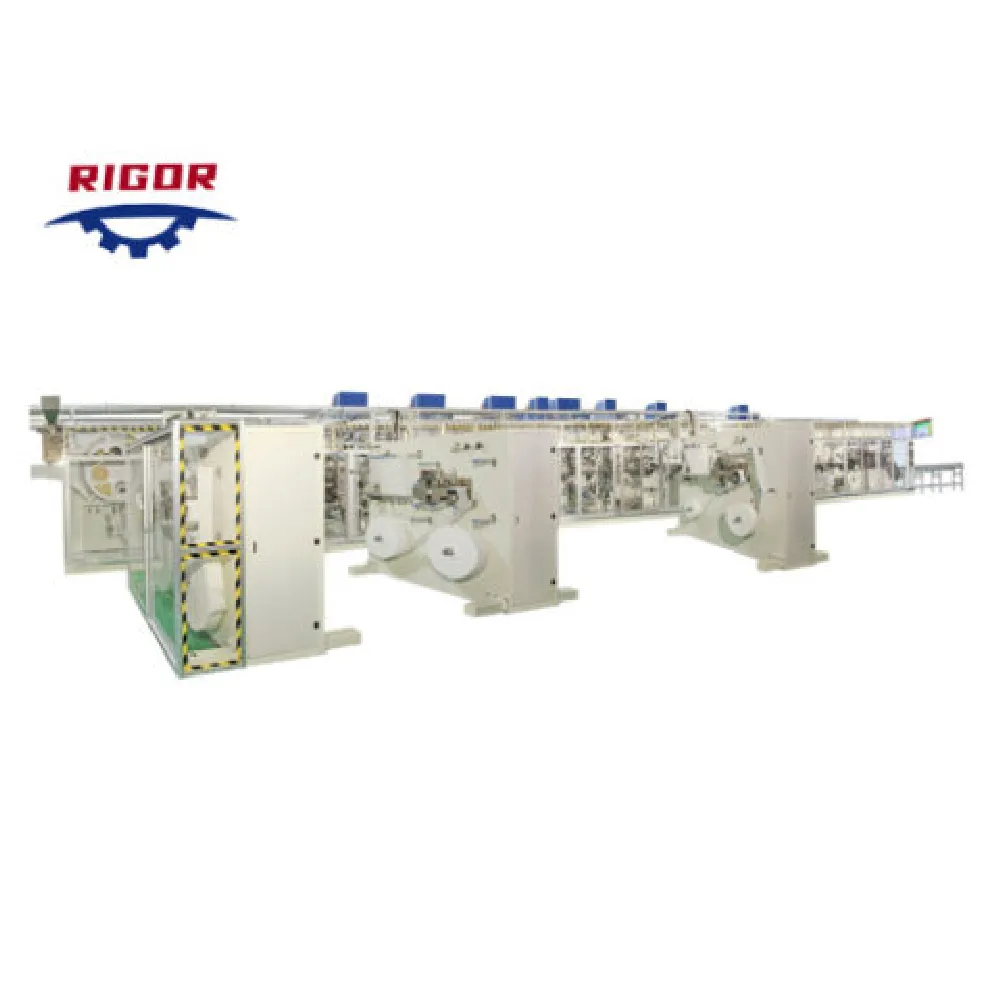
How much factory space is required for installation? These are large, complex production lines. A typical fully automatic line can be 25 to 35 meters long and 4 to 6 meters wide. Additional space is required around the machine for operator access, maintenance, and storage of raw materials like jumbo rolls of nonwoven fabric and bags of superabsorbent polymer. A facility with high ceilings is also recommended.
What kind of training and technical support is provided after purchase? Reputable manufacturers provide comprehensive support. This typically includes sending skilled technicians to your factory to supervise the installation, commission the machine, and provide extensive training for your local operators and maintenance staff. Ongoing support is usually available through remote diagnostics and a reliable supply of spare parts.
Can the machine handle different types of raw materials from various suppliers? Yes, a key feature of a modern fully automatic baby diaper making machine is its ability to be calibrated for different materials. While the machine is initially tuned for a specific set of raw materials, its parameters can be adjusted to accommodate variations in nonwoven fabrics, pulp, SAP, and elastics from different suppliers, which is crucial for supply chain flexibility.
What is the difference in capability between a baby diaper machine and a sanitary pad machine? While both are high-speed machines for hygiene products, their core functions and tooling are different. A baby diaper machine is designed to create a thick, multi-layered absorbent core and a three-dimensional structure with leg cuffs and waistbands. A sanitary pad machine creates a much thinner, flatter product with different shaping, wings, and adhesive patterns. Some manufacturers offer specialized machinery for each product line.
How difficult is the day-to-day operation of the machine? Once installed and calibrated, day-to-day operation is managed through a user-friendly touchscreen interface (HMI). Trained operators primarily monitor the system, ensuring raw materials are supplied and responding to any alerts from the machine. The complexity lies in the technical skill required for maintenance and troubleshooting, not in the daily operation.
What are the primary maintenance requirements for a fully automatic machine? Maintenance includes daily cleaning, regular lubrication of moving parts, and periodic inspection and replacement of wear-and-tear components like cutting blades and applicator nozzles. Advanced machines with predictive maintenance capabilities will alert staff to potential issues before they become critical, streamlining the maintenance process.
A Forward-Looking Perspective on Production
The journey into diaper manufacturing in 2025 is a venture of significant promise, particularly within the world’s most dynamic and growing economies. The deliberation over which production technology to adopt is perhaps the most defining choice a new enterprise will make. The evidence strongly suggests that the path of full automation, embodied by the modern fully automatic baby diaper making machine, offers the most robust and rewarding way forward. It is a choice that prioritizes speed without sacrificing quality, achieves cost efficiency through intelligent design, and provides the flexibility to adapt to a changing world. It transforms the factory floor from a place of repetitive labor into a hub of technology, data, and skilled oversight. By embracing this technology, a business is not simply buying a machine; it is acquiring the capability to compete at the highest level and the foundation for sustained growth and success.