Özet
This guide provides a comprehensive framework for entrepreneurs and manufacturing professionals aiming to enter or expand within the global hygiene products sector in 2025. It methodically deconstructs the process of selecting an optimal baby diaper making machine, a decision of profound consequence for the financial viability and operational success of a manufacturing venture. The analysis extends beyond mere technical specifications to encompass a holistic business evaluation. Key decision-making vectors are examined in depth, including the critical distinction between semi-servo and full-servo drive technologies, the nuanced assessment of production capacity against veritable market demand, and the strategic sourcing of compatible raw materials. Furthermore, the guide emphasizes the necessity of calculating the Total Cost of Ownership (TCO) and projected Return on Investment (ROI), framing the machine acquisition as a long-term strategic investment. The objective is to equip prospective buyers, particularly in emerging markets such as South America, Russia, Southeast Asia, the Middle East, and South Africa, with the analytical tools required to launch a profitable and sustainable diaper manufacturing enterprise.
Önemli Çıkarımlar
- Assess genuine market demand before choosing a machine’s production capacity.
- Full-servo machines offer superior precision, stability, and operational efficiency.
- Calculate the total cost of ownership, not just the initial purchase price.
- Prioritize manufacturers who provide reliable after-sales support and operator training.
- Selecting the right baby diaper making machine is the foundation of profitability.
- Confirm the compatibility of your chosen raw materials with the machine’s specifications.
- Develop a robust business plan that includes detailed Return on Investment projections.
İçindekiler
- Step 1: Analyzing Market Demand and Defining Production Scale
- Step 2: Understanding Machine Technology: Semi-Servo vs. Full-Servo
- Step 3: Evaluating Production Speed, Efficiency, and Waste Rate
- Step 4: Assessing Raw Material Sourcing and Compatibility
- Step 5: Scrutinizing Manufacturer Reliability and After-Sales Support
- Step 6: Calculating the Total Cost of Ownership (TCO) and ROI
- Step 7: Planning for Installation, Training, and Future Upgrades
Step 1: Analyzing Market Demand and Defining Production Scale
Embarking on the journey of diaper manufacturing begins not with the machine itself, but with a profound and honest appraisal of the human context it will serve. The acquisition of a baby diaper making machine is a significant capital investment; its success is inextricably linked to the real-world demand for its output. A machine that produces 800 diapers per minute is a marvel of engineering, but it becomes a monument to miscalculation if the market can only absorb 400. Therefore, our first step is an exercise in applied economics and sociology, grounding our technical decisions in the soil of market reality.
The Demographics of Demand: Reading the Human Story
The narrative of diaper demand is written in the language of demographics. For aspiring manufacturers in regions like Southeast Asia, South America, or Africa, the story is often one of promise. A rising middle class, increasing urbanization, and high birth rates are powerful confluences that create fertile ground for the disposable diaper market. Consider the birth rate of a target country. A nation with a high and stable birth rate offers a constantly regenerating customer base. This is not merely a statistic; it represents a continuous cycle of human need. One can look to data from institutions like the World Bank or national census bureaus to paint a picture of the potential consumer base for the next five to ten years.
However, birth rate alone is an incomplete metric. The capacity and willingness of a population to purchase disposable diapers are functions of economic well-being. An increase in per capita disposable income is often the catalyst that transforms a potential market into an active one. As families move from lower-income brackets into the middle class, their purchasing habits evolve. Convenience becomes a priority, and disposable diapers shift from a luxury item to a household staple. Your task, as a prospective manufacturer, is to identify these economic inflection points. Are government policies fostering economic growth? Is there a tangible expansion of the middle class in the urban centers you plan to serve?
Cultural norms also play a pivotal role. In some societies, traditional cloth diapers have a strong hold. A successful market entry here requires not just producing a product, but also understanding and gently shaping consumer behavior, perhaps through marketing that emphasizes hygiene, convenience, and infant comfort. The question is not just “How many babies are being born?” but also “What are the values and priorities of the parents raising them?”
Competitive Landscape Analysis: Knowing Your Neighbors
No business operates in a vacuum. Before you can decide what kind of diaper to make, you must understand the diapers already being sold. The competitive landscape is typically dominated by a few global giants—Procter & Gamble (Pampers) and Kimberly-Clark (Huggies)—alongside a scattering of smaller, local brands. Your analysis must be forensic.
Procure samples of every competing product in your target market. Deconstruct them. What is their quality? How soft is the topsheet? How effective is the absorbent core? What kind of fastening system do they use? Then, map this quality to their price point. This exercise will reveal the market structure. Is it a premium-dominated market, an economy-focused one, or is there a gap in the middle for a high-quality, mid-priced product?
This analysis directly informs the specifications of your baby diaper making machine. If you aim to compete with premium brands, you will need a machine capable of handling advanced materials and incorporating features like elastic waistbands, complex absorbent cores, and multi-color backsheets. If you identify a gap in the economy tier, you might prioritize a machine optimized for high-speed production of a simpler, more basic diaper design. Ignoring this step is akin to designing a key without ever having seen the lock it is meant to open.
Translating Market Data into Production Numbers
With a clear understanding of market size and your intended product niche, you can begin to talk about production capacity. This is where we translate sociological observations into the language of manufacturing: pieces per minute (PPM).
Let’s imagine your market analysis suggests you can realistically sell 50 million diapers in your first year. How does this translate to a machine’s PPM? The calculation requires a few assumptions about operational efficiency. No machine runs 24/7/365 without stopping. You must account for scheduled maintenance, holidays, shift changes, and raw material roll changes. A conservative estimate for operational time might be 300 days a year, with two 8-hour shifts per day.
Here is a simplified calculation:
- Total operational hours per year: 300 days × 16 hours/day = 4,800 hours
- Total operational minutes per year: 4,800 hours × 60 minutes/hour = 288,000 minutes
- Required PPM: 50,000,000 diapers / 288,000 minutes ≈ 174 PPM
This is your net required output. However, you must also factor in production waste and machine inefficiency. If you assume a 90% efficiency rate (which is optimistic for a new operation), your gross required output is higher.
- Gross required PPM: 174 PPM / 0.90 = ~193 PPM
This simple exercise demonstrates that to meet a target of 50 million diapers annually, you should be looking for a machine with a stable production speed of at least 200-250 PPM. This provides a buffer and accounts for real-world operational conditions. This calculation moves the decision from a vague “I need a fast machine” to a specific, data-driven requirement.
Scalability: Planning for Tomorrow’s Growth Today
The final consideration in this initial phase is planning for the future. You face a strategic choice: purchase a machine that meets your immediate needs (e.g., 250 PPM) or invest in a higher-capacity machine (e.g., 500 PPM) that you can grow into?
The smaller machine represents a lower initial capital outlay and less risk. It allows you to enter the market, establish your brand, and generate cash flow. However, if your product is successful, you may outgrow its capacity within a few years, forcing you into another significant investment cycle.
The larger machine requires more capital upfront and may operate below its optimal efficiency in the early years. Yet, it offers the significant advantage of scalability. As your market share grows, you can meet the increased demand simply by running more shifts or increasing the machine’s speed, without needing to build a new production line. The choice depends on your access to capital, your tolerance for risk, and your confidence in your market analysis. A well-structured business plan will model both scenarios, allowing you to make an informed decision based on long-term profitability rather than short-term cost.
Step 2: Understanding Machine Technology: Semi-Servo vs. Full-Servo
Having established the scale and nature of your production, we now turn our attention to the heart of the machine itself: its drive system. The choice between a semi-servo and a full-servo baby diaper making machine is perhaps the single most important technical decision you will make. It profoundly impacts production efficiency, product quality, operational flexibility, and, ultimately, your long-term profitability. To understand this choice, we must move beyond the labels and delve into the mechanics and philosophy behind each system.
The Mechanical Heart: A Primer on Drive Systems
Imagine the process of making a diaper as a highly synchronized ballet. Multiple materials—non-woven fabrics, pulp, elastics—must be unwound, cut, placed, and joined with microsecond precision. The drive system is the choreographer of this ballet.
A traditional, purely mechanical machine uses a single main motor connected to a complex system of gears, shafts, and belts to drive all the different operational units. It is robust but rigid. A change in one part requires mechanical adjustments throughout the system.
The advent of servo motors revolutionized this process. A servo motor is a highly precise motor that allows for exact control over angular position, velocity, and acceleration. It is the core technology that enables modern manufacturing automation.
Semi-Servo Machines: In a semi-servo configuration, the main drive shaft still exists, but critical, high-precision operations (like the application of elastics or the final cutting of the diaper) are controlled by individual servo motors. It is a hybrid system, combining the cost-effectiveness of a mechanical backbone with the precision of servo control where it matters most. Think of it as a classic car that has been retrofitted with modern fuel injection and electronic ignition. It runs better, but its fundamental architecture is still from a previous era.
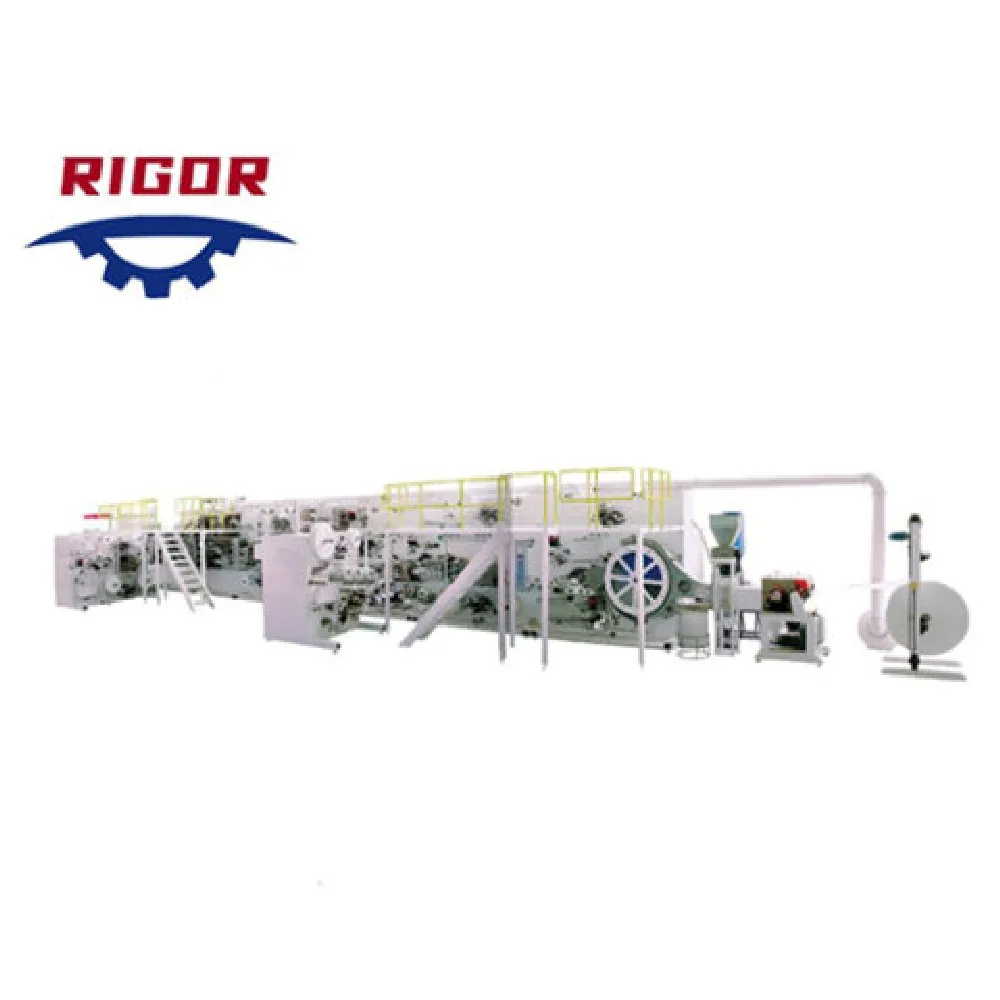
Full-Servo Machines: In a full-servo machine, the mechanical main drive shaft is eliminated entirely. Each operational unit—every roller, cutter, and applicator—is driven by its own dedicated, synchronized servo motor. The entire machine is orchestrated by a central computer (a PLC, or Programmable Logic Controller). This is the equivalent of a modern electric vehicle, where software controls independent motors at each wheel, allowing for performance and control that is impossible with a single-engine, mechanical drivetrain.
The Case for Full-Servo: Precision, Stability, and Lower Waste
The decision to invest in a full-servo baby diaper making machine is a decision to prioritize long-term operational excellence over short-term capital savings. The benefits are systemic and compound over time.
Unmatched Precision: With each function driven independently, the level of control is extraordinary. The tension of the elastic waistbands, the exact placement of the absorbent core, and the cut of the leg cuffs are all managed by software with a precision of fractions of a millimeter. This translates directly into a higher-quality, more consistent final product. A diaper that fits better and leaks less is a diaper that builds brand loyalty.
Enhanced Stability at High Speeds: In a mechanical drive system, high speeds introduce vibrations and timing issues that can lead to errors and machine stoppages. Because a full-servo system has no mechanical transmission lag, it can operate at much higher speeds (e.g., 600-1000 PPM) with remarkable stability. The synchronization is electronic, not mechanical, which is faster and more reliable.
Drastically Reduced Waste: The precision of a full-servo machine directly impacts your bottom line by minimizing raw material waste. Automatic splicing systems, for example, can join a new roll of non-woven material to an expiring one at full production speed with minimal overlap, saving material that would otherwise be discarded. The system’s ability to maintain perfect registration means fewer rejected diapers due to misaligned components. A reduction in the waste rate from 5% to 2% on a high-speed line can translate into savings of tens or even hundreds of thousands of dollars annually.
Effortless Product Changeovers: Perhaps the most significant operational advantage is the ease of changing between different diaper sizes (e.g., newborn, small, medium, large). On a semi-servo machine, a size change can be a time-consuming mechanical process involving changing gears and adjusting physical components, potentially taking several hours. On a full-servo machine, the changeover is largely a software function. The operator selects the new size from a touchscreen menu, and the PLC automatically adjusts the parameters of all the servo motors. A process that took half a shift can now be completed in under 30 minutes. This “digital” flexibility is invaluable in a market that demands a full range of product sizes.
Comparison Table: Full-Servo vs. Semi-Servo Diaper Machine
To crystallize the differences, consider the following comparison. This table should serve as a foundational tool in your decision-making process.
| Özellik | Full-Servo Machine | Semi-Servo Machine |
|---|---|---|
| Initial Investment | High | Medium to Low |
| Production Speed | Very High (e.g., 500-1000 PPM) | Moderate (e.g., 200-500 PPM) |
| Operational Stability | Excellent, especially at high speeds | Good, but can degrade at higher speeds |
| Product Quality | Superior consistency and precision | Good, but with higher potential for variation |
| Waste Rate | Very Low (typically 2-3%) | Moderate (typically 4-6%) |
| Size Changeover Time | Very Fast (e.g., 15-30 minutes) | Slow (e.g., 2-4 hours) |
| Maintenance | Simpler (fewer mechanical parts) | More complex (gears, belts, chains) |
| Enerji Tüketimi | Lower (motors only draw power on demand) | Higher (main motor runs continuously) |
| Ideal Application | High-volume, multi-size production; premium markets | Medium-volume, single-size production; budget-conscious entry |
The Semi-Servo Option: A Cost-Effective Entry Point?
It would be a mistake to dismiss the semi-servo machine entirely. Its lower initial cost makes it an accessible entry point for entrepreneurs with limited capital. In certain strategic contexts, it can be the more prudent choice.
Consider a market where demand is stable but not enormous, and where one or two standard diaper sizes dominate sales. In this scenario, the high speed and rapid changeover capabilities of a full-servo machine may be an unnecessary expense. A reliable semi-servo machine from a reputable manufacturer can be a workhorse, producing quality diapers efficiently and delivering a faster return on the initial, smaller investment. The key is to make a conscious choice based on a clear-eyed assessment of your market and your business plan, rather than simply defaulting to the cheaper option. The semi-servo machine is not an inferior product, but rather a different tool for a different job. The wisdom lies in knowing which job you are undertaking.
Step 3: Evaluating Production Speed, Efficiency, and Waste Rate
Once you have a grasp of the fundamental technology, the next layer of analysis involves scrutinizing the performance metrics that govern the day-to-day reality of your factory floor. The advertised numbers for a baby diaper making machine—its speed, its efficiency, its waste rate—are not just specifications; they are the determinants of your production capacity and your profit margins. A nuanced understanding of these figures, beyond the marketing brochures, is essential for making a sound investment.
The Nuance of Production Speed (PPM)
Production speed, typically measured in pieces per minute (PPM), is often the headline feature of a diaper machine. It is tempting to be swayed by the highest number. However, the “design speed” or “maximum speed” quoted by a manufacturer is a theoretical figure achieved under ideal conditions with specific, high-quality raw materials. The more important figure for your business plan is the “stable production speed”—the speed at which the machine can run continuously for hours on end, producing high-quality diapers with minimal interruptions.
Think of it like the top speed of a sports car. While the car might be capable of 300 km/h on a test track, its practical, safe speed on a public highway is much lower. Similarly, running a diaper machine at its absolute maximum can strain its components, increase the likelihood of defects, and lead to more frequent stoppages, ultimately lowering your net output.
When evaluating a machine, you must engage the manufacturer in a serious discussion about this. Ask for references of other customers running the same model. What stable speed are they achieving in a real-world production environment? What factors limit this speed? Is it the quality of the fluff pulp, the tensile strength of the non-woven fabric, or the bonding time of the hot-melt adhesive? A reputable manufacturer will provide honest answers and help you understand the relationship between raw material choices and achievable production speed. A higher stable speed is valuable, but only if it does not come at the cost of quality and reliability.
Defining and Measuring Operational Efficiency
Speed is meaningless without efficiency. A machine running at 800 PPM but stopping every ten minutes for an adjustment is less productive than a machine running at a stable 500 PPM without interruption. The gold standard for measuring manufacturing productivity is Overall Equipment Effectiveness (OEE). While a full OEE calculation can be complex, understanding its three core components provides a powerful framework for evaluating a machine:
Availability: This measures the time the machine is actually running versus the time it is scheduled to run. A machine that is down for repairs, lengthy size changeovers, or material jams has low availability. A full-servo machine, with its faster changeovers and more stable operation, will typically have a higher availability rate than a mechanical or semi-servo machine.
Performance: This compares the actual output during running time to the machine’s potential output. If a machine is rated for 600 PPM but is being run at 500 PPM to avoid quality issues, its performance is 500/600, or about 83%. This is often limited by operator skill, raw material quality, or minor stoppages.
Quality: This is the ratio of good diapers produced to the total number of diapers produced. Every diaper that is rejected due to a defect (e.g., a missing tab, a poorly sealed leg cuff) reduces the quality rate.
OEE = Availability × Performance × Quality
A world-class OEE is around 85%. For a new operation, achieving 60-70% would be a strong start. When you are assessing a baby diaper making machine, you are not just buying a piece of equipment; you are buying a certain potential for OEE. Ask the manufacturer what OEE their other customers typically achieve. What features does the machine have to maximize each component of OEE? For example, robust construction and high-quality components increase Availability. A stable full-servo drive system increases Performance. An integrated vision inspection system increases Quality.
The Hidden Cost of Waste
Waste is the silent thief of profit in a diaper factory. Every gram of fluff pulp, every centimeter of non-woven fabric that ends up in the scrap bin is money lost. The waste rate of a diaper machine is a critical performance indicator. A machine with a 6% waste rate costs significantly more to operate than one with a 3% rate, and this difference flows directly to your bottom line.
Waste is generated in several ways:
- Start-up and Shut-down: When the machine starts, it takes some time to stabilize, producing a number of defective products.
- Material Splicing: When a roll of raw material runs out, it must be joined (spliced) to a new roll. Inefficient splicing can create a significant amount of waste.
- Defective Products: Diapers rejected during production due to flaws.
A high-quality baby diaper making machine incorporates technologies specifically designed to minimize this waste.
- Automatic Splicing: The best machines feature “zero-speed” or “high-speed” automatic splicers. These systems can join material rolls automatically without even slowing down the production line, creating a clean, strong splice with minimal waste.
- Automatic Rejection: Instead of forcing operators to manually pick out flawed products, modern machines use vision systems or sensors to identify defects. A jet of air then automatically pushes the single defective diaper into a rejection bin without interrupting the flow of production.
- Tension Control Systems: Precise, closed-loop tension control for all the web materials (non-wovens, backsheet, etc.) ensures they feed smoothly, preventing wrinkles and misalignments that lead to defects.
When discussing waste rate with a manufacturer, ask for a guaranteed figure under normal operating conditions. A commitment to a low waste rate (e.g., ≤3%) is a powerful indicator of a well-engineered and efficient machine.
Technology for Quality Control
The ultimate goal is to produce a perfect diaper, every time. This is where advanced quality control systems become indispensable. While manual inspection by operators is important, it is not foolproof, especially at speeds of several hundred pieces per minute.
Modern diaper production lines integrate sophisticated vision inspection systems. These are high-speed cameras coupled with powerful image-processing software that inspect every single diaper as it moves through the line. They can detect a wide range of potential defects:
- Presence and position of the absorbent core.
- Correct placement of the frontal tape and side tabs.
- Integrity and position of the leg cuffs (leak guards).
- Detection of dirt, oil stains, or foreign objects.
- Correct application of the wetness indicator.
If a defect is found, the system flags the specific product and triggers the automatic rejection mechanism. This not only ensures that no faulty products reach the customer but also provides valuable data. The system can track the type and frequency of defects, helping your maintenance team identify and fix the root cause of a problem quickly. Investing in a machine with a comprehensive, integrated quality control system is an investment in brand protection and operational intelligence.
Step 4: Assessing Raw Material Sourcing and Compatibility
A baby diaper making machine, no matter how technologically advanced, is only one half of the production equation. The other half is the steady, reliable flow of high-quality raw materials. The machine and the materials exist in a symbiotic relationship; the performance of one is deeply dependent on the specifications of the other. A failure to plan for your raw material supply chain is a failure to plan for success. This step involves dissecting the diaper itself, understanding its components, and ensuring a harmonious relationship between your suppliers and your machinery.
The Anatomy of a Modern Diaper
To source materials effectively, you must first understand what you are buying. A disposable diaper is a marvel of material science, a layered composite where each component has a specific function. Let’s break it down:
- Topsheet (Non-woven): This is the layer that is in direct contact with the baby’s skin. It must be soft, comfortable, and hydrophilic (allowing liquid to pass through quickly) to keep the skin dry.
- Edinim Dağıtım Katmanı (ADL): Located just below the topsheet, this is another layer of non-woven material. Its job is to rapidly acquire the fluid and distribute it evenly across the absorbent core, preventing “gel blocking” (where the SAP gels too quickly in one spot, impeding further absorption).
- Absorbent Core: This is the heart of the diaper. It is typically a mixture of fluff pulp (pulverized wood pulp that provides structure and wicking) and Süper Emici Polimer (SAP). SAPs are incredible materials that can absorb and retain many times their own weight in liquid, turning it into a stable gel.
- Backsheet: The outer layer of the diaper. Modern backsheets are often a composite of a waterproof PE (polyethylene) film and a cloth-like non-woven fabric. This “breathable” backsheet prevents leaks while allowing water vapor to escape, reducing heat and humidity inside the diaper.
- Elastic Components: Spandex or lycra threads are used to create the stretchy leg cuffs (also known as leak guards) and elastic waistbands, which are crucial for a snug, comfortable fit and leak prevention.
- Fastening System: This usually consists of two side tapes (often with a mechanical “hook” material) and a frontal tape (a “loop” material) on the front of the diaper that the side tapes attach to.
Understanding these components is the first step to having intelligent conversations with both your machine manufacturer and your raw material suppliers.
Raw Materials Cost and Quality Analysis
The cost of these materials will constitute the vast majority of your production cost per diaper. A careful analysis is therefore essential for your business plan. The following table provides a general breakdown and key quality considerations.
| Raw Material | Approx. Cost % of Diaper | Key Quality Considerations |
|---|---|---|
| Süper Emici Polimer (SAP) | 25-35% | Absorption capacity (g/g), absorption speed, retention after pressure. |
| Fluff Pulp | 20-30% | Fiber length, brightness, purity, moisture content. |
| Backsheet (Film + Non-woven) | 10-15% | Breathability (MVTR), tensile strength, softness, print quality. |
| Topsheet (Non-woven) | 8-12% | Softness, strike-through time (how quickly liquid passes through), rewet (how much moisture comes back). |
| Elastics (Spandex) | 5-8% | Elongation, tensile strength, heat resistance. |
| Adhesives (Hot Melt) | 4-7% | Bonding strength, viscosity, thermal stability, odor. |
| Tapes (Frontal & Side) | 3-5% | Peel strength, shear strength, resealability. |
The Supply Chain Conundrum
Your factory cannot operate without a robust and reliable supply chain for these materials. You will face a critical strategic decision: source materials locally or import them?
Local Sourcing: The primary advantages are shorter lead times, lower transportation costs, and no exposure to customs duties or currency fluctuations. This can significantly simplify your logistics and reduce the amount of capital you need to tie up in inventory. However, the challenge, especially in some emerging markets, can be finding local suppliers who can consistently meet the stringent quality specifications required for high-speed automated production.
Importing: Importing, often from major hubs in Asia, Europe, or North America, can give you access to a wider range of high-quality, specialized materials. Global suppliers often have massive economies of scale, which can sometimes lead to lower per-unit costs, even after factoring in shipping. The downsides are significant: long lead times (requiring you to hold more inventory), exposure to shipping delays and port congestion, customs clearance complexities, and currency risk.
Many successful manufacturers use a hybrid approach, sourcing bulky, lower-tech materials like fluff pulp locally while importing critical, high-tech components like SAP or specialized non-wovens. Building relationships with multiple suppliers for each key material is also a wise strategy to mitigate risk.
Machine and Material Synergy: A Crucial Dialogue
This is a point that cannot be overstated: your machine must be designed or calibrated for the specific raw materials you intend to use. The “gsm” (grams per square meter) of a non-woven fabric, the particle size of the SAP, the viscosity of the hot-melt adhesive—these are not just numbers on a spec sheet. They are critical parameters that the machine is engineered to handle.
Before you finalize the purchase of a baby diaper making machine, you must have a detailed discussion with the manufacturer about your intended raw material slate. A responsible manufacturer like Rigor Makine will ask for samples of your chosen materials to test them. They may recommend specific suppliers with whom their machines are known to perform well. A failure to have this conversation can lead to a nightmare scenario: a brand new machine that constantly jams or produces defective products because it is incompatible with your raw materials.
For example, a machine’s fluff pulp forming unit is designed for a specific range of fiber lengths. Using a pulp that is outside this range can lead to an inconsistent absorbent core. Similarly, the hot-melt adhesive applicators are calibrated for a specific viscosity and temperature range. Using the wrong adhesive can result in weak bonds (leading to diaper delamination) or clogged nozzles (leading to machine downtime). The synergy must be perfect. This dialogue is a critical part of your due diligence.
Step 5: Scrutinizing Manufacturer Reliability and After-Sales Support
The purchase of a baby diaper making machine is not a simple transaction; it is the beginning of a long-term partnership. The machine is a complex piece of industrial equipment that will be the central asset of your business for a decade or more. The quality of the manufacturer, their reputation, and, most importantly, the depth and reliability of their after-sales support are as crucial to your success as the technical specifications of the machine itself. Choosing a manufacturer is like choosing a business partner—you need one you can trust, who will be there to support you through the challenges that will inevitably arise.
Beyond the Brochure: Due Diligence on the Manufacturer
In the digital age, any company can create a glossy website and an impressive brochure. Your task is to look beyond the surface and conduct thorough due diligence.
History and Experience: How long has the manufacturer been in business? A company with decades of experience in designing and building diaper machines has likely encountered and solved a vast range of engineering challenges. This experience is embedded in the design and reliability of their equipment. Look for a company that is not just an assembler but a genuine engineering firm with a deep understanding of the technology. A well-established company history, often detailed on their website, provides a narrative of stability and expertise. For instance, understanding the background and engineering philosophy of a company can be revealing. You should review the company’s “About Us” page to gauge their mission and history, like the one found at diapermachines.com/about-us/.
Certifications and Standards: Does the manufacturer adhere to international quality standards? Look for certifications like ISO 9001 (for quality management systems) and CE marking (indicating conformity with health, safety, and environmental protection standards for products sold within the European Economic Area). These certifications are not just paperwork; they are evidence of a disciplined and professional approach to manufacturing.
Customer References and Case Studies: This is the most powerful form of due diligence. A confident manufacturer will be happy to provide you with a list of existing customers, ideally in a region similar to yours. Contact these customers. Ask them about their experience with the machine and the manufacturer. Was the installation smooth? Does the machine perform as advertised? And most critically, how does the manufacturer respond when there is a problem? An honest conversation with a current user is worth more than any marketing claim.
Factory Visit: If at all possible, visit the manufacturer’s factory before finalizing your purchase. Seeing their operations firsthand will tell you a great deal about their professionalism, their manufacturing processes, and the quality of their workmanship. It also allows you to meet the engineering and support teams you will be working with.
The Lifeline of After-Sales Service
The machine will eventually require maintenance, spare parts, and troubleshooting. The quality of the after-sales service is what separates a great manufacturer from a mediocre one. This is your lifeline when production stops. Here is what to look for:
- 24/7 Technical Support: Problems do not always occur during business hours. Does the manufacturer offer around-the-clock support via phone, email, or video call? Can their technicians remotely access your machine’s PLC to diagnose problems? This remote diagnostic capability is a feature of modern, high-end machines and can dramatically reduce downtime.
- Availability of Spare Parts: A machine is only as reliable as its weakest component. The manufacturer must maintain a comprehensive inventory of spare parts and be able to ship them to you quickly. Ask about the location of their spare parts depots. Do they have a regional presence to reduce shipping times? Inquire about their recommended spare parts list for the first two years of operation—this should be included in your initial budget.
- Local or Regional Technicians: For serious issues that cannot be resolved remotely, the manufacturer needs to be able to dispatch a field service technician to your factory. Ask about their global service network. Do they have engineers based in or near your region (e.g., in South America, the Middle East, or Southeast Asia)? The time it takes for a technician to arrive at your facility is a critical factor.
The Critical Role of Installation and Operator Training
The delivery of the machine to your factory is not the end of the process; it is the beginning of the crucial commissioning phase.
Installation and Commissioning: The manufacturer should provide at least one or two experienced technicians to supervise the installation, assembly, and initial start-up of the machine. These technicians are not just mechanics; they are experts who will ensure the machine is set up correctly, calibrated for your specific raw materials, and running smoothly. The cost of this service should be clearly outlined in the purchase contract. A manufacturer offering a full-servo big waistband baby diaper machine, for example, should provide comprehensive installation support as part of the package diapermachines.com.
Operator Training: You can have the best machine in the world, but it will underperform without a well-trained team to operate and maintain it. The manufacturer’s technicians should provide comprehensive training for your operators, engineers, and maintenance staff. This training should cover:
- Day-to-day operation of the machine.
- Product size changeover procedures.
- Routine cleaning and maintenance tasks.
- Basic troubleshooting for common faults.
- Understanding the HMI (Human-Machine Interface) and control panel.
This transfer of knowledge is absolutely vital. A well-trained team is your first line of defense against downtime and is essential for achieving the high OEE targets you have set.
Reading Between the Lines of the Warranty
The warranty is the manufacturer’s formal promise regarding the quality of their machine. Do not just glance at the duration; read the fine print carefully.
- Duration: A standard warranty is typically for one year. Some manufacturers may offer an extended warranty for an additional cost.
- Coverage: What exactly is covered? Typically, the warranty covers defects in materials and workmanship. It will exclude “wear and tear” parts—components that are expected to be replaced periodically, such as cutter blades, belts, and suction cups. You should receive a clear list of what is considered a wear part.
- Process: What is the process for making a warranty claim? How quickly will the manufacturer respond and ship a replacement part?
A clear, comprehensive, and fair warranty is a sign of a manufacturer that stands behind its product. Ambiguity or excessive exclusions in the warranty terms should be considered a red flag.
Step 6: Calculating the Total Cost of Ownership (TCO) and ROI
The price tag on a baby diaper making machine is a significant number, but it is only one piece of the financial puzzle. A sophisticated investor or entrepreneur looks beyond the initial purchase price to understand the Total Cost of Ownership (TCO). The TCO is a comprehensive financial metric that includes every cost associated with owning and operating the machine over its entire lifecycle. This holistic view is essential for creating an accurate business plan and for making a true “apples-to-apples” comparison between different machines. Subsequently, by projecting revenues, you can calculate the all-important Return on Investment (ROI), the ultimate measure of the venture’s profitability.
The Iceberg Analogy: Beyond the Purchase Price
Think of the machine’s purchase price as the tip of an iceberg. It is the most visible part, but the vast majority of the cost—and the financial risk—lies submerged below the waterline. Failing to account for these hidden costs can lead to severe under-capitalization and business failure.
The Visible Cost (Tip of the Iceberg):
- The quoted price of the baby diaper making machine.
The Hidden Costs (Submerged Part of the Iceberg):
- Shipping and Logistics: The cost of transporting a large, heavy piece of industrial machinery from the manufacturer’s factory to your facility can be substantial, especially for international shipments.
- Import Duties and Taxes: These vary greatly by country and can add a significant percentage to the initial cost.
- Installation and Commissioning: The cost of the manufacturer’s technicians (flights, accommodation, fees) to install and start the machine.
- Facility Preparation: The cost of upgrading your factory floor, electrical supply, and compressed air systems to meet the machine’s requirements.
- Raw Materials: The ongoing, massive cost of the fluff pulp, SAP, non-wovens, and other materials needed for production.
- Energy Consumption: The cost of electricity to power the machine, which can be significant for a 24/7 operation.
- Labor Costs: The salaries of the operators, technicians, and quality control staff who run the production line.
- Maintenance and Spare Parts: The annual budget for routine maintenance and replacing wear-and-tear components.
A lower-priced machine might seem attractive, but if it consumes more energy, has a higher waste rate, and requires more frequent maintenance, its TCO over five years could easily exceed that of a more expensive, but more efficient, full-servo machine.
A Step-by-Step Guide to TCO Calculation
To calculate the TCO, you need to separate costs into two categories: Capital Expenditures (CapEx) and Operational Expenditures (OpEx).
1. Capital Expenditures (CapEx) – The Upfront Investment:
- Machine Purchase Price: The primary cost.
- Ancillary Equipment: You may need a compressor, a pulp grinder (if not integrated), and packaging machines.
- Shipping and Insurance: Get a firm quote from a freight forwarder.
- Import Duties/Taxes: Consult a local customs broker for an accurate estimate.
- Installation & Training Fees: As quoted by the manufacturer.
- Initial Spare Parts Package: The manufacturer’s recommended list for the first two years.
- Factory modifications: The cost of any necessary civil or electrical work.
Summing these items gives you your Total Initial Investment.
2. Operational Expenditures (OpEx) – The Ongoing Costs: This is best calculated on a per-diaper or per-month basis.
- Cost of Raw Materials per Diaper: This is the most significant OpEx. You must get current price quotes from suppliers for all your components (pulp, SAP, non-wovens, etc.) and calculate the cost for a single diaper.
- Cost of Electricity per Hour: (Machine’s kW rating × hours of operation × cost per kWh). Full-servo machines are often more energy-efficient as their motors only draw significant power when they are performing an action.
- Cost of Labor per Hour: (Total salaries of line staff / hours of operation).
- Maintenance Costs: A common estimate is to budget 1-3% of the machine’s initial purchase price annually for maintenance and spare parts.
By adding these up, you can determine your Cost per Diaper Produced.
Projecting Revenue and Calculating Return on Investment (ROI)
With a clear picture of your costs, you can now project your revenue and assess the venture’s profitability.
1. Projecting Annual Revenue:
- Annual Production Volume: (Stable PPM × 60 minutes/hr × hours of operation/day × days of operation/year) × OEE %. Be realistic with your OEE estimate!
- Projected Annual Revenue: Annual Production Volume × Wholesale Price per Diaper.
Your wholesale price will be determined by your market analysis—what can you realistically charge to be competitive while reflecting your product’s quality?
2. Calculating Net Profit:
- Total Annual OpEx: (Cost per Diaper Produced × Annual Production Volume) + fixed overheads (rent, admin salaries, etc.).
- Annual Gross Profit: Projected Annual Revenue – Total Annual OpEx.
- Annual Net Profit: Annual Gross Profit – Taxes – Depreciation.
3. Calculating Return on Investment (ROI): The simplest ROI formula is:
ROI (%) = (Annual Net Profit / Total Initial Investment) × 100
This tells you what percentage return you are making on your capital investment each year. A high ROI indicates a highly profitable venture. You can also calculate the Payback Period, which is the time it takes for your net profits to equal your initial investment:
Payback Period (in years) = Total Initial Investment / Annual Net Profit
A shorter payback period means you recoup your investment faster. By running these numbers for different machine options (e.g., a cheaper semi-servo vs. a more expensive full-servo), you can make a decision based on long-term financial performance, not just the initial sticker price. The full-servo machine might have a higher initial investment, but if its lower waste rate and higher efficiency lead to a significantly higher Annual Net Profit, it could have a much better ROI and a shorter payback period, making it the superior financial choice.
Step 7: Planning for Installation, Training, and Future Upgrades
The final step in this comprehensive process is to look beyond the purchase and focus on the practicalities of implementation and long-term strategy. The journey does not end when the machine arrives at your port; in many ways, it is just beginning. Proper planning for the physical installation, the development of your human capital, and the future evolution of your product line is what transforms a piece of equipment into a thriving, adaptable business operation. This foresight separates the successful ventures from those that falter after the initial launch.
Preparing Your Facility: The Unseen Prerequisite
A state-of-the-art baby diaper making machine cannot perform in a substandard environment. Long before the shipping container arrives, you must prepare its new home. This is a critical phase that requires careful coordination with the manufacturer’s technical specifications.
Floor Space and Layout: These machines are large and require a significant footprint. The manufacturer will provide a detailed layout drawing. You need to account not only for the machine itself but also for a “buffer zone” around it for safe operation and maintenance access. Critically, you must also allocate substantial space for raw material warehousing (rolls of non-woven fabric and bags of pulp/SAP take up a lot of room) and for storing finished goods before they are shipped out.
Floor Loading: The machine is incredibly heavy. The concrete floor of your factory must have a sufficient load-bearing capacity to support its weight without cracking or settling. The manufacturer will specify the machine’s total weight and its distribution, which you must verify with a structural engineer.
Utilities:
- Power Supply: A high-speed production line has a significant power draw. You will need a stable, three-phase electrical supply with the correct voltage and frequency. Fluctuations or “dirty” power can damage the machine’s sensitive electronics, especially the servo drives and PLC. A dedicated transformer and power conditioning equipment are often wise investments.
- Compressed Air: The machine uses compressed air for many functions, including automatic rejection systems and material handling. You will need a large, industrial air compressor capable of providing a consistent volume of clean, dry air at the required pressure (PSI or Bar).
- Ventilation and Dust Collection: The process of grinding fluff pulp creates a great deal of airborne dust. A proper dust collection system is not just a matter of cleanliness; it is a critical safety requirement to prevent dust explosions and to protect the health of your operators.
The Human Element: Building a Skilled Team
Your most valuable asset is not the machine; it is the team of people who operate and maintain it. Investing in their skills is paramount.
Hiring the Right Profile: An ideal machine operator is detail-oriented, mechanically inclined, and a proactive problem-solver. They do not just push buttons; they listen to the sounds of the machine, watch the flow of materials, and anticipate problems before they cause a stoppage. Your maintenance technicians should have a strong background in both mechanics and industrial electronics, as they will need to troubleshoot everything from a worn bearing to a faulty servo drive.
Leveraging Manufacturer Training: As discussed previously, the initial training provided by the manufacturer’s technicians during commissioning is non-negotiable. Ensure that your key personnel—your future line leaders and maintenance chiefs—are present and actively engaged throughout this process. They should be encouraged to ask questions, take copious notes, and build a relationship with the manufacturer’s experts.
Continuous Development: Training is not a one-time event. As your team gains experience, you should invest in ongoing development. This could involve sending your lead technician for advanced training at the manufacturer’s facility or developing a robust internal training program where experienced operators mentor new hires. A culture of continuous learning and skill enhancement will pay enormous dividends in machine uptime and efficiency.
Future-Proofing Your Investment: Planning for Upgrades
The consumer market is not static. Diaper technology and consumer preferences evolve. Five years from now, a new feature—perhaps a more advanced absorbent core technology or a new type of biodegradable material—may become the market standard. Your ability to adapt to these changes will depend on the flexibility of your production line.
This is where the concept of a modular machine design becomes critically important. A modular machine is built in distinct sections or “modules.” This architecture makes it possible to upgrade the machine in the future without replacing the entire line.
When selecting your machine, ask the manufacturer about its upgrade path:
- Can a module for producing a different type of elastic waistband be added later?
- If a new, more effective type of ADL becomes available, can the machine be adapted to handle it?
- Can the vision inspection system be upgraded with new software to detect different types of defects?
Choosing a diaper production line from a forward-thinking manufacturer that designs for modularity and upgradability provides a powerful hedge against technological obsolescence. It ensures that your initial investment will continue to generate returns for many years to come, allowing you to evolve your product in lockstep with the market. This long-term strategic thinking is the final, crucial element in selecting the right baby diaper making machine for a profitable and enduring business.
Sıkça Sorulan Sorular (SSS)
What is the average price of a baby diaper making machine? The price varies dramatically based on technology and capacity. A basic, semi-automatic or semi-servo machine might start around $150,000 to $300,000 USD. A high-speed, full-servo production line with all the latest features can cost well over $1,000,000 USD. The final price depends on speed (PPM), level of automation, and included features like vision systems and auto-splicing.
How much space do I need for a diaper production line? This depends on the specific machine, but a good rule of thumb is to plan for a clear, rectangular space of at least 25-30 meters in length, 10-12 meters in width, and 5-6 meters in height. This provides adequate room for the machine itself, operator access, maintenance, and the necessary in-feed and out-feed of materials and products.
Can one machine produce different sizes of diapers? Yes, modern diaper machines are designed to produce a range of sizes (e.g., Newborn, Small, Medium, Large, XL). The key difference lies in the “changeover time.” On a full-servo machine, changing sizes is a fast, software-driven process that can take as little as 15-30 minutes. On older mechanical or semi-servo machines, it is a more manual process that can take several hours.
How many people are needed to operate the machine? A typical modern, automated diaper production line requires 3 to 5 people per shift. This usually includes a senior line leader or technician, one or two operators to monitor the machine and handle material loading, and one or two packers at the end of the line to handle the finished goods.
What is the typical lifespan of a diaper machine? With a rigorous preventative maintenance program and the use of high-quality spare parts, a well-built baby diaper making machine from a reputable manufacturer can have a productive lifespan of 15 to 20 years, or even longer. Its technological lifespan may be shorter if market demands for new diaper features outpace its capabilities.
Can a baby diaper machine also make adult diapers or sanitary pads? Generally, no. While the underlying manufacturing principles are similar (layering, cutting, bonding), the product dimensions, material specifications, and core-forming processes are significantly different. Each product category requires its own dedicated machine. A diaper machine manufacturer will typically also offer a specialized sanitary pad machine or an adult diaper machine.
What are the most important raw materials for diaper production? The core functional materials are non-woven fabric for the topsheet and backsheet cover, fluff pulp and super absorbent polymer (SAP) for the absorbent core, polyethylene (PE) film for the waterproof barrier, and spandex elastics for the leg cuffs and waistband. Hot-melt adhesives are also critical for holding all the layers together.
Sonuç
The selection of a baby diaper making machine is a decision that rests at the intersection of engineering, finance, and market strategy. It is an endeavor that demands more than a simple comparison of price and speed. As we have explored, the path to a profitable manufacturing operation is paved with diligent analysis and foresight. It begins with a deep, empathetic understanding of the target market’s needs and competitive dynamics. It progresses through a critical evaluation of the core production technologies, recognizing the profound long-term financial implications of choosing a full-servo system with its inherent precision and efficiency. The journey requires a meticulous examination of performance metrics—stable speed, operational efficiency, and waste rates—and the establishment of a robust and compatible raw material supply chain.
Ultimately, the decision hinges not just on the machine, but on the manufacturer behind it. A partnership with a reliable, experienced manufacturer who provides steadfast after-sales support, installation guidance, and comprehensive training is the bedrock of operational stability. By calculating the Total Cost of Ownership rather than just the purchase price, and by planning for future needs and upgrades, you transform a major capital expenditure into a strategic, future-proofed investment. For the entrepreneur with the diligence to navigate these critical steps, the opportunity to build a successful, sustainable, and profitable enterprise in the global hygiene market is not just a possibility, but a tangible reality.