Özet
An analysis of the sanitary pads machine price in 2025 reveals a complex landscape shaped by multiple interdependent variables, extending far beyond the initial equipment cost. This examination is particularly pertinent for entrepreneurs and established businesses in emerging markets such as South America, Russia, Southeast Asia, the Middle East, and South Africa. The final investment is influenced by the degree of automation, ranging from manual to fully automatic systems, which directly correlates with production capacity, labor requirements, and product consistency. Technological sophistication, including the ability to produce modern designs with features like wings, anatomical shapes, and super absorbent polymer (SAP), constitutes another significant price determinant. Furthermore, the total cost of ownership encompasses ancillary equipment for quality control and packaging, after-sales support, training, and logistical considerations like shipping and import duties. A holistic evaluation, therefore, necessitates a shift from viewing the machine as a simple purchase to understanding it as a long-term strategic investment in manufacturing capability, where return on investment is a function of efficiency, product quality, and market alignment.
Önemli Çıkarımlar
- Machine automation level—manual, semi-automatic, or fully automatic—is the primary driver of cost and output.
- Production capacity, measured in pieces per minute (PPM), must align with your specific market demand and growth plans.
- The ability to produce advanced pad designs with features like wings and SAP significantly impacts the sanitary pads machine price.
- Factor in total cost of ownership, including ancillary equipment, installation, training, and long-term support.
- A reputable manufacturer provides not just a machine, but a reliable production solution with dependable after-sales service.
- Consider regional logistics, import duties, and site preparation costs, which add to the final investment amount.
İçindekiler
- Navigating the Investment: A Foundational Perspective
- Factor 1: The Spectrum of Automation and Its Economic Implications
- Factor 2: Production Capacity and Speed – Aligning Output with Market Ambition
- Factor 3: Technological Sophistication and Modern Pad Design
- Factor 4: Raw Material Handling and Operational Efficiency
- Factor 5: The Ecosystem of Ancillary Equipment
- Factor 6: The Intangible Value of Manufacturer Partnership and Support
- Factor 7: The Final Mile – Logistics, Installation, and Regional Variables
- Sıkça Sorulan Sorular (SSS)
- Sonuç
- Referanslar
Navigating the Investment: A Foundational Perspective
Embarking upon the venture of producing feminine hygiene products is a decision rooted in an understanding of a fundamental human need and a growing market demand, particularly across vast and diverse economic landscapes. In regions spanning from the urban centers of Southeast Asia to the developing communities in South Africa, the call for accessible, high-quality sanitary products is becoming increasingly pronounced. The acquisition of a sanitary pad making machine is the pivotal first step in answering that call. Yet, to approach this as a simple transaction—an exchange of capital for machinery—is to fundamentally misunderstand the nature of the investment. It is, more accurately, the establishment of a manufacturing capability, a complex system of which the machine is the heart. The question of the sanitary pads machine price, therefore, is not one with a single numerical answer. Instead, it is an inquiry into the value, capacity, and long-term viability of your future enterprise.
Imagine you are building a bridge. You would not simply ask for "the price of a bridge." You would first need to understand the width of the river, the weight of the traffic it must bear, the geological conditions of the riverbed, and the expected lifespan of the structure. Similarly, determining the appropriate cost for your sanitary pad machine requires a deep and nuanced examination of your specific context. What is the scale of your ambition? Are you seeking to serve a local community, a regional market, or an entire nation? What are the expectations of your target consumers regarding product quality, features, and comfort? What is the competitive landscape? Answering these questions allows us to move from a vague notion of price to a structured analysis of investment. This guide is designed to act as your partner in this process of inquiry, breaking down the complex question of cost into seven distinct, manageable factors. By examining each one with care, you can develop a robust financial model for your business and make a decision that fosters not just immediate production, but sustainable growth and profitability for years to come. This journey requires a partnership with a manufacturer that possesses deep expertise in hygiene product machinery and can guide you through these intricate considerations.
Factor 1: The Spectrum of Automation and Its Economic Implications
The most significant factor determining the initial capital outlay for a sanitary pad machine is its level of automation. This is not merely a technical specification; it is a strategic choice that defines your entire operational model, from labor costs and production volume to the consistency of the final product. The spectrum of automation can be broadly categorized into three tiers: manual, semi-automatic, and fully automatic. Each tier represents a different philosophy of manufacturing and corresponds to a distinct business scale. Thinking through which level is right for you is the foundational step in budgeting for your investment.
Manual Machines: The Entrepreneurial Entry Point
Manual machines represent the most accessible entry into the market. Their primary appeal is a very low initial investment, making them an attractive option for micro-enterprises, non-governmental organizations (NGOs), or small-scale community projects. In this setup, several processes, such as feeding the raw material, cutting the pad shape, and sealing the layers, are performed by human operators.
The operation is labor-intensive, requiring a team of workers to manage the different stages. Consequently, the production output is relatively low, typically measured in a few dozen pieces per minute at most. Quality control is entirely dependent on the skill and diligence of the operators, which can lead to variations in product consistency. While the upfront sanitary pads machine price is minimal, the operational costs per pad can be higher than automated systems due to labor intensity and potential material wastage. These machines are an excellent tool for market testing on a small scale or for social enterprises focused on creating local employment, but they lack the scalability required for capturing a significant market share.
Semi-Automatic Machines: The Balanced Approach for Growth
Semi-automatic machines occupy the crucial middle ground, offering a blend of automated efficiency and manual oversight. They represent a significant step up from manual operations and are often the ideal choice for small to medium-sized enterprises (SMEs) looking to establish a serious market presence. In a semi-automatic line, key processes like core formation, material lamination, and cutting are typically automated, while others, such as final packaging or raw material loading, may still require manual intervention.
This balance makes them a versatile and popular choice. The initial investment is moderate, significantly less than a fully automatic line, yet the production capacity is substantially higher than a manual setup, often ranging from 150 to 400 pieces per minute (PPM). The automation of critical steps ensures a much higher degree of product consistency and quality compared to manual methods. For a business in a market like Brazil or Russia, a semi-automatic line allows for the production of a high-quality product at a volume that can service a regional market, while keeping the initial capital expenditure and the required technical expertise manageable. It is the workhorse of the growing business, providing a clear path to scaling operations without the daunting cost of full automation.
Fully Automatic Machines: The Industrial Powerhouse for Mass Production
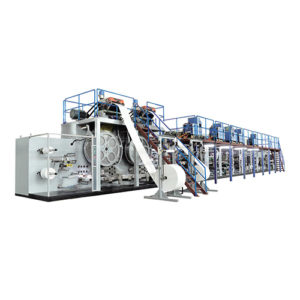
At the apex of the manufacturing spectrum are the fully automatic production lines. These are highly sophisticated, integrated systems that handle the entire process, from raw material unwinding to final packaging, with minimal human intervention. An operator's role shifts from direct labor to supervision, quality monitoring, and system management via advanced Human-Machine Interfaces (HMIs).
The investment for a fully automatic line is substantial, representing a major capital expenditure. However, the return on this investment is realized through immense production capacity, which can range from 500 to over 1,200 PPM. The operational efficiency is unparalleled, with extremely low labor costs per unit and minimal material waste due to precision sensor-based controls. These machines produce pads of exceptional and unwavering consistency, which is vital for building a premium brand reputation. For a company aiming to compete on a national level in a market like Indonesia or to export products across the Middle East, a fully automatic line is not a luxury; it is a necessity. The high sanitary pads machine price reflects the advanced robotics, servo-drive systems, and complex programmable logic controllers (PLCs) that orchestrate a high-speed symphony of manufacturing.
| Özellik | Manual Machine | Yarı Otomatik Makine | Fully Automatic Machine |
|---|---|---|---|
| Initial Investment | Low ($5,000 – $20,000) | Moderate ($50,000 – $250,000) | High ($300,000 – $1,000,000+) |
| Üretim Kapasitesi | Very Low (10-40 PPM) | Medium (150-400 PPM) | Very High (500-1200+ PPM) |
| İşgücü Gereksinimi | High | Orta düzeyde | Low |
| Product Consistency | Variable | Good | Excellent |
| Ideal Business Scale | Micro-enterprise, NGO | Small to Medium Enterprise (SME) | Large-scale Manufacturer |
| Flexibility | High (easy to change) | Orta düzeyde | Low (optimized for one design) |
Factor 2: Production Capacity and Speed – Aligning Output with Market Ambition
After deciding on the general level of automation, the next critical determinant of the sanitary pads machine price is its specific production capacity, typically measured in pieces per minute (PPM). This is not a number to be chosen lightly; it must be the result of a careful calculation that balances your market ambitions with your financial realities. A machine that is too slow will leave you unable to meet demand and vulnerable to competitors. A machine that is excessively fast for your market represents an unnecessary and potentially crippling upfront investment.
Calculating Your Required Pieces Per Minute (PPM)
To make an informed decision, you must begin with market analysis. This does not require a costly consulting firm; it begins with thoughtful estimation. First, identify your target market. Is it a city of 5 million, a region of 20 million, or a country of 100 million? Next, estimate the number of potential users within that population (typically women aged 12-50). Research from sources like the World Bank or national statistics offices can provide these demographic figures (The World Bank, 2023).
Let's walk through a hypothetical calculation. Suppose your target region has 10 million potential users. On average, a user might need 15 pads per month. That's a total market demand of 150 million pads per month. You are a new entrant, so you might realistically aim to capture 1% of this market in your first year.
- 1% of 150,000,000 pads/month = 1,500,000 pads/month.
Now, let's translate this into a required production rate. Assume your factory operates 22 days a month, with two 8-hour shifts per day.
- Total operating hours/month = 22 days * 16 hours/day = 352 hours.
- Total operating minutes/month = 352 hours * 60 minutes/hour = 21,120 minutes.
- Required PPM = 1,500,000 pads / 21,120 minutes ≈ 71 PPM.
This calculation, however, assumes 100% efficiency. In reality, you must account for downtime, maintenance, and material changes. A more realistic operational efficiency is around 80%.
- Adjusted required PPM = 71 PPM / 0.80 ≈ 89 PPM.
This simple exercise demonstrates that for this specific scenario, a machine with a capacity of around 100-150 PPM would be a sensible starting point, placing you firmly in the semi-automatic category. A machine with a 500 PPM capacity would be an inefficient use of capital at this stage.
The Correlation Between Speed and Price
Why does a faster machine cost more? The relationship between speed and price is exponential, not linear. Doubling the speed can more than double the cost. This is because higher speeds demand a greater level of engineering precision and more robust components.
Think of the difference between a family car and a Formula 1 racing car. Both have engines and wheels, but the F1 car's components are made from advanced, lightweight materials and engineered to withstand extreme forces and temperatures. Similarly, a high-speed sanitary pad machine (e.g., 1000 PPM) requires:
- Servo Motors: Instead of standard motors, high-speed lines use multiple servo motors, which offer precise control over speed and position. Each servo motor adds significantly to the cost.
- Advanced Control Systems: The PLC must be able to process thousands of inputs and outputs per second to keep every component—cutters, applicators, sensors—perfectly synchronized.
- Durable Materials: Components like rotary cutters and sealing units must be made from high-grade, hardened steel alloys to resist wear at high rotational speeds.
- Vibration Dampening: The entire machine frame must be heavier and more robustly constructed to absorb the vibrations generated by high-speed operation, ensuring stability and precision.
Future-Proofing: Planning for Growth
A common dilemma for entrepreneurs is whether to buy for today's needs or tomorrow's ambitions. Purchasing a machine with a capacity far exceeding your initial projections ties up valuable capital that could be used for marketing or raw material inventory. Conversely, outgrowing your machine too quickly can lead to lost sales and a disruptive, costly upgrade process.
A prudent strategy is to choose a machine that meets your 1-2 year projections comfortably and to have a clear discussion with the manufacturer about its "scalability." Some semi-automatic machines are designed with a modular framework, allowing for future upgrades. For example, you might start with a manual packaging station and later add an automated stacking and bagging unit to increase overall line speed. Discussing your five-year business plan with the machine manufacturer is not just a sales conversation; it is a strategic planning session. A good manufacturer will function as a consultant, helping you map a technology roadmap that aligns with your business growth.
Factor 3: Technological Sophistication and Modern Pad Design
The modern consumer, whether in Johannesburg or Jakarta, has access to global brands and has developed expectations for comfort, discretion, and performance. The ability of a machine to produce sanitary pads that meet these modern standards is a crucial factor in its price. A machine that only produces thick, wingless fluff pulp pads will be significantly cheaper than one capable of creating ultra-thin, anatomically shaped pads with advanced absorbent cores. Investing in technology is investing in the marketability and premium potential of your product.
Core Formation Technology: Fluff Pulp vs. Airlaid Paper
The absorbent core is the heart of the sanitary pad. The technology used to create this core profoundly impacts the machine's complexity and cost, as well as the final product's characteristics.
- Fluff Pulp Core: This is the traditional method. The machine incorporates a hammer mill, which pulverizes treated wood pulp into soft, absorbent fibers. These fibers are then vacuum-formed into the shape of the core. Machines with this technology are generally less expensive. They produce thicker, fluffier pads, which are still preferred by some consumer segments in various markets for their perceived high absorbency. However, the process can be dusty, and the pads are bulkier.
- Airlaid Paper Core (Ultra-Thin Core): This is the more modern approach, used for producing ultra-thin pads. The machine uses pre-fabricated sheets of "airlaid paper," which is a composite material containing short fibers and often, Super Absorbent Polymer (SAP) bonded together. The machine's role is to precisely cut this material and laminate it with other layers. The technology required for handling and cutting this delicate, pre-made core material is more sophisticated, increasing the machine cost. The resulting pads are thin, discreet, and highly absorbent, commanding a higher retail price.
Choosing between these technologies is a strategic market decision. An analysis of your local competitors' products will reveal the prevailing consumer preference, guiding your choice of core technology.
Wings, Embossing, and Anatomical Shapes
Beyond the core, other features contribute to the user's experience and, consequently, the machine's price.
- Wings: Pads with wings offer better security and are a standard expectation in most markets. The machine needs an additional module with a dedicated cutter and folding mechanism to create and attach the winged release paper. This adds complexity and cost.
- Embossing: The patterns pressed onto the pad's surface are not just for aesthetics. They create channels that guide fluid into the absorbent core, improving performance. The machine requires a heated, engraved embossing roller. The complexity of the pattern and the precision of the heating control system influence the cost.
- Anatomical Shaping: Generic rectangular pads are cheaper to produce. Creating pads that are wider at the back or contoured to fit the body requires more complex rotary cutters. These cutters are precision-engineered components, and their intricacy is directly reflected in the sanitary pads machine price.
Exploring the different types of available sanitary pad manufacturing lines can provide a clearer picture of how these features are integrated into different models.
Integration of Super Absorbent Polymer (SAP)
Super Absorbent Polymer is a marvel of material science. These tiny granules can absorb and retain hundreds of times their weight in liquid, locking it away as a gel. Its inclusion is standard for any high-quality pad. The machine must have a highly precise SAP application system. This system consists of a hopper, a volumetric or gravimetric feeder, and a distributor that sprinkles the exact amount of SAP in the designated area of the core.
Too little SAP results in poor performance. Too much is a waste of an expensive raw material and can affect the pad's feel. The precision of this applicator, especially in high-speed machines where the application window is a fraction of a second, is a significant technological cost driver.
| Feature Add-On | Impact on Machine Complexity | Estimated Price Increase (Relative) | Consumer Benefit |
|---|---|---|---|
| Wing Application Module | Orta düzeyde | +10-15% | Improved security, prevents leakage |
| Ultra-Thin (Airlaid) Core | High | +20-30% | Discretion, comfort |
| SAP Application System | High | +15-25% | Superior absorbency, dryness |
| Anatomical Shape Cutter | Moderate to High | +10-20% | Better fit, enhanced comfort |
| Individual Wrapping Unit | Orta düzeyde | +10-15% | Hygiene, portability |
Factor 4: Raw Material Handling and Operational Efficiency
An often-overlooked aspect when evaluating the sanitary pads machine price is how the machine interacts with its lifeblood: the raw materials. A well-designed machine is not just a fast producer; it is an efficient converter of raw materials into finished goods. This efficiency has two main dimensions: the machine's versatility in handling different materials and its ability to minimize waste. Both have long-term financial implications that can outweigh a small difference in the initial purchase price.
Machine Versatility with Different Material Specifications
The global supply chain for raw materials like non-woven fabrics, PE backsheet film, fluff pulp, and SAP is diverse. Prices and specifications can vary significantly from one supplier to another and from one region to another. A machine that is overly "sensitive" or calibrated to work only with a very specific grade or thickness of material from a single supplier can become a liability. If that supplier raises prices or has a disruption, your production can grind to a halt.
A more robust, and often slightly more expensive, machine is designed with greater tolerance and adjustability. Look for features like:
- Tension Control Systems: Automatic tension controllers for the non-woven and film rollers can adapt to slight variations in material thickness and elasticity, preventing breaks and wrinkles.
- Adjustable Guides and Rollers: The ability to make fine adjustments to the machine's material path allows it to run smoothly with materials from different manufacturers.
- Flexible Glue Systems: Advanced adhesive applicators that can handle hot-melt glues with different viscosities provide more options for sourcing your adhesives.
When discussing with a manufacturer, ask direct questions: "What is the recommended GSM (grams per square meter) range for the top sheet? Can the machine handle a variation of +/- 10%? Which brands of fluff pulp have you tested on this machine?" A machine that offers flexibility might have a higher initial cost, but it provides supply chain resilience, which is a powerful long-term advantage, especially in markets with volatile import logistics.
Waste Reduction Systems: Saving Money on Every Pad
In a high-volume manufacturing process, even a small percentage of waste can translate into substantial financial losses over a year. The industry standard for waste is typically between 2-5%. Advanced machines are equipped with systems designed to keep this figure as low as possible, often below 2%. These savings in raw material costs can contribute significantly to paying back the initial investment faster.
Key waste-reduction technologies include:
- Automatic Splicing: When a roll of raw material (like non-woven fabric) is about to run out, a basic machine will stop, requiring the operator to manually thread a new roll. This causes downtime and wastes the material left on the old roll's core, as well as the material used during the restart. An automatic splicing unit, on the other hand, senses the end of the roll and, at full machine speed, automatically fuses the start of the new roll to the end of the old one. There is zero downtime and minimal material waste. This feature is standard on high-speed lines and a valuable option on mid-range machines.
- Rejection of Individual Faulty Products: Basic systems might stop the entire line if a defect is detected. More advanced machines use vision systems to identify a single faulty pad (e.g., a misplaced wing or an incomplete seal) and activate a pneumatic ejector to remove only that single pad from the production line without stopping the machine. This maximizes uptime and ensures only perfect products reach the packaging stage.
- Optimized Cutting Patterns: The design of the rotary cutters and the machine's layout are optimized to minimize the "skeleton" waste from the non-woven and film materials. This is a fundamental design consideration that separates high-efficiency machines from their less-engineered counterparts.
When you receive a quotation for a sanitary pads machine, the price of these efficiency-boosting features might seem like optional extras. However, a careful calculation of your annual raw material costs will likely reveal that the return on investment for features like automatic splicing can be as short as one or two years.
Factor 5: The Ecosystem of Ancillary Equipment
A common mistake for first-time buyers is to focus solely on the price of the main forming machine. In reality, the "pad making machine" is the centerpiece of a larger production line. To create a market-ready product, you need a system for quality control and a system for packaging. These ancillary machines are not optional; they are essential components of a professional manufacturing operation. Their cost must be factored into your total project budget from the very beginning.
The Importance of Packaging Solutions
A sanitary pad is not sold as a single unit. It is counted, stacked, and placed in an attractive, hygienic bag. The method you choose for this process has a massive impact on your labor costs and overall production speed.
- Manual Packaging: This is the most basic option. The main machine drops the finished pads onto a conveyor, and workers manually count them, stack them, and insert them into pre-made plastic bags, which are then sealed with a simple heat sealer. This is extremely labor-intensive and creates a bottleneck that limits your true production capacity. Even if your main machine can produce 300 PPM, you may only be able to package 100 PPM with a manual team.
- Semi-Automatic Packaging: A step up involves an automatic stacking machine. This machine receives the pads from the main line and automatically counts and arranges them into stacks of a pre-set number (e.g., 10 or 12). A worker then takes this neat stack and inserts it into a bag. This reduces the labor requirement and improves accuracy.
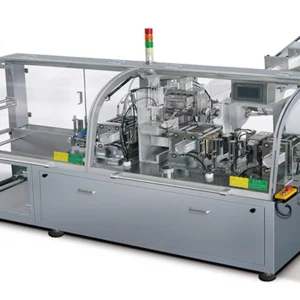
- Fully Automatic Packaging: High-speed lines are almost always integrated with a fully automatic packaging machine. This machine takes the output from the stacker, opens a bag from a roll of film, inserts the stack, seals the bag, and cuts it. It operates in perfect synchronization with the main machine, requiring only one operator to supervise the entire line from forming to final package. An integrated, fully automatic packaging line can add anywhere from $50,000 to $150,000 or more to the total sanitary pads machine price, but for high-volume producers, it is an essential investment in efficiency.
Quality Control Systems: Vision Inspection and Metal Detection
Your brand's reputation is built on the trust of your customers. A single quality defect, such as a pad with a missing adhesive strip or, in a worst-case scenario, a foreign contaminant, can cause irreparable damage. Modern production lines incorporate automated quality control systems to act as vigilant, tireless inspectors.
- Vision Inspection Systems: These systems use high-speed cameras and sophisticated image processing software to inspect every single pad that passes through the line. They can be programmed to detect a wide range of potential defects:
- Incorrect placement of the core or wings.
- Stains or dirt on the top sheet.
- Incomplete or faulty seals.
- Presence and correct position of the release paper. When a defect is detected, the system signals the rejection mechanism to remove the faulty pad.
- Metal Detection: A metal detector is typically placed on the conveyor just before the packaging machine. It creates an electromagnetic field and can detect tiny ferrous or non-ferrous metal particles that might have accidentally entered the production process (e.g., from a broken part in the hammer mill). This is a critical safety feature that protects both the consumer and your brand.
These QC systems add to the initial cost, but they are a form of insurance. They prevent substandard products from reaching the market, reduce customer complaints, and safeguard your brand's integrity. The cost of a product recall or a lawsuit far exceeds the investment in a reliable QC system.
The Complete Production Line
Therefore, when you request a quotation, it is wise to ask for a "complete production line" price. This should include the main forming machine, the necessary quality control modules, and the packaging machine that matches your desired level of automation and speed. Thinking in terms of a complete, integrated system from the start will give you a much more realistic understanding of the total investment required to launch your product successfully.
Factor 6: The Intangible Value of Manufacturer Partnership and Support
When you purchase an industrial machine of this complexity, you are not merely buying a piece of equipment; you are entering into a long-term relationship with the manufacturer. The quality of this relationship, the reliability of the manufacturer, and the comprehensiveness of their support system are intangible factors that have a very tangible impact on your operational success and long-term profitability. A lower upfront sanitary pads machine price from an unknown manufacturer with poor support can quickly become far more expensive than a fairly-priced machine from a reputable partner.
The Value of a Reputable Manufacturer
A manufacturer's reputation is built over years of successful installations and satisfied customers. It is a proxy for reliability, build quality, and adherence to international standards. When evaluating a manufacturer, look for:
- Experience and Specialization: How long have they been in business? Do they specialize in hygiene machinery, or is it a small part of a larger, unrelated business? A specialized manufacturer will have deeper engineering knowledge and a better understanding of the specific challenges of producing sanitary pads. Understanding the history and focus of the manufacturer, such as the principles that guide our team of dedicated specialists, can offer crucial insights into the expected quality and reliability of their equipment.
- International Certifications: Does the manufacturer's equipment comply with international standards like CE (for the European market, indicating safety compliance) or ISO 9001 (for quality management systems)? These certifications are not just paperwork; they indicate a commitment to standardized, high-quality manufacturing processes.
- Customer Testimonials and Site Visits: A confident manufacturer will be able to provide you with references from existing customers, ideally in a region near you. If feasible, arranging a visit to see one of their machines in operation at another factory is the best possible form of due diligence.
Beyond the Purchase: Installation, Training, and Technical Support
The machine's arrival at your factory is the beginning, not the end, of the manufacturer's responsibility. A comprehensive after-sales support package is a critical component of the total value proposition.
- Installation and Commissioning: A reputable manufacturer will send their own technicians to your site to supervise the installation, connect the utilities, and commission the machine. This ensures that the machine is set up correctly for optimal performance from day one. The cost of this service is often included in the total price, but you must clarify this.
- Operator Training: A machine is only as good as the people who run it. The manufacturer should provide comprehensive training for your operators and maintenance staff. This training should cover not just the day-to-day operation, but also routine maintenance, troubleshooting common problems, and safety procedures. Effective training reduces downtime and empowers your team to be self-sufficient.
- Remote and On-Site Technical Support: When a problem arises that your team cannot solve, you need prompt and effective support. Modern machines are often equipped with remote access modules, allowing the manufacturer's engineers to log into your machine's PLC system from their headquarters to diagnose problems remotely. This can save valuable time and the cost of an international flight. For more serious issues, the manufacturer's commitment to sending a technician to your site in a timely manner is crucial.
Spare Parts Availability and Warranty
Every machine has parts that wear out over time, such as cutters, bearings, and seals. The long-term operational viability of your investment depends on the availability and reasonable pricing of these spare parts.
Before purchasing, ask for a recommended spare parts list for the first two years of operation and its associated cost. A good manufacturer will provide a comprehensive list and often include a basic starter kit with the machine. Clarify the warranty period and exactly what it covers. A one-year warranty on all parts is standard, but some manufacturers may offer longer warranties on key components. The speed at which they can ship spare parts to your region is a critical question to ask, as a machine sitting idle waiting for a part is a significant drain on revenue. The total cost of ownership, as argued by scholars of industrial management, is a far more accurate metric for investment decisions than the initial purchase price alone (Ellram, 1995).
Factor 7: The Final Mile – Logistics, Installation, and Regional Variables
The price quoted by the manufacturer is rarely the final amount you will pay to get your sanitary pad machine up and running. A host of external costs, related to shipping the machine from its country of origin to your factory floor and preparing your site for its arrival, must be carefully budgeted. These costs can vary dramatically depending on your location, making this final factor a crucial piece of the financial puzzle, especially for buyers in South America, Russia, Southeast Asia, and Africa.
Logistics and Import Duties: From FOB to Landed Cost
When you receive a price list, you must pay close attention to the shipping terms, known as Incoterms. The most common terms are:
- FOB (Free On Board): The manufacturer's price includes the cost of the machine and the cost of transporting it to the designated port in their country. From that point on, you are responsible for all costs: ocean freight, insurance, customs clearance, import duties, and inland transportation in your country.
- CIF (Cost, Insurance, and Freight): The manufacturer's price includes the machine, ocean freight, and insurance to a port in your country. You are still responsible for customs clearance, duties, and inland transport.
The cost of import duties and taxes can be a substantial addition to the total investment. These rates vary widely. For example, some countries in the Mercosur bloc in South America may have different tariff structures than ASEAN countries in Southeast Asia. It is imperative that you work with a local customs broker in your country to get an accurate estimate of the total taxes and duties you will have to pay on the declared value of the machine. This "landed cost"—the total cost including all logistics and taxes—is the true starting point for your investment calculation, not the FOB price.
Site Preparation and Utility Requirements
A sanitary pad production line is not a piece of equipment you can simply plug into a wall socket. Your factory building must be prepared to accommodate it.
- Space and Foundation: The machine has a significant footprint. A complete semi-automatic line can be 15-20 meters long. You need to ensure you have sufficient linear space, plus room around the machine for operators to work and for storing raw materials. The machine's weight also requires a solid, level concrete floor.
- Power Supply: These machines require a three-phase industrial power supply. The total power requirement (measured in kilowatts, kW) will be specified by the manufacturer. You may need to upgrade your factory's electrical panel or even install a new transformer to meet this demand.
- Compressed Air: Many of the machine's functions, such as pneumatic actuators and rejection systems, run on compressed air. You will need to purchase and install an industrial air compressor and dryer of the specified capacity (measured in cubic meters per minute and pressure in bar or psi). The cost of a suitable compressor can be several thousand dollars.
The costs for these site preparations—electrical work, potential floor reinforcement, and the purchase of an air compressor—must be budgeted as part of the total project cost.
Currency Fluctuations and Financing
For international transactions, currency exchange rates are a real and unpredictable variable. The price of the machine is typically quoted in US Dollars (USD) or Euros (EUR). If your local currency weakens against the dollar between the time you sign the contract and the time you make the final payment, the machine will cost you more in your local currency. It can be wise to discuss hedging strategies or forward contracts with your bank to mitigate this risk.
Furthermore, financing a large capital expenditure can be a challenge. Some manufacturers may offer financing options or work with export-import banks to provide credit facilities to buyers. Exploring these options can make a higher-quality machine more accessible by spreading the cost over time. Inquiring about financing support early in the negotiation process can be a key enabler for your project.
Sıkça Sorulan Sorular (SSS)
1. What is a realistic starting sanitary pads machine price for a small business in 2025? For a small business aiming for a serious market entry, a good starting point is a semi-automatic machine. A realistic budget for a reliable semi-automatic line, including the main machine, basic quality control, and a manual or semi-automatic packaging solution, would typically fall in the range of $70,000 to $200,000 USD, depending on the speed and features. This provides a good balance of production capacity and manageable initial investment.
2. How much factory space do I need for a sanitary pad production line? The space requirement depends heavily on the machine's configuration. A compact semi-automatic machine might be around 15 meters long and 3 meters wide. However, you need to account for space around the machine for operators, maintenance access, and storage of raw materials (large rolls of non-woven fabric, pulp, etc.) and finished goods. A safe estimate for a complete semi-automatic line is a dedicated area of at least 200-300 square meters (approx. 2,000-3,000 sq. ft.).
3. Can one machine produce different sizes of sanitary pads (e.g., day, night, panty liner)? Many modern machines offer some flexibility, but it comes with trade-offs. Changing between a day pad and a longer night pad might be possible by adjusting settings and changing the main rotary cutter. However, changing the cutter is a time-consuming process (it can take several hours) and requires skilled technicians. Producing panty liners, which are structurally very different, usually requires a separate, dedicated machine. It is often more efficient to dedicate one machine to one primary product type.
4. How many people are needed to operate a semi-automatic line? A typical semi-automatic line can be operated by a team of 3 to 5 people per shift. This usually includes one main machine operator who monitors the production process, one or two workers to handle raw material loading and quality checks, and two workers at the end of the line for manual or semi-automatic packaging.
5. What is the average lifespan of a sanitary pad machine? A well-maintained machine from a reputable manufacturer is a long-term asset. With proper routine maintenance, regular replacement of wear parts, and good operational practices, a sanitary pad machine can have a productive lifespan of 15 to 20 years or even longer. The machine's structural frame and main drive systems are built to last; the key is the ongoing care and replacement of consumable and high-wear components like blades and bearings.
6. How much does a fully automatic packaging machine add to the price? Integrating a fully automatic packaging machine that handles counting, stacking, bagging, and sealing can add a significant amount to the total project cost. Depending on its speed and complexity, this ancillary machine can cost anywhere from $50,000 to over $150,000 USD. While a large expense, it drastically reduces labor costs and eliminates the packaging bottleneck, allowing the main machine to run at its full capacity.
7. Are used or refurbished machines a good option to save money? Purchasing a used machine can seem like a way to lower the initial sanitary pads machine price, but it carries significant risks. You may not have access to a reliable history of the machine's maintenance, the technology may be outdated, and obtaining spare parts can be difficult. Most importantly, you will likely receive no warranty or after-sales support from the original manufacturer. For a critical business operation, the reliability and support that come with a new machine often provide better long-term value.
Sonuç
The inquiry into the sanitary pads machine price, as we have explored, unfolds into a comprehensive examination of business strategy, technological capability, and long-term financial planning. The price tag on a quotation is not an endpoint but a single data point in a much larger equation. A true understanding of cost emerges when we move our perspective from the initial purchase to the total cost of ownership and the potential for return on investment. The decision rests not on finding the cheapest machine, but on identifying the right machine for your specific market, your production volume ambitions, and your brand's quality promise.
The seven factors—automation, capacity, technology, efficiency, ancillary systems, manufacturer support, and logistics—are interconnected facets of this decision. A choice made in one area has cascading effects on the others. Opting for a high-speed, fully automatic line necessitates a parallel investment in automated packaging and robust logistical planning. Choosing to produce advanced ultra-thin pads requires a machine with specific core-forming and SAP application technologies. Approaching this investment with a holistic, systems-thinking mindset is the most effective way to mitigate risk and build a foundation for a prosperous manufacturing enterprise. The machine you choose will be the engine of your business for many years to come; its selection warrants a level of diligence and foresight commensurate with that long-term role. It is a partnership between your entrepreneurial vision and the engineering that brings that vision to life.
Referanslar
Ellram, L. M. (1995). Total cost of ownership: An analysis of conceptual and measurement issues. International Journal of Physical Distribution & Logistics Management, 25(8), 4–23. https://doi.org/10.1108/09600039510099928
The World Bank. (2023). Population, female (% of total population). World Bank Open Data. Retrieved from https://data.worldbank.org/indicator/SP.POP.TOTL.FE.ZS