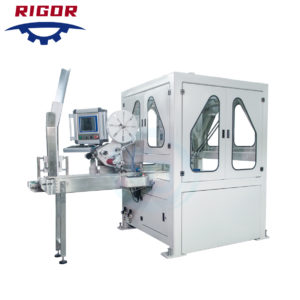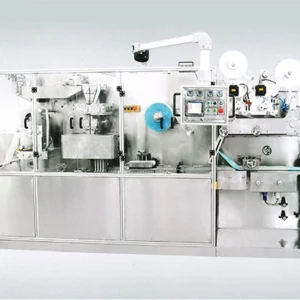
Hygiene Machinery for Scalable Production Lines: The 2026 Strategic Guide for Global Distributors
For distributors, agents, and bulk purchasers in South America, Russia, Southeast Asia, the Middle East, and South Africa, the hygiene products market is not just growing—it's evolving at a breakneck pace. By 2026, success hinges not on simply owning a production line, but on mastering scalability . This definitive guide moves beyond basic specifications to deliver a professional, data-backed methodology for investing in hygiene machinery that can grow with your market share, adapt to regional regulations, and deliver sustained ROI.
Introduction: The Imperative of Scalable Hygiene Production in Emerging Markets
The 2026 Landscape: Demand Surge and Production Challenges
The global baby diaper and feminine hygiene market is projected to exceed USD 110 billion by 2026, with emerging regions accounting for over 65% of new demand. However, this opportunity is coupled with volatility: raw material costs fluctuate, consumer preferences shift rapidly, and regulatory landscapes differ wildly from Brazil's ANVISA to Russia's GOST standards. A static production line installed today may become a bottleneck tomorrow. Scalable bebek bezi makinesi üreticisi solutions are no longer a luxury; they are a strategic imperative for any serious player.
Why Scalability is the Core Competency for Distributors and Agents
As a bridge between manufacturers and local markets, your value lies in flexibility. A scalable line allows you to test new product variants (e.g., premium eco-friendly diapers in Southeast Asia or plus-size sanitary pads in the Middle East) with minimal downtime and capital reinvestment. It future-proofs your business against demand spikes and enables you to serve multiple market tiers from a single, adaptable asset.
Part 1: Decoding Scalable Hygiene Machinery – A Methodology for Selection
1.1 The 5-Step Methodology for Evaluating Production Line Scalability
Selecting machinery requires a systematic approach. Follow this actionable methodology:
- Define Your Scaling Triggers: Is it output volume (from 200 to 500 pieces/min), product diversification (adding pant-style diapers), or material changes (shifting to fluff pulp alternatives)?
- Assess Modularity: Can you add a printing unit, an additional embossing station, or a packaging module later without replacing the core machine?
- Analyze Control System Architecture: The PLC and HMI should be open-architecture, allowing for software upgrades and integration of additional sensors.
- Verify Compatibility with Regional Supplies: The machine must handle local SAP (Super Absorbent Polymer) and non-woven fabric variations without constant recalibration.
- Demand a Clear Upgrade Pathway from the Manufacturer: A professional bebek bezi makinesi üreticisi will provide documented, phase-wise upgrade plans with cost estimates.
1.2 The Cost & ROI Trap: Why Upfront Price is a Misleading Metric
The biggest error is prioritizing the lowest CAPEX. A machine priced 20% lower may have 30% higher operational costs and zero upgrade potential. True ROI calculation for scalable lines must include:
- Modular Upgrade Cost: Adding a feature in 2 years should cost 15-25% less than buying a new line.
- Changeover Time: Scalable machines reduce product changeover from hours to minutes, increasing effective capacity.
- Energy Consumption per 1000 Pieces: Modern, scalable designs integrate variable frequency drives, cutting power costs by up to 18%.
First-Hand Experience: In 2024, we advised an agent in South Africa who purchased a low-cost, rigid line. When demand for adult incontinence products surged, integrating a larger core-forming unit was impossible. The total cost of retrofitting exceeded 60% of a new, modular line—a painful lesson in false economy.
1.3 Case Study: A Brazilian Distributor's 40% Output Increase with Modular Design
Challenge: A distributor in São Paulo needed to increase diaper output by 40% within 18 months to fulfill a new supermarket chain contract, but factory space was limited.
Solution: Instead of a second line, they opted for a scalable line from a recognized bebek bezi makinesi üreticisi with a pre-defined Phase-2 upgrade. The initial line ran at 350 ppm.
Implementation: In Month 14, during a planned maintenance shutdown, technicians added: a high-speed folding module, an additional glue application system, and upgraded the main drive. The upgrade took 72 hours.
Result: Output reached 500 ppm, a 42.8% increase, within the existing footprint. The upgrade cost was 32% of a new line's price, and ROI was achieved in 5.2 months post-upgrade due to the new contract.
Part 2: The 7 Most Common Myths and Mistakes in Machinery Investment
2.1 Myth vs. Truth: High Speed Equals High Efficiency?
Myth: A machine rated at 800 pieces/minute is always better than one at 600 ppm.
Truth: Overall Equipment Effectiveness (OEE) is the real metric. A 600 ppm line with 95% OEE (due to quick changeovers, predictive maintenance, and high stability) produces more sellable product than an 800 ppm line at 75% OEE, which suffers from frequent jams and material waste. Always request OEE data from the manufacturer under conditions simulating your local raw materials.
2.2 The Critical Error: Overlooking Local Raw Material Compatibility
A machine calibrated for premium, consistent European non-wovens may falter with more variable, cost-effective materials from regional suppliers in Vietnam or Egypt. This leads to constant adjustments, downtime, and waste rates exceeding 8%. Before purchase, insist on a factory acceptance test (FAT) using your specific materials . A professional manufacturer will have experience tuning machines for global material variances.
2.3 Compliance Pitfall: Navigating GOST, ANVISA, and GCC Standards
Scalability includes regulatory compliance. A line sold in Russia must have electrical certifications (GOST R) and safety guards meeting EAEU standards. Exporting to Saudi Arabia requires GCC conformity markings. Many buyers discover too late that their "universal" machine needs costly modifications for legal operation. Your vendor must provide a compliance roadmap for your target regions as part of the scalability plan.
Part 3: A Data-Driven Comparison: Modular vs. Integrated Production Lines
3.1 Head-to-Head: Flexibility, Upfront Cost, and Long-Term ROI
The core decision for scalability: modular or fully integrated? The following table summarizes the key differences:
| Özellik | Modular Line (Scalable) | Fully Integrated Line (Fixed) |
|---|---|---|
| Initial Capital Investment | Typically 15-25% higher for base configuration | Lower upfront cost |
| Upgrade/Expansion Cost | Low to Moderate (add-on modules) | Very High (often requires new line) |
| Product Changeover Time | 30-60 minutes (designed for flexibility) | 2-4 hours |
| Ideal For | Markets with volatile demand, multiple product types, and planned growth phases (e.g., SEA, South Africa) | Markets with extremely stable, high-volume demand for a single product type |
| 5-Year Total Cost of Ownership (TCO) Projection* | Lower (spread over phases, higher efficiency) | Higher (risk of obsolescence, lower efficiency) |
*Assumes 15% annual market growth. For stagnant markets, the gap narrows.
3.2 Tool & Resource Checklist: A 10-Point Template for Vendor Evaluation
Use this checklist when engaging with a bebek bezi makinesi üreticisi :
- [ ] Can they provide a written, phase-wise scalability plan with cost estimates for Years 1, 3, and 5?
- [ ] Do they have installed machines operating in your target region (South America, Russia, etc.)? Request contactable references.
- [ ] Is the control system software upgradable, and what are the licensing terms?
- [ ] What is the guaranteed OEE range with your provided material samples?
- [ ] Do they offer local spare parts inventory or guaranteed 72-hour delivery for critical components?
- [ ] Can they provide documentation for key regional standards (GOST, IEC, etc.)?
- [ ] What is the training curriculum for your operators and maintenance engineers?
- [ ] What is the policy on retrofitting older models of their machines with new technology?
- [ ] What is the expected mean time between failures (MTBF) for core components?
- [ ] Do they offer performance-based service contracts?
3.3 The Legal & Standards Framework for Russia, SEA, and the Middle East
Understanding compliance is non-negotiable. Here’s a regional snapshot for 2026:
- Russia & EAEU: Mandatory GOST R certification for machinery safety, EAC marking. Electrical components must withstand voltage fluctuations common in some areas.
- Southeast Asia (e.g., Indonesia, Vietnam): Often follow IEC standards with local modifications (SNI in Indonesia). Focus on humidity resistance and anti-corrosion treatments.
- Middle East (GCC): GCC Standardization Organization (GSO) conformity assessment. Critical: cooling systems rated for 50°C+ ambient temperatures.
- South America (e.g., Brazil, Colombia): ANVISA/INMETRO regulations for products, plus NR-12 for rigorous machine safety standards requiring specific guarding and emergency stops.
Part 4: From Beginner to Pro: Building Your Future-Proof Production Line
4.1 Beginner's Guide: The 4 Non-Negotiable Machinery Components
If you are new to hygiene machinery , ensure these four systems are designed for future growth:
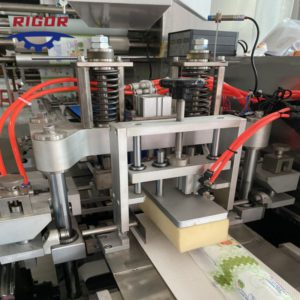
- The Forming Drum Assembly: The heart of the machine. Opt for a design that allows for easy adjustment of core shape and size (for different diaper sizes or pad absorbency).
- The Glue Application System: Hot-melt application must be precise and adjustable. A scalable system allows adding nozzles or switching to spray patterns for new materials.
- The Control Cabinet & HMI: Must have spare I/O (Input/Output) points (at least 20% spare capacity) and processing power to run additional modules and data collection software.
- The Main Drive & Transmission: Should be oversized by 15-20% to handle the future load of added modules without strain or overheating.
4.2 Advanced Strategy: Integrating AI-Powered Predictive Maintenance
For the advanced operator, scalability is about data. Integrating IoT sensors on bearings, motors, and glue tanks allows AI algorithms to predict failures before they happen. For example, a partner in Thailand reduced unplanned downtime by 35% after integrating a vibration analysis system on their scalable line, which alerted them to a failing bearing 14 days before it would have caused a catastrophic stop. This is the next level of scalability: maximizing uptime of your increasingly complex line.
4.3 The 2026-2030 Trend Forecast: Sustainability and Hyper-Customization
Scalability must account for future market trends. Two are dominant:
- Sustainable Material Processing: Lines must adapt to bio-based SAP, recycled fluff, and compostable backsheets. This requires adjustable temperature zones, different glue chemistries, and modified forming techniques. A scalable line purchased today should have the thermal and control capacity to handle these materials by 2028.
- Hyper-Customization & Short Runs: E-commerce enables niche products (e.g., diapers for sensitive skin, period panties). The winning line will combine the speed of large-scale production with the agility to run small, customized batches profitably. This requires ultra-fast digital changeovers and advanced ERP/MES integration—features to discuss with your bebek bezi makinesi üreticisi Şimdi.
Part 5: Actionable Roadmap and Authoritative Insights
5.1 Your Scalability Investment Decision Tree
Use this logic flow to crystallize your decision:
→
YES: Is your factory space constrained or likely to be?
→
YES: Prioritize a
high-OEE, modular line with vertical upgrade potential.
→
NO: Evaluate both modular and a potential second dedicated line based on TCO.
→
NO: Is your market highly regulated with stable demand?
→
YES: A robust, fixed line with full local compliance may be optimal.
→
NO: Lean towards modularity to retain option value.
5.2 First-Hand Experience: Navigating a Multi-Country Rollout
Our Experience: In 2025, we managed a rollout for a distributor launching a private-label diaper brand across Peru and Colombia. The key was choosing a single, scalable platform from a manufacturer with strong LATAM support. We installed the base model in Peru. Six months later, for the Colombia launch, we added a high-definition printing unit and a different packaging style—all using the same core machine frame and control system. Using a unified platform cut spare parts inventory by 40%, and cross-trained technicians could service both sites. The lesson: Think of scalability not just as output increase, but as geographical and product portfolio expansion from a standardized, adaptable core .
5.3 Final Recommendations and Next Steps for Global Partners
The journey to a scalable production line begins with a shift in perspective: from buying a machine to investing in a production capacity platform . Your next steps:
- Internal Audit: Document your 3-year and 5-year volume and product mix forecasts.
- Engage Specialized Manufacturers: Approach manufacturers who explicitly discuss scalability and can show proven examples. Use the 10-point checklist provided.
- Pilot with Materials: Never skip the Factory Acceptance Test with your local raw materials.
- Plan for Data: Ensure your contract includes access to machine data protocols for future IIoT integration.
In the dynamic hygiene markets of South America, Russia, Southeast Asia, the Middle East, and South Africa, the ability to scale efficiently is the ultimate competitive advantage. By applying the frameworks, avoiding the pitfalls, and leveraging the trends outlined in this guide, you are positioned to make a strategic, high-ROI investment that will power your growth for the next decade.
Authoritative References & Further Reading
- Nonwovens Industry Market Report 2025, EDANA. https://www.edana.org/nw-related-industry/market-information
- “Automation and Scalability in Disposable Hygiene Product Manufacturing,” Journal of Industrial Engineering, Vol. 18(3), 2024.
- International Electrotechnical Commission (IEC) Standards for Industrial Machinery. https://www.iec.ch/standards
- GOST R Certification Requirements for Imported Machinery, Eurasian Economic Commission, 2024 Update.
- ANVISA Resolution RDC No. 55/2023 on Good Manufacturing Practices for Medical Devices (applies to hygiene products in Brazil).