Sep 4, 2026 | Nouvelles
The global diaper industry is shifting its supply chain toward Southeast Asia, and Vietnam has emerged as a strategic hub for manufacturing high-quality diaper machinery. For buyers from South America, Russia, the Middle East, and Africa, sourcing from Vietnam offers a unique blend of competitive pricing, improving technology, and favorable trade agreements. But navigating a foreign supplier landscape requires careful planning. In this guide, I’ll share practical insights gained from years of working directly with Vietnamese manufacturers and international clients.
How to Choose the Best Diaper Machine Supplier in Vietnam?
Selecting the right supplier is the single most critical decision in your diaper production venture. Vietnam hosts a mix of established local manufacturers, joint ventures, and representatives of Chinese brands. The key is to look beyond the sales pitch and verify actual capabilities.
Key Factors to Evaluate Vietnamese Diaper Machine Manufacturers
Start with production experience: how many years has the company been building diaper machinery? A factory with a decade of history often has refined its designs and quality control. Check their technical certifications—ISO 9001 is a minimum, but CE or UL certifications indicate export readiness. Ask for a client list and contact references directly. In my experience, a manufacturer willing to share unedited customer contacts is confident in their after-sales record.
Visit their production floor if possible. Look at the level of automation they use to build the machines themselves. A workshop equipped with advanced CNC machines and laser cutters will produce more precise components. Also, evaluate their engineering team: can they customize the machine for different diaper sizes, core materials, or packaging options? The flexibility of their design often determines your ability to adapt to market trends later.
Step-by-Step Guide to Visiting and Auditing Factories in Vietnam
A factory visit is your best due diligence tool. Here’s a practical roadmap I’ve used with dozens of clients:
- Pre-Visit Research: Shortlist 3-5 suppliers based on online profiles, trade show interactions, and referrals. Request detailed quotations and technical brochures beforehand.
- Scheduling: Plan at least 2 full days in industrial zones like Binh Duong, Dong Nai, or Ho Chi Minh City. Confirm appointments and request that a technical engineer—not just a salesperson—be present.
- On-Site Inspection: Observe the assembly area for organization and safety. Are workers following standard operating procedures? Check the testing area: a reliable manufacturer will have a dedicated testing line where you can see a diaper machine in operation.
- Quality Audit: Ask to see quality control logs, raw material certificates, and the calibration records of their measurement tools. During one audit in Binh Duong, I noticed that a manufacturer used a high-speed camera to analyze product defects in real time—a sign of a mature quality system.
- Post-Visit Evaluation: Compare your notes on communication, transparency, and the overall professionalism of each factory. The best supplier isn’t always the cheapest; it’s the one that demonstrates consistent attention to detail.
Remember, a face-to-face meeting also lets you gauge the company’s stability. Look for signs of long-term investment, such as recent equipment upgrades or a clean, well-maintained facility.
Questions to Ask Before Signing a Diaper Machine Contract
Before committing, arm yourself with a list of specific questions. Here are the ones I consider non-negotiable:
- What is the exact scope of supply? Does it include the main machine, conveyors, stackers, and packaging units?
- What are the warranty terms, and what parts are excluded?
- How quickly can you dispatch spare parts to my country? Do you have a local distributor or partner?
- What is the typical response time for remote technical support? Is on-site installation and training included in the price?
- Can you provide a detailed production capacity guarantee in writing, with penalties for shortfalls?
- What are the power requirements, and can the machine handle voltage fluctuations common in my region?
- Do you offer any performance monitoring software or remote diagnostics?
- How do you handle design changes or upgrades after purchase?
Getting clear answers in writing protects you from misunderstandings that frequently plague international equipment purchases.
What are the Top Diaper Machines Available in Vietnam?
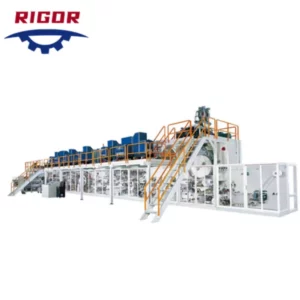
The Vietnamese market offers a spectrum of machines à fabriquer des couches , from entry-level semi-automatic lines to high-speed fully automatic systems. Understanding the differences helps you match the machine to your business goals.
Semi-Automatic vs. Fully Automatic Diaper Machines: Which is Right for You?
Semi-automatic machines require manual intervention for material feeding, product transfer, or packaging. They typically run at 100-200 pieces per minute and suit startups or niche markets where labor costs are low. Fully automatic systems integrate unwinding, forming, stacking, and bagging into one continuous line, achieving speeds of 400-800 pieces per minute or more. The choice hinges on your labor cost, target output, and product consistency needs.
Below is a quick comparison to help you decide:
| Fonctionnalité |
Semi-Automatic |
Fully Automatic |
| Production Speed |
100–200 pcs/min |
400–800 pcs/min |
| Operators Required |
4–6 per line |
1–2 per line |
| Initial Investment |
$50,000–$120,000 |
$150,000–$400,000 |
| Changeover Time |
Faster for size changes |
Slower, but automated recipes available |
| Maintenance Complexity |
Low; simple mechanical parts |
High; requires skilled technicians |
| Best For |
Startups, low-volume niche products |
Established brands, high-volume export |
When I consult with first-time buyers, I usually recommend a semi-automatic setup if their projected monthly output is under 5 million pieces. It limits financial risk while they test the market. However, if you already have distribution contracts, the efficiency of a fully automatic line quickly pays for itself.
Chinese vs. Vietnamese Diaper Machine Manufacturers: Pros and Cons
Many buyers assume Chinese machines are always cheaper and more advanced, but the gap is narrowing. Vietnamese manufacturers have several advantages: lower shipping costs within ASEAN, familiarity with local raw material supply chains, and increasingly competitive pricing due to government incentives. Chinese suppliers, on the other hand, often have larger-scale production and a wider range of models. However, after-sales service can be a challenge if you are far from China, whereas Vietnamese companies are aggressively expanding their service networks in emerging markets.
From a quality perspective, top-tier Vietnamese diaper machinery now rivals mid-range Chinese equipment. The key is to evaluate each factory individually rather than generalizing by country. One practical tip: check whether the manufacturer uses internationally branded components (like Siemens PLCs, Omron sensors, or Nord gearmotors). This is a reliable quality signal regardless of origin.
Case Study: Performance Review of Popular Diaper Machine Models in Vietnam
Let’s look at a real-world example. A client in Kenya purchased a Vietnamese fully automatic baby diaper machine (model VN-800) in early 2025. The machine was rated at 600 pcs/min and included a servo-driven stacking system. After 8 months of operation, the line achieved an overall equipment effectiveness (OEE) of 85%, with downtime mainly due to raw material splices. The client reported that the remote diagnostic support via WeChat/WhatsApp resolved most issues within 2 hours. Total cost delivered to Mombasa, including installation, was $210,000—about 20% less than an equivalent Chinese model quoted at the time. This case illustrates the growing competitiveness of Vietnamese machinery when paired with responsive service.
What Common Mistakes Should You Avoid When Buying a Diaper Machine in Vietnam?
Even experienced buyers can stumble. Here are the pitfalls I see most often—and how to steer clear.
Overlooking After-Sales Service and Technical Support
This is the number one mistake. A machine is a long-term investment, and downtime kills profitability. I recall a South African entrepreneur who bought a low-cost semi-automatic line from an unverified vendor. When a critical servo motor failed, the supplier took 6 weeks to ship a replacement because they had no local stock. The production halt cost him over $40,000 in lost orders. Always clarify: where are spare parts warehoused? What is the guaranteed response time? Is there a local technician or partner? A reputable Vietnamese supplier will offer a comprehensive service level agreement (SLA) and often provide training for your maintenance team during installation.
Ignoring Local Regulations and Import Duties
Every country has its own import regulations for industrial machinery. In Brazil, for example, you need to navigate complex tax structures like ICMS and IPI, while Russia requires EAC certification for electrical equipment. Saudi Arabia enforces SASO standards, and South Africa has NRCS approvals. Before ordering, work with a customs broker to calculate the total landed cost, including duties, VAT, and clearance fees. Also, check if Vietnam has a free trade agreement with your country—as a member of ASEAN, Vietnam enjoys preferential tariffs with many partners, which can reduce your import duty significantly.
On the Vietnamese side, ensure the manufacturer can provide the necessary export documentation, including the Certificate of Origin (Form E for ASEAN, Form D for other FTAs). Missing paperwork can delay your shipment by weeks.
Focusing Only on Price Instead of Total Cost of Ownership
Price tags are misleading. A machine that costs $80,000 might consume 30% more electricity, require more frequent part replacements, and produce higher waste rates than a $110,000 model. Over 5 years, the "cheaper" machine could cost you an extra $150,000. I helped a Brazilian client run this exact calculation: by opting for a fully automatic machine with a higher initial price but lower energy consumption and better raw material utilization, his total cost per diaper dropped by 12%. The payback period for the premium was just 9 months. Always request energy consumption data, expected waste rates, and a list of consumable parts with their lifespan before comparing quotes.
How Much Does a Diaper Machine Cost in Vietnam?
Pricing in Vietnam is dynamic, influenced by component sourcing, labor costs, and currency fluctuations. Here’s what you can expect in 2026.
Average Price Ranges for Different Types of Diaper Machines in Vietnam
- Baby diaper semi-automatic line (150–200 pcs/min): $55,000 – $95,000
- Baby diaper fully automatic line (400–500 pcs/min): $160,000 – $250,000
- High-speed fully automatic line (600–800 pcs/min): $280,000 – $420,000
- Adult diaper / pull-up pants machine: $120,000 – $350,000 depending on features
- Sanitary napkin machine: $70,000 – $200,000
These prices are FOB Ho Chi Minh City and typically include the main machine, stacking, and basic packaging modules. Customizations, such as additional size change parts or special embossing units, add 10–20% to the base cost.
Hidden Costs: Shipping, Installation, and Training
Beyond the machine price, budget for:
- Freight and insurance: Shipping a 40ft container to South America can cost $8,000–$15,000; to the Middle East, $5,000–$10,000.
- Import duties and taxes: Typically 5–20% of CIF value, depending on the destination.
- Installation et mise en service : Vietnamese manufacturers usually charge $3,000–$8,000 for sending engineers abroad for 1–2 weeks, plus travel expenses.
- Training: Often included, but confirm the duration and number of trainees covered.
- Spare parts inventory: I recommend purchasing an initial spare parts kit (5–10% of machine value) to avoid downtime.
Calculating ROI: How Long to Recoup Your Investment?
Let’s run a sample ROI for a mid-range fully automatic baby diaper machine costing $200,000 delivered. Assume a production speed of 500 pcs/min, running 20 hours/day, 300 days/year. That’s 180 million diapers annually. If your selling price per diaper is $0.06 and your material cost is $0.03, your gross margin per diaper is $0.03. Annual gross profit = $5.4 million. Even after deducting labor, overhead, and marketing, the machine cost is often recovered within 3–6 months. I recently worked with a Russian distributor who achieved full payback in 4 months because he secured a large retail contract before the machine arrived. Of course, your timeline depends on market access and utilization rate. Be conservative: plan for a 12–18 month payback to buffer against startup hiccups.
What are the Latest Trends in Vietnam's Diaper Machine Market for 2026?
Vietnam’s diaper machinery sector is evolving rapidly, driven by global sustainability demands and digital transformation.
The Rise of Eco-Friendly and Biodegradable Diaper Production
Consumers and regulators are pushing for greener diapers. In response, Vietnamese machine builders are adapting their equipment to handle biodegradable films, plant-based SAP, and chlorine-free fluff pulp. These materials behave differently on high-speed lines—they may require gentler tension control or modified ultrasonic bonding. I’ve seen several manufacturers now offering “green line” packages that include specialized unwinding units and adjustable heat settings. If you plan to market eco-friendly diapers, discuss material compatibility during the machine design phase, not after installation.
Automation and Industry 4.0 in Vietnamese Diaper Manufacturing
Industry 4.0 is no longer a buzzword here. Leading Vietnamese factories are integrating IoT sensors that monitor vibration, temperature, and production counts in real time. Data streams to a central dashboard accessible via smartphone, allowing managers to track OEE and predict maintenance needs. Some suppliers offer optional AI-powered vision inspection systems that detect defects like missing tapes or uneven elastic at full speed. While these features add upfront cost, they dramatically reduce waste and downtime. In my opinion, any new machine purchase above $200,000 should include at least basic IoT connectivity to future-proof your investment.
How Vietnam is Becoming a Hub for Diaper Machine Export to Southeast Asia
Vietnam’s strategic location, young workforce, and participation in trade pacts like CPTPP and RCEP make it an ideal export base. Local manufacturers are increasingly targeting markets in Indonesia, the Philippines, and Myanmar, where diaper consumption is growing at double-digit rates. For international buyers, this means Vietnamese suppliers are gaining more experience with diverse requirements and are building stronger logistics networks. It also means that by sourcing from Vietnam, you tap into a supply chain that is optimized for the entire region, potentially reducing your own shipping costs if you expand into neighboring countries later.
Where Can You Find Reliable Diaper Machine Suppliers and Resources in Vietnam?
Finding the right partner starts with knowing where to look. Below are the most effective channels I recommend.
Recommended Trade Shows and Exhibitions in Vietnam
- VietnamPlas (Ho Chi Minh City, usually in October): Covers plastics and packaging machinery, often featuring diaper equipment.
- Vietnam Manufacturing Expo (Hanoi, August): A broader industrial show where several machinery makers exhibit.
- Hanoi International Industrial Fair : Good for meeting northern-based manufacturers.
- ProPak Vietnam : Focuses on processing and packaging, relevant for diaper packaging automation.
Attending these shows allows you to see machines in operation, collect samples, and build personal relationships. I always advise clients to plan meetings in advance and bring raw material samples for on-the-spot testing.
Useful Online Platforms and Directories for Finding Suppliers
- Alibaba.com with location filter set to Vietnam: Many Vietnamese suppliers now have verified profiles.
- Vietnam Yellow Pages (trangvangvietnam.com): A local business directory with industrial categories.
- Industry associations: The Vietnam Plastics Association (VPAS) and the Vietnam Association of Mechanical Industry (VAMI) can provide member lists.
- LinkedIn: Search for “diaper machine Vietnam” to find company pages and connect with sales engineers.
Free Checklist: Diaper Machine Buyer's Toolkit
To simplify your sourcing process, I’ve compiled a practical checklist that covers every stage—from initial inquiry to final acceptance. It includes:
- Supplier evaluation scorecard
- Factory audit template
- Total cost of ownership calculator
- Key contract clauses to review
- Installation and commissioning timeline
You can download this toolkit directly from our website. It has saved my clients countless hours and helped them avoid costly oversights.
Choosing the right machines à fabriquer des couches supplier in Vietnam can transform your business, but it demands thorough vetting and a clear understanding of your own production needs. Whether you are upgrading an existing line or launching a new brand, take the time to visit factories, ask hard questions, and calculate the real cost beyond the sticker price. If you need personalized guidance or want to explore our range of high-performance machines, our team is ready to assist. Contact us today to schedule a consultation or request a customized quotation.
References and Further Reading
Sep 4, 2026 | Nouvelles
Indonesia has emerged as one of the most dynamic markets for hygiene products in the world. With a population exceeding 280 million and a growing middle class, demand for baby diapers, adult incontinence products, and sanitary pads is soaring. For manufacturers in South America, Russia, Southeast Asia, the Middle East, and South Africa, Indonesia presents both a lucrative local market and a strategic export hub. However, entering this market starts with a critical decision: sourcing the right machine à couches . The equipment you choose will determine your production capacity, product quality, and long-term profitability. In this guide, we break down every factor you need to consider, from understanding your production needs to navigating import regulations and calculating ROI in 2026.
What Are the Key Factors to Consider When Sourcing a Diaper Machine in Indonesia?
Before you start comparing brands or negotiating prices, you need a clear picture of your operational requirements. Too many buyers jump straight into supplier discussions without defining what they actually need. This leads to mismatched machinery, costly retrofits, and production delays. In this section, we cover the foundational factors that should shape your sourcing strategy.
Understanding Your Production Needs: Baby Diapers vs. Adult Diapers vs. Sanitary Pads
Your product choice dictates the machine configuration. Baby diaper machines typically run at higher speeds and handle lighter materials, with features like elastic waistbands and wetness indicators. Adult diaper lines, on the other hand, require larger forming drums, stronger cutting units, and the ability to process thicker absorbent cores. Sanitary pad machines have distinct folding and wrapping modules. If you plan to serve multiple segments, look for a modular machine à couches that can switch between products with minimal changeover time.
Market demand in Indonesia is shifting. Baby diapers still dominate volume, but adult incontinence products are growing at double-digit rates due to an aging population. Export markets in the Middle East often prefer premium adult diapers with high absorption. I've worked with a South African client who initially ordered a baby diaper line, only to realize six months later that the real margin was in adult products. They had to invest in a separate machine, doubling their capital outlay. Define your product portfolio before you sign any purchase agreement.
Evaluating Machine Specifications: Speed, Automation Level, and Raw Material Compatibility
Speed is measured in pieces per minute (ppm). Entry-level machines may run at 150–200 ppm, while high-end lines can exceed 500 ppm. Your target daily output should match market demand and your distribution capacity. Overinvesting in speed without a sales pipeline leads to inventory pile-up. Automation level affects labor requirements: semi-automatic machines need more operators for material splicing and packaging, but they cost less upfront. In Indonesia, labor is still relatively affordable, but full automation offers consistency and hygiene advantages that are critical for export-grade products.
Raw material compatibility is often overlooked. Indonesia has domestic suppliers of nonwoven fabric and fluff pulp, but superabsorbent polymers (SAP) are largely imported. Your machine should handle variations in material thickness, basis weight, and elasticity without frequent jams. Ask suppliers for a list of tested materials and run trials with your own samples during factory acceptance testing. A machine that works perfectly with European SAP might struggle with Chinese or Indonesian alternatives.
Assessing Supplier Credibility: Certifications, Client References, and Factory Audits
Certifications like CE, ISO 9001, and ISO 14001 are baseline indicators of quality management. However, in emerging markets, certificates can be outdated or purchased. I always recommend requesting at least three client references in similar markets. Contact those references directly and ask about machine uptime, spare parts availability, and the supplier's response to breakdowns. One Russian buyer I assisted skipped this step and relied solely on glossy brochures. The machine arrived with substandard electrical components that failed within weeks, and the supplier's "technical support" was an unresponsive WhatsApp number.
Factory audits are non-negotiable. Visit the supplier's manufacturing facility, inspect their quality control processes, and see machines being assembled. If travel is restricted, hire a third-party inspection agency like SGS or Bureau Veritas. For Indonesian buyers sourcing from China or Europe, local agents can perform these audits at a fraction of the cost of a failed machine.
Navigating Import Regulations and Logistics in Indonesia
Importing a diaper machine into Indonesia involves several layers of bureaucracy. You'll need an Importer Identification Number (API), and the machinery must comply with Indonesian National Standards (SNI) where applicable. Tariffs on industrial machinery vary, but under the ASEAN-China Free Trade Agreement, many Chinese machines enter with reduced or zero duties. European machines may attract higher tariffs, though some high-tech equipment qualifies for exemptions. Work with a licensed customs broker who understands the latest Harmonized System codes for hygiene machinery.
Logistics planning should account for port congestion at Tanjung Priok. Shipping from Shanghai takes about two weeks, but customs clearance can add another one to three weeks. Ensure your supplier provides seaworthy packing and full insurance. I've seen machines arrive with rusted components because the supplier used inadequate moisture barriers. Factor these hidden delays into your project timeline.
How to Compare Top Diaper Machine Brands and Models Available in Indonesia?
Once you have defined your needs, the next step is evaluating the available options. The Indonesian market features a mix of local, Chinese, and European suppliers. Each category has distinct strengths and trade-offs. Here's how to compare them effectively.
Brand A vs. Brand B: A Feature-by-Feature Comparison of Popular Indonesian Suppliers
To illustrate the comparison process, let's look at two representative suppliers: one from China (SinoDiaper Tech) and one from Europe (EuroHygiene Systems). Both offer full servo-driven lines for baby diapers, but their philosophies differ. The table below summarizes key specifications.
| Fonctionnalité |
SinoDiaper Tech (China) |
EuroHygiene Systems (Europe) |
| Max Speed (pcs/min) |
450 |
600 |
| Niveau d'automatisation |
Full servo with auto-splicing |
Full servo with AI-driven tension control |
| Price Range (USD) |
$280,000 – $420,000 |
$550,000 – $850,000 |
| Support après-vente |
Remote video support, spare parts within 5 days |
On-site engineer within 48 hours, annual maintenance contracts |
| Material Flexibility |
Standard SAP, nonwoven, PE film |
Includes biodegradable films, bamboo fiber, thinner cores |
| Energy Consumption (kW) |
~120 |
~95 |
For a startup targeting the Indonesian domestic market, the Chinese machine offers a faster payback. For an export-oriented factory supplying the Middle East, the European machine's wider material compatibility and lower energy use can justify the premium. Always request a detailed quotation that includes installation, training, and a one-year spare parts kit.
Chinese vs. European vs. Local Indonesian Diaper Machines: Pros and Cons
Chinese manufacturers have captured a significant share of the Indonesian market due to competitive pricing and improving technology. Their machines now rival European models in speed and automation, but after-sales service can be inconsistent if you don't have a local representative. European brands like Fameccanica and GDM offer proven reliability and comprehensive support networks, but their machines cost two to three times more. Delivery times from Europe can also stretch to six months, while Chinese suppliers often ship within 90 days.
Local Indonesian manufacturers, such as PT. Surya Teknik, offer entry-level machines at very low prices. These are suitable for small-scale production or niche products like adult diapers with simple designs. However, their speed and automation are limited, and you may struggle to meet the quality standards required for export. Import duties on components can also make local machines less cost-competitive than they appear.
Case Study: Performance Review of a Leading Diaper Machine Model in the Indonesian Market
In 2025, I assisted a Middle Eastern investor in setting up a baby diaper factory in Surabaya. They purchased a 400 ppm full servo machine from a reputable Chinese brand. After 14 months of operation, the machine achieved an overall equipment effectiveness (OEE) of 88%, with downtime primarily due to raw material splicing and scheduled maintenance. The local workforce adapted quickly after a two-week training program provided by the supplier.
One challenge was humidity. The factory's electrical panels experienced condensation during the rainy season, causing intermittent sensor faults. We solved this by installing dehumidifiers in the production hall and upgrading the panel seals. The lesson: environmental factors in tropical climates must be considered during machine specification and installation. This experience reinforced the importance of a supplier willing to customize protections for local conditions.
What Are the Common Mistakes Buyers Make When Purchasing a Diaper Machine in Indonesia?
Even experienced manufacturers stumble when entering a new market. The following pitfalls are based on real projects I've witnessed or been called in to fix. Avoiding them can save you hundreds of thousands of dollars.
Overlooking After-Sales Service and Technical Support
The lowest price rarely includes adequate support. One South American buyer I worked with chose a supplier who quoted 20% below the competition. The machine arrived, but when a servo motor failed after three months, the supplier took two weeks to ship a replacement and provided no remote diagnostic help. The factory lost over USD 50,000 in production during that downtime. A reliable after-sales package should cover emergency response times, spare parts availability, and remote troubleshooting capabilities. In Indonesia, where local technical expertise for diaper machines is still developing, you depend heavily on your supplier's support infrastructure.
Ignoring Total Cost of Ownership: Hidden Fees in Shipping, Installation, and Training
The purchase price is just the beginning. Ocean freight for a 40-foot container from Shanghai to Jakarta can range from USD 3,000 to USD 8,000 depending on fuel costs and demand. Customs duties, value-added tax, and broker fees add another 10–15% to the machine's CIF value. Installation often requires flying in two or three engineers for a week, with daily rates of USD 500–800 per person plus airfare and accommodation. Training your operators might take longer than expected, delaying ramp-up. I recommend building a buffer of at least 20% over the quoted price to cover these hidden costs.
Failing to Verify Machine Compliance with Local Safety and Quality Standards
Indonesia has specific electrical safety regulations (SNI 04-0225-2000) and machinery safety standards. If your machine lacks the required certifications, you may face fines or be forced to retrofit safety guards before production can start. Additionally, if you plan to export finished diapers to the Middle East or Africa, the machine must be capable of producing goods that meet those destination standards. During a project with a South African client, we discovered that the machine's cutting unit could not achieve the precise leg cuff dimensions required by their largest retail customer. We had to replace the cutting module, costing an extra USD 25,000.
Underestimating the Importance of Raw Material Supply Chain in Indonesia
A state-of-the-art machine is useless without a steady flow of quality raw materials. Indonesia has local producers of nonwoven fabric, but specialty materials like breathable films, elastic ears, and high-quality SAP are often imported. Supply chains can be disrupted by port delays, currency fluctuations, or regulatory changes. Before ordering your machine, map out your raw material suppliers and secure at least two qualified sources for each component. I've seen factories with top-tier machines sitting idle because they couldn't get enough fluff pulp during a global shortage. Build strategic stockpiles and negotiate long-term contracts with suppliers.
What Is the True Cost and ROI of Investing in a Diaper Machine in Indonesia in 2026?
Financial planning for a diaper machine investment requires a clear-eyed view of costs and realistic revenue projections. Here's how to build your business case.
Breakdown of Diaper Machine Prices: Entry-Level vs. High-Speed Fully Automatic Lines
In 2026, entry-level semi-automatic baby diaper machines from Chinese suppliers start around USD 50,000–80,000. These machines typically run at 150–200 ppm and require significant manual intervention. Mid-range full servo lines with auto-splicing and stacking cost between USD 200,000 and USD 400,000. High-speed lines capable of 500+ ppm, with advanced vision inspection systems and automatic packaging, can exceed USD 600,000. European top-tier models may reach USD 1 million. For adult diaper machines, prices are generally 20–30% higher due to larger forming drums and more complex folding units. Sanitary pad machines fall in a similar range, with panty liner machines on the lower end.
Calculating ROI: Production Capacity, Labor Costs, and Market Demand in Indonesia
Assume a mid-range baby diaper machine producing 300 ppm, operating 20 hours per day for 300 days per year. That's 108 million diapers annually. If your ex-factory price is USD 0.08 per piece and your all-in manufacturing cost (materials, labor, overhead) is USD 0.06, your gross profit per piece is USD 0.02. Annual gross profit reaches USD 2.16 million. After deducting fixed costs and depreciation, net profit can exceed USD 1 million, giving a payback period of less than one year on a USD 400,000 machine. Labor costs in Indonesia remain competitive: a machine operator earns about USD 400–600 per month, and you need 3–4 operators per shift for a semi-automatic line, or 1–2 for a fully automatic one.
Market demand supports these numbers. Indonesia's birth rate has stabilized, but diaper penetration in rural areas is still rising. Meanwhile, adult diaper demand is surging as the population ages and healthcare awareness grows. Export opportunities to the Middle East and Africa offer additional volume, often at higher margins.
Financing and Leasing Options for Diaper Machine Buyers in Southeast Asia
Not every buyer has USD 400,000 in cash. Indonesian banks offer equipment loans, but interest rates can be 8–12% per annum, and collateral requirements are strict. Some Chinese suppliers provide supplier credit or accept payment in installments, often backed by China Export & Credit Insurance Corporation (Sinosure). International finance institutions like the IFC have programs supporting manufacturing in emerging markets. Equipment leasing is gaining traction: you pay a monthly fee over 3–5 years, with an option to purchase at the end. This preserves working capital and can be structured off-balance-sheet. Explore these options early, as they influence your choice of supplier—not all manufacturers are willing to work with leasing companies.
What Are the 2026 Trends Shaping the Diaper Machine Industry in Indonesia?
The diaper machine landscape is evolving rapidly. Staying ahead of these trends will position your factory for long-term success.
The Rise of Eco-Friendly and Biodegradable Diaper Production
Consumer pressure and potential regulations are pushing manufacturers toward sustainable products. In 2026, several Indonesian retailers have started demanding diapers with reduced plastic content or certified biodegradable backsheets. This requires machines capable of handling plant-based films, bamboo fiber topsheets, and chlorine-free fluff pulp. European machine builders have led this transition, but Chinese suppliers are quickly catching up with eco-compatible models. If you're sourcing a new machine à couches , verify that it can process these materials without sacrificing speed. Retrofitting an older machine for biodegradable materials can be more expensive than buying a new one designed for them.
Smart Manufacturing and Industry 4.0 in Indonesian Diaper Factories
Industry 4.0 is not just a buzzword. Modern diaper machines come with IoT sensors that track every parameter—temperature, tension, speed, and energy consumption—in real time. This data feeds into manufacturing execution systems (MES) that predict maintenance needs, optimize changeovers, and reduce waste. In Indonesia, several large factories have implemented such systems, achieving up to 95% OEE. For smaller players, cloud-based monitoring platforms offer affordable entry points. A machine with open communication protocols (like OPC-UA) allows you to integrate with third-party analytics tools later. When comparing machines, ask about their digital capabilities, not just mechanical specs.
Market Growth Projections: Indonesia as a Hub for Diaper Export to the Middle East and Africa
Indonesia's strategic location between Asia and the Middle East makes it an ideal export hub. The government's "Making Indonesia 4.0" initiative offers tax incentives for export-oriented manufacturers. According to industry reports, Indonesia's diaper exports to the Middle East and Africa grew by 18% in 2025 and are projected to continue double-digit growth through 2028. This is driven by competitive production costs and improving quality perception. Setting up a factory in an industrial zone like Kendal or Batam can give you logistical advantages and customs exemptions. If your business plan includes export, ensure your machine can produce the larger pack sizes and labeling formats required by those markets.
What Tools and Resources Can Help You Succeed in the Indonesian Diaper Market?
Even with a solid plan, execution depends on having the right tools and connections. Here are practical resources I recommend to every client entering Indonesia.
Essential Checklists for Diaper Machine Inspection and Factory Acceptance Testing
A structured FAT (Factory Acceptance Test) is your last chance to catch issues before shipment. My checklist includes: (1) Run the machine at maximum speed for at least 8 continuous hours using your own raw materials. (2) Measure product dimensions and absorption against your specification. (3) Inspect all safety guards and emergency stops. (4) Test the auto-splicing units with different roll diameters. (5) Verify the electrical cabinet's IP rating for tropical environments. (6) Check the availability of spare parts and the supplier's documentation. I once discovered a misaligned cutting unit during a FAT that would have caused chronic quality issues. The supplier fixed it on the spot, saving weeks of post-installation headaches.
Recommended Industry Associations and Trade Shows in Indonesia for Diaper Manufacturers
Joining the Indonesian Hygiene Products Association (IHPA) gives you access to market data, regulatory updates, and networking events. Trade shows are invaluable for seeing machines in action and meeting suppliers face-to-face. Key events in 2026 include AllPack Indonesia (October, Jakarta), which features packaging and processing machinery, and the Indonesia International Baby Products Expo. For a broader view, consider attending the INDEX nonwovens exhibition in Geneva or the SINCE show in Shanghai to source raw materials and machinery. These events often reveal emerging technologies before they become mainstream.
Online Platforms and Agencies for Sourcing Diaper Machines and Raw Materials
B2B platforms like Alibaba and Made-in-China list hundreds of diaper machine suppliers, but filtering the reliable ones requires caution. Look for suppliers with verified onsite checks and multiple years of trading history. Specialized agencies can help you shortlist suppliers, conduct audits, and negotiate contracts. For raw materials, platforms like PaperIndex and Nonwovens Industry connect buyers with global producers. I also recommend subscribing to industry publications like Nonwovens Report International to stay updated on material innovations. If you're unsure where to start, our team at Diaper Machine Manufacturer maintains a curated directory of vetted suppliers and can match you with the right equipment for your specific needs.
The Indonesian diaper market offers substantial opportunities, but success hinges on making informed equipment decisions. Whether you're upgrading an existing line or building a new factory, take the time to evaluate your production needs, compare suppliers rigorously, and plan for the total cost of ownership. The right machine à couches is not just a purchase—it's the foundation of your competitive advantage. If you need further guidance, our team is ready to help. Contact us today to discuss your project, request a customized quote, or schedule a consultation with our engineering experts. Let's build your success in Indonesia together.
Références
- Euromonitor International – Hygiene Products in Indonesia Market Report 2025
- Badan Pusat Statistik (BPS) – Indonesian Industry Statistics 2026
- Grand View Research – Global Diaper Market Size & Trends Analysis 2026
- World Bank – Indonesia Economic Prospects 2026: Manufacturing and Trade
- Indonesian Ministry of Industry – Import Regulations for Industrial Machinery
- China Export & Credit Insurance Corporation (Sinosure) – Supplier Credit Programs
Août 28, 2026 | Nouvelles
If you're in the market for a wet wipes machine, India has emerged as a competitive sourcing destination alongside traditional manufacturing giants. Whether you're based in South America, Russia, Southeast Asia, the Middle East, or South Africa, understanding the nuances of Indian machinery can save you time, money, and operational headaches. This guide covers everything from key features and pricing to common pitfalls and the latest industry trends.
What Are the Key Features to Look for in a Wet Wipes Machine India?
Types of Wet Wipes Machines: Spunlace vs. Non-Woven vs. Composite
Before diving into specifications, it’s essential to understand that a machine de production de lingettes humides is not a one-size-fits-all solution. The type of material you plan to use—spunlace, non-woven, or composite—will dictate the machine configuration. Spunlace machines are designed for hydroentangled fabrics, which are soft and highly absorbent, making them ideal for baby wipes and facial wipes. Non-woven machines handle thermally bonded or chemically bonded fabrics, often used for industrial or household cleaning wipes. Composite machines are more versatile, capable of processing multi-layer substrates that combine different properties, such as a soft outer layer with a strong inner core.
Indian manufacturers have invested heavily in spunlace technology over the past five years, driven by the global demand for premium personal care wipes. However, many suppliers also offer modular designs that let you switch between non-woven and composite materials with minimal changeover time. When evaluating a machine, ask for video demonstrations of material changeovers and request samples produced on the exact model you're considering.
Essential Technical Specifications: Speed, Width, and Automation Level
Production speed is often the first number buyers look at, but it must be matched with your downstream packaging capabilities. A typical mid-range Indian wet wipes machine in 2026 offers speeds between 60 and 120 packs per minute, with high-end models reaching 200 packs per minute. The unwinding width usually ranges from 800 mm to 1,200 mm, which determines how many lanes of wipes can be processed simultaneously.
Automation level is another critical factor. Semi-automatic machines require manual loading and unloading, while fully automatic lines integrate folding, cutting, moistening, and stacking without operator intervention. Look for PLC-based controls with touchscreen interfaces, servo-driven motors for precision, and remote diagnostics capabilities. Many Indian manufacturers now incorporate Industry 4.0 features like real-time OEE (Overall Equipment Effectiveness) tracking and predictive maintenance alerts.
Comparing Top Indian Wet Wipes Machine Models in 2026
As of 2026, several Indian companies stand out for their wet wipes machinery. Gujarat-based manufacturers have launched high-speed spunlace lines with automatic liquid dosing systems, while Tamil Nadu exporters focus on compact, energy-efficient models suitable for small to medium enterprises. For instance, Model SW-120 from a leading Ahmedabad company offers 120 ppm speed, servo folding, and CE certification at a competitive price point. Another notable option is the EcoWipe series from a Coimbatore firm, which features reduced water and energy consumption, aligning with global sustainability trends.
When comparing models, don't just rely on spec sheets. Request actual production footage, speak with existing customers in your region, and check if the machine can be customized for your specific wipe dimensions and liquid formulations.
Evaluating Build Quality: Materials, Components, and Certifications
The longevity of your machine depends heavily on the materials and components used. Food-grade stainless steel (SS304 or SS316) is the standard for all contact parts, but some budget machines use lower-grade steel that can corrode over time. Critical components like servo motors, PLCs, and sensors should come from recognized brands such as Siemens, Mitsubishi, or Delta. Indian manufacturers often offer a choice between imported and domestic components, which affects both price and reliability.
Certifications are your assurance of quality and safety. For international buyers, look for CE marking, ISO 9001:2015, and if applicable, GMP compliance for pharmaceutical-grade wipes. I’ve seen cases where a lack of proper documentation caused customs delays; always request copies of valid certificates before placing an order.
How Much Does a Wet Wipes Machine India Cost in 2026?
Price Breakdown by Machine Type and Production Capacity
Prices for Indian wet wipes machines vary widely based on automation, speed, and build quality. A basic semi-automatic tabletop model for small-scale production can start as low as $12,000, while a fully automatic high-speed line with packaging integration can exceed $150,000. For most international buyers, the sweet spot lies in the $45,000 to $80,000 range, which buys a reliable mid-speed machine (80-120 ppm) with CE certification and a one-year warranty.
It’s important to note that Indian prices are often 15-25% lower than equivalent European machines, but the gap with Chinese pricing has narrowed in recent years due to rising raw material costs in India. However, the value proposition remains strong when you factor in the lower shipping costs to the Middle East and Africa, as well as preferential trade agreements.
Additional Costs: Shipping, Customs, Installation, and Training
The sticker price is just the beginning. Ocean freight for a 20-foot container from Mumbai or Chennai to major ports in South America can cost between $2,500 and $5,000, depending on fuel surcharges and insurance. Customs duties vary dramatically: Brazil’s import tax on machinery can be as high as 35%, while some African nations offer duty exemptions for manufacturing equipment. Always consult a local customs broker to calculate the landed cost accurately.
Installation and training are often overlooked. Many Indian suppliers include basic installation supervision in the purchase price, but you will need to cover the engineer’s travel and accommodation. Budget an additional $2,000 to $5,000 for a one-week on-site commissioning. Some companies now offer remote installation support using augmented reality tools, which can cut these costs by half.
Financing and Payment Options for International Buyers
Indian exporters typically require a 30-40% advance payment via T/T (telegraphic transfer) with the balance paid against the shipping documents or through a Letter of Credit (L/C). L/Cs provide more security for both parties but involve bank fees. For larger projects, the Export-Import Bank of India (EXIM Bank) offers buyer’s credit programs that can finance up to 85% of the contract value, though these are more common for transactions above $200,000.
Some progressive manufacturers now offer leasing options through partnerships with Indian financial institutions, but this is still rare. If cash flow is a concern, negotiate milestone payments tied to production milestones rather than a large upfront sum.
ROI Analysis: How Quickly Can You Recoup Your Investment?
Let’s run a realistic scenario. Suppose you purchase a $65,000 machine that produces baby wipes at 100 packs per minute. With an effective daily output of 80,000 packs (accounting for downtime) and a net profit of $0.08 per pack after materials and labor, you could generate around $6,400 in daily profit. Even operating at 60% capacity, that translates to a monthly profit of roughly $115,000. In this ideal case, the machine pays for itself in less than a month.
However, real-world conditions—market penetration, distribution, and operational learning curves—usually stretch the payback period to 6-12 months. The key is to secure reliable raw material supply and distribution channels before the machine arrives, so you can ramp up quickly.
How to Avoid Common Mistakes When Buying a Wet Wipes Machine from India?
Mistake #1: Neglecting After-Sales Support and Spare Parts
In my consultancy work with a South African buyer in early 2025, they opted for a high-capacity machine from a small Indian workshop. The price was attractive, but they didn’t negotiate a service level agreement (SLA). When the main PLC failed after four months, they discovered the supplier had no overseas support. The resulting six-week downtime nearly halted their entire production line. This experience taught me that after-sales support is not a ‘nice-to-have’—it’s a critical part of the machine purchase.
To avoid this, always ask for a list of installed machines in your region and speak to those references. Insist on a written warranty that covers parts and labor for at least 12 months, and clarify the process for emergency remote support. Many reputable Indian manufacturers now stock critical spare parts in Dubai or Singapore for faster delivery to the Middle East and Africa.
Mistake #2: Choosing Based on Price Alone Without TCO Analysis
Total Cost of Ownership (TCO) includes energy consumption, maintenance, consumable parts, and downtime. I’ve seen buyers in Russia and Southeast Asia who chose the cheapest machine only to find that its motors consumed 30% more electricity and its cutting blades needed replacement every two months. Over five years, a $10,000 cheaper machine can end up costing $50,000 more in operational expenses.
When comparing quotes, request an estimated TCO for the first three years, including recommended spare parts inventory. A slightly higher upfront investment often yields much better returns.
Mistake #3: Overlooking International Quality and Safety Standards
I recall a client from Russia who imported a wet wipes machine without checking for EAC certification. The machine was held at customs for two months, and they had to pay a fine and retrofit safety components. The total cost of this oversight exceeded $12,000. Always verify that the Indian manufacturer can provide the necessary certifications for your target market—CE for Europe, EAC for the Eurasian Economic Union, INMETRO for Brazil, or SASO for Saudi Arabia.
Don’t accept a generic “CE certified” claim; ask for the specific certificate number and verify it with the issuing body. Some manufacturers only have CE for certain components, not the complete machine.
Mistake #4: Skipping Factory Audits or Virtual Inspections
Even in 2026, not all Indian suppliers maintain the standards they advertise. A virtual inspection via video call can reveal a lot: the organization of the workshop, the testing procedures, and the actual stock of spare parts. I helped a Peruvian buyer in 2025 conduct a virtual audit of a shortlisted supplier. We discovered that the “factory” was essentially a small assembly shed with no in-house machining capability. The buyer switched to a more established manufacturer and later reported a smooth experience.
If a physical visit isn’t possible, hire a third-party inspection service like SGS or Bureau Veritas. The $1,000-$2,000 fee is a small price for peace of mind.
Wet Wipes Machine India vs China: Which Is the Better Source in 2026?
Quality and Technology: How Do They Compare?
Chinese wet wipes machinery has long dominated the global market due to massive scale and aggressive pricing. However, Indian manufacturers have closed the technology gap significantly. In 2026, top Indian machines feature servo-driven folding, precision liquid dosing, and integrated packaging—comparable to mid-to-high-end Chinese models. Where India often excels is in customization: Indian engineers are more willing to adapt designs for unique product requirements, while Chinese suppliers may push standardized models.
Material quality is another differentiator. Indian manufacturers frequently use SS316 for critical parts, whereas Chinese machines sometimes use SS304 or even lower grades unless specified. That said, Chinese companies offer a wider range of fully automatic turnkey lines, which can be an advantage for large-scale operations.
Cost Comparison: Purchase Price, Shipping, and Tariffs
The table below summarizes the key cost and logistics differences between sourcing from India and China in 2026.
| Fonctionnalité |
India |
Chine |
| Average Mid-Range Machine Price |
$50,000 – $90,000 |
$40,000 – $80,000 |
| Technology Level |
High, with increasing Industry 4.0 adoption |
Very high, mass production expertise |
| Lead Time |
8–14 weeks |
6–10 weeks |
| Spare Parts Availability |
Improving, many suppliers stock common parts in regional hubs |
Excellent, extensive global supply chains |
| Communication & Language |
English widely spoken, easier for international buyers |
English common but technical discussions may require translation |
| Shipping Costs to Middle East |
Lower due to proximity and trade agreements |
Moderate, depending on port congestion |
| Tariffs & Trade Barriers |
Often preferential for African and South American countries under bilateral agreements |
Subject to geopolitical tensions; US/Europe tariffs may be higher |
| Support après-vente |
Growing network, some offer remote diagnostics and regional service centers |
Established, but responsiveness can vary for smaller buyers |
Supplier Reliability and Communication: India vs China
One area where Indian suppliers consistently score higher is communication. English is an official language, and technical documentation is usually provided in English. This reduces misunderstandings during the specification and negotiation phases. Chinese suppliers have improved their English capabilities, but detailed technical discussions often still require a translator or agent, which can introduce delays.
On the reliability front, both countries have a mix of excellent and subpar manufacturers. The key is due diligence. Indian companies tend to be more flexible with payment terms for first-time buyers, sometimes accepting smaller deposits. However, Chinese suppliers often have more experience with complex international logistics and can offer faster delivery times.
Case Studies: Success Stories from Both Markets
A UAE-based wet wipes brand switched from a Chinese to an Indian supplier in 2025 after experiencing repeated quality issues with folding accuracy. The Indian machine, priced 10% higher, delivered consistent fold quality and came with a dedicated WhatsApp support group that resolved issues within hours. Their production uptime improved from 85% to 97%.
On the other hand, a large Russian distributor chose a Chinese turnkey line for its massive capacity (200 ppm) and integrated packaging. The Chinese supplier sent a team of three engineers for two weeks of on-site training, and the line was operational within 10 days. The total project cost, including shipping to St. Petersburg, was 18% lower than the comparable Indian quote. Both approaches can work—it depends on your specific needs and risk tolerance.
How to Import a Wet Wipes Machine from India: A Step-by-Step Guide
Step 1: Identifying and Shortlisting Reliable Indian Manufacturers
Start with B2B platforms like IndiaMART and TradeIndia, but don’t stop there. Cross-reference suppliers with industry associations such as ITAMMA or the Engineering Export Promotion Council (EEPC). Look for manufacturers with at least five years of export history and a website that showcases detailed machine specifications rather than just stock photos.
Create a shortlist of 3-5 companies and send them a uniform Request for Quotation (RFQ) with your target production capacity, material type, and any certification requirements. This allows you to compare offers on an apples-to-apples basis.
Step 2: Negotiating Contracts and Defining Technical Specifications
When I helped a Vietnamese company negotiate with a Gujarat-based manufacturer in 2024, we insisted on a detailed Factory Acceptance Test (FAT) clause in the contract. The FAT revealed that the folding unit didn’t meet the promised speed. The manufacturer rectified it before shipping, saving the buyer from a costly post-installation dispute. This step alone saved an estimated $20,000 in potential losses.
Your contract should include: exact machine specifications (speed, width, power consumption), delivery timeline, payment schedule, warranty terms, and a clear FAT procedure. Specify that the machine must pass the FAT at the manufacturer’s site before shipment, and include a provision for liquidated damages if delivery is delayed beyond a certain date.
Step 3: Managing Logistics, Customs Clearance, and Delivery
Engage a freight forwarder with experience in shipping machinery from India to your country. They will handle the booking, documentation, and customs clearance. Key documents include the commercial invoice, packing list, bill of lading, and certificate of origin. For some destinations, you may need additional paperwork: Brazil requires a RADAR license for importers, while Saudi Arabia needs a SASO Certificate of Conformity.
Plan for port handling and inland transportation. A 20-foot container with a wet wipes machine typically weighs 3-5 tons, so ensure your facility has a forklift or crane for unloading. Delays at customs are common; budget an extra 2-4 weeks in your timeline.
Step 4: Installation, Commissioning, and Operator Training
Most Indian suppliers offer installation supervision by a technician, usually for 5-7 days. During this period, the technician will assemble the machine, calibrate the settings, and train your operators. To maximize this time, have your raw materials ready and designate at least two operators to shadow the technician full-time.
If travel costs are prohibitive, inquire about remote commissioning. Several Indian companies now provide video-guided installation using smart glasses or high-definition cameras. A Nigerian client of mine successfully commissioned a machine this way in 2025, with the Indian engineer guiding the local team through each step over a three-day video call.
What Are the Latest Trends in the Indian Wet Wipes Machine Industry for 2026?
Rise of Automation and Industry 4.0 in Wet Wipes Production
Indian manufacturers are rapidly integrating Industry 4.0 technologies. New machines come equipped with IoT sensors that monitor vibration, temperature, and motor performance in real time. This data feeds into cloud-based dashboards, allowing plant managers to track OEE and receive predictive maintenance alerts on their smartphones. Companies like Siemens India have partnered with local machinery builders to offer pre-configured automation packages that reduce integration time.
Another notable trend is the use of collaborative robots (cobots) for end-of-line packaging. While still a premium feature, cobots are becoming more affordable and are expected to be standard on high-end Indian machines by 2027.
Sustainable and Eco-Friendly Machine Innovations
With the global push toward sustainability, Indian wet wipes machine manufacturers are developing solutions for biodegradable and plastic-free wipes. These machines handle challenging materials like PLA (polylactic acid) and viscose blends without compromising speed. Some models now feature closed-loop water recycling systems that reduce liquid waste by up to 40%.
Energy efficiency is also a focus. The latest servo-driven machines consume 20-30% less electricity than older hydraulic or pneumatic models. This not only lowers operational costs but also appeals to buyers in regions with high energy prices, such as South Africa and parts of South America.
Shifting Global Demand Patterns and Export Opportunities
The post-pandemic demand for disinfectant wipes has stabilized, but the baby and personal care wipe segments continue to grow in the Middle East and Africa. Indian exporters are capitalizing on this by offering smaller, modular machines that allow startups to enter the market with lower capital investment. Additionally, the Russia-Ukraine conflict has redirected some Eastern European demand toward Indian suppliers, as traditional European machinery has become harder to source.
India’s free trade agreements with ASEAN countries and preferential access to African markets give its machinery a tariff advantage over Chinese competitors in these regions.
Government Policies and Incentives for Indian Manufacturers
The Indian government’s “Make in India” and “Production Linked Incentive (PLI)” schemes have boosted the textile and machinery sectors. Manufacturers investing in R&D for sustainable technologies can access grants covering up to 50% of project costs. This has spurred innovation in wet wipes machinery, particularly in the areas of energy efficiency and material versatility.
For foreign buyers, these incentives often translate into more competitively priced machines and faster technology adoption. It’s worth asking potential suppliers if they have benefited from any government schemes, as this can indicate their commitment to quality and innovation.
What Tools and Resources Can Help You Find the Best Wet Wipes Machine India Suppliers?
Top B2B Platforms for Indian Wet Wipes Machine Manufacturers
IndiaMART (indiamart.com) remains the largest B2B marketplace for Indian industrial products. You can filter suppliers by location, certifications, and years in business. TradeIndia is another solid option, often featuring verified suppliers. Alibaba also lists Indian manufacturers, but the platform is dominated by Chinese companies, so use the country filter carefully.
For more curated options, consider directories from the EEPC India or ITAMMA. These organizations vet their members, reducing the risk of encountering fraudulent sellers.
Must-Attend Trade Shows and Exhibitions in India
Attending a trade show gives you the chance to see machines in operation and meet manufacturers face-to-face. In 2026, mark your calendar for:
- Techtextil India (Mumbai, September 2026) – Focuses on technical textiles and nonwovens, including wet wipes machinery.
- India ITME (Greater Noida, December 2026) – A premier textile machinery exhibition where many wet wipes machine builders showcase their latest models.
- PlastIndia (New Delhi, February 2026) – While primarily for plastics, it features packaging and converting machinery that integrates with wet wipes lines.
If travel isn’t feasible, many exhibitions now offer virtual booths and live-streamed demonstrations.
Third-Party Inspection and Quality Assurance Services
Companies like SGS, Bureau Veritas, and TÜV India offer pre-shipment inspection services. They can verify that the machine matches the specifications, test its performance, and check the quality of materials. A typical inspection costs between $800 and $2,000, depending on the complexity and location. I always recommend this step for first-time buyers or when dealing with a supplier you haven’t worked with before.
Industry Associations and Networking Groups
Joining industry groups can provide insider knowledge and peer recommendations. The Indian Textile Accessories and Machinery Manufacturers’ Association (ITAMMA) is a good starting point. Additionally, LinkedIn groups focused on “Wet Wipes Manufacturing” or “Nonwoven Machinery” often have active discussions where you can ask for supplier feedback.
Don’t underestimate the value of a simple Google search with terms like “Indian wet wipes machine supplier review” or checking YouTube for factory tour videos. In 2026, many manufacturers have embraced video content to showcase their capabilities.
Choosing the right wet wipes machine from India is a strategic decision that can define your production efficiency and product quality for years to come. Whether you’re upgrading an existing line or starting a new venture, take the time to evaluate your options, visit suppliers virtually or in person, and negotiate terms that protect your investment. At Fabricant de machines à couches , we specialize in connecting international buyers with top-tier Indian machinery. Explore our range of wet wipes production machines or contact our team for a personalized consultation. Let’s build your success together.
References and Further Reading
Août 24, 2026 | Nouvelles
The global adult diaper market is poised for unprecedented growth in 2026. For importers and manufacturers in South America, Russia, Southeast Asia, the Middle East, and South Africa, securing a reliable and cost-effective production line is the cornerstone of business success. India has rapidly ascended as a premier sourcing destination for machine à couches pour adultes solutions, blending technical sophistication with competitive pricing. This comprehensive guide walks you through the why, how, and what of procuring an adult diaper machine from India, equipping you with insider knowledge to avoid costly missteps.
Why Is India a Top Destination for Adult Diaper Machine Sourcing in 2026?
The Rising Global Demand for Adult Diapers
The demographic tide is turning worldwide. By 2026, the United Nations projects that over 1 billion people will be aged 65 or older, with a significant concentration in developing regions. South America, for instance, is witnessing a surge in age-related incontinence cases. Brazil's public healthcare system (SUS) now distributes adult diapers to low-income seniors, creating a massive, stable demand. In Argentina, private label brands are expanding rapidly, requiring flexible manufacturing setups.
Russia's adult diaper market is fueled by a combination of an aging population and a cultural shift away from makeshift solutions. The government's import substitution policies also encourage local production, making machinery imports from cost-effective sources like India highly attractive. Southeast Asia, with its dense population and rising middle class, is not just a consumer but an emerging manufacturing hub. Countries like Vietnam and Indonesia are investing in local diaper production to serve both domestic and ASEAN markets.
The Middle East presents a premium market where quality and discretion are paramount. High absorbency and thin profiles are demanded, pushing manufacturers to upgrade to advanced machinery. South Africa acts as a beacon for the entire Sub-Saharan region, where the adult diaper market is still nascent but growing at double-digit rates. All these regions share a common need: high-quality, customizable, and affordable adult diaper machines.
India’s Manufacturing Edge: Cost-Effective Labor, Advanced Technology, and Export Experience
India's engineering prowess in the hygiene machinery sector is often underestimated. Over the past decade, Indian manufacturers have absorbed technology transfers from European and Taiwanese partners, developing their own IP in servo-driven control systems and ultrasonic bonding. A modern Indian adult diaper machine can achieve speeds of up to 350 pieces per minute, matching the output of many established brands, but at a price point 30-50% lower.
The labor cost advantage is well-known, but the real value lies in the export infrastructure. Indian suppliers are accustomed to navigating the complex documentation required for Letters of Credit (L/C) from African banks, the pre-shipment inspection requirements of Russian GOST-R, and the free trade agreement benefits with ASEAN nations. They offer flexible payment terms and are often willing to send engineers for on-site training, a service that European manufacturers charge a premium for.
Furthermore, the Indian government's 'Make in India' and 'Production Linked Incentive' (PLI) schemes for medical devices have indirectly benefited the machinery sector. These policies have led to the creation of dedicated industrial clusters in Gujarat and Tamil Nadu, where component suppliers, fabricators, and automation experts work in close proximity, reducing lead times and improving quality control.
2026 Trends: Smart Automation, Eco-Friendly Materials, and Customization Capabilities
The adult diaper machine of 2026 is a smart, connected system. Indian manufacturers are integrating PLCs with IoT gateways, allowing factory owners to monitor production metrics, reject rates, and machine health via cloud dashboards. This is particularly valuable for investors who manage multiple plants across different countries.
Sustainability is no longer optional. European and Middle Eastern markets are demanding eco-friendly products. Indian machine builders have responded by developing lines that can handle biodegradable backsheets and chlorine-free fluff pulp without compromising speed. Some even offer retrofittable modules for existing machines to reduce adhesive usage through ultrasonic bonding, aligning with global ESG goals.
Customization is where India truly shines. Whether you need a machine that produces extra-large bariatric diapers for the Saudi market or slim pull-up pants for the South African retail sector, Indian engineers can configure the machine's forming drum, cutting unit, and stacking system accordingly. This flexibility allows startups to test multiple product variants without investing in separate dedicated lines.
How to Evaluate and Select the Best Adult Diaper Machine India Supplier?
5 Critical Factors to Check in an Indian Adult Diaper Machine Manufacturer
- Industry Tenure and Export Volume: Prioritize manufacturers with a minimum of 7 years in business and a portfolio of at least 20 machines exported to your target region. Ask for the specific number of units shipped to South America or Russia in the last two years.
- In-House Manufacturing Depth: A genuine manufacturer will have its own machining shop, including VMCs (Vertical Machining Centers), laser cutters, and a dedicated assembly bay. If they outsource more than 30% of critical components, quality inconsistencies are likely.
- Certification and Compliance: Insist on CE certification for the entire machine, not just individual components. For Middle East and African markets, also check for SASO or SONCAP certificates if required. These documents prove the machine has passed safety and electromagnetic compatibility tests.
- After-Sales Infrastructure: Enquire about the number of service engineers on staff and their international travel experience. A supplier with a dedicated remote support team using AR (Augmented Reality) glasses for troubleshooting is a strong plus in 2026.
- Transparency and Communication: The supplier should provide a detailed technical proposal, including a cycle diagram, BOM with brand names, and a project timeline. Vague responses or reluctance to share drawings are immediate red flags.
Comparing Machine Types: Full-Automatic vs. Semi-Automatic Adult Diaper Production Lines
Your decision between these two categories will shape your factory layout, staffing plan, and capital expenditure. The table below summarizes the key differences to guide your selection.
| Fonctionnalité |
Full-Automatic Machine |
Semi-Automatic Machine |
| Production Speed |
200-400 pieces/min |
80-150 pieces/min |
| Labor Requirement |
2-3 operators per shift |
6-10 operators for manual feeding and stacking |
| Investment (2026 Price) |
$80,000 – $250,000+ |
$30,000 – $80,000 |
| Maintenance Complexity |
High; requires skilled technicians |
Low; simpler mechanical systems |
| Product Quality Consistency |
Excellent; servo-driven precision |
Moderate; depends on operator skill |
| Ideal For |
Large-scale manufacturers targeting national or export markets |
Startups or regional distributors testing the market |
Key Takeaway: If your monthly target exceeds 5 million pieces, a full-automatic line is non-negotiable. For niche markets or private-label startups, a semi-automatic machine offers a lower barrier to entry. However, factor in the rising labor costs in your country when calculating long-term viability.
Red Flags to Watch Out for During Supplier Negotiations
In my experience helping a client from Peru set up their first production line, we encountered a supplier who offered a price 20% below market average. The red flag? They refused to share a detailed Bill of Materials (BOM). Upon insisting on a video inspection, we discovered they were using refurbished servo motors. The machine failed within three months, and the supplier stopped responding to emails. This incident underscores the importance of verifying every claim.
Other red flags include: unwillingness to provide a performance bank guarantee, vague answers about spare parts availability, and a lack of proper export documentation experience. If a manufacturer cannot show you a recent shipment to a country with similar import regulations, proceed with extreme caution. Always request a live video walkthrough of their assembly floor, not just a pre-recorded promotional clip.
What Are the Most Common Mistakes When Buying an Adult Diaper Machine from India?
Even seasoned importers fall into traps when sourcing from a new geography. Understanding these pitfalls can save you tens of thousands of dollars and months of downtime. Here are the five most critical mistakes.
Mistake #1: Not Verifying After-Sales Support and Spare Parts Availability
Un machine à couches pour adultes is a complex electromechanical system. Wear and tear of components like ultrasonic horns, cutting blades, and tension controllers is inevitable. I recall a case with a distributor in Russia who purchased a high-speed line but didn’t secure a spare parts kit. When a critical servo drive failed during peak season, the lead time for a replacement from India was six weeks. The production loss exceeded the initial savings on the machine itself. Always negotiate a comprehensive spare parts package covering at least the first year of operation, and confirm the supplier’s ability to ship parts via air freight within 72 hours.
Mistake #2: Ignoring International Quality Certifications (CE, ISO, FDA)
Certifications are not just decorative stamps. In many target markets, customs clearance for machinery requires CE marking. If your machine lacks it, you might face confiscation at the port. Similarly, if you intend to sell finished adult diapers in regulated markets, the raw materials and the machine’s contact surfaces must comply with FDA or EU standards. Always ask for valid, verifiable certificates and cross-check them with the issuing body’s online database. A genuine certificate will have a traceable number and an expiration date.
Mistake #3: Underestimating Total Cost of Ownership (TCO)
The invoice price is just the tip of the iceberg. Many first-time buyers in South Africa focus solely on the FOB price and forget about freight, insurance, import duties, and local installation costs. For instance, a machine quoted at $100,000 FOB Nhava Sheva might end up costing $135,000 landed in Durban after adding logistics, customs brokerage, and VAT. Then there are ongoing costs: energy consumption, adhesive usage, and operator training. We’ll break down the true cost in the next section.
Mistake #4: Failing to Conduct a Factory Audit or Video Inspection
Traveling to India for a factory visit is ideal, but not always feasible. In 2026, however, there is no excuse for skipping a live video inspection. During a recent engagement with a client in Thailand, we conducted a three-hour video audit using a checklist. We examined the assembly floor, tested the machine with actual materials, and even spoke to the shop-floor engineers. This process revealed that the supplier’s claimed “in-house manufacturing” was actually 60% outsourced. We switched to a more transparent manufacturer and avoided a potential quality disaster.
Mistake #5: Overlooking Language and Communication Barriers
While English is widely spoken in Indian business circles, technical nuances can get lost in translation. Misunderstandings about voltage specifications, phase cycles, or PLC programming can lead to catastrophic installation errors. Always insist on a detailed technical communication protocol. Assign a bilingual project manager on your side, and ensure the supplier provides documentation in clear, unambiguous English. Record all critical discussions and confirm decisions via email to maintain a clear audit trail.
What Is the True Cost of an Adult Diaper Machine India in 2026? (Price, Shipping, ROI)
Cost transparency is essential for a sound investment decision. Let’s dissect the numbers for 2026, factoring in inflation and supply chain adjustments.
2026 Price Breakdown: Adult Diaper Machine Costs by Type and Capacity
Prices vary widely based on speed, automation level, and brand of components. Below is a realistic range for Indian-manufactured machines:
- Semi-Automatic Line (80-120 pcs/min): $30,000 – $55,000
- Full-Automatic Standard Line (150-200 pcs/min): $80,000 – $130,000
- Full-Automatic High-Speed Line (250-350 pcs/min): $150,000 – $250,000
- Full-Automatic Pull-Up Pants Line: $180,000 – $300,000
Note that these are base prices for standard adult diaper configurations. Adding features like frontal tape, wetness indicator printing, or multi-size quick change will increase the cost by 10-20%. Always request a line item quote to understand what you are paying for.
Hidden Expenses: Freight, Customs Duties, Installation, and Training
When budgeting, create a separate line item for “Landed Cost.” A 40-foot container from Mumbai to St. Petersburg might cost $4,000-$6,000. Insurance adds another 1-2% of the cargo value. Customs duties in your country can range from 5% to 20% depending on trade agreements. Then you have local installation: hiring a certified electrician, building a compressed air system, and setting up the raw material unwinding units. Indian suppliers typically offer installation supervision for a daily fee plus travel expenses. Budget at least $5,000-$10,000 for a smooth setup.
ROI Calculation: How Quickly Can You Recoup Your Investment?
Let’s take a real-world example. A mid-sized manufacturer in Brazil invested $120,000 in a full-automatic adult diaper machine from India. Their monthly production capacity is 4 million pieces. With a per-piece net profit of $0.02, the monthly net profit is $80,000. After deducting raw materials, labor, and overhead, the machine-specific contribution margin was around $15,000 per month. This resulted in a payback period of just 8 months. Even with conservative estimates, most well-run operations achieve full ROI within 12-18 months.
How to Import and Install an Adult Diaper Machine from India: A Step-by-Step Guide
Importing capital equipment across continents can be daunting. Here is a streamlined guide based on dozens of successful installations in your target regions.
Pre-Purchase Phase: Documentation, Due Diligence, and Sample Testing
Start by finalizing your product specifications. Send the supplier samples of the adult diaper you want to produce, along with the desired SAP (Super Absorbent Polymer) ratio and core formation. Request a detailed proforma invoice that lists every component brand. Conduct a video inspection as described earlier. Finally, agree on a payment schedule tied to milestones: 30% advance, 40% upon factory acceptance test (FAT), and 30% after successful installation. This structure aligns incentives and protects your cash flow.
Logistics and Shipping: Choosing the Right Incoterms and Managing Timelines
For first-time importers, CIF (Cost, Insurance, Freight) is often safer than FOB. It transfers the shipping risk to the supplier until the goods reach your port. However, experienced buyers prefer FOB to control their own logistics. Sea freight from India to South America typically takes 35-45 days. To Russia, it can take 30-40 days to St. Petersburg. Plan for potential delays at customs and factor in 2-3 weeks for clearance. Always work with a freight forwarder experienced in handling machinery imports.
On-Site Setup: Installation, Commissioning, and Operator Training Best Practices
Once the machine arrives, do not rush the unpacking. Inspect for any shipping damage and file claims immediately if needed. I recall a project in Saudi Arabia where a control panel was dented during transit; because we had unboxing video evidence, the insurance claim was processed within a week. During commissioning, insist that the supplier’s engineer stays for at least 5-7 days after the machine starts producing saleable products. This ensures your operators are fully trained on troubleshooting common faults like web break detection and adhesive clogging. Document all settings and create a standard operating procedure (SOP) manual in your local language.
What Tools and Resources Can Help You Find Reliable Adult Diaper Machine India Manufacturers?
The digital ecosystem in India is vibrant, making supplier discovery easier than ever. Here are the best channels to use in 2026.
Top Online B2B Platforms for Finding Indian Diaper Machine Suppliers
- IndiaMART: The largest Indian B2B marketplace. Filter by “Verified Supplier” and check the “Response Rate.” Be cautious of overly generic listings.
- TradeIndia: A curated platform often featuring established exporters. Useful for finding manufacturers with ISO certifications.
- Alibaba: While dominated by Chinese suppliers, many Indian companies now have Gold Supplier profiles. Use the “Region” filter to select India specifically.
Must-Attend Trade Shows in 2026: INDEX, CIDPEX, and Regional Exhibitions
INDEX (Geneva) remains the premier nonwovens exhibition, but for India-specific sourcing, keep an eye on regional shows like the India Nonwoven Show et Hygiene India Expo . CIDPEX in China also attracts top Indian manufacturers showcasing their latest adult diaper machines. Attending these shows allows you to see machines in operation and build personal relationships with factory owners.
Free Downloadable Resource: 10 Essential Questions to Ask Your Indian Adult Diaper Machine Supplier
To help you avoid the pitfalls discussed in this article, we have compiled a concise checklist of the 10 most critical questions you must ask before signing a contract. These questions cover technical specs, after-sales commitments, and hidden costs. Contact us today to receive your free PDF copy of “10 Essential Questions to Ask Your Indian Adult Diaper Machine Supplier.” Equip yourself with the right knowledge and secure a machine that drives your business growth for years to come.
At Diaper Machine Manufacturer, we understand the complexities of cross-border machinery procurement. Whether you are in South America, Russia, Southeast Asia, the Middle East, or South Africa, our network of trusted Indian partners and our in-house technical expertise can guide you from selection to successful production. Don’t leave your investment to chance. Reach out to our team for a personalized consultation, and let’s build your diaper manufacturing success story together.
References and Further Reading
Août 7, 2026 | Nouvelles
What Are the Latest Trends in Hygiene Machinery Middle East for 2026?
Growing Demand for Adult Incontinence Products in the Middle East
The Middle East is witnessing a demographic shift that directly impacts the hygiene machinery market. With an aging population and increasing life expectancy, adult incontinence products are no longer a niche segment. Countries like Saudi Arabia and the UAE report a steady rise in demand for adult pull-up pants and briefs. This trend is further amplified by cultural factors—families prefer to care for elderly relatives at home, boosting the need for high-quality disposable hygiene items.
From a machinery perspective, this creates opportunities for manufacturers who can produce adult diaper machines with high absorbency capabilities and larger size ranges. As a machine à fabriquer des couches specialist, we have seen a 40% increase in inquiries from Middle Eastern clients specifically for adult product lines in the past two years. The machines must handle thicker cores and wider elastic applications, which requires robust engineering.
In my experience setting up a production line in Riyadh, the client initially underestimated the market speed. Within six months, they had to upgrade to a higher-capacity machine to meet demand from local hospitals and pharmacies. This shows the importance of planning for scalability right from the start.
Automation and Smart Manufacturing in Hygiene Machinery
Automation is reshaping hygiene machinery across the Middle East. Labor costs are rising, and governments are pushing for industrial modernization under initiatives like Saudi Vision 2030 and UAE's Operation 300bn. Smart manufacturing features—such as servo-driven controls, real-time production monitoring, and predictive maintenance alerts—are now standard requirements rather than luxuries.
Our latest generation of diaper machines integrates IoT sensors that track every parameter from glue temperature to blade wear. Operators can view dashboards on tablets and receive alerts before a component fails. This reduces unplanned downtime by up to 25% based on our field data. In a recent installation in Dubai, the smart system helped the factory manager identify a misalignment in the elastic application unit within minutes, saving hours of manual troubleshooting.
For Middle Eastern buyers, investing in automated machinery also addresses the challenge of finding skilled technicians. With intuitive touchscreen interfaces and remote support capabilities, even operators with basic training can manage complex production lines.
Sustainability and Eco-Friendly Materials Driving Innovation
Sustainability is no longer just a Western concern. Middle Eastern consumers and regulators are increasingly aware of environmental issues. The UAE has banned certain single-use plastics, and Saudi Arabia is promoting circular economy principles. Hygiene product manufacturers are responding by exploring biodegradable films, chlorine-free fluff pulp, and bio-based superabsorbent polymers.
This shift demands machinery that can process alternative materials without compromising speed or product integrity. For instance, plant-based SAP has different flow characteristics than traditional petroleum-based SAP, requiring precise dosing systems. Our engineering team has developed adjustable core-forming units that seamlessly switch between conventional and eco-friendly materials. We also offer energy-efficient drive systems that reduce power consumption by 15-20%, a crucial selling point in regions where electricity costs can be high.
During a trial run for a Jordanian client, we successfully produced a fully compostable adult diaper using a modified version of our standard machine. The key was optimizing the ultrasonic bonding units to handle the lower melting point of bio-based films. This kind of flexibility will define the next wave of hygiene machinery in the region.
Impact of Government Regulations on Local Production
Governments across the Middle East are actively encouraging local manufacturing to reduce import dependency. Saudi Arabia's "Made in Saudi" program, for example, offers preferential procurement for locally produced goods. In the hygiene sector, this means import tariffs on finished products are rising, while machinery imports often enjoy reduced duties or exemptions in free zones.
However, local production also brings compliance requirements. Machines must meet regional safety and quality standards such as SASO in Saudi Arabia or ESMA in the UAE. As a supplier, we ensure our equipment comes with the necessary certifications and documentation. We recently guided a client through the SASO certification process for their new baby diaper line, which involved specific electrical and mechanical safety checks. The entire process took three weeks, and having a machine that was pre-audited by our quality team saved significant time.
Understanding these regulatory landscapes is critical when selecting machinery. A machine that works perfectly in Europe might need modifications to be compliant and efficient in the Middle East. Working with a supplier who has regional experience can prevent costly delays.
How to Choose the Best Diaper Machine for the Middle East Market?
Key Specifications to Consider: Speed, Size, and Flexibility
When selecting a diaper machine, three parameters stand out: production speed, machine footprint, and product flexibility. Production speed is measured in pieces per minute (ppm). For a startup, a machine running at 250-300 ppm might suffice, but established brands aiming for national distribution often require 500-800 ppm. However, higher speed means higher investment and more complex maintenance.
Machine size matters because factory space in Middle Eastern industrial zones can be expensive. We recommend compact designs that optimize layout without sacrificing accessibility for maintenance. Our machines are designed with modular units that can be arranged in L-shape or U-shape configurations to fit different floor plans.
Flexibility is another crucial factor. A machine that can produce multiple sizes (e.g., small to XL for baby diapers) and switch between product types (e.g., tape-style vs. pull-up) offers better ROI. One of our clients in Egypt uses the same line to produce both baby diapers and light incontinence pads by changing the forming unit and cutting length—a feature that doubled their market reach without doubling their investment.
Comparing Chinese vs. European Hygiene Machinery Suppliers
The choice between Chinese and European suppliers is a common dilemma for Middle Eastern buyers. Both have distinct advantages and trade-offs. Below is a comparison based on key decision factors:
| Criteria |
Chinese Suppliers |
European Suppliers |
| Price Range |
$80,000 – $500,000 |
$250,000 – $1,200,000+ |
| Technology Level |
Advanced, rapidly evolving |
Mature, highly refined |
| Personnalisation |
High, willing to adapt |
Limited, standard models |
| Délai de livraison |
2-4 months |
6-12 months |
| Support après-vente |
Remote + growing local presence |
Established local networks |
In recent years, Chinese machinery has closed the quality gap significantly. Many Middle Eastern manufacturers now opt for Chinese lines because of the competitive pricing and faster delivery. As a Chinese supplier with extensive export experience, we have incorporated European-grade components (like Siemens motors and Omron sensors) into our machines, offering a best-of-both-worlds solution. We also provide remote video support and have partnered with local technicians in Dubai and Riyadh for on-site service.
Top Features for Baby Diaper vs. Adult Diaper Machines
Baby diaper machines and adult diaper machines share core technologies but differ in critical features. Baby diapers require high-speed production (often 500+ ppm), precise placement of soft nonwoven materials, and delicate elastic application to prevent skin irritation. The machines must handle lighter materials but at faster cycling rates. Our baby diaper lines feature servo-driven waistband systems that apply elastics with minimal tension, ensuring a snug yet gentle fit.
Adult diaper machines, on the other hand, deal with higher basis weight materials and larger product dimensions. The core forming unit must distribute SAP and fluff pulp evenly over a wider area to achieve high absorbency without clumping. Production speeds are typically lower (200-400 ppm) due to the product size, but the machines need stronger cutting and folding mechanisms. We engineer adult lines with reinforced blades and dual tension control to handle thick PE backsheets.
One notable trend is the demand for convertible machines. A client in Kuwait recently ordered a hybrid line that can switch between baby and adult products with a changeover time of under 30 minutes. This flexibility allows them to serve both markets seasonally, maximizing machine utilization.
Case Study: Successful Diaper Machine Installations in Saudi Arabia
Last year, we completed a turnkey project for a new hygiene factory in Jeddah, Saudi Arabia. The client, a family-owned business transitioning from trading to manufacturing, had no prior production experience. They required a complete baby diaper line with a capacity of 400 ppm and the ability to produce multiple sizes.
My team and I began with a detailed consultation to understand their target market—mid-range diapers for local supermarkets and export to Yemen. We recommended a servo-driven full-servo machine with automatic splicing and reject system. One of the main challenges was the factory's location in an older industrial area with unstable power supply. We integrated a voltage stabilizer and surge protection into the control cabinet, and added extra cooling fans to cope with the Jeddah heat.
During installation, I personally spent two weeks on-site with our engineers. We trained the operators in both English and Arabic (using translated manuals) and ran a three-day production trial. The line achieved 380 ppm stable output within the first month. The client later shared that their product gained 15% market share in the western region within six months, attributing success to consistent quality enabled by the machine. This experience reaffirmed that thorough preparation and local adaptation are non-negotiable for successful installations in the Middle East.
What Are the Common Pitfalls When Buying Hygiene Machinery in the Middle East?
Ignoring After-Sales Service and Technical Support
One of the most frequent mistakes I see is buyers focusing solely on the machine price and neglecting after-sales support. In the Middle East, where specialized technicians are scarce, a machine breakdown can halt production for days or even weeks if support is not readily available. I recall a manufacturer in Oman who purchased a low-cost machine from an obscure supplier. When the servo drive failed, they spent three weeks trying to get a replacement part because the supplier had no local representative and poor communication. The downtime cost them a major contract with a retail chain.
To avoid this, always evaluate the supplier's service infrastructure. Do they offer remote diagnostics? Is there a local agent or partner? What is the typical response time? We have built a support network that includes 24/7 online assistance, a stock of critical spare parts in Dubai, and annual preventive maintenance visits. These measures may seem like added cost initially, but they ensure continuous operation—which is the real profit driver.
Overlooking Local Voltage and Environmental Requirements
The Middle East has specific electrical standards (often 380V/415V, 50Hz) that may differ from the machine's origin country. I have encountered cases where European machines designed for 400V struggled with voltage fluctuations in Iraq, leading to frequent tripping. Additionally, the region's high ambient temperatures and fine dust require special consideration. Control panels need effective cooling and dust filters to prevent overheating and short circuits.
When ordering machinery, always specify the exact site conditions. We customize our machines with tropicalized electrical cabinets, high-temperature-resistant lubricants, and sealed bearings. In a recent project in Qatar, we also installed an external chiller unit to maintain optimal hydraulic oil temperature, which extended the system's life significantly.
Choosing Based on Price Alone vs. Total Cost of Ownership
It's tempting to choose the cheapest quotation, but the total cost of ownership (TCO) tells a different story. A machine with lower upfront cost may consume more electricity, require frequent part replacements, and produce higher waste rates. Over a five-year period, these operational costs can far exceed the initial savings.
I worked with a client in Jordan who initially bought a budget machine from an unverified supplier. The line produced 5% waste on average, compared to the industry standard of 2-3%. With raw material costs being the largest expense, that extra waste translated to over $50,000 in losses per year. They eventually replaced it with one of our machines, which paid for itself within 18 months through waste reduction and higher output. When evaluating options, always calculate energy consumption, expected spare parts usage, and labor requirements—not just the invoice price.
Failing to Verify Supplier Credentials and References
The internet is full of machinery suppliers, but not all have genuine manufacturing capabilities. Some are trading companies that outsource production, leading to inconsistent quality and weak after-sales support. Before committing, always request a factory visit (in person or via live video), ask for at least three references in the Middle East, and check certifications like ISO 9001 or CE.
We encourage potential buyers to visit our manufacturing base in China. Seeing the assembly line, testing procedures, and spare parts inventory gives confidence. We also provide contact details of previous customers in the region who can share their honest feedback. This transparency has helped us build long-term relationships across the Middle East.
How Much Does a Sanitary Pad Machine Cost in the Middle East?
Price Range for Entry-Level vs. High-Speed Sanitary Pad Machines
Sanitary pad machines vary widely in price depending on speed, automation level, and configuration. An entry-level semi-automatic line producing 150-200 pads per minute can cost between $30,000 and $60,000. These are suitable for startups or niche brands with limited production volume. However, they require more manual labor for packaging and quality control.
High-speed fully automatic lines that produce 800-1,200 pads per minute range from $120,000 to $350,000. These systems include automatic core forming, wrapping, and stacking, significantly reducing labor costs and improving consistency. For the Middle Eastern market, where labor availability can be a challenge, the high-speed option often provides better long-term value despite the higher initial investment. A mid-range option (400-600 ppm) typically falls between $70,000 and $150,000, offering a balance of productivity and affordability.
Hidden Costs: Shipping, Installation, and Training
The sticker price is just the beginning. Shipping a 20-foot container from China to Jeddah or Dubai can cost $3,000-$6,000 depending on freight rates. Insurance, customs duties (usually 5% in GCC, but exemptions may apply in free zones), and port handling add another layer. Then comes installation: unless you have experienced engineers, you'll need the supplier's technicians on-site, which involves travel expenses, accommodation, and daily service fees—often totaling $5,000-$10,000 for a two-week installation.
Training is another hidden cost. Operators need to learn machine setup, troubleshooting, and maintenance. We include basic training in our installation package, but advanced training or ongoing support may incur additional charges. I recall a project in Bahrain where the client budgeted only for the machine price and was surprised by the 25% additional costs. We now provide a detailed total cost breakdown in all our quotations to avoid such surprises.
ROI Analysis: How Quickly Can You Break Even in the Middle East Market?
Let's run a rough ROI calculation for a mid-speed sanitary pad machine in the UAE. Assume a machine cost of $120,000 installed. If the line produces 500 pads per minute, operating 20 hours a day, 300 days a year, that's 180 million pads annually. With a wholesale price of $0.05 per pad, annual revenue potential is $9 million. Raw material costs typically account for 60-70% of revenue, leaving a gross margin of $2.7-$3.6 million. Even after labor, utilities, and marketing, the net profit can easily exceed $500,000 per year. This means the machine investment can be recovered in under six months.
Of course, real-world results depend on market penetration and operational efficiency. But the numbers illustrate why hygiene manufacturing in the Middle East is attractive. Our clients often break even within the first year if they secure distribution agreements with major retailers or government tenders.
Financing Options and Government Incentives for Manufacturers
Many Middle Eastern governments offer attractive financing and incentives to boost local manufacturing. For example, the Saudi Industrial Development Fund provides medium-term loans covering up to 75% of project costs with favorable interest rates. In the UAE, free zones like JAFZA and KEZAD offer 100% foreign ownership, zero import duties on machinery, and streamlined setup processes. Bahrain and Oman also have industrial incentives including subsidized land and utility costs.
We assist clients in preparing the necessary documentation for loan applications, including machine specifications, project feasibility studies, and supplier credentials. Some clients have successfully combined government loans with supplier financing (e.g., 30% advance, 70% upon delivery) to minimize upfront cash outlay. Exploring these options can make the difference between a stalled project and a thriving factory.
How to Start a Hygiene Products Factory in the Middle East?
Market Research and Feasibility Study for Middle East Countries
Before investing in machinery, thorough market research is essential. The Middle East is not a monolithic market. Saudi Arabia has the largest population and a growing retail sector, making it ideal for volume-driven products. The UAE serves as a re-export hub to Africa and Asia, favoring manufacturers who can produce for both local and export markets. Iraq and Syria are rebuilding economies with high demand for basic hygiene items, while North African countries like Egypt offer low labor costs and large domestic consumption.
A feasibility study should analyze target demographics, competitor pricing, distribution channels, and regulatory requirements. We often guide new entrants by sharing our market intelligence gathered from years of supplying the region. For instance, we helped a startup in Lebanon identify a gap in premium adult incontinence products, which led them to invest in a specialized adult diaper line instead of competing in the crowded baby diaper segment.
Selecting the Right Location and Understanding Free Zone Benefits
Location is a strategic decision. Free zones like Jebel Ali in Dubai, Khalifa Economic Zones in Abu Dhabi, and Ras Al Khaimah offer significant advantages: 100% foreign ownership, exemption from corporate tax for up to 50 years, no customs duties on imported machinery and raw materials, and ready-built warehouses. However, free zone companies may face restrictions when selling directly to the local market, often requiring a local distributor.
Mainland setups allow direct local sales but typically require a local partner holding 51% ownership (though recent reforms in some countries are easing this). Industrial cities like Riyadh's Sudair Industrial City or Dammam's 2nd Industrial City provide affordable land and proximity to raw material suppliers. We recommend visiting multiple sites and consulting with local economic development authorities before deciding.
Machinery Procurement: From Inquiry to Installation
The procurement process for a machine à fabriquer des couches or sanitary pad line typically follows these steps: initial inquiry and quotation, technical discussion and customization, contract signing with payment terms, factory production (2-4 months), pre-delivery inspection (often via video or in person), shipping, and finally installation and commissioning.
We assign a dedicated project manager to each client to coordinate timelines, documentation, and training. Our standard contract includes a detailed technical specification sheet, payment milestones, and warranty terms. We also offer optional turnkey services that cover factory layout design, utility connections, and raw material sourcing assistance. One of our recent turnkey projects in Oman went from contract signing to first commercial production in just five months.
Raw Material Sourcing for Diapers and Sanitary Pads in the Region
Reliable raw material supply is the backbone of hygiene production. Middle Eastern manufacturers source materials both locally and internationally. Saudi Arabia produces some nonwoven fabrics and PE films, but most SAP and fluff pulp are imported from Asia and Europe. The UAE has a well-developed trading infrastructure, making it a convenient hub for sourcing from global suppliers.
We maintain relationships with major raw material suppliers and can introduce clients to trusted vendors. For a factory in Egypt, we connected them with a Turkish nonwoven supplier that offered competitive pricing and shorter lead times than Asian sources. Additionally, we advise on inventory management—keeping 2-3 months of safety stock for critical materials to buffer against supply chain disruptions, which are common in the region due to geopolitical factors.
Marketing and Distribution Strategies for Local and Export Markets
Once production is running, the next challenge is selling. In the Middle East, building a brand requires understanding local consumer preferences and retail dynamics. Supermarkets and hypermarkets (like Carrefour, Lulu) dominate, but pharmacies are key channels for adult incontinence products. Private label manufacturing for retail chains is a popular entry strategy, reducing marketing costs while building production expertise.
For export, the UAE's ports offer efficient access to East Africa, South Asia, and the CIS region. Participating in trade shows such as ArabPlast, Paper One Show, or INDEX can generate valuable leads. We also encourage clients to leverage digital marketing, as B2B buyers in the region increasingly use platforms like LinkedIn and industry-specific forums. As a machinery supplier, we sometimes facilitate introductions between our clients and potential distributors, drawing on our extensive network.
What Tools and Resources Can Help Maintain Hygiene Machinery in the Middle East?
Preventive Maintenance Checklists and Software
Preventive maintenance is the most cost-effective way to maximize machine lifespan. We provide detailed checklists tailored to each machine model, covering daily, weekly, and monthly tasks: cleaning sensors, checking belt tensions, lubricating bearings, and inspecting electrical connections. Many clients now use digital maintenance software (like MaintainX or Fiix) to schedule tasks and log equipment history. These tools send reminders and track spare parts usage, making it easier to manage multiple lines.
In one instance, a client in Abu Dhabi reduced unplanned downtime by 40% after implementing our recommended preventive maintenance schedule combined with a simple CMMS (Computerized Maintenance Management System). The initial effort of setting up the system paid off within months.
Recommended Spare Parts Suppliers in the Middle East
Having quick access to spare parts is critical. While we ship parts from China within a week via express courier, some clients prefer local sources for common items like belts, bearings, and sensors. In the UAE, industrial areas like Al Quoz in Dubai and Mussafah in Abu Dhabi host numerous spare parts dealers. For specialized components (e.g., ultrasonic horns, servo motors), we recommend maintaining a consignment stock at the factory or using our regional spare parts hub in Dubai.
We provide a recommended spare parts list with purchase quantities based on machine usage. For a high-speed baby diaper line, we suggest keeping at least one set of cutting blades, two sets of belts, and critical sensors in stock. This small investment prevents long downtimes waiting for international deliveries.
Training Programs and Online Courses for Machine Operators
Skilled operators are the key to efficient production. We offer comprehensive training during installation, but ongoing learning is necessary as crews change or machines are upgraded. We have developed a series of video tutorials covering operation, troubleshooting, and maintenance, accessible via a private online portal for our customers. These videos are available with Arabic subtitles to cater to the local workforce.
Additionally, we recommend external courses on industrial automation basics, PLC programming, and mechanical maintenance offered by technical institutes in the region. Investing in operator training reduces reliance on external technicians and empowers the team to handle minor issues independently. One of our clients in Kuwait sent two engineers to a Siemens PLC course; they returned capable of optimizing machine parameters themselves, improving output by 8%.
Industry Associations and Trade Shows to Network and Learn
Staying connected with the industry helps manufacturers keep up with trends and technologies. Key associations include EDANA (the international association for nonwovens and related industries) and local chambers of commerce. Trade shows are invaluable for networking: ArabPlast in Dubai, Paper One Show in Sharjah, and Saudi Print & Pack in Riyadh attract machinery suppliers, raw material vendors, and hygiene product manufacturers from across the region.
Attending these events allows you to see the latest machinery in operation, compare suppliers, and attend technical seminars. We regularly exhibit at these shows and invite our existing clients to join us—it's a great opportunity to strengthen relationships and explore new collaborations. For those unable to travel, many associations now offer webinars and virtual exhibitions, keeping the learning accessible.
Starting or upgrading a hygiene products factory in the Middle East is a significant undertaking, but with the right partner and preparation, it can be highly profitable. If you're evaluating a fabricant de machines d'essuyage humide or a full diaper production line, we invite you to reach out to our team. We offer free consultations, detailed quotations, and factory visits. Let's discuss how we can help you capture the growing Middle Eastern market—contact us today to schedule a call or visit our website for more technical resources.
Références
- EDANA Nonwovens and Hygiene Industry Statistics
- Saudi Vision 2030 – Industrial Development Goals
- UAE Operation 300bn Industrial Strategy
- Saudi Industrial Development Fund – Financing Programs
- Gulf Industry Online – Middle East Manufacturing News
- Nonwovens Industry Magazine – Market Reports