Özet
The acquisition of a sanitary napkin machine for a small business represents a significant entrepreneurial venture, particularly within the dynamic and expanding markets of South America, Russia, Southeast Asia, the Middle East, and South Africa. This document presents a meticulous examination of the decision-making framework required for such an investment in 2025. It moves beyond a superficial analysis of initial purchase price to a more profound exploration of five pivotal considerations. These include the critical alignment of machine production capacity with specific market dynamics, a nuanced evaluation of the technological spectrum from semi to fully automatic systems, and the strategic navigation of complex raw material supply chains. The analysis further provides a methodology for calculating the total cost of ownership and return on investment, emphasizing long-term financial viability. Finally, it underscores the importance of assessing the quality of after-sales support, framing the manufacturer relationship as a long-term partnership essential for sustained operational success and profitability.
Önemli Çıkarımlar
- Analyze your target market to align production capacity with real demand.
- Compare semi-automatic and fully automatic machines for your budget and labor.
- Establish a reliable supply chain for all necessary raw materials.
- Calculate the total cost of ownership, not just the initial machine price.
- Choose a manufacturer that offers robust, long-term after-sales support.
- A proper sanitary napkin machine for small business is a foundational asset.
- Evaluate machine specifications against your specific product design goals.
İçindekiler
- A Foundational Examination: Aligning Production Capacity with Market Realities
- The Heart of Production: Evaluating the Technological Spectrum of Machines
- The Lifeblood of Your Operation: Navigating the Raw Material Supply Chain
- Beyond the Sticker Price: A Deep Dive into Total Cost of Ownership and ROI
- The Unseen Asset: Assessing After-Sales Support as a Long-Term Partnership
- Sıkça Sorulan Sorular
- Sonuç
- Referanslar
A Foundational Examination: Aligning Production Capacity with Market Realities
Embarking on the path of manufacturing feminine hygiene products necessitates a profound understanding that the machinery you select is not merely a piece of equipment; it is the very engine of your enterprise. The decision carries a weight that extends far beyond the factory floor, influencing your financial trajectory, your market competitiveness, and your capacity to meet the needs of your community. The first, and arguably most formative, step in this journey is a rigorous analysis of your intended market, which will, in turn, dictate the appropriate production capacity for your sanitary napkin machine for small business. To choose a machine without first comprehending the market is akin to building a ship without knowing the nature of the sea it will sail.
Imagine two aspiring entrepreneurs. The first, located in a densely populated urban center in Southeast Asia, plans to compete with established national brands by supplying to large regional distributors. The second, operating in a series of rural communities in South Africa, aims to build a local brand focused on accessibility and affordability, selling through small shops and community health organizations. Would the same machine serve both their needs? It is highly unlikely. The first entrepreneur requires a high-speed, high-volume machine to achieve a low cost-per-unit and meet large orders. The second might be better served by a smaller, more flexible machine with a lower initial investment, one that can produce efficiently in smaller batches without incurring massive overhead.
Conducting Nuanced Market Research
Your investigation must begin with a granular look at the potential consumer base. This is not simply about population numbers. It involves developing an empathetic understanding of the lives of the women you aim to serve. What is their purchasing power? What are their current habits regarding menstrual hygiene? Are they using established brands, traditional methods, or lower-quality alternatives? Field research, conversations, and local surveys can provide insights that broad demographic data cannot. You are not just identifying a market gap; you are seeking to understand a human need.
This research should quantify the potential demand. A useful exercise is to estimate the Total Addressable Market (TAM). Start with the number of women of menstruating age in your target geography. Then, factor in cultural norms, economic conditions, and existing competition to arrive at a Serviceable Available Market (SAM)—the portion of the market you can realistically reach. Finally, project a Serviceable Obtainable Market (SOM), which is the specific share you aim to capture in your first few years. This SOM figure is what should directly inform your required production output. For instance, if your SOM suggests you can sell 2 million pads in your first year, you can calculate the required daily production and, consequently, the necessary machine speed, measured in pieces per minute (ppm).
Matching Machine Capacity to Your Business Model
Sanitary napkin machines are generally categorized by their output. A low-capacity machine might produce 100-300 ppm, a medium-capacity machine could range from 400-600 ppm, and high-speed lines can exceed 800 or even 1000 ppm. The choice is a delicate balance. A machine with insufficient capacity will leave you unable to fulfill orders, frustrating distributors and stunting your growth. Conversely, a machine with excessive capacity represents a grave financial misstep for a small business. The capital is tied up in underutilized equipment, and the higher operational costs (such as energy and maintenance) for a larger machine will erode your profit margins on a smaller sales volume. It becomes an anchor rather than a sail.
Consider the following table as a mental framework for aligning machine capacity with different business models.
| Machine Capacity Tier | Output (Pieces per Minute) | Ideal Business Model | Market Focus | Initial Investment |
|---|---|---|---|---|
| Low-Capacity | 100 – 300 | Local brand, community enterprise, market testing | Rural areas, small towns, direct-to-consumer | Low |
| Medium-Capacity | 400 – 600 | Regional distribution, private label for retailers | Medium-sized cities, supplying multiple distributors | Orta düzeyde |
| High-Capacity | 700+ | National brand competitor, export-oriented | Large metropolitan areas, national supply chains | High |
This table illustrates the direct relationship between your strategic ambition and your technical requirements. A small business often finds its sweet spot in the low-to-medium capacity range. This allows for a manageable initial investment while providing ample room for growth. A medium-capacity sanitary napkin machine for small business can often be run on a single shift initially and then scaled up to two or three shifts as demand increases, effectively tripling output without any new capital expenditure on machinery. This scalability is a vital consideration for any prudent entrepreneur.
Projecting Future Growth
A final element of this initial examination is foresight. Your business in year three should not be the same as it is in year one. Your chosen machine must accommodate this growth. When speaking with manufacturers, inquire about the machine's operational limits. Can it run consistently at its maximum rated speed for extended periods? What is the upgrade path? Some manufacturers design their equipment in a modular fashion, allowing for future additions that might increase speed or add new functionalities, such as the ability to produce different types of pads (e.g., with wings, ultra-thin, overnight). Selecting a machine that offers this flexibility is a strategic decision that pays dividends for years, preventing the painful and costly need to replace your core production asset just as your business begins to hit its stride. The right choice is a partner in your growth, not a bottleneck to your potential.
The Heart of Production: Evaluating the Technological Spectrum of Machines
Once you have a clear vision of your required production volume, the next intellectual challenge is to navigate the technological landscape of the machines themselves. The choice between a semi-automatic and a fully automatic sanitary napkin machine for small business is one of the most consequential decisions you will make. It is a determination that profoundly shapes your operational workflow, labor requirements, product consistency, and long-term cost structure. This is not a simple question of "good" versus "bad" technology; it is about finding the appropriate technological solution for your specific context—your budget, your local labor market, and your quality objectives.
Let’s use an analogy. Consider the process of preparing a large meal. A semi-automatic approach is like being a skilled chef in a well-equipped kitchen. You have machines to do the heavy lifting—a food processor for chopping, a stand mixer for kneading—but you are still manually moving ingredients from one station to the next, overseeing each step, and making adjustments along the way. A fully automatic approach is like a state-of-the-art automated food assembly line. Raw ingredients go in one end, and perfectly packaged, identical meals emerge from the other with minimal human intervention. Both can produce a wonderful result, but they demand different levels of investment, skill, and operational management.
Distinguishing Semi-Automatic and Fully Automatic Systems
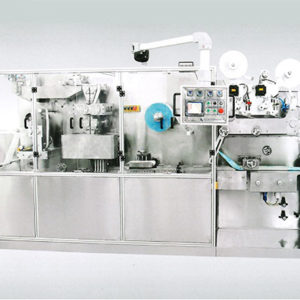
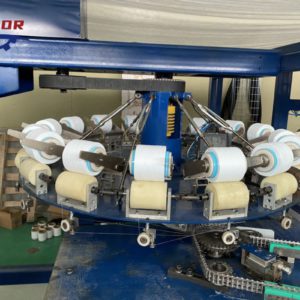
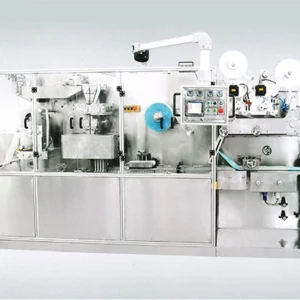
A semi-automatic sanitary pad production line involves several distinct machines and requires manual labor to transfer the product between stages. For example, the core-forming process might be automated, but an operator may need to manually place the formed cores onto the next machine for layering with the top sheet and back sheet. The final packaging is also often a manual or semi-automated process. These lines are characterized by a lower initial capital outlay and greater flexibility to produce a variety of product types in small batches. They are often an excellent entry point for a small business, as they lower the barrier to entry into the manufacturing space.
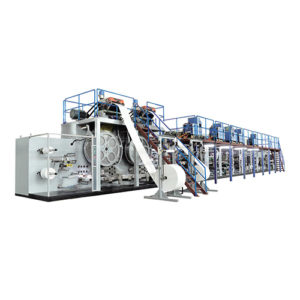
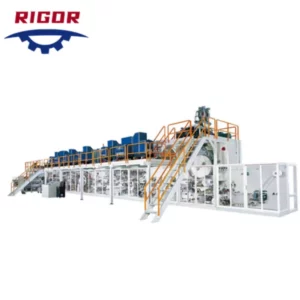
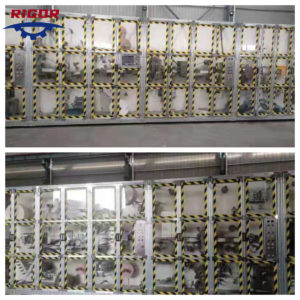
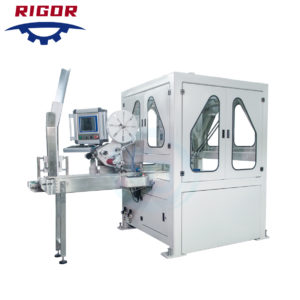
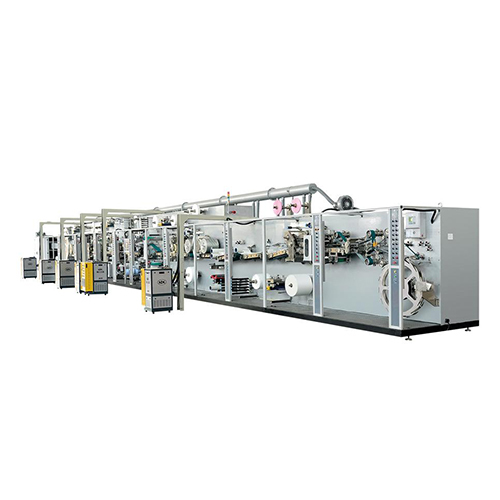
In stark contrast, a fully automatic line integrates all processes into a single, continuous, and synchronized system. From the initial pulverization of fluff pulp to the final three-dimensional packaging of the finished sanitary napkins, the entire sequence is controlled by a central PLC (Programmable Logic Controller). Human involvement is reduced to supervision, quality control checks, and loading raw materials. These machines operate at much higher speeds, offer unparalleled product consistency, and significantly reduce per-unit labor costs. The trade-off is a substantially higher initial investment and a greater need for skilled technicians to operate and maintain the complex system.
The table below provides a structured comparison to aid in this critical evaluation.
| Özellik | Yarı Otomatik Makine | Fully Automatic Machine |
|---|---|---|
| Initial Investment | Lower | Significantly Higher |
| Production Speed | Lower (e.g., 50-150 ppm) | Higher (e.g., 300-1000+ ppm) |
| İşgücü Gereksinimi | High (Multiple operators needed) | Low (Primarily supervisors/technicians) |
| Product Consistency | Değişken, operatör becerisine bağlı | Extremely High and Uniform |
| Operational Flexibility | High (Easier to switch between product types) | Lower (Optimized for long runs of one product) |
| Factory Space Needed | Can be more compact or spread out | Requires a long, linear footprint |
| Maintenance Skill | Basic mechanical skills often suffice | Requires skilled electromechanical technicians |
Deconstructing the Core Manufacturing Processes
To make an informed choice, it is beneficial to understand the fundamental stages of sanitary napkin production that these machines perform. Whether semi-automatic or fully automatic, any capable machine must execute these functions with precision.
- Pulp Pulverization: This is the starting point. Bales of treated fluff pulp are fed into a hammer mill, which defibrates the pulp into soft, fluffy fibers. The quality of this process dictates the comfort and absorption capacity of the pad's core.
- Core Formation: The fluffed pulp is then drawn by vacuum onto a forming drum, which is shaped like the absorbent core of the pad. At this stage, Super Absorbent Polymer (SAP) is typically mixed in. The evenness of this core is paramount for preventing leakage.
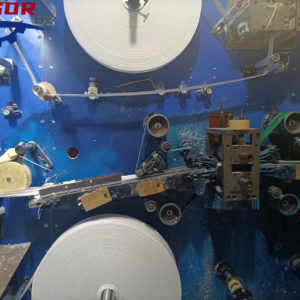
- Layering and Lamination: The formed core is placed onto the PE (polyethylene) back sheet. Simultaneously, the non-woven top sheet is applied over the core. These layers are then bonded together, often using heat, pressure, or adhesives.
- Die Cutting and Sealing: A rotary die cutter cuts the continuous laminated material into the individual pad shape (including wings, if applicable). The edges are simultaneously sealed to encapsulate the absorbent core.
- Adhesive Application: Strips of positioning adhesive (to stick to underwear) and release paper (to cover the adhesive) are applied to the back sheet.
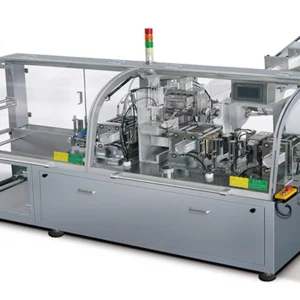
- Folding and Packaging: Finally, the individual pads are folded (typically tri-folded), sealed in individual wrappers, and then counted and fed into final bags or boxes.
In a fully automatic sanitary napkin machine for small business, these steps flow seamlessly in a single line. In a semi-automatic setup, there might be breaks where an operator moves a roll of material or a bin of processed cores from one station to the next. When you evaluate a manufacturer's offering, you should be asking them to explain, step-by-step, how their machine accomplishes each of these processes.
The Role of Technology in Product Quality
The technological sophistication of the machine directly impacts the quality of the final product. For example, advanced machines use vision systems and sensors to detect defects in real-time. If a core is formed improperly or a layer is misaligned, the machine can automatically reject that single pad without stopping the entire production run. This minimizes waste and ensures that only high-quality products reach the consumer.
Similarly, the method of SAP application is a key technological differentiator. Basic machines might simply "sprinkle" the SAP onto the pulp, leading to inconsistent distribution. More advanced systems use precise dosing units to ensure the exact amount of SAP is applied exactly where it is needed within the core, maximizing absorbency and preventing gel clumping. When you invest in a more technologically advanced machine, you are investing in consistency, waste reduction, and a superior end product. This is why the choice extends beyond mere speed; it is about the very character and reliability of the product you will put your brand name on.
The Lifeblood of Your Operation: Navigating the Raw Material Supply Chain
If the machine is the heart of your manufacturing plant, then the raw materials are its lifeblood. A steady, reliable, and cost-effective supply of high-quality materials is absolutely non-negotiable for success. The most advanced sanitary napkin machine for small business in the world is nothing more than an expensive sculpture if it sits idle waiting for a shipment of non-woven fabric or super absorbent polymer. For entrepreneurs in South America, the Middle East, or Africa, managing the supply chain can be one of the most complex puzzles to solve, often involving international logistics, import duties, and currency fluctuations. A proactive and strategic approach to sourcing is therefore not just an operational task; it is a core business function.
Understanding the constituent parts of a modern sanitary napkin is the first step. While it may seem like a simple product, it is a sophisticated composite of several specialized materials, each chosen for a specific function (SanitaryPadMachine.com, 2025). Let's dissect a typical pad to understand what you will need to source.
The Anatomy of a Sanitary Napkin
- Top Sheet (Non-woven Fabric): This is the layer that comes into contact with the skin. It must be soft, comfortable, and, most importantly, permeable, allowing fluid to pass through quickly into the absorbent core while remaining as dry as possible. Common materials include spunbond or perforated non-woven fabrics.
- Edinim Dağıtım Katmanı (ADL): Often a distinct layer right below the top sheet, the ADL's job is to rapidly acquire the fluid and distribute it evenly across the length of the absorbent core. This prevents localized saturation and improves the overall efficiency of the pad.
- Absorbent Core: This is the functional heart of the pad. It is almost always a blend of fluff pulp (for structure and initial absorption) and Süper Emici Polimer (SAP). SAP is a remarkable material—tiny, salt-like crystals that can absorb and retain hundreds of times their own weight in liquid, turning it into a stable gel.
- Back Sheet (PE Film): This is the impermeable bottom layer. Its sole purpose is to prevent leakage and protect clothing. It is typically made of a thin polyethylene (PE) film, which can be breathable or non-breathable.
- Adhesives: Two types of hot-melt adhesives are used. Construction adhesive bonds the various layers (non-woven, pulp, back sheet) together. Positioning adhesive is the strip on the back sheet that secures the pad to undergarments.
- Release Paper: This is the silicone-coated paper strip that covers the positioning adhesive and is peeled off before use. For pads with wings, there will be release paper on the wings as well.
- Individual Wrapper: The film used to wrap each individual pad for hygiene and portability.
Knowing these components is essential because you will need to find reliable suppliers for every single one of them. A disruption in the supply of even the humble release paper can bring your entire production to a halt.
Developing a Resilient Sourcing Strategy
Your sourcing strategy must balance three competing priorities: cost, quality, and reliability. It is a common mistake for new entrepreneurs to focus exclusively on finding the lowest possible price for each material. This can be a fatal error. A cheap batch of non-woven fabric might be abrasive, leading to customer complaints about comfort. A low-grade SAP might have poor retention, leading to "wet-back" and product failure. A bargain adhesive might not hold properly, causing the layers of the pad to separate. Product quality is determined by material quality (Haina Machinery Factory, 2023).
Here are the strategic questions you must ask:
- Local vs. International Sourcing: Can any of these materials be sourced locally or within your region? Local sourcing can drastically reduce shipping costs, lead times, and exposure to import tariffs and currency risk. However, international suppliers, particularly from Asia, are often the primary producers of specialized materials like SAP and high-quality non-wovens. A hybrid approach is often best: source what you can locally (perhaps packaging materials or even fluff pulp) and establish strong relationships with a few key international suppliers for the specialized components.
- Supplier Diversification: Relying on a single supplier for a critical material like SAP is extremely risky. What if their factory has a problem? What if their country of origin imposes a new export tax? It is wise to qualify at least two, and preferably three, suppliers for each of your most important materials. You may give the bulk of your business to a primary supplier to secure good pricing, but having a qualified backup supplier who has your specifications on file can save your business in a crisis.
- Quality Verification: Never take a supplier's claims at face value. Always request samples of their materials. Better yet, ask for a small trial roll that you can test on your machine once it's installed. You need to see how the material runs—does it cause static? Does it tear easily at high speeds? Does the adhesive gum up the machinery? You must also test the final product made with these materials. Conduct absorption tests, comfort tests, and adhesion tests. Your manufacturer can often provide guidance on the technical specifications required for each raw material to work optimally with their specific sanitary pad making equipment.
- Logistics and Inventory Management: For imported materials, you must understand the entire logistics chain. This includes shipping time (which can be weeks or months for sea freight), customs clearance procedures in your country, and inland transportation to your factory. This leads to the need for careful inventory management. You must hold enough safety stock of each material to cover the entire lead time for a new order, plus a buffer for unexpected delays. This ties up working capital, so it's a balancing act. A "Just-In-Time" inventory strategy is often too risky for a small business reliant on international supply chains.
The relationship with your suppliers is as important as the one with your machine manufacturer. They are your partners. Communicate openly with them about your production forecasts so they can plan their own capacity. Work with them to lock in pricing where possible and understand their quality control processes. A strong supply chain is a formidable competitive advantage, providing the stability and confidence needed to focus on growing your brand and serving your customers.
Beyond the Sticker Price: A Deep Dive into Total Cost of Ownership and ROI
A common cognitive error for entrepreneurs making their first major capital purchase is to fixate on the initial price tag of the equipment. The quoted price for a sanitary napkin machine for small business is but one chapter in a much longer financial story. A more sophisticated and sustainable approach requires an examination of the Total Cost of Ownership (TCO). TCO is a financial estimate intended to help buyers and owners determine the direct and indirect costs of a product or system. It is a management accounting concept that provides a far more accurate basis for assessing the true financial impact of the investment over its entire lifecycle (Diapermachines.com, 2025). Only by understanding the TCO can you then build a realistic model for your Return on Investment (ROI) and chart a viable path to profitability.
Think of it as buying a car. The sticker price is the starting point. But the true cost of owning that car over five years includes fuel, insurance, regular maintenance, tire replacements, and potential unexpected repairs. A car with a low purchase price but poor fuel economy and a reputation for unreliability may end up being far more expensive in the long run than a slightly more expensive but more efficient and dependable model. The exact same logic applies with industrial machinery.
Deconstructing the Total Cost of Ownership (TCO)
The TCO of your sanitary napkin machine can be broken down into several key components. A diligent entrepreneur will create a spreadsheet and model each of these costs to build a comprehensive financial picture.
-
Capital Expenditure (CapEx): This is the most obvious cost—the purchase price of the machine itself. This also includes shipping from the manufacturer to your port, marine insurance, import duties and taxes (which can be substantial and vary greatly by country), and the cost of inland transportation to your factory. These "landed costs" can add a significant percentage to the factory price.
-
Installation and Commissioning Costs: The machine does not simply appear ready to run. It requires professional installation. Will the manufacturer send their own technicians? This is highly recommended. You must account for the cost of their travel, accommodation, and service fees. You will also have factory preparation costs, such as ensuring you have a solid, level concrete floor and the correct electrical power supply (voltage, phase, and capacity) brought to the machine's location.
-
Operational Costs (OpEx): These are the ongoing costs of running the machine to produce pads.
- Energy: These are power-hungry machines. You need to know the machine's total power consumption (in kilowatts) and your local industrial electricity rate (in cost per kilowatt-hour) to calculate the hourly energy cost.
- Labor: This includes the salaries of the operators who run the machine, the technicians who maintain it, and the quality control personnel who inspect the output.
- Raw Materials: As discussed previously, this is typically the largest single component of your per-pad cost.
- Wear and Tear / Spare Parts: Machines have components that wear out with use—blades, bearings, belts, heating elements. Your manufacturer should provide a list of recommended spare parts to keep in stock. You should budget an annual amount for replacing these parts.
-
Maintenance and Training Costs: Proper training for your operators and maintenance staff is not an expense; it is an investment that prevents costly downtime and damage. The initial training is often included with commissioning, but you should budget for ongoing or advanced training. A preventive maintenance schedule is also vital. The cost here is primarily the time of your technicians and the cost of consumables like lubricants.
By summing the CapEx and the projected OpEx over a specific period (e.g., five years), you arrive at the TCO. When comparing two machines, the one with the lower purchase price may not always have the lower TCO. A more expensive, more efficient machine might consume less energy, produce less waste, and require less maintenance, making it the more economical choice over the long term.
Calculating Your Return on Investment (ROI)
With a clear picture of your costs, you can now build a model for your returns. ROI is the financial metric used to evaluate the profitability of an investment. The basic formula is:
ROI = (Net Profit / Total Investment) * 100
To use this, you must first determine your profitability. This requires a three-step calculation:
-
Calculate the Cost per Pad: Sum all your variable costs to produce one sanitary pad. This includes the cost of the non-woven fabric, pulp, SAP, PE film, adhesives, and release paper for a single pad, plus the allocated variable operational costs like the energy used to produce that one pad. For example:
- Raw Materials: $0.025
- Energy: $0.002
- Allocated Labor & Maintenance: $0.003
- Total Cost per Pad: $0.03
-
Determine Your Selling Price and Gross Margin: Based on your market research, you establish a selling price. Let's say you sell the pad to a distributor for $0.05.
- Selling Price: $0.05
- Cost per Pad: $0.03
- Gross Profit per Pad: $0.02
-
Project Your Annual Net Profit: Now, use your production capacity and sales forecast. If your sanitary napkin machine for small business produces 400 pads per minute and you run it for one 8-hour shift, 250 days a year, your annual production is 400 * 60 * 8 * 250 = 48,000,000 pads. If you project to sell 80% of this capacity in the first year (38.4 million pads), your annual gross profit is:
- 38,400,000 pads * $0.02/pad = $768,000
From this gross profit, you must subtract your annual fixed costs (salaries of administrative staff, rent, marketing, etc.) to find your net profit. Let's assume these are $268,000.
- Net Profit = $768,000 – $268,000 = $500,000
Now, you can calculate the ROI. If your total investment (the TCO's CapEx portion) was, for example, $400,000, your first-year ROI would be:
ROI = ($500,000 / $400,000) * 100 = 125%
This kind of detailed, conservative financial modeling is what separates hopeful dreamers from successful entrepreneurs. It transforms the purchase of a machine from a leap of faith into a calculated business decision. It allows you to understand your break-even point, to secure financing from banks or investors, and to manage your business with clarity and confidence.
The Unseen Asset: Assessing After-Sales Support as a Long-Term Partnership
In the calculus of acquiring a major piece of industrial equipment, the tangible factors—price, speed, technical specifications—are often given primacy. Yet, an intangible factor frequently proves to be of equal or even greater value over the lifespan of the machinery: the quality of the manufacturer's after-sales support. Viewing the transaction not as a simple sale but as the beginning of a long-term partnership is a profound shift in perspective. The manufacturer of your sanitary napkin machine for small business should be more than a vendor; they should be a vested partner in your operational success, a repository of technical expertise, and a reliable resource in times of need.
Imagine your new machine, the cornerstone of your business, is installed and running. Three months later, a critical sensor fails. Your production halts. Every hour of downtime means lost revenue, delayed orders, and potential damage to your brand's reputation. In this moment, the price you negotiated for the machine is irrelevant. The only thing that matters is how quickly you can get the problem solved. Will your manufacturer answer the phone? Can their technicians diagnose the problem remotely? How quickly can they ship you the replacement part? The answer to these questions defines the quality of their after-sales support and can make the difference between a minor hiccup and a business-threatening crisis.
Key Dimensions of High-Quality After-Sales Support
When evaluating potential manufacturers, you must probe beyond their sales pitch and investigate their support infrastructure with the same diligence you apply to the machine's mechanics. This support can be dissected into several key areas.
-
Installation and Commissioning: A reputable manufacturer will insist on sending their own experienced technicians to oversee the installation and commissioning of the machine. This is not a step to be economized. These technicians ensure the machine is assembled correctly, calibrated precisely, and running optimally from day one. They will "commission" the machine by running it with your chosen raw materials, fine-tuning the settings to maximize efficiency and minimize waste.
-
Operator and Maintenance Training: During the commissioning phase, the manufacturer's technicians should provide comprehensive training to your local team. This should be a hands-on process, not just a manual.
- Operator Training: Your operators must learn how to start and stop the machine safely, how to load raw materials, how to make minor adjustments during a run, how to spot common quality defects, and how to perform basic daily cleaning.
- Maintenance Training: Your technicians need a deeper level of instruction. They should be taught the principles of preventive maintenance, the lubrication schedule, how to diagnose common mechanical and electrical faults, and the proper procedure for replacing key wear parts. This training empowers your team to be self-sufficient in daily operations.
-
Warranty and Technical Support: Every machine should come with a warranty, typically for one year. You must understand exactly what the warranty covers. Does it cover all parts, or only non-wearing parts? Does it include the cost of labor for a technician to visit if needed? Beyond the warranty period, what kind of technical support is offered? Many top-tier manufacturers now offer 24/7 remote support. Through an internet connection to the machine's PLC, their engineers can often diagnose problems from their own offices, view error logs, and guide your local technicians through a fix in real-time. This can reduce a potential week of downtime to a matter of hours.
-
Availability of Spare and Wear Parts: As noted earlier, every machine has components that will eventually wear out. A responsible manufacturer will provide you with two things: a list of recommended spare parts to purchase with the machine and a commitment to maintaining a stock of all critical parts for many years. The speed at which they can ship a needed part is a vital metric. A manufacturer that can ship a part via international express courier within 24 hours is a far more valuable partner than one who has a multi-week lead time. Before you buy the machine, ask for the price list and availability of a few key wear parts, like cutting blades or heating elements, to test their system and responsiveness.
The Manufacturer as a Knowledge Partner
The best manufacturers see their relationship with you as symbiotic. Your success validates the quality of their equipment and can lead to future sales and referrals. They have accumulated years, sometimes decades, of experience by seeing their machines operate in dozens of different countries with hundreds of different raw materials. This knowledge is an invaluable resource for you.
Do not hesitate to ask them questions that go beyond the machine itself. They may have insights into raw material suppliers. They can offer advice on optimal factory layouts. They may have seen what product features are becoming popular in other emerging markets. When you encounter a production problem—for instance, the adhesive is not sticking properly in your hot, humid climate—they are the first people you should call. It is highly likely they have encountered and solved this exact problem for another customer in a similar environment.
Choosing a manufacturer, therefore, is an act of trust. You are trusting that they will not only deliver a high-quality machine but that they will also stand behind it, offering the support and expertise that will enable your sanitary napkin machine for small business to run productively and profitably for its entire lifespan. A lower price from a manufacturer with a poor reputation for support is a dangerous and often costly bargain. The peace of mind and operational stability that come from a strong partnership are assets that will never appear on a balance sheet but are fundamental to building a resilient enterprise. You can start by exploring the range of different models of sanitary pad machines from established suppliers to see how they present their commitment to partnership and support.
Sıkça Sorulan Sorular
What is the typical profit margin for a sanitary napkin business?
The profit margin can vary significantly based on factors like raw material costs, production efficiency, scale of operation, and the pricing strategy for your target market. However, a well-run small-scale operation can often achieve a gross profit margin of 40-60% per pad before accounting for fixed overheads. The key is to manage the supply chain effectively to control material costs and to run the machine efficiently to minimize waste and labor cost per unit.
How much factory space is required for a sanitary napkin machine?
The required space depends on the type of machine. A semi-automatic line might require a more fragmented space, but a fully automatic machine needs a long, linear footprint to accommodate the continuous production process. As a general guideline, for a medium-capacity fully automatic machine, you should plan for a space that is at least 25-30 meters long, 5-7 meters wide, and 4-5 meters high. This provides room for the machine itself, operator movement, raw material staging, and storage of finished goods.
Can one machine produce different sizes and types of sanitary pads?
Yes, most modern sanitary napkin machines are designed with a degree of flexibility. By changing certain molds and cutting tools, a single machine can typically produce pads of different lengths (e.g., day use, night use), thicknesses (ultra-thin, standard), and shapes (with or without wings). The changeover process can take a few hours, so it is most efficient to produce in long runs of a single product type before switching. You should discuss your desired product range with the manufacturer to ensure the machine you select has the necessary capabilities.
What are the main raw materials needed and are they difficult to source?
The primary raw materials are the non-woven top sheet, fluff pulp, Super Absorbent Polymer (SAP), a PE back sheet film, adhesives, and release paper. While fluff pulp may be available regionally, specialized materials like high-quality SAP and certain non-woven fabrics are often sourced internationally, primarily from Asia or Europe. Sourcing is not necessarily difficult, but it requires careful planning, supplier verification, and management of logistics and import procedures. Establishing relationships with reliable suppliers is a critical step in starting your business.
What is the difference between a semi-automatic and a fully automatic machine?
A semi-automatic line consists of several separate machines, and operators are needed to move the product from one stage to the next. It has a lower initial cost and is more flexible for small batches but has higher labor costs and lower output. A fully automatic machine integrates all processes into one continuous line with minimal human intervention. It offers high speed, high consistency, and low labor cost per unit but requires a much larger initial investment and skilled technicians for maintenance.
How much does a sanitary napkin machine for a small business typically cost?
The cost varies dramatically depending on the level of automation, production speed, and manufacturer. A basic semi-automatic line might start in the range of $50,000 to $100,000 USD. A medium-speed, fully automatic machine from a reputable manufacturer could range from $200,000 to $500,000 USD. High-speed lines with advanced features like automatic splicing and vision inspection systems can cost well over a million dollars. It is vital to get detailed quotations that specify exactly what is included.
How important is the manufacturer's after-sales service?
It is extremely important, arguably as important as the machine's price. Good after-sales service includes professional installation, comprehensive training for your staff, a solid warranty, responsive technical support (preferably 24/7 remote support), and fast, reliable access to spare parts. A strong support partnership with your manufacturer can save you from costly downtime and is a key factor in the long-term success of your operation.
Sonuç
The journey toward establishing a successful manufacturing enterprise in the feminine hygiene sector is a demanding yet potentially rewarding endeavor. The selection of a sanitary napkin machine for small business is not a simple procurement exercise; it is the foundational act upon which the entire structure of the business is built. As we have explored, this decision requires a holistic and disciplined intellectual process. It begins with an empathetic and data-driven analysis of the market, ensuring that the machine's capacity is a direct reflection of tangible opportunity, not abstract ambition. It then progresses to a nuanced evaluation of technology, weighing the trade-offs between semi-automatic and fully automatic systems to find the appropriate tool for your specific financial and operational context.
This process must be supported by a robust strategy for navigating the complexities of the raw material supply chain, recognizing that the quality of your inputs directly governs the quality of your output. Furthermore, a commitment to financial prudence demands that one look beyond the initial purchase price to the Total Cost of Ownership, building a realistic model for profitability and return on investment. Finally, the wisdom lies in recognizing the immense value of the unseen asset: a strong, supportive partnership with your machine manufacturer. Their expertise, training, and long-term support are indispensable resources that provide stability and resilience. By diligently addressing each of these five domains—market alignment, technological choice, supply chain management, financial modeling, and partnership assessment—the aspiring entrepreneur can move forward not with blind hope, but with a well-reasoned confidence in their ability to build a lasting and impactful business.
Referanslar
Diapermachines.com. (2025, September 5). The 2025 buyer's guide: 5 proven factors for your disposable diaper machine investment. https://www.diapermachines.com/2025/09/05/the-2025-buyers-guide-5-proven-factors-for-your-disposable-diaper-machine-investment/
Diapermachines.com. (2025, August 27). Your ultimate 7-step guide to launching a profitable business with a lady sanitary napkin machine. https://www.diapermachines.com/2025/08/27/your-ultimate-7-step-guide-to-launching-a-profitable-business-with-a-lady-sanitary-napkin-machine/
Haina Machinery Factory. (2023, October 16). Essential product knowledge for sanitary napkin manufacturing machine. Fjhaina.com. https://www.fjhaina.com/automaticdiapermachine_blog/865.html
SanitaryPadMachine.com. (2025, January 3). What are the raw materials for sanitary pads?. https://sanitarypadmachine.com/what-are-the-raw-materials-for-sanitary-pads/
SanitaryPadMachine.com. (2025, May 13). High-quality sanitary napkin raw materials with a complete supply chain. https://sanitarypadmachine.com/sanitary-napkin-raw-materials