Özet
The acquisition of a bag packing wet wipes machine represents a significant capital investment for manufacturers aiming to serve the expanding global hygiene market in 2025. This document provides a meticulous examination of the critical factors governing the selection, operation, and optimization of such machinery. It moves beyond a superficial feature list to explore the intricate mechanics of wipe production, from nonwoven material handling to the final hermetic sealing of the package. The analysis centers on a seven-point framework designed to guide prospective buyers through a comprehensive evaluation process. This includes defining production requirements, understanding core mechanical systems, evaluating automation levels for return on investment calculation, assessing material compatibility, and navigating the complexities of installation, training, and regulatory compliance. By adopting an interdisciplinary approach that integrates principles of mechanical engineering, material science, and economic analysis, this guide aims to equip decision-makers with the necessary knowledge to procure a machine that not only meets current output targets but also supports long-term strategic growth in diverse international markets.
Önemli Çıkarımlar
- Define your exact production needs before evaluating any machinery.
- Analyze the full mechanics, from fabric unwinding to final package sealing.
- Calculate the ROI of automation to justify your investment level.
- Ensure the bag packing wet wipes machine is compatible with your chosen materials.
- Prioritize suppliers who offer robust installation, training, and after-sales support.
- Integrate quality control systems to meet international compliance standards.
- Consider future scalability when selecting your machine's capacity and features.
İçindekiler
- An Actionable 7-Point Checklist for Your Next Bag Packing Wet Wipes Machine in 2025
- Point 1: Defining Your Production Needs and Strategic Scope
- Point 2: Deconstructing the Machine's Core Mechanical Systems
- Point 3: Mastering the Final Packaging and Sealing Process
- Point 4: Evaluating Automation Levels and Calculating Return on Investment
- Point 5: Ensuring Material Compatibility and Supply Chain Integrity
- Point 6: The Human Dimension: Installation, Training, and After-Sales Support
- Point 7: Navigating Quality Control and International Regulatory Compliance
- Sıkça Sorulan Sorular (SSS)
- A Final Thought on Strategic Investment
- Referanslar
An Actionable 7-Point Checklist for Your Next Bag Packing Wet Wipes Machine in 2025
Embarking on the purchase of industrial machinery is a journey of precision, foresight, and careful deliberation. For those in the hygiene products sector, the selection of a bag packing wet wipes machine is a pivotal decision that will shape production efficiency, product quality, and market competitiveness for years to come. In 2025, with markets in South America, Southeast Asia, and the Middle East showing robust growth, the demand for high-quality, conveniently packaged wet wipes is accelerating. Meeting this demand requires more than just capital; it requires a deep, nuanced understanding of the technology that transforms raw materials into finished goods. This guide is structured as a comprehensive seven-point checklist, a methodical approach designed to illuminate the path for manufacturers. We will move through each point not as a mere list of items to tick off, but as a series of investigative stages, each building upon the last to create a complete picture of what constitutes a wise and profitable investment.
Point 1: Defining Your Production Needs and Strategic Scope
Before one can appraise the merits of any specific machine, one must first develop a clear and detailed portrait of one's own operational requirements. A machine that is perfect for a small, niche startup will be wholly inadequate for a large-scale producer supplying major retail chains. Conversely, over-investing in capacity that will go unused is a drain on capital that could be better allocated elsewhere. This initial stage of self-assessment is foundational. Think of it as an architect drawing a blueprint before ordering steel and concrete. Without the blueprint, the structure is destined for failure.
Calculating Your Target Production Output
The most fundamental metric in this assessment is production output. This is typically measured in two ways: wipes per minute and packs per minute. It is vital to understand the relationship between these two figures. A machine might be advertised with a very high "wipes per minute" capacity, but if the stacking and packing modules are slower, that high speed is irrelevant. The true bottleneck determines your effective output.
Consider your market. Are you aiming to produce 10-count travel packs or 120-count family packs? A machine producing 80-count packs at a rate of 60 packs per minute is delivering 4,800 wipes per minute to the final packaging stage. A different machine producing 20-count packs at 100 packs per minute is delivering only 2,000 wipes per minute. You must begin with your commercial goals. What volume of which specific products do you need to ship each month to be profitable? Work backward from that sales target to determine the required packs per hour, then per minute. Always factor in a buffer for scheduled maintenance and potential downtime. A good rule of thumb is to calculate your needs based on 80% operational efficiency.
Specifying Wipe Dimensions and Fold Types
The physical characteristics of the wipe itself will dictate the necessary machine configuration. What are the dimensions of a single unfolded wipe? What about the folded dimensions? These parameters determine the size of the folding boards, the width of the cutting blade, and the dimensions of the stacking chamber.
The type of fold is equally significant. A simple "Z" fold, where each wipe is interfolded with the next for pop-up dispensing, is the most common. A "C" fold is simpler, with each wipe folded individually. More complex folds, like a "W" fold, may be required for specific applications or larger wipes. Each fold type requires a specific mechanical folding apparatus. A versatile bag packing wet wipes machine will allow for adjustments or even module changes to accommodate different fold types, but this versatility often comes at a higher cost. It is prudent to define your primary fold type and consider others as secondary, optional features.
Determining Pack Count Versatility
A successful business must adapt to market demands. Today, you might focus on 80-count packs. Tomorrow, a major client might request a promotional 15-count travel pack. Can your machine handle this switch? The ability to adjust the number of wipes per stack is a key feature. This is typically controlled via the machine's PLC (Programmable Logic Controller).
The process involves adjusting the counter that tracks each wipe as it enters the stacking unit. Once the target count is reached, the stack is pushed into the packaging section. Ask potential suppliers about the range of pack counts their machine can handle (e.g., 10 to 120 wipes). More importantly, inquire about the changeover time. How long does it take an operator to adjust the machine from an 80-count setting to a 15-count setting? A changeover that takes hours can negate the benefits of versatility by creating excessive downtime. A machine with a user-friendly interface and servo-driven adjustments can reduce this time to mere minutes.
Projecting Future Growth and Scalability
Your investment in 2025 should serve your business not just for this year, but for 2030 and beyond. This requires an element of forecasting. Where do you see your business in five years? Will you need to double your production capacity?
When evaluating a bag packing wet wipes machine, consider its potential for upgrades. Is the machine's frame and core drive system robust enough to handle a future speed increase? Can additional modules, such as an automatic lid applicator or a case packer, be integrated later? Choosing a modular design can be a wise strategy. You might purchase a machine that meets your current needs but is built on a platform that allows for future expansion. This approach protects your initial investment while providing a clear path for growth without requiring a complete replacement of the production line.
Point 2: Deconstructing the Machine's Core Mechanical Systems
Having established a clear blueprint of your needs, we can now turn our attention to the machine itself. A bag packing wet wipes machine is not a single entity but a symphony of interconnected systems, each performing a precise task in a rapid sequence. Understanding these individual systems allows you to assess the quality, durability, and sophistication of the overall design. It is like a master watchmaker examining the gears and springs of a timepiece to judge its quality.
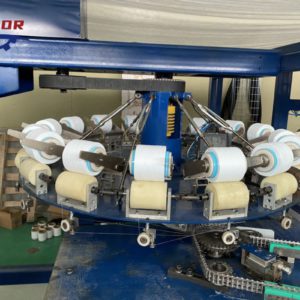
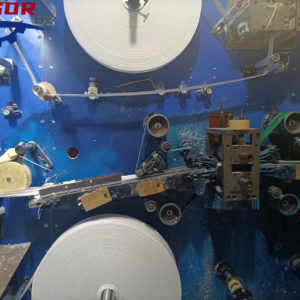
The Nonwoven Unwinding Station: Tension Control is Key
The entire process begins here. A large, heavy parent roll of nonwoven fabric is mounted onto a spindle. The machine then draws this fabric into the processing line. The single most important factor at this stage is tension control. Imagine trying to write on a piece of paper that is either sagging or stretched too tightly; the result would be poor. Similarly, the nonwoven web must be kept under constant, precise tension.
If the tension is too low, the fabric can sag, leading to inconsistent folding and cutting. If it is too high, the fabric can stretch, which alters its properties and can even cause it to tear, resulting in a line stoppage. High-quality machines use automatic tension control systems, often employing sensors and servo motors that continuously adjust the unwinding speed to maintain a preset tension level, regardless of the roll's diameter. Some machines also feature an automatic splicing unit, which joins the end of an expiring roll to the beginning of a new one without stopping the machine, dramatically improving uptime.
A Look at Folding Systems: From Simple to Complex
Once unwound, the flat web of fabric enters the folding unit. This is a purely mechanical process that uses a series of shaped plates and rollers to create the desired fold. The complexity of this unit depends on the fold type. For a Z-fold, the fabric is guided over plates that fold it back and forth, creating the interlocked stack that allows for pop-up dispensing.
The quality of the folding is paramount for the end-user's experience. A poorly folded wipe may not dispense correctly, causing consumer frustration. When inspecting a machine, pay close attention to the construction of the folding unit. Are the components made from durable, well-finished stainless steel to prevent snagging? Are the adjustments for different wipe widths easy to perform and precise? The precision of the folding directly impacts the neatness of the final stack and its ability to fit correctly into the packaging.
The Cutting Module: Rotary vs. Ultrasonic Technologies
After folding, the continuous, folded web of fabric must be cut into individual wipes. This is a high-speed, high-repetition action, and the quality of the cut is vital. A frayed or incomplete cut can ruin the aesthetic of the wipe and cause issues in the stacking process. Two main technologies dominate this area.
| Özellik | Rotary Cutting | Ultrasonic Cutting |
|---|---|---|
| Mechanism | A hardened steel blade rotates against an anvil cylinder, shearing the fabric like scissors. | A high-frequency vibrating blade (sonotrode) melts through the fabric. |
| Cut Quality | Can sometimes leave a slightly fibrous or compressed edge, depending on blade sharpness. | Produces a clean, sealed edge by melting the synthetic fibers. Prevents fraying. |
| Blade Lifespan | Blades require regular sharpening or replacement, representing an ongoing operational cost. | The sonotrode and anvil have a very long lifespan with minimal wear. |
| Material Suitability | Works well with most nonwovens, but can struggle with very thin or stretchy materials. | Excellent for synthetic or blended nonwovens (e.g., polyester, polypropylene). Less effective on 100% natural fibers like cotton. |
| Initial Cost | Generally lower initial investment. | Higher initial investment for the ultrasonic generator and components. |
| Noise Level | Can be mechanically noisy due to the high-speed shearing action. | Typically quieter, with a high-frequency hum. |
As the table illustrates, the choice depends on your priorities. If your primary material is a synthetic blend and you prioritize a perfectly clean, fray-free edge with lower long-term maintenance, ultrasonic cutting is a superior option. If you are working with a variety of materials, including natural fibers, and are more sensitive to the initial capital cost, a high-quality rotary cutter can be a very effective solution.
The Wetting System: Ensuring Uniform Saturation
This is where the "wet" in "wet wipe" happens. After being cut, the individual wipes are transported through a wetting system. The goal is simple: to apply a precise amount of liquid solution to every single wipe, ensuring uniform saturation from the first wipe in the pack to the last. Uneven wetting leads to consumer complaints of wipes being too dry or too drippy.
Most modern machines use a spray or drip manifold system. A series of nozzles are positioned above the path of the wipes, dispensing the liquid as they pass underneath. The key to a good system is control. The machine's PLC should allow the operator to precisely adjust the liquid volume. This is often linked to the machine's speed; if the machine speeds up, the liquid flow rate should increase proportionally. The system should also be designed for easy cleaning to prevent contamination and biofilm growth, with stainless steel construction and easily accessible components. Some advanced systems use a "wetting by stack" method, where the dry stack of wipes is formed first, then the liquid is applied to the stack, allowing it to wick through. This can achieve excellent uniformity but requires a more complex setup.
Stacking and Counting: The Foundation of the Pack
Once cut and wetted, the individual wipes must be collected into a neat stack of a predetermined quantity. A counting sensor (often an optical sensor) tracks each wipe as it is delivered to the stacking unit. The stacking mechanism itself can vary. Some use a simple "bomb-bay door" system, where wipes fall onto retractable plates. Once the count is reached, the plates open, dropping the stack onto a conveyor below.
More advanced systems use a servo-driven "pusher" or "elevator" mechanism. This provides a more controlled and gentle handling of the stack, which is especially important for delicate or very wet wipes. This controlled motion results in a neater, more compressed stack, which is easier to insert into the packaging. The precision of the stacking and counting is non-negotiable; an incorrect count in the final package is a direct quality failure.
Point 3: Mastering the Final Packaging and Sealing Process
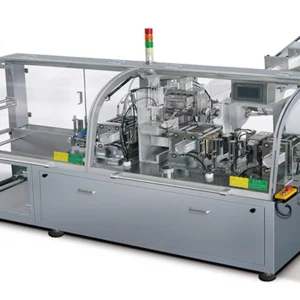
The most sophisticated wipe production system is meaningless if the final package fails to protect the product. The bag packing section of the machine takes the neat stack of wet wipes and encloses it in a flexible film package that must be airtight, durable, and aesthetically pleasing. This process, often called flow-wrapping, is a marvel of high-speed coordination.
Film Feeding and Registration: The Role of Photo-Eye Sensors
The packaging process starts with a roll of printed flexible film. Similar to the nonwoven unwinding, this film is pulled into the machine under controlled tension. If the film is printed with branding, logos, or other information, its position must be precisely controlled so that the graphics appear in the correct place on each finished pack.
This is achieved using a photo-eye sensor. The sensor reads a small, printed mark on the film called an "eye mark" or "registration mark." By detecting this mark, the machine's PLC knows the exact position of the printed pattern. It can then speed up or slow down the film feed to ensure that the sealing and cutting operations happen in perfect synchronization with the graphics. A machine with a high-quality, color-sensitive photo-eye sensor will be able to handle a wide variety of film designs and colors reliably.
The Former: Shaping the Film into a Bag
The flat film now travels to the "forming box" or "former." This is a specially shaped metal piece that guides the flat film and folds it around into a continuous tube. The stack of wet wipes is pushed into this tube of film at the exact right moment. The design of the former is specific to the cross-sectional dimensions of the wipe stack. For this reason, manufacturers who want to produce packs of very different sizes may need multiple, interchangeable formers. The ease with which these formers can be swapped out is an important consideration for operational flexibility.
Sealing Technologies: Heat Sealing vs. Ultrasonic Sealing
Once the wipes are inside the film tube, the package must be sealed. This involves creating two seals: a longitudinal seal along the length of the pack (the "fin seal") and two transverse seals at the front and back (the "end seals"). These seals must be strong and hermetic to prevent the liquid from leaking out and to stop air from getting in, which would dry out the wipes.
The most common method is heat sealing. Heated wheels or jaws press the film layers together, melting the sealant layer of the film to create a bond. The key parameters here are temperature, pressure, and time. A good machine allows for precise control over all three to adapt to different film types and thicknesses. The alternative, ultrasonic sealing, uses high-frequency vibrations to generate localized heat at the molecular level, creating a seal without applying significant external heat. This can be advantageous for heat-sensitive products and can create stronger, narrower seals, but it represents a higher initial investment.
The Lid Applicator: An Optional but Valuable Module
For many types of wet wipes, especially those in larger count packs, a rigid plastic resealable lid is a major consumer convenience feature. This lid is applied to the top of the flexible pack. A lid application module can be integrated into the bag packing wet wipes machine.
This system typically includes a bowl feeder or magazine to orient and feed the lids, a hot-melt glue system to apply a precise pattern of adhesive to the pack's surface, and a robotic arm or pick-and-place unit to accurately position the lid onto the glue. The integration of this module must be seamless. The timing has to be perfect, and the placement accuracy must be within a fraction of a millimeter to ensure a good seal and a professional appearance. While optional, for many markets, the ability to produce packs with resealable lids is a significant competitive advantage.
Date Coding and Printing Systems
The final step before the package is complete is to print variable information, such as the manufacturing date, expiration date, and batch code. This is a legal requirement in most jurisdictions and is essential for traceability. This is typically done with a thermal transfer overprinter (TTO) or a continuous inkjet (CIJ) printer. These printers are integrated into the flow-wrapping line and print directly onto the film just before or after sealing. The clarity and durability of this print are vital. The machine's design should provide a stable, vibration-free location for the printer to ensure high-quality coding on every pack.
Point 4: Evaluating Automation Levels and Calculating Return on Investment
The decision between a semi-automatic and a fully automatic production line is one of the most significant a manufacturer will make. It is not simply a matter of choosing the most advanced technology; it is a strategic economic decision based on labor costs, production volume, and long-term goals. A thorough analysis of the return on investment (ROI) is not just advisable; it is a necessity.
Semi-Automatic vs. Fully Automatic Lines: A Cost-Benefit Analysis
Let's clarify the distinction. A fully automatic line, as the name suggests, handles the entire process from raw material to finished, sealed pack with minimal human intervention. An operator's role is primarily to load raw materials (nonwoven rolls, film rolls, lids) and to monitor the process via a control panel. A semi-automatic line, in contrast, will have one or more stages that require manual labor. For example, a machine might fold, cut, and wet the wipes automatically, but the stacks might need to be manually placed into pre-made bags, which are then sealed by a separate machine.
| Aspect | Semi-Automatic Line | Fully Automatic Line |
|---|---|---|
| Initial Investment | Significantly lower capital outlay. More accessible for startups and smaller enterprises. | High capital investment. Requires substantial financial planning. |
| İşgücü Gereksinimi | Requires multiple operators for tasks like stacking, transferring, and packing. Higher ongoing labor costs. | Requires very few operators, primarily for supervision and material loading. Lower labor costs. |
| Production Speed | Lower output, typically limited by the speed of the human operators. | Very high output, capable of running continuously at speeds of 60-120 packs per minute or more. |
| Consistency & Quality | Prone to human error, leading to variations in pack count, placement, and seal quality. | Extremely high consistency. Every pack is produced to the same precise specifications. |
| Flexibility | Can be more flexible for very small, custom runs, but changeovers can be complex. | Designed for high-volume production. Changeovers are often automated but optimized for efficiency over frequent changes. |
| Footprint | May consist of several disconnected machines, potentially requiring more floor space in total. | A single, integrated line that is often more compact for its output level. |
The choice is a calculation. In regions where labor costs are high, a fully automatic line's ability to reduce headcount can lead to a rapid ROI. In regions with lower labor costs, the higher capital cost of full automation may be harder to justify, making a semi-automatic approach more attractive initially. This is where a deep understanding of your specific market—be it in South America, Russia, or South Africa—becomes indispensable.
Calculating Your Return on Investment: A Step-by-Step Guide
ROI is the metric that translates a machine's features into financial sense. The basic formula is: ROI = (Net Profit / Cost of Investment) x 100. But for a machine, the calculation is more nuanced.
- Calculate the Total Cost of Investment: This is not just the sticker price of the machine. It must include shipping, installation, any necessary facility modifications (e.g., electrical upgrades, compressed air lines), and initial training costs.
- Estimate the Annual Gross Profit: This is your projected annual revenue from the wipes produced by the machine minus the annual cost of raw materials (nonwovens, film, liquid).
- Calculate the Annual Operating Costs: This is the crucial part. Include the annual salaries of the operators required for the new machine. Add the annual cost of energy consumption, routine maintenance (lubricants, filters), and predictable spare parts (like rotary cutting blades).
- Determine the Annual Net Profit: Subtract the annual operating costs (Step 3) from the annual gross profit (Step 2).
- Calculate the Payback Period: The simplest way to view ROI is the payback period: Cost of Investment / Annual Net Profit. This tells you how many years it will take for the machine to pay for itself.
Let's imagine a scenario. A fully automatic machine costs $300,000. It replaces a manual process that required 6 workers with a single supervising operator, saving 5 salaries at $20,000 each, for an annual labor saving of $100,000. It also increases output, generating an additional $50,000 in net profit from increased sales. The total annual gain is $150,000. The payback period would be $300,000 / $150,000 = 2 years. This kind of clear calculation moves the decision from the realm of technical preference to that of sound financial strategy. Exploring a range of automated wet wipes packaging solutions allows you to compare different levels of automation against your specific financial model.
The Impact of a Bag Packing Wet Wipes Machine on Labor Costs
The reduction in direct labor is often the most significant financial benefit of automation. A fully automatic bag packing wet wipes machine can perform the work of 5, 10, or even more manual laborers. This not only reduces salary expenses but also mitigates challenges related to labor shortages, training, and human error. However, it also changes the nature of the labor required. You will need fewer unskilled workers and more skilled technicians who can operate, troubleshoot, and maintain a complex piece of electromechanical equipment. Investing in training for your existing staff or hiring skilled technicians is a hidden but vital part of the overall investment.
Considering Energy Consumption and Operational Efficiency
Modern machines are increasingly designed with energy efficiency in mind. The use of high-efficiency servo motors instead of older mechanical clutch-and-brake systems or pneumatic actuators can significantly reduce electricity consumption. Servo motors only draw significant power when they are moving, whereas pneumatic systems require a compressor to run continuously. Ask potential suppliers for data on the machine's power consumption (measured in kW). A slightly more expensive machine that uses less energy can result in substantial savings over its lifespan, directly improving your ROI. Operational efficiency also includes factors like waste reduction. A well-tuned machine with precise cutting and registration will produce less scrap material, saving money on raw materials.
Point 5: Ensuring Material Compatibility and Supply Chain Integrity
A bag packing wet wipes machine is only as good as the materials it runs. The machine, the nonwoven fabric, the packaging film, and the liquid solution form an integrated system. A lack of compatibility between any of these elements can lead to production nightmares, from constant line stoppages to catastrophic product failures. A wise manufacturer thinks not just about the machine, but about the entire supply chain that feeds it.
Choosing the Right Nonwoven Fabric
Nonwoven fabrics are the heart of the wipe. They are engineered materials, and their properties can vary dramatically. The main types used for wet wipes are spunlace and airlaid.
- Spunlace: This fabric is created by entangling fibers (like polyester, viscose, or cotton) using high-pressure water jets. The result is a soft, strong, and cloth-like material. It is excellent for personal care wipes.
- Airlaid: This fabric is formed by mixing wood pulp with a binder and then heat-treating it. It is known for its exceptional absorbency but is generally less soft and strong than spunlace.
The choice of fabric impacts the machine. A stretchy spunlace fabric requires a more sophisticated tension control system. A dusty airlaid fabric might require more frequent cleaning of machine sensors. It is essential to test your chosen fabric on a potential machine before purchase. A reputable supplier should be willing to conduct a trial run with your materials.
Selecting Packaging Film: Barrier Properties and Sealability
The packaging film has two primary jobs: to provide a barrier against moisture loss and contamination, and to run efficiently on the machine. Most wet wipe packaging is a multi-layer laminate, often composed of PET (polyethylene terephthalate) for stiffness and print quality, a barrier layer like aluminum or metallized PET, and a sealant layer like PE (polyethylene).
The film's thickness (measured in microns), stiffness, and coefficient of friction all affect how it behaves on the machine. A film that is too stiff may not form well around the former. A film with the wrong sealant layer may not seal properly at the machine's operating temperature and speed. You must work with your film supplier and your machine supplier in tandem. Provide the machine manufacturer with the detailed technical specifications of your chosen film to ensure compatibility. Changing film suppliers later may require a complete recalibration of the machine's sealing parameters.
Formulation of the Wetting Liquid: pH, Preservatives, and Compatibility
The liquid solution is a complex chemical formulation. It contains water, surfactants (for cleaning), humectants (for moisturizing), preservatives (to prevent microbial growth), and often fragrances or active ingredients. The formulation must be stable and effective, but it also must be compatible with the machine.
Certain aggressive ingredients or extreme pH levels could potentially corrode metallic parts of the machine over time. For this reason, all liquid-contact parts of a high-quality bag packing wet wipes machine—the tank, pumps, tubing, and nozzles—must be made from high-grade stainless steel (typically 316L stainless steel) or other resistant polymers. Before finalizing your liquid formula, discuss its composition with the machine manufacturer to preempt any long-term compatibility issues.
Sourcing and Supply Chain Considerations for Target Markets
Your supply chain for these raw materials must be robust, especially when operating in diverse global markets. Do you have reliable suppliers for nonwovens, film, and liquid chemicals in or near your target region? Shipping heavy rolls of fabric or film across continents can be expensive and subject to delays.
Developing local or regional supply chains can reduce costs, shorten lead times, and improve your business's agility. When you consider a machine, also consider the availability of the materials it requires in your operational theater. A machine that is optimized for a very specific type of film that is only available from a single supplier in Europe might be a risky choice for a factory in Southeast Asia. A more flexible machine that can handle films from multiple suppliers might be a more resilient long-term investment.
Point 6: The Human Dimension: Installation, Training, and After-Sales Support
A sophisticated machine is just an inert collection of metal and wires until it is properly installed, and its operators are properly trained. The relationship with your machine supplier should not end when the payment is made; it should be a long-term partnership. The quality of the after-sales support is as important as the quality of the machine itself.
The Supplier's Role in Installation and Commissioning
The arrival of a new bag packing wet wipes machine is an exciting but critical moment. The installation process is far more than simply plugging it in. A reputable supplier will send one or more skilled technicians to your facility. Their job is to oversee the unloading and positioning of the machine, perform the mechanical and electrical connections, and then systematically test every single function.
This process is called commissioning. The technicians will run the machine, first without materials, then with materials, to fine-tune all the settings. They will adjust the tension, calibrate the sensors, set the sealing temperatures, and ensure that the machine is capable of producing your specific product at the agreed-upon speed and quality. This process can take several days or even weeks, and it is vital that your own team works alongside the supplier's technicians to learn from them.
Operator Training: Beyond Pushing the Start Button
Effective training is the key to unlocking the full potential of your new machine. An untrained or poorly trained operator can inadvertently cause downtime, produce waste, or even damage the equipment. Comprehensive training should cover several areas:
- Basic Operation: Starting and stopping the machine, loading raw materials, and navigating the HMI (Human-Machine Interface) control panel.
- Changeovers: How to safely and efficiently change the machine's settings to produce a different product (e.g., changing the pack count, wipe size, or packaging film).
- Troubleshooting: How to identify the cause of common problems (e.g., a film jam, a bad seal, a misfeed) and how to resolve them. The machine's HMI should provide clear error messages to assist with this.
- Basic Maintenance: Daily and weekly cleaning procedures, lubrication points, and simple inspections that operators can perform.
Training should not be a one-time event. It is an ongoing process. Good suppliers provide detailed manuals and may offer access to online resources or follow-up training sessions. Investing in your people's skills is investing in your machine's productivity. A well-maintained machine operated by skilled personnel is the foundation of a successful production facility, and a supplier offering a comprehensive range of wet wipe machines should also provide a comprehensive training program.
A Deep Dive into Preventive Maintenance Schedules
A bag packing wet wipes machine is a high-performance athlete; it needs a regular health regimen to stay in peak condition. This is called preventive maintenance. It involves a schedule of regular inspections, cleaning, lubrication, and replacement of wear parts before they fail. Waiting for a part to break before replacing it (reactive maintenance) is a recipe for extended, unplanned downtime.
The supplier should provide a detailed preventive maintenance schedule. This will specify tasks to be done daily, weekly, monthly, and annually.
- Daily: Cleaning sensors, removing fabric dust and film scraps.
- Weekly: Inspecting belts and chains for proper tension, lubricating key points.
- Monthly: Checking the sharpness of cutting blades, inspecting the condition of heating elements.
- Annually: A more thorough inspection, potentially involving the replacement of major wear components like bearings or motors.
Adhering to this schedule is one of the most effective ways to maximize the machine's lifespan and ensure consistent performance.
The Value of Long-Term Technical Support and Spare Parts Availability
Even with the best maintenance, problems can occur. A complex machine can have thousands of parts, and eventually, something will wear out or fail. When this happens, the speed and quality of the supplier's technical support are paramount. How quickly can you get a qualified technician on the phone or on a video call to help diagnose the problem? If a part needs to be replaced, how quickly can the supplier ship it to you?
Before purchasing, inquire about the supplier's support structure. Do they have support staff who speak your language? Do they have regional service centers or partners that can provide faster on-site support? Ask for a list of recommended spare parts to keep in your own inventory. Having critical components like sensors, belts, and heating elements on hand can turn a potential multi-day shutdown into a minor, hour-long repair. The availability of spare parts for the next 10-15 years is a testament to the supplier's commitment to their products and customers.
Point 7: Navigating Quality Control and International Regulatory Compliance
Producing a wet wipe is one thing; producing a safe, effective, and legally compliant wet wipe is another entirely. Quality control is not an afterthought; it must be integrated directly into the production process. Furthermore, when selling into international markets, you must be prepared to meet a variety of different regulatory standards. Your bag packing wet wipes machine can be a powerful tool in achieving both of these goals.
Integrating In-Line Vision Systems for Defect Detection
The human eye is remarkable, but it cannot inspect hundreds of wipes and packs per minute with perfect accuracy. This is where machine vision systems come in. A vision system uses a high-speed camera and sophisticated software to automatically inspect products as they are being made.
An in-line vision system can be integrated into your wet wipes line to perform numerous checks:
- Wipe Inspection: Check for stains, tears, or incorrect folding on the nonwoven fabric.
- Lid Placement: Verify that the plastic lid is present and correctly positioned on the pack.
- Date Code Verification: Use OCR (Optical Character Recognition) to read the printed date and batch code, ensuring it is present, correct, and legible.
- Seal Integrity: Inspect the end seals for any channels or defects that could cause leaks.
Any product that fails these inspections can be automatically rejected from the line, preventing it from ever reaching a consumer. This not only protects your brand's reputation but also provides valuable data that can help you identify and fix the root cause of the defects.
Metal Detection and Checkweighers: Final Safety Gates
After the package is sealed, it should pass through two final safety checks.
- Metal Detector: This is a tunnel that the finished pack passes through. It creates an electromagnetic field and can detect even minuscule fragments of ferrous, non-ferrous, or stainless steel metal that might have accidentally contaminated the product during the production process. If metal is detected, the pack is immediately rejected. This is a critical safety measure, especially for personal care products.
- Checkweigher: This is a high-speed scale integrated into the conveyor line. It weighs every single pack as it passes over. Any pack that is underweight (indicating missing wipes or insufficient liquid) or overweight (indicating excess liquid or an extra wipe) is automatically rejected. This ensures that every customer receives exactly what they paid for and helps to control material costs.
Understanding GMP (Good Manufacturing Practices) in Wipe Production
Wet wipes, especially those for personal care or baby care, are often regulated as cosmetics or even over-the-counter drugs in many regions. This means their production must adhere to Good Manufacturing Practices (GMP). GMP is a system of principles and procedures that ensures products are consistently produced and controlled according to quality standards.
Your bag packing wet wipes machine should be designed to facilitate GMP compliance. This includes features like:
- Hygienic Design: The machine should be made from materials that are easy to clean and sanitize, like stainless steel. It should have smooth surfaces and avoid nooks and crannies where bacteria could grow.
- Traceability: The machine's control system, combined with the date coder, should make it easy to track which raw material batches were used to produce any given finished pack.
- Process Control: The ability to precisely control, monitor, and record critical process parameters (like sealing temperature and liquid volume) is a core tenet of GMP.
Navigating Regional Standards
If you plan to export to South America, the Middle East, or Southeast Asia, you must be aware of their specific regulatory requirements. For example, Brazil's health agency, ANVISA, has detailed regulations for cosmetic products. Saudi Arabia requires a SASO Certificate of Conformity for many imported goods. These regulations may dictate specific labeling requirements, approved preservative systems, or documentation standards.
While the machine itself is not directly regulated, its output is. Therefore, choosing a machine that provides the quality control and traceability features discussed above will make it significantly easier to generate the documentation and proof of quality required to enter these lucrative but demanding markets. A supplier with experience in these regions can be an invaluable resource, offering guidance on the machine features that are most important for achieving compliance.
Sıkça Sorulan Sorular (SSS)
What is the typical production output of a bag packing wet wipes machine?
Output varies significantly based on the level of automation and the specific product. Entry-level semi-automatic systems might produce 20-40 packs per minute. Standard fully automatic machines typically operate in the range of 60-100 packs per minute. High-speed, premium lines can exceed 120 packs per minute, especially for lower-count packs. The output is always a function of pack size, wipe count, and machine design.
How much factory floor space is required for a full production line?
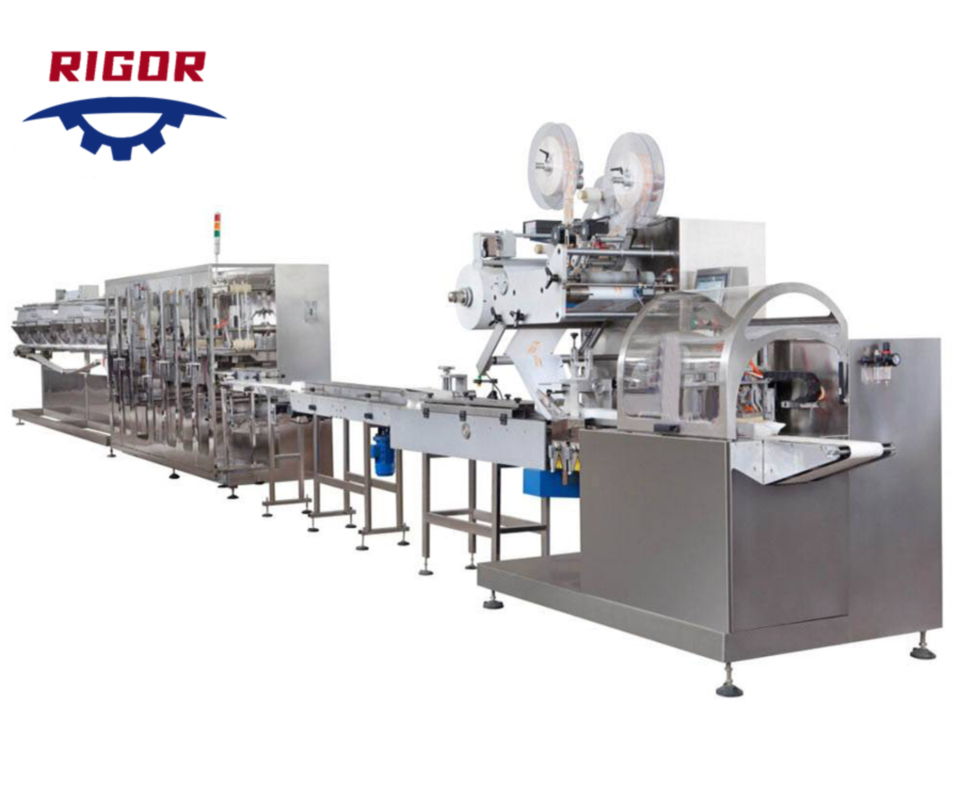
A complete, fully automatic line from nonwoven unwinding to final packaging is a substantial piece of equipment. A typical line might be 10-15 meters long and 3-4 meters wide. You must also account for space around the machine for operator access, maintenance activities, and staging of raw materials (like parent rolls of fabric and film) and finished goods. A clear ceiling height of at least 3-4 meters is also generally required.
Can a single machine handle different wipe sizes and pack counts?
Most modern machines offer a degree of flexibility. Changing the pack count (e.g., from 80 wipes to 100 wipes) is usually a simple adjustment in the machine's PLC software. Changing the wipe's cut length is also typically an adjustable parameter. However, changing the folded width of the wipe or the cross-section of the pack is more involved and may require mechanical adjustments or changing out parts like the folding unit or the packaging former. The "changeover time" for these adjustments is a key performance metric to discuss with suppliers.
What are the most common maintenance tasks for these machines?
Daily maintenance primarily involves cleaning sensors, removing dust and debris, and general inspection. Weekly tasks often include checking belt and chain tension and lubricating specified points according to the manufacturer's lubrication chart. Monthly or quarterly tasks are more involved and might include sharpening or replacing rotary cutting blades, inspecting heating elements and thermocouples in the sealing system, and checking for wear on belts and bearings. Adhering to the preventive maintenance schedule provided by the manufacturer is the best way to ensure reliability.
How do you ensure the liquid solution does not leak from the package?
Preventing leaks is a function of two things: packaging material and seal integrity. The packaging film must have a sufficient barrier layer to prevent moisture from escaping. The machine's sealing system must create a complete, hermetic seal. This is achieved by precisely controlling the sealing temperature, pressure, and dwell time. In-line quality control systems, like vision inspection and checkweighers, help to identify and reject any packs with faulty seals before they leave the factory.
What is the difference between a flow-pack machine and a full wet wipes line?
A flow-pack (or flow-wrap) machine is just the packaging part of the line. It takes a pre-made stack of products and wraps it in film. A full wet wipes production line is an integrated system that starts with the raw nonwoven fabric. It performs the unwinding, folding, wetting, cutting, and stacking operations before delivering the stack to the integrated flow-packing module. For wet wipes, a full, integrated line is almost always necessary to achieve efficient, high-volume production.
What are the typical power and compressed air requirements?
A fully automatic wet wipes line has significant power requirements. A typical machine might require a 3-phase electrical supply of 380V/50Hz or 480V/60Hz, with a total power consumption ranging from 20 kW to 50 kW, depending on the machine's size and features (like hot-melt glue systems or ultrasonic sealers). Many machines also require a supply of clean, dry compressed air to operate pneumatic components like cylinders and actuators. The required pressure is typically around 6-8 bar (90-115 PSI).
A Final Thought on Strategic Investment
Choosing a bag packing wet wipes machine in 2025 is an act of balancing technological capability with economic reality. It demands a holistic view that sees the machine not in isolation, but as the heart of a larger system of materials, people, and processes. The seven points we have explored—from defining your needs to navigating global regulations—are not merely technical checks but strategic inquiries. By engaging with these questions deeply, you move from being a mere buyer of equipment to becoming an architect of your production future. The right machine, chosen with diligence and foresight, is more than a tool; it is a catalyst for growth, a guardian of quality, and a cornerstone of your long-term success in the dynamic global market for hygiene products.
Referanslar
Diapermachines.com. (2023a, July 17). The manufacturing process of wet wipes. Retrieved from https://www.diapermachines.com/2023/07/17/the-manufacturing-process-of-wet-wipes/
Diapermachines.com. (2023b, November 13). A comprehensive guide – Wet wipes machine. Retrieved from https://www.diapermachines.com/2023/11/13/a-comprehensive-guide-wet-wipes-machine/
Michielsen, S., Lee, H. J., & Avci, H. (2013). The role of molecular architecture on the ultrasonic sealing of polyethylene films. Journal of Applied Polymer Science, 130(3), 1933–1941. https://doi.org/10.1002/app.39379
Saat, M., Tajarudin, H. A., Ismail, Z., & Yusof, F. (2021). Spunlace nonwoven fabrics: A review of manufacturing, properties, and applications. Journal of Industrial Textiles, 51(4_suppl), 6199S-6225S.
Singh, P., & Singh, P. (2015). An overview of product and machine-related aspects of horizontal form-fill-seal packaging machines. Packaging Technology and Science, 28(8), 639-656. https://doi.org/10.1002/pts.2131
Twede, D., & Selke, S. E. (2016). Cartons, crates and corrugated board: Handbook of paper and wood packaging technology (2nd ed.). DEStech Publications, Inc.
Vasile, C., & Zaikov, G. E. (2006). Polymer materials and engineering: Structure-property-processing relationships. VSP.
Yundu Filling Machine. (2025a). How are wet wipes made? | Industrial wet wipes manufacturing & machinery. Retrieved from https://yundufillingmachine.com/wet-wipes-manufacturing-process-machinery/
Yundu Filling Machine. (2025b). How wet wipes are made: Process, machinery, and principles. Retrieved from https://yundufillingmachine.com/how-wet-wipes-are-made-process-machinery/
Zou, X., Zhao, X., & Zhang, D. (2012). Thermal analysis of packaging film materials for horizontal-form-fill-seal (HFFS) machine. Journal of Food Process Engineering, 35(2), 299-315. https://doi.org/10.1111/j.1745-4530.2010.00588.x