Özet
Purchasing a wet wipes machine for non-woven or tissue production is a major investment for companies aiming to grow in the global hygiene market. Beyond basic features, key factors include production capacity, material compatibility, automation, liquid application, mechanical precision, packaging integration, and total cost of ownership.
This guide highlights what manufacturers in emerging markets—South America, Russia, Southeast Asia, the Middle East, and South Africa—need to consider. A careful, strategic evaluation ensures the machine meets current production needs while offering scalability and long-term profitability.
Önemli Çıkarımlar
- Calculate your required production speed and lanes to match market demand and future growth projections.
- Verify the machine’s compatibility with diverse non-woven fabrics and tissue to ensure product versatility.
- Evaluate automation levels to balance initial investment with long-term labor costs and efficiency gains.
- Scrutinize the liquid dosing system for precision to guarantee consistent product quality and saturation.
- Assess folding and cutting mechanisms for accuracy, which directly impacts the end-user experience.
- Ensure seamless integration with packaging units for a streamlined, end-to-end production process.
- Analyze the total cost of ownership, including after-sales support, for your wet wipes machine for non-woven or tissue.
İçindekiler
- Understanding the Core Investment: Why the Right Machine Matters
- Factor 1: Production Capacity, Speed, and Scalability
- Factor 2: Material Compatibility and Substrate Flexibility
- Factor 3: The Spectrum of Automation and Labor Dynamics
- Factor 4: The Science of Liquid Dosing and Saturation Precision
- Factor 5: Mechanical Integrity in Cutting, Folding, and Stacking
- Factor 6: Seamless Packaging Integration for Market-Ready Products
- Factor 7: Beyond the Price Tag: TCO and Manufacturer Partnership
- Navigating the Global Landscape: Regional Market Considerations
- The Horizon of Wet Wipe Manufacturing: Future-Proofing Your Investment
- Sıkça Sorulan Sorular (SSS)
- A Concluding Thought on Strategic Acquisition
- Referanslar
Understanding the Core Investment: Why the Right Machine Matters
Producing wet wipes places your business at the intersection of hygiene, consumer demand, and advanced manufacturing. While the final product seems simple, the production process is complex, and the wet wipes machine is the heart of the operation.
Selecting the right machine affects efficiency, product quality, and long-term profitability. A poorly chosen machine can cause frequent downtime, inconsistent dosing, and higher operating costs, while a carefully evaluated system ensures smooth production, precise dosing, and scalability.
For manufacturers in high-growth regions like South America, Southeast Asia, or the Middle East, the right equipment is not just a tool—it’s a competitive advantage that supports consistent quality, cost-effective production, and sustainable growth.
Factor 1: Production Capacity, Speed, and Scalability
The first question any prospective manufacturer must confront is one of quantity and velocity: “How many wipes do we need to produce, and how fast?” This question of production capacity is the logical starting point for selecting a wet wipes machine, as its answer will narrow the field of potential equipment considerably. The specifications you see, such as pieces per minute (PPM) or the number of production lanes, are the fundamental metrics that define a machine’s output. However, a thoughtful analysis goes much deeper than simply picking the highest number. It involves a careful alignment of the machine’s capabilities with your business plan, market projections, and long-term vision.Calculating Your Required Output
A machine’s production capacity is typically expressed in two ways: the number of finished packs it can produce per minute or the number of individual wipes it can cut per minute. For example, a machine might be rated at 80-100 packs per minute for a standard 80-count baby wipe package. Alternatively, a high-speed machine might be described by its cutting speed, such as 3000-5000 pieces per minute, and the number of operational lanes. A 10-lane machine cutting at 400 cycles per minute would theoretically produce 4,000 wipes per minute (10 lanes x 400 cuts/min). How do you determine the right number for your business? This requires a market-driven calculation.- Market Analysis: Begin with a realistic assessment of your target market. How many units do you project you can sell in the first year? Consider your distribution channels, your marketing strategy, and the competitive landscape. It is often wiser to be conservative in your initial estimates.
- Product Mix: Your calculation must account for your intended product mix. A line dedicated to small, 10-count travel packs will have different output requirements than one producing large, 120-count family packs. The changeover time between different pack sizes also impacts overall effective output.
- Operational Plan: How many hours per day and days per week will the machine operate? A single 8-hour shift, five days a week, provides a very different annual output than a 24/7 operation. You must factor in planned downtime for maintenance, cleaning, and material replenishment.
Scalability for Future Growth
The machine you buy in 2025 should not just serve your needs for 2025. A wise investment anticipates future success. This is the concept of scalability. Will the machine be able to support your business as it grows? There are two primary dimensions to scalability in a wet wipes machine for non-woven or tissue. First is inherent speed reserve. Choosing a machine with a maximum speed significantly higher than your immediate needs provides a buffer for growth. If your initial calculation requires 42 packs per minute, investing in a machine capable of 80 packs per minute means you can double your output simply by running the machine faster or adding a second shift, without needing to purchase new equipment. This deferral of capital expenditure can be a powerful financial advantage. Second is modularity. Modern, high-end machines are often designed with a modular architecture. This means that certain functional units can be upgraded or added later. For instance, you might start with a basic packaging unit and later add an automated lid applicator as your brand moves into more premium segments. You might begin with 8 production lanes and choose a machine whose frame and control system can accommodate an upgrade to 10 or 12 lanes in the future. Inquiring about the modularity and upgrade paths of a machine is a conversation about future-proofing your investment. It transforms the purchase from a static acquisition into a dynamic production platform.Balancing Speed with Quality Control
There is an inherent tension in all manufacturing between speed and quality. While a high production speed is attractive, it is worthless if it comes at the cost of product defects. In wet wipe production, excessive speed can lead to several problems: inaccurate cutting, poor folding, inconsistent stacking, and faulty package sealing. A wipe that is torn, improperly folded, or difficult to dispense from the package creates a negative experience for the consumer, damaging brand loyalty. Advanced machines mitigate this tension through the use of sophisticated control systems. Servo motors, for example, offer far greater precision in controlling motion profiles (acceleration, velocity, and deceleration) than older mechanical or pneumatic systems. A servo-driven cutting blade can maintain perfect synchronization with the material feed even at very high speeds, ensuring a clean, consistent cut every time. Likewise, servo-driven folding arms can execute complex folding patterns with high fidelity, and servo-controlled stacking mechanisms can create neat, even stacks without crushing or misaligning the wipes. Furthermore, a quality wet wipes machine will incorporate an array of sensors and inspection systems. These can include:- Web Yönlendirme Sistemleri: Optical sensors that monitor the position of the non-woven material as it enters the machine, making micro-adjustments to prevent it from drifting.
- Vision Inspection Systems: Cameras that can detect defects such as stains, tears, or incorrect folding, automatically rejecting the faulty product.
- Metal Detectors: To ensure no metallic contaminants make their way into the final product.
- Checkweighers: Placed after the liquid dosing station or after packaging to ensure each pack has the correct amount of liquid and the correct wipe count.
Factor 2: Material Compatibility and Substrate Flexibility
The substrate, the fabric from which the wipe is made, is the physical foundation of your product. Its composition, texture, thickness, and absorbency characteristics define the user’s tactile experience and the wipe’s functional performance. A successful wet wipe business often relies on a portfolio of products, each potentially using a different type of material. A baby wipe might use a soft, thick, and gentle spunlace fabric, while a disinfecting surface wipe might use a more durable, textured material designed for scrubbing. Therefore, the ability of a wet wipes machine for non-woven or tissue to handle a diverse range of substrates is not a minor feature; it is a measure of its versatility and its capacity to support your brand’s evolution.Understanding Non-Woven Fabrics
The term “non-woven” encompasses a broad family of engineered fabrics made directly from fibers, bonded together through various mechanical, chemical, or thermal processes. Unlike traditional textiles like cotton, which are woven or knitted, non-wovens offer a unique combination of properties that make them ideal for single-use applications. Understanding the main types is essential for any producer.- Spunlace (Hydroentangled): This is the most common material for personal care wipes. It is produced by entangling fibers (often a blend of polyester for strength and viscose/rayon for softness and absorbency) using high-pressure jets of water. The result is a soft, cloth-like fabric with good strength and drapability. Spunlace materials can be engineered with different textures, such as a plain or “pearl” embossed finish.
- Airlaid Paper: This material is made from wood pulp fibers that are dispersed in the air and then bonded together. Airlaid fabrics are known for their excellent absorbency, making them suitable for spills, industrial wipes, and some personal care applications. They have a more paper-like feel than spunlace.
- Spunbond: Produced by extruding molten polymer (typically polypropylene) into fine filaments that are laid down in a web and then bonded. Spunbond fabrics are strong and cost-effective but are generally less soft and absorbent than spunlace. They are often used for medical gowns, filtration, or as a component in composite materials.
- Needle-punched: A mechanical process where a web of fibers is repeatedly punctured with barbed needles. This entangles the fibers, creating a dense, felt-like fabric. It is very durable and often used for heavy-duty industrial or cleaning wipes.
| Material Type | Key Properties | Yaygın Uygulamalar | Machine Handling Considerations |
|---|---|---|---|
| Spunlace | Soft, absorbent, cloth-like, good strength | Baby wipes, cosmetic wipes, personal hygiene | Requires precise tension control; can be prone to stretching. |
| Airlaid Paper | High absorbency, good bulk, paper-like feel | Kitchen towels, industrial wipes, absorbent cores | Can be more brittle; requires careful handling to avoid tears. |
| Spunbond | High strength, cost-effective, lightweight | Medical applications, protective apparel, carrier sheets | Can be slippery; requires effective web guiding systems. |
| Needle-punched | Very durable, high abrasion resistance, bulky | Heavy-duty cleaning wipes, floor wipes, industrial pads | Requires robust cutting tools due to thickness and density. |
The Challenge of Tissue and Specialized Substrates
While non-wovens dominate wet wipes production, some products—like flushable toilet tissues—use delicate, water-soluble paper that breaks down quickly. Machines handling these substrates must offer gentle, precise material transport, tension control, and calibrated liquid application to prevent disintegration. Cutting and folding systems must also be optimized for fragile materials.
The market is also expanding into bamboo, cotton, biodegradable fibers, and composite non-wovens. A flexible, adaptable machine allows manufacturers to adopt these innovative materials, supporting product diversity and aligning with sustainability trends.
Machine Adjustments for Different Material Properties
A truly versatile machine is one that allows for easy and repeatable adjustments to accommodate different materials. When you switch from a thin, 40 grams per square meter (gsm) spunlace to a thick, 70 gsm needle-punched fabric, several parameters on the machine will need to change.- Unwinder Tension: The force applied to the parent roll of material must be adjusted. Too much tension will stretch a light material; too little will allow a heavy roll to sag or unwind unevenly. Modern machines use load cells and feedback loops to automatically maintain the set tension.
- Cutting Blade Pressure and Gap: A thicker, denser material requires a more robust cutting action. The machine should allow for adjustments to the pressure of the rotary cutter or the gap between the anvil and the blade to ensure a clean cut without excessive wear. Some advanced systems feature auto-adjusting or easily swappable cutting cassettes.
- Folding Ploughs and Tucking Fingers: The geometry of the folding section may need to be adjusted for different material thicknesses. A thick material requires more space to make a clean fold. The machine should have clearly marked, tool-less adjustment points to make these changes quick and easy.
- Liquid Dosing Volume: Different substrates have different absorption capacities. The control system must allow the operator to easily change the volume of liquid being applied to match the specific material being run.
Factor 3: The Spectrum of Automation and Labor Dynamics
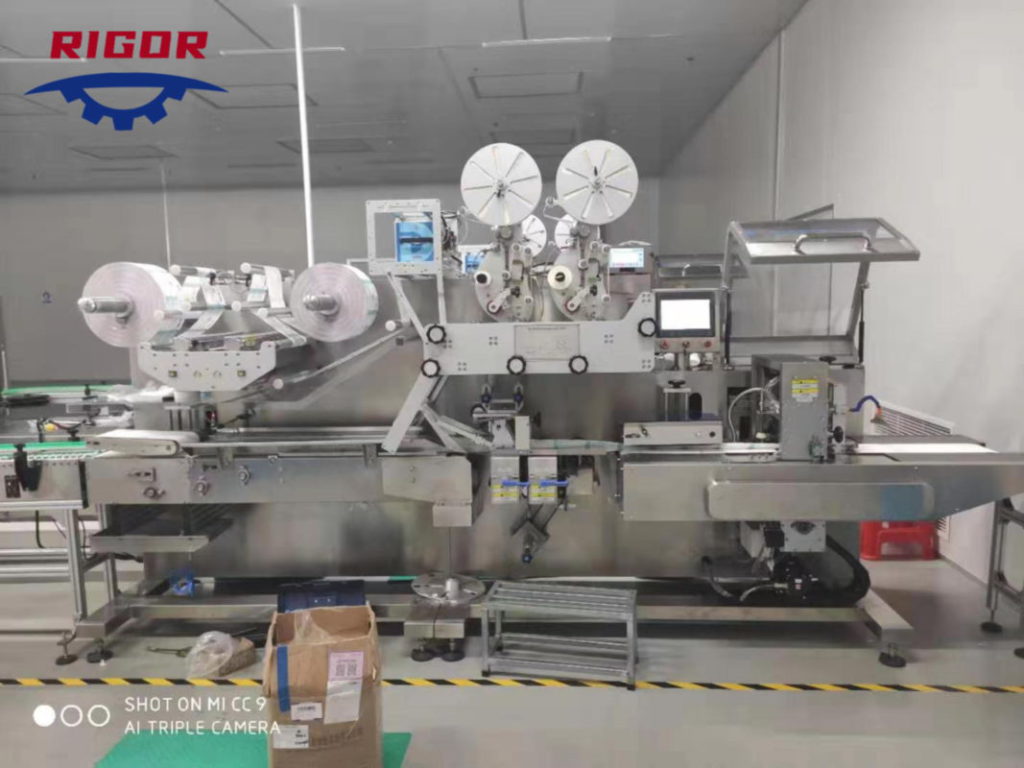
The level of automation integrated into a wet wipes machine is one of the most significant determinants of its initial cost, its operational efficiency, its labor requirements, and its long-term profitability. The choice is not simply between “manual” and “automatic.” Rather, there is a spectrum of automation, from semi-automatic systems that require significant operator intervention to fully integrated, “lights-out” production lines that can run for extended periods with minimal human oversight. Selecting the appropriate level of automation requires a thoughtful analysis of your specific business context, particularly the cost and availability of skilled labor in your target market.Fully Automatic vs. Semi-Automatic Systems
Let’s begin by clearly defining the terms.A semi-automatic wet wipes machine automates core processes like wetting, folding, cutting, and stacking but still requires manual intervention for tasks such as loading parent rolls, splicing, or transferring stacks to packaging. These machines are more affordable and suitable for small-scale operations or regions with low labor costs.
A fully automatic wet wipes machine integrates all processes into a single, continuous line. Automatic splicing, conveyor transfer, flow-wrapping, lid application, and case-packing occur without human handling. While the initial investment is higher, these systems deliver faster production, consistent quality, and lower labor costs, making them ideal for high-volume, scalable operations.
| Özellik | Semi-Automatic System | Fully Automatic System |
|---|---|---|
| Initial Investment | Lower | Higher |
| Production Speed | Moderate (e.g., 30-60 packs/min) | High (e.g., 80-120+ packs/min) |
| İşgücü Gereksinimi | High (2-4 operators per line) | Low (1 operator may oversee multiple lines) |
| Process Integration | Disconnected; manual transfer between stages | Fully integrated end-to-end production |
| Consistency | Operator-dependent; higher potential for error | High; machine-controlled precision |
| Footprint | Can be smaller, but requires space for manual work | Larger, more linear footprint |
| Changeover Time | Can be longer and more complex | Often faster, with recipe-based digital adjustments |
| İçin En İyisi | Startups, niche products, low-labor-cost regions | High-volume production, established markets |
The Role of PLCs, HMIs, and Servo Motors
The “brain” and “muscles” of a modern automatic machine are its control system components. Understanding these technologies is key to appreciating what makes a high-performance machine tick.- PLC (Programmable Logic Controller): This is the industrial computer that serves as the central nervous system of the machine. It receives input from all the sensors on the line (e.g., optical sensors, temperature probes, encoders) and executes the programmed logic to control all the actuators (e.g., motors, valves, heaters). The reliability and processing power of the PLC, often from reputable brands like Siemens, Allen-Bradley, or Mitsubishi, are fundamental to the machine’s stable operation.
- HMI (Human-Machine Interface): This is the touchscreen display that the operator uses to interact with the machine. A well-designed HMI is intuitive, graphical, and provides clear information. It should allow the operator to set production parameters (like wipe length and liquid volume), monitor the status of the machine in real-time, view production data, and diagnose faults. An HMI that is available in multiple languages is a significant advantage for a global operation.
- Servo Motors and Drives: As mentioned earlier, servo systems are the “muscles” that provide precise, high-speed motion. Unlike simple induction motors, a servo system consists of a motor and a drive that are in constant communication, with an encoder providing feedback on the motor’s exact position. This closed-loop control allows for incredibly accurate positioning, velocity, and torque control. In a wet wipes machine, servos are used for critical tasks like pulling the non-woven material at a precise rate, actuating the cutting blade, and driving the folding and stacking mechanisms. A machine that uses servo motors for all its main axes will be faster, more precise, and more flexible than one that relies on older mechanical linkages or pneumatic cylinders.
Labor Costs and Skill Requirements in Target Markets
The final piece of the automation puzzle is a realistic assessment of the labor market in your specific country or region. The logic that applies in Germany or Japan, where labor is expensive and highly skilled, may not apply in the same way in parts of Southeast Asia or South America. In regions with lower labor costs, a semi-automatic line might appear to be the most economically sound choice. However, one must also consider the availability of skilled labor. Even a semi-automatic machine requires operators who are reliable, attentive, and capable of performing repetitive tasks with consistency. More importantly, it requires technicians who have the mechanical and electrical skills to maintain and repair the equipment. The lack of readily available, trained technicians can be a major hidden cost, leading to extended downtime if you have to wait for an expert to travel from the machine manufacturer. A fully automatic line, while requiring a much smaller workforce, demands a different type of skill set. The operators are not manual laborers but system managers who monitor the HMI, understand the production process, and can perform basic troubleshooting. The maintenance staff needs to be comfortable with electronics, software, and servo systems, not just mechanics. Therefore, your decision should be based on a holistic calculation. Consider the monthly cost of the 2-4 operators needed for a semi-automatic line versus the single, more highly-paid technician for a fully automatic line. Factor in the potential costs of downtime and the availability of technical skills locally. For many emerging markets, a “sweet spot” is often found in a highly reliable, fully automatic machine from a manufacturer who also provides excellent remote diagnostic support and local or regional technical assistance. This combination minimizes daily labor costs while mitigating the risk of prolonged downtime due to a lack of local expertise.Factor 4: The Science of Liquid Dosing and Saturation Precision
A wet wipe is, by definition, a combination of a solid substrate and a liquid formulation. The effectiveness, safety, and sensory appeal of the final product are critically dependent on the precise and consistent application of that liquid. A wipe that is too dry will fail to clean effectively and will feel harsh to the user. A wipe that is too wet can be messy, leave an unpleasant residue, and may even create an environment where microbial growth can occur within the package. The liquid dosing system is therefore not just a pump and some nozzles; it is a precision fluid management system that lies at the heart of product quality.The Science of Consistent Wetting
Achieving a perfectly saturated wipe, time after time, across thousands of wipes per minute, is a significant engineering challenge. The goal is to achieve a specific liquid-to-wipe ratio, often expressed as a percentage of the dry wipe’s weight. For example, a common target for baby wipes is a liquid load of 300%, meaning that for every 10 grams of dry fabric, 30 grams of liquid solution are added. This ratio must be maintained consistently across the width of the fabric and from the beginning of a production run to the end. Several factors influence the wetting process:- Substrate Absorbency: As we discussed, different non-woven materials absorb liquid at different rates and have different holding capacities. A porous airlaid material will soak up liquid much faster than a dense, synthetic spunbond.
- Liquid Viscosity: The thickness of the formulation affects how it flows and penetrates the fabric. A thin, water-like solution will behave differently from a thicker, lotion-based formula.
- Line Speed: The faster the fabric is moving through the machine, the less time there is for the liquid to be applied and absorbed. The dosing system must be able to compensate for changes in production speed.
- Ambient Temperature: Temperature can affect the viscosity of the liquid and the rate of evaporation, which can be a factor in open-system designs.
Types of Dosing Systems
There are several common technologies used for applying the liquid to the non-woven web, each with its own advantages and disadvantages.- Spray Dosing: This is one of the most common and flexible methods. A series of nozzles are arranged in a manifold that spans the width of the fabric. The liquid is pumped under pressure and atomized into a fine spray that coats the material as it passes underneath.
- Advantages: Offers excellent control over the application volume by adjusting the pump speed and nozzle pressure. It can be easily adjusted for different fabric widths by turning individual nozzles on or off. It is also a non-contact method, which reduces the risk of contamination.
- Disadvantages: Can create an “aerosol” effect, leading to some liquid loss and requiring proper ventilation and housing. Ensuring perfectly even coverage across the entire width can be challenging and requires high-quality nozzles and precise pressure regulation.
- Drip Dosing (or Cascade/Curtain Coating): In this system, the liquid is pumped into a trough or manifold with a long, narrow slot. The liquid overflows this slot, creating a continuous “curtain” or “waterfall” of fluid that the fabric passes through.
- Advantages: Can provide very uniform coverage across the width of the web. It is a simpler mechanical system than a multi-nozzle spray bar.
- Disadvantages: Less flexible for adjusting to different web widths. More difficult to achieve very low liquid ratios. It is an open system, which can be more susceptible to airborne contaminants and evaporation.
- Soaking (or Saturation Bath): This method involves guiding the non-woven web through a bath of the liquid solution, using rollers to submerge it and then nip rollers to squeeze out the excess.
- Advantages: Ensures complete saturation of the fabric. It is a mechanically simple concept.
- Disadvantages: Offers the least amount of control over the final liquid amount, which is highly dependent on the pressure of the nip rollers. The large volume of liquid in the open bath is a significant contamination risk and makes formula changeovers very time-consuming and wasteful. This method is now considered outdated for most high-quality personal care wipe production.
Controlling Liquid-to-Wipe Ratios for Different Products
The ability to easily and accurately change the liquid formulation and the application ratio is essential for a versatile manufacturing operation. A line might run disinfectant wipes with a 250% alcohol-based solution in the morning, and then switch to producing baby wipes with a 320% lotion-based formula in the afternoon. A state-of-the-art machine facilitates this in several ways:- Recipe Management: The HMI should allow you to create and save “recipes” for each product. A recipe would include parameters like the target liquid-to-wipe ratio, pump speed curves, and which nozzles to activate. The operator can then select the desired product, and the machine automatically configures the dosing system.
- Clean-in-Place (CIP) Systems: To switch between different liquid formulas, the entire fluid path—tanks, pipes, pumps, and nozzles—must be thoroughly cleaned to prevent cross-contamination. An automated CIP system can circulate cleaning solutions and rinsing water through the system at the touch of a button, drastically reducing changeover time and ensuring hygienic conditions. This is a far superior solution to manual cleaning.
- Multiple Liquid Tanks: Some advanced systems can be configured with multiple formulation tanks and dedicated fluid paths. This allows for even faster changeovers, as one tank can be cleaned and prepared with the next formula while the machine is still running on another.
Factor 5: Mechanical Integrity in Cutting, Folding, and Stacking
After the non-woven material has been perfectly saturated with liquid, it enters the mechanical heart of the machine, where it is transformed from a continuous web into neat stacks of individual wipes. The precision of these three processes—cutting, folding, and stacking—is paramount. It directly determines the final product’s presentation, its functionality, and the user’s experience. A consumer who pulls a wipe from a package only to have it tear, or to have a clump of multiple wipes come out at once, will quickly lose confidence in the brand. The mechanical integrity of these core modules is a testament to the engineering quality of the entire machine.Precision Cutting for Clean Edges
The cutting module’s job is to cleanly sever the continuous web of moistened fabric into individual wipes of a precise, predetermined length. The most common technology used in high-speed machines is a rotary cutter. This consists of a rotating cylinder fitted with one or more hardened steel blades, which cuts the web against a stationary or rotating anvil. The quality of the cut depends on several factors:- Blade Sharpness and Material: The blades must be made of high-quality, durable tool steel or carbide that can maintain a sharp edge for a long period. A dull blade will not cut cleanly; it will crush and tear the fibers, resulting in a fuzzy, frayed edge on the wipe. This is not only aesthetically unappealing but can also lead to linting during use.
- Synchronization: The rotational speed of the cutter must be perfectly synchronized with the linear speed of the web. This is another area where servo motors are indispensable. A servo-driven cutter can maintain perfect “phase” with the web, ensuring that every wipe is cut to the exact same length, even as the machine speeds up or slows down. In older, mechanically linked machines, variations in cut length were a common problem.
- Cutting Angle: High-quality cutters often use a “scissor” or “shear” cutting action, where the blade is slightly helical. This ensures that the cut progresses across the web rather than happening all at once, resulting in a cleaner cut with less force and less noise.
Common Folding Patterns and Their Importance
Once cut, each individual wipe is immediately fed into the folding unit. The way a wipe is folded is not arbitrary; it is engineered to ensure proper dispensing. The goal is for the user to be able to pull out one wipe, and in doing so, have the next wipe “pop up,” ready for use. This is achieved through inter-folding. The most common folding patterns are:- Z-Fold: The wipe is folded into a “Z” shape. When stacked, the last panel of one wipe is tucked under the first panel of the next. This is a very common and reliable inter-fold pattern.
- C-Fold: The two outer edges of the wipe are folded in to meet at the center. C-folded wipes are not typically inter-folded and are often dispensed as a single, flat item. This is less common for pop-up dispensing packs.
- Interfold (Cross-Fold): This is a more general term for any fold that links one wipe to the next. The Z-fold is a type of inter-fold. The precise geometry of the fold ensures that as one wipe is pulled, it draws the leading edge of the subsequent wipe through the package’s dispensing orifice.
Stacking Accuracy and Count Integrity
The final step in this mechanical sequence is stacking. The folded wipes are compiled one on top of another to form a neat stack of a specific, pre-set count (e.g., 80 wipes). The accuracy of this process is vital.- Stacking Method: There are two main methods. One is a “drop” stacker, where wipes are dropped from the folding unit onto a descending platform. The other is a “climbing” stacker, where the wipes are inserted into a fixed box from below by an ascending platform. Both can be effective, but the key is the control and gentleness of the motion. The wipes should be placed, not slammed, onto the stack to avoid compression and misalignment.
- Count Accuracy: The machine must count every single wipe and create a stack with the exact number required. Miscounts lead to customer dissatisfaction and can even have legal implications in markets with strict packaging regulations. Modern machines use high-speed optical sensors or laser counters that are far more reliable than older mechanical counters.
- Stack Transfer: Once a stack is complete, it must be smoothly and quickly transferred out of the stacking unit and onto the conveyor that leads to the packaging machine. This transfer needs to happen without disturbing the neatness of the stack. A well-designed “pusher” arm, driven by a servo motor with a controlled acceleration profile, can perform this task flawlessly.
Factor 6: Seamless Packaging Integration for Market-Ready Products
The production of a perfect stack of wet wipes is only half the battle. To reach the consumer, that stack must be enclosed in packaging that is not only attractive and convenient but also hermetically sealed to preserve the moisture and sterility of the product throughout its shelf life. The packaging stage is where the product meets the brand. The integration between the core wet wipes machine and the downstream packaging equipment is therefore of paramount importance. A disconnect or bottleneck at this stage can cripple the efficiency of the entire production line.The Role of the Flow Wrapper
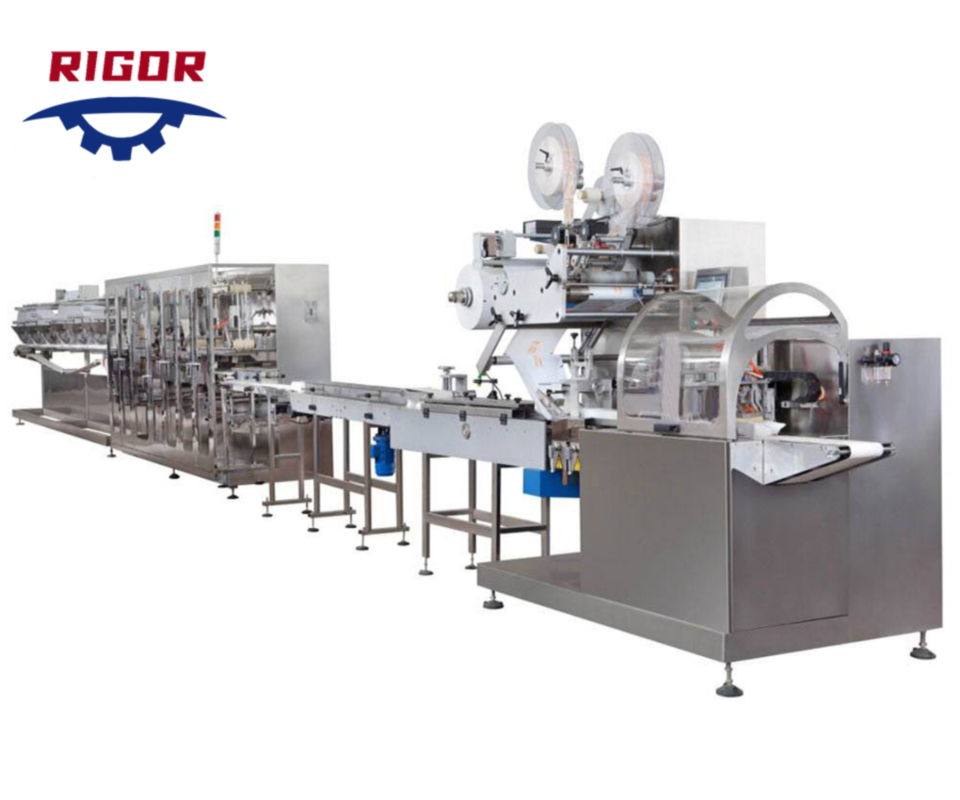
The primary packaging machine used for wet wipes is a horizontal flow wrapper (HFFS – Horizontal Form-Fill-Seal). This machine takes a flat roll of printed packaging film, forms it into a continuous tube around the incoming stacks of wipes, makes a longitudinal seal along the bottom or top of the pack, and then creates transverse seals at the front and back of each stack, cutting the packs apart in the process. A seamless integration between the wipe stacker and the flow wrapper is crucial. This is typically achieved through a carefully timed “flighted” infeed conveyor. The flow wrapper’s control system must be in constant communication with the main machine’s PLC. When the main machine pushes a completed stack onto the conveyor, the flow wrapper must know it is coming and ensure that a “flight” (a pusher on the conveyor chain) is in the right position to receive it and carry it into the wrapping section at the correct time. Any timing mismatch will result in crushed products, empty bags, or machine jams. Key features to look for in a high-quality, integrated flow wrapper include:- Servo-Driven Axes: Just like in the main machine, servo motors for the film feed, infeed conveyor, and sealing jaws provide the speed, precision, and flexibility needed for reliable operation.
- “No Product, No Bag” Function: A sensor detects if a stack is missing from the infeed. If it is, the machine will not form a bag, saving packaging film.
- “Misplaced Product” Detection: A sensor detects if a stack is improperly positioned. If so, the machine will stop the sealing jaws from closing to prevent a jam and damage to the product or the machine.
- Robust Sealing Jaws: The jaws that create the end seals must provide consistent temperature and pressure to create a strong, airtight seal. Poor seals are a primary cause of products drying out on the shelf.
Lid Application and Final Packaging Stages
For many wet wipe products, particularly in baby care, a rigid plastic flip-top lid is added to the flexible pack. This provides greater convenience for the consumer, allowing for easy one-handed dispensing and a more secure re-closing of the pack. The lid application process is another critical stage. An automatic lid applicator machine is typically positioned after the flow wrapper. The process involves:- Die-Cutting: The machine first cuts an opening in the top film of the sealed pack.
- Label Application: A die-cut label is often applied over this opening as the primary seal.
- Lid Placement: The machine uses a pick-and-place mechanism (often with suction cups) to pick a plastic lid from a magazine or feeder.
- Adhesive Application: Hot melt adhesive is precisely applied to the base of the lid.
- Lid Pressing: The lid is accurately placed over the opening on the pack and pressed down firmly to ensure a strong bond.
- Case Packers: Robots or mechanical systems that automatically group the finished packs and place them into cardboard shipping cases.
- Palletizers: Robotic arms that take the filled cases and stack them onto pallets, ready for shipment.
Accommodating Different Pack Sizes and Formats
Market demands are diverse. You may need to produce small 10-count travel packs, standard 80-count baby wipe packs, and large 120-count “refill” packs, all on the same line. The ability of the packaging system to handle this variability is a key aspect of its flexibility. A versatile packaging line allows for quick and easy changeovers between these different formats. On an advanced, servo-driven flow wrapper, changing the pack length is often as simple as entering a new value into the HMI. The PLC and servo drives automatically adjust the timing of the film feed, conveyor, and sealing jaws. Changing the pack width or height is typically more mechanical, but a well-designed machine will use quick-release handles and digital position indicators to make these adjustments as fast and repeatable as possible. Similarly, the lid applicator and case packer must be adjustable to handle the different pack dimensions. Before purchasing, you should provide the manufacturer with samples or detailed specifications for all the pack sizes you intend to produce. Ask them to provide a detailed report on the changeover times and procedures for each format. A fast, tool-less changeover process can save hours of downtime each week, significantly boosting your line’s overall equipment effectiveness (OEE).Factor 7: Beyond the Price Tag: TCO and Manufacturer Partnership
The initial purchase price of a wet wipes machine for non-woven or tissue is a significant figure, but it is only one component of the total financial commitment. A savvy investor looks beyond the sticker price to consider the Total Cost of Ownership (TCO). TCO is a comprehensive financial metric that includes not only the initial capital outlay but also all direct and indirect costs associated with the equipment over its entire lifecycle. Furthermore, the relationship you build with the machine manufacturer is not a simple transaction; it is a long-term partnership that can be a source of immense value or immense frustration.Calculating Total Cost of Ownership (TCO)
TCO provides a more accurate picture of the long-term financial impact of your investment. The key components to consider include:- Acquisition Cost: The initial purchase price of the machine, including shipping, insurance, and import duties.
- Installation and Commissioning Costs: The expense of having the manufacturer’s technicians install the machine, connect it to your utilities (power, compressed air), and get it running to specification in your facility.
- Operating Costs:
- Energy Consumption: The cost of electricity and compressed air to run the machine. More efficient machines with modern motors and drives can offer significant savings.
- Labor: The wages of the operators and technicians required to run and maintain the line. As discussed, this is heavily influenced by the level of automation.
- Consumables: The cost of items that are regularly used up, such as packaging film, hot melt adhesive, and cleaning agents.
- Maintenance and Repair Costs:
- Spare Parts: The cost of replacement parts, both for routine preventative maintenance (like blades and belts) and for unexpected breakdowns.
- Service Contracts: The cost of any annual service agreements with the manufacturer.
- Downtime Costs: This is a critical but often overlooked cost. Every hour the machine is not running is an hour of lost production and lost revenue. A cheaper, less reliable machine with frequent breakdowns can quickly become far more expensive than a pricier but more robust alternative.
- Training Costs: The cost of training your staff to operate and maintain the machine effectively.
- Decommissioning and Disposal Costs: The eventual cost of taking the machine out of service at the end of its life.
Evaluating Manufacturer Support and Spare Parts Availability
The machine you purchase is a complex piece of equipment. Sooner or later, it will require service, and parts will need to be replaced. The quality and responsiveness of the manufacturer’s after-sales support system are therefore of immense value. Consider the following when evaluating a manufacturer’s support network:- Global Reach and Local Presence: For a business in South Africa or Brazil, a manufacturer with a headquarters only in China and no regional support can be a liability. Does the manufacturer have regional offices, local agents, or partner technicians in or near your country? The ability to have a skilled technician on-site within 24-48 hours is a huge advantage over waiting a week for someone to fly in from another continent.
- Remote Diagnostics: Modern machines equipped with network connectivity can be diagnosed remotely by the manufacturer’s engineers. A technician can log into your machine’s PLC from their office, analyze fault codes, inspect program logic, and often identify the problem without needing to travel. This can reduce troubleshooting time from days to hours.
- Spare Parts Philosophy: How does the manufacturer manage spare parts? Do they maintain a large inventory of common wear parts? How quickly can they ship a critical component to your location? Ask for a recommended spare parts list and their pricing. Also, inquire about the use of standard, off-the-shelf components. A machine that uses PLCs, motors, and pneumatic valves from globally recognized brands (like Siemens, Schneider Electric, SMC, Festo) is often easier to maintain, as you may be able to source some parts locally.
- Documentation and Training: The manufacturer should provide comprehensive documentation, including detailed mechanical drawings, electrical schematics, operating manuals, and maintenance guides. These documents should be clear, well-written, and available in your local language. High-quality initial training for your operators and maintenance staff is also essential for a smooth start-up.
The Importance of a True Partnership
Ultimately, you are not just buying a machine; you are entering into a relationship. A good manufacturer will act as a partner in your success. They will take the time to understand your business goals, your market, and your products. They will use their expertise to recommend the best machine configuration for your specific needs, not just the most expensive one. They will be transparent about the machine’s capabilities and limitations. Before making a final decision, try to speak with other customers of the manufacturer, preferably ones in a similar region or industry. Ask them about their experience with the machine’s reliability and the manufacturer’s after-sales support. Their real-world feedback can be one of the most valuable data points in your entire evaluation process. Choosing a manufacturer with a proven track record of reliability, excellent support, and a partnership-oriented approach is the final, and perhaps most important, step in securing a profitable and sustainable investment in a wet wipes machine for non-woven or tissue.Navigating the Global Landscape: Regional Market Considerations
The technical specifications of a wet wipes machine are universal, but the strategic context in which that machine operates is intensely local. The optimal investment for a manufacturer in Russia will be shaped by different forces than one for a business in Southeast Asia. A nuanced understanding of the economic, cultural, and regulatory landscapes of your target markets is essential for making a truly informed decision. Your machine is not just a piece of engineering; it is an economic tool that must be sharpened to the specific realities of its environment.South America: Economic Volatility and Value-Driven Consumers
The South American market, encompassing major economies like Brazil, Argentina, and Colombia, is characterized by a growing middle class with increasing disposable income and awareness of hygiene. However, it is also a region prone to economic volatility, currency fluctuations, and complex import regulations.- Consumer Profile: Consumers are often highly value-conscious. While there is a growing premium segment, the mass market prioritizes affordability. This means that producing a high-quality wipe at a competitive price point is key. A wet wipes machine for non-woven or tissue that is highly efficient, minimizing material waste and energy consumption, provides a direct competitive advantage.
- Operational Challenges: Navigating import tariffs and customs clearance can be a significant hurdle. Working with a machine manufacturer who has experience shipping to and installing equipment in South America is invaluable. Their logistical expertise can save you months of delays and unforeseen costs.
- Machine Implications: A flexible machine that can produce a range of pack sizes and product types (e.g., basic baby wipes, household cleaning wipes) allows a manufacturer to pivot according to shifting consumer demand and economic conditions. Reliability is also paramount; waiting for spare parts to be shipped from overseas can lead to costly downtime, so a machine built with durable components and backed by strong regional support is a wise choice.
Russia and the CIS: Regulatory Hurdles and Robustness
The markets in Russia and the Commonwealth of Independent States (CIS) present a unique set of challenges and opportunities. There is a strong demand for hygiene products, but manufacturers must navigate a stringent regulatory environment and operate in a climate that can be harsh on machinery.- Regulatory Environment: Products and equipment must often comply with the GOST standards (the set of technical standards maintained by the Euro-Asian Council for Standardization, Metrology and Certification). Ensure your machine manufacturer can provide the necessary certification and documentation to meet these requirements. Failure to do so can prevent you from importing or operating the equipment.
- Climate and Logistics: The vast distances and cold climate in many parts of the region place a premium on machine robustness. The equipment must be able to operate reliably in a wide range of factory temperatures. Logistical challenges in shipping spare parts mean that machine reliability and the availability of a comprehensive on-site spare parts kit are even more critical than in other regions.
- Machine Choice: A heavy-duty, robustly constructed machine is often preferred. Simplicity in maintenance can also be an advantage if local technical skills are limited. Manufacturers with established service networks or partners in Russia or Eastern Europe should be given strong consideration.
Southeast Asia: A High-Growth, Hyper-Competitive Arena
Countries like Indonesia, Vietnam, the Philippines, and Thailand represent one of the fastest-growing markets for wet wipes in the world. A young population, rapid urbanization, and increasing health consciousness are driving explosive demand. However, this is also a hyper-competitive market with numerous local and international players.- Market Dynamics: Speed to market and cost efficiency are everything. High-speed, fully automatic production lines are often necessary to compete effectively. The ability to produce large volumes at a very low cost per unit is the key to capturing market share.
- Product Innovation: Consumers are receptive to new products. A versatile wet wipes machine for non-woven or tissue that can handle different materials (including novel ones like bamboo), formulations (e.g., with local botanical extracts), and packaging formats will allow a manufacturer to stand out.
- Labor Considerations: While labor costs are traditionally lower than in the West, they are rising. Moreover, finding and retaining skilled labor can be challenging. This economic reality often pushes serious manufacturers towards higher levels of automation to ensure consistent quality and reduce dependence on a large workforce. A fully automatic line, from splicing to case packing, is a common strategic choice for major players in this region.
The Middle East and South Africa: Sophistication and Niche Opportunities
These markets, including the Gulf Cooperation Council (GCC) countries and South Africa, are characterized by a relatively high level of consumer sophistication and disposable income.- Consumer Preferences: There is a strong demand for high-quality, premium products. This includes wipes with specialized formulations (e.g., alcohol-free, with oud fragrance), luxurious non-woven fabrics, and high-end packaging with well-designed dispensing lids. Quality perception is extremely high.
- Machine Requirements: To serve this market, a machine must be capable of flawless execution. Precision in liquid dosing, cutting, and folding is non-negotiable. The packaging integration must be perfect to create a visually appealing final product. A machine that can handle thicker, more premium non-woven materials and integrate with sophisticated lid applicators is essential.
- Niche Markets: There are also significant niche opportunities, such as wipes for specific industrial applications in the oil and gas sector (in the Middle East) or mining (in South Africa), or high-end cosmetic and personal care wipes. A flexible machine that can be configured for these specialized products can be highly profitable.
The Horizon of Wet Wipe Manufacturing: Future-Proofing Your Investment
The world of manufacturing is never static. Technological advancements, shifting consumer values, and new regulatory landscapes continuously reshape the industry. When you invest in a major piece of capital equipment like a wet wipes machine in 2025, you are making a bet on the future. A forward-thinking selection process involves not only evaluating a machine’s current capabilities but also considering its capacity to adapt to the trends that will define the market in 2030 and beyond. Two of the most powerful forces shaping the future of wet wipe production are sustainability and the rise of the “smart factory” or Industry 4.0.The Imperative of Sustainable Materials and Biodegradability
The environmental impact of single-use products, including wet wipes, has become a major concern for consumers and regulators worldwide. Many traditional wet wipes are made from non-woven fabrics containing plastic fibers like polyester (PET) or polypropylene (PP), which are not biodegradable. When flushed, they can contribute to massive blockages in sewer systems (so-called “fatbergs”), and when sent to landfills, they persist in the environment for hundreds of years. This has led to a powerful push towards sustainability, which is manifesting in several ways:- Biodegradable and Flushable Substrates: There is a massive R&D effort to develop and commercialize substrates that are plastic-free, biodegradable, and, in some cases, truly flushable. These materials are often derived from wood pulp, viscose from sustainable sources, bamboo, or cotton.
- Regulatory Pressure: Governments, particularly in Europe, are enacting legislation to ban certain single-use plastics and enforce clear labeling to prevent consumers from flushing non-flushable wipes. These regulatory trends are likely to spread to other regions over time.
- Consumer Demand: A growing segment of consumers, especially millennials and Gen Z, actively seeks out and is willing to pay more for products that are environmentally friendly.
Smart Factories and Industry 4.0 Integration
The other major trend is the integration of digital technology into manufacturing, a concept known as Industry 4.0 or the Smart Factory. This involves using data, connectivity, and artificial intelligence to create manufacturing systems that are more efficient, autonomous, and responsive. For a wet wipes production line, Industry 4.0 is not a distant sci-fi concept; it is a set of practical technologies that are available on advanced machines today:- Data Collection and Analysis: A smart machine is equipped with sensors that collect vast amounts of data on every aspect of its operation: production speed, material consumption, energy usage, motor temperatures, vibration levels, and quality inspection results. This data can be logged, visualized on the HMI, and exported to factory-level management systems (like an MES or ERP). Analyzing this data can reveal opportunities to improve efficiency, reduce waste, and predict maintenance needs.
- Predictive Maintenance: Instead of performing maintenance on a fixed schedule, predictive maintenance uses sensor data to predict when a component is likely to fail. For example, by monitoring the vibration and temperature of a motor, an algorithm can detect early signs of wear and alert the maintenance team to schedule a replacement before an unexpected breakdown occurs. This maximizes uptime and reduces maintenance costs.
- Remote Monitoring and Control: A connected machine can be monitored from anywhere with an internet connection. A plant manager can check production status from their office or a mobile device. As mentioned, this also enables powerful remote diagnostics from the machine manufacturer.
- Inter-Machine Communication (M2M): In a fully integrated Industry 4.0 line, the machines talk to each other. The flow wrapper can tell the main machine to slow down if it detects a problem in the film supply. The case packer can signal upstream that it is running low on cardboard cases. This level of automation creates a self-regulating production line that can optimize its own performance.