Abstract
The acquisition of a baby nappy machine represents a substantial capital investment and a strategic entry into the global hygiene products market. This analysis offers a comprehensive framework for prospective investors in 2025, particularly those targeting emerging markets in South America, Russia, Southeast Asia, the Middle East, and South Africa. It meticulously examines the multifaceted decision-making process, extending beyond the machinery’s initial price to encompass a holistic evaluation of technical specifications, production capacity, and automation levels, such as full-servo versus semi-servo systems. The discourse navigates the complexities of market analysis, financial viability assessment, and the critical selection of a reliable machine manufacturer. Emphasis is placed on the significance of after-sales support, logistical planning, and the long-term scalability of the investment. By systematically deconstructing each stage, from initial inquiry to operational launch, this guide aims to equip entrepreneurs with the necessary knowledge to mitigate risks and establish a profitable, sustainable diaper manufacturing enterprise.
Key Takeaways
- Analyze the long-term value of full-servo systems over semi-servo for higher efficiency.
- Conduct detailed market research for your specific region to match product features with demand.
- Calculate the total cost of ownership, not just the initial machine purchase price.
- Thoroughly vet your baby nappy machine supplier for experience and after-sales support.
- Plan for facility preparation, logistics, and operator training well in advance of delivery.
- Consider future-proofing your investment with scalable and sustainable technology.
- A strong partnership with your manufacturer is foundational to long-term operational success.
Table of Contents
- 1. Decoding the Technical Heart: Machine Specifications and Production Capacity
- 2. Mapping Your Market: Demand Analysis and Product Positioning
- 3. Calculating Your Return: A Deep Dive into Financial Viability
- 4. The Supplier Partnership: Vetting Your Machine Manufacturer
- 5. After-Sales Support and Training: Ensuring Long-Term Success
- 6. Navigating the Logistics: From Factory Floor to Your Facility
- 7. Future-Proofing Your Investment: Scalability and Technology Trends
- Frequently Asked Questions (FAQ)
- Conclusión
- References
1. Decoding the Technical Heart: Machine Specifications and Production Capacity
Embarking on the journey of diaper manufacturing begins with a deep, almost philosophical, engagement with the machine itself. It is not merely a collection of steel, wires, and motors; it is the engine of your future enterprise, the heart of your production line. Its capabilities, limitations, and design will dictate your product’s quality, your operational efficiency, and ultimately, your profitability. A superficial glance at a catalog or a price list is insufficient. One must cultivate a granular understanding of the core technical specifications to make an informed choice that aligns with both immediate production goals and long-term strategic ambitions. This requires a commitment to learning the language of the machine, from the nuances of its drive system to the intricacies of its waste management.
Understanding Servo Systems: Full-Servo vs. Semi-Servo
At the core of a modern baby nappy machine’s performance lies its drive system, which is typically categorized as either full-servo or semi-servo. To the uninitiated, this might seem like a minor technical detail, but the reality is that this choice has profound and lasting implications for your entire operation. Think of it as choosing the engine for a vehicle. A simple mechanical engine might get you from one point to another, but a sophisticated, computer-controlled engine offers superior performance, fuel efficiency, and adaptability.
A semi-servo machine uses a combination of a main mechanical shaft and a limited number of servo motors for specific, high-precision functions. It represents an older, yet still viable, technological approach. It is often less expensive upfront, which can be appealing for new ventures with tight capital constraints. The mechanical reliance, however, introduces certain rigidities. Speed adjustments can be more complex, product changeovers may require more manual intervention and downtime, and the mechanical components are subject to wear and tear that can lead to higher maintenance costs over time.
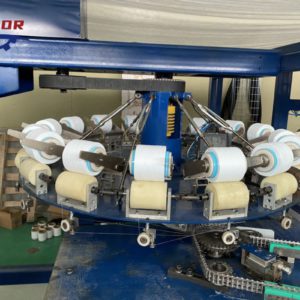
A full-servo baby nappy machine, in contrast, eliminates the main mechanical transmission shaft. Each major operational unit—from the pulp feeder to the leg cuff applicator to the final cutting tool—is driven by an independent servo motor controlled by a central programmable logic controller (PLC). This creates a system of extraordinary precision and flexibility. Tension control for delicate materials like non-woven fabrics is exact, reducing material strain and breakage. Switching between diaper sizes (e.g., small, medium, large) can often be accomplished through software parameters, dramatically cutting down on changeover time. The precision of servo motors also leads to a more consistent product quality and a lower rate of material waste, which is a significant operational saving over the machine’s lifespan.
| Feature | Full-Servo System | Semi-Servo System |
|---|---|---|
| Control Precision | High (Independent motor for each function) | Moderate (Main shaft with some servo assist) |
| Changeover Speed | Fast (Often software-based) | Slower (Requires mechanical adjustments) |
| Operational Speed | High (e.g., 600-1000 pieces per minute) | Moderate (e.g., 300-600 pieces per minute) |
| Material Waste Rate | Lower due to precise tension control | Higher due to mechanical variability |
| Initial Investment | Higher | Lower |
| Long-Term Maint. | Lower (Fewer mechanical wear parts) | Higher (Gears, chains, belts require upkeep) |
| Flexibility | High (Easier to adapt to new designs) | Moderate (Less adaptable to major changes) |
The decision is not merely about speed; it is about control, efficiency, and future-readiness. For markets demanding high-quality, consistent products and for businesses planning to scale, the higher initial investment in a full-servo system often yields a far greater return through reduced waste, lower downtime, and superior product quality.
Production Speed and Efficiency: Finding the Sweet Spot
Production speed, often quoted in pieces per minute (PPM), is a headline specification that can be seductive. A machine capable of producing 1,000 PPM seems inherently superior to one that produces 500 PPM. Yet, the pursuit of maximum speed without considering its context is a common pitfall. The optimal speed for your operation is a function of your market size, your logistical capabilities, and your team’s skill level.
A high-speed machine is a demanding instrument. It consumes raw materials at a voracious rate, necessitating a highly efficient and reliable supply chain. Any interruption in the supply of fluff pulp, superabsorbent polymer (SAP), or non-woven fabric will leave your high-speed asset sitting idle, negating its primary advantage. Similarly, it requires a well-trained team of operators and technicians who can manage its pace, perform quick diagnostics, and handle minor issues without causing prolonged stoppages.
The concept of “stable running speed” is more meaningful than “designed speed.” A machine might be designed for 800 PPM, but if it can only run stably at 650 PPM without frequent breaks or a decline in quality, then 650 PPM is its true operational speed. It is wise to inquire about the machine’s operational efficiency rate—typically, a well-maintained machine should operate at 85-95% of its stable speed.
Therefore, the question to ask is not “How fast can it go?” but “What is the most efficient speed for my business model?” For a startup entering a regional market, a machine with a stable speed of 400-600 PPM might be the perfect balance of output, manageability, and investment. It allows the business to grow into its full capacity rather than being overwhelmed from day one.
Raw Material Compatibility and Waste Management
A baby nappy machine is an orchestrator of materials. It takes diverse inputs—fluff pulp, SAP, various non-woven fabrics, polyethylene (PE) film, elastic threads, adhesives—and combines them in a precise, high-speed sequence. The machine’s ability to handle this diversity is paramount. You must ensure the machine is compatible with the raw materials that are readily and economically available in your region. For instance, some machines are optimized for a specific brand of adhesive or a certain grade of fluff pulp. A lack of flexibility can lock you into a single supplier, exposing you to price volatility and supply chain risks.
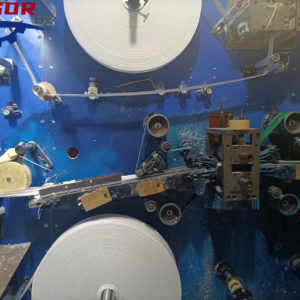
A sophisticated baby nappy machine will feature advanced tension control systems, automatic splicing units, and web guiding systems. Automatic splicers are particularly valuable; they allow a new roll of material (like non-woven fabric) to be joined to an expiring roll without stopping the machine, a process known as a “flying splice.” This significantly boosts uptime and efficiency.
Equally important is the machine’s approach to waste. In diaper manufacturing, waste is generated from material cut-offs during the shaping process and from defective products identified by the quality control system. An efficient machine minimizes this waste by design. For example, a well-designed cutting die for the diaper’s chassis can reduce the amount of non-woven material that is discarded. Furthermore, modern machines incorporate automated rejection systems that use sensors (like vision cameras or metal detectors) to identify a faulty diaper and eject it from the production line without interrupting the flow. The waste material itself is often collected by a dedicated vacuum system, keeping the production environment clean and safe. Understanding and quantifying the machine’s expected waste percentage is a key part of calculating your true production cost.
Diaper Design Capabilities: From T-shape to Big-Ears
The final product that a consumer holds in their hands is the ultimate test of your investment. The baby nappy machine must be capable of producing a diaper that meets the aesthetic and functional expectations of your target market. Diaper designs have evolved significantly.
The classic “T-shape” diaper is a basic, cost-effective design. However, many markets now demand more advanced features. “Big-ear” or “elastic waistband” diapers provide a more comfortable and secure fit, reducing the likelihood of leaks. The machine must have the specific modules to create these features—applying the wide elastic band, shaping the side panels, and ensuring a strong yet gentle seal.
Other features to consider include:
- Acquisition Distribution Layer (ADL): An additional layer that rapidly draws moisture away from the baby’s skin and distributes it evenly across the absorbent core.
- Wetness Indicator: A strip that changes color when the diaper is wet, a feature highly valued by modern parents.
- 3D Leak Guards: Hydrophobic cuffs that stand up along the leg openings to provide an extra barrier against leakage.
- Breathable Backsheet: A film that allows air to circulate while remaining waterproof, reducing the risk of diaper rash.
Your chosen machine should either come equipped with the modules for these features or, at the very least, be designed in a modular way that allows for their addition in the future. This ensures your production can evolve with consumer trends without requiring a complete replacement of the production line. Discussing the specific diaper structure you intend to produce with the fabricante de máquinas de pañales is a foundational step in the selection process.
2. Mapping Your Market: Demand Analysis and Product Positioning
Acquiring a technologically superior baby nappy machine is only half the equation. The other half, equally demanding of intellectual rigor and careful examination, is the market into which your products will be born. A machine can produce a million diapers a day, but if those diapers do not meet the specific needs, preferences, and economic realities of the parents in your chosen region, they will remain unsold in a warehouse. A profound market analysis is not a mere academic exercise; it is the act of developing empathy for your future customers. It involves moving beyond broad generalizations about “emerging markets” and cultivating a nuanced understanding of the local culture, competitive dynamics, and consumer behavior.
Regional Consumer Preferences: What Do Parents in South America vs. Southeast Asia Want?
The notion of a single, monolithic “emerging market” consumer is a dangerous fiction. A parent in Moscow, Russia, has different priorities and expectations than a parent in Rio de Janeiro, Brazil, or Jakarta, Indonesia. These differences are shaped by climate, economic conditions, cultural norms, and the influence of local and international brands.
For example, in many hot and humid climates, such as those found in Southeast Asia or parts of the Middle East, “breathability” is not a luxury feature; it is a fundamental requirement. Parents are acutely aware of the risk of diaper rash and will prioritize products that promise superior air circulation. A manufacturer targeting this region must ensure their baby nappy machine can effectively produce diapers with cloth-like, breathable backsheets.
In some markets in South America, where there may be a strong aspirational pull from North American and European brands, features like wetness indicators and ultra-soft materials might be key differentiators, even in mid-tier products. Consumers might associate these features with higher quality and better care for their child.
In contrast, in a more price-sensitive segment of the Russian or South African market, the primary concern might be raw absorbency and leak protection. A thicker core and strong leg cuffs might be valued more than aesthetic features. The perceived “bulkiness” of a diaper could even be interpreted as a sign of its effectiveness.
Conducting this analysis requires a multi-pronged approach. It involves studying market research reports, analyzing the product offerings of existing competitors, and, if possible, conducting focus groups or surveys with local parents. The goal is to build a detailed persona of your target customer. What is their daily routine? What is their disposable income? What are their biggest frustrations with current diaper options? The answers to these questions should directly inform your product design and, by extension, the specifications of the machine you purchase.
| Region | Primary Climate Concern | Key Feature Driver | Economic Sensitivity | Example Preference |
|---|---|---|---|---|
| Southeast Asia | Hot & Humid | Breathability, Skin-friendliness | Mid to High | Cloth-like backsheet, Aloe Vera lotion |
| South America | Varied (Humid/Temperate) | Fit, Softness, Brand Perception | High | Elastic waistband, Wetness indicator |
| Russia | Cold & Temperate | Absorbency, Dryness | High | High SAP content, Robust leak guards |
| Middle East | Hot & Arid | Breathability, High Absorbency | Varied (High/Mid) | Superior air circulation, High capacity core |
| South Africa | Varied (Temperate/Arid) | Leak Protection, Value for Money | Very High | Strong grip tabs, Multi-pack value |
Competitive Landscape Analysis in Your Target Region
You are not entering an empty arena. In every market, there will be established players, from global giants like Procter & Gamble (Pampers) and Kimberly-Clark (Huggies) to strong regional champions and low-cost local producers. A sober assessment of this landscape is necessary to find your unique space.
Begin by mapping out the competitors. Who are they? What market segments do they serve (premium, mid-tier, economy)? What are their price points? What are their key marketing messages? Go to local stores or browse online retailers in your target country. Buy their products. Take them apart. Analyze their construction, materials, and performance. How much SAP do they use? What kind of non-woven fabric forms the topsheet? How effective are their leak guards?
This forensic analysis serves two purposes. First, it establishes the quality benchmark. To compete, your product must be at least as good as, if not better than, the offerings in your chosen segment. Second, it reveals potential gaps in the market. Perhaps all the economy brands have poor-fitting tabs. Maybe the mid-tier brands lack a breathable backsheet. This gap is your opportunity. You can configure your baby nappy machine and your raw material sourcing to specifically target this unmet need, creating a clear value proposition for consumers. For instance, if the market is saturated with basic T-shape diapers, investing in a machine that can produce a superior “big-ear” design could allow you to capture a significant share of the mid-tier market.
Pricing Strategy: Balancing Quality, Cost, and Market Affordability
Your pricing strategy is the bridge between your production costs and the consumer’s willingness to pay. It must be grounded in a realistic understanding of both. Your final retail price will be a composite of your production cost per diaper (raw materials, energy, labor, machine amortization), packaging, marketing expenses, distribution margins, and your desired profit margin.
A common mistake is to calculate the cost, add a margin, and set that as the price. A more sophisticated, market-driven approach works backward. First, determine the viable price points for the different market segments (economy, mid-tier, premium) by analyzing competitor pricing. Then, ask: “Can I produce a diaper of sufficient quality to compete in this segment and still make a profit at this price?”
This might force you to make difficult but important choices. To hit an economy price point, you may need to use a slightly lower grade of fluff pulp or forego a wetness indicator. To justify a premium price, you must invest in higher-quality materials and features that deliver a demonstrably superior experience for the parent and child.
Your baby nappy machine plays a central role in this calculation. A highly efficient, full-servo machine with a low waste rate will give you a lower cost per piece, providing more flexibility in your pricing strategy. It might allow you to offer a premium feature at a mid-tier price, creating an irresistible value proposition. Conversely, a less efficient machine with higher waste will inflate your costs, squeezing your margins and limiting your ability to compete on price.
3. Calculating Your Return: A Deep Dive into Financial Viability
An investment in a baby nappy machine is a decision of significant financial magnitude. It requires a transition in mindset from that of an entrepreneur with an idea to that of a chief financial officer with a plan. A comprehensive financial projection is not an exercise in optimism; it is a rigorous, conservative, and detailed stress test of your business model. It is the process of translating your operational plans and market ambitions into the uncompromising language of numbers—cash flow, expenses, revenue, and profitability. This financial blueprint will not only guide your own decisions but will also be the foundation of any proposal you make to banks, investors, or financial partners.
The Total Cost of Ownership (TCO): Beyond the Initial Price Tag
The sticker price of the baby nappy machine is often the most visible number, but it is merely the tip of the financial iceberg. A prudent investor looks beyond this initial outlay to calculate the Total Cost of Ownership (TCO) over a period of several years (e.g., five to seven years). The TCO provides a far more accurate picture of the true financial commitment required.
The components of TCO include:
- Purchase Price: The initial cost of the machine itself.
- Shipping and Insurance: The cost of transporting the machine from the manufacturer’s factory to your facility, which can be substantial for heavy industrial equipment, especially in international shipping.
- Installation and Commissioning: Many manufacturers charge a separate fee for sending their technicians to install the machine, connect it to your utilities, and run the initial tests to ensure it operates according to specifications. This can also include the travel and accommodation costs for these technicians.
- Import Duties and Taxes: This is a highly region-specific cost that is often overlooked. Depending on the trade agreements between the manufacturer’s country and your own, import tariffs can add a significant percentage (sometimes 20-30% or more) to the machine’s cost. Thorough research into your country’s customs regulations is non-negotiable.
- Facility Preparation: The machine has specific requirements for floor space, foundation strength, electrical power (voltage, phase, and capacity), and compressed air. The cost of upgrading your facility to meet these requirements must be factored in.
- Training Costs: The cost of training your operators and maintenance staff, whether at the manufacturer’s facility or your own.
- Spare Parts: An initial package of critical spare parts is a wise investment to minimize downtime. The cost of this package should be included in the startup capital.
Failing to account for these ancillary costs can lead to a severe budget shortfall before production even begins. A detailed conversation with the manufacturer should clarify exactly what is included in their quotation and what additional costs you will be responsible for.
Estimating Operational Costs: Raw Materials, Labor, and Energy
Once the machine is installed, it begins to incur operational costs (OPEX). These ongoing expenses determine your cost per diaper and your overall profitability.
Raw Materials: This is typically the largest component of your operational cost. You need to secure reliable suppliers and obtain accurate, up-to-date pricing for all your inputs: fluff pulp, SAP, non-woven fabrics (for topsheet, backsheet, ADL), PE backsheet film, elastic materials (for leg cuffs and waistband), frontal tape, side tapes, and hot-melt adhesive. Prices for these commodities can fluctuate, so it is wise to build a contingency into your financial model. Your waste rate is a direct multiplier of your raw material cost, reinforcing the importance of an efficient machine.
Labor: This includes the salaries and benefits for the machine operators, technicians, quality control personnel, and packaging staff. The number of staff required will depend on the automation level of your production line. A highly automated line with auto-splicers and an auto-bagging machine will require fewer personnel than a more manual setup. You must research the prevailing wage rates for skilled and semi-skilled labor in your specific location.
Energy: A diaper production line is energy-intensive. You need to account for the electricity consumed by the machine’s many motors, heaters (for the adhesive applicators), and the powerful vacuum systems for pulp forming and waste collection. Obtain the machine’s total power rating (in kilowatts) from the manufacturer and multiply it by your local industrial electricity rate (in cost per kilowatt-hour) to estimate the hourly energy cost.
Maintenance and Consumables: This category includes the cost of routine maintenance, scheduled replacement of wear parts (like cutting blades and belts), lubricants, and other consumables. A common practice is to budget a certain percentage (e.g., 1-2%) of the machine’s initial purchase price as an annual maintenance cost.
Projecting Revenue and Break-Even Point
With a clear picture of your costs, you can begin to project revenue. This is based on your machine’s stable production speed, your planned operational hours per day, and your target selling price per diaper.
Revenue Projection Formula: (Stable PPM x 60 minutes/hour x Operational Hours/Day x Working Days/Year x Efficiency Rate) x Price per Diaper = Annual Revenue
It is crucial to be realistic in these projections. Do not assume you will be running 24/7 from the first day. Start with a conservative estimate, perhaps one 8-hour shift per day, and model a gradual ramp-up in production as you gain market traction.
El Break-Even Point is the moment when your total revenue equals your total costs (both fixed and variable). It is the point at which your business is no longer losing money.
Break-Even Point (in units) = Total Fixed Costs / (Selling Price per Unit – Variable Cost per Unit)
- Fixed Costs: Costs that do not change with production volume, such as rent, administrative salaries, and machine amortization.
- Variable Costs: Costs that are directly proportional to production volume, primarily raw materials and energy.
Knowing your break-even point is profoundly empowering. It tells you exactly how many diapers you need to sell each month to be sustainable. This target can then inform your sales and marketing strategies.
Securing Financing and Understanding Government Incentives
Few entrepreneurs have the liquid capital to fund such a large project entirely out of pocket. Most will need to seek external financing from commercial banks, development banks, or private investors. A meticulously prepared business plan, featuring the detailed financial projections discussed above, is the prerequisite for any serious conversation about funding. Lenders will scrutinize your assumptions, stress-test your projections, and assess the credibility of your management team.
In addition, many governments, particularly in developing economies, are keen to promote local manufacturing. They may offer a range of incentives to encourage investments like yours. These can include:
- Tax Holidays: A period of several years where your business is exempt from corporate income tax.
- Investment Tax Credits: A direct reduction in your tax bill based on the amount you have invested in capital equipment.
- Subsidized Loans: Government-backed loans with lower interest rates than those available from commercial banks.
- Grants for Job Creation: Direct financial grants based on the number of local jobs your factory creates.
- Tariff Exemptions: Special exemptions from import duties on machinery and equipment.
Researching these programs through your country’s ministry of trade, commerce, or economic development can uncover significant financial advantages that can improve the viability of your project and accelerate your path to profitability.
4. The Supplier Partnership: Vetting Your Machine Manufacturer
Choosing a supplier for your baby nappy machine is not a simple procurement transaction; it is the formation of a long-term, high-stakes partnership. The manufacturer you select will not only provide the physical machinery but will also be your primary source of technical expertise, troubleshooting support, and future upgrades. The health of this relationship will have a direct and lasting impact on your operational success. A trustworthy and competent supplier can be a powerful ally, while a poor choice can lead to years of technical frustration, costly downtime, and missed opportunities. This vetting process, therefore, demands diligence, skepticism, and a focus on long-term value over short-term price advantages.
Assessing Manufacturer Reputation and Experience
In the world of industrial machinery, reputation is earned over decades, not days. It is built upon a foundation of successful installations, reliable performance, and satisfied customers. Your first step is to investigate the history and track record of any potential supplier.
- Years in Business: How long has the company been manufacturing diaper machines? A long history often indicates stability and a deep well of institutional knowledge.
- Specialization: Does the company specialize in hygiene machinery, or is it a generalist? A specialist manufacturer is more likely to be at the forefront of technological advancements and have a more profound understanding of the specific challenges of diaper production. You can learn more about a company’s focus by carefully reviewing its corporate information; for instance, a detailed look at their history and mission on an About Us page can reveal their level of specialization and commitment to the industry.
- Global Footprint: Has the manufacturer successfully installed machines in your region or in markets with similar characteristics? A supplier with experience in South America, for example, will have a better understanding of the logistical challenges, customs procedures, and even the environmental conditions (like humidity) that can affect machine performance.
- Customer References: This is perhaps the most valuable source of information. A reputable manufacturer should be willing and able to provide you with a list of existing customers. You should contact these references and ask them candid questions about their experience. Inquire about the machine’s reliability, the quality of the final product, the effectiveness of the after-sales support, and whether they would choose the same supplier again. A manufacturer’s hesitation to provide references is a significant red flag.
The Importance of Factory Audits and Machine Demonstrations
You would not buy a house without inspecting it first. Similarly, you should not invest hundreds of thousands of dollars in a machine without seeing it with your own eyes. A factory audit and a live machine demonstration are indispensable parts of the due diligence process.
A visit to the manufacturer’s factory allows you to assess the quality of their operation firsthand. Observe their manufacturing processes. Do they appear organized and professional? What is the quality of the components they use? Do they have robust quality control procedures in place for their own production? You can also meet the engineering team, the project managers, and the after-sales support staff who you will be interacting with for years to come.
The machine demonstration is the moment of truth. Ideally, the manufacturer will run a machine that is identical or very similar to the one you are considering purchasing. Pay close attention to:
- Stability: Does the machine run smoothly at its advertised stable speed, or does it seem to struggle?
- Noise and Vibration: Excessive noise or vibration can be an indicator of poor design or mechanical issues.
- Product Quality: Request samples of the diapers produced during the demonstration. Inspect them closely for consistency, proper sealing, and accurate placement of all components.
- Changeover Process: If possible, ask them to demonstrate a size changeover. How long does it take? How many manual adjustments are required?
If a personal visit is not feasible due to geographical or financial constraints, a detailed, live video demonstration is a viable alternative. Insist on an interactive session where you can ask the operators to show you specific parts of the machine and answer your questions in real time.
Navigating Language and Cultural Barriers with Global Suppliers
The leading manufacturers of hygiene machinery are often located in China, Europe, or other parts of the world. As an investor in South America, Russia, or the Middle East, you will be engaging in a cross-cultural business relationship. Do not underestimate the importance of clear communication.
Assess the English proficiency of the sales and technical teams you are dealing with. Are they able to understand your technical questions and provide clear, unambiguous answers? Misunderstandings due to language barriers can lead to costly errors in machine specifications or contract terms.
Beyond language, there can be cultural differences in communication styles and business practices. Some cultures may be less direct in their communication, while others may be very straightforward. Building a good rapport and ensuring there is a clear, shared understanding of all expectations, timelines, and deliverables is foundational. A supplier who has a dedicated international sales team with experience in your region is often better equipped to navigate these nuances.
Evaluating the Supplier’s Understanding of Your Market
A truly great supplier is more than just a machine builder; they are a consultant. They should demonstrate a genuine interest in your project and your market. When you describe your target consumer and your desired product features, do they listen attentively? Do they offer constructive suggestions based on their experience?
For example, a knowledgeable supplier might say, “For the South African market you are targeting, we have found that a reinforced frontal tape is important because consumers often re-fasten the diaper to check for wetness. We can add this feature to your machine.” This kind of proactive, market-aware advice is invaluable. It shows that the supplier is thinking about your success, not just their sale.
Conversely, a supplier who gives generic answers and seems uninterested in the specifics of your market may be a sign that they offer a one-size-fits-all solution. Your business is unique, and you need a partner who is willing and able to tailor their technology to meet your specific needs. The goal is to find a manufacturer who sees themselves as a stakeholder in your long-term success.
5. After-Sales Support and Training: Ensuring Long-Term Success
The relationship with your baby nappy machine manufacturer does not end when the final payment is made or when the machine is loaded onto a ship. In many ways, that is when the most important phase of the partnership begins. The long-term performance of your investment, its uptime, its efficiency, and its ability to produce high-quality products consistently, is profoundly dependent on the quality and responsiveness of the manufacturer’s after-sales support and training programs. A machine, no matter how advanced, is only as good as the people who operate and maintain it. A robust support structure is the safety net that protects your investment and ensures a smooth, continuous operation for years to come.
The Scope of Technical Support: Installation, Commissioning, and Troubleshooting
The initial setup of the production line is a complex and delicate process. It is not something that can be undertaken by a generalist mechanic. The manufacturer’s technical support should begin with professional installation and commissioning.
- Installation: This involves the physical assembly of the machine in your factory, ensuring it is level, correctly aligned, and safely connected to your electrical and compressed air supplies. The manufacturer’s technicians possess an intimate knowledge of the machine that is impossible for a local team to replicate.
- Commissioning: This is the process of “bringing the machine to life.” Technicians will run the machine, first without materials and then with them, fine-tuning hundreds of parameters. They will calibrate the sensors, adjust the tension controls, set the cutting blades, and optimize the adhesive applicators. The goal of commissioning is to ensure the machine is operating at its specified speed and efficiency, producing diapers that meet the agreed-upon quality standards. This process can take anywhere from a week to several weeks, depending on the machine’s complexity.
Beyond the initial setup, the ongoing troubleshooting support is what truly defines a supplier’s commitment. When your machine inevitably experiences a stoppage or a quality issue, how quickly and effectively can you get help? You need to clarify the terms of this support:
- Remote Support: Does the manufacturer offer 24/7 remote support via phone, email, or video call? Modern machines are often equipped with remote access modules, allowing technicians to log into your machine’s PLC from their own office to diagnose software issues or guide your team through a problem.
- On-Site Support: If an issue cannot be resolved remotely, how quickly can they dispatch a technician to your facility? What are the associated costs for travel and labor?
- Support Language: Is technical support available in a language your team can understand fluently?
Operator Training Programs: Empowering Your Local Team
Your local operators are the frontline guardians of your machine. Their skill and attentiveness will determine the day-to-day efficiency of your production. A comprehensive training program is not an optional extra; it is a fundamental necessity. The manufacturer should offer a structured training curriculum that covers:
- Machine Operation: How to start and stop the machine safely, how to navigate the human-machine interface (HMI), how to load raw materials, and how to perform routine operational checks.
- Quality Control: How to identify common diaper defects (e.g., improper sealing, missing components, incorrect weight), how to use the machine’s quality control systems, and what adjustments to make to correct these issues.
- Basic Maintenance: How to perform daily and weekly cleaning, how to lubricate moving parts, and how to safely replace simple wear parts like blades or belts.
- Safety Procedures: A thorough understanding of all the machine’s safety features, including emergency stops, safety guards, and lockout/tagout procedures.
This training can take place at the manufacturer’s facility before shipment, allowing your key personnel to learn on an identical machine. However, on-site training after installation is also vital, as it allows a larger portion of your team to be trained in their actual working environment.
Spare Parts Availability and Lead Times
Even the most reliable machine will require spare parts over its lifetime. Components like motors, sensors, blades, belts, and bearings are subject to wear and will eventually need replacement. Your ability to get these parts quickly is what separates a minor inconvenience from a costly, multi-day shutdown.
Before signing a contract, you must have a clear understanding of the manufacturer’s spare parts logistics:
- Recommended Spare Parts List: The manufacturer should provide a list of critical and common wear parts that you should keep in stock at your factory. The cost of this initial parts package should be factored into your startup budget.
- Part Identification: Is there a clear, well-documented parts manual with unique part numbers for easy ordering?
- Lead Times: For parts you do not have in stock, what is the typical lead time from order to delivery at your facility? A supplier with a regional distribution center or a relationship with a global courier service like DHL or FedEx can offer significantly faster delivery times.
- Pricing: Are the prices for spare parts reasonable, or does the manufacturer see them as a high-margin profit center?
Warranty Terms and Conditions: Reading the Fine Print
The warranty is the manufacturer’s formal promise regarding the quality and performance of their machine. It is a legal document that should be read with meticulous care. Do not be satisfied with a vague statement like “one-year warranty.” You need to understand the specifics:
- Duration: When does the warranty period start? Is it from the date of shipment or the date of successful commissioning?
- Coverage: What parts are covered? Typically, the warranty covers defects in materials and workmanship for major components. Wear parts (like blades and belts) and consumable parts are usually excluded.
- Process: What is the exact procedure for making a warranty claim? Who do you contact? What documentation is required?
- Remedy: What is the manufacturer’s obligation under the warranty? Will they send a replacement part free of charge? Does the warranty cover the cost of the labor to install that part?
A clear, comprehensive, and fair warranty is a strong indicator of a manufacturer’s confidence in their own product. Any ambiguity or reluctance to provide detailed warranty terms should be considered a serious warning sign.
6. Navigating the Logistics: From Factory Floor to Your Facility
The process of moving a multi-ton, technologically sensitive piece of equipment across continents is a formidable undertaking in its own right. The field of logistics and supply chain management is a specialized discipline, and errors in this domain can lead to costly delays, damaged equipment, and unforeseen customs entanglements. For the investor, overseeing this process requires a proactive and detail-oriented approach. It is about anticipating challenges and ensuring that a clear, well-documented plan is in place for every step of the journey, from the moment the baby nappy machine leaves the manufacturer’s factory until it is safely installed and powered up in your own.
Understanding Incoterms: FOB, CIF, and DDP
International trade operates under a set of standardized rules known as Incoterms (International Commercial Terms), published by the International Chamber of Commerce. These terms define the precise responsibilities of the seller (the manufacturer) and the buyer (you) in a transaction. Understanding the most common terms is not just academic; it determines who is responsible for costs and risks at each stage of the shipping process.
FOB (Free On Board): This is a very common term. Under FOB, the manufacturer is responsible for all costs and risks until the machine is loaded “on board” the shipping vessel at a specified port in their country. From that point forward, you, the buyer, are responsible for the main sea freight cost, the insurance for the main journey, and all subsequent costs and risks, including unloading, customs clearance, and inland transportation in your country.
CIF (Cost, Insurance, and Freight): With CIF, the manufacturer takes on more responsibility. They pay for the cost of the machine, the main sea freight to a port of your choosing in your country, and the insurance for the journey. However, your responsibility and risk begin the moment the goods are loaded on the vessel. You are still responsible for any import customs formalities, duties, and the cost of transport from your destination port to your factory.
DDP (Delivered Duty Paid): This term represents the maximum obligation for the seller. The manufacturer is responsible for delivering the machine all the way to your factory, cleared through your country’s customs, with all duties and taxes paid. This is the most hassle-free option for the buyer, but it is also the most expensive, as the seller will build all these costs (plus a margin for their risk and effort) into their price.
The choice of Incoterm is a matter of negotiation and depends on your own logistical expertise and risk tolerance. While DDP seems simplest, using FOB or CIF can sometimes be more cost-effective if you have a good relationship with a local freight forwarder and customs broker who can handle the import process more efficiently.
Shipping, Insurance, and Customs Clearance
Regardless of the Incoterm used, you must pay close attention to the details of shipping and insurance. The baby nappy machine needs to be professionally packed in seaworthy wooden crates with protection against moisture and vibration. You should insist on receiving photos of the crating process before shipment.
Marine insurance is absolutely essential. The journey across the ocean is long, and accidents can happen. The insurance policy should cover the full value of the machine against all risks of loss or damage.
Customs clearance is often the most complex part of the import process. Each country has its own unique set of rules, regulations, and required documentation. You will typically need to provide a commercial invoice, a packing list, a bill of lading (the contract with the shipping line), and a certificate of origin. Your country may also require specific inspection certificates or conformity assessments. It is highly advisable to engage a professional, licensed customs broker in your country well in advance. They are experts in navigating the local bureaucracy and can ensure your paperwork is in order, preventing your expensive machine from being stuck in port for weeks, accumulating storage charges.
Preparing Your Facility: Space, Power, and Environmental Controls
While the machine is on its long journey across the sea, your work at your own facility should be proceeding at full pace. The machine cannot simply be dropped into an empty room. The factory floor must be meticulously prepared according to the layout diagram and technical specifications provided by the manufacturer.
- Space and Layout: You will need sufficient space not only for the machine itself but also for raw material storage, finished product storage, and maintenance access. The layout should be designed for a logical workflow, from raw material input to the packaging and dispatch of finished goods.
- Foundation: A diaper production line is heavy and generates vibrations. The concrete floor must be of sufficient thickness and strength to support the machine’s weight and ensure stable operation. The manufacturer will provide a “footprint” diagram with the precise load points.
- Power Supply: The machine will have a specific voltage, phase, and frequency requirement (e.g., 380V, 3-Phase, 50Hz). You must have a dedicated electrical panel and transformer capable of delivering this power cleanly and consistently. Fluctuations in power can damage the machine’s sensitive electronic components.
- Compressed Air: Production lines use compressed air for various pneumatic functions. You will need an industrial air compressor and dryer system capable of supplying the required volume and pressure of clean, dry air.
- Environmental Controls: While not always strictly required, controlling the climate in your production hall can be beneficial. High humidity can affect the properties of fluff pulp and some non-woven materials. Maintaining a stable temperature and humidity level can contribute to more consistent production quality.
Completing this facility preparation before the machine arrives is a cornerstone of a smooth installation process. When the manufacturer’s technicians arrive, they should be able to begin their work immediately, not wait for electricians or construction crews to finish their jobs.
7. Future-Proofing Your Investment: Scalability and Technology Trends
Making a capital investment in a baby nappy machine in 2025 is not just about meeting today’s market demands; it is about positioning your enterprise for the opportunities and challenges of tomorrow. The consumer landscape, technological capabilities, and environmental expectations are in a constant state of flux. A machine that is state-of-the-art today could be rendered less competitive in five to ten years if it is not designed with the future in mind. Future-proofing your investment requires a strategic foresight, moving beyond the immediate specifications to consider the machine’s adaptability, its alignment with global sustainability trends, and its potential to integrate with the smart manufacturing paradigms of the future.
Modular Machine Designs for Future Upgrades
A monolithic, inflexible machine design is a liability in a dynamic market. A superior approach is a modular design. In a modular machine, key functional units—such as the elastic waistband applicator, the 3D leak guard unit, or the ADL placement system—are designed as self-contained modules. This architecture provides immense long-term flexibility.
Imagine that in three years, a new type of absorbent core technology becomes popular in your market. With a modular machine, you may be able to replace the existing core-forming module with a new one without having to replace the entire production line. This allows you to upgrade your product’s features and performance incrementally, keeping pace with consumer trends at a fraction of the cost of a full machine replacement.
When discussing options with a manufacturer, inquire specifically about their machine’s modularity. Ask them how easy it is to add or upgrade features in the future. Can the control system (the PLC and HMI) accommodate new modules? Is there physical space on the machine’s chassis to add new components? A manufacturer who has thoughtfully considered modularity is one who is planning for their customers’ long-term success. The ability to add new features to a range of baby diaper machines is a hallmark of a forward-thinking design philosophy.
Embracing Sustainable Manufacturing: Biodegradable Materials and Energy Efficiency
The global conversation around environmental sustainability is no longer a niche concern; it is a powerful force shaping consumer behavior and government regulation. Parents, particularly millennials and Gen Z, are increasingly making purchasing decisions based on a brand’s environmental credentials. A manufacturing operation set up in 2025 must anticipate this trend.
Material Compatibility: The future of diapers will likely involve more sustainable and biodegradable materials. This could include bio-based plastics (PLA) for the backsheet, sustainably sourced fluff pulp (FSC or PEFC certified), and non-woven fabrics made from plant-based fibers. Your baby nappy machine should have the flexibility to handle these new materials. They may have different properties—different tensile strengths, melting points, or textures—and the machine’s tension control, sealing, and cutting systems must be robust enough to adapt.
Energy Efficiency: Energy is a major cost and a major component of your factory’s carbon footprint. A full-servo machine is inherently more energy-efficient than a mechanical-drive machine because it only delivers power to the motors that need it at any given moment. Look for manufacturers who have incorporated other energy-saving features, such as high-efficiency motors, LED lighting, and intelligent power management systems that can place parts of the machine in a low-power state during short stoppages. An energy-efficient machine is not only better for the planet but also directly improves your bottom line through lower utility bills.
The Rise of Smart Factories: IoT Integration and Data Analytics
The Fourth Industrial Revolution, or Industry 4.0, is transforming manufacturing through the integration of digital technologies. A “smart factory” is one where machines are connected, data is collected and analyzed in real time, and processes are optimized intelligently. Your baby nappy machine is a prime candidate for this transformation.
IoT Integration: The Internet of Things (IoT) involves equipping the machine with a multitude of sensors that collect data on every aspect of its performance—temperature, vibration, speed, material tension, error rates, and more. This data is then transmitted to a central system.
Data Analytics and Predictive Maintenance: By analyzing this stream of data, you can move from a reactive maintenance model (“fix it when it breaks”) to a predictive one. For example, if the data shows that the vibration on a specific motor is gradually increasing over several weeks, the system can flag it for inspection before it fails catastrophically. This allows you to schedule maintenance during planned downtime, maximizing uptime and production output.
Performance Optimization: Data analytics can also reveal hidden inefficiencies. You might discover that a specific raw material batch is causing a higher rate of micro-stoppages, or that a particular operator team achieves a higher efficiency rate. These insights allow for targeted training and continuous process improvement.
When selecting your machine, ask the manufacturer about its Industry 4.0 capabilities. Does it have the necessary sensors and connectivity options (like an OPC UA interface) to be integrated into a factory management system? Does the manufacturer offer any software for monitoring and analyzing machine performance? Investing in a machine that is “Industry 4.0 ready” is a powerful way to future-proof your operation, ensuring that you can leverage the power of data to maintain a competitive edge for years to come.
Frequently Asked Questions (FAQ)
What is the typical cost of a baby nappy machine? The cost varies dramatically based on specifications. A basic, semi-automatic, lower-speed machine might start around $150,000 – $300,000 USD. A high-speed, full-servo machine with all the latest features, from a top-tier manufacturer, can cost well over $1,000,000 USD. The final price depends on production speed, level of automation, included features, and the manufacturer’s brand reputation.
What is a realistic profit margin for diaper manufacturing? Profit margins are influenced by raw material costs, operational efficiency, and local market pricing. In competitive emerging markets, the net profit margin for a manufacturer can range from 5% to 15%. This can be improved by achieving economies of scale, securing favorable raw material contracts, and running a highly efficient production line with minimal waste.
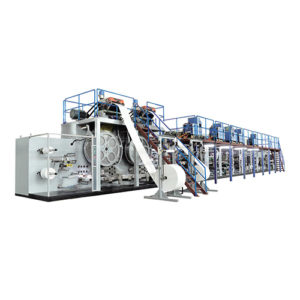
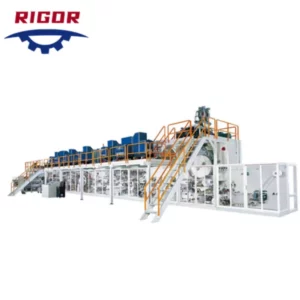
How much factory space do I need for a diaper production line? A typical baby diaper production line is quite long, often 20-30 meters. Including space for raw material storage at the input end, packaging equipment at the output end, and access for maintenance, a minimum factory area of 800-1,500 square meters is a reasonable estimate for a single production line.
What are the most critical raw materials for making diapers? The primary raw materials by weight and cost are fluff pulp (for the absorbent core), superabsorbent polymer (SAP, which locks in moisture), and non-woven fabrics (for the soft topsheet and backsheet). Other essential materials include polyethylene (PE) film, adhesives, and various elastics.
How long does the installation and commissioning process take? For a standard full-servo baby nappy machine, the process typically takes 3 to 5 weeks from the time the technicians arrive at your prepared facility. This includes mechanical assembly, electrical wiring, running tests, fine-tuning parameters, and conducting initial operator training.
Can a single machine produce different sizes of diapers (e.g., Small, Medium, Large)? Yes, modern baby nappy machines are designed to be size-changeable. On a full-servo machine, many adjustments can be made through the software on the control panel. However, some mechanical parts, such as the cutter and certain guides, will still need to be physically replaced. A typical size changeover can take anywhere from 30 minutes to a few hours, depending on the machine’s design.
What is the main difference between a baby diaper machine and an adult diaper machine? While the underlying technology is similar, the main differences are size and complexity. An adult diaper machine is physically larger to accommodate the larger product dimensions. The absorbent core is much bigger, requiring a more powerful pulp-forming system. Adult diapers often come in more varied styles (e.g., pant-style pull-ups vs. open-style with tabs), which requires different machine configurations.
Conclusión
The decision to invest in a baby nappy machine is a journey that demands a confluence of technical acumen, market sensibility, and financial discipline. It transcends the simple act of purchasing equipment, evolving into a strategic endeavor to build a competitive and sustainable manufacturing enterprise. As this detailed examination has shown, the path to success is paved not with shortcuts, but with diligent inquiry and a holistic perspective. From the intricate workings of a full-servo system to the subtle cultural preferences of a distant market, every detail matters. The foundational pillars of a successful venture rest upon selecting a machine whose technology is both advanced and adaptable, performing a rigorous market analysis that grounds the product in real-world consumer needs, and forging a true partnership with a manufacturer committed to long-term support. By embracing this comprehensive, seven-point framework, entrepreneurs in 2025 can navigate the complexities of this investment with clarity and confidence, transforming capital and ambition into a thriving business that serves the fundamental needs of families in their communities and beyond.