Abstract
The escalating operational expenditures associated with incontinence care represent a significant financial strain on nursing homes globally, particularly in emerging markets across South America, Russia, Southeast Asia, the Middle East, and South Africa. This analysis examines the economic and strategic rationale for aged care facilities to vertically integrate their supply chain by investing in an on-site adult diaper production line. It posits that such an investment transcends a mere cost-cutting measure, evolving into a foundational strategy for ensuring supply autonomy, enhancing the quality of resident care, and achieving long-term financial resilience. The discourse evaluates the multifaceted return on investment, moving beyond simple payback calculations to encompass factors like supply chain stability, product customization, and operational independence. A comprehensive framework is presented for facility managers and stakeholders to assess the viability of implementing an adult diaper production line for nursing homes, considering machinery specifications, raw material sourcing, quality assurance protocols, and the necessary human capital for successful operation.
Key Takeaways
- Calculate current annual diaper expenditures to establish a clear financial baseline for comparison.
- Evaluate diaper machine specifications against your facility's specific resident population and daily usage needs.
- Secure reliable, long-term suppliers for essential raw materials like fluff pulp, SAP, and non-woven fabrics.
- Develop a stringent quality control protocol to ensure every diaper produced meets high standards of care.
- An on-site adult diaper production line for nursing homes can dramatically reduce long-term operational costs.
- Properly train operational staff on machine safety, maintenance, and efficient production workflows.
- Project a comprehensive ROI that includes both direct cost savings and strategic operational benefits.
Table of Contents
- Factor 1: Quantifying the Financial Imperative for On-Site Production
- Factor 2: Navigating the Machinery Selection Process
- Factor 3: Mastering the Supply Chain and Raw Material Logistics
- Factor 4: Ensuring Operational Excellence and Quality Assurance
- Factor 5: Projecting Long-Term ROI and Strategic Advantages
- FAQ
- Conclusión
- References
Factor 1: Quantifying the Financial Imperative for On-Site Production
The consideration of bringing a manufacturing process in-house, especially one as specific as an adult diaper production line for nursing homes, begins not with machinery or materials, but with a profound and honest appraisal of the current state of affairs. For any aged care facility, the provision of incontinence products is a non-negotiable aspect of resident care, a daily reality interwoven with the dignity and comfort of the people you serve. Yet, it is also a line item on a balance sheet that is subject to immense external pressures. The prices of finished goods fluctuate, supply chains falter, and the logistical burden of managing inventory consumes valuable resources. To truly grasp the argument for on-site production, one must first quantify the existing financial and operational dependency.
The Arithmetic of Dependency: Calculating Your Current Diaper Expenditure
Let us engage in a thought exercise. The first step toward understanding the potential of self-sufficiency is to map the geography of your current spending. A simple calculation can illuminate the scale of your expenditure. Consider the following formula:
(Average number of diapers per resident per day) × (Number of residents requiring incontinence care) × (Average cost per diaper) × 365 days = Annual Diaper Expenditure
For a 150-bed facility where, perhaps, 100 residents require an average of 4 diapers per day, at a cost of $0.50 per unit, the calculation is straightforward: 4 × 100 × $0.50 × 365 = $73,000 per year. What might your facility's number be? Take a moment to substitute your own figures. The resulting number is often startling. It represents a significant, recurring operational cost flowing out of your organization.
However, a shallow calculation of unit cost multiplied by volume fails to capture the full picture. One must also account for the submerged costs—the hidden portion of the iceberg. These include freight charges from distant suppliers, the cost of capital tied up in warehoused inventory, staff hours dedicated to ordering, receiving, and managing stock, and the premium paid for emergency orders when regular supplies run unexpectedly low. A comprehensive audit reveals a financial dependency that is often far greater than initially perceived.
| Cost Factor | Outsourced Supply Model (Annual Estimate) | In-House Production Model (Annual Estimate) |
|---|---|---|
| Direct Product Cost | $73,000 (based on example) | $35,000 (Raw Materials, 40-50% saving) |
| Freight & Shipping | $5,000 – $8,000 | $2,000 (Bulk raw materials) |
| Inventory Holding Costs | $3,000 – $5,000 | $1,500 (Smaller raw material footprint) |
| Staff Labor (Procurement) | $4,000 (Ordering, tracking, stocking) | $1,000 (Bulk ordering, less frequent) |
| Emergency Purchase Premium | $1,000 – $3,000 | $0 (Production on demand) |
| Total Estimated Annual Cost | $86,000 – $93,000 | $39,500 + Labor/Energy |
Beyond the Price Tag: The Unquantifiable Costs of Supply Chain Volatility
Financial metrics alone do not tell the whole story. The reliance on external suppliers creates a state of perpetual vulnerability. Global events, from shipping lane disruptions in the Red Sea to sudden tariffs or unforeseen public health crises, can sever supply lines with little warning. Imagine the institutional anxiety that arises when a shipment is delayed by three weeks. The conversation in the staff room shifts from quality of care to rationing of supplies. Caregivers are forced to make difficult choices, and the dignity of residents is compromised.
What is the cost of a single day without an adequate supply of diapers? It cannot be measured in dollars or rubles or rand. It is measured in the loss of dignity for a resident, in the added physical and emotional burden on caregivers, and in the erosion of trust that families place in your facility. An adult diaper production line for nursing homes is, from this perspective, an instrument of risk mitigation. It transforms a volatile external variable into a stable, predictable internal process. It is a declaration of independence from a fragile global system, ensuring that the fundamental needs of your residents are always met, not by a distant supplier, but by your own hands.
Factor 2: Navigating the Machinery Selection Process
Once the "why" of on-site production is firmly established through a clear-eyed financial and strategic assessment, the conversation naturally pivots to the "how." At the heart of this new operational paradigm is the machine itself. Selecting the right diaper machine is not like buying a standard piece of office equipment; it is a significant capital investment that will shape your facility's operational capacity for years to come. The process demands a thoughtful, Socratic approach—a series of questions you must ask yourself and potential manufacturers to ensure the technology aligns perfectly with your unique institutional needs. It involves moving from a general desire for production to a specific understanding of the mechanics and capabilities required.
Deconstructing the Machine: Core Components and Their Functions
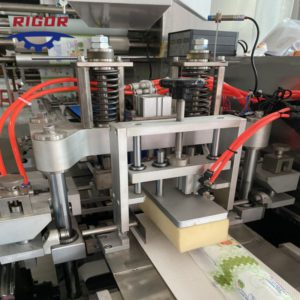
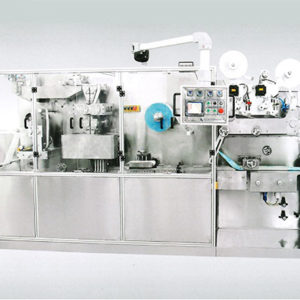
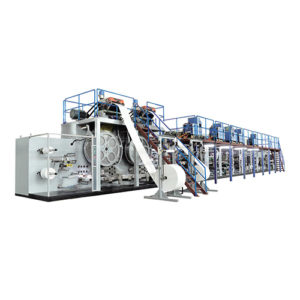
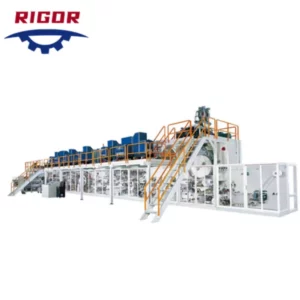
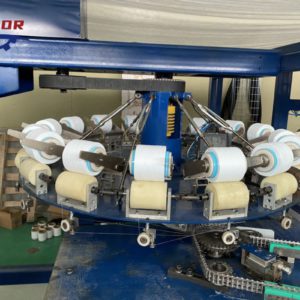
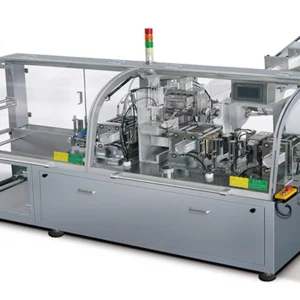
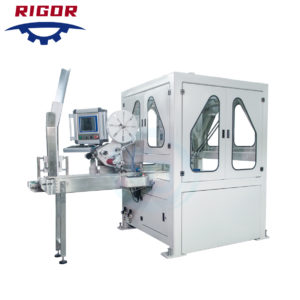
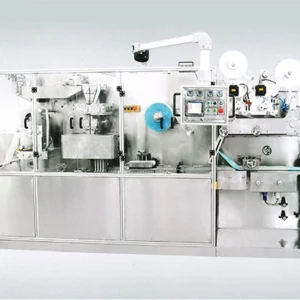
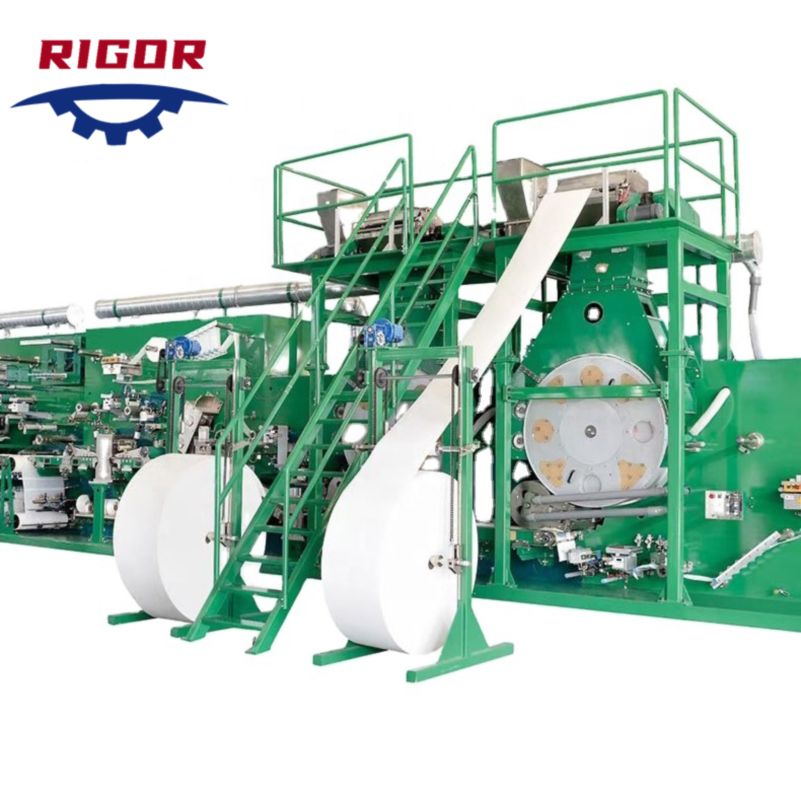
To make an informed choice, you must first become a student of the technology. An adult diaper machine, in its essence, is a symphony of synchronized mechanical processes. Let's demystify its key sections. Think of it as learning the anatomy of your future production capacity.
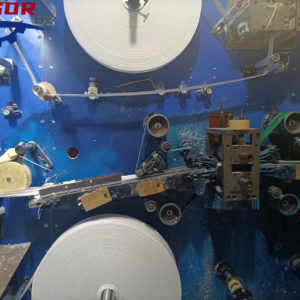
- Raw Material Feeding System: This is the starting point, where large rolls of non-woven fabric, PE film, and tissue paper are unrolled at precise speeds.
- Fluff Pulp Crushing System: Raw wood pulp is milled into a soft, fluffy consistency, forming the primary absorbent core of the diaper.
- Core Forming & SAP Application: The milled fluff pulp is vacuum-formed into the characteristic diaper shape. At this stage, Super Absorbent Polymer (SAP)—tiny crystals that can absorb hundreds of times their weight in liquid—is precisely mixed in. The ratio of fluff to SAP is a key determinant of the diaper's absorbency.
- Lamination and Acquisition Layer: The absorbent core is encapsulated between layers of non-woven fabric. An acquisition distribution layer (ADL) is often added to quickly pull moisture away from the skin and distribute it evenly.
- Elastic and Cuff Application: Waistband elastics and standing leak guards (leg cuffs) are applied using hot-melt adhesives. This is vital for fit and leakage prevention.
- Cutting and Folding: The continuous line of product is cut into individual diapers and folded into its final, recognizable shape.
- Packing System: The finished diapers are automatically counted, stacked, and fed into a bagging unit for packaging.
Understanding these components allows you to ask more intelligent questions. Instead of asking, "Is it a good machine?" you can ask, "What is the tolerance of the SAP applicator?" or "How does the machine ensure the integrity of the leg cuff adhesive?" This deeper inquiry is fundamental to selecting a machine that produces a high-quality product.
Matching Speed and Output to Your Facility's Scale
A common pitfall is to be seduced by the highest possible production speed (measured in pieces per minute, or PPM). A machine that produces 400 PPM might seem superior to one that produces 200 PPM. But is it right for you? Let's return to our 150-bed facility example.
Daily need: 100 residents × 4 diapers/day = 400 diapers. Weekly need: 400 diapers/day × 7 days = 2,800 diapers.
A machine producing at 200 PPM could theoretically produce this entire weekly supply in just 14 minutes of continuous operation (2,800 pieces / 200 PPM). A 400 PPM machine would do it in 7 minutes. The question then becomes, what is the value of that extra speed? For a single nursing home, even a lower-speed machine will likely only need to be run for a few hours each week to meet demand. The capital cost for a higher-speed machine can be substantially greater. Therefore, the goal is not to find the fastest machine, but the most appropriate machine. The right choice balances production capacity with initial investment, energy consumption, and maintenance complexity.
The Spectrum of Automation: From Semi-Automatic to Fully Automatic Lines
The level of automation is another critical decision point, directly impacting labor costs, operational consistency, and initial investment. The choice is not simply between "manual" and "automatic," but exists on a spectrum.
| Feature | Semi-Automatic Production Line | Fully Automatic Production Line |
|---|---|---|
| Initial Investment | Lower | Higher |
| Labor Requirement | Higher (2-4 operators typically required) | Lower (1-2 operators for supervision) |
| Production Speed | Moderate (e.g., 100-180 PPM) | High (e.g., 200-400+ PPM) |
| Product Consistency | Good, but more operator-dependent | Excellent, highly consistent output |
| Operational Footprint | Generally smaller | Larger, requires more floor space |
| Changeover Complexity | Can be more time-consuming for size changes | Often features faster, automated size changes |
| Ideal Use Case | Single facilities, smaller-scale operations, budget-conscious entry | Large multi-facility organizations, commercial sales, high-demand environments |
For most individual nursing homes or small chains, a semi-automatic or a lower-speed, cost-effective adult diaper machine often represents the sweet spot. It provides ample production capacity to ensure self-sufficiency while keeping the initial capital outlay and operational complexity manageable. A fully automatic line becomes more logical for very large institutions or for those who see an opportunity to sell surplus diapers to other facilities in their region, turning a cost center into a potential revenue stream.
Factor 3: Mastering the Supply Chain and Raw Material Logistics
The acquisition of an adult diaper production line for nursing homes is a transformative step, but it is only half of the equation. A machine, no matter how sophisticated, is inert without a steady, reliable flow of high-quality raw materials. The transition to in-house production is therefore also a transition into supply chain management. This may seem daunting, but it is a challenge that can be met with foresight and a structured approach. It requires a shift in thinking—from being a passive consumer of a finished product to an active manager of its core components. This mastery over your inputs is where true control over cost and quality is forged.
The Essential Quartet: Understanding Key Raw Materials
The quality of your final product is a direct reflection of the materials you put into it. Understanding the function of each component is not merely academic; it is essential for making informed purchasing decisions and for diagnosing any potential quality issues down the line. Let us examine the four foundational materials.
-
Fluff Pulp: This is the heart of the diaper's absorbent core. Typically derived from softwoods like pine, it is delivered in dense rolls or bales. Its primary role is to absorb and hold liquid. The quality of the pulp—its fiber length and treatment process—affects the diaper's bulk, softness, and wicking ability. When sourcing, you will want to ensure it has good absorption capacity and integrity when wet to prevent clumping.
-
Super Absorbent Polymer (SAP): If fluff pulp is the heart, SAP is the magic. These tiny, granular polymers are the heroes of modern diaper technology. When they come into contact with liquid, they transform into a gel, locking moisture away from the skin. The amount and quality of SAP directly dictate the diaper's total absorbency. A higher-end diaper for overnight use, for instance, will have a significantly higher concentration of SAP than a standard daytime product. Your choice of SAP will be a direct trade-off between cost and performance.
-
Non-Woven Fabrics: Several types of non-woven fabrics are used, each with a specific purpose. The topsheet is the layer that rests against the resident's skin, so its softness and hydrophilicity (ability to let moisture pass through) are paramount. The backsheet, often a PE film or a cloth-like breathable material, provides the waterproof barrier. The fabric used for the leg cuffs (leak guards) must be hydrophobic (water-repellent) to contain liquid within the core.
-
Adhesives and Elastics: Hot-melt adhesives are the invisible glue holding everything together. They are used for construction (bonding the layers), positioning (holding the core in place), and for the fastening tabs. The quality of the adhesive ensures the diaper does not delaminate or fail during use. Elastics, used in the waistband and leg cuffs, provide the snug, comfortable fit that is crucial for preventing leaks.
Sourcing Strategies: Building a Resilient and Cost-Effective Supply Chain
With this material knowledge in hand, the task of building your supply chain begins. Your goal is to create a system that is not only cost-effective but also resilient to shocks.
A primary consideration is sourcing locally versus internationally. Local or regional suppliers, where available, can offer significant advantages in terms of reduced shipping times, lower transportation costs, and easier communication. This is particularly relevant in large, geographically diverse regions like South America or Southeast Asia, where a supplier in a neighboring country might be more practical than one halfway across the world. However, international suppliers often provide economies of scale, a wider variety of specialized materials, and potentially lower unit costs, especially for materials like SAP which are produced in only a few key regions. The optimal strategy often involves a hybrid approach: sourcing bulkier materials like fluff pulp more locally while securing specialized polymers or fabrics from top-tier international manufacturers.
Vetting suppliers is a process that requires due diligence. Do not simply choose the supplier with the lowest price. Request material specification sheets and samples. Run these samples on your machine, if possible, or send them to a lab for testing. A reputable machine manufacturer can often provide guidance on material specifications that are compatible with their equipment. Discuss payment terms, lead times, and minimum order quantities (MOQs). Building a strong, long-term relationship with two or three key suppliers for your most vital materials is a far more robust strategy than constantly chasing the lowest spot price.
Finally, consider your inventory strategy. While on-site production frees you from holding large stocks of finished diapers, you will now need to hold stock of raw materials. A "Just-in-Time" (JIT) approach, where materials arrive just as they are needed, is too risky for a healthcare setting. A more prudent approach is to maintain a buffer stock—perhaps 1-2 months' worth of key materials—to insulate your facility from any unforeseen supplier delays or shipping issues. This buffer is your insurance policy, guaranteeing that the promise of care is never broken by a logistical hiccup.
Factor 4: Ensuring Operational Excellence and Quality Assurance
Possessing a state-of-the-art adult diaper production line and a well-curated supply of raw materials are necessary but insufficient conditions for success. The ultimate triumph of this strategic investment hinges on human capability and systematic rigor. Operational excellence is not an abstract corporate slogan; in this context, it is the tangible process of transforming raw materials into a product that upholds the dignity of your residents. It involves a deep commitment to training, maintenance, and, most importantly, an unwavering standard of quality. To produce your own diapers is to take direct responsibility for their performance, a responsibility that must be embraced with the same seriousness as any other aspect of clinical care.
From Installation to Operation: The Human Element
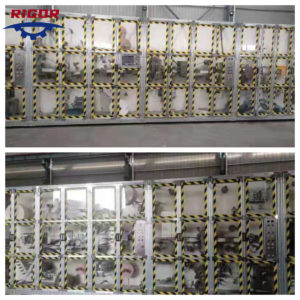
The journey begins the moment the machine arrives. The site preparation phase is the foundation for everything that follows. This requires more than just clearing floor space. You must ensure adequate electrical supply to meet the machine's power rating, proper ventilation to handle dust from the fluff pulp, and a logical layout that facilitates the flow of raw materials in and finished products out. A thoughtful layout, planned in consultation with the machine manufacturer's technicians, can prevent bottlenecks and enhance safety for years to come.
The most critical component, however, is the human one. Your staff must be transformed from users of a product to masters of a process. This is where comprehensive training becomes indispensable. A reputable manufacturer does not simply deliver a machine; they deliver a turnkey solution, and a core part of that solution is education. The training should be hands-on and encompass several tiers of learning, reflecting a framework like Bloom's Taxonomy where learners progress from basic recall to higher-order skills (Raths, 2002).
- Remembering & Understanding: Operators must learn the names and functions of each part of the machine.
- Applying: They must be able to perform standard operating procedures—startup, shutdown, and material loading.
- Analyzing: They need to learn to interpret feedback from the machine, such as alarm codes or changes in operational sounds, to diagnose minor issues.
- Evaluating & Creating: Senior operators or maintenance staff should be trained to evaluate product quality and create solutions for optimizing machine performance or troubleshooting more complex problems.
This training should be an active, engaging process. Peer teaching, where a newly trained operator mentors another, can be a powerful tool for reinforcing knowledge and building team confidence (Skillshub, 2023). Regular preventive maintenance is the final piece of the operational puzzle. Following the manufacturer's recommended schedule for cleaning, lubrication, and parts inspection is not a chore; it is the discipline that prevents costly unplanned downtime and ensures the machine's longevity.
The Promise of Dignity: Implementing a Robust Quality Control Framework
When you purchase diapers from an external brand, you are outsourcing quality control. When you produce them yourself, you are insourcing that responsibility. This is a profound shift. Every diaper that comes off your line is a direct promise of security and comfort to a resident. A failure in quality—a weak adhesive tab, an insufficient absorbent core, a leaky leg cuff—is a direct failure in that promise.
Therefore, implementing a robust Quality Control (QC) framework is not optional. It must be woven into the fabric of the production process. This does not need to be an intimidatingly complex system. A constructivist approach, where staff learn by doing and seeing the results, is highly effective (teachersoftomorrow.org, 2025). The framework can be built on a few simple, consistent checks:
- Visual Inspection: At regular intervals (e.g., every 15 minutes), an operator should pull a diaper from the line and perform a visual check. Are all layers properly aligned? Are the elastics secure? Are the fastening tabs correctly placed?
- Weight Consistency: Periodically, a diaper should be weighed on a small digital scale. A consistent weight indicates that the fluff pulp and SAP are being dispensed correctly. Significant variations could signal a problem that needs immediate attention.
- Adhesive Tab Test: The operator should manually pull on the fastening tabs to ensure the adhesive is strong and the tab does not tear away from the chassis of the diaper.
- Absorbency Test (Batch Test): Perhaps once per shift or per production run, a more formal absorbency test can be performed. This can be as simple as placing a diaper on a tray and slowly pouring a measured amount of colored saline solution onto the topsheet. One can then observe how quickly the liquid is absorbed, assess for any surface wetness after a few minutes, and check for any leaks from the backsheet or leg cuffs.
These simple, repeatable actions transform the production process from a purely mechanical one into a mindful practice of quality assurance. They empower your staff to take ownership of the final product and ensure that every single diaper that reaches a resident is one that you can stand behind with confidence.
Factor 5: Projecting Long-Term ROI and Strategic Advantages
The final pillar in the argument for establishing an adult diaper production line for nursing homes is the comprehensive evaluation of its long-term value. While the initial capital outlay for machinery is significant, a myopic focus on this single figure can obscure the profound financial and strategic returns that unfold over time. Calculating the Return on Investment (ROI) is a critical step, but it must be approached with a wide-angle lens, capturing not only the direct, quantifiable cost savings but also the less tangible, yet equally powerful, strategic benefits that enhance the institution's resilience, reputation, and standard of care.
Calculating Your Return on Investment: A Step-by-Step Framework
A credible ROI projection provides the financial justification needed for board approval and stakeholder buy-in. It demystifies the path from investment to profitability. Let's break down the calculation into its core elements. The fundamental formula is:
ROI (%) = [ (Net Annual Savings) / (Initial Investment) ] × 100
The key is to define each variable with as much accuracy as possible.
-
Initial Investment: This is the most straightforward figure. It includes:
- The purchase price of the diaper machine.
- Shipping, installation, and commissioning fees.
- Cost of site modifications (e.g., electrical upgrades, ventilation).
- Initial staff training costs.
-
Net Annual Savings: This figure requires more detailed calculation. It is the difference between your old operational model and the new one.
- Gross Annual Savings: This is the total annual cost of your previous outsourced diaper supply (as calculated in Factor 1, including product cost, shipping, and inventory management).
- New Annual Operating Costs: This is the cost to run your in-house production. It includes:
- Annual cost of raw materials (pulp, SAP, non-wovens, etc.).
- Annual labor cost for machine operators.
- Annual energy consumption costs.
- Annual budget for spare parts and maintenance.
The equation for Net Annual Savings is: (Gross Annual Savings) – (New Annual Operating Costs).
Let's revisit our example. If the old model cost ~$90,000 annually, and the new operating costs (materials, labor, energy, maintenance) total ~$50,000, the Net Annual Savings would be $40,000. If the total initial investment for a semi-automatic line was $200,000, the simple ROI would be:
($40,000 / $200,000) × 100 = 20%
This indicates a payback period of five years (100% / 20% per year). For many facilities facing ever-rising external costs, a five-year payback on a core operational expense is an exceptionally attractive proposition.
The Strategic Horizon: Beyond Cost Savings
A purely financial ROI calculation, however, fails to capture the full spectrum of value. The decision to invest in a modern adult diaper production line for nursing homes unlocks several strategic advantages that resonate throughout the organization.
Product Customization and Care Enhancement: With in-house production, you are no longer limited to the off-the-shelf products available on the market. You gain the ability to tailor products to the specific needs of your residents. Does a subset of your population require significantly higher absorbency for overnight use? You can adjust the SAP ratio to create a custom, high-performance product. Do you have residents with particularly sensitive skin? You can source and utilize premium, softer non-woven materials for the topsheet. This capability transforms the diaper from a generic supply item into a customizable component of a personalized care plan.
Supply Chain Sovereignty: As discussed earlier, the value of being insulated from global supply chain shocks cannot be overstated. This autonomy provides peace of mind to management, staff, and residents' families. It ensures continuity of care, a core promise of any reputable aged care facility. This resilience is a powerful asset in an increasingly unpredictable world.
Reputation and Market Leadership: A nursing home that takes the innovative step of producing its own essential supplies positions itself as a forward-thinking leader. It is a powerful story to tell in your marketing and community outreach efforts. It demonstrates a deep commitment to both fiscal responsibility and resident welfare. It can become a key differentiator in a competitive market, attracting both discerning families and high-quality staff who want to be part of a progressive organization.
Potential for Revenue Generation: Once your facility's needs are met, the machine's excess capacity represents an opportunity. You can become a supplier to smaller local clinics, other nursing homes, or home-care agencies in your area. This can turn what was once a major cost center into a new revenue stream, further accelerating your return on investment and contributing positively to the facility's overall financial health. This strategic pivot from cost to revenue is the ultimate expression of the investment's long-term power.
FAQ
1. How much physical space is required to install an adult diaper production line? The required space varies significantly based on the machine's level of automation and speed. A semi-automatic line might require a space of approximately 15-20 meters in length, 4 meters in width, and 4 meters in height. A fully automatic, high-speed line will require a larger footprint, potentially 25-30 meters long. It is also important to allocate additional space for raw material storage and warehousing of finished products.
2. What are the typical power and utility requirements for these machines? Most adult diaper machines operate on a 380V, 50Hz, 3-phase power supply, though this can be customized by the manufacturer for different regional standards. Total power consumption can range from 80kW for a smaller semi-automatic machine to over 200kW for a large, fully automatic line. Additionally, a compressed air supply is necessary to operate various pneumatic components of the machine.
3. How many staff members are needed to operate the production line? A semi-automatic line typically requires 2 to 4 operators per shift. Their roles would include loading raw materials, supervising the machine's operation, performing quality checks, and packing the finished products. A fully automatic line is designed for lower labor costs and might only require 1 or 2 supervisors per shift, as stacking and packing are often integrated into the machine.
4. Can a single machine produce different sizes of adult diapers (e.g., Medium, Large, XL)? Yes, most modern diaper machines are designed with the flexibility to produce multiple sizes. However, changing from one size to another, known as a "size changeover," requires stopping the machine and replacing certain molds and cutting tools. The time and complexity of this changeover vary; more advanced machines often feature quicker and more automated changeover processes.
5. What kind of after-sales support and training should I expect from a manufacturer? A reputable manufacturer should provide comprehensive after-sales support. This includes sending technicians to your facility for installation, commissioning, and initial staff training. The training should cover machine operation, routine maintenance, and basic troubleshooting. Ongoing support should include access to a technical support team for remote assistance and a reliable supply of spare parts.
6. How do I reliably source raw materials in regions like South Africa or the Middle East? Your machine manufacturer is an excellent initial resource; they often have established relationships with global and regional raw material suppliers and can provide introductions. Additionally, you can attend industry trade shows, search online B2B platforms like Alibaba or Indiamart, and contact regional chemical and textile distributors. It is wise to secure at least two viable suppliers for each critical material to ensure supply chain resilience.
7. Realistically, how long does it take to recoup the initial investment in a diaper machine? The payback period depends on your production volume, the cost savings per diaper, and the initial investment. Based on typical cost savings of 40-50% compared to buying finished goods, many nursing homes find that the payback period for a semi-automatic line is between 3 to 6 years. A detailed ROI calculation is essential to determine the specific projection for your facility.
Conclusión
The decision to integrate an adult diaper production line within a nursing home is a profound strategic pivot, moving far beyond the simple arithmetic of cost reduction. It represents a fundamental shift from a position of dependency to one of autonomy, from being a price-taker in a volatile market to becoming the master of a critical supply chain. As we have explored, the journey requires a diligent examination of your current expenditures, a thoughtful selection of appropriate technology, a mastery of raw material logistics, and an unwavering commitment to operational and quality excellence.
The investment is not merely in steel and circuitry; it is an investment in resilience, ensuring that the promise of care is never compromised by external market forces. It is an investment in quality, providing the ability to customize products to better serve the unique needs and dignities of each resident. And ultimately, it is an investment in a more sustainable and financially robust future for the entire organization. By taking control of this essential aspect of care, a nursing home does not just save money; it fortifies its very foundation, ensuring it can continue to serve its community with compassion and confidence for years to come.
References
- Education.vic.gov.au. (2017). High impact teaching strategies.
- IOPN. (2020). 3. Learning theories: Understanding how people learn. Illinois Open Publishing Network. https://iopn.library.illinois.edu/pressbooks/instructioninlibraries/chapter/learning-theories-understanding-how-people-learn/
- Mahoney, A. J. (2022, October 25). An overlooked superpower: How to explain complex concepts. Medium. @a.jeremymah/an-overlooked-superpower-how-to-explain-complex-concepts-2dd14573ac13
- Raths, D. (2002). Improving instruction with bloom's taxonomy. OIRA.
- Skillshub. (2023, October 4). 15 active learning strategies (with examples). https://www.skillshub.com/blog/active-learning-strategies-examples/
- Teachers of Tomorrow. (2025, May 28). The most common teaching philosophy examples in 2025. https://www.teachersoftomorrow.org/blog/insights/teaching-philosophy-examples/
- University of Illinois Chicago. (2023). Bloom's taxonomy of educational objectives. https://teaching.uic.edu/cate-teaching-guides/syllabus-course-design/blooms-taxonomy-of-educational-objectives/