Abstract
The global diaper manufacturing industry in 2025 faces a confluence of economic and environmental pressures, primarily driven by escalating energy costs and a growing market demand for sustainable practices. This analysis examines the financial and operational rationale for adopting an energy-efficient diaper production line. It posits that such a transition is not merely an ecological consideration but a fundamental strategic imperative for maintaining profitability and market competitiveness. The investigation deconstructs the core technologies underpinning these advanced systems, with a particular focus on full-servo motors, intelligent sensor networks, and optimized raw material handling processes. By quantifying direct energy savings and ancillary benefits—such as reduced material waste, lower maintenance overhead, and decreased operational downtime—the document demonstrates a clear and compelling return on investment (ROI). It argues that the implementation of energy-efficient machinery can yield operational cost reductions of up to 40%, thereby securing a manufacturer's long-term financial viability and brand reputation in a dynamic global market.
Key Takeaways
- Upgrade to full-servo motors to slash direct energy consumption and improve precision.
- Integrate smart sensors to enable predictive maintenance and minimize costly downtime.
- Optimize raw material handling to significantly reduce both waste and energy usage.
- Calculate the complete ROI of an energy-efficient diaper production line for a clear financial case.
- Conduct a thorough energy audit to identify the most impactful areas for improvement.
- Partner with an experienced machine supplier to ensure a smooth technological transition.
- Focus on efficient auxiliary systems, like dust collection, for cumulative energy savings.
Table of Contents
- The Shifting Landscape: Why Energy Efficiency in Diaper Manufacturing is No Longer Optional in 2025
- Deconstructing the energy-efficient diaper production line: A Technological Deep Dive
- The 40% Cost Reduction Promise: Calculating the Tangible ROI of Your Investment
- Beyond the Balance Sheet: The Qualitative and Strategic Advantages of Efficiency
- Navigating the Transition: Practical Steps to Upgrading or Implementing Your Production Line
- Frequently Asked Questions (FAQ)
- Conclusión
- References
The Shifting Landscape: Why Energy Efficiency in Diaper Manufacturing is No Longer Optional in 2025
The calculus of manufacturing has always been a delicate balance of inputs and outputs, of costs and revenues. For decades, the primary focus in the disposable hygiene sector has been on production speed and raw material costs. Yet, the economic and social climate of 2025 presents a new, unignorable variable that has fundamentally altered this equation: the cost of energy. What was once a manageable line item on an operational budget has now become a central determinant of profitability and, indeed, of survival for many manufacturers. The question is no longer whether to consider energy efficiency, but how quickly and effectively one can integrate it into the core of the production process. For producers of disposable diapers, a high-volume, energy-intensive product, this question is particularly acute. The path forward lies not in incremental tweaks but in a wholesale rethinking of the production line itself.
Analyzing the Surge in Global Energy Costs: A Regional Perspective
The narrative of rising energy prices is not a uniform one; it unfolds with unique characteristics across different regions. In South America, burgeoning industrial sectors and fluctuating grid reliabilities have created a volatile energy market. Manufacturers there face the double bind of high tariffs and the potential for production stoppages due to power inconsistencies. A production line that consumes less power is not just cheaper to run; it is also more resilient, capable of operating with smaller, more affordable backup power systems during outages.
Consider Russia, where despite its status as an energy producer, industrial electricity prices have been subject to policy shifts and the need to modernize an aging grid infrastructure. The incentive structure is moving towards penalizing heavy consumption, making every kilowatt-hour saved a direct contribution to the bottom line. For manufacturers competing on a global scale, domestic energy policy can become a factor that erodes international price competitiveness if not actively managed.
In the Middle East and Southeast Asia, rapid economic development and population growth are driving unprecedented demand for electricity. Governments are increasingly looking towards demand-side management, encouraging industries to become more efficient rather than building new power plants indefinitely. Subsidies are being reconsidered, and the true cost of energy is beginning to be reflected in industrial rates. For a diaper manufacturer in these regions, the social and political winds are blowing firmly in the direction of efficiency. Investing in an energy-efficient diaper production line becomes a way to align with national policy and secure a more predictable cost structure in a future of diminishing energy subsidies. The cost of manufacturing diapers is a complex topic, with energy now playing a more significant role than ever before (diapermachines.com, 2025).
From Operational Overhead to Strategic Imperative: Redefining Manufacturing Costs
The traditional view of manufacturing costs often compartmentalizes expenses: raw materials, labor, maintenance, and utilities. Energy was filed under utilities, a cost to be paid, not a variable to be strategically managed. This perspective is now dangerously outdated. In the current climate, energy consumption must be viewed as a direct production input, as tangible as fluff pulp or non-woven fabric. Its cost is volatile and its impact on the final product price is profound.
An inefficient diaper machine is like a leaky bucket. You can keep pouring more resources—more capital, more labor—into it, but a significant portion will be lost as waste heat, friction, and unnecessary motion. This waste is a direct subtraction from your profit margin. An energy-efficient line, by contrast, is a tightly sealed vessel. Every unit of energy is applied with purpose and precision, translating directly into the production of a saleable good.
This redefinition transforms the investment in new machinery. A higher initial capital outlay for an energy-efficient model is not just a purchase; it is a long-term hedge against energy price volatility. It is a strategic decision that insulates the business from external market shocks and provides a sustainable competitive advantage. Imagine two companies: Company A continues to operate its older, mechanically driven lines, while Company B invests in a new, fully servo-driven system. When the next energy price hike occurs, Company A must either absorb the cost, eroding its profits, or pass it on to consumers, risking market share. Company B, with its lower energy consumption per unit, is far better positioned to weather the storm, maintaining its pricing and profitability.
The Hidden Costs of Inefficiency: Beyond the Electricity Bill
The most obvious cost of an inefficient production line is the monthly electricity bill. Yet, this is merely the tip of the iceberg. The hidden costs, the secondary and tertiary effects of poor energy management, are often far greater and more corrosive to a business.
First, consider maintenance. Older, mechanically complex machines with gearboxes, belts, and long driveshafts are systems with numerous points of friction and wear. They generate more vibration and heat, which accelerates the degradation of components. This leads to more frequent breakdowns, a greater need for spare parts inventory, and higher labor costs for the maintenance team. A modern, servo-driven line, with its direct drives and fewer mechanical transfer points, inherently runs cooler and smoother, significantly reducing the maintenance burden (Wang et al., 2019).
Second is the cost of material waste. Inconsistent power or the jerky movements of a mechanical system can cause problems with web tension, leading to material stretching or tearing. Start-up and shut-down sequences on older machines are often less precise, resulting in a higher number of non-conforming products during these phases. Each rejected diaper is a complete loss of all its constituent raw materials, from the superabsorbent polymer to the packaging. An energy-efficient line, characterized by its precision control, minimizes these fluctuations, ensuring a higher percentage of first-quality products.
Finally, there is the cost of downtime. Every hour the line is not running is an hour of lost revenue. Inefficient machines, with their higher maintenance needs, are simply down more often. The time spent waiting for a replacement part, diagnosing a mechanical failure, or clearing a jam caused by inconsistent operation is a direct drain on the company's productive capacity. The reliability and predictive maintenance capabilities of modern, sensor-equipped lines transform downtime from a frequent crisis into a rare, scheduled event.
Deconstructing the energy-efficient diaper production line: A Technological Deep Dive
To appreciate the leap in performance and savings that modern equipment offers, one must look inside the machine. It is not a single invention, but a symphony of interconnected technologies working in concert to minimize waste in all its forms: wasted energy, wasted materials, and wasted time. The design philosophy has shifted from brute force mechanics to intelligent, precise control. Understanding these core components is the first step for any manufacturer contemplating an upgrade. It is about moving from a system that simply works to a system that works intelligently.
The Heart of Efficiency: The Role of Full-Servo Motors vs. Traditional Drive Systems
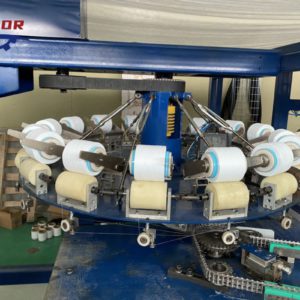
At the core of any diaper machine is the drive system, the collection of motors and mechanisms that move the raw materials through the process. For many years, the standard was a single large motor driving a complex network of shafts, gears, and belts. Think of it as an old industrial powerhouse. A new, innovative diaper machine uses a different philosophy: multiple, independent full-servo motors.
A full-servo motor is a smart motor. It consists of the motor itself, a controller, and an encoder that provides precise feedback on its position and speed. This closed-loop system allows for incredible accuracy. Instead of a single large motor running continuously at full power, each servo motor is responsible for a specific task—pulling the non-woven fabric, cutting the leg elastic, placing the frontal tape—and it only draws significant power when it is actively performing that task. This "power-on-demand" approach is the primary source of direct energy savings.
The difference in operational philosophy is profound. A mechanical line is always "on"—the main motor spins, the shafts turn, and clutches engage or disengage to start or stop a function. This generates constant noise, vibration, and heat, all of which are forms of wasted energy. A full-servo line is quiet and still when idle. Motion is initiated instantly and precisely when needed and stops just as quickly. This reduces wear, heat, and, most of all, the baseline energy consumption of the machine. The precision of servo motors also means less material waste. Because the positioning of each component is accurate to a fraction of a millimeter, there are fewer rejects due to misaligned layers or incorrectly cut materials.
| Feature | Full-Servo Drive System | Traditional Mechanical/Semi-Servo System |
|---|---|---|
| Energy Consumption | Low; motors operate on-demand, reducing idle power draw. | High; main motors run continuously, consuming power even when idle. |
| Precision & Control | Extremely high due to closed-loop feedback, minimizing material waste. | Lower; mechanical linkages have backlash and wear, leading to inconsistencies. |
| Maintenance | Low; fewer mechanical parts (gears, belts, shafts) mean less wear and tear. | High; requires regular lubrication, tensioning, and replacement of mechanical parts. |
| Changeover Time | Fast; size changes are programmed via the HMI, no mechanical adjustments. | Slow; requires manual adjustment or replacement of gears, cutters, and other parts. |
| Operational Speed | High; capable of faster and more stable production speeds. | Limited by mechanical constraints and vibration. |
| Noise & Vibration | Low; smoother operation with direct drives. | High; significant noise and vibration from gears, chains, and shafts. |
The Brains of the Operation: Smart Sensors and IoT Integration for Real-Time Optimization
If servo motors are the heart of the modern machine, then the network of smart sensors and its connection to the Internet of Things (IoT) is its nervous system and brain. An energy-efficient diaper production line is studded with hundreds of sensors that monitor every aspect of its operation in real time. There are photoelectric sensors tracking the edge of the material web, ultrasonic sensors verifying the placement of components, temperature sensors in the adhesive applicators, and vibration sensors on the motor bearings.
This constant stream of data is fed into the machine's central PLC (Programmable Logic Controller). In the past, this data was primarily used for basic process control—if a sensor detected a broken web, it would stop the machine. Today, the role of this data is far more sophisticated. Through IoT integration, this operational data can be collected, aggregated, and analyzed on a larger scale.
This enables a concept called predictive maintenance. Instead of waiting for a part to fail, the system can detect the early warning signs. For instance, a slight increase in the vibration of a motor bearing or a fractional rise in its operating temperature might indicate that it is beginning to wear out. The system can automatically flag this component for inspection or replacement during the next scheduled maintenance window, long before it fails catastrophically and stops the entire production line. This transforms maintenance from a reactive, fire-fighting activity into a proactive, planned process, maximizing uptime and production output.
Furthermore, this data allows for continuous process optimization. By analyzing sensor data over weeks and months, engineers can identify subtle inefficiencies. Perhaps a specific roll of raw material consistently causes micro-stops, or a certain machine speed leads to slightly higher energy consumption per unit. This data-driven approach allows for fine-tuning the machine for peak performance, squeezing out every last bit of efficiency.
Material Genius: Innovations in Raw Material Handling to Reduce Waste and Energy
The journey of a diaper from raw materials to finished product is a high-speed ballet of unwinding, joining, cutting, and folding. Every step of this process presents an opportunity to save energy and reduce waste. Modern machines incorporate numerous innovations in this area.
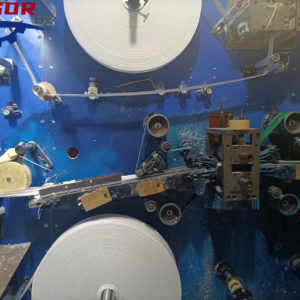
One key area is web tension control. The various layers of a diaper—the non-woven top sheet, the acquisition layer, the pulp core, the polyethylene back sheet—are all unwound from large rolls. Maintaining the perfect tension on these webs of material is paramount. If the tension is too loose, the layers can misalign. If it is too tight, the material can stretch, leading to out-of-spec products and potential tears. Traditional systems used mechanical brakes or simple motors, which provided coarse control. An energy-efficient diaper production line uses servo-driven unwind stands. These systems use sensors to measure the diameter of the roll and the tension of the web in real time, constantly adjusting the motor's speed and torque to maintain perfectly consistent tension from the beginning of the roll to the very end. This not only reduces waste from web breaks but also saves energy by avoiding the need to constantly fight against overly tight brakes.
Another innovation is the auto-splicing unit. In older machines, when a roll of material runs out, the entire line must be stopped. An operator then manually threads the start of the new roll into the machine. This process is slow and generates significant waste. Modern auto-splicers operate "on the fly." As one roll is about to run out, the machine automatically prepares the next roll. At the last possible moment, it splices the end of the old roll to the beginning of the new roll at full production speed. There is almost no downtime and minimal waste, dramatically improving the overall equipment effectiveness (OEE) of the line.
Auxiliary Systems Reimagined: Efficient Dust Collection, Air Compression, and Adhesive Application
The main drive system is not the only consumer of energy in a diaper plant. Auxiliary systems, often overlooked, can account for a substantial portion of a factory's total energy bill. Optimizing these systems is a key part of a holistic approach to energy efficiency.
The process of forming the absorbent core from fluff pulp generates a significant amount of dust. This dust must be collected for safety, quality, and environmental reasons. Traditional dust collection systems use a single, large fan running at constant speed, sized for the maximum possible load. This is highly inefficient, as the dust load is not always at its maximum. Modern systems use variable frequency drives (VFDs) on the fan motors. Sensors monitor the pressure in the ducts, and the VFD adjusts the fan speed to the minimum required to effectively capture the dust, saving a tremendous amount of energy.
Compressed air is another major utility in a diaper factory, used for pneumatic actuators and air jets. It is also notoriously inefficient. Leaks in the compressed air network are a common source of wasted energy. Modern machine design minimizes the use of pneumatics, favoring more efficient servo-electric actuators where possible. For the compressed air that is still needed, using modern, variable-speed compressors and implementing a rigorous leak detection program can yield significant savings.
Finally, consider the application of hot-melt adhesives, which are used to bond the various layers of the diaper together. These adhesives must be kept at a precise temperature. Older "tank" systems kept a large volume of adhesive melted 24/7, consuming energy even when the line was not running. Modern "tank-free" or "melt-on-demand" systems heat only the small amount of adhesive that is about to be used. This dramatically reduces standby energy consumption and also improves adhesive quality by minimizing its "pot life" or time spent in a molten state (Schiraldi & Feke, 2018).
The 40% Cost Reduction Promise: Calculating the Tangible ROI of Your Investment
A claim of cutting costs by up to 40% can sound ambitious, but it is grounded in the cumulative impact of the technological advances just discussed. This figure is not a marketing slogan; it is the result of a rigorous analysis of direct and indirect savings. For any factory owner or financial officer, the decision to invest millions of dollars in new capital equipment must be supported by a clear and credible calculation of the return on that investment (ROI). The process involves more than just looking at the sticker price of the machine; it requires a comprehensive audit of current costs and a realistic projection of future savings. The beauty of modern, data-rich machines is that they make this calculation more precise than ever before.
A Step-by-Step Framework for Calculating Your ROI
Calculating the ROI of an energy-efficient diaper production line is a systematic process. It begins with establishing a baseline of your current operational costs and then projecting the savings the new machine will generate.
-
Establish the Baseline (Current Machine):
- Energy Costs: Install a power meter on your existing line for a period of several weeks to get an accurate measure of its actual energy consumption (kWh per hour or kWh per 1,000 diapers produced). Multiply this by your utility rate to find the annual energy cost.
- Material Waste: Carefully track and weigh all waste material generated by the line, including start-up waste, rejected products, and trim waste. Calculate the monetary value of this waste based on your raw material costs.
- Maintenance Costs: Sum all costs related to maintenance for the past year, including spare parts, lubricants, and the labor hours of your maintenance staff dedicated to this line.
- Downtime Costs: Log all unplanned downtime. Calculate the value of the lost production by multiplying the downtime hours by the line's standard production rate and the profit margin per unit.
-
Project Savings (New Machine):
- Energy Savings: The machine supplier can provide a guaranteed maximum energy consumption figure (e.g., kWh/1,000 diapers). The difference between this and your baseline is your direct energy saving.
- Waste Reduction: Based on the machine's specifications (e.g., guaranteed efficiency of >98%, auto-splicing), project the percentage reduction in material waste.
- Maintenance Savings: Based on the reduced number of mechanical parts and the move to predictive maintenance, estimate a percentage reduction in maintenance costs. A conservative estimate might be 50-75%.
- Increased Production: The new machine will likely have a higher stable running speed and significantly less downtime. Calculate the value of this additional output.
-
Calculate the ROI:
- Total Annual Savings: Sum the projected savings from energy, waste, maintenance, and increased production.
- Net Investment: This is the total cost of the new machine, including shipping, installation, and training, minus any resale value of the old machine.
- Simple Payback Period (in years): Net Investment / Total Annual Savings.
- Return on Investment (ROI %): (Total Annual Savings / Net Investment) * 100.
| Cost Category | Example: Old Mechanical Line (Annual) | Example: New Full-Servo Line (Annual) | Annual Savings |
|---|---|---|---|
| Direct Energy Costs | $250,000 (at 500 kWh/hr) | $150,000 (at 300 kWh/hr) | $100,000 |
| Material Waste Costs | $180,000 (at 5% waste rate) | $72,000 (at 2% waste rate) | $108,000 |
| Maintenance Costs | $80,000 (parts & labor) | $20,000 (predictive, fewer parts) | $60,000 |
| Downtime Losses | $150,000 (at 10% unplanned downtime) | $30,000 (at 2% unplanned downtime) | $120,000 |
| Total Operational Costs | $660,000 | $272,000 | $388,000 |
| Net Investment | – | $2,000,000 | – |
| Simple Payback Period | – | 5.15 Years | – |
Note: The figures above are illustrative examples. Actual savings will vary based on local utility rates, labor costs, and specific machine models.
Direct Energy Savings: Quantifying the Kilowatt-Hour Reduction
The most straightforward component of the ROI calculation is the direct reduction in electricity consumption. As explored earlier, this stems primarily from the use of full-servo motors, variable frequency drives on auxiliary systems, and melt-on-demand adhesive systems. A typical older, mechanically-driven diaper machine might consume between 450-600 kWh of power. A state-of-the-art, full-servo machine of equivalent or greater output can consume as little as 250-350 kWh.
Let's put that into perspective. A difference of 200 kWh, over a year of operation (assuming 6,000 operating hours), amounts to 1,200,000 kWh of saved energy. Even at a modest electricity price of $0.12/kWh, that translates to $144,000 in direct savings, year after year. For manufacturers in regions with higher electricity costs, the savings are even more dramatic. This is not a theoretical number; it is a measurable, verifiable reduction in operational expenditure. The adoption of such efficient motor systems is one of the most impactful strategies for reducing industrial energy demand (Ferreira et al., 2012).
Indirect Financial Gains: Decreased Material Waste, Lower Labor Costs, and Reduced Downtime
While direct energy savings are significant, the indirect gains often contribute even more to the overall ROI. These are the savings that are not printed on the utility bill but are just as real on the profit and loss statement.
Decreased material waste is a huge factor. A diaper is a product of assembled materials. If the waste rate drops from 5% to 2% (a conservative improvement for a modern machine), the impact is substantial. On a line producing 500 million diapers a year, that 3% difference means 15 million fewer diapers are thrown away. That is 15 million units' worth of fluff pulp, superabsorbent polymer, non-woven fabric, and elastic that you did not have to purchase.
Lower labor costs are another benefit, though perhaps in a less obvious way. It is not about employing fewer people, but about using their time more effectively. On an older machine, operators spend a great deal of time clearing jams, making manual adjustments, and responding to alarms. Maintenance personnel are constantly engaged in reactive repairs. On a new, automated line with features like auto-splicing and predictive maintenance, operators can oversee multiple lines or focus on higher-value tasks like quality control. Maintenance becomes a scheduled, efficient process. This leads to a higher output per labor hour, which is a fundamental measure of productivity. The move to fully automatic baby diaper making machines is a key enabler of this shift (diapermachines.com, 2023).
Reduced downtime has a direct and powerful effect on revenue. A modern line's high reliability and predictive maintenance capabilities can increase uptime from a typical 85-90% to 95-98%. That additional uptime is pure profit. It is extra production capacity achieved without building a new factory or adding another shift. It allows you to meet customer demand more reliably and take on new orders with confidence.
Case Study Simulation: A Mid-Sized Manufacturer in Southeast Asia
Let's imagine a hypothetical manufacturer, "ASEAN Hygienics," operating in a country like Vietnam or Indonesia. They run a ten-year-old, semi-servo diaper line producing 600 diapers per minute. Their electricity cost is $0.15/kWh, and they face growing competition.
- Current Situation: Their line consumes 400 kWh, has a waste rate of 6%, and experiences about 12% unplanned downtime. Their annual energy bill for the line is $360,000. Their material waste costs them over $250,000 a year.
- The Investment: They decide to invest $2.5 million in a new, full-servo energy-efficient diaper production line that runs at 800 diapers per minute.
- The Results: The new line consumes only 280 kWh. The waste rate drops to 1.5% due to superior precision and auto-splicing. Unplanned downtime falls to under 3%.
- The Calculation:
- Energy Savings: The power draw is lower, but the speed is higher. The new machine is more efficient on a per-diaper basis. The new annual energy bill, despite higher output, is projected to be around $294,000, saving $66,000 annually.
- Waste Savings: The waste rate reduction saves them approximately $200,000 per year.
- Productivity Gain: The combination of higher speed (33% faster) and increased uptime (9% more running time) results in roughly 45% more diapers produced per year. This additional volume, sold at their existing margin, generates over $500,000 in additional gross profit.
- Total Annual Benefit: $66,000 (Energy) + $200,000 (Waste) + $500,000 (Productivity) = $766,000.
- Payback Period: $2,500,000 / $766,000 = ~3.26 years.
For ASEAN Hygienics, the investment is not just a cost-saving measure. It is a transformational project that increases their capacity, lowers their unit cost, and makes them vastly more competitive in their home market.
Beyond the Balance Sheet: The Qualitative and Strategic Advantages of Efficiency
The financial arguments for investing in an energy-efficient diaper production line are compelling, with clear returns demonstrated through reduced operational costs and increased output. However, to view this investment solely through a financial lens is to miss a significant part of its value. The adoption of this advanced technology ripples through an organization, bringing a host of qualitative and strategic benefits that, while harder to quantify in a spreadsheet, are just as profound in shaping the company's future success. These advantages touch upon product quality, brand perception, operational resilience, and human capital.
Enhancing Product Quality and Consistency Through Precision Engineering
A diaper is a surprisingly technical product. Its performance—its ability to absorb fluid quickly, lock it away from the skin, and fit comfortably without leaking—is a direct function of its construction. The precise placement of each component is not an aesthetic choice; it is a functional necessity.
The superior control offered by a full-servo system translates directly into a higher quality, more consistent product. Think about the absorbent core. Its shape, density, and position within the diaper chassis are the most important factors for performance. A mechanical system, with its inherent backlash and vibration, might have a placement tolerance of a few millimeters. This variability can lead to inconsistent performance from one diaper to the next. A servo system, guided by sensor feedback, can place that core with sub-millimeter accuracy, every single time, even at speeds of 1,000 pieces per minute.
This same precision applies to the application of elastics for the leg cuffs. If the tension is inconsistent, some diapers may have a tight, uncomfortable fit, while others may be too loose, leading to leaks. A servo-driven system applies the elastic with exact, unvarying tension, creating a perfect fit on every diaper. The result is a product that consumers can trust. This consistency builds brand loyalty, reduces customer complaints, and ultimately allows for a premium positioning in the market. In a crowded marketplace, predictable quality is a powerful differentiator.
Building a Sustainable Brand: Meeting Consumer and Regulatory Demands for Eco-Consciousness
The global consumer of 2025 is more informed and conscientious than ever before. They are not just buying a product; they are buying into a brand's values. This is particularly true for parents, the primary purchasers of baby diapers, who are making choices for the next generation. Sustainability is no longer a niche concern; it is a mainstream expectation. A brand that can legitimately claim to be produced with less energy, less water, and less waste has a powerful story to tell.
Investing in an energy-efficient production line provides the substance behind this story. You can market your diapers as being "produced with 40% less energy." You can have your factory certified under international standards like ISO 50001 for energy management. These are not empty marketing claims; they are verifiable facts that resonate with modern consumers. This can be a deciding factor on a crowded supermarket shelf.
Moreover, the regulatory landscape is evolving. In many regions, governments are implementing or considering carbon taxes, emissions trading schemes, and stricter environmental regulations for industrial operations. A company that has already invested in energy efficiency is not only compliant with current regulations but is also well-prepared for future ones. This proactive stance avoids the risk of future penalties, costly mandatory retrofits, or a damaged public image. It transforms a potential liability into a strategic asset.
Future-Proofing Your Operations: Adaptability in a Volatile Market
The disposable hygiene market is anything but static. Consumer preferences change, new material innovations emerge, and competitive pressures force rapid product evolution. One year, the trend might be for thinner diapers; the next, it might be for diapers with novel plant-based materials. A production line must be able to adapt to these changes quickly and cost-effectively.
This is where the software-driven nature of a full-servo machine provides a decisive advantage. On an old mechanical line, changing the diaper size or design is a major undertaking. It involves physically changing gears, cams, and cutting dies. This process can take a full shift or even longer, during which the line is producing nothing. The cost of this downtime and the engineering labor involved can be substantial, discouraging frequent product updates.
On a modern, full-servo line, most of these changes are a matter of software. To change the length of the diaper, the operator simply enters a new value into the HMI (Human-Machine Interface). The servo motors automatically adjust their motion profiles. To change the shape of a cut, a new cutting pattern is loaded from a file. A product changeover that once took eight hours can now be completed in under 30 minutes. This agility allows a manufacturer to be incredibly responsive to the market. You can run smaller batches of different products economically, test new designs quickly, and stay ahead of your competitors. This flexibility is a form of "future-proofing," ensuring that your capital investment remains productive and relevant for many years to come.
Improving Workplace Safety and Operator Morale
The factory floor is a human environment. The safety, comfort, and engagement of the workforce are not just ethical concerns; they are directly linked to productivity and quality. An energy-efficient diaper production line is, by its nature, a safer and more pleasant environment to work in.
Older mechanical lines are noisy, often operating at levels that require hearing protection. They have many exposed moving parts—shafts, belts, and chains—that create pinch points and entanglement hazards. The constant vibration and heat contribute to operator fatigue.
A modern full-servo machine is dramatically quieter. Its direct-drive design means that most of the moving parts are enclosed. Advanced light curtains and safety interlocks create a much safer operational envelope. The reduction in heat and vibration creates a less physically taxing environment. Furthermore, the intuitive, graphical HMI and the shift from manual adjustments to software-based control make the operator's job less about physical labor and more about skilled oversight. This can lead to a more engaged, motivated workforce, lower employee turnover, and a better safety record. A happy, safe operator is a more attentive and productive operator, which ultimately contributes to the overall efficiency of the operation.
Navigating the Transition: Practical Steps to Upgrading or Implementing Your Production Line
Understanding the immense benefits of an energy-efficient diaper production line is the first step. The next is the practical journey of implementation. This transition, whether it involves upgrading an existing facility or establishing a new one, is a significant undertaking that requires careful planning, strategic decision-making, and the right partnerships. It is a path that moves from abstract analysis to concrete action, ensuring that the theoretical ROI becomes a reality on your factory floor. A methodical approach can de-risk the project and maximize the chances of a smooth and successful outcome.
Conducting a Comprehensive Energy Audit of Your Current Operations
Before you can plan your journey, you must know your starting point. A comprehensive energy audit is the foundational step in any efficiency project. This is more than just looking at the electricity bill; it is a detailed investigation into how, where, and when your facility consumes energy. While you can hire external consultants for this, much of the initial work can be done in-house.
The audit should focus on the primary production equipment. This involves using portable power analyzers to measure the real-world energy consumption of your current diaper machines under various operating conditions—start-up, stable running, idle, and during changeovers. This provides the crucial baseline data for your ROI calculation.
However, the audit should not stop there. It must also encompass the auxiliary systems. Map your compressed air network and use ultrasonic leak detectors to find and quantify leaks—it is not uncommon for leaks to account for 20-30% of a compressor's output. Analyze the operation of your dust collection systems, your lighting, and your HVAC systems. This holistic view will often reveal "low-hanging fruit"—opportunities for significant savings with relatively low investment, which can be pursued alongside the major machinery upgrade. The insights from this audit will not only justify the investment but will also help in designing the new system to be maximally efficient.
Selecting the Right Partner: What to Look for in a Diaper Machine Manufacturer
The choice of your machinery supplier is arguably the most important decision in this process. You are not just buying a machine; you are entering a long-term technical partnership. A good partner will be a source of expertise and support long after the installation is complete.
When evaluating potential suppliers, look beyond the initial price. Consider their technical expertise. Do they have a deep understanding of full-servo technology and energy optimization? Ask for detailed data on their machines' energy consumption, certified and proven in real-world installations. Discuss their approach to remote diagnostics and IoT integration. A forward-thinking manufacturer will offer robust systems for remote monitoring and support, which can be invaluable for troubleshooting and optimization.
Examine their track record and references. Speak to other manufacturers who have purchased their equipment. Ask about the reliability of the machines, the quality of the after-sales service, and the availability of spare parts. For regions like South America or the Middle East, having a supplier with a strong regional presence or a proven system for rapid international support is vital. A reputable supplier of diaper production equipment will be transparent and eager to connect you with their existing customers. Finally, evaluate their capacity for customization and training. Your needs are unique, and the supplier should be willing to work with you to configure a machine and a training program that perfectly fits your products and your team.
Phased Implementation vs. Full Overhaul: A Strategic Decision
For a manufacturer with existing operations, a key strategic question is whether to perform a full, factory-wide overhaul or to take a phased approach, upgrading one line at a time. There are valid arguments for both strategies.
A full overhaul is a "rip and replace" approach. It is disruptive and requires significant capital, but it can be faster in the long run. It allows you to redesign the entire factory layout for optimal material flow and to standardize on a single technology platform, simplifying maintenance and training. This approach is often best for companies that are building a new facility or whose existing equipment is uniformly obsolete.
A phased implementation is less disruptive to current production and spreads the capital investment over time. You can replace your oldest, least efficient line first. The savings and productivity gains from this first new line can then help finance the purchase of the next one. This approach allows your team to learn the new technology on a single line before it is deployed more broadly. It is often the more pragmatic choice for companies that need to maintain production continuity and manage cash flow carefully. The decision depends on your specific financial situation, market demands, and tolerance for operational disruption.
Training Your Team: Maximizing the Potential of New Technology
The most advanced machine in the world will not perform to its potential if the team operating and maintaining it is not properly trained. The transition from a mechanical mindset to a servo-electronics mindset is a significant one. Your investment in training is just as important as your investment in the hardware.
Training should begin long before the machine arrives. Key personnel, including lead operators and maintenance technicians, should be sent to the manufacturer's facility for in-depth training. This allows them to understand the machine's philosophy and mechanics in a controlled environment.
Once the machine is installed, the supplier's technicians should conduct comprehensive on-site training for the entire operations team. This training must cover not only basic operation (starting, stopping, loading materials) but also the more advanced functions: how to perform a size changeover using the HMI, how to interpret diagnostic messages, and how to use the data from the sensor systems for basic troubleshooting.
For the maintenance team, the training needs to be even deeper. They must move from being mechanics to mechatronics technicians. They need to be comfortable with reading electrical schematics, diagnosing issues with servo drives and controllers, and using software tools to analyze the machine's performance. Investing in laptops with the appropriate diagnostic software and providing continuous training on these tools is not an expense; it is an investment in uptime and efficiency. A well-trained team is empowered, proactive, and capable of unlocking the full 40% cost reduction that the technology promises.
Frequently Asked Questions (FAQ)
1. What is the primary difference between a full-servo and a semi-servo diaper machine?
A full-servo machine uses independent, software-controlled servo motors for all major drive functions. This allows for extreme precision, on-demand energy use, and rapid, software-based changeovers. A semi-servo machine uses a mix of technologies, typically a main mechanical driveshaft for some functions and servo motors for others (like material placement), offering some of the benefits but with less overall efficiency and flexibility than a full-servo system.
2. How much can I realistically save by switching to an energy-efficient production line?
While savings of up to 40% on operational costs are achievable, a realistic expectation depends on your starting point. A typical manufacturer moving from an older mechanical line to a modern full-servo line can expect direct energy savings of 30-50%, a reduction in material waste from 5-7% down to 1-2%, and a significant increase in overall equipment effectiveness (OEE) due to higher speeds and reduced downtime.
3. What is the typical payback period for such an investment?
The payback period, or the time it takes for the accumulated savings to equal the initial investment, typically ranges from three to six years. This calculation is highly dependent on local factors such as electricity and labor costs, the cost of raw materials, and the total initial investment in the machinery.
4. Do these machines require more specialized maintenance?
They require a different kind of specialization. The need for mechanical maintenance (lubrication, gear replacement) is drastically reduced. However, your maintenance team will need to be proficient in electronics and software diagnostics. Technicians will need skills in troubleshooting servo drives, sensors, and PLCs. Most manufacturers provide extensive training to build these "mechatronics" skills.
5. How does an energy-efficient line handle different raw materials and diaper sizes?
This is one of its greatest strengths. The software-driven nature of a full-servo line makes it highly adaptable. Different diaper sizes and constructions are stored as "recipes" in the machine's HMI. An operator can switch from a newborn size to a junior size in minutes by selecting the new recipe, which automatically adjusts all motor positions, cutting patterns, and timings. The precise tension control systems also adapt automatically to different types of raw materials, ensuring stable operation.
6. Can existing production lines be upgraded for better energy efficiency?
Partial upgrades are possible but often have limited effectiveness. For example, you could replace a main motor with a more efficient one or add VFDs to fan motors. However, to capture the full benefits of precision, waste reduction, and speed, a full replacement of the drive system with a complete servo-based architecture is necessary. Retrofitting a full-servo system onto an old mechanical frame is technically complex and rarely cost-effective compared to investing in a new, integrated machine.
7. What kind of data do smart sensors provide?
Smart sensors provide a continuous stream of data on virtually every machine parameter. This includes material web tension, component placement accuracy, adhesive temperature and pressure, motor vibration and temperature, and production counts. This data is used for real-time process control, automatic quality rejection, and, most importantly, for predictive maintenance and long-term performance analysis.
Conclusión
The decision to invest in an energy-efficient diaper production line in 2025 transcends a simple equipment purchase. It represents a fundamental strategic pivot, an acknowledgment that the paradigms of manufacturing have shifted. The confluence of volatile energy markets, heightened consumer awareness of sustainability, and the relentless pressure of global competition has rendered older, inefficient technologies untenable. The path forward is not paved with incremental improvements but with a decisive embrace of a more intelligent, precise, and resource-conscious mode of production.
The adoption of full-servo motors, integrated sensor networks, and optimized auxiliary systems is not merely about reducing an electricity bill; it is a holistic strategy that enhances product quality, minimizes material waste, boosts productivity, and builds a resilient, future-proof operation. The demonstrable return on investment, often realized in a few short years, provides a powerful financial justification. Yet, the less tangible benefits—a stronger brand reputation, greater operational agility, and a safer, more motivated workforce—are equally compelling. For manufacturers in South America, Russia, Southeast Asia, the Middle East, and Africa, this technological evolution is the key to unlocking sustainable profitability and securing a leadership position in the demanding market of tomorrow.
References
diapermachines.com. (2025, April 8). What is the cost of manufacturing diapers? A breakdown for new investors and manufacturers. pañaleras.com
diapermachines.com. (2023, December 11). Fully automatic baby diaper making machine: Revolutionizing hygiene and convenience. pañaleras.com
Ferreira, F. J. T. E., de Almeida, A. T., & Baoming, G. (2012). Technical and economical analysis of energy-efficient technologies in electric motor systems of a pulp and paper mill. Energy, 41(1), 226-237.
Schiraldi, C., & Feke, D. L. (2018). Energy considerations for industrial hot melt adhesive applications. 2018 IEEE Green Technologies Conference (GreenTech), 151-155.
Wang, J., Gao, R. X., & Yan, R. (2019). A review of recent advances in machine health monitoring. IEEE Transactions on Instrumentation and Measurement, 69(3), 669-688.