Abstract
The global market for wet wipes continues to expand, driven by heightened consumer awareness of hygiene and convenience. This expansion places significant demands on manufacturers to enhance production efficiency, consistency, and product quality. Central to modern manufacturing is the adoption of automated systems, specifically the wet wipes machine with PLC control. This document provides a detailed examination of the critical factors influencing the selection and return on investment for such machinery in 2025. It analyzes the role of the Programmable Logic Controller (PLC) as the neurological center of the production line, orchestrating complex processes from fabric handling to packaging. The analysis extends to production capacity, material versatility, integrated quality control systems, and long-term operational costs. By deconstructing the machine's functions and aligning them with business objectives, this guide offers a structured framework for prospective buyers. It seeks to empower manufacturers in emerging markets to make informed capital investment decisions that foster sustainable growth and competitiveness.
Key Takeaways
- PLC integration is the cornerstone of modern, efficient wet wipe production.
- Match production speed and capacity directly to your specific business scale and growth plans.
- Prioritize a wet wipes machine with PLC control that offers material and formula versatility.
- Automated quality control systems are vital for minimizing waste and ensuring brand reputation.
- Evaluate Total Cost of Ownership (TCO), not just the initial purchase price.
- Seek a supplier who provides robust after-sales support and technical training.
- Future-proof your investment by choosing a machine with scalable automation features.
Table of Contents
- Understanding the Modern Wet Wipe Production Landscape
- Factor 1: Aligning Production Capacity and Speed with Business Goals
- Factor 2: The Brains of the Operation: Demystifying the PLC Control System
- Factor 3: Material Versatility and Formulation Flexibility
- Factor 4: Integrated Quality Control for Flawless Output
- Factor 5: Calculating True Return on Investment: Beyond the Initial Price Tag
- Frequently Asked Questions (FAQ)
- Bringing Our Considerations Together
- References
Understanding the Modern Wet Wipe Production Landscape
The journey of a simple wet wipe, from a roll of non-woven fabric to a sealed package on a store shelf, is a marvel of modern manufacturing. This process, which appears straightforward to the end-user, involves a sophisticated sequence of mechanical and chemical processes that must be executed with precision and speed. The global wet wipes market is not just growing; it is diversifying. Consumers now seek a wide array of products tailored for specific uses, from gentle baby wipes to robust medical-grade disinfecting cloths (diapermachines.com, 2023). This diversification presents both an opportunity and a challenge for producers. The opportunity lies in capturing niche markets, while the challenge is maintaining efficiency across a varied product portfolio.
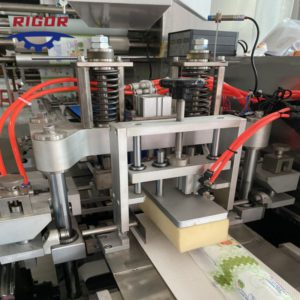
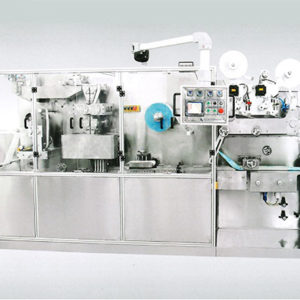
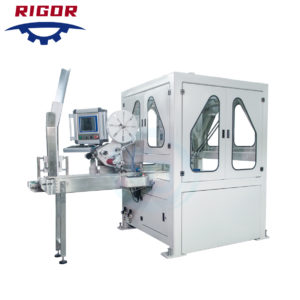
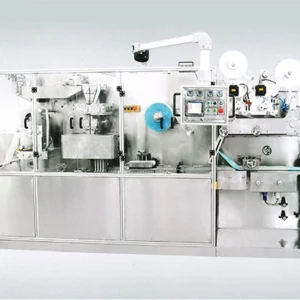
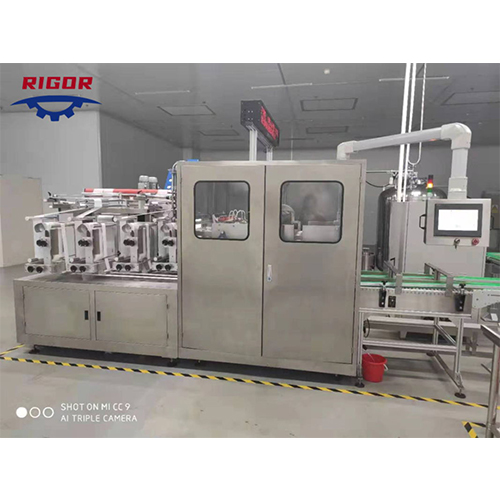
At the heart of this manufacturing challenge is the machinery itself. The days of simple, purely mechanical production lines are fading. In their place, we find highly automated systems where every step is monitored and managed. The central nervous system of these advanced operations is the Programmable Logic Controller, or PLC. A wet wipes machine with PLC control represents a fundamental shift from reactive to proactive production management, enabling a level of precision, speed, and consistency that was previously unattainable. For any enterprise looking to enter or scale up within the hygiene products sector—whether in the dynamic markets of Southeast Asia, the growing economies of South Africa, or the established consumer bases in Russia and the Middle East—understanding the nuances of this technology is not merely beneficial; it is foundational to long-term success. This guide is structured to walk you through the five most impactful factors to consider when evaluating a wet wipes machine, with a specific focus on how the PLC system underpins each one.
The Shift from Manual to Automated Production
Imagine trying to conduct an orchestra where each musician plays at their own pace. The result would be chaos. Early production lines, reliant on manual adjustments and simple relay logic, faced a similar problem. A slight delay in the folding mechanism could lead to a cascade of errors in cutting, wetting, and packaging. Operators had to be constantly vigilant, making manual tweaks that led to inconsistencies in product quality and significant downtime.
Automation, spearheaded by the PLC, changes this dynamic entirely. The PLC acts as the conductor, ensuring every component—every motor, valve, and sensor—operates in perfect synchrony. This transition is not just about replacing human labor; it is about achieving a higher order of operational intelligence. It allows for the production of millions of identical wipes, each folded perfectly, moistened to the exact saturation level, and sealed securely. This level of reliability is what builds consumer trust and brand loyalty.
Factor 1: Aligning Production Capacity and Speed with Business Goals
The first question any prospective buyer must confront is one of scale: "How many wipes do we need to produce?" The answer is not as simple as picking the fastest machine available. The selection of a machine's production capacity is a strategic decision that must align with your current market demand, your operational capabilities, and your vision for future growth. A machine that is too small will create a production bottleneck, leaving you unable to meet orders and stifling growth. Conversely, a machine that is oversized for your needs represents a significant and underutilized capital expense, tying up funds that could be used elsewhere.
Calculating Your Required Output
Let's begin with a practical exercise. Before you even look at a machine catalog, you must do your homework. Start by analyzing your business plan and market projections.
- Projected Sales Volume: How many packs of wipes do you realistically expect to sell per month?
- Packs to Wipes: How many individual wipes are in each pack (e.g., 20, 80, 100)?
- Total Wipes: Multiply your projected monthly pack sales by the number of wipes per pack to get your total required monthly output of individual wipes.
- Operational Hours: How many hours per day and days per month will the machine be running? Account for shifts, weekends, and planned maintenance.
With these figures, you can calculate the required wipes per minute. For example, if you need to produce 5,000,000 wipes in a month, operating 8 hours a day for 22 days, the calculation looks like this:
5,000,000 wipes / 22 days / 8 hours / 60 minutes = approximately 474 wipes per minute.
This calculation tells you that you need a machine capable of a stable, consistent output of around 475 wipes per minute. This immediately helps you narrow your search, focusing on machines within that performance bracket.
Matching Machine Scale to Business Size
Wet wipe machines are not one-size-fits-all. They are designed to serve different segments of the market, from small startups to multinational corporations. Understanding where your business fits is key.
| Feature | Startup / SME Machine | Large Enterprise Machine |
|---|---|---|
| Production Speed | 200–400 wipes/minute | 800–2000+ wipes/minute |
| Nivel de automatización | Semi-automated (e.g., manual loading of raw materials) | Fully automated (e.g., auto-splicing of fabric rolls) |
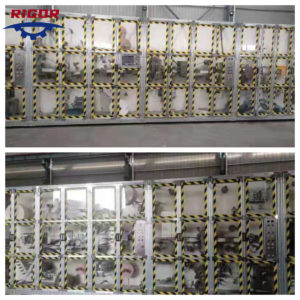
| Footprint | Compact, designed for smaller factory floors | Large, requires significant dedicated space |
| Changeover Time | Moderate; may require more manual adjustments | Minimal; often features one-touch automated changeovers |
| Initial Investment | Lower | Substantially higher |
| Ideal For | Market entry, niche products, regional distribution | Mass-market production, large-scale contracts |
As the table illustrates, a startup or small-to-medium enterprise (SME) might find a machine in the 200-400 wipes per minute range to be a perfect fit (Yundufillingmachine.com, 2025). These machines offer a lower initial investment and are often simpler to operate, providing a solid entry point into the market. For a large, established manufacturer supplying major retail chains, a high-speed line producing over 800 or even 2,000 wipes per minute is necessary to achieve the required economies of scale. The PLC system in these high-speed machines is exceptionally advanced, capable of managing thousands of I/O (Input/Output) points in real-time.
Planning for Future Scalability
An intelligent investment looks not only at today's needs but also at tomorrow's possibilities. What happens when your successful regional brand is ready to expand nationally? Will your machine be able to keep up? This is where the concept of scalability becomes so important.
When discussing options with a manufacturer, ask about the machine's upgrade path. Can the production speed be increased later with certain modifications? Can additional automation modules, such as an automatic packaging or case-packing unit, be integrated into the line later? A modular design is often a sign of a forward-thinking manufacturer. It allows you to start with a configuration that fits your current budget and add capabilities as your revenue grows. This approach protects your initial investment and provides a clear path for expansion without needing to replace the entire production line.
Factor 2: The Brains of the Operation: Demystifying the PLC Control System
We have established that the PLC is the control center of a modern wet wipes machine. But what exactly is a PLC, and how does it confer such a significant advantage? To appreciate its role, let's first consider its predecessor: relay-based control systems.
Imagine a complex switchboard with a tangled web of wires. In a relay system, every single function—every motor start, every valve open—is controlled by a physical, electromechanical switch (a relay). To change the production logic, for example, to alter the length of a wipe, a technician would have to physically rewire the control panel. This process was time-consuming, prone to error, and offered almost no flexibility.
A PLC, in contrast, is a specialized industrial computer. It replaces that physical web of wires with software. The logic that controls the machine is a program, which can be easily modified on a screen. This fundamental difference is what unlocks the flexibility, precision, and reliability of a modern wet wipes machine with PLC control.
PLC vs. Traditional Relay Logic: A Clear Comparison
| Aspect | Traditional Relay Logic | PLC (Programmable Logic Controller) |
|---|---|---|
| Flexibility | Very low. Changes require physical rewiring. | Very high. Changes made via software programming. |
| Fiabilidad | Lower. Mechanical relays wear out and can fail. | Higher. Solid-state electronics have no moving parts. |
| Troubleshooting | Difficult. Requires tracing wires and testing individual relays. | Easier. Software diagnostics can pinpoint faults quickly. |
| Size & Complexity | Large control panels with extensive wiring. | Compact and requires significantly less wiring. |
| Velocidad | Slower. Limited by the physical switching speed of relays. | Extremely fast. Capable of microsecond response times. |
| Advanced Functions | Limited to simple ON/OFF logic. | Can handle complex tasks like PID control, data logging, and networking. |
Core Functions Managed by the PLC in a Wet Wipes Machine
The PLC's role is not abstract; it manages a concrete sequence of events with microsecond precision. Let's follow its work through the production process:
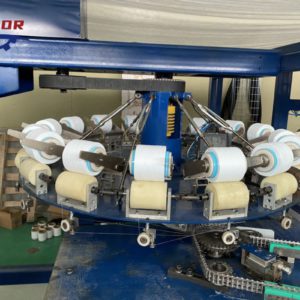
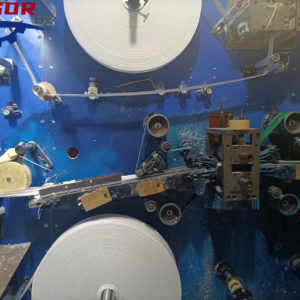
- Non-Woven Fabric Unwinding and Splicing: The PLC controls the motor that unwinds the master roll of fabric. It uses tension sensors to ensure the fabric feeds smoothly, without stretching or sagging. In high-end machines, when one roll is about to end, the PLC manages an "auto-splicer" that seamlessly joins the end of the old roll to the start of a new one, without ever stopping the machine.
- Folding: The fabric sheet is pulled into a folding unit. The PLC sends precisely timed signals to the mechanical folding plates or rollers to create the desired fold (e.g., Z-fold, C-fold). This timing is what ensures every wipe is folded identically and will dispense correctly from the final package.
- Cutting: A high-speed rotary cutter slices the continuous folded fabric into individual wipe stacks. The PLC controls the speed of this cutter to determine the length of each wipe. A change in wipe size is a simple parameter change on the control screen.
- Liquid Dosing (Wetting): This is a delicate stage. The PLC controls a system of pumps and nozzles that spray the liquid formula onto the wipe stacks. It ensures that the exact amount of liquid is applied to every single stack. Too little, and the wipes are dry; too much, and the package leaks. The PLC can adjust the dose based on fabric type and absorbency.
- Stacking and Transfer: The moistened stacks are then counted and transferred to the packaging unit. The PLC uses photo-eye sensors to count the stacks accurately and control the conveyor belts that move them.
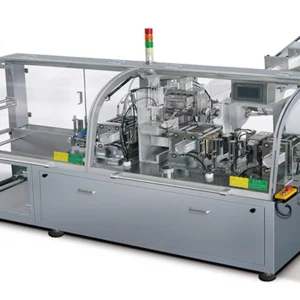
- Packaging: In the final stage, the PLC orchestrates the packaging machine, which wraps the stack in film, seals the package, and applies the resealable label. It synchronizes the film feed, the sealing jaws, and the label applicator.
The Human-Machine Interface (HMI): Your Window into the Process
The PLC does the heavy lifting, but the operator interacts with the system through a Human-Machine Interface (HMI). This is typically a touchscreen panel mounted on the machine. A well-designed HMI is intuitive and powerful. It should provide:
- Real-Time Visualization: A graphical representation of the entire machine, showing the status of every component.
- Parameter Adjustment: Easy access to change settings like wipe length, fold type, liquid volume, and machine speed.
- Recipe Management: The ability to save and load complete sets of parameters for different products. Switching from producing a 100-count baby wipe to a 20-count disinfecting wipe can be as simple as selecting a new "recipe" from a menu.
- Alarm and Diagnostic Information: When a fault occurs (e.g., the fabric tears or a sensor fails), the HMI should clearly state what the problem is and where it is located. This dramatically reduces troubleshooting time.
When evaluating a wet wipes machine with PLC control, pay close attention to the HMI. Is it available in your local language? Is it easy to navigate? Does it provide the level of control and information your team will need? A powerful PLC with a poorly designed HMI is like a brilliant mind that cannot communicate effectively.
Factor 3: Material Versatility and Formulation Flexibility
The wet wipe market is in a constant state of innovation. Consumer preferences are shifting towards products that are not only effective but also gentle on the skin and kind to the environment. This means manufacturers must be able to work with a growing variety of raw materials. An inflexible machine that can only handle one type of fabric or one type of liquid is a risky investment. A versatile machine, however, becomes a strategic asset, allowing you to adapt to market trends and launch new products quickly.
Accommodating Different Non-Woven Fabrics
The "body" of a wet wipe is the non-woven fabric, also known as the substrate. These fabrics are engineered materials, and their properties can vary significantly. Common types include:
- Spunlace: This is the most common material for baby wipes and cosmetic wipes. It is created by entangling fibers (like viscose, polyester, or cotton) with high-pressure water jets. The result is a soft, strong, and highly absorbent fabric.
- Airlaid Paper: Made from wood pulp, this material is very absorbent but typically less strong than spunlace. It is often used for industrial or cleaning wipes.
- Needle-punch: A bulky, strong fabric made by mechanically interlocking fibers with barbed needles. It is suitable for heavy-duty scrubbing wipes.
- Biodegradable/Flushable Substrates: Driven by environmental concerns, materials made from plant-based fibers like bamboo or special celluloses are gaining popularity. These materials are designed to break down after use but can have very different handling characteristics compared to traditional synthetics.
A versatile wet wipes machine must be designed to handle these differences. Key machine features to look for include:
- Adjustable Tension Control: Different fabrics have different levels of stretch. The machine's unwinding system must be able to maintain a constant, gentle tension to prevent weaker materials from tearing or stretching.
- Folding Unit Compatibility: Some folding mechanisms work better with certain fabric thicknesses and textures. Ask the manufacturer about the range of fabric weights (measured in grams per square meter, or GSM) that the machine can process effectively.
- Cutter Blade Specification: Cutting tough, thick fabrics requires a different blade type and cutting pressure than slicing delicate, lightweight substrates. A machine with easily interchangeable or robust, long-life cutters is advantageous.
Managing a Spectrum of Liquid Formulations
The liquid solution is what gives the wipe its function—be it cleaning, moisturizing, or disinfecting. These formulations can be as diverse as the fabrics.
- Water-Based Solutions: Common for baby wipes and facial wipes, these are typically gentle lotions containing mild surfactants, moisturizers (like aloe vera or glycerin), and preservatives.
- Alcohol-Based Solutions: Used for disinfecting wipes, these formulations contain ethanol or isopropanol to kill germs. They are more volatile and can be more aggressive on machine components.
- Oil-Based or Emulsion Formulas: Found in some makeup remover wipes, these can be thicker and more viscous.
The machine's liquid dosing system must be able to handle this variety. This requires careful consideration of:
- Pump and Tubing Material: The pumps, pipes, and nozzles that transport the liquid must be made of materials (like stainless steel 316L) that are resistant to corrosion from alcohol or other chemicals.
- Viscosity Range: A system designed for thin, water-like liquids may struggle to accurately pump a thicker lotion. The manufacturer should be able to specify the range of liquid viscosities the machine can handle.
- Dosing Accuracy: The PLC-controlled dosing system should allow for precise, repeatable adjustments to the liquid volume. This ensures that a highly absorbent fabric gets more liquid than a less absorbent one, maintaining product consistency across different product lines.
Investing in a versatile machine from a reputable provider like those offering a full range of wet wipes machines allows you to say "yes" to more opportunities. When a potential client asks for a new type of wipe with a special eco-friendly fabric, you will have the capability to run trials and move into production, rather than turning the business away.
Factor 4: Integrated Quality Control for Flawless Output
In mass production, quality is not something you inspect for at the end of the line; it is something you build into every step of the process. A single faulty batch of wipes—perhaps they are too dry, poorly folded, or have unsealed packages—can damage a brand's reputation and lead to costly product recalls. A modern wet wipes machine with PLC control integrates numerous automated quality control systems that act as vigilant watchdogs, identifying and often correcting or rejecting errors in real-time.
The Role of Sensors in Proactive Monitoring
Sensors are the eyes and ears of the PLC. They are constantly feeding data back to the control system, which compares the real-time information to the desired setpoints. If a deviation occurs, the PLC can take immediate action.
- Web Guide Sensors: These optical sensors are placed at the edge of the non-woven fabric as it unwinds. If the fabric roll starts to drift to one side, the sensor detects this and signals the PLC. The PLC then adjusts the position of the roll to keep it perfectly centered. This prevents folded stacks from being misaligned.
- Tension Sensors (Load Cells): These measure the strain on the fabric as it moves through the machine. If the tension becomes too high (risking a tear) or too low (risking a jam), the PLC adjusts the speed of the unwinding motors to correct it.
- Photo-eye Sensors: These simple light-beam sensors are used for a multitude of tasks: counting the number of wipes in a stack, detecting the presence or absence of a stack before it enters the packaging unit, and ensuring the packaging film is positioned correctly.
- Metal Detectors: Installed on the conveyor line, these systems scan the finished stacks for any metallic contaminants that may have accidentally entered the production process. If metal is detected, the PLC activates a rejection mechanism to remove the contaminated stack.
Advanced Vision Systems: The Next Level of Inspection
While standard sensors are excellent for many tasks, more complex defects require a more sophisticated solution: machine vision systems. These systems use high-speed cameras and intelligent software to "see" and analyze the product.
A vision system can inspect for:
- Stains or Dirt: The camera can detect any discoloration on the wipe surface.
- Folding Errors: The software can analyze the shape of the folded stack to ensure it meets the specified dimensions.
- Splicing Joint Quality: In machines with auto-splicing, a vision system can inspect the joint between two rolls to ensure it is clean and secure.
- Date/Lot Code Presence: After printing, a vision system can verify that the date and lot code are present and legible on the package.
When the vision system identifies a defective product, it signals the PLC, which then activates an automatic rejection arm or air jet to remove the faulty item from the production line without stopping the machine. This ensures that only perfect products proceed to the final case packing.
The Importance of Auto-Rejection Systems
The ability to automatically reject a faulty product is a hallmark of an advanced production line. Manual inspection is simply not feasible at speeds of hundreds or thousands of wipes per minute. An auto-rejection system, controlled by the PLC based on input from sensors and vision systems, provides a reliable and tireless quality guarantee.
This not only protects the consumer and the brand but also provides valuable data. The PLC can log every rejection event. By analyzing this data, production managers can identify recurring problems. For example, if the system is frequently rejecting stacks due to folding errors, it might indicate that a mechanical part needs adjustment or maintenance. This data-driven approach to quality improvement is a powerful benefit of a fully integrated PLC-controlled system.
Factor 5: Calculating True Return on Investment: Beyond the Initial Price Tag
A wise investment is measured not by its initial cost, but by its long-term value. The purchase price of a wet wipes machine is only one part of a much larger financial picture. To accurately assess the return on investment (ROI), you must consider the Total Cost of Ownership (TCO). TCO encompasses all costs associated with the machine over its entire lifecycle, from installation to disposal. A cheaper machine with high operational costs can end up being far more expensive in the long run than a higher-quality machine that runs efficiently.
Key Components of Total Cost of Ownership (TCO)
Let's break down the elements you must factor into your calculation:
- Initial Purchase Price (CAPEX): This is the most obvious cost, but it also includes shipping, installation, and commissioning fees.
- Operational Costs (OPEX):
- Energy Consumption: High-speed machines have powerful motors, heaters (for sealing), and control systems. Ask the manufacturer for the machine's power rating (in kW) and calculate the projected electricity costs based on your local utility rates. A machine with energy-efficient motors and drives can offer substantial savings over its lifetime.
- Labor: How many operators are required to run the line? A highly automated line may require only one or two supervisors, whereas a semi-automated line might need more staff for tasks like loading materials and packing finished goods. Compare this to your local labor costs.
- Raw Material Waste: Every faulty wipe that is rejected is lost revenue. A machine with precise control and excellent quality systems will have a lower waste percentage, directly impacting your profitability. A waste rate of 1-2% is excellent, while a rate of 5% or more can severely damage margins.
- Maintenance and Spare Parts:
- Preventive Maintenance: All machines require regular maintenance. What is the recommended maintenance schedule? Are the procedures simple enough for your own staff to perform, or will you need specialized technicians?
- Spare Parts Availability and Cost: Certain parts, like cutter blades, sealing jaws, and belts, are "wear parts" that will need periodic replacement. Are these parts proprietary to the manufacturer, or can they be sourced locally? How quickly can the manufacturer supply critical spare parts? A machine being down for weeks waiting for a part from overseas can be a financial disaster.
- Training and Support:
- Initial Training: Does the purchase price include comprehensive training for your operators and maintenance staff? Effective training is vital to running the machine efficiently and safely.
- After-Sales Support: What level of technical support does the manufacturer offer? Do they have technicians who can provide remote diagnostics by connecting to the machine's PLC over the internet? Do they have regional support centers? This is a major consideration for buyers in markets like South America or South Africa, who may be geographically distant from the machine's origin.
A Long-Term Perspective on ROI
When you evaluate TCO, the financial logic often shifts. A machine with a 20% higher initial price might be the better investment if it is 15% more energy-efficient, has a 3% lower waste rate, and requires one less operator per shift. Over a 5- or 10-year period, these operational savings will far outweigh the initial difference in cost.
Furthermore, consider the ROI in terms of market responsiveness. A flexible, reliable wet wipes machine with PLC control allows you to bring new products to market faster, adapt to changing consumer demands, and bid confidently on large contracts. This strategic capability, while harder to quantify than electricity costs, is an enormous component of the machine's long-term value. When exploring your options, it is beneficial to review a variety of solutions, such as those found when exploring advanced wet wipe production lines, to compare these long-term value propositions.
Frequently Asked Questions (FAQ)
What is the typical lead time for a wet wipes machine? Lead times can vary significantly based on the machine's complexity and the manufacturer's production schedule. For a standard machine, expect a lead time of 3 to 6 months. For a highly customized, high-speed line, it could be 6 to 9 months or more. It is best to plan well in advance.
What are the main PLC brands used in these machines? Leading international brands like Siemens, Allen-Bradley (Rockwell Automation), and Mitsubishi are very common in high-quality machines. These brands are known for their reliability and have a global support network, which can be a significant advantage for sourcing spare parts and technical expertise.
How much space do I need for a wet wipes production line? This depends entirely on the machine's capacity and level of automation. A compact, semi-automated line might fit in as little as 50-70 square meters. A full, high-speed line with raw material storage, the machine itself, and end-of-line packaging could require 300-500 square meters or more. Always request a detailed layout drawing from the manufacturer.
Can one machine produce different sizes of wet wipes? Yes, a key advantage of a wet wipes machine with PLC control is its ability to produce different product sizes. Changes to wipe length, width (with some mechanical adjustment), and the number of wipes per stack can typically be managed through the HMI. The ease and speed of this "changeover" is an important factor to evaluate.
What kind of warranty and after-sales service should I expect? A standard warranty is typically 12 months from the date of installation. More importantly, evaluate the after-sales service. A good supplier will offer remote diagnostic support, a clear process for ordering spare parts, and access to technicians for on-site service if needed.
Do I need a clean room for wet wipe production? For most consumer wipes (like baby or cleaning wipes), a clean and controlled production environment is sufficient. For medical or certain cosmetic wipes, production in a certified clean room may be required by regulations. The liquid mixing and storage area should always be maintained to a high standard of hygiene to prevent contamination.
What is the difference between a single-pack machine and a multi-pack machine? A single-pack machine produces the individual packs of wipes that consumers buy. A multi-pack machine (or bundler) is a separate, downstream unit that takes these single packs and wraps them together into larger bundles for wholesale distribution (e.g., a bundle of 6 packs).
Bringing Our Considerations Together
The selection of a wet wipes machine is a decision that will shape the trajectory of your manufacturing enterprise for years to come. It extends far beyond a simple comparison of speeds and prices. It requires a holistic examination of your business strategy, a deep understanding of the technology, and a forward-looking perspective on the market.
As we have explored, the integration of a robust PLC control system serves as the foundation for modern, efficient production. It is the intelligence that enables the speed, precision, flexibility, and quality assurance necessary to compete. By carefully aligning production capacity with your real-world needs, you ensure your capital is deployed effectively. By prioritizing versatility in materials and formulations, you build an agile business capable of adapting to new trends. By insisting on integrated quality control, you safeguard your brand's reputation. Finally, by adopting a Total Cost of Ownership mindset, you make a decision that is not just financially sound for today, but profitable for the long term.
Making this investment requires a partnership with a manufacturer who provides not just a machine, but a complete solution—one that includes reliable technology, comprehensive training, and steadfast long-term support. Armed with the framework presented here, you are now better equipped to ask the right questions, evaluate the answers critically, and choose a wet wipes machine with PLC control that will be a true engine for your company's growth and success.
References
Diaper Machines. (2023, July 17). The manufacturing process of wet wipes. diapermachines.com. https://www.diapermachines.com/2023/07/17/the-manufacturing-process-of-wet-wipes/
Diaper Machines. (2023, November 13). A comprehensive guide – Wet wipes machine. diapermachines.com. https://www.diapermachines.com/2023/11/13/a-comprehensive-guide-wet-wipes-machine/
Sywipe. (2025, November 1). How wet wipes are made | Complete guide. Clean-Wipe.com. https://www.clean-wipe.com/how-wet-wipes-are-made.html
Wet Wipe Factory. (2024, July 20). Wet wipes classification & process introduction. wetwipefactory.com.
Yundu. (2025, March 26). The ultimate guide to wet wipes making machines: Revolutionizing efficiency and quality in modern production. Yundu Filling Machine. https://yundufillingmachine.com/guide-to-wet-wipes-making-machines
Yundu. (2025, May 12). How wet wipes are made: Process, machinery, and principles. Yundu Filling Machine. https://yundufillingmachine.com/how-wet-wipes-are-made-process-machinery/
Yundu. (2025, May 30). How are wet wipes made? | Industrial wet wipes manufacturing & machinery. Yundu Filling Machine. https://yundufillingmachine.com/wet-wipes-manufacturing-process-machinery