Abstract
The selection of a wet wipes production line represents a pivotal capital investment for manufacturers, particularly within the dynamic markets of South America, Russia, Southeast Asia, the Middle East, and South Africa. This document offers a comprehensive analytical framework for evaluating and choosing the best wet wipes machine in 2025. It moves beyond a superficial feature comparison to a deeper examination of five core pillars: production capacity and speed, the integration of automation and Industry 4.0 technologies, flexibility in handling diverse materials and product types, integrated packaging solutions, and the critical nature of supplier reliability and after-sales support. By methodically dissecting each of these domains, the analysis aims to equip decision-makers with the necessary conceptual tools to assess machine capabilities not merely as technical specifications but as strategic assets that directly influence operational efficiency, market responsiveness, long-term profitability, and return on investment. The objective is to foster a nuanced understanding that aligns machinery acquisition with specific regional demands and future growth trajectories.
Key Takeaways
- Calculate your required production speed based on market analysis, not just machine specifications.
- Prioritize full automation with servo motors to reduce long-term operational costs and waste.
- Choose a machine with material flexibility to accommodate sustainable and eco-friendly substrates.
- Evaluate the best wet wipes machine 2025 based on its integrated, end-to-end packaging solutions.
- Verify supplier reliability through certifications, after-sales support, and spare parts availability.
- Seek a machine that offers scalability to adapt to future product and market expansion.
- Understand that the initial investment in technology yields significant returns in efficiency and quality.
Table of Contents
- Production Capacity and Speed: Aligning Output with Market Demand
- Automation and Technological Integration: The Role of Industry 4.0
- Material and Product Flexibility: Adapting to Consumer and Eco-Trends
- Packaging Solutions: From Wipes to Shelf-Ready Products
- Supplier Reliability and After-Sales Support: A Partnership for Success
- Frequently Asked Questions (FAQ)
- Conclusión
- References
Production Capacity and Speed: Aligning Output with Market Demand
The deliberation over a new piece of industrial machinery often begins with numbers, and in the context of wet wipe production, the most prominent figure is speed, typically measured in pieces per minute (PPM). Yet, a purely quantitative approach to this metric can be misleading. The pursuit of the highest possible PPM without a corresponding analysis of market realities and operational capacities can lead to an investment that is either underutilized or, conversely, incapable of meeting growth. A more reasoned approach, one grounded in the principles of economic prudence and strategic foresight, requires a qualitative understanding of what production speed truly represents. It is not merely a measure of output but a reflection of a machine's ability to serve a specific market at a specific time, with the built-in potential to adapt as that market evolves. For manufacturers in regions like Southeast Asia or South America, where consumer demand for hygiene products is expanding rapidly, the question is not simply "how fast can it go?" but rather "what speed provides the optimal balance of current fulfillment, future scalability, and operational stability?"
Defining Production Speed in a Real-World Context
The term "pieces per minute" (PPM) appears straightforward, yet its practical meaning is layered. Manufacturers often quote a "design speed," which represents the theoretical maximum output under ideal conditions with specific materials. However, the more meaningful figure is the "stable running speed," which is the consistent, reliable output that can be maintained over long production shifts without compromising product quality or causing excessive machine wear. The gap between these two figures can be substantial. A machine with a design speed of 1200 PPM might only run stably at 1000 PPM when using certain non-woven fabrics or complex packaging formats.
Understanding this distinction is the first step toward making an informed choice. Imagine you are a composer. The design speed is like a virtuosic passage written to be played at a blistering tempo. The stable speed is the tempo at which an orchestra can actually perform that passage flawlessly, night after night. Pushing for the absolute maximum tempo might result in missed notes and exhausted musicians. Similarly, operating a wet wipes machine constantly at its design limit can lead to increased product defects, frequent downtime for adjustments, and accelerated component failure. Therefore, when evaluating the best wet wipes machine 2025, your inquiry should focus on the proven stable running speed with materials and product formats similar to your own. Ask for references, case studies, or even live demonstrations to verify these claims.
How to Calculate Your Required Capacity
Determining the right production capacity is an exercise in market analysis and business forecasting, not a simple technical query. Before you can decide on a machine, you must first develop a robust understanding of the demand landscape you intend to serve. This involves several layers of investigation.
First, conduct a thorough market size assessment. How many units of wet wipes are currently sold in your target region per year? What is the projected growth rate? Market research reports, such as those analyzing the diaper and sanitary napkin converting machine market, often provide valuable data on regional consumption patterns and growth drivers, like rising disposable incomes and hygiene awareness in developing economies (Data Insights Market, 2025).
Second, define your target market share. Are you aiming to be a niche player focusing on a premium segment, or do you intend to compete on volume in the mass market? Your ambition here directly translates into the number of units you need to produce. For example, if the annual market demand in your country is 100 million packs and you are targeting a 10% market share in your first three years, your initial annual production target is 10 million packs.
Finally, translate this annual target into an operational requirement. Consider your factory's working schedule. Will you operate one 8-hour shift per day, five days a week, or run a 24/7 operation?
Let's walk through a hypothetical calculation. Target: 10,000,000 packs per year. Assume each pack contains 80 wipes. Total wipes needed: 800,000,000 per year. Operational Schedule: Two 8-hour shifts per day, 250 working days per year. Total operating hours: 2 shifts * 8 hours/shift * 250 days = 4,000 hours/year. Total operating minutes: 4,000 hours * 60 minutes/hour = 240,000 minutes/year. Required stable speed: 800,000,000 wipes / 240,000 minutes = 3,333 PPM.
This calculation reveals that a very high-speed machine is needed. However, it assumes 100% efficiency. A more realistic calculation would factor in an efficiency rate of around 85% to account for material changes, maintenance, and other stoppages. Adjusted required speed: 3,333 PPM / 0.85 = ~3,921 PPM. This indicates the need for a production line capable of extremely high output, possibly involving multiple machines. This analytical process ensures your investment is sized correctly from the outset.
| Machine Speed Tier | Stable Production Speed (PPM) | Typical Application | Target Markets | Key Considerations |
|---|---|---|---|---|
| Entry-Level | 200 – 400 | Start-ups, small local brands, NGOs | Niche segments, rural areas | Lower initial investment, manual or semi-automatic, higher labor cost per unit. |
| Mid-Range | 400 – 800 | Established regional players, private label manufacturing | Growing urban centers, national distribution | Balanced investment, often fully automatic, good scalability. |
| High-Speed | 800 – 1200+ | Large multinational corporations, high-volume exporters | Mass-market retail, competitive international markets | High initial investment, requires skilled operators, optimized for long production runs. |
The Trade-off: Speed Versus Stability and Maintenance
There exists an intrinsic tension between raw production speed and the long-term operational health of a machine. A system engineered for exceptionally high speeds often incorporates more complex mechanics, finer tolerances, and a greater number of moving parts. This complexity, while enabling high output, can also introduce more potential points of failure. The pursuit of speed must be tempered by a deep appreciation for machine stability and ease of maintenance.
Stability refers to the machine's ability to perform its functions—cutting, folding, wetting, and packaging—consistently and without deviation over extended periods. A high-speed machine that frequently requires minor adjustments to maintain fold accuracy or seal integrity is not truly efficient. The downtime and material waste associated with these adjustments can quickly erode the benefits of the higher PPM. Look for machines built on a robust, heavy-duty frame to minimize vibrations at high speeds. Inquire about the quality of the core components, such as bearings, cutters, and servo motors. Reputable manufacturers do not compromise on component quality, as they understand that reliability is the foundation of true productivity.
Maintenance is the other side of this coin. A complex machine that is difficult to service becomes a liability. When evaluating a potential machine, consider the accessibility of key components. Are lubrication points clearly marked and easy to reach? Can cutting blades be replaced quickly and safely? A well-designed machine prioritizes the experience of the maintenance technician. Modular design, where major sections of the machine can be serviced independently, is a significant advantage. It allows for faster repairs and reduces the overall downtime of the production line.
Future-Proofing: Choosing a Machine with Scalable Speed
Your investment in a wet wipes machine today should serve your business for the next decade or more. During that time, your market will change, and your production needs will likely grow. Therefore, selecting a machine with inherent scalability is a profoundly strategic decision. Scalability in this context does not necessarily mean buying a machine that is oversized for your current needs. Rather, it means choosing a platform that can be upgraded or enhanced as your demand increases.
One aspect of scalability is the machine's underlying control system. A machine built with a powerful and flexible PLC (Programmable Logic Controller) and a modern HMI (Human-Machine Interface) can often have its speed parameters adjusted or its software upgraded to unlock higher performance.
Another aspect is modularity. Some manufacturers design their production lines as a series of interconnected modules. You might start with a core converting machine that produces wipes at 600 PPM. As your business grows, you could add a second converting module that feeds into the same packaging system, effectively doubling your output without replacing the entire line. This approach allows your capital expenditure to be phased in line with your revenue growth. When discussing options with a supplier, frame your questions around a five or ten-year growth plan. Ask them to propose a solution that not only meets your immediate needs but also provides a clear, cost-effective upgrade path for the future. This forward-looking dialogue is a hallmark of selecting the truly best wet wipes machine 2025.
Automation and Technological Integration: The Role of Industry 4.0
The evolution of manufacturing machinery is a story of increasing intelligence. The wet wipes machine of 2025 is not just a mechanical apparatus; it is a sophisticated, cyber-physical system, a node in the larger network of the smart factory. The integration of advanced automation, driven by the principles of Industry 4.0, has fundamentally transformed what is possible in terms of efficiency, quality, and flexibility. For a manufacturer in Russia or the Middle East, where skilled labor may be a constraint or operational costs are under scrutiny, leveraging automation is not a luxury but a competitive necessity. It represents a shift from a labor-intensive process, prone to human error and inconsistency, to a data-driven operation characterized by precision and predictability. Understanding the different facets of this technological leap is fundamental to selecting a machine that will deliver a strong return on investment.
Levels of Automation: From Semi-Automatic to Fully Automatic
Wet wipes machines exist on a spectrum of automation. At one end, you have semi-automatic machines, which require significant operator intervention. For instance, an operator might need to manually load parent rolls of non-woven fabric, splice new rolls to old ones, or manually transfer stacks of finished wipes to a separate packaging machine. These machines have a lower initial purchase price, making them attractive to start-ups or businesses in markets with very low labor costs. However, their reliance on manual labor introduces variability in output and quality, and their overall production speed is inherently limited.
At the other end of the spectrum are fully automatic wet wipes machines. These systems are designed for "lights-out" operation, minimizing human contact with the product from raw material to finished case. Key features of a fully automatic line include:
- Automatic Splicing: The machine detects when a parent roll is about to run out and automatically splices the end of the old roll to the beginning of a new one at full production speed, eliminating downtime.
- Integrated Converting and Packaging: The entire process, from cutting and folding the wipes to placing them in a flow-wrap package, applying a lid, and grouping them into multi-packs, is handled by a single, synchronized line.
- Robotic Case Packing: At the end of the line, a robotic arm picks the finished packs and places them into shipping cartons, which are then automatically sealed and labeled.
The decision between semi-automatic and fully automatic is a critical financial calculation. While a fully automatic line requires a much higher initial capital outlay, the long-term savings in labor costs, reduced material waste, and higher, more consistent output often result in a lower total cost of ownership and a faster payback period.
| Feature Comparison | Semi-Automatic Machine | Fully Automatic Machine |
|---|---|---|
| Initial Investment | Low to Medium | High |
| Labor Requirement | High (2-4 operators per line) | Low (1 operator to supervise) |
| Production Speed | Limited (Typically < 400 PPM) | High (Can exceed 1200 PPM) |
| Material Splicing | Manual (Requires machine stop) | Automatic (Zero-speed or full-speed splicing) |
| Calidad Coherencia | Operator-dependent | High, controlled by sensors and servos |
| Material Waste | Higher due to manual adjustments and stops | Minimized through precise control |
| Flexibility | Lower, changes can be time-consuming | High, parameters changed via HMI |
| Suitability | Small-scale start-ups, niche products | Medium to large-scale, mass-market production |
The Impact of Servo Motor Technology
The heart of the modern automatic wet wipes machine is the servo motor. Unlike traditional mechanical systems that use a single main motor with a complex web of gears, cams, and belts to drive all functions, a full-servo machine uses multiple independent servo motors, each dedicated to a specific task. For example, one servo motor controls the feed roller, another controls the cutting blade, and a third controls the folding mechanism. All these motors are synchronized electronically through the PLC.
This architecture has profound implications. First, it offers unparalleled precision. A servo motor can control position, speed, and torque with incredible accuracy. This means that every wipe is cut to the exact same length and folded with perfect consistency, dramatically improving product quality.
Second, it provides immense flexibility. If you want to change the length of the wipe or the folding pattern, you do not need to perform a time-consuming mechanical changeover of gears and cams. Instead, the operator simply enters the new parameters into the HMI, and the PLC adjusts the profiles of the relevant servo motors. This "push-button" changeover capability is invaluable for manufacturers who need to produce a variety of SKUs on a single line.
Third, servo technology reduces maintenance. By eliminating a vast number of mechanical transmission parts, it simplifies the machine's design and reduces the number of components that can wear out or break. This leads to higher uptime and lower maintenance costs over the life of the machine. The shift to full-servo designs is a key trend noted in analyses of the hygiene converting machine market (diapermachines.com, 2024).
Smart Features: PLC Control, HMI, and Remote Diagnostics
The "brain" of an automated machine is its Programmable Logic Controller (PLC). This industrial computer executes the program that coordinates all the machine's actions. The quality and sophistication of the PLC and its programming determine the machine's overall performance and reliability. Leading machine manufacturers use PLCs from globally recognized brands like Siemens, Allen-Bradley, or Mitsubishi, which ensures robust performance and worldwide availability of support and spare parts.
The "face" of the machine is the Human-Machine Interface (HMI), typically a large, color touchscreen panel. A well-designed HMI is intuitive and user-friendly. It should provide a clear graphical representation of the entire production line, displaying real-time operational data such as running speed, output count, and efficiency. It should also provide access to all machine settings, alarm logs, and maintenance schedules. An HMI that is available in multiple languages, including the local language of your operators, is a significant asset.
One of the most powerful "smart" features of modern machines is the capability for remote diagnostics. Through a secure internet connection, the machine manufacturer's engineers can log into your machine's PLC from their own office, thousands of miles away. They can diagnose problems, troubleshoot alarms, analyze performance data, and even make software modifications, often resolving issues without the need for a costly and time-consuming on-site visit. This feature is particularly valuable for manufacturers in geographically remote locations.
AI and IoT Integration for Predictive Maintenance
The frontier of machine automation is the integration of Artificial Intelligence (AI) and the Internet of Things (IoT). This is where the machine transitions from being merely automatic to being truly intelligent. IoT sensors placed at critical points on the machine—such as on bearings, motors, and cutting units—continuously collect data on parameters like temperature, vibration, and power consumption. This data is streamed to the cloud for analysis.
AI and machine learning algorithms then analyze these vast datasets to identify patterns that precede a component failure. For example, the algorithm might learn that a specific increase in the vibration frequency of a bearing is a reliable predictor that the bearing will fail within the next 200 operating hours. This allows the system to generate a "predictive maintenance" alert, advising the maintenance team to schedule a replacement during the next planned downtime.
This shift from reactive maintenance (fixing things after they break) or preventive maintenance (replacing parts on a fixed schedule) to predictive maintenance offers enormous benefits. It maximizes the life of each component, prevents unexpected and catastrophic failures, and minimizes unplanned downtime. As noted in recent industry analyses, the adoption of AI-powered diagnostics is a key trend driving growth and efficiency in the sector (Market Research Intellect, 2024). When selecting the best wet wipes machine 2025, inquiring about the manufacturer's roadmap for AI and IoT integration is a way to gauge their commitment to future-focused technology.
Material and Product Flexibility: Adapting to Consumer and Eco-Trends
A manufacturing asset's value is not solely determined by its efficiency in performing a single, repetitive task. In a world of rapidly shifting consumer preferences and mounting environmental pressures, its true, long-term worth is measured by its adaptability. The best wet wipes machine 2025 is not a rigid monolith but a versatile platform, capable of responding to the market's evolving demands. For a producer looking to capture market share in diverse regions—from the eco-conscious consumers in parts of Europe to the price-sensitive mass markets in Africa—the ability to switch between different raw materials, product dimensions, and liquid formulations is paramount. This flexibility is the bedrock of a resilient and future-proof manufacturing operation, allowing a business to innovate and pivot without requiring a complete overhaul of its capital equipment.
Handling Various Non-Woven Fabrics
The substrate, or non-woven fabric, is the primary component of a wet wipe and largely defines its physical characteristics—its softness, strength, and texture. The market offers a wide array of non-woven types, each with its own properties and cost structure. A truly flexible converting machine must be able to handle this diversity.
- Spunlace: This is the most common material for baby wipes and cosmetic wipes. It is produced by entangling fibers using high-pressure water jets, resulting in a soft, strong, and highly absorbent fabric. However, different blends of fibers (polyester, viscose, cotton) and different basis weights (measured in grams per square meter, or gsm) can affect how the material behaves in a machine. A well-designed machine will have adjustable tension control systems to handle everything from lightweight, highly elastic spunlace to heavier, more rigid variants.
- Air-through Bonded (ATB): This material is known for its exceptional softness and bulkiness, giving it a premium, cloth-like feel. It is often used in high-end baby wipes. Its bulky nature requires the machine to have wider tolerances in its folding and stacking mechanisms.
- Spunbond: This is a more cost-effective material, often used for general-purpose cleaning wipes. It is stronger but less soft than spunlace.
When evaluating a machine, you should discuss its tested capabilities with a range of substrates. Can it maintain precise folding and cutting accuracy with a 35 gsm spunlace as well as a 60 gsm ATB fabric? The machine's web guiding system, which ensures the fabric remains perfectly aligned as it travels through the machine, is a critical component for material flexibility. Advanced systems use optical sensors to detect the edge of the fabric and make micro-adjustments to the rollers, ensuring consistent processing regardless of the material type.
The Shift to Sustainable Materials
Perhaps the most significant trend shaping the hygiene industry is the push for sustainability. Consumers, particularly in more developed markets but increasingly everywhere, are demanding products that are kinder to the planet. This has led to a surge in a new generation of non-woven substrates. These include:
- Bamboo Fiber: A rapidly renewable resource that can be processed into a soft and absorbent fabric.
- Organic Cotton: Grown without synthetic pesticides, offering a natural and hypoallergenic option.
- Viscose from certified sources: A cellulosic fiber derived from sustainably managed forests.
- Biodegradable and Compostable Polymers: Materials like PLA (polylactic acid) are being used to create fabrics that can break down in industrial composting facilities.
These eco-friendly materials often have different physical properties than their traditional synthetic counterparts. They can be more prone to stretching or tearing under tension. A machine designed only for standard polyester/viscose spunlace may struggle to process them efficiently, leading to frequent web breaks and high levels of waste. The best wet wipes machine 2025 is one that has been specifically engineered with these materials in mind. This involves features like highly sensitive, low-tension web handling systems and cutting tools designed to handle natural fibers without fraying. Investing in a machine with proven capabilities for sustainable substrates is a direct investment in your brand's future relevance. As discussed in industry reports, machine vendors are actively developing high-speed wet wipes converting lines that can handle these special materials without compromising efficiency (insights.made-in-china.com, 2024).
Versatility in Wipe Dimensions and Folding Types
The wet wipes market is not one-size-fits-all. A baby wipe has different dimensions than a floor cleaning wipe or a cosmetic face wipe. Furthermore, the way a wipe is folded affects how it is dispensed from the pack and the overall user experience. A flexible machine must allow for easy adjustment of these parameters.
- Wipe Dimensions: The ability to change both the cut-off length and the width of the wipe is essential. On a full-servo machine, changing the length is a simple matter of entering a new value into the HMI. Changing the width might involve adjusting the slitting knives that cut the parent roll into narrower lanes or, for more significant changes, swapping out a forming unit. The ease and speed of this changeover process is a key performance indicator.
- Folding Types: The most common folds are the "Z-fold" and the "C-fold." In a Z-folded pack, pulling out one wipe helps to pop up the next one, allowing for easy one-handed dispensing. This is the standard for baby wipes. A C-folded wipe is simply folded in half, and each wipe must be picked out individually. This is more common for industrial or cleaning wipes. Some advanced machines offer the capability to switch between different folding patterns, or even to produce more complex, non-standard folds, opening up possibilities for product innovation.
Liquid Application Systems: Precision for Different Formulations
The liquid lotion is what gives a wet wipe its function. The formulation for a baby wipe is very different from that of an antibacterial surface wipe or a makeup remover wipe. The machine's liquid application system must be able to handle this variety with precision.
Modern systems typically use a series of spray nozzles or a cascade system to apply the lotion to the non-woven web. The key is precise control over the amount of liquid applied. Too little liquid, and the wipe will be ineffective. Too much, and the pack will leak, and costs will increase. A sophisticated system allows the operator to set the "add-on" percentage—the weight of the liquid as a percentage of the dry substrate's weight—and the machine's control system will automatically adjust the flow rate based on the running speed to maintain that exact percentage.
The system must also be designed for easy cleaning and changeover. When switching from one formulation to another, the entire liquid path, including the tank, pumps, pipes, and nozzles, must be thoroughly flushed to prevent cross-contamination. A system with a "Clean-in-Place" (CIP) feature, which automates this flushing process, can save hours of downtime during a product changeover.
Packaging Solutions: From Wipes to Shelf-Ready Products
The journey of a wet wipe does not end when it is cut and folded. Its transformation into a marketable product is completed in the packaging stage. The package does more than just contain the wipes; it preserves their moisture, ensures their hygiene, communicates the brand's identity, and provides the end-user with a convenient dispensing experience. In the modern manufacturing environment, packaging is not an afterthought or a separate process. The best wet wipes machine 2025 incorporates packaging as an integral, synchronized part of the production line. This integration is a cornerstone of efficiency, reducing labor, minimizing handling, and ensuring a seamless flow from raw material to a product ready for the retail shelf. For a manufacturer, the capabilities and flexibility of the machine's packaging unit are as important as its converting section.
Integrated Packaging Units: Flow-Wrapping and Lid Application
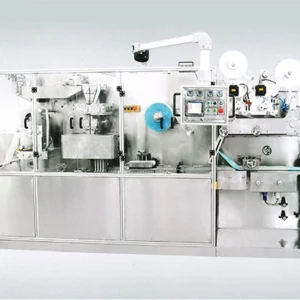
A fully integrated production line combines the "wet part" (converting) and the "dry part" (packaging) into a single, continuous system. Once a stack of wipes is cut and folded, it is automatically transferred to the packaging unit.
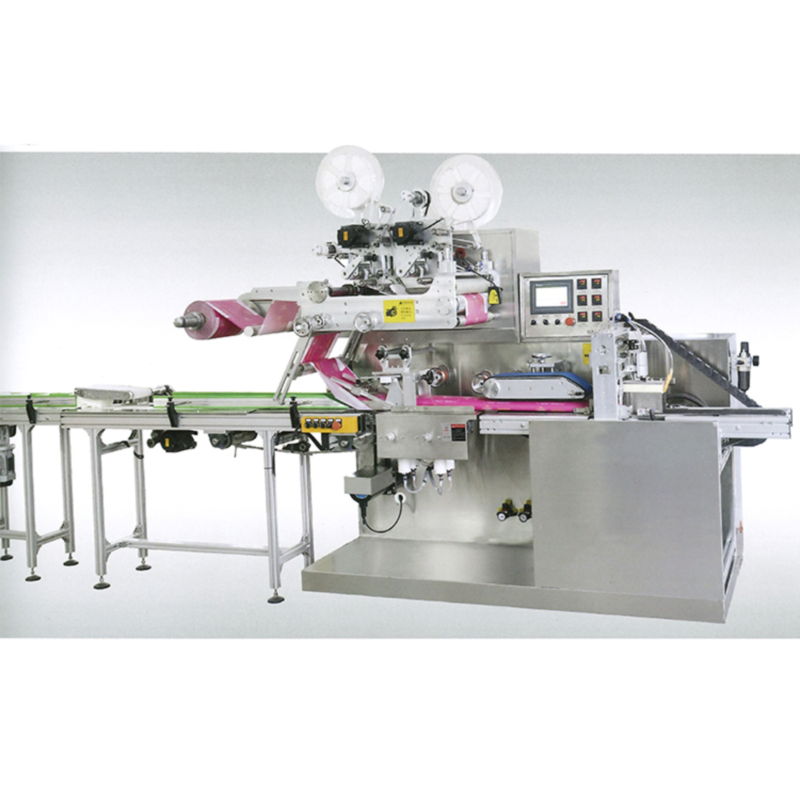
The most common primary packaging method is flow-wrapping. The stack of wipes is placed on a film of flexible packaging material, which is then formed into a tube around the stack and sealed at both ends and along its length to create an airtight "flow-pack." The quality of these seals is of utmost importance. A poor seal will allow moisture to escape, drying out the wipes, and can permit microbial contamination. Advanced flow-wrappers use precise temperature and pressure controls, often with multiple sealing jaws, to ensure the integrity of every single pack.
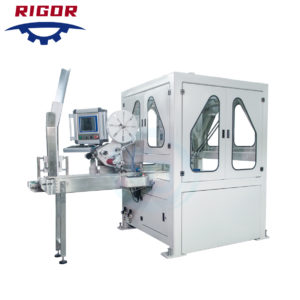
Many products, especially baby wipes, also feature a rigid plastic lid to improve dispensing and re-sealing. In an integrated line, a lid applicator machine is placed immediately after the flow-wrapper. It automatically applies a self-adhesive label to the pack (creating the resealable opening) and then uses a robotic arm with hot-melt glue to place and affix the plastic lid over the opening. The synchronization of the converting unit, the flow-wrapper, and the lid applicator is a complex engineering feat, and its flawless execution is a hallmark of a high-quality machine.
Types of Packaging: Soft Packs vs. Canisters
While the flexible soft pack is the dominant format, some market segments utilize rigid canisters. This is particularly common for disinfecting wipes or surface cleaning wipes. Wipes destined for canisters are not cut into individual stacks. Instead, they are perforated and wound into a large "master roll." This master roll is then slit into smaller rolls, which are inserted into the plastic canisters. The end-user threads the first wipe from the center of the roll through a dispensing nozzle in the canister lid.
Some machine manufacturers offer versatile systems that can be configured to produce either stacked wipes for soft packs or perforated rolls for canisters. However, it is more common for these to be distinct machine types. Your choice will be dictated by the product category you are targeting. For most consumer applications, such as baby, cosmetic, and personal care wipes, the soft pack produced by an integrated flow-wrapping line is the industry standard.
The Importance of Airtight Sealing for Product Longevity
The primary function of the package is to act as a barrier, protecting the product within from the environment outside. For wet wipes, the most critical aspect of this barrier function is preventing moisture loss. The liquid lotion is susceptible to evaporation, and a dried-out wet wipe is useless. The integrity of the package seals is therefore non-negotiable.
High-quality packaging units employ advanced sealing technologies. Ultrasonic sealing, for example, uses high-frequency vibrations to generate localized heat, creating a strong, clean seal without excessive heat that could damage the film or the product. "Long-dwell" sealing systems increase the time the sealing jaws are in contact with the film, allowing for lower temperatures to be used while still achieving a perfect seal, which is especially useful for thicker or more challenging packaging films.
Furthermore, quality control systems are often integrated into the packaging section. Vision systems can inspect the position of the lid, while in-line pressure-decay leak detectors can test the integrity of the seals on a statistical basis, automatically rejecting any packs that fail the test. This ensures that only perfectly sealed products leave the factory, protecting your brand's reputation for quality.
Customization in Packaging and Sustainable Trends
The package is a key marketing tool. It is the "face" of your product on the store shelf. An advanced packaging unit offers the flexibility to create a variety of pack sizes and formats to meet different consumer needs and retail environments. This includes standard 80-count baby wipe packs, smaller 20-count travel packs, or large 200-count bulk packs. The ability to quickly change over the machine to produce these different formats is a major competitive advantage.
In recent years, sustainability has become a major driver of innovation in packaging, just as it has in raw materials. There is a strong market push to reduce plastic consumption. This has led to several key trends that affect machinery choices:
- Recyclable Monomaterial Films: Manufacturers are moving away from multi-layer laminate films (which are difficult to recycle) toward monomaterial films (e.g., all-polyethylene) that are designed for recycling. These new films may have different sealing properties, and the packaging machine must be able to handle them effectively.
- Reduced Film Thickness: "Downgauging," or using thinner packaging films, reduces the total amount of plastic used. This requires a packaging machine with very precise tension control to handle the more delicate film without stretching or tearing it.
- Lidless Designs: Some brands are opting for innovative, high-barrier resealable labels that eliminate the need for a separate rigid plastic lid, further reducing the pack's plastic content.
When selecting a machine, it is wise to discuss these trends with the supplier. A forward-thinking manufacturer will be able to demonstrate their machine's capabilities with the latest generation of sustainable packaging materials, ensuring your operation is aligned with the future of the market. Exploring options for advanced wet wipes packaging machines can provide significant advantages in both efficiency and market appeal.
Supplier Reliability and After-Sales Support: A Partnership for Success
The acquisition of a major piece of industrial equipment like a wet wipes machine is not a simple transaction; it is the beginning of a long-term relationship. The machine itself is only one part of the equation for success. The other, equally important part, is the manufacturer that stands behind it. The expertise, reliability, and responsiveness of your supplier will have a direct and lasting impact on your operational efficiency, your ability to solve problems, and your overall return on investment. In regions that may be geographically distant from the machine's origin, such as South Africa or parts of Russia, the quality of the supplier's after-sales support infrastructure becomes an even more pronounced factor. Choosing a supplier is, in essence, choosing a technical partner for the next decade or more. This choice demands the same level of rigorous evaluation as the machine's technical specifications.
Vetting the Manufacturer: A Deep Dive Beyond the Brochure
Your due diligence on a potential supplier should extend far beyond their marketing materials and website. A thorough vetting process involves investigating their history, reputation, and technical credentials.
- Experience and Specialization: How long has the company been manufacturing hygiene converting machinery? Do they specialize in wet wipes machines, or is it just one small part of a much broader portfolio? A company with decades of focused experience, like those found in established manufacturing hubs, is likely to have a deeper well of engineering knowledge and has probably encountered and solved a wider range of technical challenges (Sunree Hygiene, 2025).
- Certifications and Standards: Does the manufacturer adhere to international quality and safety standards? Look for certifications like ISO 9001 (for quality management systems) and CE marking (indicating compliance with European health, safety, and environmental protection standards). These are not just formalities; they are external validation of a company's commitment to professional manufacturing processes.
- Global Presence and References: A supplier with a significant installed base of machines around the world, including in your region, has proven experience in handling international logistics, installation, and support. Ask for a list of customer references, preferably from companies of a similar size and in a similar market to your own. Speaking directly with other users of their machines can provide invaluable, unvarnished insights into the machine's real-world performance and the supplier's responsiveness.
The Critical Importance of Technical Documentation and Training
When the new machine arrives at your factory, it is accompanied by a wealth of technical documentation. The quality and clarity of this documentation are a direct reflection of the supplier's professionalism. A comprehensive documentation package should include:
- Detailed mechanical and electrical drawings.
- A complete bill of materials with part numbers for all components.
- An operator's manual explaining all functions and procedures.
- A maintenance manual outlining all required preventive maintenance tasks and schedules.
- Troubleshooting guides for common alarms and issues.
This documentation should be provided in a language your team can understand. However, documentation alone is not enough. The supplier must provide thorough training for your operators and maintenance staff. This training should be hands-on and take place on your actual machine, either at the supplier's factory before shipment (Factory Acceptance Test) or at your facility during installation. Well-trained operators will run the machine more efficiently and safely, and a well-trained maintenance team will be able to resolve most issues quickly, minimizing reliance on the supplier for basic support.
Spare Parts Availability and Lead Times
Even the most reliable machine will eventually require spare parts due to normal wear and tear. The supplier's ability to provide these parts quickly and efficiently is absolutely vital to minimizing downtime. Before signing a contract, you should have a clear understanding of the supplier's spare parts system.
- Recommended Spare Parts List: The supplier should provide a list of recommended spare parts to keep in stock at your factory. This list is typically divided into "wear parts" (which need regular replacement, like blades and belts) and "critical parts" (which have a long life but would cause a major shutdown if they failed, like a main motor or PLC).
- Pricing and Lead Times: Request a price list for common spare parts. What is the standard lead time for parts that are not in your local stock? A supplier with a well-organized logistics department and regional service centers can often ship parts much faster.
- Component Standardization: Inquire about the brands of the major components used on the machine (e.g., PLCs, servo motors, pneumatic valves). If the supplier uses components from globally recognized brands, it may be possible to source some standard parts locally, providing an additional layer of security.
Installation, Commissioning, and Ongoing Technical Support
The final phase of the acquisition process is the installation and commissioning of the machine in your factory. This is where the supplier's technicians come to your site to assemble the machine, connect it to your utilities, and get it running to the agreed-upon performance specifications. The professionalism and expertise of this installation team are crucial for a smooth start-up.
Once the machine is running, the nature of the relationship shifts to ongoing technical support. What happens when you encounter a problem you cannot solve on your own? The supplier should have a clear and responsive system for technical support. This often involves a tiered approach:
- Level 1: 24/7 telephone or email support for immediate questions.
- Level 2: Remote diagnostics, where a technician can log into your machine to troubleshoot.
- Level 3: On-site support, where a field service engineer is dispatched to your factory for complex issues.
Understanding the terms of this support, including response times and any associated costs (especially after the warranty period), is a key part of the purchasing decision. A supplier who views support as a cost center is a red flag. A true partner views it as an investment in your mutual success.
Frequently Asked Questions (FAQ)
What is the typical return on investment (ROI) for a fully automatic wet wipes machine?
The ROI for a fully automatic machine is highly variable and depends on factors specific to your market, such as labor costs, raw material prices, and the selling price of your finished product. However, the calculation generally involves comparing the high initial capital investment against long-term operational savings. Fully automatic lines significantly reduce labor requirements, minimize material waste through precise servo control and automatic splicing, and achieve higher, more consistent output. In markets with high labor costs, the payback period can be as short as two to three years. In regions with lower labor costs, the payback period might be longer, in the range of four to five years, but the benefits of superior product quality and production stability still provide a strong financial justification.
How much factory space is required to install a complete wet wipes production line?
The footprint of a wet wipes line varies with its speed and complexity. A complete, high-speed, fully automatic line—including the converting machine, flow-wrapper, lid applicator, and end-of-line case packing—can be quite long. A typical line might require a clear, linear space of approximately 25 to 30 meters in length and 6 to 8 meters in width. This allows for the machine itself, as well as necessary access space for operators and maintenance personnel, and staging areas for raw materials (like parent rolls of non-woven fabric and packaging film) and finished goods. It is also important to consider vertical clearance, as some machines have components that extend 3 to 4 meters in height.
Can one machine produce different types of wet wipes, such as baby wipes and cosmetic wipes?
Yes, one of the primary advantages of modern, full-servo wet wipes machines is their flexibility. A single machine can typically be configured to produce a wide variety of products. This is achieved by adjusting parameters in the HMI. For example, you can change the wipe's cut-off length, the folding pattern, the number of wipes per stack, and the amount of liquid applied. Switching between product types like baby wipes and cosmetic wipes is therefore entirely feasible. The changeover might also involve a physical change of the cutting mold if the wipe shapes are different, but on a well-designed machine, this process is engineered to be as quick as possible, often taking less than an hour.
What are the main differences between a Chinese-made and a European-made wet wipes machine?
Historically, European machines (particularly from Germany and Italy) have been considered the benchmark for high-end technology, precision engineering, and reliability, often commanding a premium price. Chinese manufacturers, on the other hand, have traditionally competed on price, offering more cost-effective solutions. However, in recent years, this gap has narrowed significantly. Leading Chinese manufacturers have heavily invested in R&D, adopting full-servo technology, high-quality international components (like Siemens or Allen-Bradley PLCs), and sophisticated automation features. Today, top-tier Chinese machines can offer performance and reliability comparable to their European counterparts but often at a more competitive price point, providing a strong value proposition for many global markets.
How does the choice of raw materials affect the performance of the best wet wipes machine 2025?
The raw materials, particularly the non-woven substrate, have a profound impact on machine performance. Different fabrics have different characteristics of strength, elasticity, and texture. A machine optimized for a standard spunlace fabric might struggle to run at high speed with a more delicate, natural fiber like bamboo or a thicker, bulkier air-through bonded fabric. This can lead to web breaks, poor folding quality, and increased waste. Therefore, it is vital to select a machine with a robust and highly adjustable web tension control system. When evaluating a machine, you should provide the supplier with samples of all the substrates you intend to use and request a demonstration or trial to confirm the machine can process them efficiently and reliably.
Conclusión
The process of selecting the best wet wipes machine in 2025 transcends a simple comparison of technical data sheets. It is an act of strategic deliberation, requiring a holistic perspective that weaves together an understanding of market dynamics, technological capabilities, operational realities, and the importance of a strong supplier partnership. The framework presented—focusing on the five pillars of capacity, automation, flexibility, packaging, and support—is intended to guide this deliberation. An investment decision grounded in this comprehensive analysis will lead not just to the acquisition of a machine, but to the establishment of a robust, efficient, and adaptable manufacturing system. This system becomes a foundational asset, empowering a business to produce high-quality products that meet the specific needs of its customers while retaining the agility to innovate and grow in the ever-evolving global hygiene market. The right machine is a catalyst, enabling a manufacturer to translate vision into tangible, profitable, and sustainable reality.
References
Data Insights Market. (2025). Unlocking the future of diaper and sanitary napkin converting machine: Growth and trends 2025-2033. Retrieved from https://www.datainsightsmarket.com/reports/diaper-and-sanitary-napkin-converting-machine-643915
Diapermachines.com. (2024, January 8). Innovations in diaper manufacturing: Exploring the baby diaper machine revolution. Retrieved from https://www.diapermachines.com/2024/01/08/innovations-in-diaper-manufacturing-exploring-the-baby-diaper-machine-revolution/
Market Research Intellect. (2024, December 9). Innovating comfort – The rise of automatic baby diaper making machines in the manufacturing sector. Retrieved from https://www.marketresearchintellect.com/blog/innovating-comfort-the-rise-of-automatic-baby-diaper-making-machines-in-the-manufacturing-sector/
Sunree Hygiene. (2025). Manufacturing machines. Retrieved from
Tucker, R. (2024, September 8). Advancements in disposable diaper machine technology and user-centric innovations. Made-in-China.com. Retrieved from https://insights.made-in-china.com/Advancements-in-Disposable-Diaper-Machine-Technology-and-User-Centric-Innovations_PATGmMdOYElC.html
WELLDONE MACHINE CO.,LIMITED. (2024, November 21). From raw materials to hygiene solutions: How sanitary napkin-making machines work. Retrieved from https://www.cnwelldone.com/from-raw-materials-to-hygiene-solutions-how-sanitary-napkin-making-machines-work