Abstract
An examination of the constituent elements of the cost of wipes reveals a complex interplay between material science, mechanical engineering, global logistics, and market-specific economic factors. For enterprises considering entry into the disposable hygiene market in 2025, particularly within emerging economies like South America, Russia, Southeast Asia, the Middle East, and South Africa, a granular understanding of these cost drivers is a prerequisite for sustainable profitability. This analysis deconstructs the total cost of wipes into seven principal domains: raw material inputs, capital expenditure on manufacturing machinery, operational and labor overheads, packaging and branding investments, supply chain and logistical hurdles, regulatory compliance expenditures, and the economic efficiencies gained through production scale and automation. By systematically evaluating each variable, from the price of nonwoven substrates and chemical formulations to the impact of import tariffs and machine production speed, a comprehensive financial model emerges. This framework enables prospective manufacturers to forecast expenses with greater accuracy, optimize their investment strategy, and strategically position their products within a competitive global landscape.
Key Takeaways
- Raw material selection, especially nonwoven fabric, is the largest variable in the overall cost of wipes.
- The initial investment in a wet wipes manufacturing line dictates long-term efficiency and per-unit costs.
- Operational expenses, including labor and energy, vary significantly across emerging markets and must be factored in.
- Packaging choices directly influence both production cost and consumer perception of product value.
- Logistics and import tariffs can drastically alter the final landed cost of materials and finished goods.
- Investing in quality control and meeting regulatory standards prevents costly recalls and builds brand trust.
- Achieving a lower cost of wipes per unit is directly proportional to production volume and automation levels.
Table of Contents
- The Anatomy of Wipe Costs: Deconstructing Raw Material Expenses
- The Engine of Production: Analyzing Wet Wipe Machine Investment
- Beyond the Machine: Quantifying Operational and Labor Overheads
- First Impressions Matter: The Economic Impact of Packaging and Branding
- From Factory to Shelf: Navigating Logistics, Tariffs, and Supply Chain Complexities
- The Price of Trust: Integrating Quality Control and Regulatory Compliance Costs
- Economies of Scale: How Production Volume and Automation Dictate Final Costs
- Frequently Asked Questions (FAQ)
- A Final Contemplation on Value
- References
The Anatomy of Wipe Costs: Deconstructing Raw Material Expenses
To truly grasp the financial architecture of a single wet wipe, we must first act as both chemist and economist, dismantling it into its core components. The journey from raw inputs to a finished, packaged product is a story of accumulated cost, and the first chapter is always about the materials. These are not merely commodities; they are carefully engineered components whose properties dictate the final product's performance, feel, and, most pressingly, its price. The raw material portion frequently accounts for the most significant percentage of the total manufacturing cost of wipes, making every decision in this domain profoundly impactful on the bottom line.
The Foundation: Selecting Nonwoven Substrates
The heart of any wipe is the nonwoven fabric, or substrate. It is the canvas upon which the entire product is built. It delivers the cleaning solution, provides the mechanical action for wiping, and creates the tactile experience for the end-user. The choice of substrate is therefore a balancing act between desired performance characteristics and budgetary constraints. Have you ever wondered why one baby wipe feels luxuriously soft while another feels coarse and papery? The answer lies in the fibers used and the way they are bonded together.
Spunlace nonwovens represent the industry standard for many applications, from baby wipes to cosmetic removers. This technology uses high-pressure water jets to entangle fibers, creating a soft, strong, and cloth-like material without the use of binders or chemicals. The composition of these fibers is a primary cost lever. A blend of polyester (PET) and viscose is common; polyester provides strength and durability, while viscose, a regenerated cellulose fiber, offers superior absorbency and a softer feel. A higher percentage of viscose will increase the material cost but yield a more premium-feeling wipe, a feature highly valued in the competitive baby care markets of the Middle East and parts of Southeast Asia. The basis weight, measured in grams per square meter (gsm), is another direct cost driver. A 45 gsm fabric will be substantially less expensive than a 60 gsm fabric, but it will also be thinner and less absorbent. Calculating the optimal gsm is a calculation of the minimum material required to provide a satisfactory consumer experience without over-engineering the product.
For the ultra-premium segment, air-through bonded nonwovens offer an even softer, bulkier, and more cushioned feel. This process uses heated air to bond bicomponent fibers, resulting in a fabric that is exceptionally gentle on the skin. While this technology produces a superior product, the machinery and energy required for its production make it a more expensive option. Its adoption often makes sense for brands targeting high-income consumers who are willing to pay a premium for perceived gentleness and quality.
A growing and technically demanding niche is the market for flushable or dispersible wipes. The engineering challenge here is immense: the wipe must be strong enough to function during use but break down rapidly into small pieces when agitated in water, preventing blockages in sewer systems. These substrates are typically made from specialized short-cut cellulose fibers. The research, development, and specialized production processes inherent in creating these materials mean their cost is significantly higher than standard spunlace. However, for markets with advanced wastewater infrastructure and environmentally conscious consumers, they represent a significant value-added opportunity that can command a higher retail price, offsetting the initial increase in the cost of wipes.
| Substrate Type | Key Characteristics | Relative Cost | Target Markets & Applications |
|---|---|---|---|
| Spunlace | Soft, strong, absorbent, versatile fiber blends (PET/Viscose). | Medium | Baby Wipes, Personal Care, Household Cleaning |
| Air-Through Bonded | Exceptionally soft, bulky, premium feel. | High | Premium Baby Wipes, Sensitive Skin Wipes |
| Flushable/Dispersible | Breaks down in water, environmentally marketed. | Very High | Flushable Moist Toilet Tissue, Toddler Wipes |
| Spunbond | Strong, lightweight, cost-effective. | Low | Industrial Wipes, Dry Wipes, Carrier for other materials |
The Active Ingredient: Formulating the Wetting Solution
If the nonwoven substrate is the body of the wipe, the wetting solution, or lotion, is its lifeblood. This liquid component is responsible for the product's primary function, whether it be cleansing, moisturizing, disinfecting, or polishing. The complexity and cost of this formulation can vary dramatically.
At its core, the solution is predominantly water—but not just any water. It must be highly purified, typically through a multi-stage process involving reverse osmosis (RO), deionization (DI), and ultraviolet (UV) sterilization. This is non-negotiable. Using untreated tap water would introduce minerals that can destabilize the formula and, more dangerously, microbes that would lead to product spoilage and potential health risks. The capital investment and operational cost of a water purification system are a fundamental part of the cost of wipes production.
The functional ingredients are where the formulation's cost truly begins to diverge. Surfactants are cleansing agents that lift dirt and oils from a surface. For a baby wipe, formulators will choose extremely mild, plant-derived surfactants like coco-glucoside or decyl glucoside to avoid skin irritation. For a hard-surface disinfecting wipe, a more powerful and less expensive surfactant might be used in combination with a disinfecting agent like a quaternary ammonium compound.
Preservatives are another unavoidable cost. Because wet wipes are a water-based product, they are an ideal breeding ground for bacteria, mold, and yeast. A robust preservative system is required to ensure the product remains safe and stable throughout its shelf life. The choice of preservatives is heavily influenced by regional regulations. For instance, certain preservatives that are acceptable in some parts of Asia may be restricted in markets that follow European Union regulations. Navigating this regulatory patchwork is a task for a skilled cosmetic chemist, and using newer, globally-compliant preservative systems can sometimes add to the formulation cost.
Finally, we have the value-added ingredients. These are the components highlighted in marketing: aloe vera for soothing, chamomile extract for calming, glycerin for moisturizing, or vitamin E as an antioxidant. Each ingredient adds a small amount to the per-liter cost of the solution, but when producing millions of wipes, these costs accumulate. The decision to include them is a strategic one, weighed against the brand's positioning and the price sensitivity of the target consumer. For example, in the sun-drenched markets of South Africa or Brazil, a wipe with added soothing aloe vera might have a distinct marketing advantage.
The Final Enclosure: Packaging Material Choices
The final piece of the raw material puzzle is the packaging. It serves multiple purposes: it protects the product from contamination and drying out, it provides a convenient dispensing mechanism, and it is the primary vehicle for branding and communicating with the consumer on the retail shelf.
The most common packaging format is the flexible flow-pack, made from a multi-layer plastic film. These films are sophisticated structures, often composed of an outer layer of polyester (PET) for stiffness and print quality, a middle barrier layer, and an inner layer of polyethylene (PE) for heat-sealing. The thickness of this film, measured in microns, and the complexity of its layers are direct cost factors.
A critical component of the flow-pack is the dispensing mechanism. The simplest and cheapest option is a resealable label. This label must be designed to be opened and closed dozens of time without losing its adhesion, lest the wipes inside dry out. A more premium and convenient option is a rigid plastic flip-top lid. These lids are typically produced through injection molding and are applied to the packaging film by a specialized machine. While they significantly increase the packaging cost, they also enhance the consumer experience and can be a key differentiator, justifying a higher retail price.
For certain product types, like heavy-duty disinfecting wipes or industrial wipes, rigid canisters are the preferred format. These are usually made from high-density polyethylene (HDPE) and offer excellent durability and a superior moisture barrier. The cost of the canister itself, plus the separate lid and the additional machinery required to fill and seal them, makes this a more expensive packaging solution reserved for products where its robustness is a key selling point.
The Engine of Production: Analyzing Wet Wipe Machine Investment
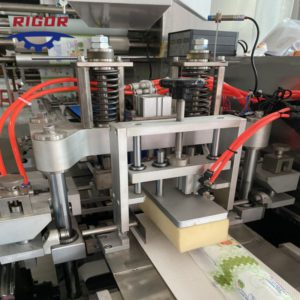
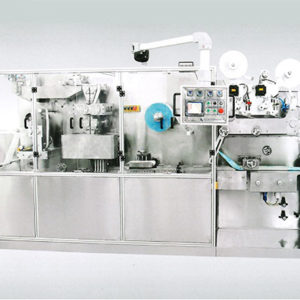
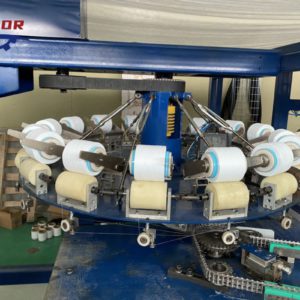
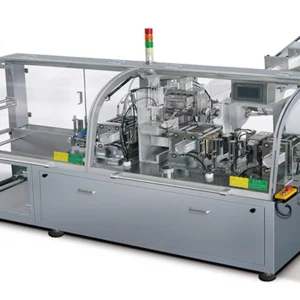
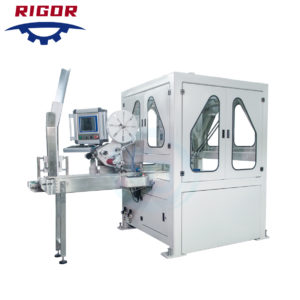
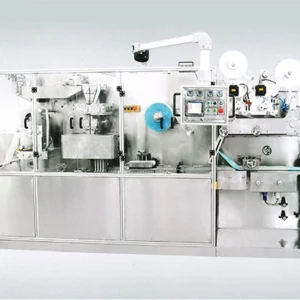
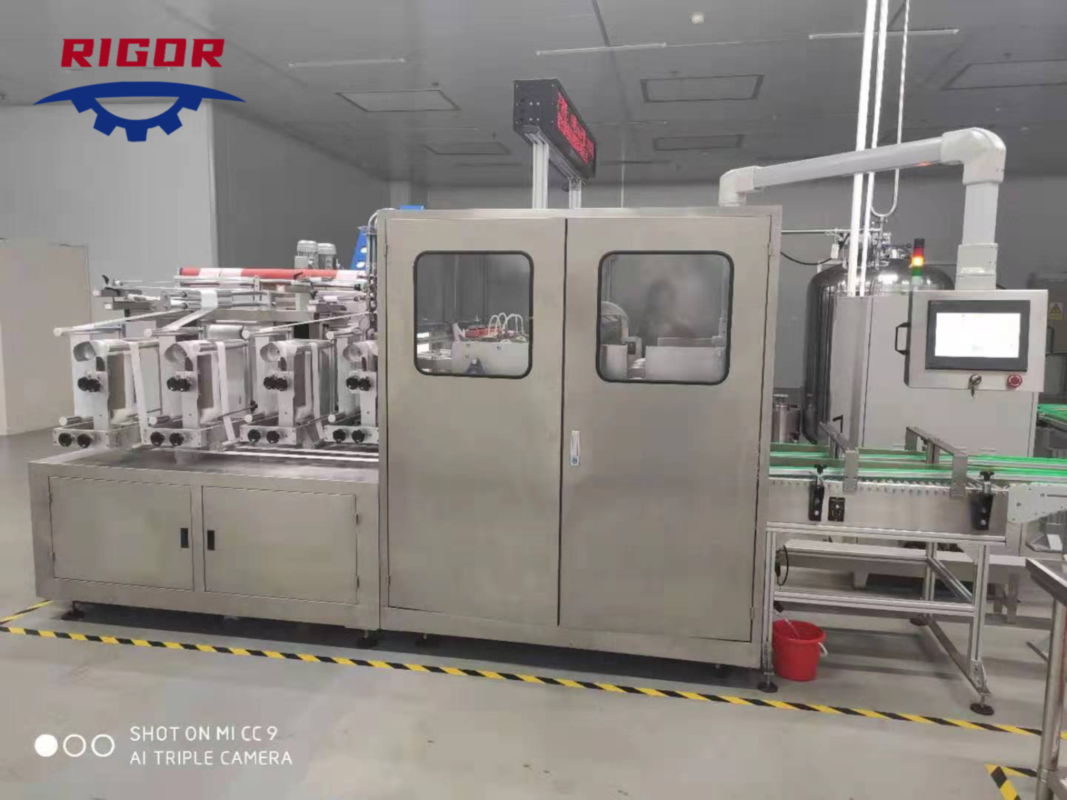
Having deconstructed the material components, we now turn our attention to the machine that brings them all together. The máquina de toallitas húmedas is the heart of the manufacturing operation. It is a significant capital expenditure that will largely determine your production capacity, efficiency, labor requirements, and, ultimately, your long-term cost of wipes on a per-unit basis. Think of it not as a single purchase, but as an investment in your factory's future capabilities.
The market for this machinery is diverse, with options ranging from basic, semi-automatic models to highly sophisticated, fully automatic production lines. The price can vary accordingly, from as little as USD $10,000 for a very simple machine to well over USD $100,000 for a high-speed, fully-featured line (diapermachines.com, 2025). The choice depends entirely on your business plan, projected sales volume, and labor market.
Semi-Automatic vs. Fully Automatic Lines
The most fundamental distinction in wet wipe machinery is the level of automation.
A semi-automatic machine will perform the core functions of folding, wetting, and cutting the nonwoven fabric. However, it will typically require manual intervention for downstream processes. For example, an operator might need to manually place the stacks of wipes into pre-made packaging bags, which are then sealed by a separate machine. These systems have a much lower initial purchase price, making them an attractive entry point for startups or for businesses in regions with very low labor costs. The downside is a significantly lower production speed, higher reliance on manual labor (which can introduce variability), and a higher per-unit labor cost.
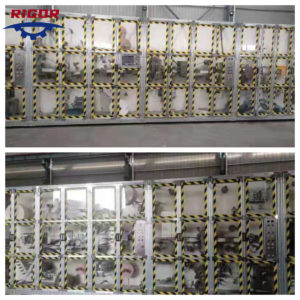
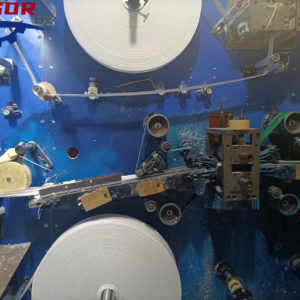
A fully automatic production line, in contrast, integrates all processes into a seamless flow. The machine automatically unwinds the nonwoven parent roll, slits it into lanes, folds it, adds the solution, cuts the wipes to length, stacks them into packs of a predetermined count, inserts the stack into packaging film that it forms into a bag, seals the bag, applies a resealable label or a plastic lid, and discharges a finished, retail-ready product. Some advanced lines even integrate case-packing robots at the end.
The benefits of a full-automation approach are immense. Production speeds are dramatically higher, often reaching hundreds of packs per minute. The consistency of the finished product is superior, as the element of human error is removed from most steps. Labor requirements are drastically reduced, often requiring only one or two operators to oversee the entire line and replenish raw materials. While the initial investment is substantial, the reduction in labor costs and the sheer volume of output lead to a much lower manufacturing cost of wipes per unit when the machine is run at or near its capacity. For businesses aiming for significant market share in competitive regions like Russia or Southeast Asia, a fully automatic line is often a necessity.
| Feature | Semi-Automatic Machine | Fully Automatic Machine |
|---|---|---|
| Initial Investment | Low (e.g., $10,000 – $30,000) | High (e.g., $50,000 – $100,000+) |
| Production Speed | Low (e.g., 20-50 packs/min) | High (e.g., 80-200+ packs/min) |
| Labor Requirement | High (Multiple operators for production & packing) | Low (1-2 operators for monitoring) |
| Per-Unit Cost | Higher (at scale, due to labor & inefficiency) | Lower (at scale, due to speed & efficiency) |
| Flexibility | Often higher for very small, custom runs. | Less flexible for frequent, small-batch changes. |
| Ideal For | Startups, niche products, markets with low labor costs. | Medium to large-scale producers, mass-market products. |
Key Machine Specifications and Their Cost Implications
When evaluating a wet wipe machine, several key specifications beyond the level of automation will influence its price and performance.
- Production Speed: This is often quoted in pieces per minute or packs per minute. Higher speed requires more robust mechanical components, more powerful servo motors, and more sophisticated control systems, all of which increase the machine's price.
- Number of Lanes: A parent roll of nonwoven fabric can be slit into multiple lanes, with each lane producing a stream of wipes. A 10-lane machine will have a much higher output than a 2-lane machine, but will also be larger and more expensive.
- Folding Type: Common folding types include 'Z' fold, 'C' fold, and 'interfold' (pop-up). Machines that can handle multiple folding types or more complex folds are generally more expensive.
- Applicable Product Size: A machine must be able to handle the desired range of wipe dimensions (length and width) and pack counts (e.g., from a 10-count travel pack to an 80-count nursery pack). Machines with a wider range of adjustability, especially those with servo-driven controls that allow for quick, recipe-based changeovers, carry a premium price but offer valuable production flexibility.
- Control System: Modern machines utilize a Programmable Logic Controller (PLC) and a Human-Machine Interface (HMI), which is typically a color touchscreen. The sophistication of this system, the quality of its components (e.g., using brands like Siemens or Allen-Bradley), and the user-friendliness of its software all impact the cost. A good PLC/HMI system simplifies operation, speeds up troubleshooting, and reduces downtime.
Beyond the Machine: Quantifying Operational and Labor Overheads
The purchase price of the machinery is a one-time capital expense, but the costs to run that machine are ongoing and continuous. These operational overheads are a vital component of the total cost of wipes and can make or break a business's profitability. A manufacturer in a region with high energy costs but low labor costs will have a different cost structure than one in the opposite scenario. A careful analysis of these factors is just as important as negotiating the price of raw materials.
The Human Element: Labor Costs and Skill Requirements
Labor is often one of the most significant operational expenses. The cost of labor varies enormously across the target markets. For example, hourly manufacturing wages in parts of Southeast Asia can be a fraction of those in Russia or certain areas of the Middle East. This differential is a major reason why semi-automatic machinery might remain a viable option in some countries, whereas it would be economically unfeasible in others.
However, it's not simply a matter of hourly wages. One must also consider the skill level required. Operating a simple, semi-automatic line may require a larger number of low-skilled workers. In contrast, running a high-speed, fully automatic production line requires fewer operators, but these individuals need to be more highly skilled. They must be technicians capable of monitoring the HMI, understanding the machine's processes, performing basic troubleshooting, and conducting routine maintenance. The training and retention of these skilled technicians are an indirect labor cost that must be accounted for.
Furthermore, one must factor in overheads associated with labor, such as payroll taxes, benefits, insurance, and the administrative costs of human resources management. These can add a significant percentage on top of the base wage.
Powering Production: Energy and Utility Consumption
A wet wipe production line is a thirsty consumer of utilities. The primary driver of energy consumption is electricity. Servo motors, heaters for sealing jaws, air compressors, pumps for the wetting solution, and the factory's lighting and HVAC systems all contribute to the electricity bill. The cost of industrial electricity varies widely from country to country. Manufacturers in nations with subsidized energy may have a distinct advantage over those in countries with high electricity tariffs. When selecting a machine, it is wise to inquire about its power consumption rating (typically in kW). Modern, well-engineered machines often incorporate energy-saving features, such as more efficient servo motors or better-insulated heating elements, which can lead to substantial long-term savings.
Water is another key utility, not just as a primary raw material in the solution but also for cleaning and sanitation of the machinery and production environment. The cost of water, along with the cost of treating the wastewater generated from cleaning processes, should be included in the operational budget.
Finally, compressed air is the unsung hero of many automated systems, used to power pneumatic cylinders, actuators, and air jets. A large, industrial air compressor is itself a significant consumer of electricity, and any leaks in the compressed air lines are literally leaks of money.
Keeping the Wheels Turning: Maintenance and Spare Parts
No machine runs forever without care. A proactive maintenance schedule is not an expense; it is an investment in preventing costly, unplanned downtime. The operational budget must include provisions for routine maintenance tasks, such as lubrication, inspection, and cleaning.
It must also account for the cost of spare and consumable parts. Consumable parts are those that wear out through normal operation and need regular replacement, such as the blades for cutting the wipes, the heat-sealing jaws, suction cups, and conveyor belts. Spare parts are components kept on hand to quickly replace a part that fails unexpectedly, such as a motor, a sensor, or a PLC module.
When purchasing a machine from a manufacturer, it is prudent to inquire about the cost and availability of their spare parts. A machine with a low initial purchase price may become a liability if its spare parts are expensive or have long lead times, leading to extended periods of lost production. Reputable manufacturers provide a recommended spare parts list with their machines and offer support for installation and maintenance, which can be a valuable service for new producers (Yugong Machinery, 2024).
First Impressions Matter: The Economic Impact of Packaging and Branding
In the crowded aisles of a supermarket, a product has only a few seconds to capture a consumer's attention. In this fleeting moment, the packaging does all the talking. It is the product's face, its handshake, and its sales pitch, all rolled into one. While we have already discussed the raw material cost of packaging films and lids, the economic impact of packaging extends far beyond the price of plastic. It encompasses the design, the branding, and the machinery required to create a package that is not only functional but also desirable. These elements add layers to the cost of wipes, but they are investments in building a brand and commanding a better position in the market.
The Cost of Shelf Appeal: Design, Printing, and Plates
Before a single package is produced, there is the cost of design. This involves graphic design work to create the brand's logo, color scheme, and on-pack imagery. For a new product launch, this can be a significant upfront cost, requiring the services of a professional design agency.
Once the design is finalized, it must be transferred onto the packaging film. The most common method for high-volume flexible packaging printing is rotogravure printing. This process involves etching the design onto massive metal cylinders, known as gravure plates. Each color in the design requires its own separate plate. The creation of a set of these plates can cost thousands of dollars. This is a one-time cost per design, but it means that changing the design is an expensive proposition. This high setup cost is why rotogravure printing is best suited for long production runs where the cost of the plates can be amortized over millions of packages. For smaller, niche brands or for test marketing, digital printing is becoming a more viable, albeit higher per-unit cost, alternative that does not require plates.
The inks used in the printing process also contribute to the cost. High-quality, vibrant, and food-safe inks are more expensive than lower-grade alternatives. Special finishes, such as a matte varnish or metallic inks, can further enhance shelf appeal but also add to the final packaging cost.
Machinery for Packaging: Lid Applicators and More
The complexity of your chosen package design directly impacts your machinery requirements. As discussed, a simple resealable label is the most economical option. This label is typically applied by a module integrated directly into the main wet wipe production line.
However, if you opt for the more premium rigid plastic flip-top lid, you will need an additional piece of equipment: a lid applicator machine. This machine takes the sealed packs of wipes from the main line, uses a vision system or mechanical guides to find the correct position, applies a hot-melt adhesive, and precisely places the plastic lid onto the pack. A reliable, high-speed lid applicator is a significant investment on its own, adding to the total capital expenditure for the production line. However, the perceived increase in quality and convenience can allow the product to compete in a higher market segment.
Other specialized packaging formats require even more machinery. For example, producing wipes in a rigid canister involves a line that includes a canister unscrambler, a filling station (which may involve "stuffing" a perforated roll of wipes into the canister), a station for feeding and sealing the canister lid, and a labeling machine to apply a wrap-around label. Each of these machines adds to the initial investment and the factory's footprint.
From Factory to Shelf: Navigating Logistics, Tariffs, and Supply Chain Complexities
The process of calculating the cost of wipes does not end when a finished pack rolls off the production line. A significant portion of the final cost to the business is incurred in the journey from the factory door to the retailer's warehouse. This is the world of logistics and supply chain management, a complex web of transportation, storage, and cross-border trade. For manufacturers in South America, Russia, Southeast Asia, the Middle East, and South Africa, who often rely on imported raw materials and machinery, and may even export finished goods, this is a particularly challenging and cost-intensive part of the business.
The Cost of Movement: Transportation and Warehousing
Transportation costs are incurred at multiple stages. First, there is the inbound logistics: the cost of shipping raw materials from your suppliers to your factory. Nonwoven parent rolls are large and heavy; liquid chemicals may need to be shipped in drums or intermediate bulk containers (IBCs). The cost of this freight, whether by sea, rail, or truck, must be factored into the landed cost of your raw materials.
Once the wipes are produced and packed into shipping cartons, there is the cost of warehousing. You will need a clean, dry, and secure space to store your finished goods before they are shipped to customers. This involves the cost of renting or owning a warehouse, the labor for managing inventory, and the material handling equipment like forklifts and pallet jacks.
Finally, there is the outbound logistics: the cost of shipping the finished products to your distributors or retail partners. This cost is highly dependent on distance, volume, and the level of service required. The further your customers are from your factory, the higher your distribution costs will be, which will either eat into your profit margin or need to be passed on to the consumer.
Crossing Borders: Import Duties and Tariffs
For any business involved in international trade, tariffs and duties are a major financial consideration. When you import your or raw materials like specialized nonwovens or chemicals, the government of your country will likely levy an import tax. This tax is usually calculated as a percentage of the declared value of the goods. These tariffs can add a substantial amount to your initial investment and ongoing material costs. For example, a 15% tariff on a $100,000 machine adds an immediate $15,000 to its cost.
It is absolutely vital to work with a knowledgeable customs broker who understands the specific tariff codes (HS Codes) for your machinery and raw materials. Sometimes, small differences in classification can lead to large differences in the duty rate. Trade agreements between countries can also play a huge role. For instance, a country within a trade bloc like ASEAN or Mercosur may have lower or zero tariffs on goods imported from other member countries.
Similarly, if you plan to export your finished wipes to neighboring countries, you must understand the import duties they will charge. This will affect the final price of your product on the foreign shelf and your competitiveness in that market. This complex matrix of international trade regulations requires careful study and expert guidance.
The Price of Trust: Integrating Quality Control and Regulatory Compliance Costs
In the hygiene products industry, trust is not a marketing buzzword; it is the fundamental currency of your business. Consumers trust that the wipe they use on their baby's skin is safe, gentle, and free from harmful contaminants. They trust that a disinfecting wipe will actually kill the germs it claims to. Earning and maintaining this trust has a cost, an investment in robust quality control systems and adherence to a web of national and international regulations. While these activities add to the cost of wipes, they are not optional. They are the bedrock of a sustainable business, protecting both the consumer and the brand from the catastrophic consequences of a quality failure.
Building a Quality Assurance Framework
Quality Control (QC) is not something that happens at the end of the line; it is a philosophy that must be embedded in every step of the manufacturing process. A comprehensive Quality Assurance (QA) framework includes:
- Incoming Material Inspection: Raw materials should not be accepted into the warehouse without first being inspected and tested. This means checking nonwoven fabrics for defects, correct gsm, and strength. It means taking samples of the wetting solution to test its pH, viscosity, and preservative levels. It may even involve microbiological testing of incoming raw materials.
- In-Process Quality Checks (IPQC): Operators and QC technicians must constantly monitor the production line. This includes visually inspecting the folding of the wipes, checking the cut-off length, verifying the weight of the finished packs to ensure the correct amount of solution has been added, and testing the seal strength of the packaging. These checks help to catch any deviations from the standard before a large number of defective products are made.
- Finished Goods Testing: Before a batch of products can be released for sale, a final round of testing is required. This always includes microbiological testing, where samples are incubated to ensure they are free from bacteria, yeast, and mold. It also includes stability testing, where packs are kept at elevated temperatures and humidity to simulate aging and ensure the product will remain stable throughout its intended shelf life.
The cost of this framework includes the salaries of QC personnel, the investment in laboratory equipment (such as a pH meter, viscometer, incubator, and microbial testing supplies), and the cost of the materials that are used up in testing.
The Cost of Compliance: Certifications and Standards
Operating in the global market means complying with a variety of standards. Achieving certifications like ISO 9001 (for quality management systems) or Good Manufacturing Practices (GMP) is often a prerequisite for selling to major retailers or for exporting to developed markets.
The process of becoming certified involves developing extensive documentation of your processes, training your staff, and often, making upgrades to your facility and equipment to meet the required standards. Then, you must pay for an audit by an accredited third-party certification body. These certifications are not a one-time event; they require periodic surveillance audits to maintain, all of which have associated costs.
While these certifications add to the overhead, they provide a powerful signal of quality and reliability to potential customers. They demonstrate a commitment to excellence that can be a strong competitive advantage. They also provide a robust framework that helps to minimize errors, reduce waste, and improve overall efficiency, which can lead to long-term cost savings that offset the initial investment. A manufacturer with GMP certification is making a clear statement about the integrity of their production process (Chuangda Machinery, 2022).
Economies of Scale: How Production Volume and Automation Dictate Final Costs
We arrive now at a principle that lies at the heart of modern manufacturing: the economy of scale. In simple terms, the more of something you produce, the cheaper it becomes to produce each individual unit. For a prospective wet wipes manufacturer, understanding and leveraging this principle is the key to transitioning from a small-scale operation to a profitable, mass-market player. The relationship between production volume, automation, and the per-unit cost of wipes is direct and powerful.
The Amortization Effect: Spreading Fixed Costs
Every manufacturing business has two types of costs: variable costs and fixed costs.
- Variable Costs are costs that change in direct proportion to your production volume. The cost of nonwoven fabric is a perfect example. If you produce twice as many wipes, you will use twice as much fabric, and your total fabric cost will double. The variable cost per wipe remains constant.
- Fixed Costs are costs that remain the same regardless of your production volume (within a certain range). The rent for your factory, the salaries of your administrative staff, the depreciation of your machinery, and the setup cost for printing plates are all fixed costs.
The magic of economies of scale happens when you spread these fixed costs over a larger number of units. Imagine your factory's fixed costs are $10,000 per month. If you only produce 100,000 packs of wipes that month, the fixed cost allocated to each pack is $0.10. But if you can ramp up production and produce 1,000,000 packs, the fixed cost allocated to each pack plummets to just $0.01. This ten-fold increase in production has slashed the fixed cost portion of your per-unit cost by 90%.
This is why high production volume is so critical to achieving a low manufacturing cost of wipes. It allows you to dilute the impact of your most significant fixed costs, most notably the initial investment in your machinery. A high-speed, fully automatic production line that costs $100,000 may seem expensive, but if it allows you to produce tens of millions of packs per year, the depreciation cost per pack becomes almost negligible.
Automation as the Enabler of Scale
High production volume is not achievable without a high degree of automation. A semi-automatic line that relies on manual packing simply cannot reach the output levels needed to truly benefit from economies of scale. A fully automatic line that can run 24 hours a day with minimal staffing is the engine that drives high volume.
Automation also contributes to economies of scale by reducing waste. An automated system performs each task with a precision and consistency that humans cannot match. It will cut each wipe to the exact same length, apply the exact same amount of solution, and place the lid in the exact same spot every single time. This reduces the amount of raw material that is wasted due to errors and minimizes the number of rejected, unsaleable products.
Furthermore, automation allows a business to scale its output without proportionally scaling its labor force. Doubling the production on a manual line might require doubling the number of workers. Doubling the production of an automated factory might simply mean running a second shift with a small additional crew. This decoupling of production volume from labor costs is one of the most powerful financial benefits of automation and a key driver in reducing the overall cost of wipes. For any enterprise with ambitions to serve a large market, investing in a reliable and efficient is not just an option; it is a strategic imperative.
Frequently Asked Questions (FAQ)
What is the minimum startup investment to begin manufacturing wet wipes?
The minimum investment can vary dramatically based on your business model. For a very small-scale, semi-automatic operation in a low-cost labor market, it might be possible to start with an initial capital outlay of around $30,000 to $50,000 USD, covering a basic machine and initial raw material stock. However, for a more robust, fully automatic line capable of competitive mass production, the investment in machinery alone can range from $50,000 to over $100,000 USD, with total startup capital, including facility setup and working capital, likely exceeding $200,000 to $300,000 USD.
How much does a typical wet wipes machine cost in 2025?
The price of a wet wipes machine depends on its speed, level of automation, and features. According to industry suppliers, a basic semi-automatic machine may cost between $10,000 and $30,000 USD. A fully automatic, high-speed production line with features like auto-splicing and lid application will typically cost between $50,000 and $100,000 USD, with some highly advanced, multi-lane systems exceeding this range.
Which raw material has the biggest impact on the final cost of wipes?
The nonwoven substrate is consistently the single most expensive raw material component, often accounting for 50-70% of the total material cost. The specific type of fiber blend (e.g., polyester vs. viscose), the basis weight (gsm), and the manufacturing technology (e.g., spunlace vs. air-through bonded) are the primary drivers of the substrate's price.
How can I reduce my manufacturing costs?
The most effective long-term strategy to reduce the per-unit cost of wipes is to increase production volume through automation. Investing in a high-speed, fully automatic machine lowers labor costs and allows you to spread fixed costs over more units. Other strategies include negotiating bulk discounts on raw materials, optimizing your wetting solution formula to use more cost-effective ingredients, and implementing a rigorous maintenance program to minimize costly downtime.
Are fully automatic machines better than semi-automatic ones?
"Better" depends on your specific goals. For large-scale production targeting mass markets, fully automatic machines are superior due to their high speed, low per-unit labor cost, and consistency. For small startups, niche product manufacturing, or operations in regions with extremely low labor costs, a semi-automatic machine can be a more financially accessible entry point, despite its lower efficiency.
How do import tariffs affect the cost of starting a wipe business?
Import tariffs can significantly increase your startup costs. Machinery, specialized nonwoven fabrics, and certain chemical ingredients are often imported. A tariff, which is a tax on these imports, is added to the purchase price. For example, a 20% tariff on an $80,000 machine adds $16,000 to your initial investment. It is vital to research the specific tariff rates for your country and factor them into your business plan.
Does the choice of packaging significantly alter the cost?
Yes, significantly. A simple flow-pack with a resealable sticker is the most economical option. Upgrading to a pack with a rigid plastic flip-top lid increases the material cost and requires an additional investment in a lid applicator machine. While this raises the production cost, it also improves consumer convenience and perceived value, which can support a higher retail price.
A Final Contemplation on Value
As we conclude this detailed examination, it becomes clear that the "cost of wipes" is not a single number but a dynamic equation with numerous variables. It is an intricate dance of material science, mechanical precision, labor economics, and global trade. For the entrepreneur standing at the threshold of this industry in 2025, the path to profitability is paved not with shortcuts, but with knowledge. It requires a deep appreciation for how the choice of a viscose fiber in a nonwoven can translate to a mother's perception of softness, how the investment in a servo motor can reduce waste and increase output, and how adherence to a quality standard can build a brand that endures. The figures and factors discussed here are not merely line items on a spreadsheet; they are the building blocks of a tangible product that will become a part of people's daily lives. The true challenge, and indeed the opportunity, lies in skillfully managing these costs to create a product that delivers not just function, but genuine value to the consumer and sustainable returns to the enterprise.
References
diapermachines.com. (2025). Wet wipes machine. Retrieved from https://www.diapermachines.com/product-category/wet-wipes-machine/
dnwmachines.com. (2025). Category: Sanitary Napkin Machine. Retrieved from
en.chuangdamachine.com. (2022). Company Profile. Retrieved from https://en.chuangdamachine.com/about.html
Michał, C., & Prochon, M. (2018). Spunlace nonwovens–the fabric of the future. AUTEX Research Journal, 18(4), 364-370. https://doi.org/10.1515/aut-2018-0004
Saat, N. C., Tahir, M. F. M., & Anuar, N. (2021). Preservatives in personal care and cosmetic products: A review on the new alternative preservatives. Journal of Cosmetic Science, 72(4), 395-416.
sanitarypadmachine.com. (2024). Sanitary Napkin Production Line. Retrieved from
Smith, P. (2020). An introduction to nonwovens technology. John Wiley & Sons.
World Trade Organization. (2024). Tariff data. WTO.org. Retrieved from
yugongmachinery.com. (2024). Diaper Manufacturing Machine | Baby/Adult Diaper Making Machine Price. Retrieved from https://www.yugongmachinery.com/diaper-manufacturing-machine/
Zhang, D. (2017). Advanced nonwoven technologies. Woodhead Publishing.