Approximately 3.7 billion people experience menstruation on a monthly basis. Despite that, millions of women and girls who live in less developed regions cannot afford or even get sanitary napkins, although they are a basic hygiene product. A global discussion has taken place as a consequence: Why are the sanitary napkins not free like the other public health necessities?
Although a lot of people are of the opinion that menstrual products should be given away for free or at least be subsidized, things are far from being that simple. There are many reasons behind the current sanitary napkin prices situation, and these include the whole chain from the manufacturing and logistics to policy and infrastructure.
What Goes Into the Cost of a Sanitary Napkin?
Sanitary napkins may seem simple, but their production involves multiple stages, each contributing to the final price. Key cost factors include:
Raw materials: Super absorbent polymers, fluff pulp, breathable backsheet films, and non-woven fabrics
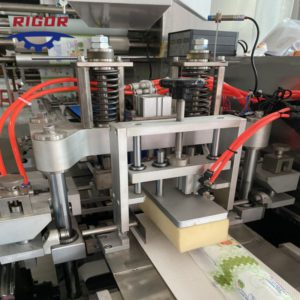
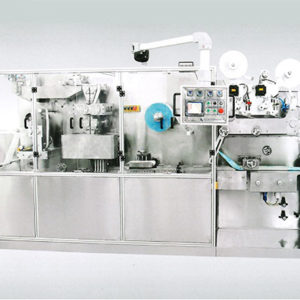
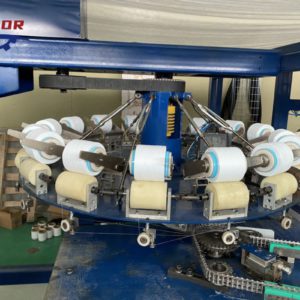
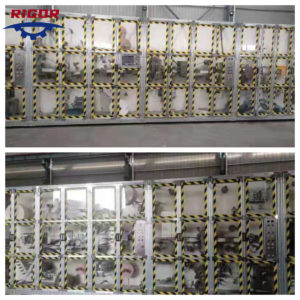
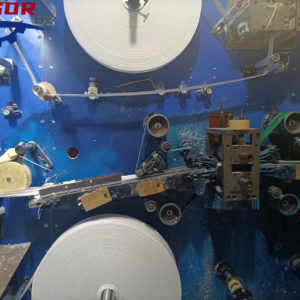
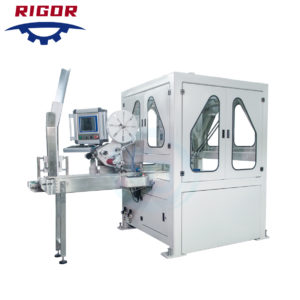
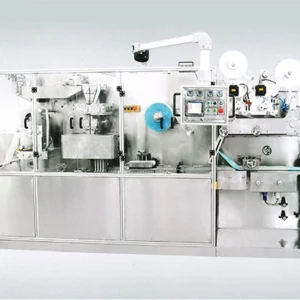
Advanced machinery: High-speed sanitary pad machines like those made by Rigor that ensure precision, hygiene, and automation
Labor and energy: Even with automation, skilled operation and maintenance add to overhead
Packaging and branding: Individual wrapping, labeling, and marketing expenses
Logistics and distribution: Warehousing and delivery across urban and rural regions
Even in bulk, the cost of producing each pad adds up. Governments or NGOs aiming to offer free pads must still finance these components, which can become significant over time.
Why Most Countries Don’t Offer Free Sanitary Pads
Despite global awareness of “period poverty,” only a handful of countries have implemented free sanitary napkin distribution policies. Several reasons explain this:
Budget constraints: Health and education sectors already compete for limited government funding
Infrastructure challenges: Distribution in rural or remote areas can be complex and costly
Cultural stigma: In some regions, menstruation is still considered taboo, delaying policy action
Lack of manufacturing capacity: Many local economies lack the technology and expertise to produce affordable pads at scale
That’s where manufacturers like Rigor play a vital role. By supplying automated sanitary pad machines, baby wet wipes machines, and diaper production lines, they empower local businesses and institutions to produce hygiene products cost-effectively and independently.
Can Local Production Make Pads More Affordable?
Yes—and it’s already happening. Small and mid-sized enterprises in developing regions are investing in compact, high-output sanitary pad machines to bring production closer to demand. This reduces shipping costs, creates jobs, and increases access.
With machines like the baby wet wipes machine and diaper production line, businesses can even expand into adjacent hygiene markets—allowing them to subsidize or support sanitary pad production with profits from other product lines.
Benefits of local manufacturing include:
Lower per-unit cost over time
Greater control over product quality
Faster distribution to schools, clinics, and community centers
Opportunities for government or NGO partnerships
By decentralizing production, sanitary pads can become significantly more affordable—if not entirely free.
Why sanitary napkins are not free is a lesser question related to fairness and more about the things like economies, infrastructure, and access to efficient manufacturing. To close this gap, companies such as Rigor are facilitating the transformation of conventional production into sustainable one using the necessary technology.
What if some governments, NGOs, and private enterprises were to work hand in hand, put funds into local manufacture with high-standard machines for the production of sanitary pads? Then, the goal of menstrual care being easy to access and low-priced, or maybe even free, would not be far off, becoming a reality not only in one place but all over the world.
Welcome to the Nonwoven Expo Bangladesh 2025, running from July 24 to 26 in Dhaka’s ICCB. As a premier platform for hygienic nonwoven technologies, this year’s expo highlights innovations across diapers, sanitation, wipes, and packaging sectors. Rigor Machine (Quanzhou Rigor Machine Manufactory Co., Ltd.), a leading provider of high-performance diaper production line solutions, is proud to exhibit at Booth No. 81.
Rigor Machine: Pioneering Diaper Production Lines
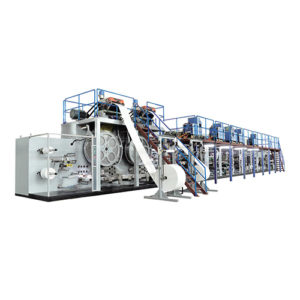
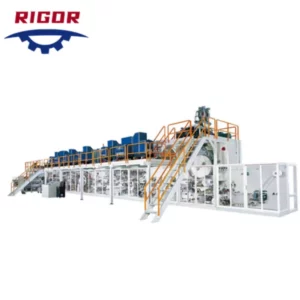
With over 15 years of expertise, Rigor Machine specializes in designing and manufacturing advanced diaper production line systems—ranging from baby diapers to adult pull‑up pants, sanitary pads, and wet wipes machinery. Their production lines deliver top-tier performance, achieving speeds of 300–600 pieces per minute thanks to full‑servo automation and PLC controls.
Whether your operation is scaling up or entering the Asian market, Rigor Machine’s solutions offer hygienic precision, efficiency, and consistency.
Why Visit Rigor Machine at Booth 81?
At Nonwoven Expo Bangladesh, Rigor Machine is showcasing its flagship diaper production line that integrates modern features:
High throughput: Achieving stable speeds of 400–500 pcs/min, ideal for high-demand markets
Customization: Tailor machinery size, output capacity, and component layout to suit production needs.
Global standard quality: CE-certified equipment paired with rigorous CNC-manufactured components ensures long-term reliability
Technical support & training: From installation assistance to long-term after-sales support, Rigor Machine offers lifetime service, onsite technician training, and spare parts availability worldwide
Explore Their Capabilities
High-Speed Baby Diaper Production
Visitors can witness the full-automatic baby diaper machine on display. These machines are engineered for stability—capable of maintaining productivity at up to 600 pcs/min during peak operation, with quality control ensuring a ≥97% qualification rate. The system is ideal for nonwoven-based diapers with SAP cores and soft nonwoven layers.
Adult Diaper & Underpad Lines
At booth 81, Rigor Machine will also introduce adult diaper production lines featuring large waistbands, pull‑up styles, and automated packaging. These production lines integrate seamlessly into broader nonwoven sanitary product manufacturing operations.
Wet Wipes & Sanitary Pad Machinery
Though the central focus is on diapering, Rigor also exhibits complete hygiene solutions, including sanitary pad lines and wet wipes equipment using spunlace nonwoven materials—demonstrating comprehensive nonwoven expertise across product types.
Key Advantages
Scalable hygiene production: Whether you’re launching a small diaper brand or expanding your facility, Rigor Machine supports scalable operations.
Efficiency and cost-saving: Full automation translates to lower labor needs and faster ROI.
Versatile nonwoven applications: With equipment capable of processing a wide range of nonwoven materials, Rigor meets diverse industry demands—from SAP-based diapers to absorbent sanitary pads.
Meet Rigor Machine at Booth No. 81
If your business is exploring diaper production line capabilities or planning new capacity investments, visiting Booth No. 81 at Nonwoven Expo Bangladesh is a must. Engage with Rigor Machine’s expert team, see live machine demos, and discover personalized hygiene production configurations.
Rigor Machine’s presence at this Expo emphasizes their strategic focus on South Asian markets. Their systems combine cutting-edge servo technology, robust build quality, and user-centric service, making them a trusted partner for hygiene product manufacturers.
Before taking off on a plane, a lot of flyers are getting curious about what personal care items are acceptable to be carried in their bag into the airplane. The major part of the questions that usually come up, especially by women, is whether it is okay to bring sanitary pads in the hand luggage. The answer is straightforward—with a yes, they are allowed, and they are not just an essential but also the most important item you can have on the plane.1
In this article, we’ll explore what makes sanitary pads travel-safe, address common misconceptions, and highlight how manufacturers like Rigor contribute to the global supply of hygiene products through advanced diaper production line technology, competitive sanitary pads machine price, and high-quality wet wipes raw material.
TSA Rules: Sanitary Pads Are 100% Permitted
According to airport security regulations worldwide—including TSA (Transportation Security Administration) in the United States—sanitary pads, tampons, and pantyliners are allowed in both carry-on and checked luggage. These items are considered personal hygiene necessities and are not restricted like liquids or gels.
You can bring as many as you need, whether sealed in packaging or packed individually. They don’t need to be declared at security checkpoints, and they rarely trigger additional screening.
Why the Confusion?
Much of the uncertainty stems from two factors:
Lack of clarity in official guidelines: While toiletries and liquids are regulated, solid hygiene items like pads are less often mentioned.
Privacy concerns: Some travelers worry about embarrassment if their bags are opened. However, security staff are trained to handle such items with professionalism.
It’s important to remember that sanitary pads are everyday necessities—bringing them on a plane is as normal as packing a toothbrush.
What About Wet Wipes and Other Hygiene Products?
Sanitary pads and wet wipes belong to separate categories, which is different. Most alcohol-based wet wipes and some non-liquid hygiene wipes are not banned in carry-on baggage. These are useful for passengers who need to keep themselves fresh during long trips or clean surfaces in public places.
It is here that the importance of the quality of the wet wipe’s material emerges. Companies like Rigor that are reputable and provide the latest Hygiene materials to top personal care brands are perfect for mild sensations, no harm to skin even in dry airplane conditions. Their offerings are both appealing and strong enough for those who are in good health as well. And the best choice for people with sensitive skin, who are usually the most affected during these occasions.
The Role of Manufacturers Like Rigor
Behind the scenes, companies like Rigor play a major role in ensuring these everyday products are accessible, effective, and safe for travel. Their cutting-edge diaper production line systems are used not only for baby care but also for adult incontinence and feminine hygiene manufacturing.
Rigor’s machinery supports efficient, high-volume production of sanitary pads.
Their sanitary pads machine price remains competitive, making it easier for global brands to offer affordable products.
Their wet wipes raw material helps brands produce compact, airport-safe wipes without compromising performance.
Rigor’s broad portfolio helps businesses serve both retail and travel markets with reliable hygiene solutions.
Travel Tips: Carrying Hygiene Products Onboard
Here are a few quick tips for air travelers packing hygiene essentials:
Store sanitary pads in a clean pouch for easy access.
Pack a few extra in case of delays or unexpected needs.
Include wet wipes for comfort and hygiene during the flight.
Choose unscented or skin-safe products to avoid irritation.
Thanks to modern production technologies, including Rigor’s advanced equipment, today’s hygiene products are lightweight, discreet, and well-suited for travel.
Rigor Makes Hygiene Travel-Ready
Whether it’s a long-haul flight or a short business trip, hygiene matters. With support from manufacturers like Rigor, sanitary pads and wet wipes are safer, softer, and more accessible than ever. From high-efficiency diaper production line systems to premium wet wipes raw material, Rigor helps businesses keep travelers comfortable and confident around the world.
As sustainability gains momentum in the hygiene industry, reusable sanitary pads have emerged as an eco-friendly and cost-effective alternative to disposables. However, many people still hesitate to use them—often wondering if washable pads are disgusting.
This article explores the reality behind reusable menstrual products, debunks common myths, and highlights how companies like Rigor play a vital role by providing efficient diaper production line systems, competitive sanitary pad machine prices, and high-quality wet wipe raw materials for both disposable and reusable hygiene product manufacturers.
What Are Reusable Sanitary Pads?
The majority of reusable sanitary pads are made of absorbent fabric, usually organic cotton or bamboo, and are intended to be washed as well as reused up to several times. They are provided with waterproof covers and press studs that hold them in position, and therefore, they function similarly to the throwaway pads, with no plastic waste.
The reason why many people might feel uncomfortable is not so much about the problems of hygiene or functionality rather with the conditioning of the society and unenlightenment.
Are They Unsanitary?
This is the most common myth. Reusable pads can be extremely hygienic when used and washed properly. Users simply rinse them in cold water after use, then wash with soap or detergent and dry completely before reuse. Just like underwear or cloth diapers, proper care ensures cleanliness.
Unlike some disposables, reusable pads contain no chemical fragrances or bleaching agents, reducing the risk of irritation. Their effectiveness and safety are backed by thousands of users and growing scientific acceptance.
Common Concerns (and the Truth)
“They must smell bad.” Not if you rinse and wash them promptly. Like any cloth product, odor only builds up with neglect.
“It’s too much work.” While they require a few extra minutes for washing, many users find the routine manageable—and worth the environmental and financial benefits.
“They leak more.” High-quality reusable pads offer excellent absorbency. Many users find them just as reliable as disposables.
“It’s embarrassing.” Reusables are gaining popularity globally, and many modern versions are discreet and stylish. The stigma is slowly fading.
Why Manufacturers Like Rigor Matter
As consumer needs diversify, manufacturers must adapt. Rigor is at the forefront of this shift, offering advanced diaper production line systems that can be modified for cloth hygiene products. While reusable pads are sewn, the industry still relies on wet wipes raw material and sanitary pads machine price comparisons to support hybrid offerings—combining reusable core products with disposable support items like liners or wipes.
Rigor’s experience with both disposable and sustainable solutions enables them to support businesses transitioning to greener hygiene options. Their machines deliver precision and consistency, whether for modern sanitary pads, baby diapers, or eco-friendly personal care products.
When Should You Consider Reusables?
Reusable pads are ideal for:
Individuals seeking sustainable alternatives
People with sensitive skin or allergic reactions to disposables
Users in regions where access to disposables is limited
Environment-conscious consumers looking to reduce plastic waste
These groups represent a growing portion of the market, creating new demand for both cloth-based solutions and supportive disposable items produced using wet wipes raw material.
Rigor Supports All Your Hygiene Production Needs
Whether you’re launching reusable menstrual products or optimizing your diaper production line, Rigor provides the technology, materials, and expertise to build high-quality hygiene solutions. With competitive sanitary pads machine price options and a commitment to innovation, Rigor empowers brands to meet modern demands—responsibly and affordably.
Visit Rigor today to explore how sustainable production can work for your business.
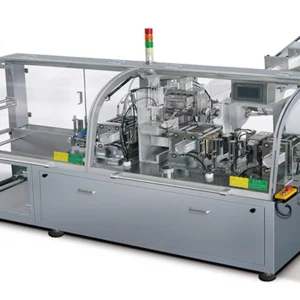
With rising awareness around menstrual hygiene and the expanding demand for accessible, high-quality feminine care products, manufacturers are looking for smart, scalable production equipment. Rigor, a trusted name in hygiene automation, delivers just that with its advanced sanitary napkin pad making machine—a precision-engineered system designed for high-speed, hygienic, and efficient production of sanitary napkins.
Ideal for both established brands and new market entrants, Rigor’s machines enable continuous, reliable manufacturing with minimal labor input and maximum product consistency.
High-Efficiency, Low-Maintenance Feminine Care Production
The machine for diapers by Rigor integrates core functionalities such as material unwinding, SAP (super absorbent polymer) application, core forming, sealing, embossing, cutting, and stacking—all in a fully automated, compact line.
Whether producing ultra-thin napkins, winged pads, or panty liners, this machine ensures every pad meets stringent hygiene standards and dimensional accuracy, with an output capacity ranging from 300 to 800 pieces per minute, depending on configuration.
Key features include:
PLC and HMI control system with touchscreen interface
Servo-driven operation for high-speed precision and smooth tension control
Automated rejection unit for defective products
Dust-free and stainless steel enclosures for a sanitary working environment
Quick format changeover to adapt to various pad types and sizes
Designed for Cleanroom Environments and Strict Hygiene Compliance
In feminine hygiene manufacturing, sanitation is non-negotiable. That’s why Rigor’s diaper production line is built using high-grade materials and finishes suitable for Class 100,000 cleanrooms. All product-contact parts are made of stainless steel, and components are sealed to prevent dust accumulation.
Moreover, the design allows for easy disassembly and cleaning, ensuring fast maintenance without risking contamination. From raw material feeding to final pad stacking, every step is enclosed and monitored to maintain the integrity and cleanliness of the final product.
Flexible Configuration for Diverse Market Needs
Rigor offers multiple models and modular configurations to cater to a wide range of production goals—whether you’re creating standard napkins for general retail or biodegradable options for eco-conscious consumers. Optional add-ons include:
Automatic bagging or carton packing unit
Wings folding and adhesive strip application
Biodegradable or organic cotton material compatibility
Online inspection systems for real-time defect tracking
This flexibility empowers producers to stay competitive and responsive to changing market trends in the feminine care sector.
Why Choose Rigor?
Decades of expertise in hygiene product automation
Global presence with successful installations in over 40 countries
End-to-end service from machine design to installation, training, and after-sales support
Customization support for OEM or branded solutions
Sustainability-focused designs to support biodegradable and recyclable material usage
Rigor understands the operational challenges and regulatory demands in feminine hygiene production and delivers not just machines, but total solutions that elevate product quality, reduce labor dependency, and enhance speed-to-market.
Empower Your Brand with Smart Feminine Care Automation
As global demand for sanitary pads continues to rise, investing in a reliable, scalable, and intelligent production solution is key to success. Whether you are launching a new feminine hygiene line or upgrading outdated machinery, Rigor’s sanitary napkin pad making machine offers unmatched value and reliability.
Reach out to Rigor today to explore product options, schedule a demo, or discuss your project requirements with our technical team. We help you bring better hygiene solutions to more women—faster, safer, and smarter.