Abstract
The global baby diaper market continues to exhibit robust growth, presenting a significant opportunity for entrepreneurs and established businesses in emerging economies. Selecting the appropriate machines for manufacturing baby diapers is a foundational decision that profoundly impacts production efficiency, product quality, and long-term profitability. This analysis examines the five pivotal factors that prospective buyers must consider in 2025: production capacity and speed, the level of automation and technological sophistication, raw material compatibility and operational versatility, the total cost of ownership and return on investment, and the quality of after-sales support and training. The investigation synthesizes technical specifications with practical business considerations, offering a structured framework for decision-making. By dissecting each factor through a lens of clarity and in-depth analysis, this guide aims to empower investors in regions like South America, Russia, Southeast Asia, the Middle East, and South Africa to make an informed, strategic investment in diaper production technology, thereby laying the groundwork for a sustainable and competitive enterprise.
Key Takeaways
- Align production speed and capacity with your specific market growth projections.
- Choose between semi-automatic and fully-automatic based on labor costs and quality goals.
- Ensure your chosen diaper machine is versatile with various raw materials.
- Calculate the total cost of ownership, not just the initial purchase price.
- Prioritize manufacturers who offer excellent after-sales support and training.
- Investing in the right machines for manufacturing baby diapers is key to long-term success.
- Consider future-proofing your investment with modular and upgradeable equipment.
Table of Contents
- A Foundational Choice: Entering the Diaper Manufacturing Landscape
- Factor 1: Production Capacity and Speed – Aligning Output with Market Demand
- Factor 2: Automation and Technological Sophistication
- Factor 3: Raw Material Compatibility and Versatility
- Factor 4: Calculating Total Cost of Ownership (TCO) and Return on Investment (ROI)
- Factor 5: After-Sales Support, Training, and Spare Parts Availability
- Frequently Asked Questions (FAQ)
- Navigating Your Path to Manufacturing Success
- References
A Foundational Choice: Entering the Diaper Manufacturing Landscape
Stepping into the world of manufacturing is a profound undertaking. It is not merely a financial transaction but an act of creation, a commitment to producing something tangible that serves a fundamental human need. The baby diaper industry, projected to continue its expansion well into the next decade (Fact.MR, 2022), represents a field where this commitment can be particularly rewarding. You are not just creating a product; you are contributing to the health, hygiene, and comfort of the most vulnerable members of society. This endeavor, while noble, is grounded in complex practicalities. The very heart of your future factory, the engine that will drive your success or failure, is your production line. The selection of machines for manufacturing baby diapers is therefore not a decision to be taken lightly. It is a choice that will echo through every aspect of your business, from the quality of your final product to your daily operational costs and your capacity to grow.
Imagine for a moment two aspiring entrepreneurs. One, captivated by the lowest price tag, purchases a machine with outdated technology and limited capacity. They soon find themselves overwhelmed by maintenance issues, inconsistent product quality, and an inability to meet rising demand. The other, taking a more considered approach, invests in a system that aligns with their specific market goals, even if the initial cost is higher. This second entrepreneur experiences smoother operations, produces a superior product, and possesses the flexibility to scale their business as it flourishes. The difference between these two paths is not luck; it is knowledge and foresight.
This guide is designed to be your companion on this second path. We will move beyond superficial specifications and explore the deeper, more nuanced questions you should be asking. Think of this not as a simple checklist, but as a structured dialogue, a way of thinking about the problem that equips you with the intellectual tools to make a truly wise investment. We will examine the five most consequential factors that should shape your decision-making process in 2025. Our journey will take us through the mechanics of production speed, the philosophy behind automation, the chemistry of raw materials, the economics of long-term ownership, and the human element of partnership and support. By engaging with these concepts thoughtfully, you will be prepared to select a diaper machine that serves not just as a piece of equipment, but as the cornerstone of a thriving and resilient enterprise.
Factor 1: Production Capacity and Speed – Aligning Output with Market Demand
The first question that naturally arises in the mind of a prospective manufacturer is one of scale: "How many diapers can it make?" This question of production capacity, measured in pieces per minute (PPM), is the initial gateway to understanding a machine's potential. Yet, viewing this number in isolation is a common pitfall. The true task is to harmonize the machine's output with the specific, dynamic demands of your target market. A machine that produces 1,000 PPM may seem impressive, but if your initial market can only absorb 300 PPM, you have invested in idle capacity, tying up capital that could be used elsewhere. Conversely, a machine with a 200 PPM capacity might seem like a prudent start, but if your market in a rapidly urbanizing area of South Africa or Southeast Asia is poised for explosive growth, you will quickly find yourself unable to keep pace with orders, losing valuable market share to competitors.
Understanding Production Metrics: PPM and Efficiency
Let's break down the numbers. Production speed, or PPM, is the theoretical maximum output of a machine operating under ideal conditions. Think of it as the top speed of a car listed in a brochure. It's an important figure, but your actual, day-to-day "driving speed" will be different. This is where the concept of operational efficiency comes into play. No machine runs continuously without stopping. There will be planned stops for changing raw material rolls, and unplanned stops due to material breaks or minor adjustments.
Operational efficiency is the percentage of time the machine is actually producing quality products. A machine rated at 600 PPM with a 90% efficiency rate will produce an average of 540 saleable diapers per minute. A less reliable machine, perhaps also rated at 600 PPM but operating at only 70% efficiency, yields just 420 diapers per minute. Over a year, this difference amounts to millions of diapers and a significant loss of potential revenue.
When evaluating machines for manufacturing baby diapers, you must inquire deeply about the factors that contribute to high efficiency. A reputable diaper machine manufacturer will be transparent about these figures. Ask about the typical causes of downtime. How long does it take to change a roll of non-woven fabric or superabsorbent polymer (SAP)? Are these changes automated or do they require significant manual intervention? Modern machines often incorporate features like automatic splicing, where a new roll of material is seamlessly joined to the end of an old one without stopping the line, dramatically boosting efficiency. These are the granular details that separate a moderately productive line from a highly profitable one.
Scaling for Growth: From Start-up to Market Leader
Your initial investment must also consider the future. Your business plan, which should be informed by a thorough market analysis (businessplan-templates.com), will project your growth over the next three to five years. How does your choice of machine support this trajectory?
There are two primary philosophies for scaling. The first is to start with a smaller, more affordable machine (e.g., 200-400 PPM) that meets your initial demand and plan to add a second production line as your business grows. This approach minimizes initial capital risk. It is a viable strategy, particularly in uncertain market conditions. However, it requires additional factory space and can lead to complexities in managing two separate production lines.
The second philosophy is to invest in a higher-speed machine (e.g., 500-800 PPM) that has a modular design. Perhaps you run it at a slower speed initially to match demand, which can also reduce wear and tear. As your orders increase, you can ramp up the speed. The best machines for manufacturing baby diapers are often designed with future upgrades in mind. You might start with a basic configuration and later add modules for features like elastic waistbands or different packaging options. This approach requires more upfront capital but provides a more seamless path to expansion within the same footprint.
Think about your five-year vision. Do you see yourself as a niche player in a specific city, or do you aspire to be a regional brand leader? Your answer to this strategic question should directly inform the production capacity and scalability of the machinery you choose. It's a matter of matching the mechanical potential of the equipment to the human potential of your business ambition.
Case Study: A Mid-Sized Enterprise in Southeast Asia
Consider the case of a fictional company, "Bayi Sehat," in Indonesia. They began in 2022 with a market analysis showing a rising middle class and increasing awareness of infant hygiene (Fact.MR, 2022). They faced a choice: a 300 PPM machine for a lower initial cost, or a 600 PPM servo-driven machine for a 40% higher price. Their projections showed a potential market capture that would exceed the capacity of the smaller machine within 24 months.
They chose the 600 PPM machine. For the first year, they ran it at an average speed of 400 PPM, focusing on establishing their brand and distribution network. This slower operational speed resulted in extremely high efficiency (around 95%) and very low waste, as the machine was not being pushed to its limits. As demand surged in their second and third years, they were able to simply increase the operational speed to 550 PPM, effortlessly meeting the new demand without requiring a second major capital investment in a new line. Their initial foresight paid dividends, allowing them to capture market share aggressively while their competitors, who had started smaller, were struggling with the logistics of installing new equipment. This story illustrates the power of looking beyond the immediate need and investing in capacity that aligns with your growth ambitions.
Factor 2: Automation and Technological Sophistication
Once you have a clear idea of the production volume you need, the next layer of inquiry concerns the technology that achieves it. The level of automation in a diaper production line is perhaps the single most significant determinant of product quality, consistency, and labor costs. We can broadly categorize machines into two types: semi-automatic and fully-automatic. The choice between them is not a simple matter of "good" versus "better"; it is a strategic decision that depends on your local economic context, your workforce's skill level, and your quality positioning in the market.
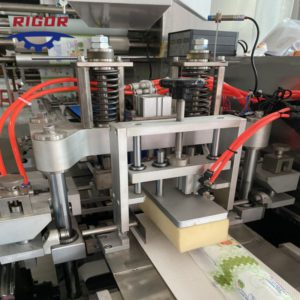
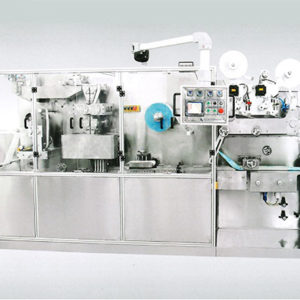
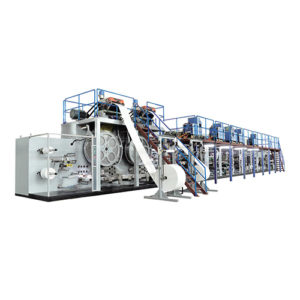
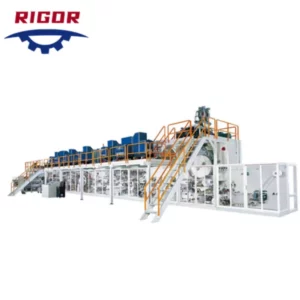
A fully-automatic diaper machine is a marvel of modern engineering. From the unwinding of raw materials to the final packaging of the diapers, human intervention is minimal. These systems use advanced servo motors, Programmable Logic Controllers (PLCs), and Human-Machine Interfaces (HMIs) to orchestrate a high-speed symphony of precise actions. A semi-automatic machine, by contrast, requires more manual input at various stages, such as manual splicing of materials, manual quality checks, or a more hands-on packaging process.
Semi-Automatic vs. Fully-Automatic: A Comparative Analysis
To understand the trade-offs, let's compare these two approaches across several key dimensions. Think of it like choosing between a vehicle with a manual transmission and one with a fully automatic system. Both will get you to your destination, but the experience, skill required, and performance consistency are quite different.
| Feature | Semi-Automatic Diaper Machine | Fully-Automatic Diaper Machine |
|---|---|---|
| Initial Investment | Lower. This makes it an attractive option for startups or businesses with limited initial capital. | Higher. The cost of servo motors, advanced sensors, and complex control systems increases the price significantly. |
| Production Speed | Generally lower (e.g., 150-400 PPM). Speed is often limited by the manual steps in the process. | Significantly higher (e.g., 400-1200+ PPM). The entire process is optimized for maximum, continuous output. |
| Labor Requirement | Higher. More operators are needed for material handling, quality control, and packaging. | Lower. A few highly skilled technicians can oversee the entire automated line. |
| Product Consistency | More variable. Product quality can depend on the skill and attentiveness of the individual operators. | Extremely high. Every diaper is produced with the same precise application of glue, the same cutting dimensions, and the same placement of components. |
| Waste Rate | Generally higher. Manual adjustments and material changes can lead to more rejected products. | Lower. Automated tension control, web guiding, and quality inspection systems minimize material waste. |
| Flexibility | Can be more flexible for very small, custom runs, but changing product sizes can be time-consuming. | Highly flexible for size changes via the HMI, but initial setup is more complex. Modern systems allow for quick, programmed changeovers. |
For a business in a region with high labor costs, a fully-automatic line is almost a necessity to remain competitive. The savings in wages and the benefits of higher quality and lower waste quickly offset the higher initial investment. However, for an entrepreneur in a market with lower labor costs, a semi-automatic machine can be a perfectly logical entry point. It allows the business to start production with less capital and provides local employment. The key is to ensure the machine is still built with quality components to avoid constant maintenance headaches.
The Role of Servo Motors and PLC Systems
Let's delve deeper into the technology that powers a modern, fully-automatic machine. At its core are two key components: servo motors and the PLC.
Servo Motors: In older, mechanically-driven machines, a single large motor would power the entire line through a complex system of gears, shafts, and chains. This was mechanically complex, noisy, and inefficient. A change in product size required a painstaking manual adjustment of these mechanical linkages. A modern, fully-automatic diaper machine uses multiple independent servo motors. Each servo motor controls a specific function—one might drive the knife that cuts the diaper, another might control the applicator that places the elastic leg cuffs, and yet another manages the tension of the backsheet material.
What is the benefit of this? Precision and control. Each servo motor is controlled electronically by the PLC. If you want to change from a medium-sized diaper to a large-sized one, you don't need a wrench. You simply select the new size on the HMI touchscreen. The PLC then sends new instructions to each servo motor, adjusting speeds and positions with microscopic accuracy in a matter of minutes. This results in faster changeovers, higher precision, less waste during size changes, and a much quieter, cleaner operating environment.
The PLC (Programmable Logic Controller): If the servo motors are the muscles of the machine, the PLC is the brain. It's a ruggedized industrial computer that executes the program governing the entire manufacturing process. It receives information from hundreds of sensors across the machine—sensors that check for material presence, detect splices, inspect for glue, and monitor the position of every component. Based on this information, the PLC makes real-time decisions, commanding the servo motors, activating glue guns, and controlling pneumatic valves. The reliability and sophistication of the PLC and its programming are what separates a truly "smart" machine from a merely automated one. When you are evaluating machines for manufacturing baby diapers, ask about the brand and model of the PLC and servo systems. Reputable, globally recognized brands like Siemens, Allen-Bradley, or Mitsubishi Electric are often indicative of a high-quality build.
Smart Features: Quality Control Systems and Remote Diagnostics
The most advanced machines for manufacturing baby diapers now incorporate "smart" features that would have been science fiction a decade ago. These systems move beyond simple automation to active quality assurance.
Vision Inspection Systems: These are high-speed cameras coupled with powerful image processing software. They are positioned at critical points along the production line to visually inspect every single diaper. They can detect defects like a missing leg cuff, misplaced frontal tape, or an improperly formed absorbent core. If a defective product is detected, the system automatically signals a rejection mechanism to remove that specific diaper from the line without stopping production. This ensures that only perfect products reach the packaging stage, protecting your brand's reputation for quality.
Remote Diagnostics: Many top-tier machines are now equipped with an internet connection that allows the manufacturer's technicians to remotely access the machine's PLC system (with your permission, of course). Imagine you have an unusual error code that your local team cannot solve. Instead of waiting days for a technician to fly in, a specialist from the manufacturer's headquarters can log in, diagnose the problem by analyzing the PLC's data and sensor readings, and guide your team through the solution in a matter of hours. This capability dramatically reduces potential downtime and is a powerful testament to the value of choosing a technologically advanced and supportive manufacturing partner. You can learn more about our commitment to clients and our implementation of such forward-thinking technologies.
Factor 3: Raw Material Compatibility and Versatility
A diaper, though it appears simple, is a highly engineered composite product. It is an assembly of specialized materials, each chosen for a specific function: containment, absorption, comfort, and fit. A superior diaper machine is not just fast and precise; it is also a master of handling this diverse palette of materials with finesse and flexibility. The machine's ability to work with different suppliers, grades, and types of raw materials can significantly impact your supply chain resilience and your ability to innovate.
Your factory's location—be it in the dynamic markets of Brazil, the vast expanse of Russia, or the growing economies of the Middle East—will influence your access to raw materials. Relying on a single supplier for a critical component is a risky strategy. A machine that is versatile enough to handle materials from different sources provides you with crucial flexibility. For instance, if your primary supplier of non-woven fabric has a production issue, can your machine run a similar fabric from a secondary supplier, even if it has slightly different properties of thickness or texture? A well-designed machine with adjustable tension controls and robust processing units can. An overly sensitive or poorly designed machine might suffer from constant breaks and jams, grinding your production to a halt.
Core Components: Fluff Pulp, SAP, and Non-Wovens
Let's examine the primary materials and how the machine interacts with them.
- Fluff Pulp: This is the fluffy, absorbent cellulose material that forms the bulk of the diaper's core. It typically arrives at the factory in large rolls. The machine's "pulp mill" section uses a high-speed hammermill to shred and fluff the pulp, turning the compressed sheet back into a soft, fibrous mass. The quality of this mill is paramount. A good mill produces uniform fibers without creating excessive dust, which is a fire hazard and can clog other parts of the machine.
- Superabsorbent Polymer (SAP): These are tiny, granular crystals that are the unsung heroes of modern diapers. They can absorb and retain many times their weight in liquid. The diaper machine must have a highly accurate dosing system to precisely mix the SAP with the fluff pulp. Too little SAP, and the diaper's absorbency will be poor. Too much, and you are wasting one of the most expensive components of the diaper. Advanced machines use loss-in-weight feeders that constantly monitor the amount of SAP being dispensed, ensuring perfect consistency from the first diaper of the day to the last.
- Non-Woven Fabrics: Several types of non-woven fabrics are used. The topsheet is the soft layer that touches the baby's skin and must allow liquid to pass through quickly. The backsheet is the waterproof outer layer. The acquisition distribution layer (ADL) sits beneath the topsheet and helps to quickly spread liquid across the absorbent core. The machine must guide these delicate fabrics at high speeds without stretching or tearing them. This is accomplished through a series of rollers and sophisticated "web guiding" systems that use sensors to ensure the fabrics are perfectly aligned at all times.
The table below outlines these key materials and some considerations for sourcing them in various international markets.
| Material | Key Properties | Sourcing Considerations for Emerging Markets |
|---|---|---|
| Fluff Pulp | High absorbency, fiber uniformity, brightness. | Primarily sourced from North and South America. Factor in logistics and import duties. Look for regional distributors. |
| SAP | Absorption capacity (g/g), absorption speed, retention under pressure. | Major producers are in Europe, Asia, and North America. Quality can vary significantly; test samples from different suppliers on your machine. |
| Non-Woven Fabrics | Softness (topsheet), barrier properties (backsheet), wicking ability (ADL). | Many regional producers in Asia and the Middle East. A versatile machine allows you to test local suppliers, potentially reducing costs and lead times. |
| Adhesives | Hot-melt glues for construction and elasticity. Must be non-toxic and provide strong bonds. | Global brands like Henkel or H.B. Fuller often have local production or distribution. Test for compatibility with your machine's glue application system. |
| Elastic Strands | Lycra or spandex for leg cuffs and waistbands. Requires consistent tension for a good fit. | Sourcing can be global. The machine's elastic unwinding stands must provide precise, constant tension to avoid loose or overly tight elastics. |
Machine Flexibility for Different Diaper Designs
The baby diaper market is not static. Consumer preferences change, and new product features emerge. A few years ago, elastic waistbands were a premium feature; now, they are standard in many markets. "Smart diapers" with wetness indicators are also gaining popularity (Data Bridge Market Research, 2022). Your machine should not lock you into a single, unchangeable product design.
When discussing options with a diaper machine manufacturer, inquire about the machine's modularity and its ability to produce different types of diapers.
- Diaper Shape: Can the machine produce both traditional T-shaped diapers (with side panels) and simpler I-shaped or pad-style diapers? This flexibility can allow you to target different market segments, from premium to economy tiers.
- Feature Integration: How easily can the machine be upgraded to add new features? For example, can you add a unit to apply an elastic waistband later on? Can a lotion or aloe vera applicator be integrated? A forward-thinking manufacturer designs their machines with a "plug-and-play" philosophy in mind, where new stations can be added to the line without a complete overhaul.
- Size Changeovers: As we discussed, modern servo-driven machines excel at this. The ability to quickly and efficiently switch between producing diapers for newborns, infants, and toddlers is essential for serving the full market. Ask for a demonstration or video of a size changeover process. The time it takes—often called the "changeover time"—is a key performance indicator.
Your investment in one of the many available modern baby diaper machine options should be an investment in adaptability. The market will evolve, and your production capabilities must be able to evolve with it. A versatile machine is a form of insurance against obsolescence, allowing your business to remain agile and responsive to new opportunities.
Factor 4: Calculating Total Cost of Ownership (TCO) and Return on Investment (ROI)
An astute business leader understands that the purchase price of a piece of industrial equipment is only the beginning of the story. Like an iceberg, the visible cost is often only a fraction of the total financial commitment. To make a truly sound investment in machines for manufacturing baby diapers, you must adopt the mindset of calculating the Total Cost of Ownership (TCO). This comprehensive view encompasses every expense associated with the machine over its entire operational life. Only by understanding the TCO can you accurately project your profitability and calculate your Return on Investment (ROI).
Many entrepreneurs, especially those new to manufacturing, fall into the trap of "sticker price shock." They compare the upfront costs of several machines and gravitate towards the cheapest option, believing they are securing the best deal. This can be a catastrophic error. A machine that is 15% cheaper to buy but consumes 30% more energy, requires 20% more maintenance, and produces 5% more waste will be vastly more expensive in the long run. The wise investor looks past the initial price tag to the ongoing operational realities.
Beyond the Sticker Price: Installation, Training, and Maintenance
Let's break down the hidden and ongoing costs that constitute the TCO.
- Shipping and Installation: The machine is large and heavy. How much will it cost to ship it from the manufacturer's factory to your facility in, for example, Nigeria or Russia? Who is responsible for installation and commissioning? A reputable manufacturer will typically send a team of skilled engineers to install the machine, ensure it is running correctly, and formally hand it over to your team. The cost of their travel, accommodation, and services should be clearly defined in the contract.
- Training: Your operators and maintenance staff need to learn how to run and care for this complex piece of equipment. A low-cost offer might include only rudimentary training. A superior package will involve comprehensive, hands-on training for both operators (on running the machine efficiently) and technicians (on mechanical and electrical maintenance). Insufficient training leads directly to lower efficiency, higher waste, and potential damage to the machine.
- Spare Parts: Machines have components that wear out over time. These are called "wear parts" (like cutting blades and bearings) and "consumables" (like glue nozzles). What is the cost of these parts? How readily available are they? A manufacturer who uses non-standard, proprietary parts can hold you hostage with high prices and long lead times. A manufacturer who uses high-quality, standardized components from globally recognized brands (like SKF bearings or Festo pneumatics) gives you more options and ensures better availability. Your initial purchase should include a recommended package of critical spare parts to cover the first one to two years of operation.
- Maintenance: How much scheduled downtime is required for preventive maintenance? A well-designed machine will have easy access to maintenance points and clear instructions. A poorly designed one might require significant disassembly for simple tasks, increasing labor costs and downtime.
Energy Consumption and Operational Costs
In an era of volatile energy prices, the power consumption of your production line is a major operational expense. A modern, servo-driven machine is significantly more energy-efficient than an older, mechanically-driven one. The main drive motor on a mechanical machine runs constantly at full power, with a lot of energy lost to friction in the gear and shaft system. In a servo system, each motor only draws the power it needs for the specific task at hand, and there is far less mechanical friction.
Ask the manufacturer for a detailed breakdown of the machine's power consumption in kilowatts (kW). You can then use your local electricity price (per kilowatt-hour) to calculate the daily and annual energy cost. An energy difference of just 20-30 kW between two machines can translate into tens of thousands of dollars in extra costs over a year.
Another operational cost is compressed air. The pneumatic systems on the machine (used for activating certain components) require a steady supply of clean, dry compressed air. The machine's air consumption will determine the size and cost of the air compressor you need to purchase and operate. A machine designed with efficient pneumatics will save you money on both the compressor investment and its ongoing energy use.
A Framework for ROI Calculation
Once you have a clearer picture of the TCO, you can begin to realistically calculate your potential ROI. The basic formula is straightforward:
ROI (%) = (Net Profit / Total Investment) x 100
The "Total Investment" is your TCO. The "Net Profit" is where the details of your machine's performance become critical. Your net profit is derived from your revenue minus your costs.
- Revenue: This is determined by your production output (PPM x Efficiency x Operating Hours) multiplied by the selling price of your diapers. A faster, more efficient machine generates more revenue.
- Costs: These include the cost of raw materials, operational costs (labor, energy), and the maintenance and spare parts costs derived from your TCO analysis. A machine with a lower waste rate directly reduces your raw material cost per diaper. A machine that requires fewer operators reduces your labor cost.
Let's imagine you are comparing Machine A (lower price, lower efficiency, higher energy use) with Machine B (higher price, higher efficiency, lower energy use). By plugging all the numbers into a spreadsheet, you can model your profitability over several years. You will often find that Machine B, despite its higher initial cost, pays for itself much faster and generates significantly more cumulative profit over a five-year period. This is the power of thinking in terms of ROI instead of just purchase price. It shifts the decision from a simple expense to a strategic investment in future profitability.
Factor 5: After-Sales Support, Training, and Spare Parts Availability
Your relationship with the machine manufacturer does not end when the payment is made or when the machine is delivered. In many ways, it is just beginning. A diaper production line is a long-term asset, expected to operate for a decade or more. Over this lifespan, you will inevitably require support, advice, spare parts, and potentially further training. The quality and reliability of the manufacturer's after-sales service is a factor of immense importance, one that can mean the difference between a smoothly running operation and a factory plagued by frustratingly long periods of downtime.
Think of this relationship as a partnership. You are not just buying a product; you are investing in the expertise and commitment of the company that built it. A manufacturer who views the sale as a one-time transaction is a red flag. A true partner, like a reliable diaper machine manufacturer, understands that their success is intrinsically linked to yours. They will be there to support you long after the initial installation is complete.
The Value of a Reliable Manufacturing Partner
Before you sign any contract, investigate the manufacturer's reputation for service. Do not rely solely on their marketing materials. Seek out testimonials from their existing customers. If possible, ask the manufacturer for references—other companies, perhaps in a different region so as not to be direct competitors, who have purchased and are operating their equipment. Ask these references candid questions:
- When you have a technical problem, how responsive is the service team?
- Do they have technicians who speak your language or a common business language like English?
- How do they handle warranty claims?
- Have they been helpful in providing advice on improving efficiency or testing new raw materials?
A manufacturer's willingness to connect you with their current clients is a sign of confidence in their own service. Their reluctance to do so should be a cause for concern. The global nature of the business means you might be thousands of miles away from the manufacturer's headquarters. This physical distance makes their commitment to remote support, clear communication, and rapid response even more vital. The existence of regional service centers or partnerships with local technical agents in areas like South America or the Middle East is another strong positive indicator.
Comprehensive Training Programs for Your Operators
We touched on training earlier, but its importance cannot be overstated. The most technologically advanced machine in the world will underperform if operated by an improperly trained team. A premier manufacturer offers a multi-stage training program.
- Pre-Installation Training: Some manufacturers invite your key technicians and engineers to their factory for training while your machine is being built and tested. This is an invaluable opportunity for your team to learn about the machine in a controlled environment, directly from the people who designed and assembled it.
- On-Site Training during Commissioning: When the manufacturer's engineers are at your factory for installation, they should conduct intensive, hands-on training with your operators and maintenance staff. This training should cover everything from daily startup and shutdown procedures, to performing size changes, loading new materials, understanding the HMI and error messages, and performing routine cleaning and lubrication.
- Post-Installation Support: Does the manufacturer provide detailed operating and maintenance manuals? Are these manuals clear, well-illustrated, and available in your language? Do they offer ongoing remote support to answer questions that arise during the first few months of operation?
A well-trained team is more efficient, produces a higher quality product, and is capable of resolving minor issues on their own without needing to call for external support. This autonomy is crucial for maximizing your production uptime.
Ensuring Long-Term Uptime with Readily Available Spares
Every hour your production line is down is an hour of lost revenue. One of the most common causes of extended downtime is waiting for a critical spare part to arrive. Therefore, the manufacturer's spare parts strategy is a key part of your evaluation.
- Recommended Spare Parts List: The manufacturer should provide a list of recommended spare parts to keep in your own inventory. This list is typically divided into categories: critical parts (which could stop the line for an extended period), wear parts (which need regular replacement), and standard components. Your initial purchase should include a budget for this initial stock of spares.
- Lead Times: For parts you do not stock, what is the manufacturer's guaranteed lead time for shipping? How do they handle emergency orders? Do they use reliable international couriers like DHL or FedEx to ensure rapid delivery to your region?
- Part Identification: A good manufacturer provides a detailed parts manual with diagrams and unique part numbers for every single component of the machine. This eliminates confusion and ensures you can order the exact part you need quickly and easily. Some modern systems even integrate the parts manual into the machine's HMI, allowing an operator to simply touch a component on the screen to get its part number.
Choosing a partner with a robust and well-organized after-sales support system is not a cost; it is an insurance policy for your investment. It provides the peace of mind that comes from knowing that when challenges arise, you have a knowledgeable and responsive team ready to help you get back to what you do best: producing quality diapers for your market.
Frequently Asked Questions (FAQ)
What is the typical lifespan of a baby diaper machine?
A well-maintained, high-quality diaper machine from a reputable manufacturer should have an operational lifespan of 15 to 20 years or even longer. The key to longevity is adherence to the manufacturer's preventive maintenance schedule, the use of high-quality spare parts, and operation by a well-trained team. The core structure and heavy-duty components are built to last, while wear parts like blades, bearings, and belts will be replaced periodically as part of normal maintenance.
How much factory space do I need for a diaper production line?
The required space depends significantly on the machine's size and configuration. A complete production line includes not just the main machine but also space for raw material warehousing, finished product storage, and auxiliary equipment like an air compressor and dust collection system. As a rough estimate, a medium-speed (400-600 PPM) fully-automatic line might require a space of approximately 30-40 meters in length, 10-12 meters in width, and a ceiling height of at least 5 meters. Always request a detailed layout drawing from the manufacturer to plan your facility accurately.
Can one machine produce both baby diapers and adult diapers or sanitary pads?
Generally, a machine is specifically designed for one product type due to significant differences in size, shape, and component assembly. However, the underlying technologies (like non-woven handling, pulp processing, and adhesive application) are similar. Many manufacturers of machines for manufacturing baby diapers also offer lines for adult diapers or a sanitary pad machine. If you are interested in diversifying, it is best to discuss this with the manufacturer. Some may offer combination machines for very specific, lower-speed applications, but for high-volume production, dedicated lines are standard.
What are the main causes of waste in diaper production?
The primary sources of waste (often called "scrap") in diaper production are machine start-ups and shut-downs, splices when changing raw material rolls, and rejected products due to quality defects. A modern, fully-automatic machine with features like automatic splicing and an advanced quality control vision system can keep the total waste rate below 2-3%. Older or less advanced machines can have waste rates of 5-8% or even higher, which significantly impacts profitability due to the high cost of raw materials.
How many people are needed to operate a fully-automatic diaper machine?
A fully-automatic, high-speed diaper production line is designed for minimal labor. A typical shift might require only 2 to 3 operators. One lead operator would primarily monitor the HMI and oversee the process, while one or two other operators would be responsible for loading raw material rolls and managing the packaging system at the end of the line. This is a significant reduction compared to semi-automatic lines, which might require 5-8 operators per shift.
Navigating Your Path to Manufacturing Success
The journey to becoming a successful diaper manufacturer is intricate, paved with both immense opportunity and significant challenges. The decision of which machine to purchase is the most critical step you will take, setting the trajectory for your entire enterprise. As we have explored, this choice transcends a simple comparison of price and speed. It is a holistic evaluation of technology, adaptability, long-term cost, and partnership. It requires you to be not just an entrepreneur, but also a strategist, an engineer, and a futurist, peering into the potential of your market and aligning your capital investment with that vision.
By moving through the five key factors—capacity, automation, material versatility, total cost of ownership, and after-sales support—you arm yourself with a comprehensive framework for analysis. You learn to ask the deeper questions: not just "How fast does it run?" but "How efficient is it at that speed?". Not just "What does it cost?" but "What is the return on this investment over five years?". Not just "Can it make my product today?" but "Can it adapt to make the product my customers will want tomorrow?".
This considered approach, one of clarity and depth, transforms the purchase from a daunting expense into a strategic empowerment of your business goals. The right machine is more than steel, wires, and motors; it is the engine of your growth, the guardian of your quality, and the key to your long-term competitiveness in a dynamic global market. By choosing wisely, you lay a robust foundation upon which you can build a lasting and profitable business, one that serves a fundamental human need with quality and care.
References
Businessplan-templates.com. (2025, April 4). How to start a diaper manufacturing business: 9-step checklist. businessplan-templates.com
Data Bridge Market Research. (2022, October). Diaper attachment sensors market – Global market – Industry trends and forecast to 2029. www.databridgemarketresearch.com
Fact.MR. (2022, August 2). Baby disposable diapers market is expected to reach a value of USD 60 billion by 2031. blog.factmr.com
Garg, G. (2025, February 13). Top 10 baby diper making machine. Favourite Hub. favouritehub.com
Kilic, M., & Kalkan, S. (2018). Raw materials used in the production of baby diapers and their properties. Tekstil ve Mühendis, 25(112), 319-331.
Michielsen, S., Partiman, B., & Ab-Rahman, M. S. (2010). The effect of SAP and fluff pulp distribution on the performance of a disposable diaper. Journal of Applied Polymer Science, 115(1), 151-158. https://doi.org/10.1002/app.30873
Odio, M., & O'Connor, R. (2001). Disposable diapers. In Handbook of nonwoven filter media (pp. 523-535). Elsevier. https://doi.org/10.1533/9781856177119.5.523
Park, S., Kim, D., Lee, Y., & Lee, S. (2014). Effects of non-woven fabric properties on the comfort and performance of disposable diapers. Fibers and Polymers, 15(3), 619-625. https://doi.org/10.1007/s12221-014-0619-2