Abstract
The Indian subcontinent, with its burgeoning population and rising disposable incomes, presents a significant opportunity for the disposable hygiene products sector. This document provides a comprehensive analysis of the factors determining the automatic baby diaper machine price in India for the year 2025. It moves beyond a superficial price list to offer a granular examination of the technical, economic, and logistical variables that prospective investors must consider. The analysis dissects seven critical cost determinants: production capacity, level of automation (including servo motor technology), machine configuration for different diaper types, component quality and manufacturer origin, after-sales support, ancillary equipment needs, and the complexities of the Indian tax and import regime. By presenting a structured framework for evaluation, this guide aims to empower entrepreneurs and established businesses to make informed capital investment decisions. It argues that a machine's true cost transcends its initial purchase price, encompassing long-term operational efficiency, maintenance requirements, and scalability, all of which are crucial for sustainable profitability in a competitive market.
Key Takeaways
- Machine speed and output directly correlate with the initial investment cost.
- Full-servo machines offer higher efficiency and lower long-term operational costs.
- The type of diaper produced (pant vs. tape) significantly alters machine design and price.
- Component brands (e.g., Siemens, Bosch) and country of origin are major price drivers.
- Factor in costs for ancillary equipment like packaging machines and raw material handlers.
- Understanding the automatic baby diaper machine price in India requires factoring in import duties and GST.
- Comprehensive after-sales support and spare parts availability are invaluable assets.
Table of Contents
- A Foundational Overview: The Indian Diaper Market and Manufacturing Landscape
- Factor 1: Production Capacity and Speed (Pieces Per Minute)
- Factor 2: Level of Automation and Servo Technology
- Factor 3: Machine Configuration and Diaper Type
- A Comparative Analysis: Estimating the Automatic Baby diaper machine price in India
- Factor 4: Brand, Origin, and Quality of Components
- Factor 5: After-Sales Service and Technical Support
- Factor 6: Ancillary Equipment and Factory Setup
- Factor 7: Import Duties, Taxes, and Logistics in India
- FAQ
- Conclusion
- References
A Foundational Overview: The Indian Diaper Market and Manufacturing Landscape
Embarking on the journey of diaper manufacturing in India is to engage with a narrative of immense demographic potential and evolving consumer behavior. It is not merely a question of acquiring machinery but of understanding the very fabric of the market you wish to serve. The decision to invest in a production line is a significant one, and its success hinges on a deep appreciation of the context in which it will operate.
The Demographic Dividend: Why India?
India's market is not just large; it is young. The country continues to have one of the highest birth rates in the world, with tens of millions of babies born each year (UNICEF, 2023). This demographic reality forms the bedrock of sustained demand for baby care products. Historically, the use of disposable diapers was concentrated in Tier-1 metropolitan areas. However, with increasing urbanization, a growing female workforce, and rising disposable incomes in Tier-2 and Tier-3 cities, the penetration of disposable diapers is expanding into new frontiers. This creates a compelling case for decentralized manufacturing. An investor in 2025 is not just catering to Mumbai or Delhi but to the aspiring households of Lucknow, Pune, and Coimbatore. Understanding this geographic and economic diffusion is the first step in calibrating your production strategy and, consequently, your machinery requirements.
Understanding the Machine: From Raw Material to Finished Product
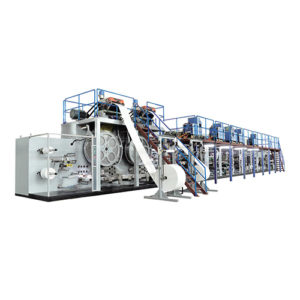
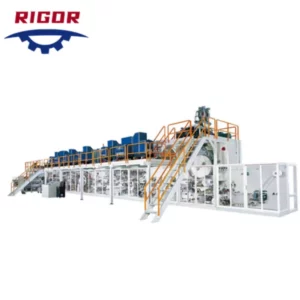
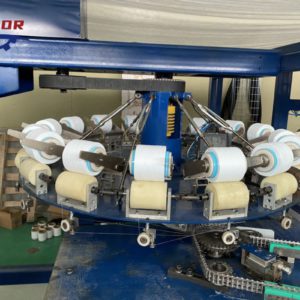
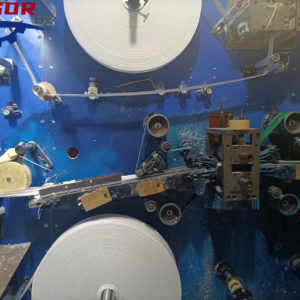
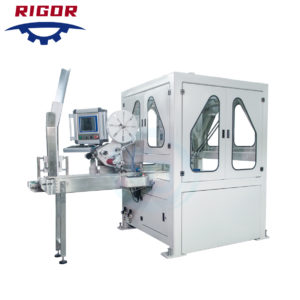
At its core, an automatic baby diaper machine is a marvel of mechanical and electrical engineering, a symphony of synchronized actions that transforms rolls of raw material into a finished, packaged product. Imagine a long, intricate assembly line, but one that operates at incredible speeds. The process begins with the unwinding of various materials: the non-woven top sheet that touches the baby’s skin, the absorbent core typically made of fluff pulp and Super Absorbent Polymer (SAP), the waterproof back sheet, and the elastic strands for the leg cuffs. These layers are precisely cut, laminated, and bonded together. The machine applies adhesive, forms the three-dimensional leak guards, attaches the fastening tapes or welds the elastic waistband for pant-style diapers, and finally, cuts each individual diaper. Each of these steps requires a dedicated station within the machine, and the precision of each action determines the quality of the final product.
Semi-Automatic vs. Fully Automatic: A Critical Distinction
When you begin your search, you will encounter terms like "semi-automatic" and "fully automatic." The distinction is fundamental and has a profound impact on the automatic baby diaper machine price in India.
A semi-automatic line may require manual intervention at certain stages. For instance, the stacking and bagging of the finished diapers might need to be done by human operators. It might also run at a slower speed and require more personnel to oversee its operations.
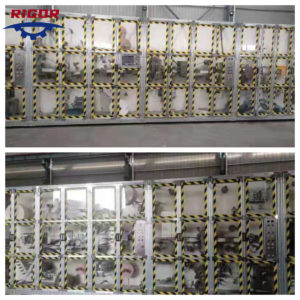
A fully automatic machine, in contrast, integrates the entire process from raw material feeding to final packaging. These systems often include auto-splicing units that automatically join a new roll of raw material when the old one is depleted, without stopping the machine. They will have integrated quality control vision systems to detect defects and auto-reject mechanisms. The final diapers are counted, stacked, and fed directly into a bagging machine, all within a closed, high-speed loop. While the initial investment is considerably higher, the benefits manifest as reduced labor costs, higher production efficiency, lower material wastage, and more consistent product quality. For a market as competitive as India, these efficiencies are not just advantages; they are often prerequisites for long-term survival.
Factor 1: Production Capacity and Speed (Pieces Per Minute)
The first and perhaps most influential factor shaping the price of a diaper machine is its designated production speed, typically measured in pieces per minute (PPM). This metric is the heartbeat of your manufacturing plant, dictating your potential output, market share, and revenue. Choosing the right capacity is a delicate balance between your initial capital, market ambitions, and operational capabilities.
Defining Production Needs: From Start-up to Large-Scale Operation
A start-up enterprise entering a regional market may find a machine with a stable production speed of 300-400 PPM to be a prudent choice. This allows for a manageable scale of production, lower initial investment, and the ability to grow with the market. It is a way to test the waters, establish a brand, and build a distribution network without the immense pressure of servicing the debt from a top-tier machine.
Conversely, an established player or a well-capitalized new entrant aiming for a significant national presence might look towards high-speed machines capable of 600, 800, or even 1000+ PPM. These machines are built for mass production, designed to churn out millions of diapers each month to feed extensive supply chains. The choice is not just about numbers; it is a strategic decision that reflects your business model. Are you a niche player focused on a specific region, or are you aiming to compete with multinational corporations on a national scale?
The Correlation Between Speed and Investment
The relationship between speed and price is not linear; it is exponential. Doubling the speed from 400 PPM to 800 PPM can more than double the cost of the machine. Why is this?
Higher speeds place immense stress on every mechanical component. The gears, bearings, cutters, and drive shafts must be engineered from superior materials and with finer tolerances to withstand the vibrations and forces at play. The control systems, particularly the Programmable Logic Controller (PLC) and servo drives, must be faster and more powerful to process signals and execute commands in microseconds. Material handling becomes more complex; a machine running at 800 PPM consumes raw materials at a dizzying rate, necessitating sophisticated auto-splicing systems to ensure continuous operation. Any downtime on such a machine is incredibly costly, so reliability becomes paramount, which further drives up the engineering and component costs.
Calculating ROI based on Production Output
A higher-priced, high-speed machine can offer a better Return on Investment (ROI) if you have the market to absorb its output. Let's consider a simple thought experiment. A 400 PPM machine running for 20 hours a day produces 480,000 diapers. An 800 PPM machine produces 960,000 diapers in the same period. While the second machine may cost twice as much, it generates double the product volume. This allows you to achieve a lower cost per piece, assuming fixed costs like rent and administrative salaries remain relatively constant. This lower unit cost can provide a significant competitive advantage, enabling you to offer more competitive pricing, invest more in marketing, or simply enjoy higher profit margins. The crucial caveat is that this entire output must be sold. A high-capacity machine running at half its potential is an inefficient use of capital.
Factor 2: Level of Automation and Servo Technology
Beyond the raw speed of production, the sophistication of a machine's automation technology is a primary determinant of its price, performance, and future-readiness. The transition from older, mechanically driven machines to modern, servo-driven systems represents a paradigm shift in manufacturing efficiency. Understanding this spectrum of automation is crucial for any investor evaluating the automatic baby diaper machine price in India.
The Spectrum of Automation: Manual, Semi-Servo, and Full-Servo
Imagine the automation level as a continuum. At one end, you have older or very basic models that rely heavily on a single main motor with a complex system of mechanical gears, chains, and shafts to drive all the different parts. These are often less expensive but are mechanically complex to maintain, noisy, and inefficient in terms of energy consumption.
In the middle lies the "semi-servo" or "hybrid" machine. Here, critical processes that require high precision or speed—such as the application of elastic strands or the final cutting of the diaper—are controlled by individual servo motors. Other, less critical functions might still be driven by a main mechanical shaft. This offers a balance between cost and performance, providing some of the benefits of servo technology without the price tag of a fully automated system.
At the high end is the "full-servo" machine. In this configuration, almost every moving part or process station has its own dedicated servo motor, all synchronized electronically through the central PLC. There are no mechanical line shafts. This design offers unparalleled flexibility, precision, and efficiency.
What is a Servo Motor and Why Does It Matter?
To grasp the importance of this, let's demystify the servo motor. Think of a standard electric motor as a simple light switch: it is either on or off. A servo motor, by contrast, is like a dimmer switch with a computer brain. It is a rotary actuator that allows for precise control of angular position, velocity, and acceleration. When integrated into a diaper machine, this means:
- Precision: A servo can position an elastic strand with sub-millimeter accuracy, ensuring a perfect fit and preventing leakage. It can execute a cut at the exact right moment, every single time, even at 1000 PPM.
- Flexibility: On a full-servo machine, changing the diaper size from Medium to Large can often be done electronically through the Human-Machine Interface (HMI) screen. The operator simply inputs the new parameters, and the PLC adjusts the speeds and positions of all the relevant servo motors. On a mechanical machine, this would require hours of downtime for manual adjustments of gears and chains.
- Efficiency: Servo motors only draw significant power when they are performing a task, making full-servo machines more energy-efficient. They also have fewer mechanical parts that wear out, leading to reduced maintenance costs and less downtime.
Long-Term Gains: How Full-Servo Systems Reduce Operational Costs
While a full-servo fully automatic baby diaper making machine carries the highest initial price, its long-term economic benefits are substantial. The reduction in material wastage due to higher precision is a significant factor. Even a 1% reduction in waste can translate to tens of thousands of dollars saved annually. The ability to change sizes quickly means less downtime and more production uptime. The reduced need for skilled mechanical maintenance labor and lower energy bills further contribute to a lower Total Cost of Ownership (TCO). For an investor in 2025, choosing a full-servo system is not just buying a machine; it is investing in a flexible, efficient, and scalable manufacturing platform.
Factor 3: Machine Configuration and Diaper Type
The specific type and features of the diaper you intend to produce have a direct and significant impact on the machine's design, complexity, and ultimately, its cost. A diaper is not a monolithic product; it is an engineered item with various features that cater to different market segments. The machine must be built to create these specific features.
T-Type vs. Pant-Style (Pull-Up) Diapers: A Machine Design Perspective
The most fundamental distinction in diaper design is between the traditional "T-type" (also known as open or tape-style) diaper and the "pant-style" (or pull-up) diaper.
-
T-Type Diaper Machines: These machines are engineered to produce flat diapers that are secured using adhesive tapes on the side. The process involves forming the absorbent core, laminating the layers, and applying the frontal tape and side tapes. These machines are generally less complex than their pant-style counterparts.
-
Pant-Style Diaper Machines: The pant-style diaper has gained immense popularity in India and many other markets due to its convenience and comfortable fit. Manufacturing them is a more complex process. The machine must not only form the diaper's core but also incorporate a full elastic waistband and then fold and ultrasonically weld the side seams to create the "pant" shape. This requires additional modules for elastic handling, lamination, and ultrasonic bonding, making the machine longer, more intricate, and more expensive. A machine designed exclusively for T-type diapers cannot produce pant-style diapers, though some advanced, modular machines can be configured to produce both, at a premium price.
Customization and Modularity: Adding Features like Elastic Waistbands
Beyond the basic T-type or pant-style format, numerous other features can be added, each requiring specific hardware on the production line. These include:
- Elastic Waistbands: Even on T-type diapers, adding an elasticated back waistband for a snugger fit requires an additional applicator unit.
- 3D Leak Guards: These are the upright cuffs around the leg openings that provide an extra barrier against leaks. Creating them requires a specific forming and bonding station.
- Acquisition Distribution Layer (ADL): This is a sub-layer beneath the top sheet that helps to quickly spread liquid across the absorbent core. Adding an ADL requires another unwinding and placement unit on the machine.
- Wetness Indicator: The line or pattern that changes color when the diaper is wet is printed onto the backsheet material, but the machine's sensors must be calibrated to handle this material correctly.
Each of these features adds a module to the machine, increasing its footprint, complexity, and cost.
The Impact of Size Versatility (S, M, L, XL) on Machine Complexity
A single machine is often required to produce multiple sizes of diapers (e.g., Small, Medium, Large, Extra Large) to cater to the full age range of infants. The machine's ability to handle these size changes efficiently is a key cost factor. As discussed earlier, on a full-servo machine, size changes can be largely software-driven, with minimal physical part replacement. On a less advanced machine, changing sizes might involve replacing cutting units, forming drums, and other "change parts." A manufacturer will often quote a machine price that includes the parts for one or two sizes. Requesting the full set of change parts for four or five sizes will add a considerable amount to the final automatic baby diaper machine price in India. Therefore, a clear product strategy is essential before you even request a quote.
A Comparative Analysis: Estimating the Automatic Baby diaper machine price in India
While providing an exact price without a detailed specification is impossible, we can delineate the typical investment brackets based on the factors discussed. The following tables offer a structured perspective on how different levels of automation and features influence the overall cost. These figures are estimates for 2025 and should be used as a guide for initial financial planning. The final price will always be subject to negotiation and the specific configuration requested from the manufacturer.
Table 1: Price Estimation Based on Automation Level & Capacity
| Machine Type | Production Speed (PPM) | Automation Level | Estimated Price Range (USD) | Estimated Price Range (INR) | Best Use Case |
|---|---|---|---|---|---|
| Basic Semi-Automatic | 150 – 250 | Low (Main Motor + Mechanical) | $150,000 – $300,000 | ₹1.2 Crore – ₹2.5 Crore | Small-scale local markets, entry-level investment. |
| Semi-Servo (Hybrid) | 300 – 500 | Medium (Critical parts servo-driven) | $400,000 – $750,000 | ₹3.3 Crore – ₹6.2 Crore | Mid-sized regional players, balancing cost and performance. |
| Full-Servo | 500 – 800 | High (All axes servo-driven) | $800,000 – $1,500,000 | ₹6.6 Crore – ₹12.5 Crore | National brands, high-volume production, focus on efficiency. |
| High-Speed Full-Servo | 800 – 1200+ | Very High (Advanced controls) | $1,600,000 – $3,000,000+ | ₹13.3 Crore – ₹25 Crore+ | Market leaders, export-oriented units, maximum output. |
Table 2: Feature Impact on Overall Machine Cost
| Feature | Description | Estimated Cost Impact (Increase on Base Price) | Rationale for Cost Increase |
|---|---|---|---|
| Pant-Style Conversion | Ability to produce pull-up diapers instead of/in addition to T-type. | +40% to +70% | Requires complex side sealing, waistband lamination, and a longer machine frame. |
| Full Elastic Waistband | A 360-degree elastic waistband for a pant-like fit on T-type diapers. | +10% to +15% | Needs sophisticated elastic lamination units and tension control systems. |
| Auto-Splicing Units | Automatically joins new raw material rolls without stopping the machine. | +5% to +12% | Adds complex mechanical and sensor systems for each raw material station. |
| Vision Inspection System | High-speed cameras to detect defects (e.g., missing tape, core clumps). | +3% to +8% | Involves high-resolution cameras, lighting, and powerful image processing software. |
| Multiple Size Parts | Additional sets of "change parts" (cutters, formers) for different sizes. | +2% to +5% per size | Cost of precision-machined physical components. |
| High SAP Core Forming | Technology to handle high concentrations of Super Absorbent Polymer. | +5% to +10% | Requires specialized dosing systems and vacuum forming technology to prevent clumping. |
These tables illustrate that the final price is a composite figure. An investor looking for a high-speed, full-servo machine capable of producing pant-style diapers with all the premium features could be looking at an investment several times that of a basic, semi-automatic T-type diaper machine. This underscores the necessity of a clear business plan before engaging with a diaper machine manufacturer.
Factor 4: Brand, Origin, and Quality of Components
The provenance of the machine and the quality of its constituent parts are powerful, albeit sometimes less visible, drivers of its price. Just as with any complex piece of equipment, the brand reputation of the manufacturer and the sourcing of its core components serve as proxies for reliability, performance, and longevity. An astute investor looks beyond the surface and scrutinizes the bill of materials.
The "Made In…" Label: Comparing European, Chinese, and Indian Machines
Geographic origin often correlates with different philosophies of engineering, quality standards, and, consequently, price points.
-
European Machines (e.g., from Germany, Italy): These are often considered the gold standard in the industry. They are renowned for their precision engineering, use of premium materials, exceptional reliability, and high production speeds. Brands like GDM or Andritz Diatec are synonymous with cutting-edge technology. However, this excellence comes at the highest price point, and their suitability for the Indian market must be weighed against their cost and the availability of local support.
-
Chinese Machines: China has emerged as a dominant force in the manufacturing of diaper machinery, offering a wide spectrum of options. At the top end, you have manufacturers who have adopted European design principles and use high-quality international components, producing reliable and efficient full-servo machines at a more competitive price point (Wang, 2022). At the lower end, you can find very inexpensive, basic machines. The key challenge for an investor is to differentiate between high-quality Chinese manufacturers like those found at and those who compromise on quality to offer a lower price.
-
Indian Machines: The domestic manufacturing base in India is growing. While historically focused on smaller-scale or semi-automatic machines, some Indian manufacturers are now developing more advanced systems. The primary advantages are lower initial cost, no import duties, and more accessible local service. However, buyers must rigorously assess their technological sophistication and track record compared to established international players.
Scrutinizing the Bill of Materials: PLC, Sensors, and Steel Quality
A machine is only as strong as its weakest link. Two machines that look similar on the outside can have vastly different internal components, leading to major price and performance disparities. Key components to investigate include:
- PLC (Programmable Logic Controller): This is the brain of the machine. Brands like Siemens (Germany), Allen-Bradley (USA), or Mitsubishi (Japan) are industry standards known for their reliability and robust performance. A machine using a lesser-known or unbranded PLC might be cheaper but risks software glitches, slower processing, and difficulty in finding support.
- Servo Drives and Motors: Similar to PLCs, the brand of the servo system (e.g., Yaskawa, Panasonic, Rockwell Automation) is a crucial indicator of quality and precision.
- Sensors: Modern machines are filled with sensors (photoelectric, ultrasonic, fiber optic) that monitor material flow, detect positions, and check for quality. High-quality sensors from brands like Banner or Sick ensure accuracy and reduce false stops.
- Steel Quality and Frame Construction: The machine's main frame should be made of heavy-gauge, stress-relieved steel to absorb vibrations and ensure stability over years of high-speed operation. A flimsy frame will lead to alignment issues and premature wear.
The Hidden Costs of Inferior Components: Downtime and Maintenance
Choosing a machine with substandard components to save on the initial purchase price is often a false economy. The hidden costs manifest quickly. A cheaper sensor might fail, causing hours of production downtime while a replacement is sourced. An inferior bearing might wear out prematurely, potentially causing damage to more expensive parts of the machine. Unreliable PLCs can lead to frustrating and hard-to-diagnose operational problems. The higher automatic baby diaper machine price in India for a machine with branded, high-quality components is an insurance policy against lost production, high maintenance bills, and the immense frustration of an unreliable production line.
Factor 5: After-Sales Service and Technical Support
The relationship with a machine manufacturer does not end upon delivery; it begins. The quality and accessibility of after-sales service and technical support are intangible but immensely valuable components of your purchase. In a high-stakes manufacturing environment, downtime is the enemy, and a responsive support system is your greatest ally. This factor should be weighed just as heavily as the machine's technical specifications when evaluating the total value proposition.
Beyond the Purchase: The Value of Installation and Training
The installation and commissioning of a complex diaper production line is not a plug-and-play affair. It requires a team of skilled technicians to assemble the machine, align its numerous components, connect it to power and compressed air supplies, and fine-tune its settings to run your specific raw materials efficiently. A reputable manufacturer will include the cost of their technicians' time for installation and commissioning in the contract.
Equally important is operator training. Your local team needs to be thoroughly trained on how to operate the machine safely, perform routine maintenance, handle raw material changes, manage size changes, and troubleshoot common problems. High-quality training empowers your team to be self-sufficient, reducing your reliance on the manufacturer for minor issues and maximizing uptime. When negotiating, clarify the duration and depth of the training included.
Warranty, Spare Parts Availability, and Maintenance Contracts
- Warranty: A standard warranty is typically one year and covers defects in manufacturing. Scrutinize the warranty terms carefully. What is covered? More importantly, what is excluded (e.g., "wear and tear" parts like blades and belts)? How is a warranty claim processed?
- Spare Parts: A machine will inevitably require spare parts. A good manufacturer will provide a recommended list of critical spares to keep in stock. The crucial question is: where do the spare parts ship from, and how quickly can they reach your factory in India? A machine from Europe might be excellent, but if a critical spare part takes three weeks to arrive, the production loss can be catastrophic. Manufacturers with a local or regional parts depot in India or Southeast Asia have a significant advantage.
- Maintenance Contracts: Some suppliers offer optional annual maintenance contracts (AMCs) where their technicians will visit periodically to perform preventive maintenance and inspections. While an additional cost, this can be a worthwhile investment to ensure the machine remains in optimal condition and to catch potential problems before they lead to major failures.
The Geopolitical Factor: Sourcing Support for International Machines in India
For machines sourced from outside India, particularly from China or Europe, the ease of getting technical support is a practical concern. Can the technicians communicate effectively in English? How quickly can they obtain a visa to travel to India if on-site assistance is required? Does the company have a local agent or a partnership with a local technical service firm in India? In 2025, with global supply chains and travel still subject to potential disruptions, having a clear and reliable pathway to technical support is a non-negotiable part of the investment decision. A slightly lower price from a distant supplier with no local presence can quickly become a very expensive problem.
Factor 6: Ancillary Equipment and Factory Setup
The automatic baby diaper machine is the heart of your operation, but it cannot function in isolation. A common mistake for first-time investors is to focus solely on the price of the main production line while underestimating the substantial costs associated with the supporting infrastructure and ancillary equipment. A holistic financial plan must account for the entire ecosystem required to turn raw materials into a market-ready product.
The Complete Production Line: Raw Material Handling and Packaging Machines
Your production line does not begin and end with the diaper-making machine.
- Raw Material Handling: While the main machine has unwinding stands, you need a system to get the heavy rolls of non-woven fabric, pulp, and film onto those stands. This may involve investment in forklifts, pallet jacks, and potentially overhead hoists.
- Fluff Pulp Mill: The absorbent core is typically made from fluff pulp, which arrives in dense bales. You will need a separate pulp mill (or hammermill) to shred and fluff the pulp before it is fed into the diaper machine's forming unit. This is a significant piece of equipment in its own right.
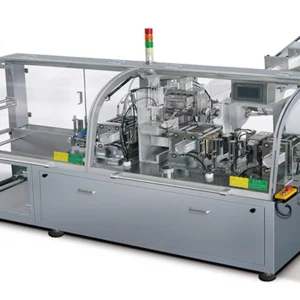
- Automatic Packaging Machine: A high-speed diaper machine producing 600 PPM is churning out 10 diapers every second. It is impossible for humans to bag this output manually. Therefore, a fully automatic packaging (or bagging) machine is essential. This machine receives the stacked diapers from the main line, compresses them, inserts them into pre-made plastic bags, and seals the bags. The packaging machine must be able to keep pace with the diaper machine, and its cost can be substantial, often ranging from $50,000 to $150,000 or more, depending on its speed and features.
- Air Compressor and Dust Collection System: The diaper machine requires a large volume of clean, dry compressed air to operate its pneumatic components. The pulp mill generates a significant amount of dust, necessitating a powerful dust collection system to maintain air quality and prevent fire hazards.
Factory Infrastructure: Power, Space, and Environmental Controls
The cost of the factory itself is a major part of the overall project.
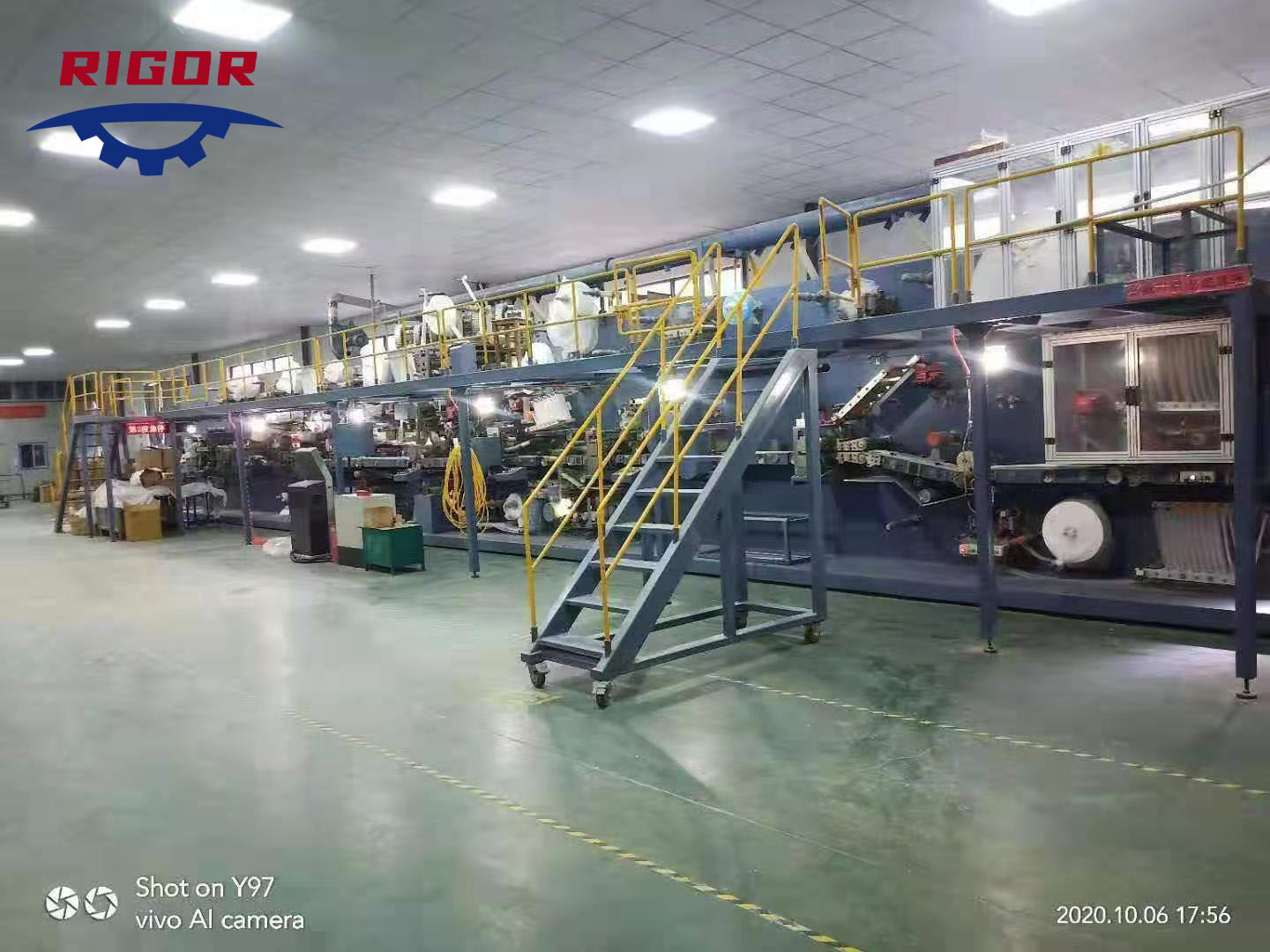
- Space: A modern, high-speed diaper production line is long—often 25-35 meters. When you add the pulp mill, packaging machine, and space for raw material storage and finished goods inventory, you need a substantial factory floor, typically several thousand square meters.
- Power: These machines are power-hungry. You will need a high-capacity electrical connection from the grid, along with a backup generator powerful enough to run the entire line. Unstable power can damage sensitive electronics, so a good power conditioning system (stabilizers, UPS for the PLCs) is also a wise investment.
- Flooring and Foundation: The machine requires a perfectly level and strong concrete floor to ensure stability and proper alignment.
- HVAC: Maintaining a controlled environment (temperature and humidity) is important for both machine performance and raw material integrity.
The Cumulative Investment: Looking Beyond the Main Machine's Price Tag
When you sum the costs of the main diaper machine, the pulp mill, the packaging machine, the air compressor, the dust collector, and the factory setup (rent/purchase, renovation, electricals), you begin to see the true scope of the investment. A rule of thumb is that the cost of ancillary equipment and initial factory setup can be anywhere from 30% to 60% of the cost of the main production machine. Failing to budget for these essential components can derail a project before it even begins. Therefore, when you are evaluating the automatic baby diaper machine price in India, you must think in terms of the "total project cost," not just the machine's sticker price.
Factor 7: Import Duties, Taxes, and Logistics in India
For any investor planning to source a diaper machine from outside India, the final landed cost at the factory gate will be significantly higher than the price quoted by the manufacturer. Navigating the complex web of Indian customs duties, taxes, and inland logistics is a critical final step in calculating the true investment. Overlooking these government-mandated costs can lead to unpleasant financial surprises and project delays.
Navigating the Indian Customs Labyrinth: HS Codes and Tariffs
Every product imported into India is classified under a specific Harmonized System (HS) code. Diaper manufacturing machinery typically falls under Chapter 84 of the customs tariff. The specific HS code determines the rate of Basic Customs Duty (BCD) applicable. As of early 2025, the BCD on many types of industrial machinery is around 7.5%, but this rate is subject to change based on government policy, such as the "Make in India" initiative, which may adjust tariffs to encourage domestic manufacturing (CBIC, 2024).
In addition to BCD, imported goods are also subject to a Social Welfare Surcharge, which is levied as a percentage of the BCD. It is imperative to work with an experienced Customs House Agent (CHA) in India who can ensure the machine is classified under the correct HS code to avoid disputes and penalties.
GST (Goods and Services Tax) and Its Application to Capital Goods
Once the customs duty is calculated, the Goods and Services Tax (GST) is applied. For imported goods, this takes the form of Integrated GST (IGST). The IGST is levied on the "assessable value," which is the sum of the machine's CIF value (Cost, Insurance, and Freight) plus all customs duties and surcharges. The standard GST rate on capital goods like industrial machinery is currently 18%.
The significant point about GST for a business is that it is part of a value-added tax system. The IGST paid on the import of the machine can typically be claimed back as an Input Tax Credit (ITC) against the GST you will collect on the sale of your finished diapers. While this means the GST is not a sunk cost in the long run, it represents a substantial cash outflow at the time of import that must be factored into your project's initial funding and cash flow projections.
From Port to Plant: The Costs of Inland Transportation and Insurance
The journey of the machine is not over once it clears customs at an Indian port like Nhava Sheva (Mumbai) or Mundra. It must then be transported to your factory location, which could be hundreds or thousands of kilometers inland.
- Logistics: The machine is typically packed in several large wooden crates and may require multiple flatbed trucks for transport. The cost of this inland freight can be significant.
- Insurance: You must have transit insurance that covers the journey from the port to your factory to protect against damage or loss.
- Unloading and Positioning: Once at your site, you will need to hire heavy cranes and skilled riggers to unload the heavy machine components from the trucks and carefully position them on the factory floor. This is a delicate operation that carries its own costs and risks.
In summary, the final landed cost of an imported automatic baby diaper machine in India can be estimated by the following formula: Landed Cost = (CIF Price) + (Customs Duties & Surcharges) + (IGST) + (Port Handling & CHA Fees) + (Inland Logistics & Insurance). This can add up to an additional 25% to 40% on top of the machine's original price.
FAQ
What is a realistic starting budget for a small-scale diaper business in India?
For a small-scale operation targeting a local or regional market, a realistic starting budget for the machinery itself would be in the range of $200,000 to $400,000 (approximately ₹1.6 to ₹3.3 Crore). This would likely get you a good quality semi-automatic or a basic semi-servo machine from a reputable Asian manufacturer, with a production speed of around 200-350 PPM. Remember to budget an additional 40-60% on top of this for ancillary equipment, factory setup, and initial raw material inventory.
How much labor is required to run a fully automatic diaper machine?
A modern, fully automatic diaper production line is designed for minimal labor. For a single line, you might need one skilled operator/technician to monitor the HMI screen and oversee the machine, one or two assistants to load raw material rolls and manage the packaging output, and perhaps a quality control person. In total, a shift can often be run with just 3-5 people, which is a dramatic reduction compared to older, less automated lines.
Can I produce both baby diapers and adult diapers on the same machine?
No, this is generally not possible. The size, shape, absorbent capacity, and overall construction of baby diapers and adult diapers are vastly different. Each requires a dedicated machine engineered specifically for its product dimensions and material specifications. The forming units, cutting tools, and chassis of the machines are fundamentally distinct.
How long does it take to get a return on investment (ROI) for a diaper machine?
The ROI period depends heavily on the machine's cost, your operational efficiency, the price you can sell your diapers for, and your sales volume. For a well-run project with a good market fit, a typical ROI period might be in the range of 3 to 5 years. High-speed, high-efficiency machines, while more expensive initially, can achieve a faster ROI if their full production capacity is utilized and sold, due to the lower cost per diaper.
What are the most important raw materials, and are they available in India?
The primary raw materials are non-woven fabrics (for the top sheet and back sheet), fluff pulp (from wood), Super Absorbent Polymer (SAP), polyethylene (PE) film, adhesives, and elastics. While some of these materials, particularly certain grades of non-woven fabric, are manufactured in India, many key components like high-quality SAP and fluff pulp are often imported. Establishing a reliable supply chain for these materials, both domestic and international, is as crucial as buying the machine itself.
Is it better to buy a new machine or a used one?
For a critical, high-speed production asset like a diaper machine, buying new is almost always the recommended path. A new machine comes with a warranty, full technical support for installation and training, and the latest technology for efficiency and quality. A used machine may be cheaper upfront, but it carries significant risks: no warranty, potential for hidden mechanical problems, outdated technology leading to lower efficiency, and difficulty in sourcing spare parts. The initial savings can be quickly erased by extended downtime and high maintenance costs.
How does changing the diaper size on the machine work?
On modern full-servo machines, many size change adjustments are made electronically via the control panel (HMI). The operator selects the new size, and the servo motors automatically adjust their positions and speeds. However, some physical "change parts," like the final cutting die or the forming drum, may still need to be manually swapped. On older, mechanically-driven machines, the process is much more labor-intensive and can take several hours, involving the manual replacement of multiple gears and components.
Conclusion
The endeavor to establish a diaper manufacturing facility in India is a journey paved with both profound opportunity and considerable complexity. As we have explored, determining the automatic baby diaper machine price in India is not a matter of consulting a simple price list. It is an exercise in strategic decision-making, where the investor must act as an engineer, an economist, and a logistician. The final price is a complex tapestry woven from threads of production speed, the sophistication of servo-driven automation, the specific features of the diaper to be produced, the pedigree of the manufacturer, and the quality of its components.
Beyond the machine's ex-factory price lie the equally significant costs of ancillary equipment, factory infrastructure, and the labyrinthine structure of import duties and taxes. To ignore these elements is to plan for failure. The most prudent approach is one of holistic evaluation, where the long-term value of reliability, efficiency, and robust after-sales support is given its due weight against the allure of a lower initial cost. A full-servo machine from a reputable manufacturer, though carrying a higher price tag, often represents a more sound investment in the long run, offering lower operational costs, reduced waste, and the flexibility to adapt to a dynamic market. Ultimately, the right machine is not the cheapest one, but the one that provides the most sustainable and profitable foundation for your business ambitions in the vibrant and demanding Indian marketplace.
References
Central Board of Indirect Taxes and Customs (CBIC). (2024). Customs Tariff. Government of India. Retrieved from https://www.cbic.gov.in/htdocs-cbec/customs/cst2024-310324/cst-idx
JOA. (n.d.). Baby Diaper J8T-B. Curt G. Joa, Inc. Retrieved from https://www.joa.com/baby-care-machine-platforms/baby-diaper-j8t-b/
Rigor Machine Manufactory Co., Ltd. (n.d.). Baby Diaper Machine. Retrieved from https://www.diapermachines.com/product-category/diaper-machine/baby-diaper-machine/
Statista. (2023). Baby Diapers – India. Retrieved from https://www.statista.com/outlook/cmo/tissue-hygiene-paper/hygiene-paper/baby-diapers/india
UNICEF. (2023). Vital statistics. UNICEF Data. Retrieved from
Wang, L. (2022). Analysis on the development status and trend of China's disposable hygiene products equipment industry. China Pulp & Paper, 41(5), 79-84.