Abstract
An examination of the disposable diaper production market in Southeast Asia reveals a complex interplay of demographic shifts, economic growth, and technological advancements. This analysis evaluates the primary considerations for entrepreneurs and businesses planning to establish or upgrade a disposable diaper production line in the region as of 2025. The investigation focuses on five principal factors: production capacity relative to market demand, the selection of appropriate automation technology, the strategic sourcing of raw materials, comprehensive financial modeling for total cost of ownership and return on investment, and the necessity of robust after-sales support. The study synthesizes technical specifications of manufacturing equipment with the economic and logistical realities of the Southeast Asian market. It argues that a successful investment transcends the initial acquisition cost of machinery, requiring a holistic strategy that encompasses supply chain resilience, operational efficiency, and long-term technical partnerships. The findings suggest that a nuanced understanding of these interconnected elements is fundamental to achieving sustainable profitability and market leadership in this rapidly expanding consumer goods sector.
Key Takeaways
- Align production capacity with specific Southeast Asian market demand and growth projections.
- Choose between semi-automatic and fully-automatic lines based on labor costs and quality goals.
- Develop a resilient raw material supply chain by vetting both local and international suppliers.
- Analyze total cost of ownership, not just the initial machine price, for accurate ROI.
- Prioritize manufacturers who offer comprehensive after-sales support and technical training.
- Plan your disposable diaper production line in Southeast Asia with future scalability in mind.
- Ensure the machinery partner provides robust technical support and readily available spare parts.
Table of Contents
- 1. Decoding Production Capacity and Speed: The Engine of Your Operation
- 2. Navigating Technological Tiers: From Semi-Automatic to Fully-Automatic Lines
- 3. Mastering the Raw Material Supply Chain in Southeast Asia
- 4. Calculating Total Cost of Ownership (TCO) and Return on Investment (ROI)
- 5. Ensuring After-Sales Support and Technical Partnership
- The Manufacturing Process Unpacked: A Journey from Pulp to Product
- Market Nuances: Tailoring Diapers for the Southeast Asian Consumer
- Frequently Asked Questions
- Conclusion
- References
1. Decoding Production Capacity and Speed: The Engine of Your Operation
Embarking on the venture of diaper manufacturing in Southeast Asia requires, first and foremost, a profound understanding of the relationship between production machinery and market appetite. The capacity and speed of your production line are not merely technical specifications on a data sheet; they represent the very heart of your business, dictating your ability to meet demand, control costs, and scale your operations. Think of it as choosing the engine for a vehicle. A small city car's engine would be inadequate for a long-haul truck, and a racing engine would be wasteful and impractical for daily commutes. Similarly, the selection of a production line's capacity must be a deliberate and calculated decision, finely tuned to the specific context of your target market.
Defining Your Market's Demand: From Niche to Mass Market
Before you can even begin to evaluate machinery, you must first become a student of your chosen market. Is your ambition to serve a specific urban center in a country like Vietnam or the Philippines, or do you intend to capture a significant share of a national market, like Indonesia's? The answer to this question fundamentally shapes your capacity requirements. A niche strategy, perhaps focusing on premium, eco-friendly diapers for an affluent urban demographic, might be well-served by a line producing 200-300 diapers per minute (DPM). This allows for a more controlled output, potentially lower initial investment, and a focus on quality over sheer volume.
Conversely, a mass-market approach, aiming to compete on price and availability in densely populated regions, necessitates a much larger engine. Here, you would be considering high-speed lines capable of 600, 800, or even over 1,000 DPM. The demographic tailwinds in many Southeast Asian nations—with high birth rates and a growing middle class moving from traditional cloth to disposable diapers—suggest a substantial volume-based opportunity. A failure to match capacity to this kind of mass demand means you will perpetually be unable to fulfill orders, leaving the door wide open for competitors to satisfy the market you have identified.
Calculating Production Output: Diapers Per Minute (DPM) vs. Reality
Machine manufacturers will present you with a design speed, for example, 800 DPM. It is tempting to take this number and perform a simple calculation: 800 diapers/minute * 60 minutes/hour * 24 hours/day. The resulting figure, however, is a theoretical maximum, not a reflection of your actual daily output. A more sober and practical calculation must account for the realities of a manufacturing environment.
Consider these factors:
- Operational Efficiency: No machine runs 24/7 without stopping. You must account for shift changes, scheduled maintenance, and cleaning. A realistic operational efficiency might be between 80% and 90% for a well-run facility.
- Material Changes: Your line will stop for raw material roll changes—nonwoven fabrics, acquisition layers, and polyethylene backsheets all come in large rolls that eventually run out. Automated splicers can minimize this downtime, but it still exists.
- Size Changes: If you produce multiple diaper sizes (e.g., Small, Medium, Large, Extra Large) on the same line, each changeover requires downtime. The machine must be stopped, adjustments made, and new raw materials potentially loaded.
- Unplanned Stoppages: From a sensor malfunction to a web break, unexpected issues will occur. A robust preventative maintenance schedule can reduce these, but they cannot be eliminated entirely.
A more realistic formula looks like this: (Design Speed) * (Operational Efficiency %) * (Time) – (Downtime for Size Changes) = Actual Output. So, an 800 DPM machine running at 85% efficiency over a 22-hour production day (allowing for 2 hours of scheduled maintenance and cleaning) would produce approximately 897,600 diapers, before accounting for size changeovers. This practical calculation is foundational for building an accurate business plan.
The Scalability Question: Planning for Future Growth in Southeast Asia
Your initial investment should not only solve today's problem but also provide a pathway for tomorrow's success. The economic trajectory of Southeast Asia suggests that the demand you calculate for 2025 will likely be significantly higher by 2030. Therefore, the question of scalability becomes paramount.
Does the production line have a modular design? Modularity, a key feature in modern machine design, allows for future upgrades. For example, you might start with a 500 DPM machine but choose a chassis and control system that can be upgraded to 700 DPM later by adding or modifying certain sections. Perhaps you could add a pant-style diaper production module to an existing open-style diaper line. This foresight prevents the need for a complete replacement of the line when your business grows, saving immense capital and reducing disruption. Discussing the "upgrade path" with a potential machine supplier is as consequential as discussing the initial price. A cheaper machine with no upgrade path may prove to be a more expensive choice in the long run.
Balancing Speed with Quality Control: A Non-Negotiable Compromise
The pursuit of higher DPM can sometimes come at a cost to quality. As the machine runs faster, the tolerances for error shrink dramatically. A slight misalignment of the elastic waistband at 800 DPM can result in thousands of defective diapers in a single hour. This is where the integration of advanced quality control systems becomes a non-negotiable aspect of a high-speed line.
Modern production lines employ vision systems—high-speed cameras paired with processing software—to inspect every single diaper. These systems can check for dozens of potential defects in real time:
- Correct placement of the frontal tape and side tapes.
- Integrity and positioning of the absorbent core.
- Proper application of leg cuff elastics.
- Detection of any foreign materials or stains.
When a defect is detected, the system automatically flags and rejects the individual diaper without stopping the line. The investment in a robust, integrated quality control system protects your brand's reputation and prevents the costly scenario of a product recall. Speed is only valuable when it produces a consistently high-quality product.
2. Navigating Technological Tiers: From Semi-Automatic to Fully-Automatic Lines
The choice of technology for your disposable diaper production line is a decision that reverberates through every aspect of your operation, from labor costs and product quality to raw material consumption and long-term maintenance. The spectrum of available technology is broad, but it can be largely understood by examining the continuum from semi-automatic to fully-automatic systems. This is not a simple choice of "good" versus "bad" but rather a strategic decision about what is appropriate for your specific business model, labor market, and financial capacity.
The Case for Semi-Automatic Lines: Cost-Effectiveness and Labor Considerations
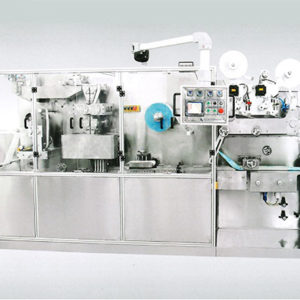
A semi-automatic production line is characterized by a greater reliance on manual intervention at various stages of the process. While the core functions of forming, layering, and cutting are automated, processes like raw material splicing, quality inspection, and final packaging often require human operators.
For a new entrant in a market with abundant and affordable labor, a semi-automatic line presents a compelling argument centered on a lower initial capital investment. The mechanical complexity is reduced, which can also translate to simpler maintenance and a lesser need for highly specialized technicians. However, one must weigh this against the potential for higher long-term operational costs. Human operators, no matter how well-trained, introduce variability. This can lead to lower overall efficiency, higher rates of material waste, and less consistent product quality compared to a fully automated system. A semi-automatic line might be the ideal starting point for a business testing a market or for production in a region where the cost-benefit analysis favors labor over capital.
The Power of Full Automation: Precision, Efficiency, and Reduced Waste
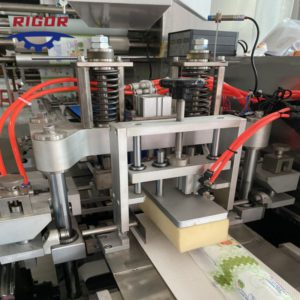
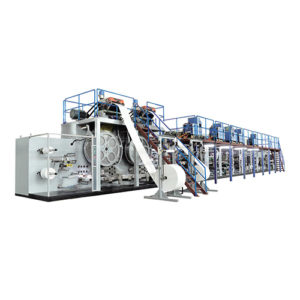
A fully-automatic production line represents the pinnacle of current manufacturing technology. In such a system, human involvement is minimized to supervision, quality assurance oversight, and maintenance. Raw material rolls are spliced automatically at high speed, production is monitored by a suite of sensors and vision systems, defective products are rejected automatically, and finished diapers are counted, stacked, and bagged by integrated packaging units.
The primary advantages are profound.
- Consistency: A fully automated line, driven by precise servo motors, produces a remarkably consistent product, diaper after diaper, hour after hour. This is vital for building brand trust.
- Efficiency and Speed: These lines operate at higher speeds with minimal downtime, maximizing output as discussed previously.
- Waste Reduction: The precision of automated processes significantly reduces raw material scrap. Over the course of a year, a 1-2% reduction in waste on a high-volume line can translate into hundreds of thousands of dollars in savings.
Of course, this technological prowess comes with a higher initial investment. It also necessitates a more skilled workforce capable of operating and maintaining sophisticated machinery. For businesses aiming for large-scale production and competing in a developed or rapidly developing market, the long-term benefits of efficiency, quality, and lower per-unit production cost often justify the initial expenditure on a state-of-the-art baby diaper machines.
| Feature | Semi-Automatic Line | Fully-Automatic Line |
|---|---|---|
| Initial Investment | Lower | Higher |
| Labor Requirement | High (Operators for splicing, QC, packing) | Low (Supervisors, technicians) |
| Production Speed | Lower (e.g., 150-300 DPM) | Higher (e.g., 500-1000+ DPM) |
| Product Consistency | Good, but operator-dependent | Excellent, machine-driven precision |
| Material Waste | Higher | Lower, due to precision and auto-splicing |
| Ideal For | Start-ups, niche markets, low-labor-cost regions | Mass markets, high-quality focus, large-scale operations |
Core Forming Technology: The Heart of Absorbency (Fluff Pulp vs. Airlaid Paper)
The heart of any diaper is its absorbent core. The technology used to create this core is a defining feature of a production line. Traditionally, this involved a "hammermill" that pulverizes rolls of cellulose fluff pulp, which is then mixed with Super Absorbent Polymer (SAP) and formed into the absorbent pad using a vacuum drum. This method is robust, well-understood, and cost-effective.
However, a significant technological evolution is the use of pre-made, ultra-thin absorbent cores, often referred to as airlaid paper or composite cores. These are multi-layered sheets that already contain fluff fibers and SAP. A production line designed for these cores does not require a hammermill. This results in a machine that is quieter, cleaner (less airborne pulp dust), more energy-efficient, and often has a smaller physical footprint. The resulting diapers are thinner and can be marketed as "ultra-thin," a desirable trait for consumers in the hot and humid climates of Southeast Asia. The choice between a traditional fluff pulp system and an ultra-thin core system impacts your raw material sourcing, machine complexity, and the final characteristics of your product.
User-Centric Innovations: Servo Motors, Vision Systems, and Smart Controls
Modern advancements in diaper machine technology have been transformative (Tucker, 2024). A key innovation is the widespread replacement of mechanical-drive systems (using gears, chains, and a single main motor) with full-servo drive systems. In a servo-driven machine, each major component has its own independent motor, all synchronized by a central computer controller.
What does this mean for you, the owner?
- Faster Size Changes: Changing from a Medium to a Large diaper size on a mechanical machine might require hours of manual gear changes and adjustments. On a full-servo machine, the operator can select the new size from a touchscreen menu, and the motors automatically adjust their positions and timings. A changeover that took hours can now be done in under 30 minutes.
- Higher Precision: Servo motors offer a level of precision that is impossible with mechanical linkages, leading to better product quality and less waste.
- Easier Maintenance: With fewer mechanical parts like gears and shafts, there is less wear and tear, simplifying maintenance.
Paired with the vision inspection systems and sophisticated Human-Machine Interface (HMI) touchscreens that provide real-time production data, these innovations make modern diaper lines more efficient and user-friendly than ever before (DiaperMachines.com, 2023).
3. Mastering the Raw Material Supply Chain in Southeast Asia
A disposable diaper production line, no matter how technologically advanced, is ultimately a machine for converting raw materials into finished goods. The efficiency and profitability of your entire operation are therefore inextricably linked to your ability to establish a reliable, cost-effective, and quality-consistent supply chain for these materials. In the context of Southeast Asia, this presents a unique set of challenges and opportunities that demand careful strategic planning. The journey from sourcing pulp to shipping a finished diaper is as vital as the mechanics of the machine itself.
| Raw Material | Primary Function | Key Sourcing Considerations |
|---|---|---|
| Fluff Pulp | Main absorbent body; provides integrity and wicking | Sourced from sustainably managed forests, typically North or South America. Logistics and import duties are major factors. |
| Super Absorbent Polymer (SAP) | Locks away liquid under pressure, turning it into a gel | A petrochemical product. Quality varies greatly. Sourced globally from major chemical companies in Europe, Japan, and China. |
| Nonwoven Fabrics | Topsheet (contacts skin), backsheet, leg cuffs, acquisition layer | Requires specific properties (hydrophilic for topsheet, hydrophobic for backsheet). Large suppliers in China and Thailand. |
| Polyethylene (PE) Film | Waterproof outer layer (backsheet) | Often laminated to a nonwoven for a cloth-like feel. Regional production is available. |
| Adhesives | Construction (laminating layers), positioning, elastics | Hot-melt adhesives. Performance is climate-dependent (heat/humidity). Sourced from global specialists. |
| Elastics | Leg cuffs, waistband for a snug fit | Spandex/Lycra threads. Quality affects fit and comfort. |
Identifying Key Raw Materials: SAP, Fluff Pulp, Nonwovens, and Adhesives
A disposable diaper is a marvel of material science, a composite product where each component plays a specific role (SUNREE, 2025). Understanding these primary materials is the first step.
- Fluff Pulp: This is the bulky, absorbent material, typically made from softwood. It forms the structural matrix of the absorbent core. Its quality affects the diaper's wicking ability and integrity when wet.
- Super Absorbent Polymer (SAP): These are tiny granules that can absorb many times their weight in liquid, turning it into a stable gel. The quality and quantity of SAP are the primary determinants of a diaper's total absorbency.
- Nonwoven Fabrics: Multiple types are used. The topsheet, which touches the baby's skin, must be soft and hydrophilic (allow liquid to pass through). The leg cuffs and backsheet nonwoven must be hydrophobic (repel liquid) to prevent leaks. An Acquisition Distribution Layer (ADL), another nonwoven, is often placed under the topsheet to rapidly spread liquid across the core.
- Backsheet: The outermost layer is typically a waterproof polyethylene (PE) film or a breathable film laminated to a nonwoven fabric for a "cloth-like" feel.
- Adhesives: Hot-melt adhesives are the invisible glue holding everything together. Construction adhesives laminate the layers, while elastication adhesives hold the leg and waist elastics in place.
- Elastics & Tapes: Spandex threads create the stretchy fit around the legs and waist. Fastening systems consist of frontal tapes and mechanical (hook-and-loop) or adhesive side tapes.
The specifications for each of these materials must be perfectly matched to your production line's capabilities and your final product's desired performance characteristics.
Sourcing Strategies: Local vs. International Suppliers
Once you know what you need, the question becomes where to get it. For a disposable diaper production line in Southeast Asia, you have two primary avenues: sourcing from international giants or cultivating relationships with regional suppliers.
International Sourcing: Major producers of fluff pulp (e.g., from the USA or Brazil) and SAP (e.g., from Germany, Japan, or China) are global players. Sourcing from them often guarantees high quality and consistency, backed by extensive R&D. However, this strategy exposes you to the volatilities of global shipping costs, currency fluctuations, and lengthy lead times. An order for fluff pulp might need to be placed months in advance.
Local/Regional Sourcing: The manufacturing ecosystem in Southeast Asia and neighboring China is rapidly maturing. There are now high-quality producers of nonwovens, PE films, and adhesives within the region. Sourcing regionally can dramatically shorten lead times, reduce shipping costs, and simplify logistics. For example, sourcing nonwovens from a supplier in Thailand for a factory in Malaysia is far more efficient than sourcing them from Europe. The challenge lies in rigorous vetting. You must ensure the regional supplier can meet your quality specifications consistently, batch after batch. It often makes sense to adopt a hybrid strategy: sourcing highly specialized materials like SAP internationally while developing strong partnerships for more commoditized materials like packaging and certain nonwovens regionally.
The Impact of Logistics and Tariffs on Your Bottom Line
Your raw material cost is not just the price per kilogram. It is the "landed cost"—the price including shipping, insurance, import duties, and local transportation to your factory. Trade agreements within the ASEAN bloc can offer significant advantages. For instance, sourcing a material from an ASEAN member country (like Indonesia or Thailand) for your factory in Vietnam might incur zero or very low import tariffs, a significant cost advantage over sourcing from outside the bloc.
You must work with a knowledgeable logistics partner to navigate the complexities of customs clearance and import regulations. Delays at the port can shut down your production line just as effectively as a machine breakdown. Maintaining a safety stock of materials is essential, but this also ties up working capital. Calculating the optimal balance between Just-in-Time (JIT) delivery and maintaining adequate safety stock is a continuous and vital exercise.
Quality Consistency and Supplier Vetting: Your First Line of Defense
Your diaper is only as good as the worst material you put into it. A single bad batch of adhesive that fails in a hot climate or a shipment of SAP with low absorbency can ruin your brand's reputation. This is why supplier vetting is not a one-time task.
Your quality control process must begin before the materials even reach your production line.
- Request Samples: Test samples from potential suppliers in your own lab or a third-party lab.
- Establish Specifications: Create a detailed "spec sheet" for each raw material, outlining the required performance metrics (e.g., for a topsheet: basis weight, tensile strength, strikethrough time).
- Conduct Audits: If possible, visit the supplier's factory. An audit can reveal much about their own quality control processes and production discipline.
- Implement Incoming QC: Every batch of raw material that arrives at your factory should be tested to ensure it meets your spec sheet before it is allowed onto the production floor.
Building a strong, transparent relationship with a few trusted suppliers is often more valuable than constantly chasing the lowest price from a wide array of unknown vendors. Your supplier is a partner in your quality promise to your customers.
4. Calculating Total Cost of Ownership (TCO) and Return on Investment (ROI)
A wise investment in a disposable diaper production line in Southeast Asia is an exercise in foresight, looking far beyond the initial quote on a piece of machinery. The price tag is merely the entry fee. The true cost, and subsequently the true potential for profit, is revealed through a comprehensive analysis of the Total Cost of Ownership (TCO) and a realistic projection of the Return on Investment (ROI). This financial discernment separates sustainable enterprises from those that falter under the weight of unforeseen expenses. It requires a shift in mindset from "How much does the machine cost?" to "How much will it cost to run and profit from this machine over the next decade?"
Beyond the Initial Price Tag: Installation, Training, and Commissioning Costs
The figure presented by the machine manufacturer is for the machine itself, often designated as FOB (Free on Board), meaning the cost to get it to the port of origin. An astute entrepreneur must immediately begin adding to this base price.
- Shipping and Insurance: The cost of transporting a machine that can be over 30 meters long and weigh many tons across oceans is substantial. Insurance against damage during transit is not optional.
- Import Duties and Taxes: Each country in Southeast Asia has its own tariff schedule for industrial machinery. This could be a significant percentage of the machine's value and must be budgeted for.
- Installation and Commissioning: The manufacturer will send a team of specialized engineers to your facility to assemble, install, and fine-tune the machine. The cost for their travel, accommodation, and service days is a separate, and considerable, line item.
- Facility Preparation: The machine requires a specific foundation, electrical supply, compressed air systems, and dust collection infrastructure. The cost of preparing your factory building to house the line must be included.
- Initial Training: The commissioning engineers will train your first set of operators and technicians. This initial knowledge transfer is part of the startup cost.
Failing to account for these "hidden" costs can strain your capital budget before you have produced a single diaper. A thorough TCO analysis begins by mapping out every expense required to get the line from the manufacturer's floor to a state of operational readiness on your own.
Operational Expenditures: Energy Consumption, Spare Parts, and Maintenance
Once the machine is running, it begins to incur operational expenditures (OpEx). These ongoing costs are the primary determinant of your per-diaper production cost.
- Energy Consumption: A large production line is power-hungry. It has dozens, if not hundreds, of motors, heaters for the adhesives, and large vacuum pumps for the core forming. The machine's energy efficiency rating (measured in kWh) is a specification as important as its speed.
- Labor: While a fully automatic line reduces the number of operators, you still need skilled technicians, quality control staff, and supervisors for each shift. Labor costs are a major component of OpEx.
- Raw Materials: As detailed previously, this will be your single largest operational cost.
- Spare and Wear Parts: Certain parts of the machine, like cutting blades, anvil rolls, and adhesive nozzles, are designed to wear out and require regular replacement. A good manufacturer will provide a list of recommended spare parts to keep in stock. The cost and availability of these parts are a critical part of the TCO.
- Preventative Maintenance: This includes the cost of lubricants, cleaning supplies, and the man-hours dedicated to keeping the machine in optimal condition to prevent larger, more expensive breakdowns.
Over a 10-year lifespan, the cumulative OpEx can far exceed the initial investment. Therefore, a slightly more expensive machine that is more energy-efficient and requires fewer proprietary spare parts might have a lower TCO than a cheaper alternative.
Projecting Your ROI: A Step-by-Step Financial Model for Diaper Manufacturing
Return on Investment is the ultimate measure of your venture's success. A credible ROI projection requires a conservative and detailed financial model.
Let's imagine a simplified model:
- Calculate Total Investment (CAPEX): Sum the machine cost, shipping, installation, facility prep, etc. Let's say this is $1,500,000.
- Calculate Annual Production Volume: Based on your DPM, efficiency, and operational hours, determine your realistic annual output. For example, 200 million diapers per year.
- Calculate Cost Per Diaper:
- Sum your annual raw material costs (e.g., $4,000,000).
- Sum your annual OpEx (energy, labor, maintenance, etc.) (e.g., $800,000).
- Total Annual Cost = $4,800,000.
- Cost Per Diaper = $4,800,000 / 200,000,000 diapers = $0.024 per diaper.
- Determine Revenue:
- Establish a realistic wholesale selling price per diaper. This will be market-dependent, but let's assume $0.040.
- Total Annual Revenue = 200,000,000 diapers * $0.040/diaper = $8,000,000.
- Calculate Gross Profit:
- Annual Gross Profit = Total Revenue – Total Annual Cost = $8,000,000 – $4,800,000 = $3,200,000.
- Calculate ROI:
- Simple ROI = (Annual Gross Profit / Total Investment) * 100 = ($3,200,000 / $1,500,000) * 100 = 213%.
- This suggests a payback period of less than a year.
This is a highly simplified model. A real projection would also include overheads, sales and marketing expenses, taxes, and depreciation. However, the process illustrates the systematic thinking required. You must build your own model with data specific to your machine, your raw material contracts, and your target market's pricing structure.
Financing Your Investment: Options for Entrepreneurs in Southeast Asia
The significant capital required for a comprehensive selection of diaper production lines can be a barrier to entry. Fortunately, various financing avenues exist.
- Commercial Bank Loans: The most traditional route. A strong, detailed business plan with a solid ROI projection is necessary to secure a loan.
- Government-Backed SME Loans: Many governments in Southeast Asia have programs to encourage industrial development and support small and medium-sized enterprises (SMEs). These often come with more favorable interest rates or terms.
- Venture Capital or Private Equity: For larger-scale projects with high growth potential, attracting investment from venture capital firms may be an option. This usually involves giving up a share of equity in your company.
- Supplier Financing: Some machine manufacturers may offer financing options or have partnerships with financial institutions to help buyers. It is always worth inquiring about this possibility.
Securing financing is contingent on demonstrating the viability of your project, which brings us back to the necessity of a meticulous TCO and ROI analysis.
5. Ensuring After-Sales Support and Technical Partnership
The relationship with your machine manufacturer should not conclude when the final payment is made or when the installation engineers depart. In fact, that is when the most important phase of the relationship begins. The purchase of a complex piece of industrial equipment like a disposable diaper production line is not a simple transaction; it is the formation of a long-term technical partnership. The quality of the after-sales support you receive will be a direct determinant of your line's uptime, efficiency, and longevity. Choosing a manufacturer who acts as a true partner, rather than a mere vendor, is one of the most consequential decisions you will make.
The Value of a True Partner vs. a Mere Supplier
A supplier sells you a machine. A partner invests in your success. What is the functional difference? A supplier's job is done upon delivery and commissioning. Their communication may become slow, and their interest in your operational challenges may wane. A partner, by contrast, understands that their reputation is tied to the successful performance of their equipment in your factory.
A true partner exhibits several key behaviors:
- They are proactive, perhaps checking in to see how the machine is performing and suggesting potential process optimizations.
- They provide ongoing training opportunities for your staff as you hire new people or as they release new software updates.
- They are transparent about potential issues and work collaboratively with you to solve problems.
- They view your feedback as valuable data for improving their own future machine designs.
When evaluating potential manufacturers, try to gauge this mindset. Ask them for references from existing customers. Inquire about their philosophy on long-term support. The answers can be more revealing than any technical data sheet.
Evaluating Technical Support: Response Times, Expertise, and Language Capabilities
When your production line stops unexpectedly, every minute of downtime costs you money in lost production and idle labor. The quality of the manufacturer's remote technical support in these moments is paramount.
- Response Time: How quickly can you get a qualified technician on the phone or in a video call? Do they offer 24/7 support, considering the time zone differences between your factory in Southeast Asia and their headquarters, which might be in Asia, Europe, or North America? A guaranteed service-level agreement (SLA) for response times can be a valuable part of your contract.
- Expertise: When you get through, are you speaking with a first-level support agent reading from a script, or do you have access to experienced engineers who understand the machine's mechanical, electrical, and software systems in depth? Modern machines often have remote access capabilities, allowing the manufacturer's engineers to securely log into your machine's control system (with your permission) to diagnose problems directly. This can resolve many issues without the need for an on-site visit.
- Language Capabilities: Given your target markets, can the support team communicate effectively in English? Having a technician who can clearly explain complex procedures to your local team is vital. Miscommunication during a troubleshooting session can lead to further errors or delays.
Spare Parts Availability and Local Service Centers
A machine is an assembly of thousands of parts, some of which will inevitably wear out or fail. Your ability to replace these parts quickly is essential for maintaining high uptime.
Before you buy, ask the manufacturer direct questions about their spare parts logistics:
- Recommended Spare Parts List: They should provide a list of critical spares you should purchase with the machine and keep on-site. This list should be based on their experience with a large fleet of similar machines.
- Lead Time for Non-Stocked Parts: For larger or less common parts that you do not stock, what is the guaranteed lead time to get them from their central warehouse to your factory?
- Cost of Spare Parts: Are the spare parts reasonably priced, or does the manufacturer see them as a high-margin profit center?
- Use of Standard Components: Does the machine use standard, off-the-shelf components (like motors, sensors, or pneumatic valves from well-known global brands like Siemens, Allen-Bradley, or Festo) that you could potentially source locally in an emergency? Or does it rely heavily on proprietary parts that you can only buy from them? The use of standard components provides you with greater flexibility and reduces your dependence on a single supplier.
Some larger machine manufacturers are establishing regional service centers in strategic locations like Southeast Asia. The presence of a local or regional office with a stock of spare parts and a team of field service technicians can be a massive advantage, drastically reducing the time and cost associated with getting on-site support.
The Role of Continuous Training and Process Optimization
Your team's ability to run and maintain the machine effectively will grow over time, but this growth can be accelerated by a good partnership. A supportive manufacturer will offer advanced training programs, either at their facility or yours, to move your team from basic operation to expert-level troubleshooting and preventative maintenance.
Furthermore, as your business evolves, you may want to change raw materials, introduce new product features, or push the machine's performance envelope. A true partner will work with you on this. Their process engineers can provide valuable advice on how to adjust machine settings to run a new type of nonwoven or how to optimize adhesive temperatures for the local climate. This collaborative approach to process optimization ensures that your investment continues to deliver maximum value for years to come.
The Manufacturing Process Unpacked: A Journey from Pulp to Product
To truly appreciate the technology you are investing in, it helps to visualize the remarkable journey a diaper takes within the production line. It is a high-speed symphony of precisely synchronized actions that transforms humble raw materials into a sophisticated, multi-layered product in a matter of seconds. The entire process, from unwinding raw materials to packaging the final product, is a testament to modern engineering (SQ Machine, 2025). Let's walk through the key stages.
Stage 1: Raw Material Unwinding and Splicing
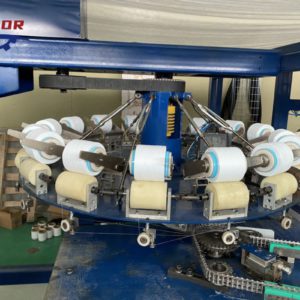
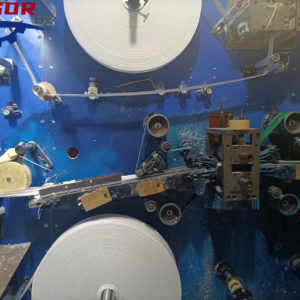
The process begins at the "back end" of the machine, where massive rolls of the various raw materials—the topsheet nonwoven, acquisition layer, backsheet film, and tissue—are mounted on spindles. As the machine runs, these materials are continuously fed, or "unwound," into the line. A critical feature here is the automatic splicer. When one roll is about to run out, the splicer automatically joins the end of the expiring roll to the beginning of a new roll at full machine speed, without stopping production. This single feature is a huge contributor to overall line efficiency.
Stage 2: Core Formation and SAP Application
Simultaneously, the absorbent core is created. In a traditional line, a large roll of compressed fluff pulp is fed into a hammermill. The hammermill is essentially a high-speed rotor with hammers that disintegrates the pulp sheet into soft, fluffy fibers. These fibers are then drawn by a vacuum into a pocket on a rapidly rotating drum, which is shaped like the final absorbent pad. At the same time, a precise applicator sprinkles the Super Absorbent Polymer (SAP) granules into the stream of fluff, ensuring it is evenly distributed throughout the core. The amount of SAP can be varied to create different absorbency levels for different diaper sizes or product tiers.
Stage 3: Layering and Lamination
This is where the diaper starts to take its familiar form. The continuous, web-like stream of absorbent cores is deposited onto the moving web of backsheet material. The acquisition layer and topsheet nonwoven are then fed in from above. Strands of elastic for the leg cuffs are stretched and guided into place. Jets of hot-melt adhesive are precisely sprayed to bond all these layers together. The process is akin to creating a multi-layered sandwich at hundreds of meters per minute.
Stage 4: Cutting, Folding, and Sealing
Now the continuous web of laminated material needs to be turned into individual diapers. A rotary cutter slices out the contoured leg openings. Another unit applies the side tapes for fastening. The web is then folded longitudinally. High-speed blades then cut the web into individual diaper units. In the case of pant-style diapers, this is also the stage where the side seams are ultrasonically welded together.
Stage 5: Quality Control and Packaging
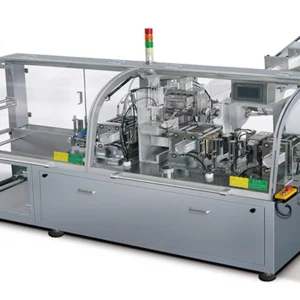
As the finished diapers exit the main process, they pass through the high-speed vision inspection system. Any diaper with a detected flaw—a misplaced tape, an incorrectly formed core, a stain—is automatically diverted into a reject bin by a puff of air. The good diapers continue on. A "stacker" unit counts the diapers and arranges them into neat stacks of a predetermined quantity. These stacks are then compressed and pushed into a pre-made plastic bag by an automatic bagging unit. The bag is sealed, and the finished packages are conveyed away, ready for boxing and shipment. From raw pulp to a sealed bag can take as little as two to three seconds.
Market Nuances: Tailoring Diapers for the Southeast Asian Consumer
A successful product is one that feels like it was designed specifically for the person using it. Simply manufacturing a generic, one-size-fits-all diaper is a recipe for failure in the diverse and discerning Southeast Asian market. A deep empathy for the local context—the climate, the body types, the economic realities—must inform your product design and, by extension, your choice of machinery. Your disposable diaper production line in Southeast Asia must be capable of producing a diaper that local parents want to buy.
Climate Considerations: Breathability and Thinness
Much of Southeast Asia is characterized by a hot and humid tropical climate. For a baby, this means a higher risk of heat rash and skin irritation. A thick, bulky diaper that traps heat and moisture is a parent's nightmare. This has profound implications for product design.
- Breathability: The market has a strong preference for diapers with "breathable" backsheets. These are microporous films that allow water vapor to escape while still retaining liquid. Your production line must be able to handle these more delicate breathable films, which may require different temperature settings and tension controls than standard PE films.
- Thinness: As discussed earlier, there is a powerful consumer trend towards "ultra-thin" diapers. These are perceived as more comfortable and cooler for the baby. To produce these, you need a line capable of working with advanced, thin absorbent cores rather than bulky traditional fluff pulp. The ability to market your product as "Ultra-Thin and Breathable" is a significant competitive advantage.
Sizing and Fit: Adapting to Local Demographics
Average infant and toddler body sizes can vary between regions. A sizing chart developed for European or North American babies may not provide an optimal fit for babies in Thailand or the Philippines. An ill-fitting diaper leads to two major problems: discomfort for the baby and a high likelihood of leaks, which destroys customer trust.
Your product development should involve studying local anthropometric data or, even better, conducting your own fit studies with local parents and babies. This will help you define the ideal dimensions, elastic tensions, and overall shape for each size (S, M, L, XL). Your production line must then have the flexibility to produce these custom shapes and sizes. A full-servo machine is particularly advantageous here, as its parameters can be digitally adjusted to fine-tune the cut and placement of components to achieve that perfect, leak-proof fit.
Price Sensitivity and Product Tiering
While the middle class is growing, a large segment of the Southeast Asian market remains highly price-sensitive. Parents may be making their first-ever switch from cloth diapers and are carefully watching their budgets. This necessitates a strategic approach to product tiering. You cannot expect to sell only a premium, feature-rich diaper.
A versatile production line allows you to create multiple product tiers from a single platform.
- Economy Tier: A basic, functional diaper with a lower SAP content, a standard PE backsheet, and simpler fastening tapes. The goal is to offer a safe, reliable product at the most accessible price point possible.
- Mid-Tier: Your core product, balancing features and cost. This might include a breathable backsheet, a moderate amount of SAP for good absorbency, and perhaps a wetness indicator.
- Premium Tier: An "all the bells and whistles" product. This would feature an ultra-thin core, the softest nonwovens, a highly breathable backsheet, a comfortable stretchy waistband, and advanced features.
The ability to adjust the amount of SAP, switch between different types of backsheets, and change fastening systems on your line gives you the manufacturing flexibility to address these different market segments effectively.
Regulatory Compliance and Standards in ASEAN Countries
Each country may have its own specific regulations regarding product safety, labeling, and materials used in baby products. For example, there may be restrictions on the use of certain chemicals, phthalates, or heavy metals. It is absolutely your responsibility to understand and comply with the standards in every country you plan to sell to.
Working with reputable raw material suppliers who can provide safety data sheets (SDS) and certificates of compliance is the first step. Your own quality assurance program must then ensure that your finished products meet these local standards. This is not just a matter of legal compliance; it is a fundamental pillar of brand trust. Parents are placing immense trust in you to provide a product that is safe for their child. Honoring that trust is non-negotiable.
Frequently Asked Questions
1. How much factory space is required for a typical diaper production line?
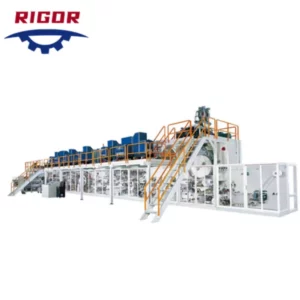
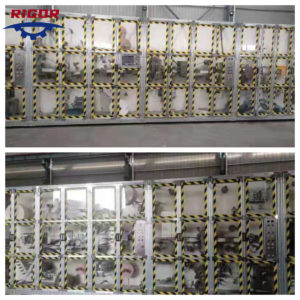
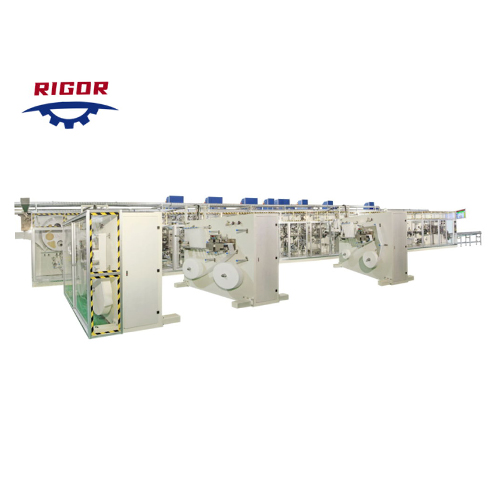
The physical footprint of a disposable diaper production line is substantial. A fully automatic, high-speed line can be over 30 meters (about 100 feet) long and 4-5 meters wide. When you account for the space needed for raw material storage at the back of the line, maintenance access around the machine, and finished goods accumulation at the front, a safe estimate for the production area alone would be around 800 to 1,200 square meters. You will also need additional space for a raw material warehouse, a finished goods warehouse, quality control lab, offices, and utilities. A total facility size of 3,000 to 5,000 square meters is a reasonable starting point for planning.
2. Can I produce both baby diapers and adult incontinence products on the same machine?
Generally, no. While the basic principles of manufacturing are similar, baby diapers and adult incontinence products have vastly different dimensions, absorbent capacities, and features. The forming drums, cutting dies, and handling components are specifically sized for one product range. A machine built for baby diapers cannot be easily converted to produce adult diapers. Manufacturers produce dedicated lines for each product category: baby diapers, baby pants, adult diapers, and sanitary napkins. You must decide on your target product first, as that determines the type of machine you will purchase.
3. What is the typical lead time from ordering a machine to starting production?
The lead time is a multi-stage process. Manufacturing the machine itself typically takes between 6 to 10 months, depending on the complexity of the line and the manufacturer's order backlog. Sea freight to a port in Southeast Asia can take another 4 to 6 weeks. Installation and commissioning at your facility by the manufacturer's engineers can take an additional 4 to 8 weeks. Therefore, a realistic timeline from signing the contract to starting commercial production is approximately 10 to 14 months. This timeline underscores the importance of planning your facility preparation and raw material sourcing in parallel with the machine's manufacturing.
4. How many people are needed to operate a fully automatic diaper line?
A key benefit of full automation is the reduction in direct labor. For a single, fully automatic line, a typical shift might require 3 to 5 personnel. This would include one or two main operators responsible for overseeing the machine's operation from the control panel, one or two quality control technicians monitoring output and performing lab tests, and a material handler to supply the line with raw materials. The team is focused on supervision, quality assurance, and logistics rather than manual production tasks.
5. How does humidity in Southeast Asia affect the production process?
High ambient humidity can pose several challenges. It can affect the performance of hot-melt adhesives, potentially weakening the bonds that hold the diaper together. It can also cause static electricity issues with the thin nonwoven fabrics and films, leading to material handling problems. Most importantly, fluff pulp and SAP are hygroscopic, meaning they absorb moisture from the air. If the fluff pulp becomes damp before it enters the hammermill, it can lead to poor core formation and reduced diaper absorbency. For these reasons, a climate-controlled production environment with regulated temperature and humidity is not a luxury; it is a necessity for maintaining consistent quality and high operational efficiency in the region.
Conclusion
The decision to invest in a disposable diaper production line in Southeast Asia is a commitment to a dynamic and promising market. However, the path to success is paved with careful consideration and strategic foresight. It moves beyond a simple comparison of machine prices to a deeper, more holistic evaluation of your business's entire ecosystem. The five core factors—calibrating capacity to market size, choosing the appropriate technological tier, mastering the regional supply chain, conducting a rigorous financial analysis of TCO and ROI, and securing a genuine technical partnership—are the pillars upon which a sustainable and profitable enterprise is built. The machinery itself, whether a marvel of full automation or a cost-effective semi-automatic line, is ultimately a tool. Its true value is realized only when it is wielded with a nuanced understanding of the product it creates, the consumer it serves, and the economic environment in which it operates. By embracing this comprehensive approach, you position yourself not just to enter the market, but to thrive within it, delivering a safe, reliable, and desirable product to millions of families across the region.
References
ANDRITZ AG. (2025). Production platforms for baby diaper production. ANDRITZ. Retrieved from https://www.andritz.com/nonwoven-textile-en/technologies/converting/hygiene/hygiene-baby-diaper
DiaperMachines.com. (2023, December 11). Fully automatic baby diaper making machine: Revolutionizing hygiene and convenience. Diaper Machine | Sanitary Pad Machine Manufacturer. Retrieved from https://www.diapermachines.com/2023/12/11/fully-automatic-baby-diaper-making-machine-revolutionizing-hygiene-and-convenience/
DiaperMachines.com. (2024, January 8). Innovations in diaper manufacturing: Exploring the baby diaper machine revolution. Diaper Machine | Sanitary Pad Machine Manufacturer. Retrieved from https://www.diapermachines.com/2024/01/08/innovations-in-diaper-manufacturing-exploring-the-baby-diaper-machine-revolution/
Quanzhou Womeng Intelligent Equipment Co., Ltd. (2024, December 23). Unveiling the diaper production line: The wonderful journey from raw materials to finished products. Made-in-China.com. Retrieved from https://insights.made-in-china.com/Unveiling-the-Diaper-Production-Line-The-Wonderful-Journey-from-Raw-Materials-to-Finished-Products_WGYtHRClIxIg.html
SQ Machine. (2025, May 22). How diapers are made: Materials, machines, and process explained. Sanitary Pad Machine. Retrieved from https://sanitarypadmachine.com/how-diapers-are-made/
SUNREE. (2025, March 14). The disposable baby diaper manufacturing process: A comprehensive guide. SUNREE Hygiene. Retrieved from https://sunreehygiene.com/the-disposable-diaper-manufacturing-process-a-comprehensive-guide/
Tucker, R. (2024, September 8). Advancements in disposable diaper machine technology and user-centric innovations. Made-in-China.com. Retrieved from https://insights.made-in-china.com/Advancements-in-Disposable-Diaper-Machine-Technology-and-User-Centric-Innovations_PATGmMdOYElC.html