Abstract
This document provides a comprehensive examination of the sachet wet wipes machine, a pivotal piece of equipment in the modern hygiene products industry. It is intended for prospective buyers and industry professionals, particularly those operating within the emerging markets of South America, Russia, Southeast Asia, the Middle East, and South Africa. The analysis moves beyond a superficial overview, offering a deep, structured exploration of the five fundamental factors that should govern a purchasing decision in 2025. These factors include production capacity alignment with market demand, the nuances of folding technology and its impact on user experience, the precision of liquid dosing systems for product quality, the integrity of packaging and sealing for shelf life, and a holistic calculation of the total cost of ownership and return on investment. The discussion is framed within a practical, empathetic lens, acknowledging the real-world operational challenges and economic considerations faced by manufacturers. By integrating technical specifications with market-specific insights, the text aims to equip readers with the necessary knowledge to make an informed, strategic, and profitable investment in a sachet wet wipes machine.
Key Takeaways
- Align machine speed with your specific market demand to avoid over-or under-capacity.
- Evaluate folding technology for its impact on user experience and brand perception.
- Prioritize precise liquid dosing systems to ensure consistent product quality and safety.
- Invest in a sachet wet wipes machine with superior sealing to guarantee product shelf life.
- Analyze the total cost of ownership, not just the initial purchase price, for long-term ROI.
- Consider machine adjustability for producing various wipe sizes and formulations.
- Verify the manufacturer's after-sales support and spare parts availability in your region.
Table of Contents
- Understanding the Core Mechanics of a Sachet Wet Wipes Machine
- Factor 1: Production Capacity and Speed – Aligning Output with Market Demand
- Factor 2: Folding Technology and Wipe Dimensions – Precision and Versatility
- Factor 3: Liquid Dosing and Formulation – Ensuring Consistency and Quality
- Factor 4: Packaging and Sealing Integrity – The Final Touchpoint
- Factor 5: Cost of Ownership and ROI – A Holistic Financial Analysis for 2025
- Navigating the Global Landscape: Regional Considerations for Machine Acquisition
- Frequently Asked Questions (FAQ)
- Conclusion
- References
Understanding the Core Mechanics of a Sachet Wet Wipes Machine
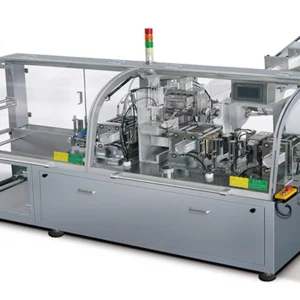
Before one can judiciously select a piece of industrial equipment, a foundational understanding of its inner workings is not merely helpful; it is a prerequisite for a sound decision. A sachet wet wipes machine, at its heart, is a marvel of electromechanical synchronization. It transforms raw materials—large rolls of non-woven fabric, liquid formulations, and packaging film—into the small, convenient, single-use packets that have become ubiquitous in our daily lives. To appreciate the differences between models and manufacturers, we must first trace the path of a single wipe through this intricate process. It is a journey from an undifferentiated state to a specific, functional, and packaged good.
Imagine the machine not as a single entity, but as a sequence of specialized stations, each performing a critical task with precision. The failure or inefficiency of any one station compromises the entire output. The process begins with the raw fabric and ends with a sealed, ready-to-ship sachet, all within a few seconds.
The Journey from Non-Woven Fabric to Packaged Wipe
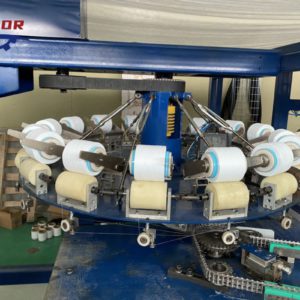
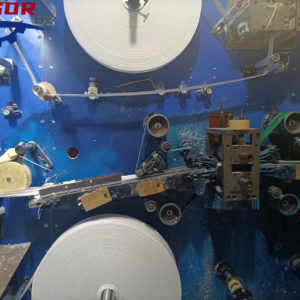
The genesis of a wet wipe begins at the unwinding station. Here, a large parent roll of dry non-woven fabric, often weighing hundreds of kilograms, is mounted onto a spindle. The material itself is an engineered textile, perhaps a spunlace or air-laid fabric, chosen for its specific properties of softness, strength, and absorbency (Chapman, 2021). A sophisticated tension control system is paramount at this stage. If the tension is too loose, the fabric may drift or wrinkle, leading to folding errors downstream. If it is too tight, the fabric might stretch or even tear, causing a line stoppage. Modern machines use sensors and feedback loops to maintain constant, optimal tension, regardless of the roll's decreasing diameter as it is consumed.
From the unwinder, the web of fabric travels to the folding unit. This is where the wide sheet is transformed into the narrow, folded configuration the consumer will eventually pull from the sachet. The folding process is purely mechanical, using a series of plates and guides to create precise creases. The type of fold is a defining characteristic of the final product. After folding, the continuous strip of folded fabric proceeds to the cutting station. Here, a high-speed rotary or guillotine cutter slices the strip into individual wipe lengths. The accuracy of this cut determines the final dimensions of the wipe and the consistency of the product.
Simultaneously, the liquid formulation is prepared. In a separate tank, purified water is mixed with surfactants, moisturizers, preservatives, and fragrances according to a precise recipe. This solution is then pumped to the wetting station. As each dry, cut wipe passes through, a nozzle system applies a measured dose of the liquid, instantly transforming it into a "wet wipe." The final station is the packaging unit, where the now-wet wipe is married with its sachet, sealed, and discharged from the machine.
Key Stations: Unwinding, Folding, Wetting, Cutting, and Packaging
To deepen our understanding, let's examine each station as a distinct functional module.
- Unwinding and Guiding: The parent roll is held on an expanding shaft. An automatic web guiding system, often using ultrasonic or infrared sensors, detects the edge of the fabric and makes micro-adjustments to the roll's lateral position. This ensures the fabric enters the folding section perfectly centered, which is foundational for all subsequent processes.
- Folding: This is arguably the most mechanically intricate part. For a simple V-fold (a single fold), the process is straightforward. For more complex folds, the fabric is guided through a more elaborate path. The design and build quality of these folding plates directly influence the neatness and consistency of the final folded wipe.
- Wetting (Liquid Dosing): Precision is the operative word here. The machine must deliver the exact amount of liquid to each wipe. Too little, and the wipe is ineffective and feels dry. Too much, and the sachet may leak, leading to product spoilage and a negative consumer experience. High-end machines use servo-driven pumps that can be programmed with extreme accuracy.
- Cutting: After wetting, the folded, wet fabric strip is cut. The cutter must be sharp, durable, and perfectly timed with the movement of the fabric. A dull or misaligned blade can cause frayed edges or inconsistent lengths.
- Packaging (Form-Fill-Seal): This station operates in parallel. A roll of packaging film is unwound and formed into a tube. The individual wet wipe is inserted into this tube. Then, a set of heated sealing jaws clamps down, creating the top seal of the trailing sachet and the bottom seal of the leading sachet, all while a rotary knife cuts them apart. This "form-fill-seal" (FFS) process is a standard in the packaging industry (Robertson, 2013).
The Role of PLC Systems and Servo Motors in Modern Machines
What orchestrates this high-speed ballet of mechanical parts? The answer lies in the machine's central nervous system: the Programmable Logic Controller (PLC). The PLC is a ruggedized industrial computer that receives input from dozens of sensors across the machine—sensors for fabric position, liquid levels, registration marks on the film, temperature of the sealing jaws, and more. Based on its programming, it sends output signals to control the motors, pumps, and actuators.
The "muscles" of the machine are increasingly powered by servo motors. Unlike traditional induction motors, servo motors offer precise control over position, speed, and torque. A servo motor connected to the film-pulling rollers can advance the packaging film by an exact length, ensuring the printed artwork is perfectly centered on each sachet. A servo motor driving the liquid pump can dispense a volume of fluid with milliliter accuracy. The use of a comprehensive servo-driven system, coordinated by a powerful PLC and accessed through a human-machine interface (HMI) touchscreen, is a hallmark of a high-quality, modern sachet wet wipes machine. This combination provides the speed, accuracy, and flexibility required for today's competitive market.
Factor 1: Production Capacity and Speed – Aligning Output with Market Demand
The first question any prospective buyer grapples with is one of scale: "How fast does the machine need to be?" The answer is not simply "as fast as possible." A machine's production speed, typically measured in packs per minute (PPM), is a defining specification that has profound implications for cost, operational complexity, and market responsiveness. Choosing the right capacity is an exercise in foresight and honest self-assessment of your business plan and the specific character of your target market. An imbalance between production capacity and actual sales can be a source of significant financial strain.
Calculating Your Required Production Speed (PPM)
Instead of being swayed by impressive top-speed figures in a brochure, one should begin with a market-driven calculation. Start with your sales forecast. How many individual sachets do you realistically project to sell per month?
Let's construct a hypothetical calculation. Suppose your market research for a region in Southeast Asia suggests you can sell 1,500,000 sachets per month. Your production plan must account for operational realities, not theoretical maximums. Assume you will operate the machine for 8 hours per day, 25 days a month.
- Total production hours per month: 8 hours/day * 25 days/month = 200 hours
- Total production minutes per month: 200 hours * 60 minutes/hour = 12,000 minutes
Now, consider the machine's Overall Equipment Effectiveness (OEE). No machine runs at 100% efficiency, 100% of the time. There will be planned stops for cleaning and changeovers, and unplanned stops for material replenishment or minor faults. A realistic OEE for a well-maintained machine might be 80%.
- Effective production minutes per month: 12,000 minutes * 80% OEE = 9,600 minutes
Finally, calculate the required speed:
- Required PPM = Total monthly sales / Effective production minutes
- Required PPM = 1,500,000 sachets / 9,600 minutes ≈ 156 PPM
This calculation suggests that a machine capable of a stable, consistent output of around 160 PPM would be an appropriate choice. Purchasing a machine with a 400 PPM capacity would mean a much higher capital investment and potentially excessive idle time, while a 100 PPM machine would fail to meet demand, leading to lost sales opportunities.
Single-Lane vs. Multi-Lane Machines: A Comparative Analysis
Production speed is directly related to the number of "lanes" the machine operates. A single-lane machine produces one sachet per cycle. A multi-lane machine, such as a 2-lane or 4-lane model, produces multiple sachets simultaneously with each cycle. The choice between them is a classic trade-off between output, cost, and flexibility.
| Feature | Single-Lane Sachet Wet Wipes Machine | Multi-Lane Sachet Wet Wipes Machine |
|---|---|---|
| Production Speed | Lower (e.g., 60-120 PPM) | Higher (e.g., 120-500+ PPM) |
| Initial Investment | Lower | Significantly Higher |
| Footprint | Smaller, more compact | Larger, requires more floor space |
| Product Changeover | Faster and simpler | More complex and time-consuming |
| Flexibility | High; ideal for multiple small-batch products | Lower; best for long runs of a single product |
| Ideal Application | Start-ups, niche markets, contract manufacturing | Large-scale, high-volume, mass-market production |
| Maintenance | Simpler, fewer synchronized parts | More complex, requires higher skill level |
As the table illustrates, a multi-lane sachet wet wipes machine is a tool for mass production. It achieves high speeds by essentially running several production lines in parallel within one chassis. However, this parallelism comes at a cost. The initial purchase price is substantially higher, and changing from one product size to another is more involved because adjustments must be made and verified for each lane. A single-lane machine offers greater agility, making it a more suitable instrument for businesses that cater to diverse clients with smaller order quantities or for those entering a new market and wishing to test different product variations.
The Pitfalls of Over-Specifying and Under-Specifying Capacity
The temptation to purchase a machine with the highest possible speed—over-specifying—is a common psychological trap. It is fueled by ambition and a desire to "future-proof" the investment. However, the consequences can be severe. A high-speed machine is not just more expensive to buy; it is more expensive to run. It consumes more power and compressed air, and its more complex components may have a shorter service life, leading to higher maintenance costs. More critically, if the market does not absorb the high output, the machine sits idle, representing a non-performing asset and a drain on capital.
Conversely, under-specifying capacity is equally perilous. A machine that cannot keep up with orders leads to stockouts, disappointed customers, and a reputation for unreliability. It forces the business into a reactive mode, perhaps running extra shifts at overtime pay rates, which erodes profitability. It also cedes market share to competitors who can supply the demand. The key, therefore, is the careful, data-driven alignment of machine capacity with a realistic, 12-to-24-month sales forecast.
Market-Specific Speed Considerations: South America vs. Southeast Asia
The "right" speed is also context-dependent. In some South American markets, for instance, where economic conditions might be volatile and import logistics complex, a more conservative approach might be prudent. A flexible single-lane or a modest 2-lane machine that allows for product diversification—perhaps running restaurant wipes one week and cosmetic wipes the next—could be a more resilient strategy than investing in a high-capacity line dedicated to a single product.
In contrast, in a densely populated, rapidly growing market in Southeast Asia, the calculus might be different. If a contract is secured to supply a major hotel or airline chain, the volume requirements could immediately justify a multi-lane, high-speed sachet wet wipes machine. The competitive landscape might also demand the economies of scale that only high-speed production can offer. The decision must be informed by an intimate understanding of the specific commercial environment in which the machine will operate.
Factor 2: Folding Technology and Wipe Dimensions – Precision and Versatility
Beyond the sheer number of wipes produced, the quality and character of the wipe itself are defined in large part by how it is folded. The folding station of a sachet wet wipes machine is a place of mechanical precision, where a flat sheet of fabric is artfully transformed into a compact, easy-to-use format. This process is not merely about fitting the wipe into a small packet; it has a direct bearing on the end-user's experience, the product's functionality, and the overall perception of the brand. A potential investor must look deeply into the folding capabilities and dimensional flexibility of a machine.
Common Folding Types for Sachet Wipes
While numerous custom folds exist, most sachet wipes utilize one of a few standard configurations. Each has its own mechanical process and presents a different "unfurling" experience for the user.
- V-Fold (1/2 Fold): This is the simplest fold. The fabric is folded in half once along its length. It is mechanically straightforward and reliable at high speeds. The resulting wipe is a simple folded rectangle. It's common for basic cleaning or antiseptic wipes where presentation is secondary to function.
- Z-Fold (1/3 Fold): The fabric is folded into three panels, resembling the letter 'Z' in cross-section. This creates a slightly more compact and thicker folded wipe than a V-fold from the same initial sheet size. It feels more substantial in the hand and is often used for higher-quality personal care or cosmetic wipes.
- C-Fold (1/3 Fold): Similar to a Z-fold in that it has three panels, but the two outer panels fold in toward the center. The cross-section looks like the letter 'C'. The user experience is similar to the Z-fold.
- Multi-Panel Folds (e.g., 1/4, 1/5, 1/6 Fold): For larger initial wipes that need to fit into a very small sachet, more complex folds are used. A 1/4 fold, for example, might involve a V-fold followed by another V-fold. These more intricate folds require a more sophisticated and precisely tuned folding unit on the sachet wet wipes machine.
The choice of fold is a strategic one. A premium facial wipe, for example, might benefit from a Z-fold to give it a more luxurious feel, while a simple lens cleaning wipe might be perfectly served by a V-fold to keep production costs at a minimum.
The Impact of Folding on User Experience and Product Perception
One must not underestimate the subtle psychology at play when a consumer opens a sachet. A wipe that unfolds neatly and intuitively creates a sense of quality and thoughtful design. A wipe that is awkwardly folded, difficult to open, or tears during unfolding can create frustration and a perception of cheapness, regardless of the quality of the fabric or the formulation.
Think of the difference in experience. A Z-folded wipe presents a clean edge to be grasped, and it unfolds in a predictable sequence. A poorly executed V-fold might require the user to fumble to find the edges to pull it apart. The fold, therefore, is part of the product's "human interface." A machine that can produce a consistently neat, tight, and perfectly symmetrical fold is producing a superior product. When inspecting a machine, it is wise to request samples produced at various speeds and to scrutinize the quality and consistency of the fold.
Adjustability and Changeover: How Easily Can You Switch Products?
Market needs are not static. Today you might be producing a 15cm x 20cm wipe for cosmetic use; tomorrow, a client might request a smaller 12cm x 15cm wipe for airline meal trays. The versatility of a sachet wet wipes machine is determined by how easily and quickly it can be adjusted to produce different wipe sizes and fold types. This process is known as a "changeover."
A machine with superior design facilitates quick changeovers. Changing the wipe length might be a simple parameter adjustment on the HMI touchscreen, as the servo-driven cutter can be electronically programmed. Changing the wipe width is more mechanical. It typically involves adjusting the position of the folding plates or, in some cases, swapping out a "folding group" cassette. A machine that requires hours of intricate adjustments with specialized tools is a liability in a fast-moving market. In contrast, a machine designed with quick-release handles, calibrated setting scales, and modular components can be changed over in under an hour. When evaluating a machine, a live demonstration of a complete size changeover is an invaluable data point.
Material Compatibility: Handling Different Non-Woven Fabrics
The world of non-woven fabrics is diverse. Materials vary in thickness (measured in grams per square meter, or GSM), composition (polyester, viscose, cotton, blends), and texture. A robust sachet wet wipes machine should be able to handle a reasonable range of these materials without extensive modification.
A very thin, lightweight fabric (e.g., 35 GSM) behaves differently from a thick, plush fabric (e.g., 70 GSM). The thin fabric is more prone to wrinkling and requires delicate tension control, while the thicker fabric requires more force to fold and cut cleanly. The machine's fabric transport system, its folding geometry, and the power of its cutting system must all be designed with this variability in mind. A manufacturer should be able to provide clear specifications on the range of fabric GSM and types their machine can process effectively. Testing the machine with the specific fabrics you intend to use is a crucial step in the due diligence process. A machine that performs well with one type of material may struggle with another.
Factor 3: Liquid Dosing and Formulation – Ensuring Consistency and Quality
A "wet wipe" is defined by its liquid component. The application of this liquid is a process that demands scientific precision. The sachet wet wipes machine's liquid dosing system is the heart of product quality, responsible for ensuring that every single wipe delivered to the consumer has the correct level of moisture and the proper blend of active ingredients. An inconsistent or inaccurate wetting process can lead to a cascade of problems, from ineffective cleaning and dry-out to microbial contamination and product recalls. Therefore, a deep scrutiny of the machine's liquid handling capabilities is not optional.
The Science of Wetting: Achieving Uniform Saturation
The goal is not simply to spray some liquid onto a fabric. The goal is to achieve complete and uniform saturation throughout the folded wipe's matrix. A wipe that is wet on the outside but has dry patches on the inside is a defective product. Achieving uniformity is a challenge of fluid dynamics and material science.
The liquid must be applied in a way that allows it to wick rapidly and evenly through the layers of the folded non-woven fabric. High-quality machines often use a multi-point injection or a controlled drip-bar system. The nozzles are designed to produce a specific spray pattern—not a fine mist that could evaporate, but a direct stream or fan that penetrates the fabric. The timing is also exact. The liquid is applied to the fabric at a precise moment, just before the final cut or as the cut wipe is being transferred to the packaging station. The machine's design must ensure that the applied liquid does not splash or drip onto mechanical parts, which could cause corrosion or contamination.
Dosing Systems: Peristaltic Pumps vs. Piston Pumps
The pump is the core component of the dosing system, responsible for measuring and delivering the precise volume of liquid for each wipe. The two most common technologies used in a sachet wet wipes machine are peristaltic pumps and piston pumps.
-
Piston Pumps: A piston pump operates like a syringe. A piston retracts, drawing a specific volume of liquid into a cylinder, and then extends, pushing that liquid out to the nozzles. They are known for their high accuracy and repeatability, especially with low-viscosity (water-like) fluids. They are robust and can generate high pressure if needed. However, they have mechanical seals and moving parts (the piston and check valves) that are in direct contact with the liquid. These parts can wear over time and may be more difficult to clean, especially when changing between different formulations.
-
Peristaltic Pumps: A peristaltic pump works by a different principle. A flexible tube containing the liquid is housed within a circular pump casing. A rotor with a series of rollers or "shoes" rotates and squeezes the tube, creating a "peristalsis" effect that pushes the fluid forward. The primary advantage of this design is that the liquid never touches any mechanical parts of the pump itself; it is always contained within the tube. This makes them ideal for hygienic applications, as the tube can be easily cleaned, sterilized, or simply replaced between batches, virtually eliminating the risk of cross-contamination. They are also excellent at handling a wide range of fluid viscosities. While historically they were sometimes considered slightly less accurate than piston pumps, modern servo-controlled peristaltic systems offer exceptionally high precision.
For most wet wipe applications, especially those involving sensitive cosmetic or medical formulations, the peristaltic pump is often the superior choice due to its hygienic design and ease of cleaning.
Maintaining Formulation Integrity: Material Choices for Liquid Contact Parts
Every component that touches the liquid formulation—from the holding tank and pipes to the pump tubing and nozzles—must be made of materials that will not react with or contaminate the product. The industry standard for these "contact parts" is high-grade stainless steel, specifically Type 316L.
Why 316L? Standard stainless steel (like Type 304) is resistant to corrosion. However, many wet wipe formulations contain chlorides or other ingredients that can be aggressive. Type 316L stainless steel contains molybdenum, an element that significantly enhances its resistance to corrosion from chlorides and other chemicals (Gardner, 2005). Using a lower-grade material can lead to leaching of metallic ions into the formulation, which can destabilize the product, cause discoloration, or even present a safety issue. When inspecting a machine, it is imperative to verify that all liquid-contact parts are certified 316L stainless steel. For tubing in peristaltic pumps, materials like food-grade silicone or specialized polymers are used, chosen for their chemical inertness.
Quality Control Mechanisms for Liquid Application
How does one ensure the dosing system remains accurate over millions of cycles? Advanced sachet wet wipes machines incorporate several layers of quality control.
- Servo Control with Feedback: The pump's motor is a servo motor, which allows the PLC to command a precise number of rotations or a precise stroke length, corresponding to an exact volume. Feedback sensors confirm that the motor has executed the command correctly.
- Flow Meters: In highly critical applications, an in-line flow meter can be installed between the pump and the nozzles. This device directly measures the volume of liquid passing through and can send an alert or stop the machine if the volume deviates from the setpoint.
- No-Wipe, No-Liquid Logic: The machine's sensors can detect if a wipe is missing from the production line. The PLC is programmed to inhibit the liquid dosing for that cycle, preventing liquid from being sprayed into an empty sachet or onto machine parts.
- Level Sensors: The main formulation tank is equipped with level sensors that alert the operator when the liquid is running low, preventing the pump from running dry, which could cause damage and introduce air into the system.
A sophisticated liquid dosing system is a sign of a well-engineered machine. It demonstrates a manufacturer's commitment not just to production speed, but to the quality and safety of the final product.
Factor 4: Packaging and Sealing Integrity – The Final Touchpoint
The sachet is more than just a container; it is a miniature, self-contained environment designed to protect the wet wipe from the outside world. It must preserve the moisture of the wipe, protect it from microbial contamination, and serve as a vehicle for branding and information. The packaging station of the sachet wet wipes machine is where this protective barrier is created. The integrity of the sachet, particularly its seal, is directly responsible for the product's shelf life and its condition upon reaching the consumer. A failure in packaging renders all previous production steps worthless.
Sachet Material Selection: PE/PET, PE/AL/PET Films
The choice of packaging film is a foundational decision. The film is typically a multi-layered laminate, with each layer contributing a specific property. Common structures include:
- PET/PE (Polyethylene Terephthalate / Polyethylene): In this two-layer structure, the outer PET layer provides a high-quality surface for printing, giving the sachet a glossy, premium appearance. It also provides stiffness and strength. The inner PE layer is the sealing layer; it melts at a lower temperature and fuses to itself to create the seals. This is a common and cost-effective choice for many standard wet wipes.
- PET/AL/PE (Polyethylene Terephthalate / Aluminum / Polyethylene): This three-layer laminate includes a micro-thin layer of aluminum foil. The aluminum provides a near-perfect barrier to moisture, oxygen, and light (Robertson, 2013). This structure is essential for wipes with sensitive formulations, such as those containing alcohol (which would otherwise evaporate) or active ingredients that degrade with exposure to light or oxygen. It is the gold standard for ensuring maximum shelf life, often extending it from months to years.
The sachet wet wipes machine must be able to handle the chosen film type. The film transport system (pulling rollers) needs to grip the film securely without scratching the printed surface. The sealing system must be able to apply the correct temperature and pressure to effectively seal the specific laminate structure.
Sealing Mechanisms: Heat Sealing vs. Ultrasonic Sealing
The vast majority of sachet machines use direct heat sealing. The process involves a pair of heated metal jaws that press the film together. The heat is conducted through the film to the inner PE layer, causing it to melt and fuse. The quality of the seal depends on three interdependent parameters, often remembered by the acronym D-W-T:
- Dwell Time: The amount of time the jaws are in contact with the film.
- Temperature: The temperature of the jaws.
- Pressure: The force with which the jaws clamp the film.
A well-designed machine provides precise, independent control over all three parameters via the HMI. The temperature is controlled by a PID (Proportional-Integral-Derivative) controller for high accuracy. The pressure is adjustable, and the dwell time is a function of the machine's cycle speed.
An alternative, though less common for standard wipes, is ultrasonic sealing. This technology uses high-frequency vibrations to generate localized, instantaneous heat at the interface of the film layers, causing them to fuse. Its main advantage is that it does not apply significant heat to the product itself, which can be beneficial for heat-sensitive wipes. It can also seal through minor contamination in the seal area. However, ultrasonic systems are typically more expensive and complex than traditional heat sealers. For most applications, a properly controlled heat-sealing system is perfectly adequate and more cost-effective.
The Importance of a Hermetic Seal for Shelf Life
The goal of sealing is to create a hermetic seal—one that is completely airtight. Any microscopic channel or imperfection in the seal can become a pathway for moisture to escape or for bacteria and mold spores to enter. A "leaker" is a product that will either be dry or contaminated by the time it reaches the consumer.
The reliability of a machine's sealing station is paramount. Look for robustly built sealing jaws that maintain perfect alignment. The heating elements should be of high quality to provide even temperature distribution across the entire face of the jaw. Poorly made jaws can have "hot spots" and "cold spots," leading to inconsistent seals. The machine should also have a mechanism for detecting registration marks printed on the film, ensuring that the sealing and cutting actions are perfectly synchronized with the printed artwork on each sachet. Exploring a range of versatile wet wipes machinery can reveal different approaches to ensuring this critical seal integrity.
Printing and Coding Options: Date, Batch, and Branding
The sachet is a communication tool. Brand logos and graphics are pre-printed on the film roll by a specialized supplier. However, variable information, such as the expiration date, manufacturing date, and batch number, must be printed on each sachet in real-time by the sachet wet wipes machine. This is not just for regulatory compliance; it is essential for quality control and traceability.
| Technology | Principle | Print Quality | Speed | Cost per Print | Maintenance |
|---|---|---|---|---|---|
| Hot Stamp Coder | A heated metal die presses a pigmented foil onto the film, transferring the characters. | Basic, indented characters. | Lower speed applications. | Very low. | Simple; requires foil changes and die cleaning. |
| Thermal Transfer Overprinter (TTO) | A thermal printhead heats a ribbon, transferring ink onto the film to create high-resolution text, barcodes, and graphics. | High to very high. | Medium to high speed. | Moderate. | Requires ribbon changes; printhead is a consumable. |
| Continuous Inkjet (CIJ) | A jet of tiny, electrostatically charged ink droplets is directed onto the film to form characters. | Good, non-contact printing. | Very high speed. | Low, uses bulk ink. | More complex; requires solvent top-ups and routine cleaning. |
For a modern, professional operation in 2025, a Thermal Transfer Overprinter (TTO) represents the best balance of quality, flexibility, and cost. It can print clear, legible text, as well as barcodes and simple logos, directly onto the film as it passes through the machine. This capability adds a layer of professionalism and traceability that is increasingly expected by consumers and required by regulators.
Factor 5: Cost of Ownership and ROI – A Holistic Financial Analysis for 2025
An intelligent investment decision for a piece of capital equipment like a sachet wet wipes machine extends far beyond the number on the price tag. The initial purchase price is merely the entry fee. The true cost of the machine unfolds over its entire operational lifespan. A seemingly cheaper machine can become a financial burden through high operational costs, frequent downtime, and poor support. A comprehensive Return on Investment (ROI) analysis requires a shift in perspective from "What does it cost to buy?" to "What does it cost to own and operate?"
Beyond the Initial Price Tag: Installation, Training, and Shipping
The full landed cost of the machine is the first step in this broader analysis. This includes:
- Shipping and Logistics: For international purchases, this involves freight costs, insurance, customs duties, and import taxes. These can add a substantial percentage to the factory price and vary significantly depending on the destination country (e.g., navigating the port logistics in South America versus the Middle East).
- Installation and Commissioning: Most reputable manufacturers offer the services of a technician to oversee the installation and commissioning of the machine. While this service has a cost, it is an invaluable investment. A factory-trained technician ensures the machine is set up correctly, calibrated for your specific products, and running at optimal efficiency from day one.
- Operator Training: A machine is only as good as the people who run it. Proper training for your operators and maintenance staff is not a luxury; it is essential for maximizing uptime and minimizing errors. The cost of this training, whether conducted at your site or the manufacturer's facility, must be factored into the initial investment.
Calculating Operational Costs: Power, Labor, and Consumables
Once the machine is running, it begins to incur operational costs (OpEx). A thorough ROI calculation must account for these recurring expenses.
- Power Consumption: The machine's motors, heaters, and control systems consume electricity. The manufacturer should provide a clear specification for the machine's power rating (in kW). You can then calculate the monthly energy cost based on your local industrial electricity rates. A machine with more energy-efficient motors and better-insulated heaters will have a lower long-term cost.
- Compressed Air: Most sachet wet wipes machines use pneumatic actuators for various small movements. These require a supply of clean, dry compressed air. The cost of running an air compressor to meet the machine's demand (measured in liters per minute or CFM) is a direct operational cost.
- Labor: How many operators are required to run the line? A well-automated machine might require only one operator to load raw materials and oversee its function. A less automated or more temperamental machine might require more hands-on attention, increasing labor costs.
- Consumables: These are the raw materials—non-woven fabric, liquid formulation, and packaging film. While not a cost of the machine itself, the machine's efficiency directly impacts consumable waste. A machine with poor tension control or inconsistent sealing will produce more scrap, directly eating into profit margins.
Maintenance Schedules and Spare Parts Availability: A Look at Long-Term Viability
Every machine requires maintenance. The question is how much, how often, and at what cost. A manufacturer should provide a recommended preventive maintenance schedule. This includes routine tasks like cleaning, lubrication, and inspection.
More importantly, one must consider the cost and availability of spare parts.
- Wear Parts: Certain components, by their nature, wear out and require periodic replacement. These include cutting blades, sealing jaw heaters, peristaltic pump tubes, and belts. The manufacturer should provide a list of these parts and their expected service life and cost.
- Critical Spares: For critical components that could shut down the entire line if they fail (e.g., a main drive motor or a PLC module), it is wise to keep a spare on-site. The cost of this spare parts inventory is part of the investment.
- After-Sales Support: What happens when a problem arises that your team cannot solve? The manufacturer's after-sales support is a lifeline. Do they offer remote diagnostic support via an internet connection to the machine? How quickly can they dispatch a technician to your region? Is support available in your local language? For buyers in regions like Russia or South Africa, the logistical ability of the manufacturer to provide timely support is a major consideration.
Case Study: ROI Analysis for a Mid-Sized Operation in the Middle East
Let's imagine a startup in Dubai aiming to supply premium, alcohol-free cosmetic wipes to hotels. They are choosing between two sachet wet wipes machines.
- Machine A: Lower initial cost ($80,000). It is a basic model with less automation and uses a hot stamp coder. Its OEE is estimated at 70%.
- Machine B: Higher initial cost ($120,000). It is a more advanced, servo-driven model from a reputable manufacturer, featuring a TTO printer and remote diagnostics. Its OEE is conservatively estimated at 85%.
The business plan requires producing 2,000,000 sachets per month. Each sachet generates a net profit of $0.01 after accounting for consumables.
Machine A Analysis:
- Required PPM = 2,000,000 / (25 days * 8 hours * 60 mins * 70% OEE) = 238 PPM. This speed might be at the machine's absolute limit, causing stress and frequent downtime.
- Let's assume it can only reliably produce 1.5M sachets/month.
- Monthly Profit = 1,500,000 * $0.01 = $15,000.
- Time to recover initial cost = $80,000 / $15,000/month ≈ 5.3 months (not including other costs).
Machine B Analysis:
- Required PPM = 2,000,000 / (25 days * 8 hours * 60 mins * 85% OEE) = 196 PPM. This is well within the comfortable operating range of the machine.
- Monthly Profit = 2,000,000 * $0.01 = $20,000.
- Time to recover initial cost = $120,000 / $20,000/month = 6.0 months (not including other costs).
While Machine B takes slightly longer to pay back its initial cost, it generates $5,000 more profit each month. Over a year, that's an additional $60,000 in profit. Furthermore, its higher reliability, better print quality (TTO), and superior support reduce the risk of costly downtime and product recalls. This simple analysis shows that the more expensive machine offers a far superior long-term ROI. When seeking out equipment, exploring a comprehensive portfolio of single-pouch wet wipes production lines allows for a more nuanced comparison based on features that drive long-term value, not just initial price.
Navigating the Global Landscape: Regional Considerations for Machine Acquisition
A sachet wet wipes machine does not operate in a vacuum. It is a piece of industrial hardware that must function effectively within a specific economic, logistical, and environmental context. A machine that is perfectly suited for a factory in Germany may face unexpected challenges in the high humidity of Southeast Asia or the vast logistical distances of Russia. A prudent buyer must therefore apply a "regional filter" to their evaluation, considering the unique characteristics of their operating environment.
South America: Economic Fluctuations and Import Logistics
Markets in South America can be characterized by their dynamism, but also by potential economic volatility and complex import regulations.
- Financial Prudence: Currency fluctuations can impact the cost of an imported machine and the price of spare parts. This reality may favor a machine with a lower initial investment and a reliance on locally sourceable components where possible. A flexible, single-lane machine that can cater to various smaller clients might be a more resilient business model than a high-capacity line dependent on a single large contract.
- Logistical Robustness: Port clearance and inland transportation can be challenging. It is vital to partner with a machine manufacturer who has experience shipping to the region and can provide thorough documentation to facilitate a smooth customs process. The availability of local or regional technical support is a significant advantage, as flying in a technician from Asia or Europe can be both costly and time-consuming.
Russia & CIS: Robustness and Cold-Weather Operation
The vast geographical expanse and demanding climate of Russia and the Commonwealth of Independent States (CIS) place a premium on machine durability.
- Mechanical Durability: The machine should be of robust construction, with a heavy-duty frame and high-quality components. Simplicity in design can be a virtue, as overly complex systems may be more difficult to service in remote locations.
- Climate Considerations: For factories in regions with harsh winters, the machine's operating temperature range is a relevant specification. Electronic components and lubricants must be rated to perform reliably in potentially cold startup conditions. The manufacturer's ability to provide remote diagnostics via an internet connection can be incredibly valuable, potentially saving a long and expensive service visit for a minor issue.
Southeast Asia: High Humidity and Diverse Consumer Needs
The hot and humid climate of many Southeast Asian countries presents a unique set of technical challenges.
- Corrosion Resistance: High humidity accelerates corrosion. A machine destined for this region must have excellent protection for all its components. This means high-grade stainless steel construction (like 316L for contact parts and 304 for frames and panels), and sealed electrical cabinets with proper ventilation or cooling to protect the sensitive PLC and servo drives from moisture.
- Market Agility: The consumer markets in this region are vibrant, diverse, and fast-changing. A machine with excellent flexibility is a major asset. The ability to quickly change over between different wipe sizes, formulations, and sachet designs allows a business to respond rapidly to new trends, such as the sudden popularity of a new cosmetic ingredient or a demand for antibacterial wipes during a health scare.
The Middle East: Demand for Premium and Specialized Wipes
Markets in the Middle East, particularly in the Gulf Cooperation Council (GCC) countries, often show strong demand for premium and high-quality products.
- Aesthetics and Quality: Production quality is paramount. The sachet wet wipes machine must be capable of producing a flawlessly packaged product. This means perfect sealing, high-resolution date coding (favoring TTO or CIJ printers), and precise folding. Any visual imperfection can lead to product rejection in a market that values luxury and quality.
- Specialized Formulations: There may be strong demand for specialized products, such as alcohol-free perfume wipes, oud-scented wipes, or wipes with specific skin-soothing ingredients. The machine's liquid handling system must be able to manage these potentially more viscous or complex formulations, and its hygienic design (e.g., peristaltic pumps, 316L steel) is non-negotiable.
South Africa: Balancing Cost-Effectiveness with Quality Standards
As a major economic hub on the continent, South Africa presents a market where both value and quality are key purchasing drivers.
- Cost of Ownership: While the initial investment is a consideration, the total cost of ownership is even more significant. A reliable, efficient machine that minimizes waste and downtime will be more profitable in the long run. Buyers should seek manufacturers who can provide a clear breakdown of operational costs and a strong ROI case.
- Reliable Support: Given the geographical distance from major machine manufacturing centers in Asia and Europe, the quality and accessibility of after-sales support are critically important. A manufacturer with a local or regional agent who stocks spare parts and has trained technicians can provide a significant competitive advantage by ensuring machine uptime.
By thoughtfully considering these regional factors, a buyer can select a sachet wet wipes machine that is not just technically sound, but also strategically aligned with the realities of their specific place in the world.
Frequently Asked Questions (FAQ)
What is the typical power consumption of a sachet wet wipes machine?
The power consumption varies significantly based on the machine's size, speed, and features. A small, single-lane machine might consume around 3-5 kW, while a large, high-speed multi-lane machine could require 10-15 kW or more. The largest power draws are typically the motors and the heaters for the sealing jaws. Always refer to the manufacturer's technical specifications for the exact power rating and ensure your facility can provide the required voltage and phase (e.g., 380V, 3-Phase).
How much factory floor space is needed for a machine?
A single-lane sachet wet wipes machine is relatively compact, often requiring a footprint of approximately 4 meters in length by 1.5 meters in width. However, you must also account for space around the machine for operator access, maintenance, and staging of raw materials (fabric rolls, film rolls, liquid tanks). A complete production line, including the machine, a liquid mixing tank, and space for finished product, might require a dedicated area of at least 20-30 square meters. Multi-lane machines are significantly larger and require more space.
What kind of training is required to operate the machine?
Modern machines with user-friendly HMI touchscreens are designed to be relatively easy to operate for day-to-day production. A trained operator should be able to start/stop the machine, load materials, and make minor adjustments. However, more in-depth training is essential for maintenance staff and line supervisors. This training, usually provided by the manufacturer, covers machine setup, product changeovers, troubleshooting, and preventive maintenance procedures.
Can one sachet wet wipes machine produce different wipe and sachet sizes?
Yes, a key feature of a versatile machine is its ability to be adjusted for different product dimensions. The wipe length can usually be changed easily via the HMI. Changing the wipe width and sachet width is a more mechanical process that involves adjusting the folding unit and the sachet-forming parts. The range of possible sizes is a critical specification to check. A machine might be adjustable for wipe lengths from 100mm to 200mm and widths from 100mm to 180mm, for example.
What is the average lifespan of a sachet wet wipes machine?
With proper preventive maintenance and the periodic replacement of wear parts, a well-built machine from a reputable manufacturer should have an operational lifespan of 10 to 15 years, or even longer. The frame, core drive systems, and control electronics are designed for longevity. The lifespan is less about the machine "wearing out" and more about it being superseded by newer, more efficient technology.
How do I choose the right non-woven fabric for my wipes?
The choice depends on your product's application and target cost. Spunlace fabric is common for personal care wipes due to its softness and strength. The composition (e.g., a blend of polyester for strength and viscose for absorbency) and thickness (GSM) are key variables. It is highly recommended to test your desired fabric on the machine you intend to purchase to ensure compatibility.
What are the most common maintenance issues to expect?
The most common issues are related to wear parts. Cutting blades will become dull over time and need replacement to ensure a clean cut. The heating elements or thermocouples in the sealing jaws can fail and need to be replaced. Peristaltic pump tubing has a finite life and must be replaced periodically. Keeping a stock of these essential, low-cost spare parts is the key to minimizing unplanned downtime.
Conclusion
The acquisition of a sachet wet wipes machine is a significant strategic step for any business in the hygiene products sector. As we have explored, the path to a wise decision does not lie in a simple comparison of price or top speed. It demands a more profound, empathetic mode of inquiry—one that considers the intricate mechanics of the machine, the specific character of the target market, the subtle psychology of the end-user, and the long-term financial realities of ownership.
The five core factors—production capacity, folding technology, liquid dosing precision, packaging integrity, and total cost of ownership—serve as a structured framework for this inquiry. Each factor opens a window into a different aspect of the machine's performance and its potential to generate value. By moving through this analysis, from the raw calculation of required PPM to the nuanced consideration of regional logistics, a prospective buyer transforms from a mere shopper into a well-informed investor. The ideal machine is not the fastest or the cheapest; it is the one that aligns most harmoniously with your specific business plan, creating a foundation for sustainable growth, product quality, and lasting profitability in the dynamic global market of 2025.
References
Chapman, J. (2021). Nonwovens: A global perspective. INDA, Association of the Nonwoven Fabrics Industry.
Gardner, F. (2005). Corrosion of stainless steels. ASM International.
Robertson, G. L. (2013). Food packaging: Principles and practice (3rd ed.). CRC Press. https://doi.org/10.1201/b13298
Yundu. (2025, May 12). How wet wipes are made: Process, machinery, and principles. Yundu Filling Machine. https://yundufillingmachine.com/how-wet-wipes-are-made-process-machinery/
Yundu. (2025, June 5). How are wet wipes made? Industrial wet wipes manufacturing & machinery. Yundu Filling Machine. https://yundufillingmachine.com/wet-wipes-manufacturing-process-machinery/
DiaperMachines. (2023, November 13). A comprehensive guide – Wet wipes machine. Diaper Machines. https://www.diapermachines.com/2023/11/13/a-comprehensive-guide-wet-wipes-machine/
DiaperMachines. (2023, December 25). The production process of wet wipes in this industry. Diaper Machines. https://www.diapermachines.com/2023/12/25/the-production-process-of-wet-wipes-in-this-industry/
Wet Wipe Factory. (2024, July 20). Wet wipes classification & process introduction. WetWipeFactory.com.