Oct 31, 2025 | News
Abstract
The global diaper manufacturing industry in 2025 faces a confluence of economic and environmental pressures, primarily driven by escalating energy costs and a growing market demand for sustainable practices. This analysis examines the financial and operational rationale for adopting an energy-efficient diaper production line. It posits that such a transition is not merely an ecological consideration but a fundamental strategic imperative for maintaining profitability and market competitiveness. The investigation deconstructs the core technologies underpinning these advanced systems, with a particular focus on full-servo motors, intelligent sensor networks, and optimized raw material handling processes. By quantifying direct energy savings and ancillary benefits—such as reduced material waste, lower maintenance overhead, and decreased operational downtime—the document demonstrates a clear and compelling return on investment (ROI). It argues that the implementation of energy-efficient machinery can yield operational cost reductions of up to 40%, thereby securing a manufacturer's long-term financial viability and brand reputation in a dynamic global market.
Key Takeaways
- Upgrade to full-servo motors to slash direct energy consumption and improve precision.
- Integrate smart sensors to enable predictive maintenance and minimize costly downtime.
- Optimize raw material handling to significantly reduce both waste and energy usage.
- Calculate the complete ROI of an energy-efficient diaper production line for a clear financial case.
- Conduct a thorough energy audit to identify the most impactful areas for improvement.
- Partner with an experienced machine supplier to ensure a smooth technological transition.
- Focus on efficient auxiliary systems, like dust collection, for cumulative energy savings.
Table of Contents
The Shifting Landscape: Why Energy Efficiency in Diaper Manufacturing is No Longer Optional in 2025
The calculus of manufacturing has always been a delicate balance of inputs and outputs, of costs and revenues. For decades, the primary focus in the disposable hygiene sector has been on production speed and raw material costs. Yet, the economic and social climate of 2025 presents a new, unignorable variable that has fundamentally altered this equation: the cost of energy. What was once a manageable line item on an operational budget has now become a central determinant of profitability and, indeed, of survival for many manufacturers. The question is no longer whether to consider energy efficiency, but how quickly and effectively one can integrate it into the core of the production process. For producers of disposable diapers, a high-volume, energy-intensive product, this question is particularly acute. The path forward lies not in incremental tweaks but in a wholesale rethinking of the production line itself.
Analyzing the Surge in Global Energy Costs: A Regional Perspective
The narrative of rising energy prices is not a uniform one; it unfolds with unique characteristics across different regions. In South America, burgeoning industrial sectors and fluctuating grid reliabilities have created a volatile energy market. Manufacturers there face the double bind of high tariffs and the potential for production stoppages due to power inconsistencies. A production line that consumes less power is not just cheaper to run; it is also more resilient, capable of operating with smaller, more affordable backup power systems during outages.
Consider Russia, where despite its status as an energy producer, industrial electricity prices have been subject to policy shifts and the need to modernize an aging grid infrastructure. The incentive structure is moving towards penalizing heavy consumption, making every kilowatt-hour saved a direct contribution to the bottom line. For manufacturers competing on a global scale, domestic energy policy can become a factor that erodes international price competitiveness if not actively managed.
In the Middle East and Southeast Asia, rapid economic development and population growth are driving unprecedented demand for electricity. Governments are increasingly looking towards demand-side management, encouraging industries to become more efficient rather than building new power plants indefinitely. Subsidies are being reconsidered, and the true cost of energy is beginning to be reflected in industrial rates. For a diaper manufacturer in these regions, the social and political winds are blowing firmly in the direction of efficiency. Investing in an energy-efficient diaper production line becomes a way to align with national policy and secure a more predictable cost structure in a future of diminishing energy subsidies. The cost of manufacturing diapers is a complex topic, with energy now playing a more significant role than ever before (diapermachines.com, 2025).
From Operational Overhead to Strategic Imperative: Redefining Manufacturing Costs
The traditional view of manufacturing costs often compartmentalizes expenses: raw materials, labor, maintenance, and utilities. Energy was filed under utilities, a cost to be paid, not a variable to be strategically managed. This perspective is now dangerously outdated. In the current climate, energy consumption must be viewed as a direct production input, as tangible as fluff pulp or non-woven fabric. Its cost is volatile and its impact on the final product price is profound.
An inefficient diaper machine is like a leaky bucket. You can keep pouring more resources—more capital, more labor—into it, but a significant portion will be lost as waste heat, friction, and unnecessary motion. This waste is a direct subtraction from your profit margin. An energy-efficient line, by contrast, is a tightly sealed vessel. Every unit of energy is applied with purpose and precision, translating directly into the production of a saleable good.
This redefinition transforms the investment in new machinery. A higher initial capital outlay for an energy-efficient model is not just a purchase; it is a long-term hedge against energy price volatility. It is a strategic decision that insulates the business from external market shocks and provides a sustainable competitive advantage. Imagine two companies: Company A continues to operate its older, mechanically driven lines, while Company B invests in a new, fully servo-driven system. When the next energy price hike occurs, Company A must either absorb the cost, eroding its profits, or pass it on to consumers, risking market share. Company B, with its lower energy consumption per unit, is far better positioned to weather the storm, maintaining its pricing and profitability.
The Hidden Costs of Inefficiency: Beyond the Electricity Bill
The most obvious cost of an inefficient production line is the monthly electricity bill. Yet, this is merely the tip of the iceberg. The hidden costs, the secondary and tertiary effects of poor energy management, are often far greater and more corrosive to a business.
First, consider maintenance. Older, mechanically complex machines with gearboxes, belts, and long driveshafts are systems with numerous points of friction and wear. They generate more vibration and heat, which accelerates the degradation of components. This leads to more frequent breakdowns, a greater need for spare parts inventory, and higher labor costs for the maintenance team. A modern, servo-driven line, with its direct drives and fewer mechanical transfer points, inherently runs cooler and smoother, significantly reducing the maintenance burden (Wang et al., 2019).
Second is the cost of material waste. Inconsistent power or the jerky movements of a mechanical system can cause problems with web tension, leading to material stretching or tearing. Start-up and shut-down sequences on older machines are often less precise, resulting in a higher number of non-conforming products during these phases. Each rejected diaper is a complete loss of all its constituent raw materials, from the superabsorbent polymer to the packaging. An energy-efficient line, characterized by its precision control, minimizes these fluctuations, ensuring a higher percentage of first-quality products.
Finally, there is the cost of downtime. Every hour the line is not running is an hour of lost revenue. Inefficient machines, with their higher maintenance needs, are simply down more often. The time spent waiting for a replacement part, diagnosing a mechanical failure, or clearing a jam caused by inconsistent operation is a direct drain on the company's productive capacity. The reliability and predictive maintenance capabilities of modern, sensor-equipped lines transform downtime from a frequent crisis into a rare, scheduled event.
Deconstructing the energy-efficient diaper production line: A Technological Deep Dive
To appreciate the leap in performance and savings that modern equipment offers, one must look inside the machine. It is not a single invention, but a symphony of interconnected technologies working in concert to minimize waste in all its forms: wasted energy, wasted materials, and wasted time. The design philosophy has shifted from brute force mechanics to intelligent, precise control. Understanding these core components is the first step for any manufacturer contemplating an upgrade. It is about moving from a system that simply works to a system that works intelligently.
The Heart of Efficiency: The Role of Full-Servo Motors vs. Traditional Drive Systems
At the core of any diaper machine is the drive system, the collection of motors and mechanisms that move the raw materials through the process. For many years, the standard was a single large motor driving a complex network of shafts, gears, and belts. Think of it as an old industrial powerhouse. A new, innovative diaper machine uses a different philosophy: multiple, independent full-servo motors.
A full-servo motor is a smart motor. It consists of the motor itself, a controller, and an encoder that provides precise feedback on its position and speed. This closed-loop system allows for incredible accuracy. Instead of a single large motor running continuously at full power, each servo motor is responsible for a specific task—pulling the non-woven fabric, cutting the leg elastic, placing the frontal tape—and it only draws significant power when it is actively performing that task. This "power-on-demand" approach is the primary source of direct energy savings.
The difference in operational philosophy is profound. A mechanical line is always "on"—the main motor spins, the shafts turn, and clutches engage or disengage to start or stop a function. This generates constant noise, vibration, and heat, all of which are forms of wasted energy. A full-servo line is quiet and still when idle. Motion is initiated instantly and precisely when needed and stops just as quickly. This reduces wear, heat, and, most of all, the baseline energy consumption of the machine. The precision of servo motors also means less material waste. Because the positioning of each component is accurate to a fraction of a millimeter, there are fewer rejects due to misaligned layers or incorrectly cut materials.
| Feature |
Full-Servo Drive System |
Traditional Mechanical/Semi-Servo System |
| Energy Consumption |
Low; motors operate on-demand, reducing idle power draw. |
High; main motors run continuously, consuming power even when idle. |
| Precision & Control |
Extremely high due to closed-loop feedback, minimizing material waste. |
Lower; mechanical linkages have backlash and wear, leading to inconsistencies. |
| Maintenance |
Low; fewer mechanical parts (gears, belts, shafts) mean less wear and tear. |
High; requires regular lubrication, tensioning, and replacement of mechanical parts. |
| Changeover Time |
Fast; size changes are programmed via the HMI, no mechanical adjustments. |
Slow; requires manual adjustment or replacement of gears, cutters, and other parts. |
| Operational Speed |
High; capable of faster and more stable production speeds. |
Limited by mechanical constraints and vibration. |
| Noise & Vibration |
Low; smoother operation with direct drives. |
High; significant noise and vibration from gears, chains, and shafts. |
The Brains of the Operation: Smart Sensors and IoT Integration for Real-Time Optimization
If servo motors are the heart of the modern machine, then the network of smart sensors and its connection to the Internet of Things (IoT) is its nervous system and brain. An energy-efficient diaper production line is studded with hundreds of sensors that monitor every aspect of its operation in real time. There are photoelectric sensors tracking the edge of the material web, ultrasonic sensors verifying the placement of components, temperature sensors in the adhesive applicators, and vibration sensors on the motor bearings.
This constant stream of data is fed into the machine's central PLC (Programmable Logic Controller). In the past, this data was primarily used for basic process control—if a sensor detected a broken web, it would stop the machine. Today, the role of this data is far more sophisticated. Through IoT integration, this operational data can be collected, aggregated, and analyzed on a larger scale.
This enables a concept called predictive maintenance. Instead of waiting for a part to fail, the system can detect the early warning signs. For instance, a slight increase in the vibration of a motor bearing or a fractional rise in its operating temperature might indicate that it is beginning to wear out. The system can automatically flag this component for inspection or replacement during the next scheduled maintenance window, long before it fails catastrophically and stops the entire production line. This transforms maintenance from a reactive, fire-fighting activity into a proactive, planned process, maximizing uptime and production output.
Furthermore, this data allows for continuous process optimization. By analyzing sensor data over weeks and months, engineers can identify subtle inefficiencies. Perhaps a specific roll of raw material consistently causes micro-stops, or a certain machine speed leads to slightly higher energy consumption per unit. This data-driven approach allows for fine-tuning the machine for peak performance, squeezing out every last bit of efficiency.
Material Genius: Innovations in Raw Material Handling to Reduce Waste and Energy
The journey of a diaper from raw materials to finished product is a high-speed ballet of unwinding, joining, cutting, and folding. Every step of this process presents an opportunity to save energy and reduce waste. Modern machines incorporate numerous innovations in this area.
One key area is web tension control. The various layers of a diaper—the non-woven top sheet, the acquisition layer, the pulp core, the polyethylene back sheet—are all unwound from large rolls. Maintaining the perfect tension on these webs of material is paramount. If the tension is too loose, the layers can misalign. If it is too tight, the material can stretch, leading to out-of-spec products and potential tears. Traditional systems used mechanical brakes or simple motors, which provided coarse control. An energy-efficient diaper production line uses servo-driven unwind stands. These systems use sensors to measure the diameter of the roll and the tension of the web in real time, constantly adjusting the motor's speed and torque to maintain perfectly consistent tension from the beginning of the roll to the very end. This not only reduces waste from web breaks but also saves energy by avoiding the need to constantly fight against overly tight brakes.
Another innovation is the auto-splicing unit. In older machines, when a roll of material runs out, the entire line must be stopped. An operator then manually threads the start of the new roll into the machine. This process is slow and generates significant waste. Modern auto-splicers operate "on the fly." As one roll is about to run out, the machine automatically prepares the next roll. At the last possible moment, it splices the end of the old roll to the beginning of the new roll at full production speed. There is almost no downtime and minimal waste, dramatically improving the overall equipment effectiveness (OEE) of the line.
Auxiliary Systems Reimagined: Efficient Dust Collection, Air Compression, and Adhesive Application
The main drive system is not the only consumer of energy in a diaper plant. Auxiliary systems, often overlooked, can account for a substantial portion of a factory's total energy bill. Optimizing these systems is a key part of a holistic approach to energy efficiency.
The process of forming the absorbent core from fluff pulp generates a significant amount of dust. This dust must be collected for safety, quality, and environmental reasons. Traditional dust collection systems use a single, large fan running at constant speed, sized for the maximum possible load. This is highly inefficient, as the dust load is not always at its maximum. Modern systems use variable frequency drives (VFDs) on the fan motors. Sensors monitor the pressure in the ducts, and the VFD adjusts the fan speed to the minimum required to effectively capture the dust, saving a tremendous amount of energy.
Compressed air is another major utility in a diaper factory, used for pneumatic actuators and air jets. It is also notoriously inefficient. Leaks in the compressed air network are a common source of wasted energy. Modern machine design minimizes the use of pneumatics, favoring more efficient servo-electric actuators where possible. For the compressed air that is still needed, using modern, variable-speed compressors and implementing a rigorous leak detection program can yield significant savings.
Finally, consider the application of hot-melt adhesives, which are used to bond the various layers of the diaper together. These adhesives must be kept at a precise temperature. Older "tank" systems kept a large volume of adhesive melted 24/7, consuming energy even when the line was not running. Modern "tank-free" or "melt-on-demand" systems heat only the small amount of adhesive that is about to be used. This dramatically reduces standby energy consumption and also improves adhesive quality by minimizing its "pot life" or time spent in a molten state (Schiraldi & Feke, 2018).
The 40% Cost Reduction Promise: Calculating the Tangible ROI of Your Investment
A claim of cutting costs by up to 40% can sound ambitious, but it is grounded in the cumulative impact of the technological advances just discussed. This figure is not a marketing slogan; it is the result of a rigorous analysis of direct and indirect savings. For any factory owner or financial officer, the decision to invest millions of dollars in new capital equipment must be supported by a clear and credible calculation of the return on that investment (ROI). The process involves more than just looking at the sticker price of the machine; it requires a comprehensive audit of current costs and a realistic projection of future savings. The beauty of modern, data-rich machines is that they make this calculation more precise than ever before.
A Step-by-Step Framework for Calculating Your ROI
Calculating the ROI of an energy-efficient diaper production line is a systematic process. It begins with establishing a baseline of your current operational costs and then projecting the savings the new machine will generate.
-
Establish the Baseline (Current Machine):
- Energy Costs: Install a power meter on your existing line for a period of several weeks to get an accurate measure of its actual energy consumption (kWh per hour or kWh per 1,000 diapers produced). Multiply this by your utility rate to find the annual energy cost.
- Material Waste: Carefully track and weigh all waste material generated by the line, including start-up waste, rejected products, and trim waste. Calculate the monetary value of this waste based on your raw material costs.
- Maintenance Costs: Sum all costs related to maintenance for the past year, including spare parts, lubricants, and the labor hours of your maintenance staff dedicated to this line.
- Downtime Costs: Log all unplanned downtime. Calculate the value of the lost production by multiplying the downtime hours by the line's standard production rate and the profit margin per unit.
-
Project Savings (New Machine):
- Energy Savings: The machine supplier can provide a guaranteed maximum energy consumption figure (e.g., kWh/1,000 diapers). The difference between this and your baseline is your direct energy saving.
- Waste Reduction: Based on the machine's specifications (e.g., guaranteed efficiency of >98%, auto-splicing), project the percentage reduction in material waste.
- Maintenance Savings: Based on the reduced number of mechanical parts and the move to predictive maintenance, estimate a percentage reduction in maintenance costs. A conservative estimate might be 50-75%.
- Increased Production: The new machine will likely have a higher stable running speed and significantly less downtime. Calculate the value of this additional output.
-
Calculate the ROI:
- Total Annual Savings: Sum the projected savings from energy, waste, maintenance, and increased production.
- Net Investment: This is the total cost of the new machine, including shipping, installation, and training, minus any resale value of the old machine.
- Simple Payback Period (in years): Net Investment / Total Annual Savings.
- Return on Investment (ROI %): (Total Annual Savings / Net Investment) * 100.
| Cost Category |
Example: Old Mechanical Line (Annual) |
Example: New Full-Servo Line (Annual) |
Annual Savings |
| Direct Energy Costs |
$250,000 (at 500 kWh/hr) |
$150,000 (at 300 kWh/hr) |
$100,000 |
| Material Waste Costs |
$180,000 (at 5% waste rate) |
$72,000 (at 2% waste rate) |
$108,000 |
| Maintenance Costs |
$80,000 (parts & labor) |
$20,000 (predictive, fewer parts) |
$60,000 |
| Downtime Losses |
$150,000 (at 10% unplanned downtime) |
$30,000 (at 2% unplanned downtime) |
$120,000 |
| Total Operational Costs |
$660,000 |
$272,000 |
$388,000 |
| Net Investment |
– |
$2,000,000 |
– |
| Simple Payback Period |
– |
5.15 Years |
– |
Note: The figures above are illustrative examples. Actual savings will vary based on local utility rates, labor costs, and specific machine models.
Direct Energy Savings: Quantifying the Kilowatt-Hour Reduction
The most straightforward component of the ROI calculation is the direct reduction in electricity consumption. As explored earlier, this stems primarily from the use of full-servo motors, variable frequency drives on auxiliary systems, and melt-on-demand adhesive systems. A typical older, mechanically-driven diaper machine might consume between 450-600 kWh of power. A state-of-the-art, full-servo machine of equivalent or greater output can consume as little as 250-350 kWh.
Let's put that into perspective. A difference of 200 kWh, over a year of operation (assuming 6,000 operating hours), amounts to 1,200,000 kWh of saved energy. Even at a modest electricity price of $0.12/kWh, that translates to $144,000 in direct savings, year after year. For manufacturers in regions with higher electricity costs, the savings are even more dramatic. This is not a theoretical number; it is a measurable, verifiable reduction in operational expenditure. The adoption of such efficient motor systems is one of the most impactful strategies for reducing industrial energy demand (Ferreira et al., 2012).
Indirect Financial Gains: Decreased Material Waste, Lower Labor Costs, and Reduced Downtime
While direct energy savings are significant, the indirect gains often contribute even more to the overall ROI. These are the savings that are not printed on the utility bill but are just as real on the profit and loss statement.
Decreased material waste is a huge factor. A diaper is a product of assembled materials. If the waste rate drops from 5% to 2% (a conservative improvement for a modern machine), the impact is substantial. On a line producing 500 million diapers a year, that 3% difference means 15 million fewer diapers are thrown away. That is 15 million units' worth of fluff pulp, superabsorbent polymer, non-woven fabric, and elastic that you did not have to purchase.
Lower labor costs are another benefit, though perhaps in a less obvious way. It is not about employing fewer people, but about using their time more effectively. On an older machine, operators spend a great deal of time clearing jams, making manual adjustments, and responding to alarms. Maintenance personnel are constantly engaged in reactive repairs. On a new, automated line with features like auto-splicing and predictive maintenance, operators can oversee multiple lines or focus on higher-value tasks like quality control. Maintenance becomes a scheduled, efficient process. This leads to a higher output per labor hour, which is a fundamental measure of productivity. The move to fully automatic baby diaper making machines is a key enabler of this shift (diapermachines.com, 2023).
Reduced downtime has a direct and powerful effect on revenue. A modern line's high reliability and predictive maintenance capabilities can increase uptime from a typical 85-90% to 95-98%. That additional uptime is pure profit. It is extra production capacity achieved without building a new factory or adding another shift. It allows you to meet customer demand more reliably and take on new orders with confidence.
Case Study Simulation: A Mid-Sized Manufacturer in Southeast Asia
Let's imagine a hypothetical manufacturer, "ASEAN Hygienics," operating in a country like Vietnam or Indonesia. They run a ten-year-old, semi-servo diaper line producing 600 diapers per minute. Their electricity cost is $0.15/kWh, and they face growing competition.
- Current Situation: Their line consumes 400 kWh, has a waste rate of 6%, and experiences about 12% unplanned downtime. Their annual energy bill for the line is $360,000. Their material waste costs them over $250,000 a year.
- The Investment: They decide to invest $2.5 million in a new, full-servo energy-efficient diaper production line that runs at 800 diapers per minute.
- The Results: The new line consumes only 280 kWh. The waste rate drops to 1.5% due to superior precision and auto-splicing. Unplanned downtime falls to under 3%.
- The Calculation:
- Energy Savings: The power draw is lower, but the speed is higher. The new machine is more efficient on a per-diaper basis. The new annual energy bill, despite higher output, is projected to be around $294,000, saving $66,000 annually.
- Waste Savings: The waste rate reduction saves them approximately $200,000 per year.
- Productivity Gain: The combination of higher speed (33% faster) and increased uptime (9% more running time) results in roughly 45% more diapers produced per year. This additional volume, sold at their existing margin, generates over $500,000 in additional gross profit.
- Total Annual Benefit: $66,000 (Energy) + $200,000 (Waste) + $500,000 (Productivity) = $766,000.
- Payback Period: $2,500,000 / $766,000 = ~3.26 years.
For ASEAN Hygienics, the investment is not just a cost-saving measure. It is a transformational project that increases their capacity, lowers their unit cost, and makes them vastly more competitive in their home market.
Beyond the Balance Sheet: The Qualitative and Strategic Advantages of Efficiency
The financial arguments for investing in an energy-efficient diaper production line are compelling, with clear returns demonstrated through reduced operational costs and increased output. However, to view this investment solely through a financial lens is to miss a significant part of its value. The adoption of this advanced technology ripples through an organization, bringing a host of qualitative and strategic benefits that, while harder to quantify in a spreadsheet, are just as profound in shaping the company's future success. These advantages touch upon product quality, brand perception, operational resilience, and human capital.
Enhancing Product Quality and Consistency Through Precision Engineering
A diaper is a surprisingly technical product. Its performance—its ability to absorb fluid quickly, lock it away from the skin, and fit comfortably without leaking—is a direct function of its construction. The precise placement of each component is not an aesthetic choice; it is a functional necessity.
The superior control offered by a full-servo system translates directly into a higher quality, more consistent product. Think about the absorbent core. Its shape, density, and position within the diaper chassis are the most important factors for performance. A mechanical system, with its inherent backlash and vibration, might have a placement tolerance of a few millimeters. This variability can lead to inconsistent performance from one diaper to the next. A servo system, guided by sensor feedback, can place that core with sub-millimeter accuracy, every single time, even at speeds of 1,000 pieces per minute.
This same precision applies to the application of elastics for the leg cuffs. If the tension is inconsistent, some diapers may have a tight, uncomfortable fit, while others may be too loose, leading to leaks. A servo-driven system applies the elastic with exact, unvarying tension, creating a perfect fit on every diaper. The result is a product that consumers can trust. This consistency builds brand loyalty, reduces customer complaints, and ultimately allows for a premium positioning in the market. In a crowded marketplace, predictable quality is a powerful differentiator.
Building a Sustainable Brand: Meeting Consumer and Regulatory Demands for Eco-Consciousness
The global consumer of 2025 is more informed and conscientious than ever before. They are not just buying a product; they are buying into a brand's values. This is particularly true for parents, the primary purchasers of baby diapers, who are making choices for the next generation. Sustainability is no longer a niche concern; it is a mainstream expectation. A brand that can legitimately claim to be produced with less energy, less water, and less waste has a powerful story to tell.
Investing in an energy-efficient production line provides the substance behind this story. You can market your diapers as being "produced with 40% less energy." You can have your factory certified under international standards like ISO 50001 for energy management. These are not empty marketing claims; they are verifiable facts that resonate with modern consumers. This can be a deciding factor on a crowded supermarket shelf.
Moreover, the regulatory landscape is evolving. In many regions, governments are implementing or considering carbon taxes, emissions trading schemes, and stricter environmental regulations for industrial operations. A company that has already invested in energy efficiency is not only compliant with current regulations but is also well-prepared for future ones. This proactive stance avoids the risk of future penalties, costly mandatory retrofits, or a damaged public image. It transforms a potential liability into a strategic asset.
Future-Proofing Your Operations: Adaptability in a Volatile Market
The disposable hygiene market is anything but static. Consumer preferences change, new material innovations emerge, and competitive pressures force rapid product evolution. One year, the trend might be for thinner diapers; the next, it might be for diapers with novel plant-based materials. A production line must be able to adapt to these changes quickly and cost-effectively.
This is where the software-driven nature of a full-servo machine provides a decisive advantage. On an old mechanical line, changing the diaper size or design is a major undertaking. It involves physically changing gears, cams, and cutting dies. This process can take a full shift or even longer, during which the line is producing nothing. The cost of this downtime and the engineering labor involved can be substantial, discouraging frequent product updates.
On a modern, full-servo line, most of these changes are a matter of software. To change the length of the diaper, the operator simply enters a new value into the HMI (Human-Machine Interface). The servo motors automatically adjust their motion profiles. To change the shape of a cut, a new cutting pattern is loaded from a file. A product changeover that once took eight hours can now be completed in under 30 minutes. This agility allows a manufacturer to be incredibly responsive to the market. You can run smaller batches of different products economically, test new designs quickly, and stay ahead of your competitors. This flexibility is a form of "future-proofing," ensuring that your capital investment remains productive and relevant for many years to come.
Improving Workplace Safety and Operator Morale
The factory floor is a human environment. The safety, comfort, and engagement of the workforce are not just ethical concerns; they are directly linked to productivity and quality. An energy-efficient diaper production line is, by its nature, a safer and more pleasant environment to work in.
Older mechanical lines are noisy, often operating at levels that require hearing protection. They have many exposed moving parts—shafts, belts, and chains—that create pinch points and entanglement hazards. The constant vibration and heat contribute to operator fatigue.
A modern full-servo machine is dramatically quieter. Its direct-drive design means that most of the moving parts are enclosed. Advanced light curtains and safety interlocks create a much safer operational envelope. The reduction in heat and vibration creates a less physically taxing environment. Furthermore, the intuitive, graphical HMI and the shift from manual adjustments to software-based control make the operator's job less about physical labor and more about skilled oversight. This can lead to a more engaged, motivated workforce, lower employee turnover, and a better safety record. A happy, safe operator is a more attentive and productive operator, which ultimately contributes to the overall efficiency of the operation.
Navigating the Transition: Practical Steps to Upgrading or Implementing Your Production Line
Understanding the immense benefits of an energy-efficient diaper production line is the first step. The next is the practical journey of implementation. This transition, whether it involves upgrading an existing facility or establishing a new one, is a significant undertaking that requires careful planning, strategic decision-making, and the right partnerships. It is a path that moves from abstract analysis to concrete action, ensuring that the theoretical ROI becomes a reality on your factory floor. A methodical approach can de-risk the project and maximize the chances of a smooth and successful outcome.
Conducting a Comprehensive Energy Audit of Your Current Operations
Before you can plan your journey, you must know your starting point. A comprehensive energy audit is the foundational step in any efficiency project. This is more than just looking at the electricity bill; it is a detailed investigation into how, where, and when your facility consumes energy. While you can hire external consultants for this, much of the initial work can be done in-house.
The audit should focus on the primary production equipment. This involves using portable power analyzers to measure the real-world energy consumption of your current diaper machines under various operating conditions—start-up, stable running, idle, and during changeovers. This provides the crucial baseline data for your ROI calculation.
However, the audit should not stop there. It must also encompass the auxiliary systems. Map your compressed air network and use ultrasonic leak detectors to find and quantify leaks—it is not uncommon for leaks to account for 20-30% of a compressor's output. Analyze the operation of your dust collection systems, your lighting, and your HVAC systems. This holistic view will often reveal "low-hanging fruit"—opportunities for significant savings with relatively low investment, which can be pursued alongside the major machinery upgrade. The insights from this audit will not only justify the investment but will also help in designing the new system to be maximally efficient.
Selecting the Right Partner: What to Look for in a Diaper Machine Manufacturer
The choice of your machinery supplier is arguably the most important decision in this process. You are not just buying a machine; you are entering a long-term technical partnership. A good partner will be a source of expertise and support long after the installation is complete.
When evaluating potential suppliers, look beyond the initial price. Consider their technical expertise. Do they have a deep understanding of full-servo technology and energy optimization? Ask for detailed data on their machines' energy consumption, certified and proven in real-world installations. Discuss their approach to remote diagnostics and IoT integration. A forward-thinking manufacturer will offer robust systems for remote monitoring and support, which can be invaluable for troubleshooting and optimization.
Examine their track record and references. Speak to other manufacturers who have purchased their equipment. Ask about the reliability of the machines, the quality of the after-sales service, and the availability of spare parts. For regions like South America or the Middle East, having a supplier with a strong regional presence or a proven system for rapid international support is vital. A reputable supplier of diaper production equipment will be transparent and eager to connect you with their existing customers. Finally, evaluate their capacity for customization and training. Your needs are unique, and the supplier should be willing to work with you to configure a machine and a training program that perfectly fits your products and your team.
Phased Implementation vs. Full Overhaul: A Strategic Decision
For a manufacturer with existing operations, a key strategic question is whether to perform a full, factory-wide overhaul or to take a phased approach, upgrading one line at a time. There are valid arguments for both strategies.
A full overhaul is a "rip and replace" approach. It is disruptive and requires significant capital, but it can be faster in the long run. It allows you to redesign the entire factory layout for optimal material flow and to standardize on a single technology platform, simplifying maintenance and training. This approach is often best for companies that are building a new facility or whose existing equipment is uniformly obsolete.
A phased implementation is less disruptive to current production and spreads the capital investment over time. You can replace your oldest, least efficient line first. The savings and productivity gains from this first new line can then help finance the purchase of the next one. This approach allows your team to learn the new technology on a single line before it is deployed more broadly. It is often the more pragmatic choice for companies that need to maintain production continuity and manage cash flow carefully. The decision depends on your specific financial situation, market demands, and tolerance for operational disruption.
Training Your Team: Maximizing the Potential of New Technology
The most advanced machine in the world will not perform to its potential if the team operating and maintaining it is not properly trained. The transition from a mechanical mindset to a servo-electronics mindset is a significant one. Your investment in training is just as important as your investment in the hardware.
Training should begin long before the machine arrives. Key personnel, including lead operators and maintenance technicians, should be sent to the manufacturer's facility for in-depth training. This allows them to understand the machine's philosophy and mechanics in a controlled environment.
Once the machine is installed, the supplier's technicians should conduct comprehensive on-site training for the entire operations team. This training must cover not only basic operation (starting, stopping, loading materials) but also the more advanced functions: how to perform a size changeover using the HMI, how to interpret diagnostic messages, and how to use the data from the sensor systems for basic troubleshooting.
For the maintenance team, the training needs to be even deeper. They must move from being mechanics to mechatronics technicians. They need to be comfortable with reading electrical schematics, diagnosing issues with servo drives and controllers, and using software tools to analyze the machine's performance. Investing in laptops with the appropriate diagnostic software and providing continuous training on these tools is not an expense; it is an investment in uptime and efficiency. A well-trained team is empowered, proactive, and capable of unlocking the full 40% cost reduction that the technology promises.
Frequently Asked Questions (FAQ)
1. What is the primary difference between a full-servo and a semi-servo diaper machine?
A full-servo machine uses independent, software-controlled servo motors for all major drive functions. This allows for extreme precision, on-demand energy use, and rapid, software-based changeovers. A semi-servo machine uses a mix of technologies, typically a main mechanical driveshaft for some functions and servo motors for others (like material placement), offering some of the benefits but with less overall efficiency and flexibility than a full-servo system.
2. How much can I realistically save by switching to an energy-efficient production line?
While savings of up to 40% on operational costs are achievable, a realistic expectation depends on your starting point. A typical manufacturer moving from an older mechanical line to a modern full-servo line can expect direct energy savings of 30-50%, a reduction in material waste from 5-7% down to 1-2%, and a significant increase in overall equipment effectiveness (OEE) due to higher speeds and reduced downtime.
3. What is the typical payback period for such an investment?
The payback period, or the time it takes for the accumulated savings to equal the initial investment, typically ranges from three to six years. This calculation is highly dependent on local factors such as electricity and labor costs, the cost of raw materials, and the total initial investment in the machinery.
4. Do these machines require more specialized maintenance?
They require a different kind of specialization. The need for mechanical maintenance (lubrication, gear replacement) is drastically reduced. However, your maintenance team will need to be proficient in electronics and software diagnostics. Technicians will need skills in troubleshooting servo drives, sensors, and PLCs. Most manufacturers provide extensive training to build these "mechatronics" skills.
5. How does an energy-efficient line handle different raw materials and diaper sizes?
This is one of its greatest strengths. The software-driven nature of a full-servo line makes it highly adaptable. Different diaper sizes and constructions are stored as "recipes" in the machine's HMI. An operator can switch from a newborn size to a junior size in minutes by selecting the new recipe, which automatically adjusts all motor positions, cutting patterns, and timings. The precise tension control systems also adapt automatically to different types of raw materials, ensuring stable operation.
6. Can existing production lines be upgraded for better energy efficiency?
Partial upgrades are possible but often have limited effectiveness. For example, you could replace a main motor with a more efficient one or add VFDs to fan motors. However, to capture the full benefits of precision, waste reduction, and speed, a full replacement of the drive system with a complete servo-based architecture is necessary. Retrofitting a full-servo system onto an old mechanical frame is technically complex and rarely cost-effective compared to investing in a new, integrated machine.
7. What kind of data do smart sensors provide?
Smart sensors provide a continuous stream of data on virtually every machine parameter. This includes material web tension, component placement accuracy, adhesive temperature and pressure, motor vibration and temperature, and production counts. This data is used for real-time process control, automatic quality rejection, and, most importantly, for predictive maintenance and long-term performance analysis.
Conclusion
The decision to invest in an energy-efficient diaper production line in 2025 transcends a simple equipment purchase. It represents a fundamental strategic pivot, an acknowledgment that the paradigms of manufacturing have shifted. The confluence of volatile energy markets, heightened consumer awareness of sustainability, and the relentless pressure of global competition has rendered older, inefficient technologies untenable. The path forward is not paved with incremental improvements but with a decisive embrace of a more intelligent, precise, and resource-conscious mode of production.
The adoption of full-servo motors, integrated sensor networks, and optimized auxiliary systems is not merely about reducing an electricity bill; it is a holistic strategy that enhances product quality, minimizes material waste, boosts productivity, and builds a resilient, future-proof operation. The demonstrable return on investment, often realized in a few short years, provides a powerful financial justification. Yet, the less tangible benefits—a stronger brand reputation, greater operational agility, and a safer, more motivated workforce—are equally compelling. For manufacturers in South America, Russia, Southeast Asia, the Middle East, and Africa, this technological evolution is the key to unlocking sustainable profitability and securing a leadership position in the demanding market of tomorrow.
References
diapermachines.com. (2025, April 8). What is the cost of manufacturing diapers? A breakdown for new investors and manufacturers. diapermachines.com
diapermachines.com. (2023, December 11). Fully automatic baby diaper making machine: Revolutionizing hygiene and convenience. diapermachines.com
Ferreira, F. J. T. E., de Almeida, A. T., & Baoming, G. (2012). Technical and economical analysis of energy-efficient technologies in electric motor systems of a pulp and paper mill. Energy, 41(1), 226-237.
Schiraldi, C., & Feke, D. L. (2018). Energy considerations for industrial hot melt adhesive applications. 2018 IEEE Green Technologies Conference (GreenTech), 151-155.
Wang, J., Gao, R. X., & Yan, R. (2019). A review of recent advances in machine health monitoring. IEEE Transactions on Instrumentation and Measurement, 69(3), 669-688.
Oct 29, 2025 | News
Abstract
The global hygiene products market, particularly in developing economies across South America, Russia, Southeast Asia, the Middle East, and South Africa, presents a landscape of immense opportunity coupled with intense competitive pressure. For manufacturers of disposable diapers, the mechanical heart of the operation—the diaper machine—dictates profitability and market position. This document provides a comprehensive examination of diaper machine performance optimization as a strategic imperative for 2025. It moves beyond rudimentary maintenance to explore a holistic framework encompassing Overall Equipment Effectiveness (OEE) as a core metric, the implementation of predictive maintenance schedules powered by IoT and data analytics, rigorous control over raw material consumption to minimize waste, and the cultivation of an empowered, highly skilled workforce. The analysis demonstrates that achieving peak operational efficiency is not a singular project but a continuous process of improvement, demanding a cultural shift towards data-driven decision-making and proactive problem-solving to secure a sustainable competitive advantage and maximize return on investment.
Key Takeaways
- Adopt Overall Equipment Effectiveness (OEE) to measure availability, performance, and quality.
- Shift from reactive repairs to a predictive maintenance schedule using IoT sensors.
- Implement automated splicing and stringent quality control to reduce material waste.
- Invest in advanced operator training to improve troubleshooting and changeover speed.
- Use data analytics for continuous diaper machine performance optimization and improvement.
- Standardize operating procedures (SOPs) to ensure consistent quality and efficiency.
- Focus on reducing minor stops, as their cumulative effect significantly lowers output.
Table of Contents
1. Mastering Overall Equipment Effectiveness (OEE) as a Foundational Metric
In any manufacturing endeavor, the pursuit of efficiency is the central narrative. For a diaper production facility, where machines run at incredible speeds, converting rolls of nonwoven fabric and polymers into finished products, efficiency is not merely a goal; it is the bedrock of financial viability. The language we use to speak about this efficiency must be precise, universal, and actionable. This is the role of Overall Equipment Effectiveness, or OEE. It serves as a composite metric, a powerful lens through which we can scrutinize the health and productivity of a production line. OEE tells a story in three parts: were we running when we were scheduled to run (Availability)? How fast were we running compared to our potential (Performance)? How many of the products we made were good enough to sell (Quality)? The mathematical product of these three scores gives us a single, unforgiving number that represents our true productivity. A score of 100% is a theoretical ideal—a line that runs for every scheduled minute, at its maximum designed speed, producing zero defective products. While no real-world operation achieves this, the pursuit of it is what drives meaningful improvement. Understanding OEE is the first step toward genuine diaper machine performance optimization.
Let's dissect these three pillars. Think of them as three gates through which your total potential production time must pass. Any loss at one gate diminishes the final output.
Availability is the first gate. It measures the percentage of scheduled time that the machine is actually running. The primary enemy of availability is downtime. Downtime itself can be categorized into two types: planned stops and unplanned stops. Planned stops are necessary evils—time allocated for product changeovers, scheduled maintenance, or team meetings. While they are planned, they still represent a loss from 100% availability, and a key optimization strategy is to minimize the duration of these planned events. Unplanned stops are the true villains of production. These are equipment failures, material shortages, or unexpected jams. Every minute of an unplanned stop is a direct hit to your bottom line. Calculating availability is straightforward: Availability = Run Time / Planned Production Time. If you planned to run for an 8-hour shift (480 minutes) but experienced 60 minutes of unplanned downtime, your run time is 420 minutes, and your availability is 420/480 = 87.5%.
Performance is the second gate. It accounts for the speed at which the machine operates. A machine might be running, but is it running as fast as it could be? Performance losses come from two main sources: minor stops and reduced speed. Minor stops are the brief, often unrecorded, pauses—a quick jam cleared by an operator, a sensor that needs wiping, a misaligned roll that is quickly adjusted. Individually, they seem insignificant, but cumulatively, they can represent a substantial loss. Reduced speed occurs when the machine is deliberately run slower than its ideal or designed cycle time. This might be due to poor quality raw materials, an inexperienced operator, or the fear of causing a major breakdown by running at full capacity. The formula is: Performance = (Ideal Cycle Time × Total Count) / Run Time. If your machine's ideal speed is 600 diapers per minute, but over a 420-minute run time you only produced 231,000 diapers (an average of 550 per minute), your performance score would be 550/600 = 91.7%.
Quality is the final gate. It simply measures the good products as a percentage of the total products made. It accounts for products that are rejected during production or after inspection due to defects—improper sealing, misplaced tabs, incorrect absorbent core distribution, or aesthetic flaws. Rework, if it exists in your process, is also a quality loss. The calculation is simple: Quality = Good Count / Total Count. If you produced 231,000 diapers in total, but 4,620 were rejected, your good count is 226,380. Your quality score is 226,380 / 231,000 = 98%.
To find the OEE score, we multiply the three factors: 87.5% (Availability) × 91.7% (Performance) × 98% (Quality) = 78.6%. This number tells a powerful story. While a 98% quality rate might seem excellent on its own, the combined losses from downtime and reduced speed reveal a significant gap between current performance and ideal potential.
Setting Realistic OEE Benchmarks for Diaper Production Lines
Knowing your OEE score is one thing; knowing what to do with it is another. The first step is to establish a benchmark. What constitutes a "good" OEE score? While a world-class OEE is often cited as 85%, this figure can be misleading without context. For a complex, high-speed process like diaper manufacturing, the benchmark can vary based on the age of the equipment, the product mix, and the maturity of the operational processes.
A newly installed, state-of-the-art diaper machine running a single, high-volume product might realistically target an OEE of 80-85%. In contrast, an older line that has to handle frequent changeovers between ten different diaper sizes and specifications might find an OEE of 60-65% to be a more achievable, yet still challenging, initial target. The key is not to fixate on a universal number but to use OEE as a tool for internal improvement. Your most important benchmark is your own historical performance.
The table below provides a general framework for OEE levels in a diaper manufacturing context. It helps to contextualize performance and set tiered goals.
| OEE Score |
Performance Level |
Typical Characteristics in Diaper Manufacturing |
| Below 40% |
Poor |
High levels of unplanned downtime, frequent material jams, significant quality defects, lack of standardized procedures. |
| 40% – 60% |
Average |
Some downtime control, but performance losses from minor stops and reduced speed are significant. Basic maintenance in place. |
| 60% – 75% |
Good / Industry Typical |
Stable operation, planned maintenance schedules are followed, quality issues are tracked, but root cause analysis is inconsistent. |
| 75% – 85% |
World-Class |
Low unplanned downtime, line runs close to ideal speed, high first-pass quality yield, strong culture of continuous improvement. |
The goal-setting process should be collaborative, involving operators, maintenance staff, and management. Start by reliably measuring your baseline OEE. Once you have several weeks or months of data, you can identify your biggest loss category. Is it availability? Then your focus should be on analyzing and reducing unplanned downtime. Is it performance? Then you need to investigate the causes of minor stops and reduced speed. A targeted approach to improving the weakest of the three pillars will yield the fastest gains in your overall OEE score.
Practical Strategies for Improving Availability: Reducing Downtime
Availability is often the lowest of the three OEE scores in many diaper plants, making it the most fertile ground for improvement. Reducing downtime is a systematic process of investigation and action.
First, you must distinguish between planned and unplanned downtime. For planned downtime, the primary target is changeover time. The process of switching from producing a "Newborn" size diaper to a "Size 5" can involve changing cutting dies, adjusting guides, swapping raw material rolls, and re-calibrating sensors. Applying principles from Single-Minute Exchange of Die (SMED) can be transformative. The core idea of SMED is to convert as many "internal" setup steps (those that can only be done when the machine is stopped) to "external" steps (those that can be prepared while the machine is still running). For example, preparing the new raw material rolls and pre-setting the guides for the next size on a separate cart before the current run finishes is a classic externalization strategy. A well-executed SMED program can often cut changeover times by 50% or more, directly boosting availability.
For unplanned downtime, the approach must be rooted in data. Your machine control system should log every stop, tagging it with a time, duration, and, most importantly, a reason. Operators must be trained to accurately assign a reason for each stop from a predefined list. Is it a "Web Break – Nonwoven"? A "Jam at Stacker"? A "Glue System Fault"?
Once you have this data, a Pareto analysis is your best friend. This simple tool helps you identify the "vital few" causes that are responsible for the majority of your downtime minutes. You will likely find that 80% of your downtime comes from just 20% of the possible causes. Focus your problem-solving efforts on the top 3-5 reasons for downtime. For each one, form a small, cross-functional team (operator, maintenance technician, engineer) to perform a root cause analysis. Techniques like the "5 Whys" can be incredibly effective. A web break might seem like the problem, but by asking "why" repeatedly, you might discover the root cause is improper tension control, which is caused by a worn-out roller, which is caused by a lack of proper lubrication, which is caused by an unclear maintenance procedure. Fixing the procedure prevents the problem from ever recurring, which is far more valuable than just getting good at re-threading the web.
Enhancing Performance: Tackling Minor Stoppages and Reduced Speed
Performance losses are often called the "hidden factory." The machine is running, so from a distance, everything looks fine. However, the constant, brief interruptions and the failure to run at the designated speed silently steal a massive amount of potential output. Overcoming these losses requires a different mindset.
Tackling minor stoppages begins with making them visible. Many control systems do not automatically log stops under a certain duration (e.g., 30 seconds). This threshold should be lowered or eliminated. The goal is to see every single interruption. When operators have to clear a small jam or adjust a sensor multiple times an hour, they may see it as "just part of the job." It is not. Each intervention is a signal of an underlying instability in the process. Encourage operators to log these micro-events. Use high-speed cameras focused on problem areas (like the point where the elastic leg cuffs are applied) to slow down reality and see exactly what is causing the intermittent fault. Often, these issues are related to subtle variations in raw materials or slight misalignments that accumulate over time.
The issue of reduced speed is equally complex. An operator might intentionally slow down the machine because running at the full 800 pieces per minute (PPM) rate leads to more web breaks or quality defects. In their mind, running at 720 PPM with higher stability is better than frequent stops at 800 PPM. They are not wrong in their logic, but this masks the real problem. The question management should ask is not "Why are you running slow?" but "What is preventing you from running at the designed speed?" The answer could be an underperforming glue system that cannot keep up, a batch of super absorbent polymer (SAP) with inconsistent properties, or a cutting unit that vibrates excessively at high speeds. Addressing these technical bottlenecks is a core component of diaper machine performance optimization. It allows the entire line to run faster and more stably, unlocking a new level of throughput without compromising quality.
Elevating Quality: Minimizing Defects and Rework
The quality component of OEE is typically the highest of the three, but this can be deceptive. A 98% quality rate sounds great, but on a line producing 800 diapers per minute, that 2% loss equates to 16 defective diapers every minute. Over an 8-hour shift, that is over 7,500 wasted diapers. The financial cost of the raw materials, energy, and labor embodied in those defects is substantial.
Improving quality begins with a robust detection system. Modern diaper machines are equipped with vision systems that inspect every single diaper for dozens of attributes: tab placement, core integrity, leg cuff bonding, backsheet printing alignment, and more. Any diaper that fails these checks is automatically rejected. The first step is to ensure these systems are properly calibrated and maintained. A dirty camera lens or a misconfigured inspection parameter can lead to either letting bad products escape (a risk to your brand reputation) or rejecting good products (a direct financial loss).
The second, more profound step is to move from detection to prevention. The data from your vision system is a goldmine. It should not just be used to trigger a reject gate; it should be used to provide real-time feedback to the process. If the vision system detects that the absorbent core is starting to drift to the left, it should not wait until it is out of tolerance to start rejecting products. Instead, that data should be used to signal an alarm to the operator or, in a more advanced system, to automatically make a micro-adjustment to the core-forming unit to bring the process back to the center of its specification. This is the essence of Statistical Process Control (SPC). By monitoring trends and reacting to small deviations, you can prevent defects from ever occurring. This proactive approach to quality is a hallmark of a world-class manufacturing operation and a cornerstone of effective diaper machine performance optimization.
2. Implementing a Predictive Maintenance and Smart Monitoring Framework
The traditional approach to maintenance in many factories has been reactive. A component fails, the machine stops, and a maintenance technician is called to fix it. This "breakdown maintenance" model is the most expensive and disruptive way to manage equipment. It leads to long, unplanned downtime, frantic scrambles for spare parts, and often, collateral damage to other parts of the machine. The next evolution was preventive maintenance, based on a fixed schedule. "Change the oil every 3 months," "replace the cutting blades every 500 hours of operation." This is a significant improvement, as it prevents many failures. However, it is also inefficient. It often leads to replacing components that are still perfectly healthy, wasting parts and labor. Or, it can fail to predict a premature failure that occurs before the scheduled replacement.
The paradigm for 2025 and beyond is predictive maintenance (PdM). PdM uses technology to monitor the actual condition of the equipment to determine when maintenance should be performed. It is about fixing a component just before it is about to fail. This approach promises the best of both worlds: minimizing unplanned downtime while also maximizing the useful life of each component. For a high-speed, complex asset like a modern diaper machine, a PdM framework is not a luxury; it is a fundamental strategy for achieving elite levels of performance.
The Shift from Reactive to Predictive Maintenance: A Paradigm Change
Making the shift from a reactive to a predictive maintenance culture requires more than just new technology; it demands a change in mindset from the plant floor to the corner office. It is a move from being firefighters to being detectives.
In a reactive culture, the maintenance team is rewarded for speed. How quickly can they get a downed machine back up and running? Their success is measured in minutes of downtime. In a predictive culture, the team is rewarded for foresight. How many potential failures did they identify and prevent this month? Their success is measured in the absence of downtime. This is a profound shift.
This transition requires a structured approach. It starts with a criticality analysis of the diaper machine. Not all components are created equal. A failure of the main drive motor is a catastrophe. A failure of a sensor bracket is a minor inconvenience. You must identify the components whose failure would have the most severe consequences for safety, quality, and production. These critical components become the first candidates for your predictive monitoring program.
The table below contrasts the old and new paradigms, illustrating the benefits of embracing a predictive approach.
| Aspect |
Reactive Maintenance ("Fix it when it breaks") |
Predictive Maintenance ("Fix it before it breaks") |
| Trigger |
Equipment failure |
Data indicating potential failure (e.g., vibration, temperature) |
| Downtime |
Unplanned, often long and disruptive. |
Planned, short, and scheduled for non-production times. |
| Cost |
High. Includes overtime labor, express shipping for parts, and lost production. |
Low. Maintenance is planned, parts are ordered in advance, no lost production. |
| Spare Parts |
Large inventory of "just in case" parts must be kept. |
Minimal inventory needed. Parts are ordered "just in time." |
| Component Life |
Parts are either run to failure (risky) or replaced too early (wasteful). |
Maximum useful life is extracted from every component. |
| Safety |
Higher risk of catastrophic failure and associated safety incidents. |
Lower risk, as developing problems are identified early. |
Embracing this change means investing in training. Your maintenance technicians need to become data analysts. They need to learn how to interpret a vibration spectrum or a thermal image, not just how to turn a wrench. It's a journey, but one that leads directly to a more stable, predictable, and profitable operation.
Key Technologies: IoT Sensors, Thermal Imaging, and Vibration Analysis
Predictive maintenance is powered by data, and that data comes from a suite of technologies designed to listen to the "voice" of the machine. For a diaper machine, three technologies are particularly powerful.
1. Vibration Analysis: Every rotating component on a diaper machine—motors, bearings, rollers, cutting units—has a unique vibration signature when it is healthy. As a component begins to wear out, develop an imbalance, or become misaligned, its vibration signature changes. By placing small, wireless vibration sensors (part of the Internet of Things, or IoT) on critical rotating assets, you can continuously monitor these signatures. Sophisticated software analyzes the data, looking for tell-tale frequencies that indicate specific fault types. For example, a peak at a particular frequency might indicate a microscopic flaw on the inner race of a bearing, while a different frequency might point to a misalignment between a motor and a gearbox. This technology can often provide weeks or even months of warning before a bearing seizes, allowing you to schedule its replacement during a planned stop.
2. Thermal Imaging (Thermography): Problems in mechanical and electrical systems often manifest as heat before they lead to failure. A handheld or fixed thermal imaging camera can instantly reveal these hotspots. On a diaper machine, thermography is invaluable for scanning electrical cabinets to find loose connections or overloaded circuits, which are a major fire risk. It can identify failing motor bearings, which run hot before they seize. It can even be used to check the performance of the adhesive application systems; a clogged nozzle or a failing heater on a glue tank will show up as a cold spot in the thermal image. Regular thermal scans of the entire machine can be a quick, non-invasive way to get a health check and spot developing issues.
3. Oil Analysis and Lubrication Management: Lubrication is the lifeblood of any machine. For the numerous gearboxes and hydraulic systems on a diaper line, the condition of the oil provides a wealth of diagnostic information. Sending small samples of oil to a lab for analysis can reveal the presence of microscopic metal particles, indicating wear in gears or bearings. It can detect contamination from water or other fluids, which can degrade lubricating properties. It can also measure the depletion of critical additives in the oil. A robust lubrication management program, guided by oil analysis, ensures that components are protected, and oil is changed based on its actual condition, not just a generic schedule. This is a simple yet incredibly effective form of diaper machine performance optimization.
These technologies work best when used in concert. A rising vibration level on a gearbox might be corroborated by a hotspot detected by a thermal camera and the presence of iron particles in the oil sample. This confluence of data gives you an extremely high degree of confidence that a failure is developing, allowing you to act proactively.
Building a Data-Driven Maintenance Schedule
The output of your PdM technologies is a stream of data. The next challenge is to turn that data into a concrete maintenance plan. This requires a Computerized Maintenance Management System (CMMS). A modern CMMS acts as the brain of the maintenance operation.
When a sensor detects an anomaly—for instance, the vibration on a fan motor exceeds a preset "alert" threshold—it can automatically generate a work order in the CMMS. This work order is not an emergency request. It is a notification to the maintenance planner: "The bearing on fan motor F-101 is showing early signs of wear. Estimated time to failure is 4-6 weeks."
The planner can then look at the production schedule and see that there is a major product changeover planned in 3 weeks. They can add the replacement of the F-101 bearing to the list of tasks to be performed during that planned stop. They can check the inventory to ensure a spare bearing is available or order one with standard shipping. A maintenance technician is assigned the job. The procedure for replacing the bearing is attached to the work order.
On the day of the changeover, the technician performs the replacement. They close the work order in the CMMS, and the system records how long it took and what parts were used. The vibration sensor on the new bearing confirms that the signature is back to its healthy baseline.
This closed-loop process is the essence of data-driven maintenance. It is calm, organized, and efficient. It transforms the maintenance department from a chaotic emergency room into a well-oiled machine, systematically eliminating the sources of unplanned failure. It is a critical enabler of high OEE and a pillar of sustainable diaper machine performance optimization.
Case Study: How Predictive Maintenance Reduced Unplanned Stops by 40%
Consider the case of a mid-sized diaper manufacturer in Southeast Asia. Their primary production line was approximately seven years old and was experiencing an average of 10-12 hours of unplanned downtime per week. A Pareto analysis revealed that over half of this downtime was caused by failures of rotating components: bearings in the fluff pulp mill, rollers in the web tensioning system, and the main drive gearbox.
They initiated a pilot PdM program, focusing on these critical assets. They installed wireless vibration sensors on 30 key bearings and rollers and contracted a service to perform quarterly thermal imaging surveys and oil analysis on the main gearbox.
Within the first three months, the system flagged two issues. The vibration signature on a primary tensioning roller showed a clear bearing-wear frequency, predicting a failure within 2-3 weeks. The maintenance team replaced the bearing during the next scheduled weekend maintenance. Upon inspection, the old bearing showed significant visible pitting on the outer race; it was close to catastrophic failure. The second issue was a hotspot on a contactor in the main electrical panel, identified by the thermal scan. It was caused by a loose connection, which was tightened in minutes. Left undetected, it would have likely led to a major electrical failure and a significant fire risk.
After one year, the results were dramatic. Unplanned downtime attributed to mechanical failures on the monitored components had decreased by over 80%. The overall unplanned downtime for the entire line was reduced by 40%. The initial investment in sensors and training was paid back in less than six months through the value of the saved production time. This real-world example illustrates the tangible power of shifting from a reactive to a predictive maintenance strategy.
The Role of Machine Learning in Predicting Component Failure
The next frontier in predictive maintenance involves machine learning (ML). While traditional PdM relies on predefined thresholds (e.g., "alert if vibration exceeds X"), machine learning models can learn the normal operating behavior of a machine in a much more nuanced way.
An ML algorithm can take in data from dozens or even hundreds of sensors simultaneously—vibration, temperature, speed, web tension, glue pressure, etc. It learns the complex correlations between all these variables during normal, healthy operation. It essentially builds a highly detailed "digital twin" of the machine's behavior.
Then, the ML model continuously compares the live data stream from the machine to its learned model of "normal." When it detects a subtle deviation—a pattern that does not match what it has learned—it can flag an "anomaly." This anomaly might be a pattern that is too complex for a human to spot or for a simple threshold to catch. For example, it might learn that a small increase in the vibration of motor A, combined with a tiny drop in temperature at sensor B, and a slight increase in the current draw of drive C, is a unique precursor to a specific type of jam that occurs 30 minutes later.
By identifying these complex, multi-variate patterns, ML-based predictive maintenance can not only predict that a failure will occur but can also provide a more accurate diagnosis of what is about to fail and why. As these systems become more accessible and easier to implement, they will offer an even more powerful tool for manufacturers striving for the highest levels of diaper machine performance optimization and operational stability.
3. Optimizing Raw Material Handling and Consumption
In the economics of diaper manufacturing, raw materials represent the single largest component of the cost of goods sold, often accounting for 50-70% of the final product cost. The main ingredients—nonwoven fabrics for the topsheet and backsheet, fluff pulp and super absorbent polymer (SAP) for the absorbent core, elastics, and adhesives—are consumed at a prodigious rate. A high-speed line can consume several tons of these materials every day. Consequently, even a small percentage of waste can have a massive financial impact. Optimizing the handling and consumption of these materials is not just a peripheral activity; it is a central front in the battle for profitability. Every gram of wasted SAP, every meter of trimmed nonwoven, is profit that is literally being thrown away. An effective strategy for diaper machine performance optimization must therefore place a heavy emphasis on material efficiency.
The Financial Impact of Material Waste in Diaper Manufacturing
Let's put some numbers to this to understand the scale. Imagine a diaper line running 24/7, producing 700 diapers per minute. That's just over one million diapers per day. If the raw material cost per diaper is, for example, $0.08, the daily material consumption is $80,000.
Now, consider a waste level of 5%. This might sound acceptably low to some, but it represents $4,000 in lost material every single day. Over a year, that's nearly $1.5 million of waste for a single production line. If you could reduce that waste from 5% to 3%, you would be adding over half a million dollars directly to your annual profit.
Waste in diaper production comes from several sources:
- Startup/Shutdown Waste: The first few hundred diapers produced after a startup or a major stop are often out of specification and must be scrapped.
- Splice Waste: When one roll of material (e.g., nonwoven) runs out, it must be spliced to a new roll. The machine slows down or stops, and the diapers produced during this splice sequence are typically rejected.
- Trim Waste: The process of cutting the diaper shape from the continuous web of materials generates a significant amount of trim, particularly from the leg contour area.
- Quality Rejects: Any diaper rejected for a quality defect represents a total loss of its constituent materials.
- Over-consumption: Using slightly more material than is specified in the product design, such as applying a thicker layer of adhesive or a heavier absorbent core, is a hidden form of waste that can add up significantly.
Tackling these sources of waste requires a combination of technology, process control, and operator diligence.
Automated Splicing Systems: The Key to Uninterrupted Production
One of the most significant sources of both waste and downtime is the roll change process. On a high-speed line, a large roll of nonwoven fabric might be consumed in less than an hour. A manual or semi-automatic splicing process requires the operator to slow or stop the machine, thread the new material, and make the splice. This process is slow, generates a significant amount of waste, and is a major cause of availability loss in the OEE calculation.
The solution is a fully automatic, zero-speed splicer. This sophisticated piece of equipment holds the new roll of material in standby. As the current "running" roll is about to expire, the splicer accumulates a buffer of the material in a "festoon" or "accumulator." This buffer allows the main process to continue running at full speed. At the precise moment the roll runs out, the splicer automatically clamps the end of the old web, cuts it, and instantly joins it to the start of the new web using tape or heat. The entire splice is made while the web entering the accumulator is momentarily stationary (hence "zero-speed"), but the web exiting the accumulator and feeding the machine never stops.
The benefits are enormous. Downtime for roll changes is completely eliminated, providing a massive boost to the Availability component of OEE. Because the splice is made automatically and at high speed, the amount of waste material is reduced to a minimum—often just one or two diaper lengths, compared to dozens or hundreds in a manual process. The splice itself is more reliable and consistent, reducing the risk of a web break after the splice. While the investment in an automatic splicer is significant, the ROI for a high-speed line is typically very rapid, often under 12 months, due to the combined savings from increased uptime and reduced material waste. Any serious effort at diaper machine performance optimization must evaluate the implementation of these systems for all primary web materials.
Quality Control for Incoming Materials: Nonwovens, SAP, and Adhesives
There is an old saying in manufacturing: "You cannot inspect quality into a product." This is especially true in diaper manufacturing. You cannot create a high-quality diaper from low-quality raw materials. Inconsistent materials are a primary cause of machine instability, downtime, and defects. A robust incoming quality control (IQC) program is therefore not just a quality function; it is a machine performance function.
Your suppliers are your partners in production. You must work with them to establish clear, measurable specifications for every material you purchase.
- Nonwoven Fabrics: Key parameters include basis weight (grams per square meter), tensile strength, elongation, and wettability (for the topsheet). A roll of nonwoven that has inconsistent basis weight will cause problems in the core-forming unit and can lead to web breaks. You should have the equipment in your lab to test a sample from each new batch of material that arrives to verify it meets your specifications before it is ever loaded onto the machine.
- Super Absorbent Polymer (SAP): SAP is the magic ingredient, the material that absorbs and locks away liquid. Its properties are critical. You need to test for absorption capacity, absorption speed, and particle size distribution. A batch of SAP with too many fine particles can create dust, which can clog filters and cause sensor faults. A batch with poor absorption speed will lead to a diaper that leaks, a catastrophic quality failure.
- Adhesives: The hot-melt adhesives used for construction and elastic attachment are also critical. Their viscosity (thickness) must be consistent. If the viscosity is too low, the glue may spray or "string," contaminating other parts of the machine. If it is too high, it may not apply properly, leading to weak bonds and delamination of the diaper layers. Working with your adhesive supplier to ensure consistent quality and optimizing the application temperature and pressure on the machine are key.
When you do detect an out-of-spec material, you must have a clear procedure. The material should be quarantined and not used. You must provide clear data to your supplier to explain the rejection. A good supplier will use this feedback to improve their own processes. Over time, this collaborative approach leads to a more stable and predictable supply chain, which directly translates to a more stable and predictable production line. This is a foundational aspect of achieving long-term diaper machine performance optimization. Exploring options like comprehensive solutions for baby diaper machines can provide integrated systems that are better equipped to handle minor material variations.
Even with perfect materials and uninterrupted running, the diaper design itself can be a source of waste. The "T-shape" or contoured shape of a modern diaper means that when the leg cutouts are made, the trimmed material is waste. On some products, this "trim waste" can be as high as 10-15% of the total web material.
There are several strategies to combat this. The first is design optimization. Can the shape of the diaper be slightly modified to "nest" more efficiently on the web, reducing the space between units? Can the trim from one area be repurposed for another component? Some advanced processes, for example, can reclaim the nonwoven trim, re-process it, and use it as part of the material for a non-critical layer like the acquisition distribution layer (ADL).
The second strategy is process optimization. The precision of the cutting unit is paramount. A dull or misaligned cutting die can create a ragged edge, leading to more defects. It can also drift, increasing the amount of trim. Using high-precision rotary die cutters and ensuring they are meticulously maintained is key.
Another major area for material optimization is the absorbent core. The core is a precise mixture of fluff pulp and SAP. The goal is to place this expensive material exactly where it is needed for absorption and nowhere else. Modern core-forming technology allows for "contoured" or "profiled" cores, which are thicker in the target zone and thinner at the edges. This not only improves comfort and fit but also saves a significant amount of material compared to a simple rectangular core of uniform thickness. However, this requires precise control. The forming system must be able to maintain a consistent basis weight profile across the core, and the vision system must verify this on every diaper. Any deviation can lead to either poor performance or wasted material. Fine-tuning the core-forming process to meet the absorbency target with the absolute minimum amount of pulp and SAP is a high-level form of diaper machine performance optimization.
Integrating Supply Chain Data with Production Planning
A final, more advanced strategy for material optimization is to digitally integrate your supply chain with your production floor. Imagine a system where your production schedule is directly linked to your suppliers' inventory and production systems.
When you schedule a run of 5 million "Size 4" diapers, the system automatically calculates the exact amount of each required raw material. It then checks your current inventory and communicates with your suppliers' systems to issue purchase orders and delivery schedules. This ensures that materials arrive "just-in-time," reducing the amount of capital tied up in inventory and minimizing the need for large warehouses.
This integration can also work in the other direction. If your SAP supplier informs the system that a particular batch has a slightly lower-than-average absorption capacity (but is still within an acceptable range), this information can be passed to the diaper machine. The machine's control system could then automatically make a micro-adjustment, increasing the basis weight of the core by 0.5% for the duration of that batch's use, ensuring that the final product still meets its performance specifications.
This level of digital integration creates a truly "smart" factory, where information flows seamlessly from the supply chain through the production process and back again. It allows the entire system to be more resilient, more efficient, and more responsive to the inevitable variations that occur in any real-world manufacturing environment. It represents the pinnacle of material management and a key future direction for the industry.
4. Empowering Your Workforce: Advanced Operator Training and Skill Development
In the sophisticated world of modern manufacturing, it is tempting to focus exclusively on the hardware. We celebrate the speed of the motors, the precision of the cutters, and the intelligence of the sensors. However, this focus can obscure a fundamental truth: the single most important component on any production line is the human operator. A state-of-the-art, multi-million-dollar diaper machine in the hands of an untrained or unmotivated operator will underperform. Conversely, a skilled, engaged, and empowered operator can coax surprising levels of performance out of even older equipment. Investing in your people is not a "soft" initiative; it is one of the highest-return investments you can make in your pursuit of diaper machine performance optimization. The goal is to transform operators from simple machine-minders into true process owners.
Beyond Basic Operation: Cultivating a Culture of Ownership
Traditional operator training often focuses on the "how": how to start the machine, how to stop it, how to load materials, how to clear a basic jam. This is necessary, but it is not sufficient. A culture of ownership is cultivated when training also emphasizes the "why."
Why is tension control so important? An operator who understands that incorrect tension is the root cause of web breaks, wrinkles, and registration errors is more likely to be vigilant about monitoring and adjusting it. Why must we be so careful with adhesive temperature? An operator who knows that the wrong temperature can lead to weak bonds that cause customer complaints is more likely to treat the glue system with respect. Why do we track minor stops? An operator who sees minor stops not as an annoyance but as data points that reveal process instability will be a valuable partner in problem-solving.
Cultivating this culture starts with respect. Operators are the people who spend eight hours a day with the machine. They know its sounds, its quirks, and its personality. Their insights are invaluable. Management must create channels for these insights to be heard and acted upon. Daily team huddles around a production whiteboard, formal suggestion programs, and the inclusion of operators on continuous improvement teams are all practical ways to do this.
When operators feel that their knowledge is valued and that they have the authority to make small adjustments and improvements, their relationship with the machine changes. It is no longer "the company's machine"; it becomes "my machine." They take personal pride in its OEE score, its quality rate, and its cleanliness. This sense of ownership is an incredibly powerful, self-sustaining driver of performance.
Structured Training Modules for Fault Diagnosis and Troubleshooting
While a sense of ownership is the foundation, it must be supported by technical competence. When a machine stops, the clock is ticking. The ability of an operator to quickly and accurately diagnose the cause of the stop is a critical skill that directly impacts the Availability component of OEE. Relying on "tribal knowledge" passed down from senior to junior operators is unreliable and inconsistent. A structured, competency-based training program is essential.
This program should be broken down into modules, covering each major section of the diaper machine: the web handling and unwinds, the mill and core-forming unit, the chassis application section, the elastic application systems, the cutting units, and the stacker and bagger.
For each module, the training should follow a logical progression:
- Theory of Operation: How does this section work? What is its purpose? What are the key process variables?
- Normal Operation: What does it look like, sound like, and feel like when this section is running correctly?
- Common Faults: What are the top 5-10 most common reasons for a stoppage or defect in this area? (This information should come from your downtime data analysis).
- Troubleshooting Guides: For each common fault, provide a clear, step-by-step diagnostic process. For a "Web Break" fault, the guide might start with "1. Check material roll for defects. 2. Check splice integrity. 3. Check web tension reading. 4. Inspect rollers for adhesive buildup."
- Assessment: At the end of each module, there should be a practical assessment where the operator has to demonstrate their ability to identify and resolve simulated faults.
This structured approach ensures that every operator receives the same high-quality training and possesses a consistent baseline of troubleshooting skill. It professionalizes the role of the operator and equips them with the confidence to solve a wider range of problems on their own, without always having to wait for a maintenance technician.
Utilizing Simulators and Augmented Reality for Safe, Effective Training
One of the challenges of training on a high-speed production line is that it is difficult—and often unsafe—to practice on the real machine. You cannot deliberately cause a major jam just for training purposes. This is where modern technology can be a game-changer.
Training Simulators: Many manufacturers of explore our advanced diaper machine technology now offer sophisticated software simulators that replicate the machine's control interface (HMI). A new operator can sit at a computer and learn to navigate the screens, respond to alarms, and practice changeover procedures in a completely safe, virtual environment. The simulator can be programmed with various fault scenarios, allowing the trainee to practice their troubleshooting skills without risking any real downtime or material waste.
Augmented Reality (AR): AR takes this a step further. An operator wearing a set of AR glasses can look at the physical machine and see digital information overlaid on their view. For a maintenance task, the AR system could highlight the exact bolts that need to be removed, show the correct torque specification, and play a video of the procedure right in their line of sight. For troubleshooting, an operator could look at a faulty sensor, and the AR system could display its live reading, its historical trend, and the relevant page from the electrical schematic. This technology can dramatically reduce the time it takes to perform complex tasks and reduce the risk of human error. It can also be used for remote assistance, where an expert in another country can see what the local operator sees and guide them through a difficult repair in real time. These technologies represent the future of industrial training.
The connection between operator skill and machine performance is direct and measurable. A well-trained operator contributes to all three components of OEE.
- Availability: By quickly diagnosing and resolving minor stops, they reduce the "death by a thousand cuts" that kills performance. By performing efficient and correct changeovers, they minimize planned downtime. Their ability to spot the early warning signs of a developing mechanical problem (a new noise, a slight vibration) and report it can help prevent a major unplanned breakdown.
- Performance: A skilled operator understands the delicate balance of the process and has the confidence to run the machine closer to its ideal design speed. They know how to make the fine adjustments to tension, temperature, and pressure that allow the process to run stably at high speed.
- Quality: An operator trained in quality awareness is the first line of defense against defects. They are constantly performing visual checks, noticing subtle changes in the product, and taking corrective action before the automated vision system even has to reject a diaper. They understand the importance of proper setup and calibration to ensure that every product is made to specification.
Investing in operator competency is, therefore, a direct investment in OEE. The financial return comes in the form of more products shipped per hour, less material wasted, and a more reliable and predictable operation. This is a crucial element of a holistic approach to diaper machine performance optimization.
Creating Standard Operating Procedures (SOPs) for Fast Changeovers
Nowhere is the combination of skill and process more important than during a product changeover. As discussed earlier, changeover time is a direct hit to Availability. The key to reducing it is standardization. Every operator should perform the changeover in the exact same way—the most efficient way. This is achieved through the creation and use of Standard Operating Procedures (SOPs).
An SOP for a changeover is not just a simple checklist. It is a detailed, visual guide. It should include:
- A list of all tools and parts that need to be prepared before the machine stops (the external setup).
- A step-by-step sequence of tasks to be performed after the machine stops (the internal setup), with target times for each step.
- Clear photographs or diagrams for each step, especially for complex adjustments.
- The specific settings for the new product (e.g., "Set tension controller TC-101 to 45 Newtons," "Load recipe 'Size 3 Super' on HMI").
- A checklist for verification and startup after the changeover is complete.
These SOPs should be developed by a team that includes the most experienced operators and maintenance technicians. Once created, they should be used for training and should be physically present at the machine during every changeover. By following the SOP, even a less experienced operator can perform a changeover efficiently and correctly. The SOP turns a complex, variable process into a standardized, repeatable routine. This standardization is the secret to achieving consistently fast changeovers and is a powerful, practical tool for boosting machine availability.
5. Leveraging Data Analytics and Process Control for Continuous Improvement
If empowered operators are the heart of an optimized production line, then data is its nervous system. In the past, manufacturing was often run on experience and intuition. A seasoned operator "knew" how to run the machine based on its sounds and feel. While that experience is still valuable, it is no longer enough to compete at the highest level. The complexity and speed of modern diaper machines generate a torrent of data every second. The ability to collect, analyze, and act on this data is what separates good manufacturers from great ones. A culture of continuous improvement, fueled by data analytics, is the final and most sustainable pillar of diaper machine performance optimization. It creates a virtuous cycle where the machine gets smarter, the process becomes more stable, and performance consistently trends upward.
Establishing a Centralized Data Collection System
You cannot manage what you do not measure. The first step in any data-driven journey is to establish a comprehensive and reliable system for data collection. On a modern diaper machine, this data comes from many sources:
- The PLC (Programmable Logic Controller): This is the machine's brain. It contains data on cycle times, machine states (running, stopped, faulted), alarm histories, and the status of every motor and valve.
- The HMI (Human-Machine Interface): This is the screen where operators interact with the machine. It logs operator actions, recipe changes, and the reasons entered for downtime.
- Sensor Networks: This includes the data from your predictive maintenance sensors (vibration, temperature) as well as process sensors measuring web tension, glue temperature and pressure, and airflow.
- Vision Systems: The quality inspection system generates a huge amount of data on the precise measurements of every diaper and the reasons for any rejects.
- Manufacturing Execution System (MES): This higher-level system tracks production orders, material consumption, and labor.
The challenge is that this data often lives in separate "silos." The PLC has its data, the vision system has its own, and the MES has its own. A truly effective analytics strategy requires bringing all of this data together into a single, centralized data historian or database. This creates a single source of truth and allows you to correlate data from different systems. For example, you could analyze if a slight increase in web tension (from the process sensor) is correlated with a specific type of quality defect (from the vision system) that occurs 10 minutes later. This kind of cross-system analysis is impossible when data is trapped in silos.
While OEE is the ultimate headline metric, a robust performance management system tracks a balanced set of Key Performance Indicators (KPIs) that provide a more detailed picture of the operation's health. These KPIs should be displayed on dashboards visible to everyone on the plant floor, providing real-time feedback. Good KPIs should be:
- Mean Time Between Failures (MTBF): This measures the average time the machine runs before an unplanned stop occurs. A rising MTBF is a strong indicator that your maintenance and problem-solving efforts are succeeding. MTBF = Total Uptime / Number of Unplanned Stops.
- Mean Time To Repair (MTTR): This measures the average time it takes to recover from an unplanned stop. A falling MTTR indicates that your operators and technicians are getting better and faster at troubleshooting and repair. MTTR = Total Unplanned Downtime / Number of Unplanned Stops.
- First Pass Yield (FPY): This is a stricter measure of quality than the simple Quality component of OEE. It measures the percentage of products that are made correctly the first time, without any need for rework or special handling. It is a pure measure of process capability.
- Material Yield: This KPI tracks the ratio of the weight of the finished, good-quality diapers to the total weight of the raw materials consumed. It is a direct measure of your efficiency in converting expensive raw materials into sellable products.
- Changeover Time: As discussed, this should be tracked meticulously for every changeover. Plotting the times on a chart and setting aggressive reduction targets is a powerful way to focus improvement efforts.
These KPIs give your team specific areas to focus on. They break down the grand goal of "improving OEE" into more manageable sub-goals like "increase our MTBF by 10% this quarter" or "reduce the average changeover time to under 60 minutes."
Applying Statistical Process Control (SPC) to Diaper Manufacturing
Statistical Process Control (SPC) is a powerful methodology for moving from a reactive "detection" mode of quality control to a proactive "prevention" mode. The core idea of SPC is that every process has a certain amount of natural, inherent variation. An SPC chart is a tool that helps you distinguish between this "common cause" variation (the normal noise in the system) and "special cause" variation (a signal that something has changed in the process and needs investigation).
Let's take the example of the absorbent core weight. Your target weight might be 15.0 grams. Due to the nature of the fluffing and forming process, not every core will be exactly 15.0 grams. There will be some natural variation. By measuring the core weight of a small sample of diapers every 15 minutes and plotting the average on a control chart, you can establish the "voice of the process." The chart will have a center line (the average) and statistically calculated upper and lower control limits (UCL and LCL).
As long as the plotted points bounce around randomly between the control limits, the process is considered "in control" and stable. You should not react to any single point being slightly high or low. However, if you see a point fall outside the control limits, or if you see a non-random pattern (e.g., seven consecutive points all trending upwards), that is a signal of a "special cause." Something has changed. Perhaps a nozzle is starting to clog, or the density of the incoming fluff pulp has changed. The SPC chart gives you an early warning to investigate and fix the problem before the core weight goes outside the engineering specification limits and you start producing defective products.
Applying SPC to critical process parameters—core weight, glue application weight, elastic elongation, tab placement position—transforms your quality management. It allows operators to make intelligent, data-based decisions about when to adjust the process and when to leave it alone, leading to a more stable process and higher, more consistent quality.
Using Data to Optimize Machine Settings for Different Product SKUs
Most diaper factories produce a wide range of products: different sizes, different absorbency levels (day vs. night), and sometimes different brands with different features. Each of these Stock Keeping Units (SKUs) requires a unique set of machine settings, often called a "recipe." This recipe can contain hundreds of parameters: speeds, tensions, temperatures, pressures, camera inspection tolerances, and more.
Often, these recipes are developed through trial and error and then saved. However, are they truly optimal? Data analytics provides a way to answer this question. By analyzing the historical production data for a specific SKU, you can identify the set of process parameters that consistently produced the highest OEE.
For example, you could analyze all the runs of "Size 4 Premium" over the last six months. The analysis might reveal that the runs where the main web tension was set between 48-52 Newtons had a significantly lower rate of web breaks than runs where the tension was set outside this range. This data provides a clear, objective basis for updating the standard recipe for "Size 4 Premium" to specify a tension of 50 Newtons.
This process of "recipe optimization" can be applied to all key parameters and all major products. It is a systematic way of capturing the "best known way" to run each product and embedding that knowledge directly into the machine's control system. It reduces the variability that comes from different operators having different preferences for machine settings and ensures that you are always starting a run with the most optimized parameters possible.
Closing the Loop: From Data Insight to Actionable Change
The final, and most important, step is to create a culture and a process for turning data insights into concrete actions. A beautiful dashboard or a clever analysis is useless if it does not lead to a change on the factory floor. This is often referred to as "closing the loop."
This requires a structured continuous improvement process, such as a daily production meeting. The team (production manager, maintenance lead, quality lead, and operator representatives) gathers for 15-20 minutes to review the KPIs from the last 24 hours.
- "Our OEE yesterday was 68%, 5 points below target. Why?"
- "The downtime pareto chart shows our number one issue was 'Jam at Stacker,' accounting for 90 minutes of lost time."
- "The operator log notes say the jams were happening with the new packaging film we started using."
Based on this brief data review, an action is assigned. "John (engineer) and Mary (operator), please investigate the stacker jams with the new film today and report back tomorrow with a countermeasure."
The next day, John and Mary report back. "We found the static bar at the stacker infeed was not effective on the new film. We adjusted its position, and we have not had a jam in the last 6 hours."
This simple, daily routine creates a relentless, problem-solving engine. It ensures that data is not just collected and admired; it is used to drive specific, measurable improvements every single day. It is this disciplined, data-driven execution that truly unlocks the full potential of the equipment and sustains a high level of diaper machine performance optimization over the long term.
Frequently Asked Questions (FAQ)
What is a good OEE score for a diaper machine?
A "good" OEE score is highly contextual. For a modern, high-speed diaper line running a consistent product, a world-class OEE score is generally considered to be 75% or higher. However, for older lines or operations with a high variety of product changeovers, an OEE of 60-65% might be a very strong performance. The most valuable approach is to first establish a reliable baseline OEE for your specific operation and then focus on continuous improvement from that baseline, rather than fixating on a universal number.
How can I reduce changeover times between different diaper sizes?
Reducing changeover time is best achieved using the SMED (Single-Minute Exchange of Die) methodology. The key steps are: 1) Videotape the entire changeover process. 2) Analyze the video with a team of operators and technicians to separate "internal" tasks (done while the machine is stopped) from "external" tasks (can be prepared beforehand). 3) Convert as many internal tasks to external as possible, such as preparing tool carts and pre-setting guides. 4) Streamline the remaining internal tasks by using quick-release clamps, standardized settings, and practicing the sequence.
What are the most common causes of downtime in diaper production?
While it varies by machine, common causes of unplanned downtime include: web breaks of the nonwoven or backsheet material, jams in the folding or stacking units, faults in the adhesive application system (e.g., clogged nozzles), and failures of rotating components like bearings and motors. A systematic downtime tracking system with accurate reason codes is essential to identify and prioritize the specific causes impacting your line.
Raw material quality is exceptionally important. Inconsistent materials are a primary source of machine instability and downtime. For example, variations in the basis weight of nonwoven fabric can cause web tracking and tensioning problems. Inconsistent particle size in Super Absorbent Polymer (SAP) can lead to dust and clogged filters. Poor quality adhesives can fail to bond properly, causing delamination. A stringent incoming quality control (IQC) program is a prerequisite for high-performance manufacturing.
Yes, older machines can often be significantly improved through strategic upgrades. Common retrofits include installing modern, zero-speed automatic splicers to eliminate roll-change downtime, upgrading to high-precision vision systems for better quality control, adding IoT sensors for predictive maintenance, and modernizing the drive and control system (PLC/HMI) for better diagnostics and data collection. A thorough audit can identify the upgrades that will provide the best return on investment.
What role does automation play in optimization?
Automation plays a vital role. On a modern diaper machine, automation handles high-speed material handling, cutting, folding, and bonding with a precision humans cannot match. Advanced automation, such as automatic splicing, robotic packaging, and process control loops that use sensor feedback to self-adjust, directly increases OEE by improving Availability (reducing stops), Performance (enabling higher speeds), and Quality (ensuring consistency).
Conclusion
The journey toward superior diaper machine performance optimization is not a destination but a continuous path. It is a comprehensive endeavor that weaves together the precision of engineering with the empowerment of people, underpinned by the undeniable clarity of data. As we have explored, achieving excellence in the competitive 2025 landscape requires moving beyond the traditional reactive model of manufacturing. It demands the adoption of a holistic framework where Overall Equipment Effectiveness serves as the guiding star, illuminating the path toward greater productivity. By implementing predictive maintenance, you transform your maintenance team from firefighters into forecasters, preventing disruptions before they occur. By meticulously managing every gram of raw material, you plug the leaks that drain profitability. By investing in the skills and ownership of your operators, you unlock the human potential that no machine can replicate. Finally, by building a culture that thrives on data analytics, you create a self-improving system that learns, adapts, and relentlessly pushes the boundaries of performance. This integrated approach is the definitive strategy for manufacturers in South America, Russia, Southeast Asia, the Middle East, and beyond to not only survive but to thrive, ensuring their operations are as efficient, reliable, and profitable as possible.
References
Andritz AG. (2025). Production platforms for baby diaper production. ANDRITZ. Retrieved from
Diapermachines.com. (2024, January 8). Innovations in diaper manufacturing: Exploring the baby diaper machine revolution. Retrieved from https://www.diapermachines.com/2024/01/08/innovations-in-diaper-manufacturing-exploring-the-baby-diaper-machine-revolution/
Diapermachines.com. (2025, April 8). What is the cost of manufacturing diapers? A breakdown for new investors and manufacturers. Retrieved from https://www.diapermachines.com/2025/04/08/what-is-the-cost-of-manufacturing-diapers-a-breakdown-for-new-investors-and-manufacturers/
Hansen, R. C. (2005). Overall equipment effectiveness. Industrial Press.
Nakajima, S. (1988). Introduction to TPM: Total productive maintenance. Productivity Press.
SQ Machine. (2025, May 22). How diapers are made: Materials, machines, and process explained. Sanitary Pad Machine. Retrieved from https://sanitarypadmachine.com/how-diapers-are-made/
Sunree Hygiene. (2025, March 14). The disposable baby diaper manufacturing process: A comprehensive guide. Retrieved from
Tsarouhas, P. (2020). Improving operation of a production line by measuring OEE: A case study. International Journal of Productivity and Performance Management, 69(8), 1645–1662.
Tucker, R. (2024, September 8). Advancements in disposable diaper machine technology and user-centric innovations. Made-in-China.com. Retrieved from https://insights.made-in-china.com/Advancements-in-Disposable-Diaper-Machine-Technology-and-User-Centric-Innovations_PATGmMdOYElC.html
Williamson, R. M. (2006). Using overall equipment effectiveness to improve performance. Cost Management, 20(4), 36–42.
Oct 24, 2025 | News
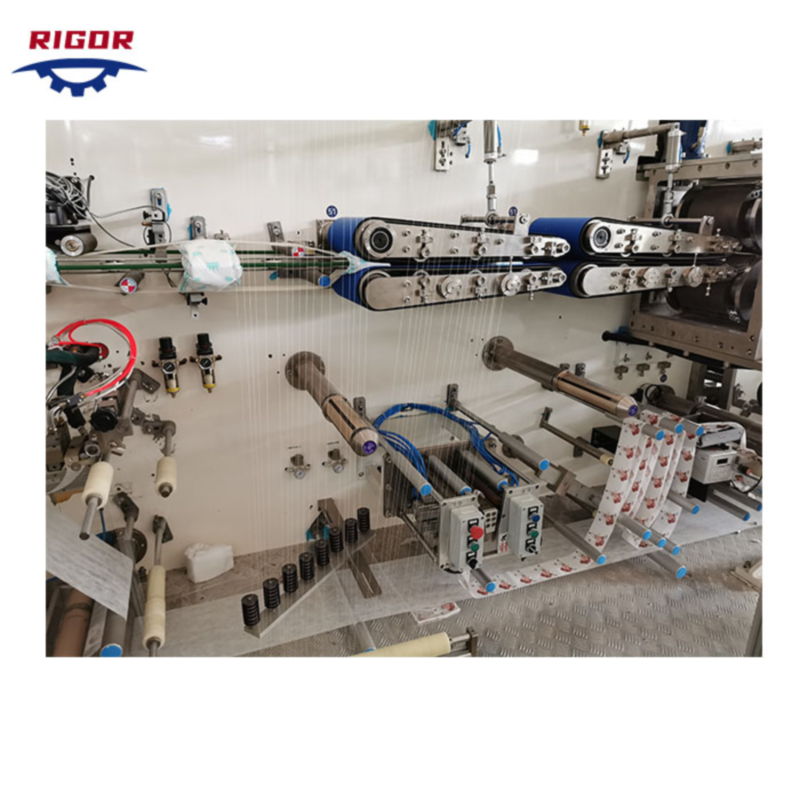
Abstract
The acquisition of an export quality diaper making machine represents a significant capital investment and a pivotal strategic decision for manufacturers aiming to compete in global markets. This document provides a comprehensive analysis for businesses, particularly those in South America, Russia, the Southeast Asian region, the Middle East, and South Africa, on the process of procuring such machinery from European manufacturers in 2025. It meticulously examines the critical parameters that define a high-caliber machine, moving beyond superficial specifications to explore the nuances of production efficiency, long-term operational stability, and raw material compatibility. The analysis integrates technical, financial, and logistical considerations, emphasizing the importance of supplier verification through certifications like CE and ISO, as well as the necessity of robust after-sales support. By deconstructing the total cost of ownership and evaluating the return on investment, this guide equips decision-makers with a structured framework for making an informed and strategically sound purchasing decision that aligns with long-term production goals and market competitiveness.
Key Takeaways
- Verify CE and ISO certifications to ensure the machine meets European safety and quality standards.
- Analyze the Total Cost of Ownership (TCO), not just the initial purchase price, for accurate budgeting.
- Prioritize suppliers offering comprehensive after-sales support, training, and spare parts availability.
- Evaluate an export quality diaper making machine in Europe based on production stability, not just maximum speed.
- Ensure the machine’s control system (PLC) is supportable in your region to avoid future maintenance issues.
- Demand integrated quality control systems like vision cameras to minimize defects and material waste.
- Opt for modular and upgradable designs to future-proof your manufacturing investment.
Table of Contents
Deconstructing Technical Specifications: Beyond the Brochure
Embarking on the journey to acquire a high-performance diaper machine is an exercise in discernment. It demands a perspective that transcends the glossy pages of a manufacturer's brochure and engages with the mechanical and digital soul of the machine. The specifications listed—speeds, dimensions, power ratings—are merely the opening lines of a much deeper conversation. A truly astute investor learns to read between these lines, to question the interplay of components, and to envision the machine not as a static object but as a dynamic system operating within the specific context of their factory floor. The pursuit of an export quality diaper making machine in Europe, therefore, begins with a commitment to understanding its intricate anatomy and physiology. This understanding is not just for engineers; it is a fundamental prerequisite for any business leader aiming to make a wise, sustainable investment.
At the very heart of any diaper machine lies a trio of systems that work in concert to create the absorbent core, the functional center of the final product. Let's approach this not as a simple list of parts, but as a dynamic, interconnected process.
First, consider the fluff pulp unit. Its function is to transform dense bales of cellulose pulp into a soft, fibrous mat. The process, known as de-fiberization, is typically accomplished by a hammer mill. But not all hammer mills are created equal. What should one look for? Think about the consistency of the resulting fluff. Is it uniform? Are there clumps or unprocessed knots? An inconsistent fluff mat leads directly to an inconsistent diaper core, resulting in variable absorbency and potential product failure. A superior machine will have a hammer mill designed for high efficiency and uniformity, often paired with sophisticated air-laid systems that carefully distribute the fluff. When you speak with a European manufacturer, ask them to explain how their system guarantees this uniformity at high speeds. This is a far more insightful question than simply asking for the motor's horsepower.
Next, we have the Super Absorbent Polymer (SAP) applicator. SAP is the magic ingredient, the tiny crystals that can absorb many times their weight in liquid. The applicator's job is to dose and mix this polymer precisely with the fluff pulp. The central question here is one of precision. A machine might use a volumetric dosing system or a more advanced gravimetric (weight-based) system. A gravimetric system, while often more costly, offers unparalleled accuracy. It continuously weighs the SAP being dispensed, adjusting in real-time to ensure every single diaper core has the exact specified amount. Why does this matter so profoundly? An under-dosed diaper will fail to meet absorbency standards, damaging your brand's reputation. An over-dosed diaper is a direct hit to your profitability, as SAP is one of the most expensive raw materials. An export quality diaper making machine in Europe will almost certainly feature a high-precision dosing system, and understanding its mechanics is non-negotiable.
Finally, these two materials meet in the forming system, typically a rotating drum or a series of vacuum pockets. This is where the diaper's core is shaped. The design of this system dictates the shape, density, and integrity of the core. A poorly designed forming drum, especially when running at high speed, can cause the fluff and SAP to shift, creating weak spots. Look for designs that ensure a consistent vacuum pressure across the entire forming area. Ask the manufacturer about the materials used for the forming pockets and the ease of changing them for different product sizes. A system that is difficult to clean or switch over will lead to excessive downtime, eating into your production schedule. The synergy between the pulp unit, SAP applicator, and forming system defines the quality of your product's most vital component.
Production Speed vs. Operational Stability: Finding the Sweet Spot
In the world of manufacturing, speed is an alluring metric. A machine advertised at 1000 pieces per minute (PPM) seems inherently superior to one rated at 800 PPM. However, this is a classic trap for the unwary investor. The true measure of a machine's performance is not its maximum theoretical speed but its stable, sustainable operational speed. What is the difference?
Maximum speed is often a figure achieved under ideal conditions, with perfectly calibrated materials, for a short burst of time. Operational stability, on the other hand, refers to the speed at which the machine can run continuously for hours or even days, producing a high percentage of A-grade products with minimal stops. An export quality diaper making machine in Europe is engineered for stability.
Consider this analogy: a Formula 1 car can reach incredible top speeds, but it cannot maintain that speed for an entire race. A successful race car is one that can maintain a high average speed, cornering reliably and spending minimal time in the pit. Your diaper machine is the same. A machine that runs at 1000 PPM but stops every 15 minutes for adjustments and produces a 5% defect rate is far less productive than a machine running smoothly at 800 PPM with a 0.5% defect rate and minimal downtime.
How do you assess this stability? Inquire about the machine's efficiency rating at its advertised speeds. Ask for reference clients and, if possible, speak to them about their real-world experiences. Discuss the machine's splicing systems. High-speed machines require automatic splicing for nearly all raw materials—nonwovens, elastic bands, frontal tape. A slow or unreliable splicer is a primary cause of machine stoppage. A top-tier European machine will feature zero-speed or high-speed flying splicers that change material rolls without slowing down the production line, a hallmark of a system designed for genuine operational stability.
Material Compatibility and Waste Reduction Systems
A diaper is a complex composite of numerous materials: various types of nonwoven fabrics, polyethylene film, fluff pulp, SAP, elastics, adhesives, and tapes. Your machine must not only handle these materials but be optimized for them. When you are sourcing from a specific region, say South Africa or Brazil, you may have access to local material suppliers whose specifications might differ slightly from European or North American standards.
A crucial conversation to have with the manufacturer concerns the machine's tolerance for material variations. For example, how does the machine's tension control system adapt to nonwovens with slightly different elasticity or thickness? A sophisticated machine will have a closed-loop tension control system with dancer rolls and load cells that automatically adjust to maintain constant tension, preventing material breaks or misalignments. This adaptability is a cornerstone of a versatile and robust production line.
Furthermore, waste is a direct and significant cost in diaper manufacturing. An export quality diaper making machine in Europe is designed with waste reduction as a core principle. Where does waste come from?
- Start-up and Shut-down: How much material is wasted each time the machine starts or stops?
- Splices: How much material is rejected around the splice point of a new roll?
- Defective Products: Any product identified as faulty by the quality control system must be rejected.
An advanced machine will have systems to minimize all three. For example, it might have a "cull" system that only rejects the single defective product rather than a whole section of the line. It may have highly efficient splice systems that waste only a meter or two of material. Some machines even have reclaim systems that can recover unused pulp and SAP from rejected cores, feeding it back into the production stream. These features may add to the initial cost, but the savings on raw materials over the machine's lifetime are often immense.
The Role of Automation and PLC Control Systems (Siemens, Mitsubishi, etc.)
The modern diaper machine is a marvel of automation, orchestrated by a Programmable Logic Controller (PLC). The PLC is the brain of the operation, coordinating every motor, sensor, valve, and actuator with microsecond precision. The Human-Machine Interface (HMI), typically a large touchscreen, is the window into this brain, allowing operators to monitor processes, adjust settings, and diagnose problems.
The choice of PLC brand is not a trivial matter. While top European brands like Siemens or Beckhoff are common on machines built in Europe, it is vital to consider the support infrastructure for that brand in your own country. If you are operating in Southeast Asia, for instance, a machine running on a Mitsubishi or Omron PLC might be easier to service, as local technicians and spare parts will be more readily available. A leading manufacturer of an export quality diaper making machine in Europe will be flexible, often offering a choice of major PLC brands to suit the client's geographical location.
Below is a comparative table of common PLC systems you might encounter. This is not just a technical choice; it is a strategic one that impacts long-term maintenance and operational uptime.
| Feature |
Siemens (e.g., SIMATIC S7) |
Rockwell/Allen-Bradley (e.g., ControlLogix) |
Mitsubishi (e.g., MELSEC) |
| Market Dominance |
Strong in Europe, growing in Asia |
Strong in the Americas |
Strong in Asia, good global presence |
| Programming Environment |
TIA Portal (Totally Integrated Automation) |
Studio 5000 Logix Designer |
GX Works |
| Key Strengths |
Highly integrated hardware/software, powerful motion control |
Robust, reliable, strong in process control |
Cost-effective, compact, strong in robotics |
| Local Support (Target Markets) |
Variable; strong in some Middle Eastern/SA hubs |
Strong in South America |
Very strong in Southeast Asia, good in other regions |
| Consideration for Buyer |
Ensure local system integrators are proficient. |
May have higher licensing costs. |
Excellent choice for Asian markets; verify high-end motion control capabilities. |
Beyond the brand, delve into the software's functionality. Does the HMI provide intuitive diagnostics? Can it generate production reports on efficiency, waste, and stoppage reasons? Can it be integrated with a higher-level factory management system (MES or ERP)? A state-of-the-art machine provides not just production, but data—data that is invaluable for process optimization and informed business decisions. Exploring these advanced diaper machine options reveals the depth of automation available today.
Validating Supplier Reliability and European Standards
Choosing a machine is only half the battle; choosing the right partner to build it is arguably the more consequential decision. A machine is a physical asset, but the relationship with its manufacturer is a long-term commitment that encompasses service, support, and shared expertise. When sourcing an export quality diaper making machine in Europe, you are not just buying steel and electronics; you are investing in decades of engineering heritage, rigorous quality standards, and a reputation for reliability. However, this reputation must be verified, not assumed. A diligent validation process protects your investment and lays the foundation for a successful, multi-decade manufacturing operation.
The Significance of CE Marking and ISO Certification
In the European market, certain certifications serve as a baseline for quality and safety. The two most prominent are the CE marking and ISO 9001 certification. It is crucial to understand what they represent and, equally, what they do not.
The CE marking is a declaration by the manufacturer that the product—in this case, the diaper machine—meets the essential requirements of the relevant European health, safety, and environmental protection legislation. For industrial machinery, the most pertinent directive is the Machinery Directive 2006/42/EC. This directive mandates that the machine is designed and constructed to be operated, adjusted, and maintained without risk to persons. It covers aspects like mechanical guards, electrical safety, emergency stop systems, and noise control. A machine bearing the CE mark should be fundamentally safe. However, the CE mark is a self-certification. While some high-risk machinery requires third-party assessment, many machines are certified by the manufacturer themselves. Therefore, while the absence of a CE mark is a major red flag, its presence is a starting point for inquiry, not the final word on safety and quality.
ISO 9001, on the other hand, is not a product certification but a quality management system certification. An ISO 9001:2015 certified company has demonstrated to an external auditor that it has a robust system for ensuring consistent quality. This includes processes for design and development, production, customer feedback, and continuous improvement. It suggests that the manufacturer is organized, disciplined, and committed to quality as a business process. It does not guarantee that every machine they produce is perfect, but it significantly increases the likelihood that they have the systems in place to build a high-quality machine and to effectively address any problems that may arise. When a supplier tells you they are ISO 9001 certified, ask to see their certificate and inquire about the scope of the certification.
Beyond Certification: On-site Audits and Factory Acceptance Tests (FAT)
Certificates are paper. Reality is the factory floor. The most reliable way to validate a potential supplier is to conduct an on-site audit. If the travel from your home country is a significant undertaking, it is an expense that is well worth it. What should you look for during such a visit?
Pay attention to the environment. Is the assembly hall clean and organized? A disorganized workshop often translates into a disorganized machine build. Observe the workforce. Do the technicians and engineers seem skilled and engaged? Look at machines currently under construction. Examine the quality of the welding, the neatness of the electrical wiring, and the precision of the assembly. These small details are indicative of the overall build quality.
Ask to see their design department. Are they using modern 3D CAD software? A strong engineering team is the foundation of a great machine. Discuss their project management process. How will they keep you informed of progress during the many months of manufacturing? A professional company will have a dedicated project manager and a clear communication plan.
Before the machine is shipped, a critical milestone is the Factory Acceptance Test (FAT). The FAT is your opportunity to see your machine running in the manufacturer's factory, using your specified raw materials if possible. A detailed FAT protocol should be agreed upon in advance, outlining the tests to be performed, the duration of the run, and the acceptance criteria (e.g., speed, efficiency, waste percentage, product quality). This is your final chance to identify and rectify any major issues before the machine is disassembled and shipped thousands of miles to your facility. Do not rush the FAT. Be thorough, be meticulous, and do not sign off until you are fully satisfied that the machine meets the contractual specifications. This is a pivotal moment in securing a genuine export quality diaper making machine in Europe.
Evaluating After-Sales Support and Spare Parts Availability
A diaper machine is a complex asset that will require maintenance, service, and spare parts throughout its 20- to 30-year lifespan. The manufacturer's after-sales support structure is therefore as important as the machine itself. A cheap machine from a supplier with poor support is a recipe for disaster.
When evaluating suppliers, ask detailed questions about their support model. Do they have regional service technicians or partners in or near your country? If not, what is their guaranteed response time for sending a technician from Europe? What are the associated costs? In the age of Industry 4.0, remote support is a powerful tool. A top-tier machine should have a secure internet connection (a VPN, for example) that allows the manufacturer's engineers to remotely access the PLC and HMI to diagnose problems, analyze performance, and even guide your local technicians through repairs. This can save days of downtime and thousands of dollars in travel expenses.
Spare parts availability is another critical pillar of support. The manufacturer should provide a comprehensive list of recommended spare parts to keep in stock. This list is typically divided into tiers: critical parts that can halt production, wear-and-tear parts that need regular replacement, and general parts. For proprietary or custom-made parts, what is the lead time for ordering a replacement? For standard commercial parts (e.g., motors, bearings, sensors), are they from global brands that you can source locally in an emergency? A supplier who uses obscure or proprietary components for everything can effectively hold you hostage for spare parts. The ideal scenario is a machine built with high-quality, globally recognized components, ensuring you have multiple sourcing options for common items.
Case Studies: Learning from Successes and Failures in the Industry
Theory and specifications are one thing; real-world application is another. One of the most powerful evaluation tools is the case study. A confident and experienced manufacturer will be proud to share success stories of clients they have worked with, particularly clients in regions or markets similar to your own.
Ask for references. A reputable manufacturer will be able to connect you with one or two existing clients who are willing to speak with you. When you have this opportunity, prepare your questions carefully. Don't just ask if they are "happy" with the machine. Ask about the specifics:
- "What was your actual, stable production speed and efficiency in the first year of operation?"
- "How responsive was the manufacturer during the installation and commissioning phase?"
- "Have you had any major unplanned downtime? If so, how was the issue resolved by the supplier?"
- "What is one thing you wish you had known before purchasing the machine?"
The answers to these questions are pure gold. They provide an unvarnished look into the reality of owning and operating that specific brand of machine.
It is also wise to learn from failures. While a manufacturer won't advertise their mistakes, industry news, forums, and networking with other professionals in the hygiene products sector can be illuminating. If you hear about a company in a neighboring country that had a disastrous experience with a new production line, try to understand why. Was it a poor machine? Inadequate training? A lack of after-sales support? Every failure holds a lesson. Understanding the common pitfalls in these large-scale projects can help you structure your own project to avoid them, ensuring your investment in an export quality diaper making machine in Europe becomes a case study in success.
Calculating the Total Cost of Ownership (TCO) and ROI
A common mistake in capital equipment procurement is to focus excessively on the initial purchase price. The figure on the quotation is just the tip of the iceberg. A more holistic and strategically sound approach is to evaluate the Total Cost of Ownership (TCO). TCO is a financial estimate intended to help buyers and owners determine the direct and indirect costs of a product or system. It provides a cost basis for a full lifecycle, from purchase to disposal. For a complex asset like a diaper machine, a TCO analysis over a 10- or 15-year horizon provides a far more accurate picture of the investment's true financial impact. This analytical rigor is what separates a speculative purchase from a strategic investment.
Initial Investment vs. Long-Term Operational Costs
The initial investment, or Capital Expenditure (CapEx), is the most visible cost. It includes the price of the machine itself, plus costs for shipping, insurance, import duties, and installation. While significant, this sum might only represent 30-50% of the TCO over a decade. The bulk of the cost lies in the long-term Operational Expenditure (OpEx).
OpEx includes a wide range of recurring costs:
- Raw Materials: This is by far the largest component of OpEx. The machine's efficiency and waste rate have a direct and massive impact here. A machine with a 1% lower waste rate can save hundreds of thousands of dollars per year.
- Energy: These machines are power-hungry. They have large motors, heaters for adhesives, and powerful vacuum systems. An energy-efficient design, featuring high-efficiency motors and smart power management, can lead to substantial savings.
- Labor: The level of automation determines the number of operators required per shift. A highly automated machine may require fewer operators, reducing labor costs.
- Maintenance & Spare Parts: This includes the cost of routine maintenance activities and the replacement of wear-and-tear parts.
- Downtime: This is an indirect but very real cost. Every hour the machine is not running is an hour of lost revenue and contribution to fixed costs.
When comparing two machines, one with a lower purchase price but higher waste and energy consumption, and another with a higher price but superior efficiency, the TCO analysis will almost invariably show the more expensive machine to be the better long-term investment.
Here is a simplified sample TCO calculation to illustrate the concept. Imagine comparing two machines over a 10-year period.
| Cost Component |
Machine A (Lower CapEx) |
Machine B (Higher CapEx, Higher Efficiency) |
Comments |
| Initial Purchase Price |
$2,000,000 |
$2,500,000 |
The most visible difference. |
| Shipping & Installation |
$250,000 |
$250,000 |
Assumed to be similar. |
| Total CapEx |
$2,250,000 |
$2,750,000 |
Initial cash outlay. |
| Annual Raw Material Cost |
$10,000,000 (at 3% waste) |
$9,800,000 (at 1% waste) |
Machine B's efficiency saves $200k/year. |
| Annual Energy Cost |
$150,000 |
$120,000 |
Machine B's modern motors save $30k/year. |
| Annual Labor Cost |
$200,000 (4 operators) |
$150,000 (3 operators) |
Machine B's automation saves $50k/year. |
| Annual Maintenance |
$100,000 |
$80,000 |
Higher quality components need less frequent replacement. |
| Total Annual OpEx |
$10,450,000 |
$10,150,000 |
Machine B saves $300,000 annually. |
| 10-Year TCO |
$106,750,000 |
$104,250,000 |
CapEx + (10 * Annual OpEx). |
In this scenario, despite being $500,000 more expensive upfront, Machine B is the more economical choice by $2,500,000 over ten years. This demonstrates the power of TCO analysis in making a rational, data-driven decision.
Factoring in Energy Consumption, Maintenance, and Labor
Let's delve deeper into the components of OpEx. Energy consumption is a growing concern for manufacturers worldwide, both from a cost perspective and an environmental one. When discussing specifications with a European manufacturer, ask for a detailed breakdown of the machine's power consumption. What is the total installed power (kW)? What is the expected average consumption during stable production? Modern machines incorporate numerous energy-saving features. Look for variable frequency drives (VFDs) on all major motors, which allow motor speed to be precisely controlled, saving significant power compared to running motors at full speed all the time. LED lighting, energy-efficient glue systems, and optimized vacuum fan designs also contribute to lower energy bills.
Maintenance costs are another key variable. A well-built machine from a top-tier manufacturer will use high-quality, durable components—bearings from SKF or FAG, motors from Siemens or SEW-Eurodrive, pneumatic components from Festo or SMC. While these may increase the initial price, they result in longer life, less frequent failures, and lower maintenance costs over time. In contrast, a machine built with cheaper, lower-quality components will be plagued by frequent breakdowns and a constant need for parts replacement, leading to both high maintenance bills and costly production stoppages.
Labor costs are dictated by the machine's level of automation and its user-friendliness. A machine with fully automatic splicing, an intuitive HMI, and robust process stability can often be run with fewer operators. For example, one skilled lead operator might be able to supervise the entire machine, with one or two other staff members focused on packing the finished product. A less automated or less stable machine might require an operator stationed at each key section to handle web breaks, troubleshoot issues, and perform manual tasks. When you are projecting your ROI, the difference of one or two operators per shift, multiplied over three shifts and 365 days, becomes a very significant number.
How a High-Quality Machine Impacts Product Premium and Market Penetration
The calculation of Return on Investment (ROI) goes beyond cost savings. It must also encompass the revenue-generating potential of the investment. An export quality diaper making machine in Europe is not just a tool for making diapers; it is a tool for making better diapers. This enhanced product quality can directly translate into higher revenue and greater market share.
How does a superior machine enable a premium product?
- Consistency: The machine produces diapers that are uniform in weight, absorbency, and fit. This reliability builds consumer trust and brand loyalty.
- Advanced Features: A high-end machine can produce diapers with advanced features that command a higher price. This might include ultra-soft top sheets, three-dimensional leak guards, full elastic waistbands, or complex, multi-layer absorbent cores. The ability to produce these premium features allows you to compete in the higher tiers of the market, where profit margins are typically greater.
- Aesthetics: A precise machine creates a visually perfect product. Symmetrical application of the frontal tape, perfectly aligned leg cuffs, and clean, sharp cuts all contribute to a perception of quality on the store shelf.
By enabling the production of a superior product, the machine allows you to implement a premium pricing strategy. Even a small price premium per pack, when multiplied by millions of packs sold per year, can have a dramatic effect on your ROI. Furthermore, a high-quality product is a powerful tool for market penetration. It allows you to compete effectively against established national and international brands. In a crowded marketplace, demonstrable product superiority is one of the most sustainable competitive advantages. Therefore, when calculating your ROI, do not just model the cost of production. Model different revenue scenarios based on the premium product you will now be able to offer. This will reveal the true transformative potential of investing in a world-class diaper machine or even a related .
Navigating Customization and Future-Proofing Your Investment
Purchasing an industrial machine of this scale is not like buying a car off a lot. It is more akin to commissioning the construction of a custom-built house. Each manufacturer has its own unique market, with specific consumer preferences, competitive landscapes, and price points. A "one size fits all" machine is a myth. The ability to customize the machine to your precise needs is paramount. Simultaneously, you are not just investing for today. The market will evolve, new technologies will emerge, and consumer demands will shift. Therefore, a forward-thinking investment must also be a future-proof one, with the inherent flexibility to adapt and grow with your business over the coming decades.
Tailoring the Machine for Your Specific Market Needs (Baby vs. Adult Diapers)
The first layer of customization relates to the product itself. Are you primarily targeting the baby diaper market or the adult incontinence market? While the core technologies are similar, the specific requirements are quite different. A baby diaper machine needs to be highly flexible, capable of producing a range of sizes from newborn to junior. This requires quick and easy size-change parts, and a control system that can store and recall recipes for each size. The emphasis is on speed, efficiency, and features like wetness indicators and cartoon-printed backsheets.
An adult diaper machine, while perhaps running at a slightly lower speed, deals with much larger products and different performance demands. The absorbent core is larger, the elastics are stronger, and features like re-fastenable tapes and odor control are more important. The machine's frame and conveyors must be robust enough to handle the larger, heavier products.
Beyond the basic product type, consider the specific features that are valued in your target market. In some markets in the Middle East, for example, a very high SAP content for maximum absorbency is a key selling point. In parts of Southeast Asia, a focus on thinness and breathability might be more important. In South America, a strong, comfortable fit with good leakage protection could be the priority. A good European manufacturer will work with you as a consultant. They will listen to your market analysis and help you configure the machine to produce a product that is perfectly tailored to win in your specific environment. This could mean adding a specific type of lotioning unit, a special applicator for elastic ears, or a unique cutting die for a more anatomical shape. This collaborative customization process is a hallmark of a true partnership.
Modularity and Upgradability: Preparing for Future Innovations
Technology in the hygiene industry does not stand still. What is a premium feature today may be a standard expectation in five years. Consider the evolution of diapers over the last twenty years: the move from tape to hook-and-loop fasteners, the introduction of elastic waistbands, the development of ultra-thin cores. Your machine, with its 20-30 year lifespan, will live through several such innovation cycles. How do you ensure it doesn't become obsolete?
The answer lies in modular design. A modular machine is built in distinct, self-contained sections or modules. For example, the elastic waistband applicator might be one module, the lotioning unit another, and the backsheet printing unit a third. This architecture is incredibly powerful for future-proofing. Imagine that in seven years, a new technology for breathable, cloth-like backsheets emerges. With a modular machine, you may be able to simply replace the existing backsheet module with a new one that incorporates this technology, without having to replace the entire production line.
When discussing the machine design with a supplier, specifically ask about its modularity. How easy is it to add or upgrade a section? Is there physical space on the machine's frame to accommodate future additions? Is the PLC and control system architecture flexible enough to integrate new modules seamlessly? Investing a little more in a modular design upfront is a wise insurance policy against future obsolescence. It gives you a platform for growth, allowing you to continually innovate your product and respond to market trends without needing to make another massive capital investment. An export quality diaper making machine in Europe should be conceived not as a static entity, but as an evolving platform.
Software Integration and Data Analytics for Production Optimization
The future of manufacturing is digital. The concept of Industry 4.0, or the fourth industrial revolution, is centered on the integration of physical production with smart digital technology, machine learning, and big data. Your diaper machine should be ready for this future.
The machine's PLC and HMI are the starting points. As discussed earlier, they do more than just control the machine; they generate a vast amount of data. Every stop, every speed change, every splice, every rejected product is logged. This data is a goldmine for process optimization, but only if it can be accessed and analyzed effectively. A forward-thinking machine design will include robust data logging and reporting capabilities. It should be able to provide clear, actionable reports on Overall Equipment Effectiveness (OEE), a key metric that combines availability, performance, and quality.
The next step is integration. Can the machine's control system communicate with other systems in your factory? This is often achieved using standard industrial communication protocols like OPC UA (Open Platform Communications Unified Architecture). This allows the diaper machine to be connected to a Manufacturing Execution System (MES). An MES can schedule production runs, track raw material consumption in real-time, and provide management with a live dashboard of the entire factory's performance.
Looking even further ahead, the data from the machine can be fed into cloud-based analytics platforms. By applying machine learning algorithms to months or years of production data, it's possible to uncover subtle patterns and correlations that would be invisible to a human operator. This can lead to predictive maintenance (e.g., "The vibration signature of motor #7 suggests it is likely to fail in the next 48 hours, so it should be replaced during the next planned stop"), further waste reduction, and enhanced process stability. When you select your machine, you are also selecting your partner for this digital journey. Choose a manufacturer who understands this technological landscape and builds machines with the open, modern architecture needed to thrive in it.
Mastering the Logistics of International Shipping and Installation
The journey of your diaper machine from a factory in Europe to your production floor is a complex logistical operation fraught with potential pitfalls. A successful transition depends on meticulous planning, clear communication, and a deep understanding of international trade practices. The physical transfer of the asset is a project in itself, and managing it effectively is crucial to ensuring your machine arrives safely, is installed efficiently, and begins generating revenue on schedule. Overlooking the details of logistics can lead to costly delays, unexpected expenses, and even damage to your multi-million dollar investment.
Choosing the Right Incoterms (FOB, CIF, DDP)
Incoterms are a set of pre-defined commercial terms published by the International Chamber of Commerce (ICC) that are widely used in international commercial transactions. They clarify the tasks, costs, and risks associated with the transportation and delivery of goods. The choice of Incoterm in your purchase contract is a critical decision that defines where the seller's responsibility ends and yours begins. Let's examine three common options:
-
FOB (Free On Board): Under FOB terms, the seller is responsible for all costs and risks until the goods are loaded on board the vessel nominated by the buyer at the named port of shipment (e.g., "FOB Hamburg"). Once the machine is on the ship, the risk and responsibility for transport costs, insurance, and import clearance transfer to you, the buyer. This gives you control over the ocean freight and your choice of carrier, which can sometimes be more cost-effective. However, it also means you bear the risk of anything happening to the cargo during sea transit.
-
CIF (Cost, Insurance, and Freight): With CIF, the seller's responsibility extends further. They are responsible for the cost of goods, the main carriage (ocean freight) to the destination port (e.g., "CIF Durban"), and also for arranging and paying for insurance coverage for the cargo during transit. The risk, however, still transfers from seller to buyer once the goods are on board the vessel at the origin port. This is a convenient option as the seller handles the freight and insurance booking, but you have less control over the carrier and the specifics of the insurance policy.
-
DDP (Delivered Duty Paid): This term represents the maximum obligation for the seller. The seller is responsible for delivering the goods to the named destination in the buyer's country, including all costs and risks, and paying for all import duties and taxes. For the buyer, this is the simplest, most hands-off option (e.g., "DDP São Paulo Factory"). However, it is also typically the most expensive, as the seller will price in all the risks and administrative costs of handling the entire logistics chain.
The right choice depends on your company's experience with international logistics and your appetite for risk. For a first-time importer, a CIF or even a DDP arrangement can provide peace of mind. For a company with an experienced logistics department, taking control with an FOB contract might be more economical. This decision must be made in consultation with your finance and logistics teams and clearly stipulated in the sales contract.
Packaging, Crating, and Ensuring Safe Transit from Europe
A diaper machine is not a single object. It is a massive piece of equipment that is disassembled into numerous sections for shipping, typically packed into multiple 40-foot shipping containers. The quality of this packaging is paramount to ensuring the machine arrives without damage.
A professional European manufacturer will have a rigorous process for this. Each major section of the machine should be securely bolted to a custom-built wooden or steel base. All sensitive components—control panels, motors, sensors—should be protected with additional wrapping. The entire assembly is then enclosed in a sturdy wooden crate, often lined with a waterproof barrier (like a vacuum-sealed foil bag containing desiccant) to protect against moisture and corrosion during the long ocean voyage. This is particularly important for shipments that will cross the equator, as the temperature and humidity changes inside a container can be extreme.
Each crate must be clearly labeled with its contents, weight, handling instructions (e.g., "This Side Up"), and a unique number corresponding to a detailed packing list. This meticulous documentation is essential for both customs clearance and the re-assembly process at your factory. Before signing the contract, ask the manufacturer to provide details and even photos of their standard export packaging. A lack of attention to this detail is a significant red flag.
On-Site Installation, Commissioning, and Operator Training
The arrival of the containers at your factory is a moment of excitement, but it marks the beginning of the most critical phase: installation and commissioning. This process is typically supervised by a team of specialized technicians from the manufacturer. Your contract should clearly define the scope of their work and the responsibilities of your own team.
Typically, your responsibilities will include:
- Unloading the containers and moving the crates to the installation site.
- Providing necessary utilities to the machine's location (compressed air, electricity, water).
- Providing a team of local mechanical and electrical fitters to work under the supervision of the manufacturer's technicians.
The manufacturer's team will lead the complex process of re-assembling the machine, leveling the frames, aligning all the sections, and completing the intricate electrical and pneumatic connections. This process can take several weeks.
Once the machine is mechanically and electrically complete, the commissioning phase begins. This is where the machine is powered up for the first time, and all its functions are tested systematically. The technicians will load raw materials, fine-tune all the settings, and begin producing the first diapers. This phase culminates in the Site Acceptance Test (SAT), which is similar to the FAT but performed in your factory. The SAT confirms that the machine, now fully installed, meets the agreed-upon performance criteria.
Parallel to this process is operator training, which is so vital it warrants its own section. However, it's important to note that the installation period is a golden opportunity for your key operators and maintenance staff to learn. By working alongside the manufacturer's experts, they gain invaluable hands-on experience and a deep, practical understanding of the machine's inner workings.
Assessing the Quality Control and Inspection Systems
In high-speed manufacturing, you cannot afford to "inspect quality in" at the end of the line. Quality must be built into the process and monitored in real-time. A modern, export quality diaper making machine in Europe is not just a production machine; it is also a sophisticated inspection machine. It is equipped with an array of sensors and vision systems designed to detect any deviation from the specified standard and to take immediate corrective action. These integrated quality control systems are the guardians of your product's integrity and your brand's reputation. They are non-negotiable features for any serious manufacturer aiming to compete on quality.
Integrated Vision Systems for Defect Detection
Human eyes, even those of a diligent operator, cannot keep up with a machine producing 15-20 diapers per second. This is the domain of high-speed industrial cameras, or vision systems. These systems are strategically placed along the production line to inspect critical features of every single product that passes by.
What can these systems detect?
- Material Presence and Position: A vision system can verify that all components are present and correctly placed. Is the frontal tape there? Is it straight? Are the leg cuffs properly formed? Is the absorbent core centered?
- Component Integrity: It can check for defects in the raw materials themselves, such as holes or stains in the nonwoven top sheet.
- Construction Quality: It can inspect the application of hot melt adhesive, ensuring the glue pattern is correct and consistent, which is vital for the diaper's structural integrity.
- Feature Verification: For more advanced products, a vision system can confirm the presence and position of features like the wetness indicator or the lotion stripes.
When a camera detects a defect, it sends a signal to the PLC. The PLC then tracks that specific diaper as it moves down the line and activates a reject mechanism to remove it from the production stream before it can be packaged. The HMI will log the fault, providing valuable data for troubleshooting. For example, if the system suddenly starts rejecting many diapers for a crooked frontal tape, the operator knows to immediately check the tape application unit. When evaluating a machine, ask the supplier for a list of all the inspection points covered by their vision system. A more comprehensive system provides a higher level of quality assurance.
Product safety is an absolute priority. The raw materials, particularly the fluff pulp, can potentially contain minute metallic contaminants. A metal detector is an essential safety device, typically placed just before the final packing section. It creates an electromagnetic field, and if any ferrous or non-ferrous metal particle passes through it, the field is disturbed, and a signal is triggered.
Just like with the vision system, this signal is sent to the PLC. The PLC then activates a reject gate—a fast-acting pneumatic arm or a blast of air—that diverts the contaminated product into a locked reject bin. This ensures that no potentially harmful product can ever reach the consumer. The sensitivity of the metal detector should be adjustable and regularly calibrated as part of your quality assurance protocol. The presence and reliability of this system are fundamental requirements for any manufacturer, especially those exporting to markets with stringent consumer safety regulations. An export quality diaper making machine in Europe will have this as a standard, non-optional feature.
Raw Material Inspection and its Impact on Final Product Quality
The principle of "Garbage In, Garbage Out" is acutely true in diaper manufacturing. Even the most advanced machine cannot produce a high-quality diaper from substandard raw materials. While the machine's integrated systems can catch many defects, the first line of defense is a robust process for inspecting raw materials before they are loaded onto the machine.
Your quality assurance program must include specifications and testing procedures for every material you purchase. For example:
- Fluff Pulp: Test for brightness, moisture content, and fiber length.
- SAP: Test for absorption capacity and absorption speed.
- Nonwovens: Test for basis weight (grams per square meter), tensile strength, and elasticity.
- Adhesives: Test for viscosity and open time.
However, the machine itself can play a role in this process. Many high-end machines are equipped with sensors at the infeed of each material roll. For instance, sensors can detect the splice marks made by your material supplier, alerting the operator or even triggering an automatic rejection of a few products around that splice, as the material properties can be different at that point. Some advanced systems can even monitor the diameter of the material roll and cross-reference it with the weight to detect if a supplier has provided a roll that is underweight or has a different density.
Ultimately, quality is a holistic endeavor. It starts with sourcing good materials, is maintained by a precisely controlled production process on a high-quality machine, and is verified by a comprehensive set of real-time inspection systems. Each part of this chain is indispensable.
Understanding the Human Element: Training and Skill Development
Amidst the intricate dance of gears, sensors, and software, it is easy to overlook the most crucial component of any successful manufacturing operation: the human element. A multi-million dollar diaper machine is only as good as the team that operates and maintains it. Investing in a state-of-the-art machine without concurrently investing in the skills of your people is a formula for underperformance. The process of learning to master such a complex piece of equipment is not trivial; it requires a structured approach, a supportive environment, and a commitment to continuous development. This perspective aligns with established learning theories, which emphasize that true understanding is built through experience, reflection, and active problem-solving (Kolb, 1984).
The Importance of a Well-Trained Operator Team
The role of a modern machine operator has evolved significantly. They are no longer just laborers who load materials and press buttons. They are skilled technicians, the first line of defense against production problems, and key contributors to process optimization. A well-trained operator understands not just what to do, but why they are doing it.
This deeper level of understanding can be framed using a model like Bloom's Taxonomy, which classifies learning objectives into levels of complexity (Stapleton-Corcoran, 2023).
- Remembering: The operator knows the names of the parts and the sequence of buttons to press for a start-up.
- Understanding: The operator can explain why a certain tension setting is important for a specific nonwoven material.
- Applying: The operator can use their knowledge to correctly perform a size change procedure.
- Analyzing: When the machine stops, the operator can analyze the error messages on the HMI and inspect the relevant section of the machine to identify the root cause of the problem.
- Evaluating: The operator can assess the quality of the diapers being produced and make small, informed adjustments to the process parameters to improve it.
- Creating: An experienced operator might even suggest a new way to route a material or a modification to a guard to improve efficiency or safety.
Your training program, delivered by the machine manufacturer, should aim to move your team up this pyramid. It should go beyond simple rote memorization to foster genuine analytical and problem-solving skills. A great training program empowers operators, giving them ownership of the machine and pride in their work. This leads to higher morale, lower staff turnover, and a production line that runs more smoothly and efficiently.
Bridging the Language and Culture Gap with European Technicians
When the manufacturer's technicians arrive from Europe for installation and training, you are not just bringing in technical expertise; you are initiating a cross-cultural collaboration. Bridging potential language and cultural gaps is essential for a successful knowledge transfer.
If English is not the first language for either your team or the visiting technicians, clear communication can be a challenge. It is highly advisable to have a dedicated translator present, someone who is not just bilingual but also has a basic grasp of technical terminology. Visual aids, hands-on demonstrations, and patience are key. Learning is not a passive activity; people learn by doing (Gonzalez, 2018). Ensure your team is actively involved, performing tasks under the technicians' guidance rather than just watching.
Cultural differences in communication styles can also play a role. Some cultures are more direct, while others are more indirect. Being aware of and sensitive to these nuances can foster a more positive and productive working relationship. The goal is to create an atmosphere of mutual respect and shared purpose, where your team feels comfortable asking questions, no matter how basic they may seem. Remember, the visiting technicians are your most valuable resource for learning. Maximizing the value of their time on-site is a critical project management task.
Continuous Learning and Process Improvement Methodologies
The initial training provided by the manufacturer is just the beginning. A diaper machine is a dynamic system, and the process of optimizing its performance is continuous. To foster a culture of ongoing improvement, it is helpful to adopt structured methodologies.
One powerful framework is Kolb's Experiential Learning Cycle, which posits that learning is a four-stage process (Simply Psychology, 2025):
- Concrete Experience: Your team operates the machine and encounters a real-world problem, such as an increase in waste from the leg cuff applicator.
- Reflective Observation: The team takes a step back. They review the production data from the HMI, observe the specific section of the machine in operation, and discuss their observations. What changed? When did the problem start?
- Abstract Conceptualization: Based on their observations and their foundational knowledge of the machine, they form a hypothesis. "We believe the adhesive temperature has dropped by 2 degrees, causing the glue to be too thick to bond the elastics properly."
- Active Experimentation: The team devises a plan to test their hypothesis. They carefully adjust the temperature setting back to the specified level and then run the machine, measuring the waste rate to see if the problem is resolved.
By consciously moving through this cycle, your team is no longer just reacting to problems; they are actively learning from them and systematically improving the process. This creates a powerful feedback loop that drives efficiency and expertise over time. Your investment in an export quality diaper making machine in Europe will yield the highest returns when it is paired with an equal investment in creating a skilled, analytical, and continuously learning organization.
Frequently Asked Questions (FAQ)
What is the typical lead time for an export quality diaper making machine in Europe? For a customized, high-speed machine, the lead time from signing the contract to the machine being ready for the Factory Acceptance Test (FAT) is typically between 8 to 12 months. This can vary depending on the manufacturer's backlog and the complexity of your specific machine configuration.
How much does a European diaper machine cost? The price varies dramatically based on speed, features, and level of automation. A basic, medium-speed baby diaper machine might start around $1.5 million USD, while a top-of-the-line, high-speed machine with all advanced features and quality control systems can exceed $5 million USD. Adult diaper machines generally have a similar price range.
Can I use local raw materials with a European machine? Yes, but this is a critical point to discuss in detail with the manufacturer. You should provide the supplier with samples and technical specification sheets for all the local raw materials you intend to use. They will then ensure the machine is designed and tuned to handle those specific materials effectively. It is highly recommended to use these same materials during the Factory Acceptance Test (FAT).
What are the main differences between European and Asian diaper machines? European machines are generally known for their high-end engineering, focus on long-term operational stability, advanced automation, and robust build quality, which often comes with a higher initial price. Many leading Asian machines offer excellent value and high speeds, but buyers should perform careful due diligence on component quality, long-term durability, and the sophistication of the control and software systems.
How important is the SAP (Super Absorbent Polymer) system? The SAP application system is one of the most critical components of the machine. SAP is a major cost driver, and its precise application is essential for the diaper's absorbency and performance. A high-quality machine will feature a gravimetric (weight-based) dosing system for maximum accuracy, which directly impacts both product quality and profitability.
What kind of warranty and after-sales service should I expect? A standard warranty is typically 12 months from the date of commissioning or 18 months from the date of shipment, whichever comes first. It usually covers defects in materials and workmanship. Crucially, you should secure a comprehensive after-sales service agreement that details remote support capabilities, technician response times, and spare parts availability.
How do I verify a European supplier's claims? Verification is a multi-step process. First, request and verify their CE certificate and ISO 9001 certification. Second, ask for a list of reference clients, preferably in a region near you, and speak with them. Finally, the most effective method is to conduct an on-site factory audit and a thorough Factory Acceptance Test (FAT) before the machine is shipped.
Conclusion
The acquisition of an export quality diaper making machine in Europe is a transformative step for any ambitious hygiene products manufacturer. It is a decision that extends far beyond a simple transaction, representing a long-term strategic partnership and a commitment to excellence. As we have explored, the path to a wise investment is paved with diligence, inquiry, and a holistic perspective. It requires moving beyond the allure of top speeds to appreciate the profound value of operational stability. It demands a financial analysis that accounts for the total cost of ownership over the machine's entire lifecycle, not just its initial price tag. It calls for a deep engagement with the machine's technical heart, a rigorous validation of the manufacturer's promises, and a forward-looking approach to customization and digital integration.
Ultimately, the steel, wires, and code of the machine are animated by the skill and knowledge of the people who run it. Recognizing the human element—investing in comprehensive training and fostering a culture of continuous learning—is what unlocks the full potential of your technological investment. By navigating this complex process with a clear framework and a commitment to quality at every stage, you are not merely buying a machine; you are acquiring a powerful engine for growth, innovation, and lasting success in your market.
References
Gonzalez, J. (2018, November 4). To learn, students need to DO something. Cult of Pedagogy. https://www.cultofpedagogy.com/do-something/
International Chamber of Commerce. (n.d.). Incoterms® 2020. https://iccwbo.org/resources-for-business/incoterms-rules/incoterms-2020/
Kolb, D. A. (1984). Experiential learning: Experience as the source of learning and development. Prentice-Hall.
European Commission. (n.d.). The Machinery Directive.
International Organization for Standardization. (2015). ISO 9001:2015 Quality management systems — Requirements.
Simply Psychology. (2025, March 19). Kolb's learning styles & experiential learning cycle. https://www.simplypsychology.org/learning-kolb.html
Stapleton-Corcoran, E. (2023, January 25). Bloom’s taxonomy of educational objectives. University of Illinois Chicago, Center for the Advancement of Teaching Excellence. https://teaching.uic.edu/cate-teaching-guides/syllabus-course-design/blooms-taxonomy-of-educational-objectives/
TAPPI. (n.d.). Pulp, paper, and packaging industry standards.
Oct 21, 2025 | News
Abstract
The global demand for affordable menstrual hygiene products presents a significant opportunity for entrepreneurs, particularly in emerging markets across South America, Russia, Southeast Asia, the Middle East, and South Africa. This document serves as a comprehensive guide for startups navigating the acquisition of a low-cost sanitary pad machine. It examines the critical decision-making factors that extend beyond the initial purchase price, advocating for a holistic evaluation framework. The analysis differentiates between semi-automatic and fully automatic machinery, detailing the implications for labor, output, and scalability. It further explores the total cost of ownership, encompassing raw material sourcing, installation, training, and operational expenditures. The guide emphasizes the necessity of aligning production capacity with market analysis and building a resilient supply chain. By providing a structured approach to evaluating technical specifications, manufacturer reliability, and after-sales support, this text equips aspiring business owners with the knowledge to make an informed investment, fostering a sustainable and impactful enterprise in the personal hygiene sector.
Key Takeaways
- Analyze the total cost of ownership, not just the machine's initial price.
- Choose between semi-automatic and fully automatic based on your capital and labor market.
- Secure a reliable raw material supply chain before starting production.
- Select a low cost sanitary pad machine for startups with scalable production capacity.
- Verify manufacturer credibility and the availability of robust after-sales support.
- Develop a comprehensive business plan covering logistics, staffing, and local regulations.
- Prioritize machine quality and user-friendly controls for long-term efficiency.
Table of Contents
1. Demystifying Machine Types: Semi-Automatic vs. Fully Automatic
Embarking on the journey of manufacturing sanitary pads begins with a foundational choice, one that shapes your entire operational framework, your initial capital outlay, and the very rhythm of your factory floor. This is the choice between a semi-automatic and a fully automatic sanitary pad machine. It is not merely a technical decision; it is a strategic one. Think of it as choosing between a well-equipped workshop and a fully autonomous assembly line. Both can produce excellent results, but they demand different things from you as the owner in terms of investment, workforce, and oversight. For a startup, especially in regions where capital might be constrained but labor is available, understanding the nuances of this choice is the first step toward building a resilient enterprise. Let us walk through the characteristics of each, not as abstract concepts, but as tangible operational models you can visualize for your own future factory.
What Defines a Semi-Automatic Machine?
A semi-automatic sanitary pad machine represents a balanced synergy between human skill and mechanical efficiency. It is not a completely hands-off process, nor is it a fully manual one. Imagine a production process broken down into several key stages. A semi-automatic line automates the most complex or repetitive tasks—such as pulverizing the fluff pulp, forming the absorbent core, and perhaps cutting the pads into shape. However, it relies on human operators for other steps. These manual interventions often include placing the formed cores onto the non-woven top sheet, feeding materials into certain parts of the machine, folding the final product, and packaging.
The involvement of labor is its defining feature. This human element introduces both advantages and challenges. On one hand, it makes the initial investment in a semi-automatic machine significantly lower than its fully automated counterpart. The machinery is less complex, often smaller, and requires less sophisticated electronic control systems. For a startup, this lower barrier to entry is a powerful enabler. On the other hand, production speed is directly tied to the efficiency and coordination of your workforce. The output is measured not just by the machine's mechanical speed but by the pace at which your team can perform their tasks. Quality control also becomes a shared responsibility between the machine's consistency and the operator's diligence.
The Leap to Full Automation: What Changes?
Stepping up to a fully automatic sanitary pad machine is like witnessing a perfectly choreographed ballet of mechanical parts. From the moment the raw material spools are loaded at one end to the point where sealed, packaged sanitary pads emerge at the other, human intervention is minimal. These machines integrate every single step into one seamless, continuous flow. A Programmable Logic Controller (PLC), the sophisticated brain of the operation, synchronizes every action: feeding the non-woven fabrics, crushing the pulp, precisely dosing the Super Absorbent Polymer (SAP), compressing the core, applying the back sheet and release paper, cutting the final shape, folding the wings, and even counting and bagging the finished products.
The primary change is a dramatic increase in speed and consistency. A fully automatic machine can produce hundreds, or even thousands, of pads per minute, a rate a semi-automatic line could never achieve. Because the process is automated, the potential for human error is virtually eliminated, leading to a highly uniform product quality. Every pad is made to the exact same specifications. The trade-off, of course, is the significant initial investment. These machines are larger, more complex, and incorporate advanced robotics, sensors, and control systems, all of which contribute to a higher price tag. They also demand a different kind of workforce—not a large team of manual laborers, but a smaller, highly skilled team of technicians who can operate, maintain, and troubleshoot this advanced equipment.
A Comparative Analysis for Startups
To make an informed decision, it is helpful to place the two options side-by-side and compare them across the factors that matter most to a new business. A startup's reality is a delicate balance of ambition and available resources. The table below offers a clear, practical comparison to guide your thinking.
| Feature |
Semi-Automatic Sanitary Pad Machine |
Fully Automatic Sanitary Pad Machine |
| Initial Investment |
Low to Moderate |
High to Very High |
| Production Speed |
Lower (e.g., 50-150 pads/minute) |
Very High (e.g., 300-1200+ pads/minute) |
| Labor Requirement |
High (4-8 operators per shift) |
Low (1-3 skilled technicians per shift) |
| Cost Per Unit |
Higher (due to labor costs and lower speed) |
Lower (at high volume due to efficiency) |
| Operational Flexibility |
High (easier to switch product types manually) |
Moderate (may require part changes for different sizes) |
| Space Requirement |
Smaller Footprint |
Larger Footprint |
| Quality Consistency |
Good, but dependent on operator skill |
Excellent and highly consistent |
| Maintenance |
Simpler, mechanical focus |
More complex, requires electronic/PLC expertise |
Making the Right Choice for Your Initial Business Scale
So, which path is yours? There is no single correct answer. The right choice is deeply personal to your business plan, your market, and your financial reality.
If you are a startup with limited initial capital, targeting a local or regional market, a semi-automatic machine is an excellent starting point. It allows you to enter the market, build your brand, and generate cash flow without taking on overwhelming debt. The reliance on labor can be an advantage in regions where wages are competitive, creating local employment opportunities. Your focus will be on training your team to be efficient and quality-conscious. This model allows you to learn the business from the ground up, understanding each step of the production process intimately.
Conversely, if you are well-capitalized, aiming to compete in a larger, more established market from day one, or if your business plan is predicated on achieving the lowest possible cost per unit through economies of scale, a fully automatic machine is the logical choice. Your investment will be in technology rather than a large workforce. Your challenge will be to secure enough sales volume to keep the machine running efficiently and justify its high cost. This path is for entrepreneurs who plan to scale rapidly and compete on price and volume. A fully automatic diaper production line shares similar principles of high-speed automation and is a good reference for understanding the scale of such an operation.
Think about your five-year plan. Do you see yourself as a boutique local brand known for quality, or a volume player capturing significant market share? Your answer to that question will point you toward the machine that is right for you, not just for today, but for the future you intend to build.
2. Calculating Your Investment: Beyond the Machine's Price Tag
When a new entrepreneur first inquires about a low cost sanitary pad machine for startups, the most immediate question is almost always, "How much does it cost?" It is a natural and necessary question, but focusing solely on the price written on the invoice is like judging the size of an iceberg by what you see above the water. The true cost of setting up your production is a much larger, more complex figure. This is what financial experts call the Total Cost of Ownership (TCO). It encompasses every single expense you will incur to get from an empty factory space to your first box of market-ready sanitary pads. Understanding TCO is not just an accounting exercise; it is the foundation of a realistic business plan and the difference between a venture that struggles with unexpected costs and one that is prepared for the financial realities of manufacturing. Let us break down this iceberg piece by piece.
The Total Cost of Ownership (TCO) Explained
Total Cost of Ownership is a framework that helps you see the full picture. It includes the initial purchase price, but it also forces you to account for all the direct and indirect costs associated with acquiring, installing, and operating the asset over its entire lifecycle. For a sanitary pad machine, the TCO can be broken into three main categories:
- Acquisition Costs: This is the most obvious part. It includes the price of the machine itself, plus any taxes, import duties (a significant factor for international purchases), and shipping or freight charges to get the machine from the manufacturer to your factory door.
- Operational Costs: These are the recurring expenses of running the machine. This is the largest and most ongoing part of the TCO. It includes the cost of raw materials (pulp, non-woven fabric, SAP, etc.), electricity to power the machine, wages for your operators and technicians, and routine maintenance parts like blades and glue nozzles.
- Post-Acquisition & Hidden Costs: These are the often-overlooked one-time or infrequent costs. They include the cost of installation (which may require a technician from the manufacturer), training for your staff, any necessary modifications to your factory (like electrical upgrades or reinforced flooring), and the cost of spare parts you should keep in stock.
By calculating the TCO, you move from being just a buyer to being a strategic investor. You can more accurately forecast your cash flow, set a realistic budget, and determine a competitive yet profitable price for your final product.
Factoring in Raw Material Sourcing and Costs
The single largest component of your operational cost will be raw materials. A sanitary pad is a composite product, an assembly of several different materials, each with its own price and supply chain. The machine is a one-time purchase, but the materials are a constant flow of expense. Neglecting to plan for this is a common pitfall for startups. The primary materials you will need to source are outlined below.
| Raw Material |
Function in the Sanitary Pad |
Key Sourcing Considerations |
| Fluff Pulp |
Forms the main absorbent core; provides structure and absorption capacity. |
Usually sold in large rolls or bales. Quality (fiber length) affects absorbency. |
| Non-Woven Fabric |
Used for the top sheet (skin contact) and sometimes the back sheet. |
Must be soft, hydrophilic (for the top), and hydrophobic (for the back). |
| Super Absorbent Polymer (SAP) |
A fine powder mixed with pulp that turns liquid into a gel, locking it away. |
The key to high absorbency. Price can fluctuate; quality varies. |
| PE Film (Polyethylene Film) |
The waterproof back sheet that prevents leakage. |
Can be breathable or non-breathable. Often printed with branding. |
| Release Paper |
The paper strip that covers the adhesive on the back and wings. |
Must release cleanly without leaving residue. |
| Hot Melt Adhesive |
Used for construction (bonding layers together) and positioning (on the back). |
Different types are needed for different applications within the pad. |
The cost of these materials can vary significantly based on global commodity prices, shipping costs, and supplier location. A crucial part of your business plan must be to identify and build relationships with reliable suppliers, whether local or international. You should request samples and test them thoroughly. Your goal is to find the optimal balance between cost and quality that allows you to produce a product that meets your market's expectations and your financial targets.
Hidden Costs: Installation, Training, and Shipping
Here lie the expenses that can catch an unprepared entrepreneur by surprise.
- Shipping and Import Duties: If you are buying your machine from another country, which is often the case, the cost of shipping (sea freight is common for large machinery) can be substantial. On top of that, your country's customs authority will levy import duties and taxes, which can be a significant percentage of the machine's value. You must research these duties beforehand.
- Installation: A semi-automatic machine might be simple enough for a local engineer to install with guidance from the manufacturer's manuals. A fully automatic machine, however, will almost certainly require a specialized technician from the manufacturer to come to your site for installation and commissioning. You will likely be responsible for their travel, accommodation, and service fee. This can add thousands of dollars to your setup cost.
- Training: Your team needs to know how to operate and maintain the machine safely and efficiently. Proper training prevents costly mistakes, reduces downtime, and ensures product quality. This training might be included with the installation, or it could be a separate cost. Do not treat it as optional; it is a vital investment.
Projecting Your Return on Investment (ROI): A Simple Framework
Once you have a handle on your Total Cost of Ownership, you can start projecting your Return on Investment. ROI tells you how long it will take for the profits from your machine to pay back the initial investment. A simplified formula is:
ROI (%) = (Net Profit / Total Investment) x 100
To do this, you need to project your revenue and your costs.
- Estimate Total Investment (TCO): Sum up the machine price, shipping, duties, installation, and a buffer for initial raw material stock.
- Calculate Cost Per Pad: Add up the cost of all raw materials in one pad, plus a small amount for electricity and labor per pad (Total Monthly Labor & Electricity / Total Pads Produced Monthly).
- Set a Wholesale/Retail Price: Research your market to determine a competitive price for your product.
- Calculate Profit Per Pad: Subtract the Cost Per Pad from your Wholesale Price.
- Estimate Monthly Production: Based on your machine's output and your planned operating hours.
- Calculate Monthly Net Profit: Multiply Profit Per Pad by Monthly Production.
- Determine Payback Period: Divide your Total Investment by your Monthly Net Profit. This tells you how many months it will take to recoup your investment.
This exercise transforms the purchase of a low cost sanitary pad machine for startups from a simple transaction into a calculated business strategy. It forces you to think through every financial aspect, preparing you for a successful and profitable launch.
3. Understanding Production Capacity and Output Realities
In the world of manufacturing, numbers tell a story. When you look at the specifications for a sanitary pad machine, one of the most prominent figures you will see is its production capacity, often listed as "pads per minute" (PPM). For a hopeful entrepreneur, a high PPM number can be incredibly exciting. It conjures images of a bustling factory, with products flying off the line, ready to meet the demands of a waiting market. However, a seasoned manufacturer knows that this number, while important, is just the beginning of the story. The true measure of a machine's output is not its theoretical maximum speed but its consistent, reliable, real-world production. Understanding the difference is vital for accurate business planning, managing expectations, and ensuring your investment truly aligns with your goals. Let us translate these "pads per minute" into the language of business reality.
How "Pads Per Minute" Translates to Daily Production
The PPM figure is a measure of the machine's designed mechanical speed under ideal conditions. Think of it as the top speed of a car. You might own a car that can go 200 kilometers per hour, but in your daily commute, factoring in traffic, stoplights, and speed limits, your average speed is much lower. The same principle applies to your machine.
To get a realistic estimate of your daily output, you need to account for several factors:
- Operational Efficiency: No machine runs 24/7 without stopping. You must account for shift changes, operator breaks, and routine cleaning. A common industry practice is to assume an operational efficiency of around 80-85%.
- Maintenance and Downtime: There will be planned downtime for preventive maintenance (like changing cutting blades) and unplanned downtime if a fault occurs.
- Material Changes: When a roll of non-woven fabric or fluff pulp runs out, the machine must be stopped to load a new one. The time this takes is called splicing time, and it reduces overall output. Advanced fully automatic machines have "auto-splicing" features that do this at full speed, but this is a premium feature not always found on a low cost sanitary pad machine for startups.
Let’s do a simple calculation. Suppose you buy a machine with a rated speed of 150 PPM.
- Theoretical Maximum (per hour): 150 pads/minute * 60 minutes/hour = 9,000 pads/hour.
- Realistic Output (at 80% efficiency): 9,000 pads/hour * 0.80 = 7,200 pads/hour.
- Per 8-hour Shift: 7,200 pads/hour * 8 hours = 57,600 pads.
- Per Day (with two 8-hour shifts): 57,600 pads/shift * 2 shifts = 115,200 pads.
This realistic number, not the theoretical maximum, is what you should use for your financial projections, raw material planning, and sales targets.
Matching Machine Output to Your Market Demand Forecast
One of the most delicate balancing acts for a startup is matching production capacity to market demand. Buying a machine that is too small can mean leaving sales on the table and being unable to fulfill large orders, frustrating potential distributors. On the other hand, buying a machine that is too large for your initial market can be a catastrophic financial burden. You would be paying for capacity you cannot use, the high electricity consumption of a large machine, and the large stockpile of raw materials needed to feed it, all while your sales struggle to catch up.
This is where diligent market research becomes your most valuable tool. Before you even talk to a machine manufacturer, you should have a well-reasoned estimate of your target market's size and your potential share.
- Who are your customers? Are you selling directly to consumers, to local shops, to regional distributors, or to institutions like schools and NGOs?
- What is your distribution area? Are you starting in one city, a specific region, or aiming for nationwide distribution from the outset?
- How many units do you realistically expect to sell in your first month? First quarter? First year? Be conservative and build your estimates from the bottom up. Talk to potential distributors. Understand their current volumes.
Let’s say your research suggests you can realistically sell 1 million pads in your first year. That’s roughly 83,000 pads per month. Based on our earlier calculation, a 150 PPM machine running just one shift a day for about 20 days a month could easily meet this demand. This kind of analysis prevents you from over-investing and allows your business to grow sustainably.
The Scalability Question: Can Your Machine Grow with Your Business?
Your business today will not be your business in three years. As your brand gains recognition and your distribution network expands, your demand will grow. The ideal machine is one that can serve you well at the start and also accommodate future growth. This is the concept of scalability.
When evaluating a low cost sanitary pad machine for startups, ask the manufacturer about its scalability:
- Can the speed be adjusted? Some machines can be run at a lower speed initially and then ramped up as your team becomes more experienced and demand increases.
- Is it modular? Some production lines are designed in a modular way, allowing you to add components later. For example, you might start with manual packaging and later add an automatic bagging machine to the end of the line.
- What is the upgrade path? Does the manufacturer offer a trade-in program or a clear upgrade path to a faster or more advanced model once you outgrow your initial machine?
Thinking about scalability from day one is a sign of a mature business strategy. It shows that you are planning not just for your launch, but for your long-term success.
Quality Control at Different Production Speeds
Finally, it is vital to understand the relationship between speed and quality. Pushing a machine to its absolute maximum speed can sometimes compromise the quality of the final product. At very high speeds, there is less time for adhesives to set properly, for cores to be perfectly aligned, or for sensors to reject a faulty pad.
Modern machines, even less expensive ones, are increasingly equipped with quality control systems. These can include:
- Vision Systems: Cameras that visually inspect each pad for defects like incorrect shape, stains, or improper sealing.
- Metal Detectors: To ensure no metallic contaminants are in the final product.
- Automatic Rejection Systems: An arm or a puff of air that automatically removes any pad identified as defective from the production line.
When you are discussing PPM with a manufacturer, ask them: "At what speed was this quality level achieved?" A good manufacturer will be transparent about the stable operating speed—the speed at which the machine can run for extended periods while consistently producing a high-quality product with a low rejection rate. This stable speed, not the peak speed, is the number that truly matters for the health and reputation of your new brand.
4. The Heart of the Matter: Raw Materials and Supply Chain
A sanitary pad machine, no matter how sophisticated or efficient, is ultimately a tool for transformation. It takes simple, raw inputs and, through a series of precise mechanical actions, assembles them into a product that is essential for the health, dignity, and empowerment of millions. The machine is the body, but the raw materials are its lifeblood. The quality of your final product is inextricably linked to the quality of the materials you feed into it. Furthermore, the reliability of your entire operation hinges on your ability to consistently and affordably source these materials. For a startup in an emerging market, building a robust supply chain is not just a logistical task; it is a strategic imperative that can define your resilience and competitive edge. Let us delve into the core components that make up a sanitary pad and explore how to build a supply chain that will sustain your business.
A Deep Dive into Core Materials: Fluff Pulp, SAP, Non-Woven Fabric
Understanding the function of each material helps you make smarter purchasing decisions. A sanitary pad is an elegant piece of material science, with each layer performing a specific job. The process is similar to what's seen in diaper manufacturing, where an absorbent core is key (SUNREE, 2025).
-
Fluff Pulp: This is the foundation of the absorbent core. It is typically made from softwood trees and arrives at your factory in large, dense rolls. Inside the machine, a "hammermill" or "pulverizer" grinds and fluffs it up, turning it into a soft, cotton-like material. This fluff creates a matrix that can quickly acquire and distribute liquid. When you are sourcing pulp, you will hear terms like "fiber length" and "bleaching process" (like ECF – Elemental Chlorine Free, or TCF – Totally Chlorine Free). Longer fibers generally create a more stable and absorbent core. TCF pulp is often preferred for products marketed as eco-friendly or for sensitive skin.
-
Super Absorbent Polymer (SAP): This is the miracle ingredient. SAP is a dry, granular powder, almost like fine salt, that has an incredible capacity to absorb and retain liquid. It can hold many times its own weight in fluid, turning it into a stable gel. This is what provides the high level of security and dryness that modern pads offer. The SAP is precisely mixed in with the fluff pulp as the core is being formed. The quality of SAP is measured by its absorption capacity and its retention ability under pressure. Sourcing high-quality SAP is non-negotiable for producing a premium, leak-proof pad.
-
Non-Woven Fabric: You will actually need several types of non-woven fabric.
- Top Sheet (Hydrophilic): This is the layer that is in direct contact with the skin. It must be soft, comfortable, and hydrophilic (water-loving), meaning it allows liquid to pass through it quickly into the absorbent core below, keeping the surface feeling dry.
- Acquisition Distribution Layer (ADL): Often a distinct layer placed just below the top sheet, the ADL's job is to rapidly spread the liquid across the entire length of the core. This prevents all the fluid from concentrating in one spot, improving the overall performance of the pad.
- Back Sheet (Hydrophobic): This is the outermost layer of the pad itself (before the PE film). It is hydrophobic (water-repelling) and serves as another barrier to prevent leakage.
Each of these materials comes with its own set of specifications (like GSM – grams per square meter, which indicates thickness and density), and your machine will be calibrated to work with specific types.
Sourcing Strategies: Local vs. International Suppliers
Once you know what you need, the next question is where to get it. You have two primary options: sourcing locally/regionally or sourcing from major international suppliers (often in China, Europe, or the United States). Each strategy has its own set of benefits and drawbacks.
-
Local/Regional Sourcing:
- Pros: Shorter delivery times mean you can keep less inventory on hand, improving cash flow. Shipping costs are significantly lower. Supporting local economies can be a powerful part of your brand story. Communication is easier due to shared language and time zones.
- Cons: The range of available materials may be limited. The quality might not always meet the standards of major international producers. Local prices may not always be the most competitive, especially for specialized materials like high-grade SAP.
-
International Sourcing:
- Pros: Access to a vast range of materials, often at the cutting edge of technology. Prices, especially when buying in bulk, can be very competitive. Quality is often highly consistent and certified to international standards.
- Cons: Long shipping times (4-8 weeks via sea freight is common) mean you must plan your purchases far in advance and hold more inventory. You will have to navigate international payments, customs clearance, and import duties. Communication can be challenging across time zones and language barriers.
For many startups, the best approach is a hybrid one. You might source bulky, lower-tech materials like fluff pulp or packaging from local suppliers while importing critical, high-tech components like SAP or specialized non-woven fabrics from international experts.
Building a Resilient Supply Chain in Emerging Markets
A resilient supply chain is one that can withstand shocks—a sudden price increase, a shipping delay, a supplier going out of business. In the dynamic environments of many emerging markets, resilience is key to survival.
- Diversify Your Suppliers: Never rely on a single supplier for a critical material. Always have a qualified backup supplier, even if you give the majority of your business to a primary partner. This gives you leverage in negotiations and protects you from disruptions.
- Build Strong Relationships: Your suppliers are your partners. Treat them with respect, pay your bills on time, and communicate clearly about your future needs. A supplier who feels valued is more likely to help you out in a tight spot, perhaps by extending credit or expediting an order.
- Manage Your Inventory: Implement a clear inventory management system. Know how much of each material you have, what your weekly consumption rate is, and what your reorder point should be. This prevents a situation where your expensive machine has to sit idle because you ran out of release paper.
- Understand Logistics: Become an expert in the logistics of getting materials to your factory. If you are importing, work with a reliable freight forwarder and customs broker who understands the regulations in your country.
Quality Testing Your Raw Materials for a Superior Final Product
You cannot produce a quality product from substandard materials. Your brand's reputation is built on the trust that your product will perform as promised, every single time. This requires a rigorous quality control process for incoming raw materials.
You do not need a multi-million dollar laboratory. You can start with simple, practical tests:
- Visual Inspection: Check for discoloration, dirt, or damage on the rolls.
- Feel Test: Is the non-woven top sheet as soft as the sample you approved?
- Simple Absorbency Test: Create a small sample core with the pulp and SAP you received. Use a syringe to apply a measured amount of colored water and see how quickly it is absorbed and whether the surface feels dry afterward.
- Adhesive Test: Check if the positioning adhesive is tacky enough and if the release paper peels away cleanly.
By establishing a clear quality standard for each material and testing every new shipment against that standard, you protect your investment, your machine, and most importantly, your customer's trust. The journey to creating a successful sanitary pad brand is paved with quality materials.
5. Navigating Technical Specifications and Customization
When you begin to review proposals from different manufacturers for a low cost sanitary pad machine for startups, you will be presented with a technical specification sheet. At first glance, this document can seem intimidating, filled with industry jargon, acronyms, and numbers. It might list things like "Power: 380V, 50Hz, 3-Phase," "PLC: Siemens," or "Product Sizes: 240mm, 290mm." It is easy to feel overwhelmed or to gloss over these details, focusing only on the price and production speed. However, these technical specifications are the very DNA of the machine. They dictate what it can do, how it will fit into your factory, and the kind of product you can create. Understanding these details is not just for engineers; it is for any entrepreneur who wants to make a wise and informed investment. Let us demystify these specifications and explore how you can work with a manufacturer to customize a machine that perfectly fits your vision.
Power Requirements and Factory Infrastructure
This is one of the most practical and least negotiable aspects of your machine selection. A machine is a physical object that must exist in a physical space and connect to a local power grid. Mismatches here can lead to costly delays and rework.
- Voltage, Frequency, and Phase: Electrical grids are not the same everywhere in the world. Europe and much of Asia, Africa, and South America use a 50Hz frequency, while North America and parts of South America use 60Hz. Voltage standards also vary widely (e.g., 220V, 380V, 415V). A "3-Phase" power supply is standard for industrial machinery as it delivers power more efficiently than the single-phase power found in homes.
Before you finalize a machine order, you must confirm the exact power standard available at your factory location. Provide this information to the manufacturer. A good manufacturer can then build the machine's electrical system—its motors, heaters, and control panels—to match your local grid perfectly. Getting this wrong could mean the machine will not run, or worse, it could damage the electrical components.
-
Total Power Consumption: The spec sheet will list a total power consumption in kilowatts (kW). This number is crucial for two reasons. First, your factory's electrical service must be able to supply this much power. You may need to work with your local utility company to upgrade your service. Second, this figure is the basis for calculating your electricity costs, a key part of your operational budget.
-
Compressed Air: Many sanitary pad machines use compressed air for various functions, such as operating pneumatic cylinders, creating a vacuum to hold materials in place, or for the auto-rejection system. The spec sheet will indicate the required air pressure (e.g., in Bar or PSI) and consumption rate (e.g., in m³/min). This means you will also need to purchase a separate air compressor and air tank that can meet these requirements.
Pad Design Flexibility: Winged, Non-Winged, and Varying Sizes
Your market may demand different types of sanitary pads. Some consumers prefer the security of pads with wings, while others prefer the simplicity of non-winged pads. You may also want to offer different lengths for day use (e.g., 240mm), night use (e.g., 290mm or 320mm), or even longer pads for extra protection. The ability of your machine to produce this variety is a key indicator of its flexibility.
When discussing with a manufacturer, ask these specific questions:
- Can the machine produce both winged and non-winged pads? How is the changeover made? Is it a simple setting on the control screen, or does it require a lengthy mechanical adjustment?
- How many different pad lengths can the machine produce? Typically, a machine comes with one or two size formats included in the price.
- What is the cost and process for adding a new size in the future? This usually involves purchasing a new set of cutting molds and other size-specific parts. Knowing this cost upfront helps you plan for future product line extensions.
The ideal machine for a startup offers a good degree of flexibility without being overly complex. It should allow you to launch with the most popular product types and sizes for your market, with a clear and affordable path to add more variety as your brand grows.
The Importance of User-Friendly Controls and PLC Systems
The Programmable Logic Controller (PLC) is the central nervous system of a modern machine. It is a rugged industrial computer that controls and synchronizes all the motors, sensors, and actuators. The PLC is what ensures every pad is made exactly the same way. Major, reputable brands for PLCs include Siemens, Mitsubishi, Allen-Bradley, and Delta. Seeing a well-known PLC brand on a spec sheet is a good sign of quality and reliability, as it means service and spare parts are more likely to be available globally.
However, the PLC itself is only half the story. The other half is the Human-Machine Interface (HMI). This is the touchscreen or control panel that your operator uses to interact with the machine. A well-designed HMI is intuitive, easy to learn, and provides clear information. It should:
- Be in a language your operators can understand (e.g., English, Spanish, Russian, Arabic).
- Allow for easy adjustment of key parameters like machine speed, glue application amount, and SAP dosage.
- Display real-time production data, such as current speed, total count, and efficiency.
- Provide clear alarm messages that help the operator quickly identify and fix a problem (e.g., "Non-woven web break" or "Safety door open").
A user-friendly HMI reduces the training time for new operators, minimizes errors, and decreases machine downtime. When you are evaluating a machine, ask for a video demonstration of the HMI in action.
Inquiring About Customization Options from the Manufacturer
While manufacturers have standard models, many are willing to customize a machine to meet a client's specific needs. This is particularly true when you are seeking a low cost sanitary pad machine for startups, as your requirements may be unique. Do not be afraid to ask for modifications. Customization can take many forms:
- Product Features: You might want to add a specific feature, like a tri-fold design for the pad or the ability to produce an ultra-thin core.
- Component Brands: If you have a preference for a certain brand of motor or sensor because you know it is easily available in your country, you can ask the manufacturer if they can incorporate it.
- Layout: If your factory space is long and narrow, you can ask if the machine's layout can be adjusted to fit.
- Adding Features: You might ask to add an automatic stacking or bagging unit to a semi-automatic line to reduce labor at the end of the process.
This dialogue with the manufacturer is crucial. It allows you to move beyond a standard, off-the-shelf solution and co-create a machine that is truly tailored to your business vision, your market's needs, and your operational reality. A manufacturer who is willing to listen and collaborate on these technical details is often a manufacturer who is invested in your success.
6. Evaluating Manufacturer Reliability and After-Sales Support
You are not just buying a machine; you are entering into a long-term relationship with the company that built it. The sanitary pad machine you choose will be the heart of your production for years to come. During that time, you will inevitably need support. You will need a spare part, you will have a technical question, or you will want to upgrade a component. In these moments, the quality of the manufacturer's after-sales support becomes just as important as the quality of the machine itself. A reliable manufacturer stands behind their product, viewing your success as their own. An unreliable one may disappear after the final payment is made, leaving you with an expensive piece of equipment and no one to call when something goes wrong. For a startup, the risk is too great to ignore. Therefore, evaluating the trustworthiness of the manufacturer and the robustness of their support system is a critical step in the procurement process.
The Hallmarks of a Trustworthy Machine Manufacturer
How can you, as a buyer potentially thousands of miles away, gauge the reliability of a manufacturer? You must become a detective, looking for clues and evidence that build a picture of their professionalism and integrity. Here are the hallmarks to look for:
- Experience and Specialization: How long has the company been in business? How many machines have they built and installed globally? A company with a long track record, like the 18+ years of experience noted by some industry leaders (SUNREE, 2025), has likely navigated numerous challenges and refined its products and processes. Specialization matters too. A manufacturer focused solely on hygiene machinery (diapers, sanitary pads, etc.) will have deeper expertise than a general-purpose engineering firm.
- Professional Communication: Pay attention to how they communicate with you from the very first inquiry. Are their responses prompt, detailed, and professional? Do they answer your questions directly, or are they evasive? Do they have a professional website with clear information and specifications?
- Certifications: Look for quality management certifications like ISO 9001. This indicates that the company has established and follows standardized processes for design, manufacturing, and quality control. CE marking is another important one, especially if you are in a region that follows European standards, as it signifies that the product meets health, safety, and environmental protection standards.
- Customer References and Case Studies: A confident manufacturer will be happy to provide you with references from other customers, ideally in a region close to yours. Do not just ask for a list of names. Ask if you can speak to them. Ask those customers about their experience with the machine, the installation process, and, most importantly, the after-sales support.
The Non-Negotiable: Comprehensive After-Sales Service
After-sales service is the safety net for your investment. Before you sign any contract, you must have a crystal-clear understanding of what the manufacturer's support package includes. This is not a "nice to have"; it is a non-negotiable part of the deal.
A comprehensive support package should include:
- Warranty: What is the warranty period (typically one year)? What exactly does it cover? Does it cover all parts, or just non-wearing parts? Who pays for shipping of a replacement part under warranty?
- Technical Support: How can you reach their technical team? Do they offer support via phone, email, and video call? Is there support available during your business hours, considering potential time zone differences?
- Spare Parts Availability: The machine will have "wearing parts"—components like cutting blades, bearings, and timing belts that wear out with normal use and need regular replacement. Does the manufacturer provide a recommended spare parts list with the machine? How quickly can they ship spare parts to you in an emergency? What are the costs of these parts?
- On-Site Technician Support: If you face a complex problem that cannot be solved remotely, will the manufacturer send a technician to your factory? What are the terms and costs associated with this service after the initial installation and warranty period?
A manufacturer's commitment to after-sales support is a direct reflection of their confidence in their own product and their commitment to their customers' long-term operational success.
Asking the Right Questions Before You Purchase
Your power as a buyer is greatest before you sign the contract. Use this leverage to get the clarity you need. Create a checklist of questions and do not proceed until you have satisfactory answers.
- "Can you provide a full list of component brands used in the machine (PLC, motors, sensors)?"
- "Can you share a video of this exact model of machine running, producing the pad size I am interested in?"
- "What is the standard delivery time from the date of order confirmation?"
- "Can you provide a detailed quotation that breaks down the cost of the machine, optional features, and recommended spare parts?"
- "What documentation is provided with the machine (user manual, electrical diagrams, maintenance schedule)?"
- "What training is included with the installation?"
These questions demonstrate that you are a serious, knowledgeable buyer and compel the manufacturer to be transparent.
Visiting the Factory or Requesting a Virtual Tour
In a perfect world, you would visit the manufacturer's factory before making a purchase. This allows you to see their operations firsthand, meet the team, and inspect the quality of their workmanship. You can see machines being assembled and perhaps even see a finished machine undergoing testing.
If a physical visit is not feasible due to distance or cost, the next best thing is a live virtual tour. In 2025, this is a common and reasonable request. Ask your sales contact to walk you through their factory floor using a video call. This allows you to see the scale of their operation, the organization of their workshop, and the general level of professionalism. It helps bridge the distance and builds a level of trust that emails and photos alone cannot achieve. A manufacturer who is proud of their facility will be happy to accommodate this request. A manufacturer who hesitates or refuses may have something to hide. Choosing a partner like an established diaper machine manufacturer often comes with the assurance of a transparent and professional operation that is open to such scrutiny.
Ultimately, your goal is to find a partner, not just a supplier. The right manufacturer will be a source of technical expertise and support that will be invaluable as you launch and grow your business.
7. Assembling Your Business Plan: From Machine to Market
Acquiring the right low cost sanitary pad machine for startups is a monumental step, but it is just one chapter in the larger story of building your business. The machine is the engine, but a successful enterprise needs a well-designed vehicle around it: a solid operational plan, a skilled team, and a clear route to the customer. Many entrepreneurs focus so intensely on the hardware of production that they can overlook the critical software of business operations. A comprehensive business plan acts as your roadmap, guiding you through the complexities of setting up your factory, managing your team, navigating the legal landscape, and finally, reaching your market. It transforms your manufacturing capability into a living, breathing, profitable business. Let us walk through the final, crucial steps that take you from machine ownership to market leadership.
Securing Your Location: Space and Utility Requirements
Your machine needs a home, and not just any four walls will do. Your factory space must meet a specific set of requirements to be safe, efficient, and compliant with local regulations.
- Space and Layout: You will need enough space not just for the machine's footprint, but also for a "buffer zone" around it for operators to move safely and for maintenance access. Beyond that, you need dedicated areas for raw material storage (in a clean, dry environment), finished goods storage, a small quality control station, and office space. When planning your layout, think about workflow. The ideal layout allows for a logical flow of materials from receiving, through the machine, to the finished goods area, and finally to the shipping dock, minimizing unnecessary movement.
- Floor Loading: Industrial machinery is heavy. The concrete floor of your chosen facility must be able to support the weight of the machine, especially in areas with high vibration, like the pulverizer. You may need to consult a structural engineer to verify the floor's load-bearing capacity.
- Utilities: As we discussed in the technical specifications, your factory must have access to the correct industrial-grade electrical supply (voltage, phase) and sufficient capacity (kW). You will also need a reliable water supply for cleaning and sanitation, and potentially a drainage system. If your machine requires compressed air, you will need space for the compressor and air tank.
- Ventilation and Hygiene: A clean production environment is essential for a hygiene product. The space should be well-ventilated to manage dust from the fluff pulp and any fumes from hot melt adhesives. Walls and floors should be easy to clean. Many regions have specific hygiene standards for producing personal care items, which you must adhere to.
Staffing and Training Your Production Team
Your team is your most valuable asset. The success of your daily operations will depend on their skill, diligence, and motivation. Even with a highly automated machine, the human element remains vital.
- Defining Roles: For a semi-automatic line, you will need to hire and train operators for specific manual tasks. You will also need at least one lead technician who has a deeper mechanical and electrical understanding of the machine. This person will be responsible for changeovers, troubleshooting, and preventive maintenance. You will also need staff for warehouse management, quality control, and administration.
- The Training Process: Your machine manufacturer should provide the initial, foundational training for your lead technicians. However, your responsibility does not end there. You need to develop your own internal training program and standard operating procedures (SOPs) for every task. This ensures that everyone performs their job consistently and safely, and it makes training new hires much easier in the future.
- Creating a Culture of Quality: From day one, instill in your team the understanding that they are not just making a product; they are producing an item that is crucial for the health and confidence of your customers. Empower them to spot and flag quality issues. A production operator who feels responsible for quality is your best line of defense against defects.
Navigating Local Regulations and Product Certification
Before you can sell your first pack of sanitary pads, you must ensure you are in full compliance with all local laws and regulations. This can be a complex process, and it is wise to consult with a local legal or business expert.
- Business Registration: You will need to legally register your company, obtain a tax identification number, and secure any necessary business licenses to operate a manufacturing facility in your city and country.
- Product Standards and Certification: Many countries have a national standards body (like the SABS in South Africa or the INMETRO in Brazil) that sets quality and safety standards for products like sanitary pads. Your product may need to be tested and certified by this body before it can be legally sold. This often involves laboratory testing for things like absorbency, material safety, and microbiological cleanliness.
- Packaging and Labeling Laws: There are almost always specific laws governing what information must appear on your product's packaging. This can include the manufacturer's name and address, a list of materials, the manufacturing date, the batch number, and the number of pads in the pack.
Navigating this regulatory landscape can take time. Start the research and application process early, well before your machine arrives.
Creating a Go-to-Market Strategy for Your Brand
You have a great product. Now, how do you get it into the hands of your customers? A go-to-market strategy is your action plan for reaching, engaging, and selling to your target audience.
- Branding and Packaging: Your brand is more than just a name or a logo. It is the story you tell and the feeling you evoke. What does your brand stand for? Affordability? Superior comfort? Local pride? This identity should be reflected in your packaging design, which is your most important marketing tool at the point of sale.
- Distribution Channels: How will you sell your product? Will you build your own sales team to sell directly to small shops and kiosks? Will you partner with established distributors who already have a network? Will you try to get listed in major supermarkets? Or will you focus on selling to institutions like schools, hospitals, and NGOs? Each channel has its own margins, logistics, and relationship dynamics.
- Pricing Strategy: Based on your TCO and ROI calculations, you know your cost per unit. Now you must set a price that is competitive in the market, attractive to distributors (allowing them a fair margin), and profitable for you.
- Marketing and Promotion: How will customers learn about your brand? Your initial marketing efforts might be grassroots and community-focused. This could include local radio ads, promotional events at markets, partnerships with community health workers, or social media campaigns targeted at your specific demographic.
Building a business is a holistic endeavor. The successful entrepreneur is one who can zoom in on the technical details of a machine's gear ratio and then zoom out to see the broad landscape of market trends, supply chains, and brand strategy. By assembling a thoughtful and comprehensive business plan, you provide the structure and direction needed to turn your powerful new machine into a thriving, impactful enterprise.
FAQ
How much does a low-cost sanitary pad machine for startups typically cost in 2025?
The price varies significantly based on automation level and features. A basic, semi-automatic machine might start from $15,000 to $40,000 USD, while a small-scale, fully automatic machine could range from $60,000 to over $150,000. These are ballpark figures for the machine alone; always budget for the total cost of ownership, including shipping, installation, and raw materials.
How much factory space do I need to install a sanitary pad machine?
A semi-automatic line typically requires a smaller footprint, perhaps 80-150 square meters, including space for material and product storage. A fully automatic line is longer and more complex, often requiring 200-400 square meters or more. Always confirm the exact machine dimensions and recommended operational space with the manufacturer.
Can a single machine produce sanitary pads of different sizes and types?
Most modern machines offer this flexibility. They can often be configured to produce both winged and non-winged pads. Changing between different lengths (e.g., 240mm day pads and 290mm night pads) usually requires swapping out specific parts like the cutting mold. Inquire about the cost and time required for these changeovers.
What is a realistic profit margin for a sanitary pad manufacturing business?
Profit margins depend heavily on your raw material costs, labor costs, operational efficiency, and the price your market can bear. After accounting for all costs, startups can often aim for a net profit margin of 10% to 25%. Achieving higher margins often requires achieving economies of scale with a highly efficient, fully automatic machine.
How can I find reliable suppliers for raw materials like fluff pulp and SAP?
Start by asking your machine manufacturer for a list of recommended or compatible suppliers. You can also attend international trade fairs for the hygiene or non-woven industries. Online B2B platforms like Alibaba can be a starting point, but always verify supplier credentials, ask for samples, and perform quality tests before placing a large order. Building relationships with a primary and a backup supplier is a crucial strategy.
What is the most important factor to consider when choosing a manufacturer?
Beyond the machine's price and specifications, the most important factor is the manufacturer's reliability and their commitment to after-sales support. A machine is a long-term investment that will require maintenance, spare parts, and technical assistance. Choose a manufacturer with a proven track record, positive customer testimonials, and a clear, comprehensive after-sales service policy.
Do I need skilled engineers to operate a sanitary pad machine?
For a semi-automatic machine, you can train diligent operators for the manual tasks, but you will need at least one technician with good mechanical aptitude for maintenance and troubleshooting. For a fully automatic machine with a PLC system, you will need to hire or train technicians with stronger skills in electronics and automation to manage the machine effectively.
Conclusion
The path to establishing a sanitary pad manufacturing enterprise is one of meticulous planning, strategic investment, and a deep understanding of both technology and markets. The selection of a low cost sanitary pad machine for startups is not a mere purchase but the foundational decision upon which the entire venture is built. As we have explored, this decision requires a perspective that transcends the initial price tag, embracing the comprehensive realities of total cost of ownership, the practicalities of production output, and the critical importance of a resilient supply chain. The choice between semi-automatic and fully automatic systems must be aligned with your specific capital resources, labor environment, and long-term business ambitions.
Success in this industry, particularly in the promising markets of South America, Southeast Asia, the Middle East, and Africa, is predicated on diligence. It requires a thorough evaluation of a manufacturer's reliability, a clear-eyed assessment of technical specifications, and a commitment to quality that begins with the raw materials themselves. Your business plan must serve as a living document, guiding you from the initial factory setup through the complexities of regulatory compliance and into the dynamic arena of marketing and distribution. By approaching this journey with the intellectual rigor of an investor and the passionate vision of an entrepreneur, you can transform a well-chosen machine into an engine of both commercial success and profound social impact, meeting a fundamental need with a product you can be proud of.
References
Diapermachines.com. (2024a). Innovations in diaper manufacturing: Exploring the baby diaper machine revolution. https://www.diapermachines.com/2024/01/08/innovations-in-diaper-manufacturing-exploring-the-baby-diaper-machine-revolution/
Diapermachines.com. (2024b). China adult diaper machine, Diaper manufacturing Manufacturer. https://www.diapermachines.com/2024/06/05/detailed-explanation-of-diaper-production-process/
Diapermachines.com. (2025). What is the cost of manufacturing diapers? A breakdown for new investors and manufacturers. https://www.diapermachines.com/2025/04/08/what-is-the-cost-of-manufacturing-diapers-a-breakdown-for-new-investors-and-manufacturers/
Sanitarypadmachine.com. (2025). How diapers are made: Materials, machines, and process explained. https://sanitarypadmachine.com/how-diapers-are-made/
SUNREE. (2025). The disposable baby diaper manufacturing process: A comprehensive guide. https://sunreehygiene.com/the-disposable-diaper-manufacturing-process-a-comprehensive-guide/
Womengmachines.com. (2025a). Detailed explanation of diaper production process. https://www.womengmachines.com/detailed-explanation-of-diaper-production-process/
Womengmachines.com. (2025b). How to make a diaper. https://www.womengmachines.com/how-to-make-a-diaper/
Oct 17, 2025 | News
Abstract
An examination of the disposable diaper production market in Southeast Asia reveals a complex interplay of demographic shifts, economic growth, and technological advancements. This analysis evaluates the primary considerations for entrepreneurs and businesses planning to establish or upgrade a disposable diaper production line in the region as of 2025. The investigation focuses on five principal factors: production capacity relative to market demand, the selection of appropriate automation technology, the strategic sourcing of raw materials, comprehensive financial modeling for total cost of ownership and return on investment, and the necessity of robust after-sales support. The study synthesizes technical specifications of manufacturing equipment with the economic and logistical realities of the Southeast Asian market. It argues that a successful investment transcends the initial acquisition cost of machinery, requiring a holistic strategy that encompasses supply chain resilience, operational efficiency, and long-term technical partnerships. The findings suggest that a nuanced understanding of these interconnected elements is fundamental to achieving sustainable profitability and market leadership in this rapidly expanding consumer goods sector.
Key Takeaways
- Align production capacity with specific Southeast Asian market demand and growth projections.
- Choose between semi-automatic and fully-automatic lines based on labor costs and quality goals.
- Develop a resilient raw material supply chain by vetting both local and international suppliers.
- Analyze total cost of ownership, not just the initial machine price, for accurate ROI.
- Prioritize manufacturers who offer comprehensive after-sales support and technical training.
- Plan your disposable diaper production line in Southeast Asia with future scalability in mind.
- Ensure the machinery partner provides robust technical support and readily available spare parts.
Table of Contents
1. Decoding Production Capacity and Speed: The Engine of Your Operation
Embarking on the venture of diaper manufacturing in Southeast Asia requires, first and foremost, a profound understanding of the relationship between production machinery and market appetite. The capacity and speed of your production line are not merely technical specifications on a data sheet; they represent the very heart of your business, dictating your ability to meet demand, control costs, and scale your operations. Think of it as choosing the engine for a vehicle. A small city car's engine would be inadequate for a long-haul truck, and a racing engine would be wasteful and impractical for daily commutes. Similarly, the selection of a production line's capacity must be a deliberate and calculated decision, finely tuned to the specific context of your target market.
Defining Your Market's Demand: From Niche to Mass Market
Before you can even begin to evaluate machinery, you must first become a student of your chosen market. Is your ambition to serve a specific urban center in a country like Vietnam or the Philippines, or do you intend to capture a significant share of a national market, like Indonesia's? The answer to this question fundamentally shapes your capacity requirements. A niche strategy, perhaps focusing on premium, eco-friendly diapers for an affluent urban demographic, might be well-served by a line producing 200-300 diapers per minute (DPM). This allows for a more controlled output, potentially lower initial investment, and a focus on quality over sheer volume.
Conversely, a mass-market approach, aiming to compete on price and availability in densely populated regions, necessitates a much larger engine. Here, you would be considering high-speed lines capable of 600, 800, or even over 1,000 DPM. The demographic tailwinds in many Southeast Asian nations—with high birth rates and a growing middle class moving from traditional cloth to disposable diapers—suggest a substantial volume-based opportunity. A failure to match capacity to this kind of mass demand means you will perpetually be unable to fulfill orders, leaving the door wide open for competitors to satisfy the market you have identified.
Calculating Production Output: Diapers Per Minute (DPM) vs. Reality
Machine manufacturers will present you with a design speed, for example, 800 DPM. It is tempting to take this number and perform a simple calculation: 800 diapers/minute * 60 minutes/hour * 24 hours/day. The resulting figure, however, is a theoretical maximum, not a reflection of your actual daily output. A more sober and practical calculation must account for the realities of a manufacturing environment.
Consider these factors:
- Operational Efficiency: No machine runs 24/7 without stopping. You must account for shift changes, scheduled maintenance, and cleaning. A realistic operational efficiency might be between 80% and 90% for a well-run facility.
- Material Changes: Your line will stop for raw material roll changes—nonwoven fabrics, acquisition layers, and polyethylene backsheets all come in large rolls that eventually run out. Automated splicers can minimize this downtime, but it still exists.
- Size Changes: If you produce multiple diaper sizes (e.g., Small, Medium, Large, Extra Large) on the same line, each changeover requires downtime. The machine must be stopped, adjustments made, and new raw materials potentially loaded.
- Unplanned Stoppages: From a sensor malfunction to a web break, unexpected issues will occur. A robust preventative maintenance schedule can reduce these, but they cannot be eliminated entirely.
A more realistic formula looks like this: (Design Speed) * (Operational Efficiency %) * (Time) – (Downtime for Size Changes) = Actual Output. So, an 800 DPM machine running at 85% efficiency over a 22-hour production day (allowing for 2 hours of scheduled maintenance and cleaning) would produce approximately 897,600 diapers, before accounting for size changeovers. This practical calculation is foundational for building an accurate business plan.
The Scalability Question: Planning for Future Growth in Southeast Asia
Your initial investment should not only solve today's problem but also provide a pathway for tomorrow's success. The economic trajectory of Southeast Asia suggests that the demand you calculate for 2025 will likely be significantly higher by 2030. Therefore, the question of scalability becomes paramount.
Does the production line have a modular design? Modularity, a key feature in modern machine design, allows for future upgrades. For example, you might start with a 500 DPM machine but choose a chassis and control system that can be upgraded to 700 DPM later by adding or modifying certain sections. Perhaps you could add a pant-style diaper production module to an existing open-style diaper line. This foresight prevents the need for a complete replacement of the line when your business grows, saving immense capital and reducing disruption. Discussing the "upgrade path" with a potential machine supplier is as consequential as discussing the initial price. A cheaper machine with no upgrade path may prove to be a more expensive choice in the long run.
Balancing Speed with Quality Control: A Non-Negotiable Compromise
The pursuit of higher DPM can sometimes come at a cost to quality. As the machine runs faster, the tolerances for error shrink dramatically. A slight misalignment of the elastic waistband at 800 DPM can result in thousands of defective diapers in a single hour. This is where the integration of advanced quality control systems becomes a non-negotiable aspect of a high-speed line.
Modern production lines employ vision systems—high-speed cameras paired with processing software—to inspect every single diaper. These systems can check for dozens of potential defects in real time:
- Correct placement of the frontal tape and side tapes.
- Integrity and positioning of the absorbent core.
- Proper application of leg cuff elastics.
- Detection of any foreign materials or stains.
When a defect is detected, the system automatically flags and rejects the individual diaper without stopping the line. The investment in a robust, integrated quality control system protects your brand's reputation and prevents the costly scenario of a product recall. Speed is only valuable when it produces a consistently high-quality product.
2. Navigating Technological Tiers: From Semi-Automatic to Fully-Automatic Lines
The choice of technology for your disposable diaper production line is a decision that reverberates through every aspect of your operation, from labor costs and product quality to raw material consumption and long-term maintenance. The spectrum of available technology is broad, but it can be largely understood by examining the continuum from semi-automatic to fully-automatic systems. This is not a simple choice of "good" versus "bad" but rather a strategic decision about what is appropriate for your specific business model, labor market, and financial capacity.
The Case for Semi-Automatic Lines: Cost-Effectiveness and Labor Considerations
A semi-automatic production line is characterized by a greater reliance on manual intervention at various stages of the process. While the core functions of forming, layering, and cutting are automated, processes like raw material splicing, quality inspection, and final packaging often require human operators.
For a new entrant in a market with abundant and affordable labor, a semi-automatic line presents a compelling argument centered on a lower initial capital investment. The mechanical complexity is reduced, which can also translate to simpler maintenance and a lesser need for highly specialized technicians. However, one must weigh this against the potential for higher long-term operational costs. Human operators, no matter how well-trained, introduce variability. This can lead to lower overall efficiency, higher rates of material waste, and less consistent product quality compared to a fully automated system. A semi-automatic line might be the ideal starting point for a business testing a market or for production in a region where the cost-benefit analysis favors labor over capital.
The Power of Full Automation: Precision, Efficiency, and Reduced Waste
A fully-automatic production line represents the pinnacle of current manufacturing technology. In such a system, human involvement is minimized to supervision, quality assurance oversight, and maintenance. Raw material rolls are spliced automatically at high speed, production is monitored by a suite of sensors and vision systems, defective products are rejected automatically, and finished diapers are counted, stacked, and bagged by integrated packaging units.
The primary advantages are profound.
- Consistency: A fully automated line, driven by precise servo motors, produces a remarkably consistent product, diaper after diaper, hour after hour. This is vital for building brand trust.
- Efficiency and Speed: These lines operate at higher speeds with minimal downtime, maximizing output as discussed previously.
- Waste Reduction: The precision of automated processes significantly reduces raw material scrap. Over the course of a year, a 1-2% reduction in waste on a high-volume line can translate into hundreds of thousands of dollars in savings.
Of course, this technological prowess comes with a higher initial investment. It also necessitates a more skilled workforce capable of operating and maintaining sophisticated machinery. For businesses aiming for large-scale production and competing in a developed or rapidly developing market, the long-term benefits of efficiency, quality, and lower per-unit production cost often justify the initial expenditure on a state-of-the-art baby diaper machines.
| Feature |
Semi-Automatic Line |
Fully-Automatic Line |
| Initial Investment |
Lower |
Higher |
| Labor Requirement |
High (Operators for splicing, QC, packing) |
Low (Supervisors, technicians) |
| Production Speed |
Lower (e.g., 150-300 DPM) |
Higher (e.g., 500-1000+ DPM) |
| Product Consistency |
Good, but operator-dependent |
Excellent, machine-driven precision |
| Material Waste |
Higher |
Lower, due to precision and auto-splicing |
| Ideal For |
Start-ups, niche markets, low-labor-cost regions |
Mass markets, high-quality focus, large-scale operations |
The heart of any diaper is its absorbent core. The technology used to create this core is a defining feature of a production line. Traditionally, this involved a "hammermill" that pulverizes rolls of cellulose fluff pulp, which is then mixed with Super Absorbent Polymer (SAP) and formed into the absorbent pad using a vacuum drum. This method is robust, well-understood, and cost-effective.
However, a significant technological evolution is the use of pre-made, ultra-thin absorbent cores, often referred to as airlaid paper or composite cores. These are multi-layered sheets that already contain fluff fibers and SAP. A production line designed for these cores does not require a hammermill. This results in a machine that is quieter, cleaner (less airborne pulp dust), more energy-efficient, and often has a smaller physical footprint. The resulting diapers are thinner and can be marketed as "ultra-thin," a desirable trait for consumers in the hot and humid climates of Southeast Asia. The choice between a traditional fluff pulp system and an ultra-thin core system impacts your raw material sourcing, machine complexity, and the final characteristics of your product.
User-Centric Innovations: Servo Motors, Vision Systems, and Smart Controls
Modern advancements in diaper machine technology have been transformative (Tucker, 2024). A key innovation is the widespread replacement of mechanical-drive systems (using gears, chains, and a single main motor) with full-servo drive systems. In a servo-driven machine, each major component has its own independent motor, all synchronized by a central computer controller.
What does this mean for you, the owner?
- Faster Size Changes: Changing from a Medium to a Large diaper size on a mechanical machine might require hours of manual gear changes and adjustments. On a full-servo machine, the operator can select the new size from a touchscreen menu, and the motors automatically adjust their positions and timings. A changeover that took hours can now be done in under 30 minutes.
- Higher Precision: Servo motors offer a level of precision that is impossible with mechanical linkages, leading to better product quality and less waste.
- Easier Maintenance: With fewer mechanical parts like gears and shafts, there is less wear and tear, simplifying maintenance.
Paired with the vision inspection systems and sophisticated Human-Machine Interface (HMI) touchscreens that provide real-time production data, these innovations make modern diaper lines more efficient and user-friendly than ever before (DiaperMachines.com, 2023).
3. Mastering the Raw Material Supply Chain in Southeast Asia
A disposable diaper production line, no matter how technologically advanced, is ultimately a machine for converting raw materials into finished goods. The efficiency and profitability of your entire operation are therefore inextricably linked to your ability to establish a reliable, cost-effective, and quality-consistent supply chain for these materials. In the context of Southeast Asia, this presents a unique set of challenges and opportunities that demand careful strategic planning. The journey from sourcing pulp to shipping a finished diaper is as vital as the mechanics of the machine itself.
| Raw Material |
Primary Function |
Key Sourcing Considerations |
| Fluff Pulp |
Main absorbent body; provides integrity and wicking |
Sourced from sustainably managed forests, typically North or South America. Logistics and import duties are major factors. |
| Super Absorbent Polymer (SAP) |
Locks away liquid under pressure, turning it into a gel |
A petrochemical product. Quality varies greatly. Sourced globally from major chemical companies in Europe, Japan, and China. |
| Nonwoven Fabrics |
Topsheet (contacts skin), backsheet, leg cuffs, acquisition layer |
Requires specific properties (hydrophilic for topsheet, hydrophobic for backsheet). Large suppliers in China and Thailand. |
| Polyethylene (PE) Film |
Waterproof outer layer (backsheet) |
Often laminated to a nonwoven for a cloth-like feel. Regional production is available. |
| Adhesives |
Construction (laminating layers), positioning, elastics |
Hot-melt adhesives. Performance is climate-dependent (heat/humidity). Sourced from global specialists. |
| Elastics |
Leg cuffs, waistband for a snug fit |
Spandex/Lycra threads. Quality affects fit and comfort. |
Identifying Key Raw Materials: SAP, Fluff Pulp, Nonwovens, and Adhesives
A disposable diaper is a marvel of material science, a composite product where each component plays a specific role (SUNREE, 2025). Understanding these primary materials is the first step.
- Fluff Pulp: This is the bulky, absorbent material, typically made from softwood. It forms the structural matrix of the absorbent core. Its quality affects the diaper's wicking ability and integrity when wet.
- Super Absorbent Polymer (SAP): These are tiny granules that can absorb many times their weight in liquid, turning it into a stable gel. The quality and quantity of SAP are the primary determinants of a diaper's total absorbency.
- Nonwoven Fabrics: Multiple types are used. The topsheet, which touches the baby's skin, must be soft and hydrophilic (allow liquid to pass through). The leg cuffs and backsheet nonwoven must be hydrophobic (repel liquid) to prevent leaks. An Acquisition Distribution Layer (ADL), another nonwoven, is often placed under the topsheet to rapidly spread liquid across the core.
- Backsheet: The outermost layer is typically a waterproof polyethylene (PE) film or a breathable film laminated to a nonwoven fabric for a "cloth-like" feel.
- Adhesives: Hot-melt adhesives are the invisible glue holding everything together. Construction adhesives laminate the layers, while elastication adhesives hold the leg and waist elastics in place.
- Elastics & Tapes: Spandex threads create the stretchy fit around the legs and waist. Fastening systems consist of frontal tapes and mechanical (hook-and-loop) or adhesive side tapes.
The specifications for each of these materials must be perfectly matched to your production line's capabilities and your final product's desired performance characteristics.
Sourcing Strategies: Local vs. International Suppliers
Once you know what you need, the question becomes where to get it. For a disposable diaper production line in Southeast Asia, you have two primary avenues: sourcing from international giants or cultivating relationships with regional suppliers.
International Sourcing: Major producers of fluff pulp (e.g., from the USA or Brazil) and SAP (e.g., from Germany, Japan, or China) are global players. Sourcing from them often guarantees high quality and consistency, backed by extensive R&D. However, this strategy exposes you to the volatilities of global shipping costs, currency fluctuations, and lengthy lead times. An order for fluff pulp might need to be placed months in advance.
Local/Regional Sourcing: The manufacturing ecosystem in Southeast Asia and neighboring China is rapidly maturing. There are now high-quality producers of nonwovens, PE films, and adhesives within the region. Sourcing regionally can dramatically shorten lead times, reduce shipping costs, and simplify logistics. For example, sourcing nonwovens from a supplier in Thailand for a factory in Malaysia is far more efficient than sourcing them from Europe. The challenge lies in rigorous vetting. You must ensure the regional supplier can meet your quality specifications consistently, batch after batch. It often makes sense to adopt a hybrid strategy: sourcing highly specialized materials like SAP internationally while developing strong partnerships for more commoditized materials like packaging and certain nonwovens regionally.
The Impact of Logistics and Tariffs on Your Bottom Line
Your raw material cost is not just the price per kilogram. It is the "landed cost"—the price including shipping, insurance, import duties, and local transportation to your factory. Trade agreements within the ASEAN bloc can offer significant advantages. For instance, sourcing a material from an ASEAN member country (like Indonesia or Thailand) for your factory in Vietnam might incur zero or very low import tariffs, a significant cost advantage over sourcing from outside the bloc.
You must work with a knowledgeable logistics partner to navigate the complexities of customs clearance and import regulations. Delays at the port can shut down your production line just as effectively as a machine breakdown. Maintaining a safety stock of materials is essential, but this also ties up working capital. Calculating the optimal balance between Just-in-Time (JIT) delivery and maintaining adequate safety stock is a continuous and vital exercise.
Quality Consistency and Supplier Vetting: Your First Line of Defense
Your diaper is only as good as the worst material you put into it. A single bad batch of adhesive that fails in a hot climate or a shipment of SAP with low absorbency can ruin your brand's reputation. This is why supplier vetting is not a one-time task.
Your quality control process must begin before the materials even reach your production line.
- Request Samples: Test samples from potential suppliers in your own lab or a third-party lab.
- Establish Specifications: Create a detailed "spec sheet" for each raw material, outlining the required performance metrics (e.g., for a topsheet: basis weight, tensile strength, strikethrough time).
- Conduct Audits: If possible, visit the supplier's factory. An audit can reveal much about their own quality control processes and production discipline.
- Implement Incoming QC: Every batch of raw material that arrives at your factory should be tested to ensure it meets your spec sheet before it is allowed onto the production floor.
Building a strong, transparent relationship with a few trusted suppliers is often more valuable than constantly chasing the lowest price from a wide array of unknown vendors. Your supplier is a partner in your quality promise to your customers.
4. Calculating Total Cost of Ownership (TCO) and Return on Investment (ROI)
A wise investment in a disposable diaper production line in Southeast Asia is an exercise in foresight, looking far beyond the initial quote on a piece of machinery. The price tag is merely the entry fee. The true cost, and subsequently the true potential for profit, is revealed through a comprehensive analysis of the Total Cost of Ownership (TCO) and a realistic projection of the Return on Investment (ROI). This financial discernment separates sustainable enterprises from those that falter under the weight of unforeseen expenses. It requires a shift in mindset from "How much does the machine cost?" to "How much will it cost to run and profit from this machine over the next decade?"
Beyond the Initial Price Tag: Installation, Training, and Commissioning Costs
The figure presented by the machine manufacturer is for the machine itself, often designated as FOB (Free on Board), meaning the cost to get it to the port of origin. An astute entrepreneur must immediately begin adding to this base price.
- Shipping and Insurance: The cost of transporting a machine that can be over 30 meters long and weigh many tons across oceans is substantial. Insurance against damage during transit is not optional.
- Import Duties and Taxes: Each country in Southeast Asia has its own tariff schedule for industrial machinery. This could be a significant percentage of the machine's value and must be budgeted for.
- Installation and Commissioning: The manufacturer will send a team of specialized engineers to your facility to assemble, install, and fine-tune the machine. The cost for their travel, accommodation, and service days is a separate, and considerable, line item.
- Facility Preparation: The machine requires a specific foundation, electrical supply, compressed air systems, and dust collection infrastructure. The cost of preparing your factory building to house the line must be included.
- Initial Training: The commissioning engineers will train your first set of operators and technicians. This initial knowledge transfer is part of the startup cost.
Failing to account for these "hidden" costs can strain your capital budget before you have produced a single diaper. A thorough TCO analysis begins by mapping out every expense required to get the line from the manufacturer's floor to a state of operational readiness on your own.
Operational Expenditures: Energy Consumption, Spare Parts, and Maintenance
Once the machine is running, it begins to incur operational expenditures (OpEx). These ongoing costs are the primary determinant of your per-diaper production cost.
- Energy Consumption: A large production line is power-hungry. It has dozens, if not hundreds, of motors, heaters for the adhesives, and large vacuum pumps for the core forming. The machine's energy efficiency rating (measured in kWh) is a specification as important as its speed.
- Labor: While a fully automatic line reduces the number of operators, you still need skilled technicians, quality control staff, and supervisors for each shift. Labor costs are a major component of OpEx.
- Raw Materials: As detailed previously, this will be your single largest operational cost.
- Spare and Wear Parts: Certain parts of the machine, like cutting blades, anvil rolls, and adhesive nozzles, are designed to wear out and require regular replacement. A good manufacturer will provide a list of recommended spare parts to keep in stock. The cost and availability of these parts are a critical part of the TCO.
- Preventative Maintenance: This includes the cost of lubricants, cleaning supplies, and the man-hours dedicated to keeping the machine in optimal condition to prevent larger, more expensive breakdowns.
Over a 10-year lifespan, the cumulative OpEx can far exceed the initial investment. Therefore, a slightly more expensive machine that is more energy-efficient and requires fewer proprietary spare parts might have a lower TCO than a cheaper alternative.
Projecting Your ROI: A Step-by-Step Financial Model for Diaper Manufacturing
Return on Investment is the ultimate measure of your venture's success. A credible ROI projection requires a conservative and detailed financial model.
Let's imagine a simplified model:
- Calculate Total Investment (CAPEX): Sum the machine cost, shipping, installation, facility prep, etc. Let's say this is $1,500,000.
- Calculate Annual Production Volume: Based on your DPM, efficiency, and operational hours, determine your realistic annual output. For example, 200 million diapers per year.
- Calculate Cost Per Diaper:
- Sum your annual raw material costs (e.g., $4,000,000).
- Sum your annual OpEx (energy, labor, maintenance, etc.) (e.g., $800,000).
- Total Annual Cost = $4,800,000.
- Cost Per Diaper = $4,800,000 / 200,000,000 diapers = $0.024 per diaper.
- Determine Revenue:
- Establish a realistic wholesale selling price per diaper. This will be market-dependent, but let's assume $0.040.
- Total Annual Revenue = 200,000,000 diapers * $0.040/diaper = $8,000,000.
- Calculate Gross Profit:
- Annual Gross Profit = Total Revenue – Total Annual Cost = $8,000,000 – $4,800,000 = $3,200,000.
- Calculate ROI:
- Simple ROI = (Annual Gross Profit / Total Investment) * 100 = ($3,200,000 / $1,500,000) * 100 = 213%.
- This suggests a payback period of less than a year.
This is a highly simplified model. A real projection would also include overheads, sales and marketing expenses, taxes, and depreciation. However, the process illustrates the systematic thinking required. You must build your own model with data specific to your machine, your raw material contracts, and your target market's pricing structure.
Financing Your Investment: Options for Entrepreneurs in Southeast Asia
The significant capital required for a comprehensive selection of diaper production lines can be a barrier to entry. Fortunately, various financing avenues exist.
- Commercial Bank Loans: The most traditional route. A strong, detailed business plan with a solid ROI projection is necessary to secure a loan.
- Government-Backed SME Loans: Many governments in Southeast Asia have programs to encourage industrial development and support small and medium-sized enterprises (SMEs). These often come with more favorable interest rates or terms.
- Venture Capital or Private Equity: For larger-scale projects with high growth potential, attracting investment from venture capital firms may be an option. This usually involves giving up a share of equity in your company.
- Supplier Financing: Some machine manufacturers may offer financing options or have partnerships with financial institutions to help buyers. It is always worth inquiring about this possibility.
Securing financing is contingent on demonstrating the viability of your project, which brings us back to the necessity of a meticulous TCO and ROI analysis.
5. Ensuring After-Sales Support and Technical Partnership
The relationship with your machine manufacturer should not conclude when the final payment is made or when the installation engineers depart. In fact, that is when the most important phase of the relationship begins. The purchase of a complex piece of industrial equipment like a disposable diaper production line is not a simple transaction; it is the formation of a long-term technical partnership. The quality of the after-sales support you receive will be a direct determinant of your line's uptime, efficiency, and longevity. Choosing a manufacturer who acts as a true partner, rather than a mere vendor, is one of the most consequential decisions you will make.
The Value of a True Partner vs. a Mere Supplier
A supplier sells you a machine. A partner invests in your success. What is the functional difference? A supplier's job is done upon delivery and commissioning. Their communication may become slow, and their interest in your operational challenges may wane. A partner, by contrast, understands that their reputation is tied to the successful performance of their equipment in your factory.
A true partner exhibits several key behaviors:
- They are proactive, perhaps checking in to see how the machine is performing and suggesting potential process optimizations.
- They provide ongoing training opportunities for your staff as you hire new people or as they release new software updates.
- They are transparent about potential issues and work collaboratively with you to solve problems.
- They view your feedback as valuable data for improving their own future machine designs.
When evaluating potential manufacturers, try to gauge this mindset. Ask them for references from existing customers. Inquire about their philosophy on long-term support. The answers can be more revealing than any technical data sheet.
Evaluating Technical Support: Response Times, Expertise, and Language Capabilities
When your production line stops unexpectedly, every minute of downtime costs you money in lost production and idle labor. The quality of the manufacturer's remote technical support in these moments is paramount.
- Response Time: How quickly can you get a qualified technician on the phone or in a video call? Do they offer 24/7 support, considering the time zone differences between your factory in Southeast Asia and their headquarters, which might be in Asia, Europe, or North America? A guaranteed service-level agreement (SLA) for response times can be a valuable part of your contract.
- Expertise: When you get through, are you speaking with a first-level support agent reading from a script, or do you have access to experienced engineers who understand the machine's mechanical, electrical, and software systems in depth? Modern machines often have remote access capabilities, allowing the manufacturer's engineers to securely log into your machine's control system (with your permission) to diagnose problems directly. This can resolve many issues without the need for an on-site visit.
- Language Capabilities: Given your target markets, can the support team communicate effectively in English? Having a technician who can clearly explain complex procedures to your local team is vital. Miscommunication during a troubleshooting session can lead to further errors or delays.
Spare Parts Availability and Local Service Centers
A machine is an assembly of thousands of parts, some of which will inevitably wear out or fail. Your ability to replace these parts quickly is essential for maintaining high uptime.
Before you buy, ask the manufacturer direct questions about their spare parts logistics:
- Recommended Spare Parts List: They should provide a list of critical spares you should purchase with the machine and keep on-site. This list should be based on their experience with a large fleet of similar machines.
- Lead Time for Non-Stocked Parts: For larger or less common parts that you do not stock, what is the guaranteed lead time to get them from their central warehouse to your factory?
- Cost of Spare Parts: Are the spare parts reasonably priced, or does the manufacturer see them as a high-margin profit center?
- Use of Standard Components: Does the machine use standard, off-the-shelf components (like motors, sensors, or pneumatic valves from well-known global brands like Siemens, Allen-Bradley, or Festo) that you could potentially source locally in an emergency? Or does it rely heavily on proprietary parts that you can only buy from them? The use of standard components provides you with greater flexibility and reduces your dependence on a single supplier.
Some larger machine manufacturers are establishing regional service centers in strategic locations like Southeast Asia. The presence of a local or regional office with a stock of spare parts and a team of field service technicians can be a massive advantage, drastically reducing the time and cost associated with getting on-site support.
The Role of Continuous Training and Process Optimization
Your team's ability to run and maintain the machine effectively will grow over time, but this growth can be accelerated by a good partnership. A supportive manufacturer will offer advanced training programs, either at their facility or yours, to move your team from basic operation to expert-level troubleshooting and preventative maintenance.
Furthermore, as your business evolves, you may want to change raw materials, introduce new product features, or push the machine's performance envelope. A true partner will work with you on this. Their process engineers can provide valuable advice on how to adjust machine settings to run a new type of nonwoven or how to optimize adhesive temperatures for the local climate. This collaborative approach to process optimization ensures that your investment continues to deliver maximum value for years to come.
The Manufacturing Process Unpacked: A Journey from Pulp to Product
To truly appreciate the technology you are investing in, it helps to visualize the remarkable journey a diaper takes within the production line. It is a high-speed symphony of precisely synchronized actions that transforms humble raw materials into a sophisticated, multi-layered product in a matter of seconds. The entire process, from unwinding raw materials to packaging the final product, is a testament to modern engineering (SQ Machine, 2025). Let's walk through the key stages.
Stage 1: Raw Material Unwinding and Splicing
The process begins at the "back end" of the machine, where massive rolls of the various raw materials—the topsheet nonwoven, acquisition layer, backsheet film, and tissue—are mounted on spindles. As the machine runs, these materials are continuously fed, or "unwound," into the line. A critical feature here is the automatic splicer. When one roll is about to run out, the splicer automatically joins the end of the expiring roll to the beginning of a new roll at full machine speed, without stopping production. This single feature is a huge contributor to overall line efficiency.
Simultaneously, the absorbent core is created. In a traditional line, a large roll of compressed fluff pulp is fed into a hammermill. The hammermill is essentially a high-speed rotor with hammers that disintegrates the pulp sheet into soft, fluffy fibers. These fibers are then drawn by a vacuum into a pocket on a rapidly rotating drum, which is shaped like the final absorbent pad. At the same time, a precise applicator sprinkles the Super Absorbent Polymer (SAP) granules into the stream of fluff, ensuring it is evenly distributed throughout the core. The amount of SAP can be varied to create different absorbency levels for different diaper sizes or product tiers.
Stage 3: Layering and Lamination
This is where the diaper starts to take its familiar form. The continuous, web-like stream of absorbent cores is deposited onto the moving web of backsheet material. The acquisition layer and topsheet nonwoven are then fed in from above. Strands of elastic for the leg cuffs are stretched and guided into place. Jets of hot-melt adhesive are precisely sprayed to bond all these layers together. The process is akin to creating a multi-layered sandwich at hundreds of meters per minute.
Stage 4: Cutting, Folding, and Sealing
Now the continuous web of laminated material needs to be turned into individual diapers. A rotary cutter slices out the contoured leg openings. Another unit applies the side tapes for fastening. The web is then folded longitudinally. High-speed blades then cut the web into individual diaper units. In the case of pant-style diapers, this is also the stage where the side seams are ultrasonically welded together.
Stage 5: Quality Control and Packaging
As the finished diapers exit the main process, they pass through the high-speed vision inspection system. Any diaper with a detected flaw—a misplaced tape, an incorrectly formed core, a stain—is automatically diverted into a reject bin by a puff of air. The good diapers continue on. A "stacker" unit counts the diapers and arranges them into neat stacks of a predetermined quantity. These stacks are then compressed and pushed into a pre-made plastic bag by an automatic bagging unit. The bag is sealed, and the finished packages are conveyed away, ready for boxing and shipment. From raw pulp to a sealed bag can take as little as two to three seconds.
Market Nuances: Tailoring Diapers for the Southeast Asian Consumer
A successful product is one that feels like it was designed specifically for the person using it. Simply manufacturing a generic, one-size-fits-all diaper is a recipe for failure in the diverse and discerning Southeast Asian market. A deep empathy for the local context—the climate, the body types, the economic realities—must inform your product design and, by extension, your choice of machinery. Your disposable diaper production line in Southeast Asia must be capable of producing a diaper that local parents want to buy.
Climate Considerations: Breathability and Thinness
Much of Southeast Asia is characterized by a hot and humid tropical climate. For a baby, this means a higher risk of heat rash and skin irritation. A thick, bulky diaper that traps heat and moisture is a parent's nightmare. This has profound implications for product design.
- Breathability: The market has a strong preference for diapers with "breathable" backsheets. These are microporous films that allow water vapor to escape while still retaining liquid. Your production line must be able to handle these more delicate breathable films, which may require different temperature settings and tension controls than standard PE films.
- Thinness: As discussed earlier, there is a powerful consumer trend towards "ultra-thin" diapers. These are perceived as more comfortable and cooler for the baby. To produce these, you need a line capable of working with advanced, thin absorbent cores rather than bulky traditional fluff pulp. The ability to market your product as "Ultra-Thin and Breathable" is a significant competitive advantage.
Sizing and Fit: Adapting to Local Demographics
Average infant and toddler body sizes can vary between regions. A sizing chart developed for European or North American babies may not provide an optimal fit for babies in Thailand or the Philippines. An ill-fitting diaper leads to two major problems: discomfort for the baby and a high likelihood of leaks, which destroys customer trust.
Your product development should involve studying local anthropometric data or, even better, conducting your own fit studies with local parents and babies. This will help you define the ideal dimensions, elastic tensions, and overall shape for each size (S, M, L, XL). Your production line must then have the flexibility to produce these custom shapes and sizes. A full-servo machine is particularly advantageous here, as its parameters can be digitally adjusted to fine-tune the cut and placement of components to achieve that perfect, leak-proof fit.
Price Sensitivity and Product Tiering
While the middle class is growing, a large segment of the Southeast Asian market remains highly price-sensitive. Parents may be making their first-ever switch from cloth diapers and are carefully watching their budgets. This necessitates a strategic approach to product tiering. You cannot expect to sell only a premium, feature-rich diaper.
A versatile production line allows you to create multiple product tiers from a single platform.
- Economy Tier: A basic, functional diaper with a lower SAP content, a standard PE backsheet, and simpler fastening tapes. The goal is to offer a safe, reliable product at the most accessible price point possible.
- Mid-Tier: Your core product, balancing features and cost. This might include a breathable backsheet, a moderate amount of SAP for good absorbency, and perhaps a wetness indicator.
- Premium Tier: An "all the bells and whistles" product. This would feature an ultra-thin core, the softest nonwovens, a highly breathable backsheet, a comfortable stretchy waistband, and advanced features.
The ability to adjust the amount of SAP, switch between different types of backsheets, and change fastening systems on your line gives you the manufacturing flexibility to address these different market segments effectively.
Regulatory Compliance and Standards in ASEAN Countries
Each country may have its own specific regulations regarding product safety, labeling, and materials used in baby products. For example, there may be restrictions on the use of certain chemicals, phthalates, or heavy metals. It is absolutely your responsibility to understand and comply with the standards in every country you plan to sell to.
Working with reputable raw material suppliers who can provide safety data sheets (SDS) and certificates of compliance is the first step. Your own quality assurance program must then ensure that your finished products meet these local standards. This is not just a matter of legal compliance; it is a fundamental pillar of brand trust. Parents are placing immense trust in you to provide a product that is safe for their child. Honoring that trust is non-negotiable.
Frequently Asked Questions
1. How much factory space is required for a typical diaper production line?
The physical footprint of a disposable diaper production line is substantial. A fully automatic, high-speed line can be over 30 meters (about 100 feet) long and 4-5 meters wide. When you account for the space needed for raw material storage at the back of the line, maintenance access around the machine, and finished goods accumulation at the front, a safe estimate for the production area alone would be around 800 to 1,200 square meters. You will also need additional space for a raw material warehouse, a finished goods warehouse, quality control lab, offices, and utilities. A total facility size of 3,000 to 5,000 square meters is a reasonable starting point for planning.
2. Can I produce both baby diapers and adult incontinence products on the same machine?
Generally, no. While the basic principles of manufacturing are similar, baby diapers and adult incontinence products have vastly different dimensions, absorbent capacities, and features. The forming drums, cutting dies, and handling components are specifically sized for one product range. A machine built for baby diapers cannot be easily converted to produce adult diapers. Manufacturers produce dedicated lines for each product category: baby diapers, baby pants, adult diapers, and sanitary napkins. You must decide on your target product first, as that determines the type of machine you will purchase.
3. What is the typical lead time from ordering a machine to starting production?
The lead time is a multi-stage process. Manufacturing the machine itself typically takes between 6 to 10 months, depending on the complexity of the line and the manufacturer's order backlog. Sea freight to a port in Southeast Asia can take another 4 to 6 weeks. Installation and commissioning at your facility by the manufacturer's engineers can take an additional 4 to 8 weeks. Therefore, a realistic timeline from signing the contract to starting commercial production is approximately 10 to 14 months. This timeline underscores the importance of planning your facility preparation and raw material sourcing in parallel with the machine's manufacturing.
4. How many people are needed to operate a fully automatic diaper line?
A key benefit of full automation is the reduction in direct labor. For a single, fully automatic line, a typical shift might require 3 to 5 personnel. This would include one or two main operators responsible for overseeing the machine's operation from the control panel, one or two quality control technicians monitoring output and performing lab tests, and a material handler to supply the line with raw materials. The team is focused on supervision, quality assurance, and logistics rather than manual production tasks.
5. How does humidity in Southeast Asia affect the production process?
High ambient humidity can pose several challenges. It can affect the performance of hot-melt adhesives, potentially weakening the bonds that hold the diaper together. It can also cause static electricity issues with the thin nonwoven fabrics and films, leading to material handling problems. Most importantly, fluff pulp and SAP are hygroscopic, meaning they absorb moisture from the air. If the fluff pulp becomes damp before it enters the hammermill, it can lead to poor core formation and reduced diaper absorbency. For these reasons, a climate-controlled production environment with regulated temperature and humidity is not a luxury; it is a necessity for maintaining consistent quality and high operational efficiency in the region.
Conclusion
The decision to invest in a disposable diaper production line in Southeast Asia is a commitment to a dynamic and promising market. However, the path to success is paved with careful consideration and strategic foresight. It moves beyond a simple comparison of machine prices to a deeper, more holistic evaluation of your business's entire ecosystem. The five core factors—calibrating capacity to market size, choosing the appropriate technological tier, mastering the regional supply chain, conducting a rigorous financial analysis of TCO and ROI, and securing a genuine technical partnership—are the pillars upon which a sustainable and profitable enterprise is built. The machinery itself, whether a marvel of full automation or a cost-effective semi-automatic line, is ultimately a tool. Its true value is realized only when it is wielded with a nuanced understanding of the product it creates, the consumer it serves, and the economic environment in which it operates. By embracing this comprehensive approach, you position yourself not just to enter the market, but to thrive within it, delivering a safe, reliable, and desirable product to millions of families across the region.
References
ANDRITZ AG. (2025). Production platforms for baby diaper production. ANDRITZ. Retrieved from https://www.andritz.com/nonwoven-textile-en/technologies/converting/hygiene/hygiene-baby-diaper
DiaperMachines.com. (2023, December 11). Fully automatic baby diaper making machine: Revolutionizing hygiene and convenience. Diaper Machine | Sanitary Pad Machine Manufacturer. Retrieved from https://www.diapermachines.com/2023/12/11/fully-automatic-baby-diaper-making-machine-revolutionizing-hygiene-and-convenience/
DiaperMachines.com. (2024, January 8). Innovations in diaper manufacturing: Exploring the baby diaper machine revolution. Diaper Machine | Sanitary Pad Machine Manufacturer. Retrieved from https://www.diapermachines.com/2024/01/08/innovations-in-diaper-manufacturing-exploring-the-baby-diaper-machine-revolution/
Quanzhou Womeng Intelligent Equipment Co., Ltd. (2024, December 23). Unveiling the diaper production line: The wonderful journey from raw materials to finished products. Made-in-China.com. Retrieved from https://insights.made-in-china.com/Unveiling-the-Diaper-Production-Line-The-Wonderful-Journey-from-Raw-Materials-to-Finished-Products_WGYtHRClIxIg.html
SQ Machine. (2025, May 22). How diapers are made: Materials, machines, and process explained. Sanitary Pad Machine. Retrieved from https://sanitarypadmachine.com/how-diapers-are-made/
SUNREE. (2025, March 14). The disposable baby diaper manufacturing process: A comprehensive guide. SUNREE Hygiene. Retrieved from https://sunreehygiene.com/the-disposable-diaper-manufacturing-process-a-comprehensive-guide/
Tucker, R. (2024, September 8). Advancements in disposable diaper machine technology and user-centric innovations. Made-in-China.com. Retrieved from https://insights.made-in-china.com/Advancements-in-Disposable-Diaper-Machine-Technology-and-User-Centric-Innovations_PATGmMdOYElC.html