1. The GCC Sanitary Napkin Market in 2026: Why It's Your Next Big Move
The sanitary napkin machine GCC landscape is entering a decisive phase. Across Saudi Arabia, the UAE, Kuwait, Qatar, Oman and Bahrain, demand for feminine hygiene products is growing at a compound annual rate of 6.8% (Mordor Intelligence, 2025). For importers, distributors and private-label entrepreneurs, this is a window to secure machinery that can deliver consistent output, meet tightening regulations and capture brand loyalty in a region where 55% of the population is under 30.
Unlike mature markets, the GCC still imports over 70% of its finished sanitary pads. Governments are actively incentivizing local production through industrial free zones, reduced utility tariffs and export rebates. A well-chosen sanitary napkin machine is no longer just a production asset—it is a strategic entry ticket into one of the fastest-growing hygiene markets in the world.
Market Size and Growth Projections (2024–2028)
The GCC feminine hygiene market was valued at approximately USD 1.2 billion in 2024 and is projected to surpass USD 1.6 billion by 2028. Saudi Arabia alone accounts for 48% of regional consumption, driven by a female population of 16.5 million and a retail sector expanding at 5.2% annually. The UAE follows with a strong tourism-driven demand, adding 15 million female visitors per year who consume travel-sized and premium pad formats.
For machinery buyers, these numbers translate into a tangible need for lines that can produce 300–600 pieces per minute while maintaining the flexibility to switch between ultra-thin, maxi and night pad SKUs. The market is shifting toward value-added products—pads with aloe vera, charcoal-infused layers and organic cotton topsheets—which require machines with precise SAP dosing and multi-layer bonding capabilities.
Key Demand Drivers: Youth Demographics, Tourism, and Retail Expansion
Three forces are reshaping procurement decisions in 2026. First, the GCC's median age of 29 creates a consumer base that is digitally informed and brand-conscious. They expect leak-proof, breathable pads in compact packaging. Second, religious tourism in Makkah and Madinah generates a recurring spike in demand for single-use hygiene items, pushing distributors to stockpile inventory ahead of Ramadan and Hajj seasons. Third, the rapid expansion of pharmacy chains (like Al Nahdi and Aster) and hypermarkets (Lulu, Carrefour) is widening shelf space for private-label brands, which rely on regional contract manufacturers equipped with modern sanitary napkin machinery .
Import Dependency and the Localization Push – What It Means for Machinery Buyers
Despite the demand, local production meets less than 30% of GCC consumption. This gap has prompted Saudi Vision 2030 and UAE's Operation 300bn to classify hygiene product manufacturing as a priority sector. Incentives include 0% customs duty on imported production machinery in many free zones, 10-year tax holidays and subsidized industrial land. However, these benefits come with a caveat: machines must comply with Gulf Standardization Organization (GSO) and SASO regulations, making pre-compliance checks a non-negotiable part of the buying process.
2. Core Technologies of a Modern Sanitary Napkin Machine
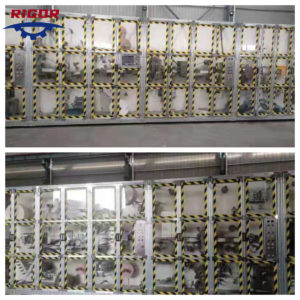
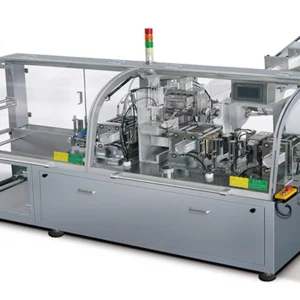
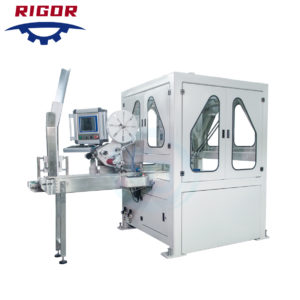
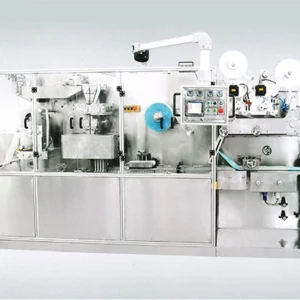
Understanding what happens inside a sanitary napkin machine GCC buyers are evaluating is essential to avoid overpaying for features you don't need or, worse, under-specifying a line that cannot meet market requirements. A contemporary pad-making line is a symphony of unwinding, folding, cutting, bonding and packaging modules, each with its own performance parameters.
From Raw Material to Finished Pad: The 7-Stage Production Process
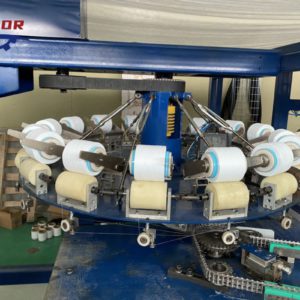
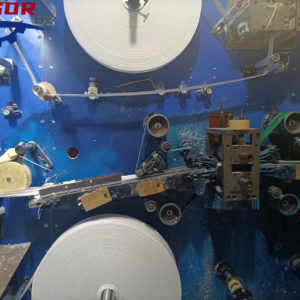
Every sanitary napkin machine follows a sequential flow: (1) nonwoven topsheet unwinding and guiding, (2) acquisition layer formation with airlaid or thermal-bonded material, (3) SAP (superabsorbent polymer) dosing and fluff pulp core shaping, (4) polyethylene backsheet lamination, (5) ultrasonic or thermal bonding of edges, (6) wing creation and release paper application, and (7) folding, individual wrapping and stacking. In high-speed lines, stage 3 is the critical bottleneck—SAP dosing accuracy of ±1.5% determines both product performance and raw material cost.
Full-Servo vs. Semi-Servo vs. Mechanical Drive: A Technical Breakdown
The choice of drive system directly impacts speed, changeover time and energy consumption. Full-servo machines use independent motors for each axis, enabling recipe-driven size changes in under 15 minutes and speeds up to 800 ppm. Semi-servo configurations combine servo-driven main sections with mechanical cams for secondary motions, offering a sweet spot of 400–500 ppm at 30–40% lower capital cost. Pure mechanical lines, while still available, are increasingly rare in the GCC due to their inflexibility and higher maintenance demands in dusty environments.
Critical Components: Ultrasonic Bonding, SAP Applicators, and Folding Units
Ultrasonic bonding has replaced much of the thermal embossing in premium pad lines because it creates softer edges and reduces energy use by 22%. SAP applicators with vacuum-assisted drums ensure even distribution and prevent gel blocking. Folding units with servo-driven tuckers can handle three-fold, bi-fold and tri-fold formats without manual adjustment. When auditing a machine, buyers should request a component-level bill of materials that lists the brand and origin of PLCs, servo motors, bearings and sensors—these determine long-term reliability.
Industry 4.0 Features: IoT, Predictive Maintenance, and OEE Monitoring
In 2026, more than 40% of new sanitary napkin machines shipped to the GCC include some level of Industry 4.0 connectivity. Sensors on motors and rollers stream data to a central dashboard, calculating OEE (Overall Equipment Effectiveness) in real time. Predictive maintenance algorithms analyze vibration patterns and temperature trends to warn of bearing failures 72 hours in advance. For distributors running multiple shifts, this reduces unplanned downtime by up to 35% and helps maintain the 95% OEE benchmark that separates profitable operations from marginal ones.
3. Importing a Sanitary Napkin Machine into the GCC: A Step-by-Step Compliance Roadmap
Importing a sanitary napkin machine GCC-wide involves a sequence of documentation, certification and clearance steps that differ slightly by country. The process can take 8–12 weeks if managed correctly, but one missing certificate can cause months of port storage fees.
Pre-Purchase Documentation: CE, ISO 9001, and SASO Certificates
Before shipment, the machine must carry a valid CE mark (or equivalent) and the manufacturer should provide an ISO 9001:2015 certificate. For Saudi Arabia, a SASO Certificate of Conformity (CoC) is mandatory. This requires a pre-shipment inspection by an accredited body such as Bureau Veritas or SGS. The CoC confirms compliance with SASO 2170 for sanitary napkins and SASO 2183 for machinery safety. Without it, Saudi customs will reject the consignment outright.
Customs Clearance in Saudi Arabia, UAE, and Kuwait: Tariffs and Paperwork
The UAE offers the smoothest path: 5% customs duty on most hygiene machinery, with exemptions in free zones like JAFZA and Hamriyah. Saudi Arabia applies a 5% duty but requires a Saber platform registration, linking the product to its HS code (8479.89 for sanitary napkin machines). Kuwait demands a Commercial Invoice legalized by the Kuwait Embassy and a Certificate of Origin. In all three countries, a detailed packing list and the original Bill of Lading are essential. We advise clients to allocate a USD 1,200–1,800 budget for customs brokerage and local handling fees.
Working with a Local Agent: Legal Requirements and Benefits
In Saudi Arabia and Kuwait, foreign companies selling machinery often need a registered local agent or distributor. This entity handles the SABER filing, Arabic translation of manuals and after-sales coordination. A good agent also provides market intelligence on tender opportunities. However, agent agreements should be performance-based with clear KPIs—vague exclusivity clauses are a common pitfall we have seen costing importers 2–3 years of market access.
4. Cost Analysis & ROI: How Much Does a Sanitary Napkin Machine Really Cost in the GCC?
Price tags on sanitary napkin machines span from USD 45,000 for a basic semi-servo line to over USD 600,000 for a fully automated full-servo line with packaging integration. The GCC market demands a balance between upfront investment and the ability to produce the premium pad formats that command 35–50% higher retail margins.
Price Ranges by Machine Type and Capacity (2026 Data)
A semi-servo machine rated at 300–400 ppm and capable of producing ultra-thin pads with wings typically costs USD 85,000–120,000 FOB. A full-servo line with 600–800 ppm capacity, automatic splicing and vision inspection falls in the USD 250,000–450,000 range. Adding a high-speed flow-wrap packaging module adds USD 60,000–90,000. These figures are based on quotations from established Chinese and Turkish manufacturers in Q1 2026, excluding shipping and installation.
Hidden Costs: Shipping, Installation, Training, and Spare Parts
Sea freight from Shanghai to Jeddah for a 40-foot container holding a sanitary napkin line averages USD 4,800–5,500 in 2026. Installation and commissioning by the manufacturer's engineers (typically 2 persons for 7–10 days) costs USD 5,000–8,000 plus travel. Operator training for a team of 4 should be budgeted at USD 3,000. A recommended initial spare parts package—including ultrasonic horns, belts, sensors and heating elements—runs USD 8,000–12,000. In total, first-year hidden costs can add 18–22% to the machine's FOB price.
Calculating Payback Period: A Real-World Model for a Mid-Sized Line
Consider a USD 110,000 semi-servo line producing 350 ppm, running two 8-hour shifts, 300 days per year. Annual output: approximately 100 million pads. With a conservative ex-factory selling price of USD 0.025 per pad and a material cost of USD 0.014, the gross margin per pad is USD 0.011. Annual gross profit: USD 1.1 million. After deducting labor (6 operators at USD 12,000 each), utilities, maintenance and depreciation, net operating profit reaches USD 380,000–420,000. Payback period: 3.1–3.5 months. Even with a 20% buffer for commissioning delays, most well-planned projects achieve full ROI within 6 months.
5. Machine Comparison: Choosing the Right Configuration for Your Market Segment
No single sanitary napkin machine GCC configuration fits all business models. A private-label startup targeting pharmacy chains needs different capabilities than a large-scale contract manufacturer supplying multinational brands.
High-Speed Production Lines vs. Flexible Batch Machines
High-speed lines (600+ ppm) excel when you run 2–3 SKUs in long campaigns. Their output per shift can exceed 250,000 pads, minimizing labor cost per unit. However, changeover between sizes can take 45–60 minutes. Flexible batch machines with servo-driven recipe management are slower (250–350 ppm) but switch between pad lengths, widths and folding styles in under 10 minutes. For GCC distributors serving diverse retail channels with frequent reorders of smaller quantities, flexibility often beats raw speed.
European vs. Chinese Manufacturers: Quality, Price, and After-Sales in the GCC
| Parameter | European (e.g., Fameccanica, Zuiko) | Chinese (e.g., top-tier suppliers) |
|---|---|---|
| Price (600 ppm full-servo) | USD 450,000–600,000 | USD 220,000–350,000 |
| Lead Time | 7–9 months | 3–4 months |
| After-Sales Response in GCC | 48–72 hours (via regional hub) | 24–48 hours (dedicated English/Arabic support) |
| Spare Parts Availability | Centralized in Italy/Japan | Local warehouse in Dubai/Jeddah |
| Compliance Support | CE, limited SASO pre-cert | Pre-configured for SASO/GSO |
In 2026, leading Chinese manufacturers have closed the quality gap significantly. Their machines now feature Siemens or Mitsubishi PLCs, SKF bearings and ultrasonic systems from Herrmann or Dukane. For GCC buyers, the combination of faster delivery, localized spare parts and proactive SASO compliance makes Chinese equipment a pragmatic choice for all but the most specialized niche products.
Decision Matrix: Matching Machine Features to Target Product (Ultra-Thin, Maxi, Night)
Ultra-thin pads require precise SAP application and thin core forming, favoring machines with vacuum drum formers and adjustable embossing rollers. Maxi pads need higher fluff pulp capacity and stronger bonding units. Night pads with extended length and wider backsheets demand a machine with a 350–400 mm product width capability. Before requesting quotations, define your primary SKU mix and ask suppliers to demonstrate successful runs on similar product profiles—ideally with video evidence and production data logs.
6. Standards & Regulations: Ensuring Your Machine Meets GCC Hygiene Product Laws
Regulatory alignment is the single most underestimated factor in sanitary napkin machine GCC procurement. A machine that produces pads failing SASO absorbency or pH tests can lead to shipment rejection, fines and brand damage.
SASO 2170 and GSO 994: Sanitary Pad Performance and Safety
SASO 2170 specifies minimum absorbency (≥ 15 g for day pads), pH range (4.5–8.0), and absence of irritants. GSO 994 covers labeling, packaging and microbiological limits. The machine must consistently deliver pads within these parameters. This means the SAP dosing unit must have a calibration certificate traceable to an ISO 17025 lab, and the bonding system must not introduce formaldehyde or other volatile compounds. Request a SASO compliance test report from the machine supplier using pads produced on your exact configuration.
Halal Compliance Considerations for Raw Materials
While the machine itself is not halal-certified, the raw materials it processes may need halal certification if they contain animal-derived components (e.g., certain adhesives or lotions). GCC retailers increasingly demand halal certification for the finished product. Ensure your machine can handle certified nonwoven fabrics and adhesives without cross-contamination—dedicated raw material lanes and cleaning protocols are part of the machine's design specification.
Environmental Regulations on Plastic Waste and Biodegradability Targets
The UAE's Single-Use Plastics Policy and Saudi Arabia's upcoming packaging law are pushing for 30% recycled content in backsheets by 2028 and full biodegradability of release paper by 2030. Machines must be capable of processing bio-based PE films and silicone-coated paper alternatives, which have different tensile strengths and heat-sealing windows. A machine with adjustable temperature zones and tension control is essential to avoid wrinkles and seal failures when switching to eco-materials.
7. 7 Critical Mistakes When Buying a Sanitary Napkin Machine for the Middle East
Over a decade of supplying diaper and pad machines to the GCC, we have seen the same costly errors repeat. Here are the seven most expensive ones and how to sidestep them.
Overlooking Voltage and Climate Adaptations (50Hz, 380V, Dust/Heat)
GCC countries operate on 380V/50Hz three-phase power. A machine built for 220V/60Hz will require transformers and motor replacements, adding USD 12,000–18,000 and voiding warranties. Additionally, ambient temperatures of 45°C and fine desert dust demand IP65-rated electrical cabinets, air-conditioned control panels and sealed bearings. In one Jeddah installation, a client's machine halted 11 times in its first month because standard cooling fans clogged with dust. We now specify positive-pressure cabinets with filtered intake as standard for all GCC-bound sanitary napkin machinery .
Ignoring After-Sales Service Availability in Arabic and English
When a servo drive faults at 2 a.m. during a Ramadan production rush, waiting 48 hours for a response from a European time zone is unacceptable. Buyers should verify that the supplier offers 24/7 technical support in both English and Arabic, with remote diagnostic capability via VPN. Ask for the phone number of the regional service manager and call it before signing the contract.
Choosing a Machine Without Valid CE or SASO Certification
A CE mark without a valid Declaration of Conformity and technical file is worthless. SASO certification must be for the specific machine model and serial number, not a generic company certificate. We have seen two shipments detained at Dammam port because the CoC referenced an older machine version. Always cross-check certificate validity on the SASO Saber portal before shipment.
Underestimating the Learning Curve for Operators
A full-servo line with touchscreen HMI looks intuitive, but operators accustomed to mechanical machines need 3–4 weeks of structured training to achieve 85% OEE. Budget for on-site training and a detailed operations manual in Arabic. One Dubai client reduced scrap rates from 12% to 2.5% simply by investing in a 5-day advanced operator workshop six months after installation.
8. Future Trends Shaping the GCC Hygiene Machinery Market in 2026 and Beyond
The sanitary napkin machine GCC market is not static. Three trends are redefining machine specifications and buyer expectations.
The Rise of Bamboo and Organic Cotton Pads – Machine Adaptability
Bamboo fiber topsheets are growing at 18% CAGR in the GCC, driven by sustainability claims. These fibers are shorter and less uniform than synthetic nonwovens, requiring machines with advanced web guiding systems and lower tension unwinds. Organic cotton cores absorb differently, demanding adjustable SAP-to-fluff ratios. Machines with recipe-driven parameter storage can switch between conventional and organic materials in minutes, a feature that will become a baseline requirement by 2028.
Smart Factories: How AI Vision Systems Reduce Defect Rates
AI-powered vision inspection cameras now detect defects as small as 0.3 mm—missing wings, skewed release paper, uneven SAP distribution—at line speeds of 800 ppm. The system automatically ejects faulty pads and logs images for root-cause analysis. In a recent installation in Riyadh, an AI vision system reduced customer complaints by 62% within the first quarter. Suppliers offering integrated vision solutions are gaining preference in GCC tenders.
Regional Manufacturing Hubs: Saudi Vision 2030 and UAE's Operation 300bn
Saudi Arabia's MODON industrial cities and the UAE's KIZAD are offering plug-and-play factory shells with pre-installed utilities for hygiene manufacturers. These hubs are designed to attract 50+ new production lines by 2030. Machinery buyers who locate in these zones benefit from accelerated licensing, cluster logistics and shared training facilities. The message is clear: the GCC is moving from import-reliant to self-sufficient, and the machines installed in the next 24 months will define the competitive landscape for a decade.
9. Case Study: From Zero to Market Leader – A Dubai Distributor's Journey with Our Machinery
In 2024, a mid-sized Dubai-based distributor of personal care products approached us with a challenge: they wanted to launch a private-label sanitary pad brand targeting pharmacy chains in the UAE and Oman, but they had zero manufacturing experience and a tight budget of USD 180,000 for machinery and setup.
The Challenge: Entering a Price-Sensitive Market with Premium Quality
The distributor knew that pharmacy buyers would benchmark their product against multinational brands like Always and Kotex. They needed a pad that felt soft, absorbed quickly and came in compact, shelf-ready packaging. However, the average retail price in their target channel was 20% lower than hypermarkets, squeezing margins. The machine had to deliver high productivity with minimal waste and be simple enough for a newly hired team to operate within weeks.
Our Solution: Customized Semi-Servo Line with Quick-Change Module
We recommended a semi-servo sanitary napkin machine with a 400 ppm nominal speed, configured for ultra-thin and maxi pad production. The line included a quick-change folding unit that could switch between bi-fold and tri-fold in under 8 minutes, allowing the distributor to offer both economy and premium SKUs from one machine. We integrated a hot-melt adhesive system with 6 independent temperature zones to ensure bonding consistency on the thinner PE backsheet they chose for a “barely there” feel. The total FOB cost was USD 112,000, including a basic flow-wrap packer.
Results: 22% Market Share in Private-Label Segment Within 18 Months
After commissioning in JAFZA in March 2025, the line reached 92% OEE by week 4. The distributor launched three SKUs—day, night and ultra-thin—under their own brand. Within 12 months, they secured listings in 280 pharmacy outlets across the UAE and Oman. By September 2026, their brand held a 22% unit share in the private-label sanitary pad segment, and they had already ordered a second, higher-speed line to meet demand from Saudi Arabia. The initial investment was fully recouped in 5.5 months, validating the semi-servo approach for first-time manufacturers.
10. Supplier Vetting Toolkit: Checklists, Questions, and Red Flags
Selecting a sanitary napkin machine GCC supplier without a structured evaluation process is gambling. Use this toolkit to separate reliable partners from costly disappointments.
The 15-Point Factory Audit Checklist (Including Virtual Audit Tips)
- Verify business license and export record for hygiene machinery (minimum 5 years).
- Check ISO 9001:2015 certificate validity and scope.
- Request a video tour of the assembly floor, focusing on wiring standards and component storage.
- Ask for a reference list of at least 5 customers in MENA or similar climate regions.
- Contact 2 references directly—ask about downtime, support response and spare parts delivery.
- Inspect the electrical cabinet of a machine in production: look for IP65 rating, cable labeling and thermal management.
- Confirm the brands of key components: PLC (Siemens/Mitsubishi), servo (Yaskawa/Delta), bearings (SKF/NSK), ultrasonic (Herrmann/Dukane).
- Request a live trial run on a pad specification similar to yours, with raw materials you intend to use.
- Request a SASO CoC sample and verify its validity on the Saber platform.
- Review the warranty terms: at least 12 months on mechanical parts and 6 months on electrical parts.
- Clarify after-sales support: response time, language capabilities and availability of remote diagnostics.
- Check spare parts inventory in regional warehouse—ask for a stock list with part numbers.
- Review the training plan: number of days, language of manuals and availability of Arabic-speaking trainers.
- Assess financial stability: request audited financial statements or a bank reference letter.
- Use a virtual audit platform (e.g., Zoom with screen sharing) to verify real-time factory operations if travel is not possible.
Questions to Ask Before Signing a Contract
- “What is the exact lead time from deposit to FOB, and what penalties apply for delays?”
- “Can you provide a detailed component-level bill of materials with brand and model numbers?”
- “What is your standard commissioning procedure and how many days of on-site support are included?”
- “Do you have a local service partner in Saudi Arabia or the UAE, and can I meet them?”
- “What is the cost and availability of the top 20 consumable spare parts?”
Red Flags: Inconsistent CE Marking, Vague Delivery Terms, and Missing References
Be wary of suppliers who show a CE certificate but cannot produce the corresponding technical file or Declaration of Conformity. Vague delivery terms like “prompt shipment” instead of “within 90 days of confirmed L/C” often mask production backlogs. If a supplier hesitates to provide direct customer references or offers only email addresses without phone numbers, treat it as a serious warning sign. In our experience, transparent suppliers win long-term business; opaque ones cost you months of downtime.
11. Debunking 6 Persistent Myths About Sanitary Pad Machinery
Myths distort purchasing decisions and lead to overspending or missed opportunities. Let's correct the record with 2026 facts.
Myth 1: “Chinese Machines Are Unreliable” – The 2026 Reality
This was partially true in 2010. Today, top-tier Chinese manufacturers export to over 80 countries and hold CE, SASO and UL certifications. Their machines run in factories producing for multinational brands. The key is not origin but specification: a Chinese machine built with global-brand components and rigorous QC is as reliable as any European equivalent, at 40–50% lower cost. The myth persists because buyers sometimes select the cheapest, non-certified supplier rather than a quality-focused one.
Myth 2: “Servo Motors Are Only for High-End Products”
Servo motors are now standard even in mid-range machines because they enable recipe-driven changeovers and reduce mechanical wear. A semi-servo machine producing economy maxi pads benefits from servo-driven folding and cutting just as much as a premium line. The real question is how many axes are servo-controlled, not whether to have servos at all.
Myth 3: “You Need an Engineer on Staff 24/7”
With remote diagnostic capabilities and intuitive HMIs, a well-trained operator team can handle 90% of daily issues. One of our clients in Kuwait runs two lines with a total of 8 operators and one maintenance technician, achieving 94% OEE. The machine's predictive alerts and step-by-step troubleshooting guides on the HMI reduce the need for constant engineering oversight.
12. Maintenance & Optimization: Keeping Your GCC Line Running at 95% OEE
A sanitary napkin machine GCC environment demands a proactive maintenance culture. Reactive fixes destroy margins and delivery schedules.
Preventive Maintenance Schedules for High-Humidity Environments
Coastal GCC cities like Dubai, Dammam and Muscat experience humidity above 85% in summer, accelerating corrosion on uncoated metal parts and causing SAP clumping in hoppers. A weekly PM routine should include: cleaning and drying SAP feed lines, inspecting ultrasonic horn surfaces for pitting, checking all seals on electrical cabinets, and lubricating chains with high-temperature grease. Monthly, calibrate temperature controllers and verify servo motor feedback. Quarterly, replace air filters and perform a full alignment check on folding and cutting stations.
Common Spare Parts to Stock and Their Replacement Intervals
Critical spares: ultrasonic horns (replace every 12–18 months), Teflon-coated sealing belts (every 8–10 months), heating elements for hot-melt tanks (every 2 years), servo drive fans (every 18 months), and a complete set of sensors (photoelectric, proximity). Keep at least two sets of each consumable on hand. A well-stocked spare parts inventory worth USD 12,000 can prevent 10 days of downtime per year, which at 350 ppm translates to over USD 90,000 in lost production value.
Training Your Team: From Beginner to Advanced Troubleshooting in 4 Weeks
Week 1: safety protocols, machine startup/shutdown, and basic HMI navigation. Week 2: raw material handling, splice procedures, and quality inspection using sample boards. Week 3: changeover procedures, cleaning routines, and common alarm responses. Week 4: advanced troubleshooting of servo faults, SAP dosing calibration, and vision system parameter adjustment. After this program, operators should be able to resolve 80% of stoppages within 15 minutes without external support.
Your Next Step: Demand a Factory Audit and Material Trial Before You Commit
The difference between a sanitary napkin machine GCC investment that generates 6-month payback and one that becomes a stranded asset often comes down to 48 hours of due diligence before the contract is signed. You have the market data, the cost models, the checklists and the regulatory roadmap. Now apply them. Request a live video audit of the assembly floor. Send 50 kg of your intended raw materials to the supplier and ask for a recorded trial run with detailed production data—speed, waste rate, pad weight distribution and seal integrity. Compare the SASO compliance test report against the latest GSO standards. Speak directly to a reference customer in a similar climate zone. The sanitary pad market in the Gulf is accelerating; the machines that will win are those selected with precision, not impulse. Your next move is to turn this knowledge into a concrete purchase specification and challenge every supplier to meet it transparently.
References
- Mordor Intelligence, “GCC Hygiene Products Market Size & Share Analysis – Growth Trends & Forecasts (2024 – 2029)”, https://www.mordorintelligence.com/industry-reports/gcc-hygiene-products-market
- SASO, “Saudi Standards, Metrology and Quality Organization – Sanitary Napkins Standard SASO 2170”, https://www.saso.gov.sa/en/standards/Pages/default.aspx
- EDANA, “Nonwovens Statistics for the Middle East & Africa”, https://www.edana.org/industry-statistics
- Grand View Research, “Feminine Hygiene Products Market Size Report, 2025 – 2030”, https://www.grandviewresearch.com/industry-analysis/feminine-hygiene-products-market