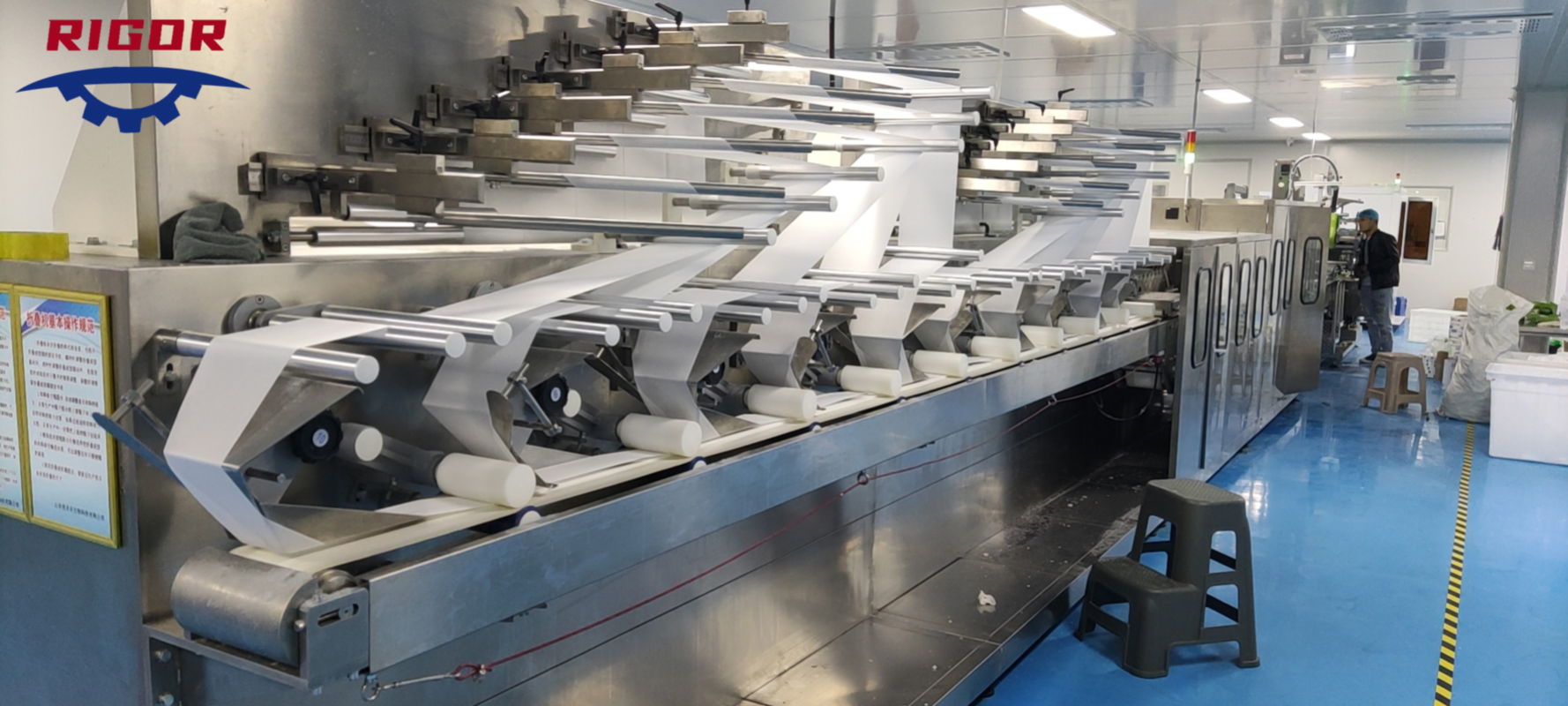
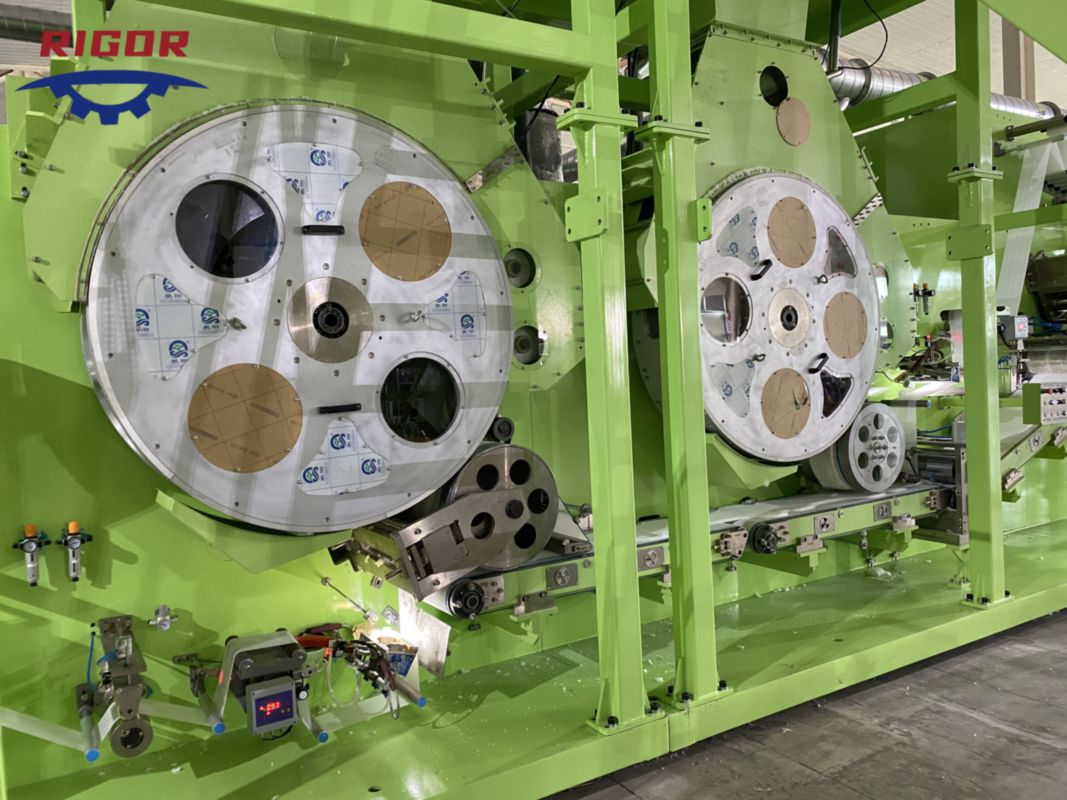
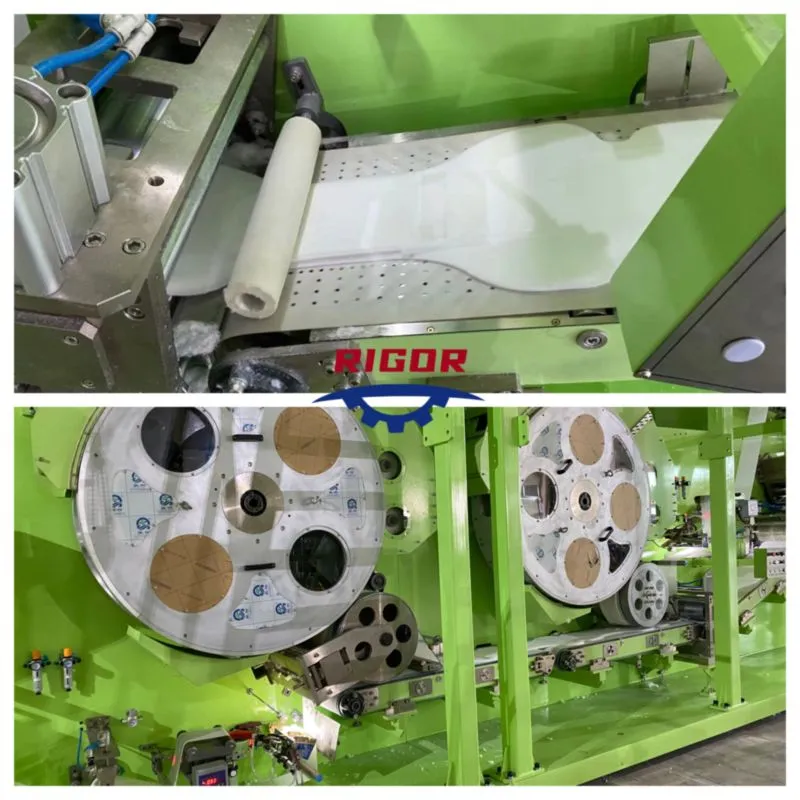
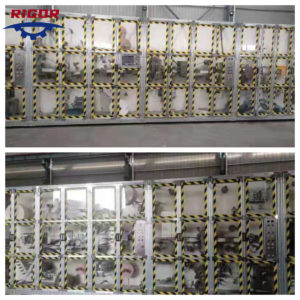
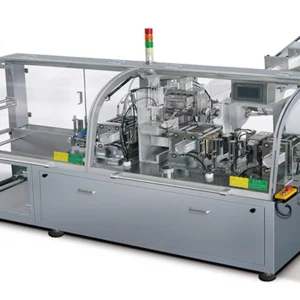
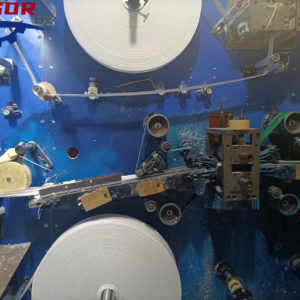
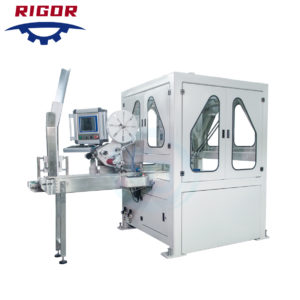
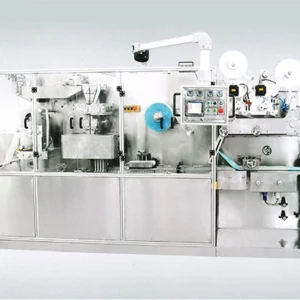
In the sanitary napkin production process, accurate material delivery is an important part of ensuring production efficiency, which places high demands on the performance of sanitary towel making machines. We are a professional sanitary napkin machine manufacturer, providing you with a full set of solutions for sanitary napkin production.
The automation equipment of our sanitary towel making machines uses a variety of advanced technologies and systems to ensure the accurate delivery of raw materials, thereby ensuring the quality and consistency of the product.
1. Servo drive system
Servo motors are used to drive the conveyor belts and rollers of the raw materials. The servo system can accurately control the speed, position and acceleration to ensure that the raw materials move at a constant and accurate speed.
2. Tension control system
During the entire conveying process, the tension of the material is monitored and adjusted through tension controllers and sensors. This can avoid deformation or wrinkles caused by excessive stretching or looseness of the material during the process.
3. Sensors and vision systems
Photoelectric sensors, laser sensors or visual inspection systems are used to monitor the position and movement of raw materials. They can detect the edges, marks or printed patterns of the materials to ensure the accurate alignment of the materials.
4. Programmable logic controller (PLC)
The PLC performs unified control commands for each drive and sensor. Through the preset program, the PLC can process the sensor information and make corresponding adjustments to ensure the accuracy and synchronization of the conveying process.
5. Automatic adjustment mechanism
When the sensor detects the position deviation of the raw material, the automatic adjustment system will immediately adjust the position of the conveying mechanism to ensure that the material is accurately conveyed along the predetermined path.
6. Track and guide system
The carefully designed track and guide rollers ensure the linearity and stability of the raw materials during the conveying process and prevent the material from deflecting.
7. Data monitoring and feedback
Sensors and cameras on the production line continuously collect data. Through the real-time feedback system, any conveying deviation will be immediately detected and corrected to ensure the continuous accuracy of raw material conveying.
Using these advanced technologies and systems, sanitary napkin manufacturing machines can achieve accurate raw material conveying in a high-speed production environment, reduce production errors, and improve product quality. By achieving automated precision control, manufacturers can also optimize production efficiency and resource utilization and reduce production costs.
As a sanitary napkin manufacturing machine supplier, we enjoy a good reputation in the industry. We can provide comprehensive technical support and services, and have advanced technical equipment. At the same time, we also produce adult diaper machine and diaper making machine. Welcome to contact us for more product information.
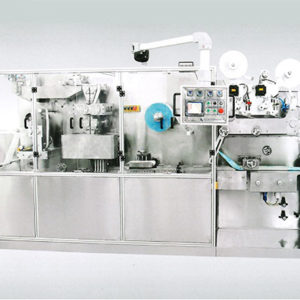
Diaper and wet wipes machine have various implications for maintaining hygiene standards. Diaper and wet wipes machines play a vital role in maintaining hygiene standards. These machines ensure the production of high quality wet wipes that comply with health and safety regulations. They are designed to produce wet wipes that are free of harmful bacteria and other contaminants. Diaper and wet wipes machines regulate the amount of solution per wipe, providing the optimal level of disinfectant or cleanser for each use. Diaper and wet wipes machines are responsible for sealing the wet wipe packages to maintain sterility until use.Diaper and wet wipe machines can quickly produce large quantities of wet wipes and diapers, and these machines have made a remarkable contribution to the rapid and widespread availability of hygiene products. This is specifically important in situations that require rapid action, such as viral outbreaks.
The Dynamics of Diaper Manufacturing
Diaper manufacturers transform vast quantities of raw materials into dry, comfortable covers for the smallest of baby bottoms. With every stitch, every layer of down, and every breathable outer layer, they are not just making a product; they are taking the burden off parents, wrapping babies in comfortable, leak-proof covers. Manufacturers play a vital societal role, not only providing diapers but also providing caregivers with peace of mind around the clock. They stand at the intersection of demand and innovation, constantly pursuing the gold standard for softness, absorbency, and environmental friendliness.
Adult Diaper Manufacturers Meeting Special Needs
Recognizing the growing demand for adults who need these products due to various health conditions or ages, the adult diaper manufacturing industry has made significant progress. The adult diaper manufacturer mainly ensures the production of high-quality, disposable, and reusable adult diapers that are designed to provide comfort, discretion, and protection.As the global population ages, adult diaper manufacturers have become key players in the personal care market, providing dignity and independence to millions of people. It showcases advances in absorbent technology, tailored designs for different levels of incontinence, and the integration of comfort-enhancing features such as breathable materials and customizable fit.
Wet wipe machines can be taken out and used.
Effective hygiene is not limited to diapers. Wet wipe machines are an important part of personal cleanliness and care. These machines transform raw materials into soothing, disinfecting, and easy-to-use wipes, which are a thorough part of our hygiene customs. As the global population ages, adult diaper manufacturers have become key players in the personal care market, providing dignity and independence to millions of people. Unique challenges and opportunities in the adult diaper industry. Wet wipe machines are another fast-growing mainstay of the personal care industry, producing disinfecting and cleansing wipes for personal and household use.
The ingenious wipes dispenser is the unsung hero of cleanliness and comfort, from alcohol swabs that kill germs to soft baby wipes that clean and soothe at the same time. But it’s more than just about making the product; hygiene control is a high-walled fortress guarding every step of the way, ensuring the wipes are as clean as the surfaces they’re meant to wipe. As our environmental awareness grows, there’s also a growing trend towards biodegradable wipes to replace synthetics. This is where creativity blossoms, incorporating eco-friendly materials without sacrificing the cleanliness we all depend on. Manufacturers not only offer top-notch products but also have the power to pave the way for candid conversations.
In summary, this article aims to provide an illuminating journey through the core elements of hygiene product production. By looking at diaper manufacturers, adult diaper manufacturers, and wet wipe machines, we explore the dedication behind products that support everyday cleanliness. By understanding these different aspects, we can gain a clearer understanding of the undeniable value these hygiene solutions provide in our lives.
There are several main ways to improve the production efficiency of diaper production machine .The use of advanced automation technology and equipment can greatly improve production efficiency. For example, using a motor with better performance can increase the machine’s operating speed. By optimizing the production process, such as by improving material preliminary and handling methods and redesigning product structure, production time and cost can be reduced. Regular machine maintenance and care can avoid machine failures and ensure the smooth manipulation of the production line. Production efficiency can be improved by training employees to familiarize them with equipment operation and troubleshooting. Production efficiency can be improved by optimizing the use of raw materials and reducing waste. Implementing strict quality control can reduce errors in the production process, improve quality, and thus improve production efficiency. The above are some ways to improve the production efficiency of diaper production machines. Different production environments and needs may require different strategies and methods.
Diaper manufacturing is necessary in infant households
Diaper manufacturing requires both comfort and strong absorbency. The process doesn’t just start on an assembly line but is a combination of multiple sciences, from chemistry to mechanics, tied to strict cleanliness standards. From sourcing super sponges like SAP that can fight floods to selecting non-woven fabrics that are soft to the touch, every ingredient is key to the diaper formula. Each diaper manufactured is a design miracle, carefully constructed to be breathable but tightly sealed to prevent leaks. Using biodegradable materials, say goodbye to the old plastic packaging methods. With every tweak and change in design, diaper production continues to redefine comfort and care for our youngest children while keeping pace with the needs of a fragile planet.
This machine is suitable for the production of diapers
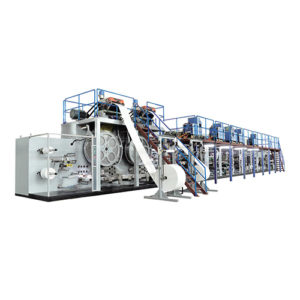
Diaper production machines represent the heart of the industry, ensuring high-quality, consistent, and safe products reach the market. These high-speed machines enable streamlined and efficient production, addressing every aspect from material selection to packaging. The production of diapers is a complex and meticulous process that blends science, engineering, and sanitation standards to create a product that ensures the comfort and health of infants. This section dissects the complex steps involved, starting with the sourcing of highly absorbent materials such as SAP (super absorbent polymer) and nonwovens to the final packaging.
At the heart of our diaper manufacturing plants are precision production machines that combine speed with accuracy. The latest technologies used in our machines include automatic feeding systems, multi-layer lamella, and high-speed cutting and sealing mechanisms. It highlights how these innovations not only increase production ability but also ensure product consistency and quality, reduce waste, and minimize downtime.
Wet tissue machines transform personal hygiene
Wet tissue machines have transformed personal hygiene, providing effective, disposable, and convenient solutions for disinfection and cleaning. By producing uniformly moistened, cut, and packaged wipes, these machines ensure quality and consistency. Although the working principle of wet wipe machines is similar to that of diaper machines, wet tissue machinedemonstrate their multifunctionality in producing a wide range of hygiene and personal care products.
The adaptability of our wet tissue machines in producing wet wipes for various uses, including antibacterial hand wipes, makeup removal wipes, and baby cleansing wipes, It highlights the importance of the sterilization process, fragrance and lotion application systems, and packaging versatility to cater to different market segments and consumer preferences. In addition, it touches on the growing trend of sustainable and biodegradable materials in wet wipe production.
In conclusion, the key to effective hygiene product production lies in the combination of innovative technologies and specialized machinery. This article sheds light on the importance of diaper manufacturing, diaper production machines, and wet wipe machines in meeting global hygiene needs and improving personal care.
Diaper production machines are highly efficient and automated equipment used to produce various types of diapers, such as baby diapers, adult diapers, etc.
Main features of diaper making machines
1. High degree of automation
Diaper making machines are usually highly automated. The entire production process, from raw material processing to finished product packaging, requires almost no human intervention. This not only improves production efficiency but also reduces labor costs.
2. Versatility
Modern diaper making machines are able to produce a variety of types and specifications to meet different market needs. By changing molds and adjusting parameters, it is possible to quickly switch to produce different models of products.
3. Precise control
Equipped with advanced PLC (Programmable Logic Controller) and HMI (Human Machine Interface) to achieve precise control and monitoring of the production process. Operators can adjust production parameters and monitor the equipment operation status through touch screens or computer interfaces.
4. High-speed production
The production speed of diaper making machines is usually very high, reaching hundreds or even thousands of pieces per minute. This makes large-scale production possible to meet the large demands of the market.
5. Quality control
Equipped with a variety of online detection systems to monitor quality problems in the production process in real time. Any defective products will be automatically eliminated to ensure the high quality of the finished product.
6. Energy saving and environmental protection
Modern diaper making machines pay more attention to energy saving and environmental protection in design, and adopt energy-efficient motors and transmission systems to reduce energy consumption. At the same time, the waste treatment system is more perfect to reduce the generation of waste in the production process.
7. Easy maintenance
The equipment design takes into account the convenience of maintenance, and the modular design makes it easier and faster to replace and maintain parts. The operating instructions and maintenance manuals are usually very detailed, which is convenient for operators to carry out daily maintenance.
8. Safety
Equipped with multiple safety protection devices, such as emergency stop buttons, safety doors, overload protection, etc., to ensure the safety of operators.
9. Flexibility
The equipment can be adjusted according to different production needs, such as changing different types of raw materials, adjusting product size and shape, etc.
10. Data recording and analysis
Modern diaper manufacturing machines are usually equipped with data recording and analysis functions. It can record various data in the production process, such as production speed, product quantity, fault records, etc. These data can be used for production optimization and quality control.
About us
Rigor is a group technology-based enterprise integrating the upstream and downstream industrial chains of the sanitary products industry. Rigor Machinery develops and manufactures sanitary products and equipment of diapers, sanitary napkins and pads, wet wipes machines. Meeting the needs of domestic and foreign customers. Since the establishment, nearly a thousand production lines have been successfully operated not only in China. Our products exported to 116 countries and regions in Europe, America, Oceania, Africa and Asia.
With its unique design concept and comfortable user experience, the sanitary products produced by Purity Industry lead the new direction of the industry’s development. Its products cover full elastic waistband baby diaper, baby pull-up pants, sanitary napkins and pads, and health-care adult diapers, Medical mattresses and other disposable hygiene products.
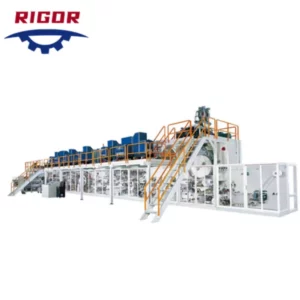
Diapers production lineis a set of sophisticated systems. Rigor is a supplier focusing on machine for diapers. Designed to help you produce diapers efficiently and at high speed. We provide a one-stop shopping solution to provide you with baby/adult diaper machine.
Diaper production line integrates various technologies and processes to ensure the production of high-quality diapers that meet industry standards.
– Pulp feeding system. Supply absorbent core material, usually fluff pulp or a combination of pulp and super absorbent polymer (SAP). The selection of pulp must meet production hygiene and safety standards.
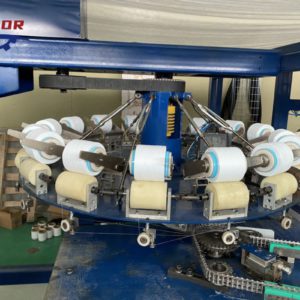
– Nonwoven processing. Coordinate the supply of top and bottom materials.
– Elastic material processing. Supply elastic materials for leg sleeves and waistbands.
2. Forming section
– Absorbent core molding. Process pulp into absorbent cores, usually combined with SAP to enhance absorbency. This step is a key procedure for production.
– Core molding. Cut and shape the core to fit the diaper design.
3. Assembly section
– Top sheet and bottom sheet docking. The nonwoven topsheet and backsheet are applied to the core.
– Elastic attachment process. Elastic material is added to the cuffs and waistband areas to ensure that the finished product fits tightly against the skin and prevents side leakage.
– Bonding process. The layers and components are bonded together using adhesives.
4. Cutting and shaping
– Die-cutting process: The assembled diaper is cut into its final shape using a die-cutting tool.
– Edge sealing: The edges of the diaper are sealed to prevent leaks and improve comfort.
5. Quality control
– Inspection system: Cameras and sensors check diapers for defects such as misalignment, missing components or incorrect sizes.
– Testing station: Random samples are taken for testing of absorbency, strength and other quality parameters.
6. Packaging
– Folding and stacking: Diapers are folded and stacked in preparation for packaging.
– Packaging machine: Diapers are packed into bags or boxes ready for distribution.
Here’s an overview of how to make diapers through a step-by-step production process involving advanced materials and precision machinery:
1. Raw material preparation
– Raw materials such as fluff pulp, SAP, nonwovens and elastic materials are prepared and loaded into the production line.
2. Absorbent Core Formation
– Fluff pulp is processed and combined with SAP to form the absorbent core. The core is then shaped and cut to the desired size.
3. Multi-layer Assembly
– Top and bottom layers are applied to the absorbent core. Elastic material is added to the leg cuffs and waistband area to ensure a secure fit.
4. Cutting and Shaping
– Assembled diapers are cut to their final shape using a die-cutting tool. The edges are sealed to prevent leaks.
5. Quality Inspection
– Diapers are inspected for defects using cameras and sensors. Random samples are taken for testing of absorbency, strength, and other quality parameters.
6. Packaging
– Finished diapers are folded, stacked, and packed into bags or boxes for distribution.
Advanced Features
With the development of technology, some highly intelligent procedures have also been introduced into the process of how are nappies made:
1. Automation and Control Systems
– Modern diaper production lines are equipped with advanced automation and control systems to ensure high efficiency and consistent quality. These systems monitor and control all aspects of the production process, from raw material handling to final packaging.
2. Customization Options
– Production lines can be customized to produce different types of diapers, such as baby diapers, adult diapers, and incontinence products. Customization options include different sizes, absorbency, and designs.
3. Energy Efficiency
– Energy-saving technologies are often integrated into production lines to reduce energy consumption and minimize environmental impact.
Conclusion
A diaper production line is a complex system that integrates a variety of technologies and processes to efficiently produce high-quality diapers. These lines are designed to handle large amounts of raw materials, assemble multiple layers and components, and ensure consistent quality through advanced inspection and testing systems. The entire process of how diapers are made—from feeding raw materials to layering, shaping, cutting, and packaging—is seamlessly managed through this integrated system. By utilizing automation and control systems, manufacturers can produce a variety of diaper products to meet different market needs.